Mid Fade Haircut: 25 Modern Styles for a Sharp Look
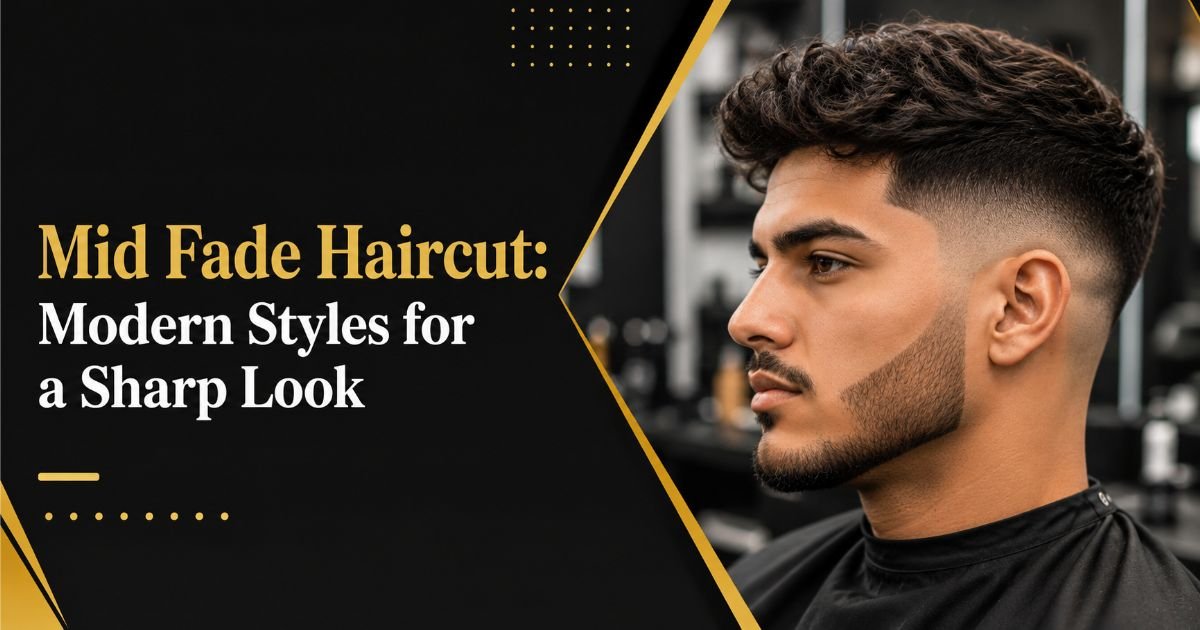
Walking into a barbershop and not knowing how to describe what you want is one of the most common ways a haircut goes wrong. A mid fade haircut solves that problem because it’s specific enough to describe clearly, yet flexible enough to fit almost any face shape or hair type.
It starts around the temples and gradually blends the sides and back into shorter hair, leaving room for a longer, styled top. Barbers see this request more than almost any other because it works for job interviews, weekend plans, and everything between. This guide breaks down 25 real mid fade variations, how to ask for each one, and how to keep it looking sharp between visits.
Mid Fade Haircut Comparison Table
Here are style, type, face shape, mintenance and styling time comparison detailed table.
| Hairstyle | Best Hair Type | Face Shape | Maintenance | Styling Time |
| Classic Mid Fade | Straight, Wavy | Oval, Round | Medium | 5 min |
| Mid Fade Pompadour | Straight, Thick | Oval, Square | High | 10–15 min |
| Mid Fade Crew Cut | Any | Round, Square | Low | 2 min |
| Mid Fade Slick Back | Straight, Wavy | Oval, Long | Medium | 8 min |
| Textured Crop Mid Fade | Straight, Wavy | Round, Square | Medium | 5 min |
| Mid Fade Comb Over | Straight | Oval, Square | Medium | 6 min |
| Mid Skin Fade | Any | Oval, Round | High | 3 min |
| Mid Drop Fade | Any | Round, Square | Medium | 5 min |
| Mid Burst Fade | Wavy, Curly | Oval, Diamond | Medium | 5 min |
| Mid Fade Quiff | Straight, Wavy | Oval, Round | High | 10 min |
| Mid Fade Faux Hawk | Straight, Thick | Oval, Square | High | 8 min |
| Mid Fade Mohawk | Straight, Thick | Oval, Square | High | 10 min |
| Mid Fade with Curls | Curly, Coily | Oval, Round | Low | 5 min |
| Mid Fade with Waves | Wavy, Curly | Oval, Round | Medium | 5 min |
| Mid Fade Buzz Cut | Any | Any | Low | 1 min |
| Mid Fade French Crop | Straight, Wavy | Square, Diamond | Low | 3 min |
| Mid Fade Caesar Cut | Straight, Wavy | Oval, Round | Low | 2 min |
| Mid Fade with Beard | Any | Long, Diamond | Medium | 5 min |
| Mid Fade Spiky Top | Straight | Round, Square | High | 8 min |
| Mid Fade Undercut | Straight, Thick | Oval, Square | Medium | 6 min |
| Mid Fade with Fringe | Wavy, Curly | Long, Square | Medium | 5 min |
| Mid Fade Side Part | Straight | Oval, Round | Medium | 6 min |
| Mid Fade Curly Top | Curly, Coily | Round, Oval | Low | 5 min |
| Mid Fade Man Bun | Long, Thick | Oval, Square | Low | 3 min |
| Mid Fade Blowout | Thick, Curly | Oval, Round | High | 10 min |
What Is a Mid Fade Haircut?
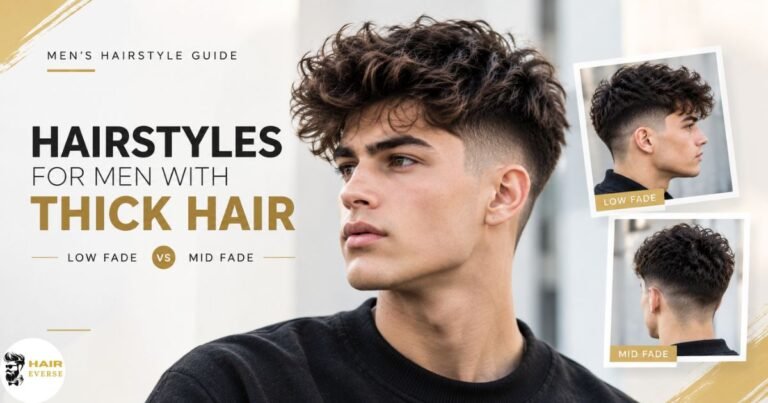
Before getting into individual styles, it helps to know what makes a fade a “mid” fade in the first place. The transition point where short hair starts blending into longer hair sits roughly around the temple, midway between the hairline and the top of the ear.
That placement is what separates it from a low fade (starts near the ear) and a high fade (starts near the crown). Because the blend sits in the middle, it works with nearly any top style, from a short crop to a longer pompadour, which is exactly why it shows up so often when men search for hair style ideas.
Classic Mid Haircut Fade Men
Overview: The classic mid fade keeps roughly two to three inches on top with a smooth blend starting at the temples. It’s the baseline version every barber can execute quickly, with no dramatic shapes or lines involved.
Why It Works: Straight and wavy hair show the fade line most clearly, and the balanced proportions flatter oval and round faces without adding bulk anywhere.
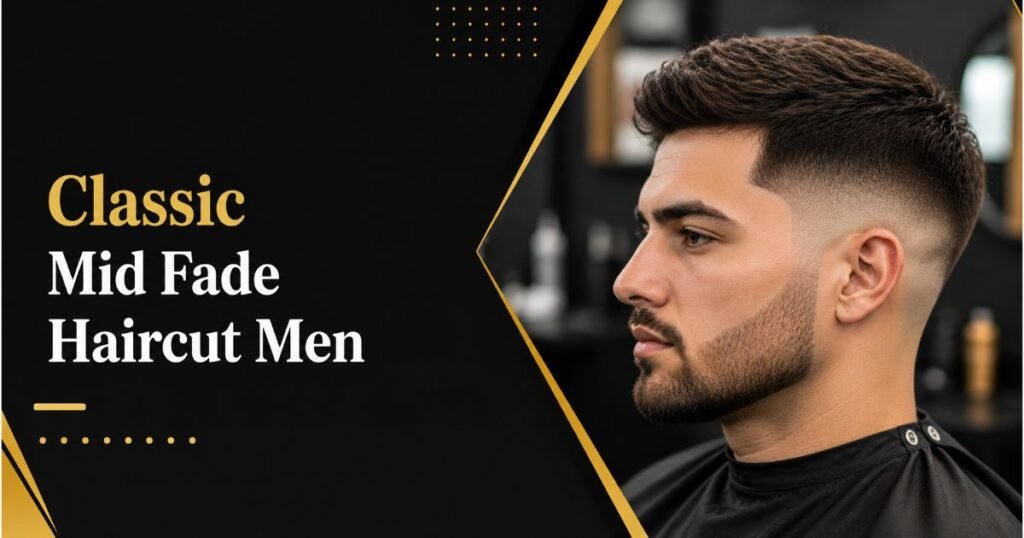
Styling Tip: Work a dime-sized amount of matte clay through damp hair, then comb the top slightly forward or off to one side for texture without shine.
Maintenance: Book a fade refresh every three to four weeks to keep the blend crisp, since the short sides grow out visibly faster than the top. Maintenance and styling times are estimates and may vary by hair type.
Mid Fade Haircut Taper Pompadour
Overview: This pairs the tapered sides of a mid fade with a swept-back, voluminous top, giving a sharper, more formal silhouette than most fade styles.
Why It Works: Thick, straight hair holds the lift best, and the added height at the front balances square or oval face shapes nicely.
Styling Tip: Blow-dry the top backward with a round brush first, then set the shape with a strong-hold pomade for a glossy or matte finish depending on preference.
Maintenance: Daily restyling is required since the volume drops overnight, and a trim every four weeks keeps the sides from overtaking the pompadour’s shape. Maintenance and styling times are estimates and may vary by hair type.
Mid Fade Crew Cut
Overview: A crew cut keeps the top short and uniform, usually under an inch, so the mid fade underneath does most of the visual work.
Why It Works: Any hair type handles this well because there’s minimal length to manage, and it suits round or square faces by adding a bit of vertical structure.
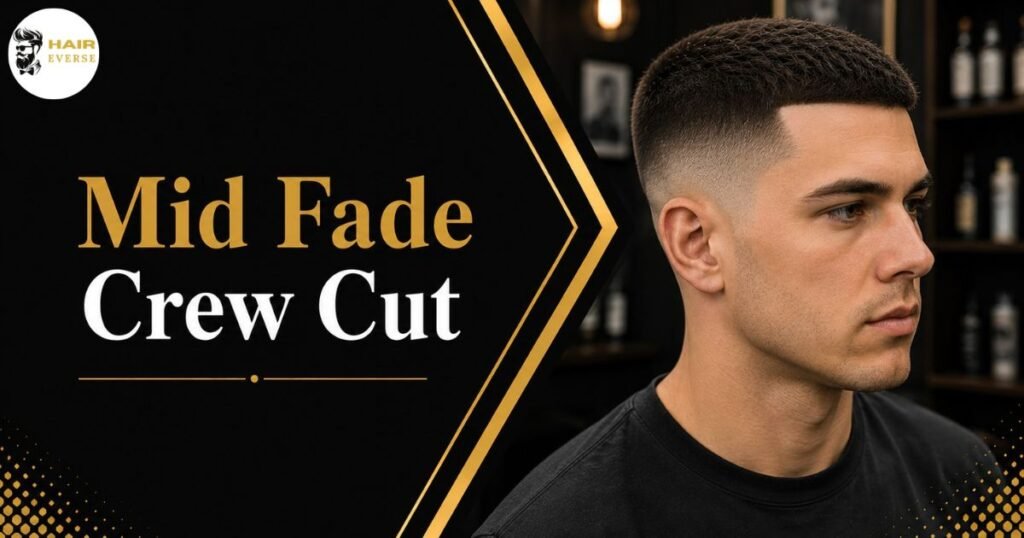
Styling Tip: Rub a small amount of hair cream between your palms and pat it lightly onto the top for texture rather than combing it flat.
Maintenance: This is one of the lowest-upkeep options on the list, needing a trim roughly every three weeks to keep both the fade and top length in check. Maintenance and styling times are estimates and may vary by hair type.
Mid Fade Slick Back
Overview: The top is grown out to three or four inches and combed straight back for a polished, retro-leaning finish that pairs well with the tapered sides.
Why It Works: Straight and wavy hair combs back most smoothly, and the elongated top shape flatters oval and longer face shapes especially well.
Styling Tip: Apply pomade to towel-dried hair and comb it straight back with a fine-tooth comb, working from the front hairline toward the crown.
Maintenance: Expect to restyle daily and trim every five to six weeks, since this style relies on longer top length that grows out slower than shorter cuts. Maintenance and styling times are estimates and may vary by hair type.
Textured Crop Mid Fade
Overview: A textured crop keeps the top around two inches with choppy, layered ends that fall forward into a loose fringe over the tapered sides.
Why It Works: Wavy and straight hair with some natural movement shows off the texture best, and the forward fringe softens round or square face shapes.
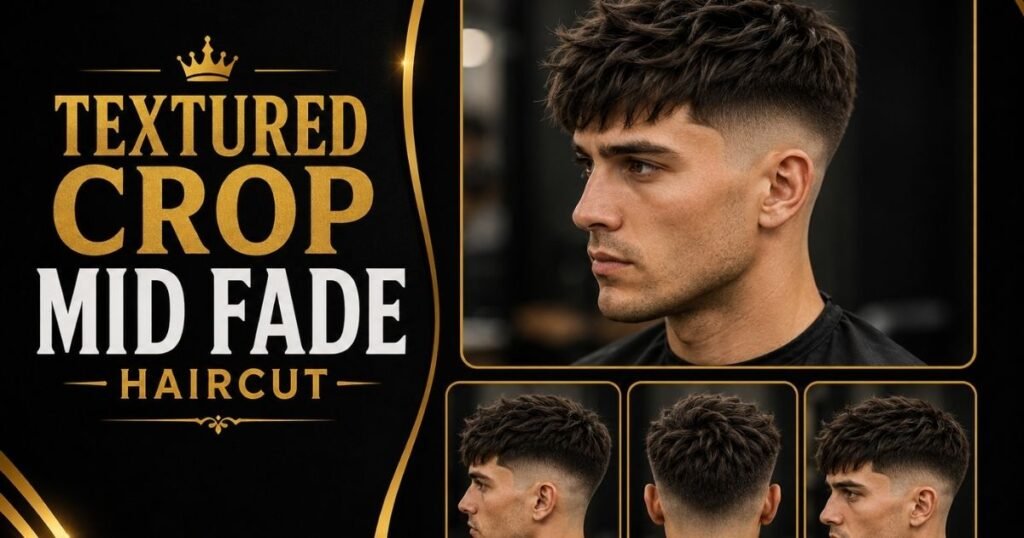
Styling Tip: Scrunch a lightweight matte paste through damp hair with your fingers instead of a comb to keep the choppy, undone texture intact.
Maintenance: A trim every four weeks keeps the layers sharp, and daily restyling only takes a minute since the look is meant to appear slightly undone. Maintenance and styling times are estimates and may vary by hair type.
Mid Fade Comb Over
Overview: This style keeps a defined side part and combs the longer top hair across the head in a clean, controlled sweep.
Why It Works: Straight hair holds the part line most reliably, and the diagonal sweep across the forehead flatters square and oval faces.
Styling Tip: Use a fine comb dipped lightly in pomade to create a crisp part line, then sweep the top hair over in one smooth motion.
Maintenance: Reset the part daily with a comb and product, and schedule a trim every four to five weeks to keep the length manageable. Maintenance and styling times are estimates and may vary by hair type.
Skin Fade Mid Fade
Overview: Here the fade blends all the way down to bare skin at its shortest point, creating the sharpest contrast possible against the longer top.
Why It Works: Any hair texture works since the focus is on the sides, and the strong contrast suits oval and round faces by adding definition.
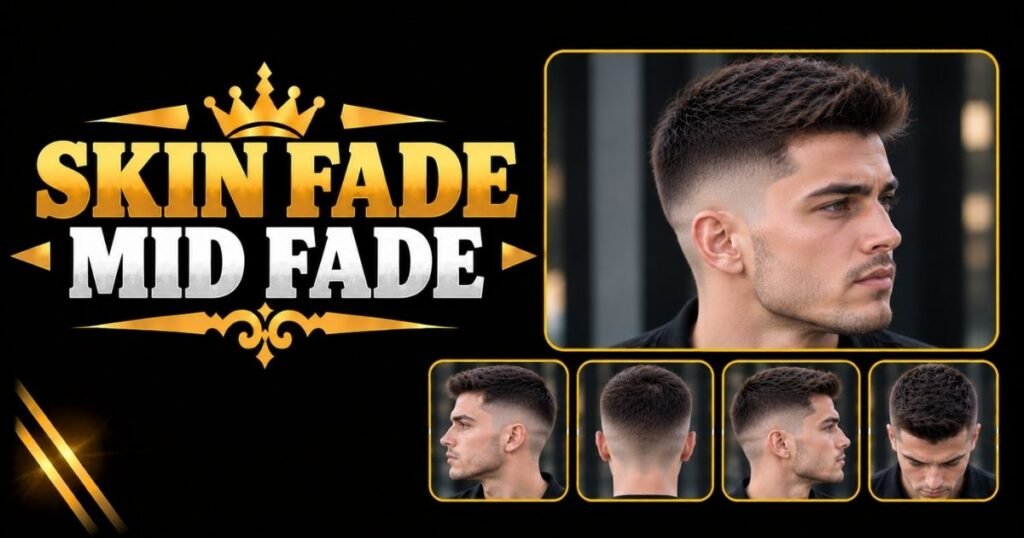
Styling Tip: Keep styling on top simple with a small amount of matte clay so attention stays on the crisp skin-fade line itself.
Maintenance: This is the highest-upkeep fade type, needing a touch-up every two to three weeks before the shaved section starts growing out and softening the line. Maintenance and styling times are estimates and may vary by hair type.
Drop Mid Fade
Overview: Instead of staying level, the fade line curves downward behind the ear, following the natural shape of the skull for a more sculpted look.
Why It Works: This works especially well on any hair type and flatters round or square faces by adding a subtle diagonal line that breaks up wide angles.
Styling Tip: Apply a small amount of sea salt spray to the top before drying for texture that complements the curved fade shape below it.
Maintenance: Because the curve is more detailed than a straight fade line, plan for a touch-up every three weeks to keep the shape crisp. Maintenance and styling times are estimates and may vary by hair type.
Burst Mid Fade
Overview: The fade “bursts” in a rounded, semicircle shape around the ear rather than running in a straight line across the head.
Why It Works: Wavy and curly hair pair especially well with the rounded detailing, and it suits oval or diamond face shapes by softening the sides.
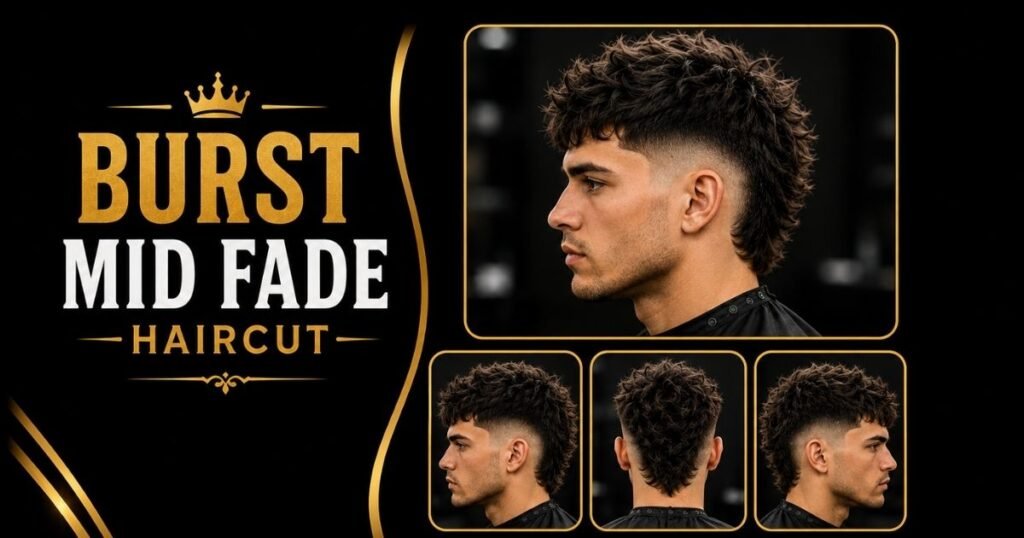
Styling Tip: Keep the top styled loosely with a light cream to avoid competing visually with the rounded fade detail near the ear.
Maintenance: Plan a barber visit every three to four weeks, since the rounded shape needs precise upkeep to avoid looking uneven as it grows out. Maintenance and styling times are estimates and may vary by hair type.
Mid Fade Haircut with Italian Beard: Quiff Haircut
Overview: The top is left longer at the front, around three inches, and styled upward and slightly back into a lifted quiff shape.
Why It Works: Straight and wavy hair hold the lift most consistently, and the height at the front elongates round faces nicely.
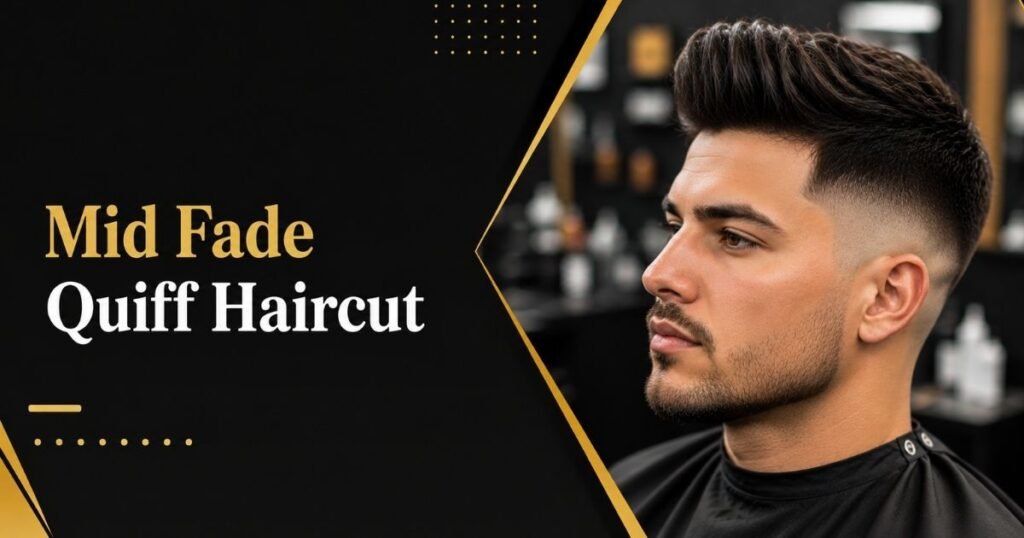
Styling Tip: Blow-dry the front section upward while pulling it with a comb, then lock the shape in place with a strong-hold pomade or gel.
Maintenance: This needs daily restyling and a trim every five weeks to keep the front section from losing its shape as it grows. Maintenance and styling times are estimates and may vary by hair type.
Mid Fade Faux Hawk Haircut
Overview: A faux hawk keeps a raised strip of hair down the center while the sides fade down from the temples, without shaving the sides bare like a true mohawk.
Why It Works: Thick, straight hair builds the center ridge most easily, and the vertical emphasis suits oval and square faces well.
Styling Tip: Apply matte clay to the center section and pinch the hair upward with your fingers while blow-drying to build the ridge shape.
Maintenance: Expect daily restyling and a trim every four weeks, since the center section needs enough length to hold its shape without looking sparse. Maintenance and styling times are estimates and may vary by hair type.
Mid Fade Mohawk
Overview: This takes the faux hawk a step further by fading the sides down to skin, leaving a bold, fully separated strip of longer hair on top.
Why It Works: Thick or coarse hair holds the strip’s shape best, and the bold vertical line suits oval and square faces looking for a statement cut.
Styling Tip: Use a strong-hold wax on the center strip and shape it upward with a fine comb for a sharp, defined edge.
Maintenance: This is a commitment style needing touch-ups every two to three weeks to keep the shaved sides from growing out and blurring the sharp contrast. Maintenance and styling times are estimates and may vary by hair type.
Mid Fade with Curls
Overview: The fade tapers the sides while the natural curl pattern is left mostly untouched on top, letting the texture do the styling work.
Why It Works: This is built specifically for curly and coily hair, and the volume on top suits oval and round faces by adding balanced height.
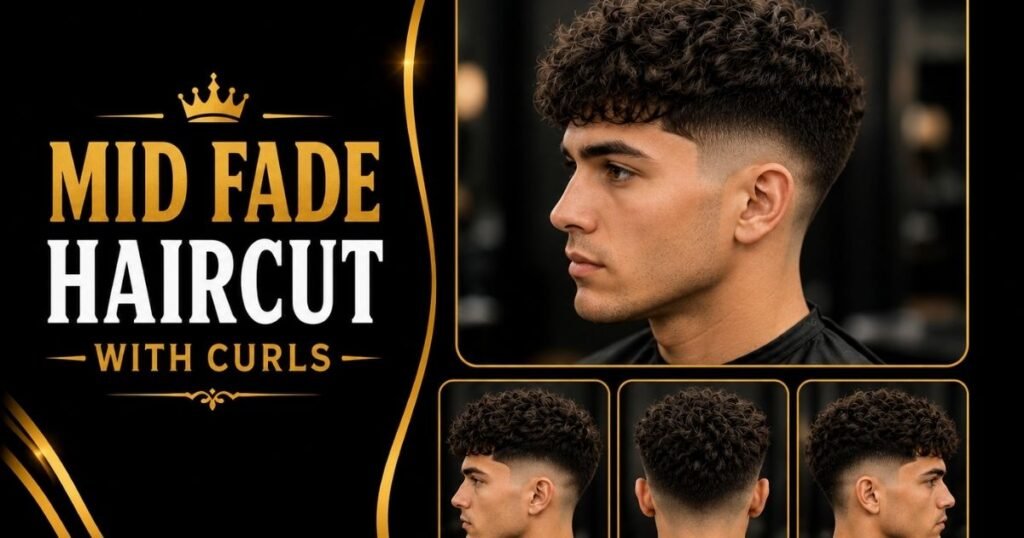
Styling Tip: Apply a curl-defining gel to damp hair and let it air-dry or diffuse on low heat to keep curls defined rather than frizzy.
Maintenance: Curly hair grows outward rather than down, so trims every five to six weeks are usually enough to maintain the fade without disturbing curl shape. Maintenance and styling times are estimates and may vary by hair type.
Mid Fade with Waves
Overview: Short top hair is brushed consistently in one direction to develop a rippled wave pattern, paired with a clean mid fade on the sides.
Why It Works: This works best on coily and curly hair types, and the low, tight silhouette suits oval and round faces.
Styling Tip: Brush the top in a circular pattern with a wave brush after applying a light pomade, then cover with a durag to set the pattern while it dries.
Maintenance: Daily brushing is required to build and maintain the wave pattern, with trims every three to four weeks to keep the fade sharp. Maintenance and styling times are estimates and may vary by hair type.
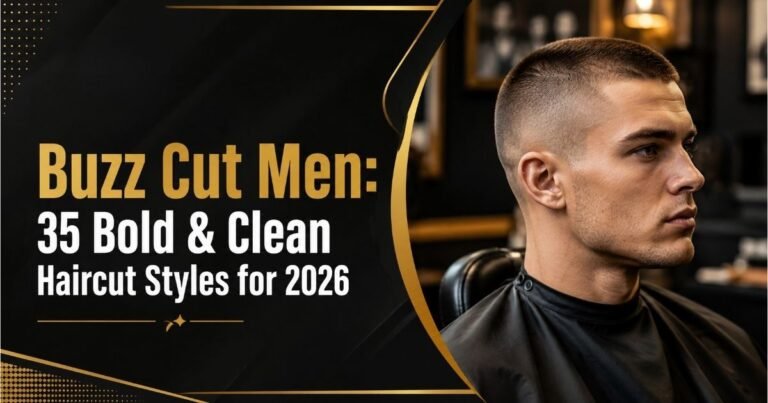
Mid Fade Buzz Cut
Overview: The top is buzzed to a uniform, very short length using clippers, with the mid fade blending seamlessly into it on the sides.
Why It Works: This is the most universal option on the list, working with any hair type or face shape since there’s minimal length to shape.
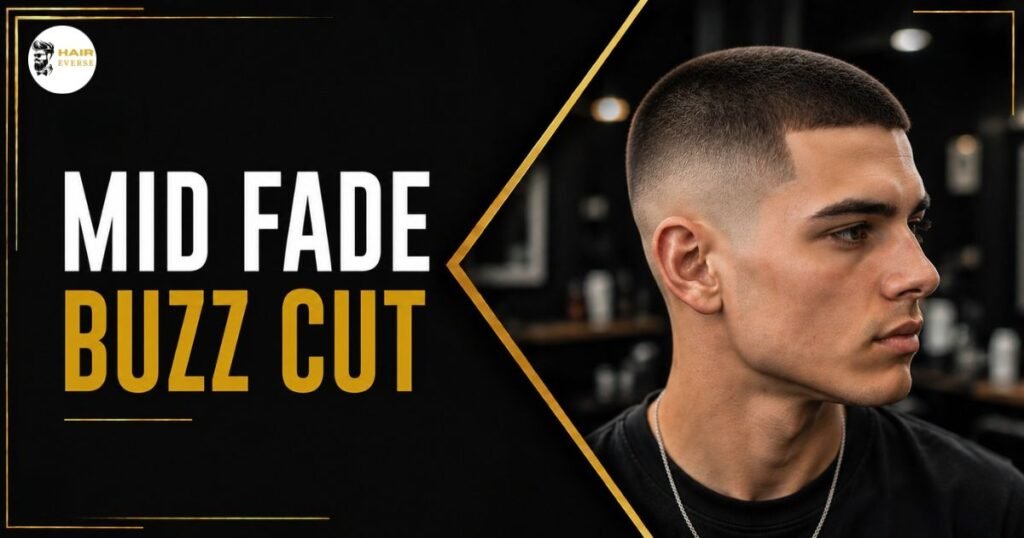
Styling Tip: No product is strictly necessary, but a light matte cream can add subtle texture if you prefer a slightly less flat finish.
Maintenance: This is the lowest-maintenance style here, needing a fresh buzz and fade refresh only every three to four weeks. Maintenance and styling times are estimates and may vary by hair type.
Mid Fade Haircut Short Hair: French Crop
Overview: A French crop keeps the top short and textured with a straight-across fringe that sits just above the eyebrows, paired with the tapered sides.
Why It Works: Straight and wavy hair hold the fringe shape most cleanly, and the horizontal line suits square and diamond face shapes.
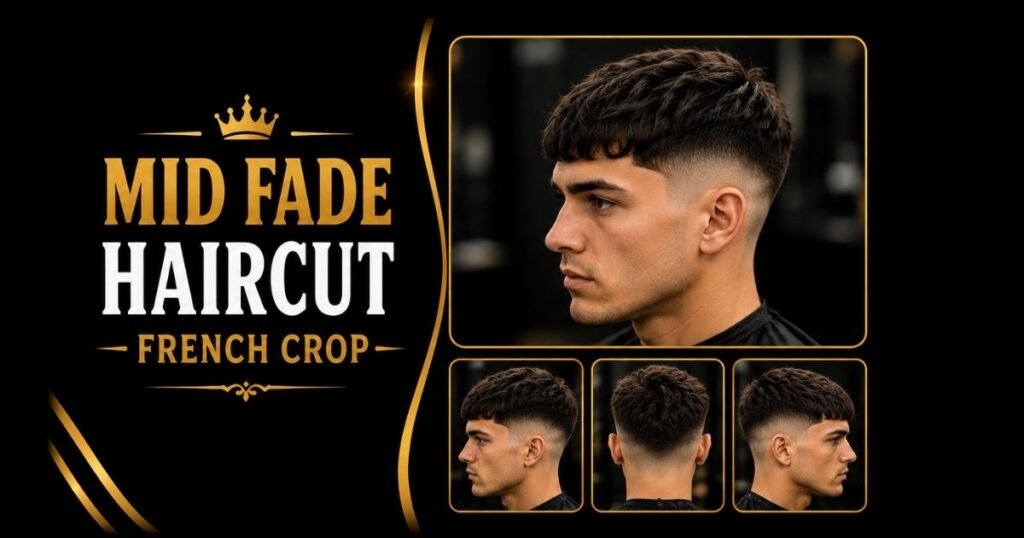
Styling Tip: Work a small amount of matte clay through dry hair and press the fringe downward with your fingers rather than combing it.
Maintenance: A trim every three to four weeks keeps the fringe length in check before it starts falling into the eyes. Maintenance and styling times are estimates and may vary by hair type.
Mid Fade Caesar Cut
Overview: The Caesar cut features short, horizontally cropped hair combed forward into a light fringe, kept simple and close to the head throughout.
Why It Works: This suits straight and wavy hair particularly well, and the short forward fringe flatters oval and round faces without adding height.
Styling Tip: Use a small dab of hair cream to press the fringe forward evenly, keeping the finish matte rather than glossy.
Maintenance: This low-fuss style needs a trim about every four weeks and takes almost no daily styling effort. Maintenance and styling times are estimates and may vary by hair type.
Mid Fade Haircut with Beard
Overview: This pairs any mid fade top style with a well-groomed beard, using the fade’s clean lines to frame and sharpen the beard’s shape.
Why It Works: This combination works with any hair type, and a full beard is especially flattering for long or diamond face shapes since it adds width at the jaw.
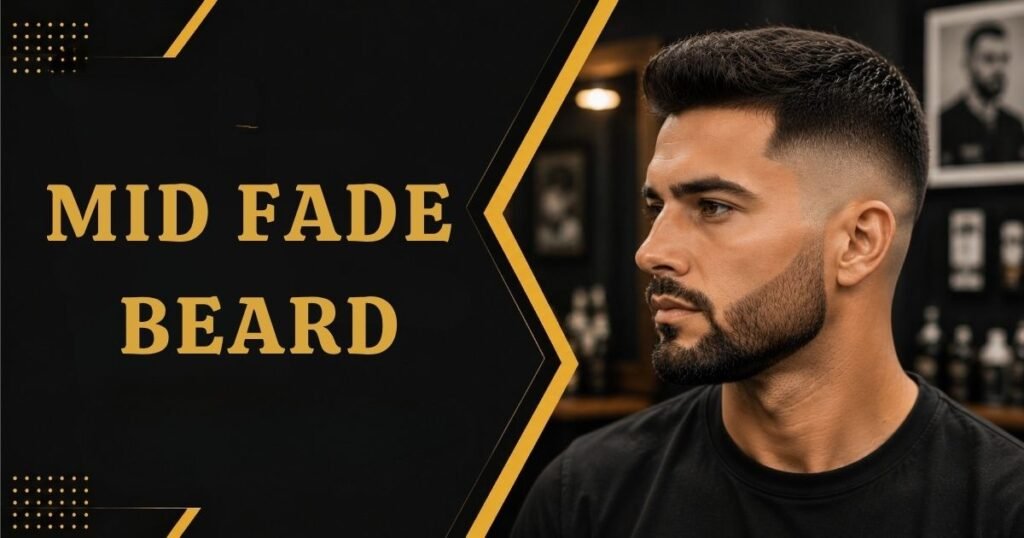
Styling Tip: Brush beard oil through the beard daily to keep it soft, then use a beard trimmer with a guard to maintain a consistent length along the jawline.
Maintenance: Trim the beard every one to two weeks between fade appointments to keep both elements looking equally sharp and intentional. Maintenance and styling times are estimates and may vary by hair type.
Mid Fade Haircut Spiky Top
Overview: One to three inches of top hair is styled upward into defined spikes, contrasting sharply against the clean, tapered sides.
Why It Works: Straight hair holds spikes most reliably, and the upward texture adds definition that suits round or oval faces.
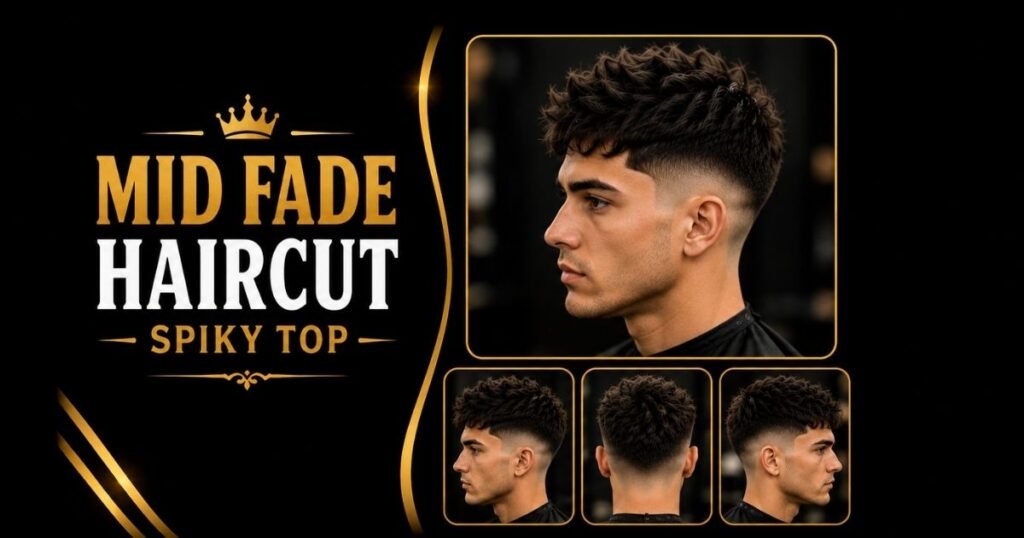
Styling Tip: Apply a strong-hold matte paste to dry hair and pull small sections upward between your fingers to create separated, textured spikes.
Maintenance: This needs daily restyling and a fade refresh every three weeks to keep the sides from softening the spiky contrast on top. Maintenance and styling times are estimates and may vary by hair type.
Mid Fade Undercut Haircut
Overview: The sides are cut short and disconnected from the noticeably longer top, with the mid fade blending the transition rather than leaving a hard line.
Why It Works: Thick, straight hair shows the disconnect most clearly, and the structured top suits oval and square face shapes.
Styling Tip: Style the top with matte clay worked through damp hair, pushing it slightly forward or to the side for a modern, textured pomp.
Maintenance: Trim every four to five weeks and expect daily restyling, since the longer top needs regular shaping to keep its structure. Maintenance and styling times are estimates and may vary by hair type.
Mid Fade with Fringe
Overview: The top is grown out and styled forward into a soft fringe that falls across the forehead, softened by the mid fade underneath.
Why It Works: Wavy and curly hair fall into a natural fringe shape easily, and the forward styling suits long or square face shapes by shortening the visual length of the face.
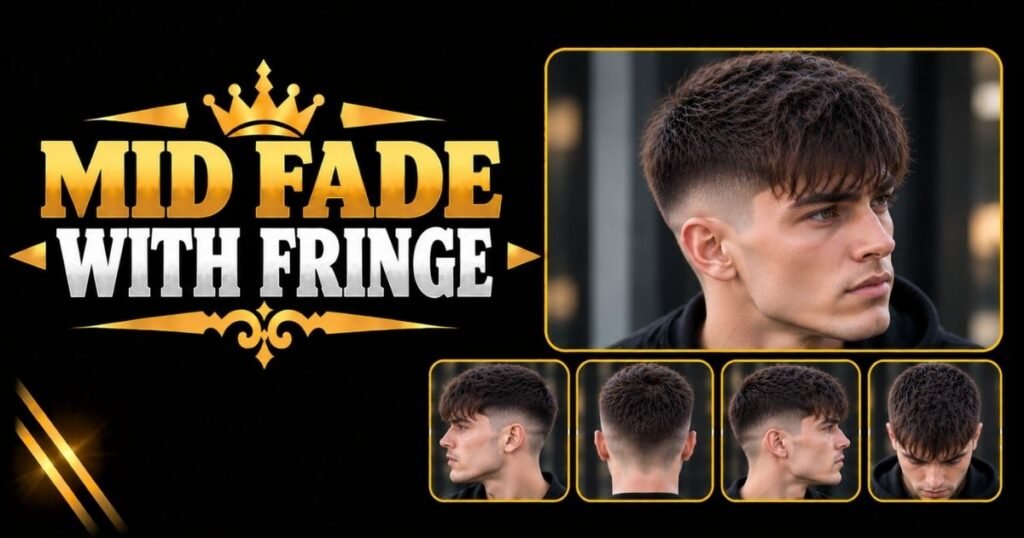
Styling Tip: Apply a light cream to damp hair and comb the fringe forward and slightly to one side rather than straight down.
Maintenance: Light trims every three to four weeks keep the fringe from covering the eyes while preserving its natural fall. Maintenance and styling times are estimates and may vary by hair type.
Mid Fade Side Part
Overview: A defined, shaved or combed side part separates the top hair cleanly, giving a polished, business-appropriate finish above the fade.
Why It Works: Straight hair holds the part best, and the clean geometric line flatters oval and round face shapes.
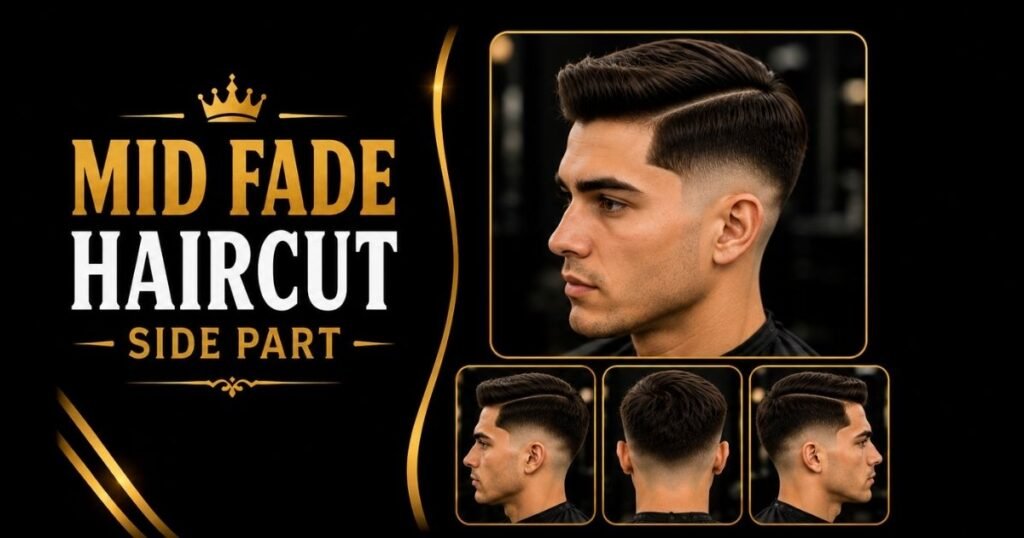
Styling Tip: Comb a small amount of pomade through the part line while hair is damp, then reinforce the part daily with a fine comb.
Maintenance: A trim every four weeks keeps the part crisp, and daily combing is needed to maintain the clean line. Maintenance and styling times are estimates and may vary by hair type.
Mid Fade Haircut Curly Hair
Overview: This keeps three to four inches of curl length on top, left loose and voluminous, while the sides taper down cleanly at the temples.
Why It Works: Naturally curly or coily hair is required to hold this shape, and the volume balances round and oval faces particularly well.
Styling Tip: Apply curl cream to soaking-wet hair and scrunch upward from the ends to the roots, then air-dry without touching it further.
Maintenance: Trims every six to eight weeks are usually enough, since curly hair shows length loss more slowly than straight hair. Maintenance and styling times are estimates and may vary by hair type.
Mid Fade Man Bun
Overview: Longer top hair, usually four inches or more, is gathered and tied into a small bun while the sides stay tapered and clean underneath.
Why It Works: This works for thick and long hair types, and the elevated shape suits oval and square faces by drawing the eye upward.
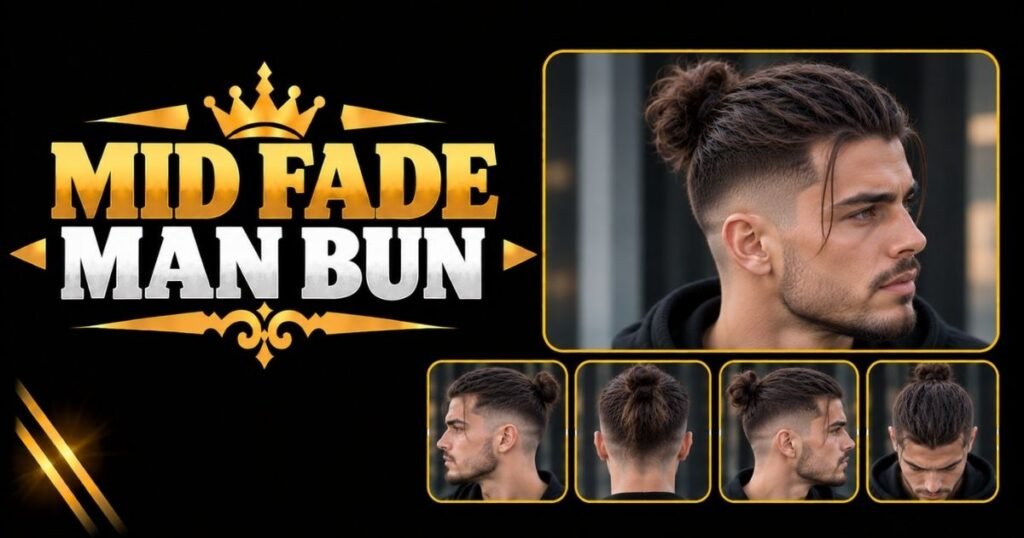
Styling Tip: Use a small amount of hair cream to smooth flyaways before tying the bun with a soft elastic to avoid breakage.
Maintenance: The top only needs a trim every couple of months to keep it healthy, though the fade itself still needs refreshing every four weeks. Maintenance and styling times are estimates and may vary by hair type.
Mid Fade Haircut for Boys: Blowout
Overview: The top is blow-dried upward and outward for maximum volume and fullness, creating a lifted, airy shape above the tapered sides.
Why It Works: This holds best on thick or curly hair, and the added volume suits oval and round faces looking for extra height.
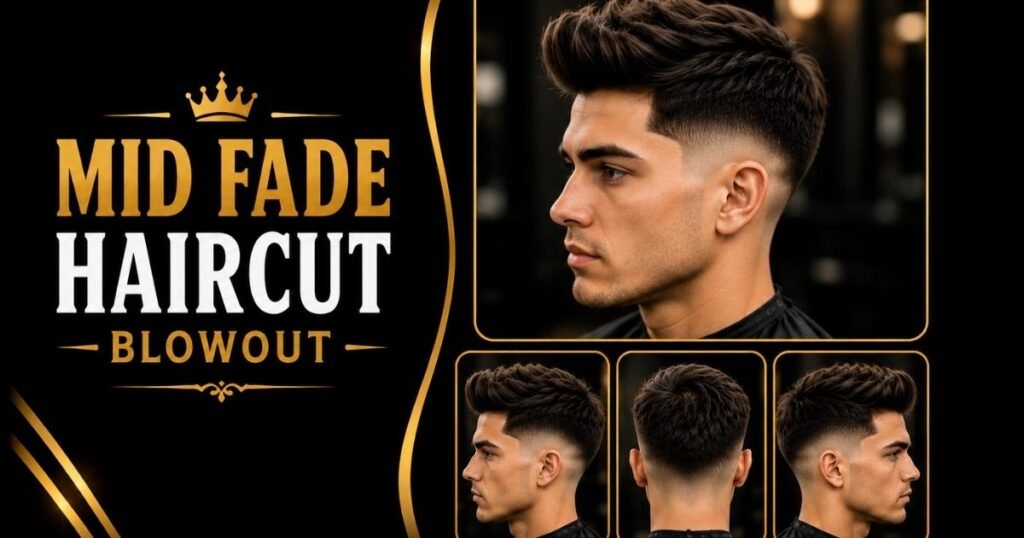
Styling Tip: Blow-dry upward with a round brush while the hair is damp, then finish with a sea salt spray for texture and hold without weighing it down.
Maintenance: Daily blow-drying is required to maintain the volume, with a fade touch-up every three to four weeks to keep the sides clean. Maintenance and styling times are estimates and may vary by hair type.
How to Choose the Right Hairstyle
Picking a mid fade variation comes down to two things: your natural hair type and your face shape. Here’s a beginner-friendly starting point for both.
By Hair Type:
- Thick hair: Handles bold shapes well, try the pompadour, faux hawk, or blowout.
- Thin hair: Shorter, cleaner styles like the crew cut or buzz cut prevent the top from looking flat or sparse.
- Curly hair: Styles built around natural texture, like the curly top or wave pattern, work with the hair instead of against it.
- Straight hair: Most versatile category nearly every style on this list works well, especially the slick back and comb over.
- Wavy hair: Textured crops and fringe styles let the natural movement show through.
By Face Shape:
- Oval: Nearly every mid fade style works; this is the most flexible face shape.
- Round: Styles with height on top, like the quiff or spiky top, add visual length.
- Square: Softer, textured tops like the crop or fringe balance strong jawlines.
- Long: Fuller top styles like the man bun or fringe help shorten the face visually.
How to Ask Your Barber for a Mid Fade
Clear communication is the difference between getting exactly what you pictured and leaving disappointed. Use these tips at your next appointment:
- Bring one or two reference photos instead of describing it from memory
- Point to exactly where you want the fade to start, around the temple area
- Explain how much length you want left on top, in inches if possible
- Mention your daily styling routine so the cut works with your real schedule
- Ask about maintenance frequency before you sit down, not after
- Confirm the final shape and length with your barber before they put the clippers away
Product Recommendations for Mid Fade Haircuts
Hair Cream Best For: Low-shine, natural-looking texture on shorter styles How to Use: Rub a dime-sized amount between palms and work through damp or dry hair with fingertips
Pomade Best For: Slick backs, comb overs, and side parts needing a defined finish How to Use: Warm a small amount in your palms and comb through damp hair for a controlled shape
Wax Best For: Spiky tops and faux hawks needing strong hold with texture How to Use: Rub between fingers until pliable, then apply to dry hair in the direction you want it to hold
Matte Clay Best For: Textured crops and pompadours needing volume without shine How to Use: Apply to towel-dried hair and mold with fingers rather than a comb for a more natural finish
Shampoo Best For: Keeping the scalp clean around fade lines where product buildup shows easily How to Use: Use two to three times a week, focusing on the scalp rather than just the lengths
Conditioner Best For: Keeping longer top sections, like curls or a man bun, soft and manageable How to Use: Apply from mid-length to ends after shampooing, then rinse thoroughly to avoid weighing hair down.
Confuse to Get Right Haircut
- Long hairstyles for men open up styling options once hair passes the ears and reaches the collar or shoulders, making room for waves, layers, buns, and ponytails. This guide covers modern long styles like the wolf cut, man bun, and layered flow, matched to hair texture and face shape, with tips on keeping longer hair manageable and sharp.
- Big forehead hairstyles rely on the right fringe, height, and fade choices to soften a wider forehead rather than emphasize it. This guide covers modern cuts matched to hair type and face shape, so you can find a style that balances your proportions and stays easy to maintain.
- Beard fade styles blend facial hair smoothly into a clean, defined edge, creating a sharper jawline without a harsh, obvious line. This guide covers modern fade variations matched to face shape, hair texture, and beard length, with tips on getting a seamless blend that looks polished day to day.
- Side part haircuts for men offer a timeless, versatile look that works across hair types and face shapes, from classic hard parts to modern textured finishes. This guide covers 35 trending styles for 2026, with styling tips to help you find a clean, easy-to-maintain part that suits your everyday routine.
- The undercut haircut pairs short, clipped sides with a noticeably longer top, creating sharp contrast that can be kept as a hard line or blended into a smooth fade. This guide covers 35 undercut and undercut fade styles, matched to hair type and face shape, with barber tips to help you get the exact look you want.
- Hairstyles for men in 2026 range from low-maintenance buzz cuts and crew cuts to bold textured tops like spikes, quiffs, and undercuts, giving guys options for nearly every hair type, face shape, and lifestyle. This guide rounds up 35 of the best styles for the year, with tips on matching a cut to your hair texture and upkeep routine so you walk out of the barbershop with a look that actually works for you.
- There’s no shortage of styles worth exploring once you’ve nailed the basics. If you like a textured, tousled look, compare wolf cut vs shag cut or browse our full roundup of wolf cut hairstyles.
- For sharper, cleaner options, check out our picks for professional hairstyles and professional hairstyles for men, or the classic structure of a pompadour hairstyle and a slick back hairstyle.
- If you spend a lot of time outdoors, our guide to the surfer hairstyle for men is worth a look, and for something globally inspired, see our take on Korean hairstyles for men.
- Fans of low-maintenance fades should check our breakdown of low fade vs mid fade vs high fade, the low taper fade, and our full list of low-maintenance men’s haircuts.
- If you’re keeping things sharp and structured, our guides to the high and tight haircut, middle part hairstyles for men, an over-50 old man fade haircut, and long hairstyles for men round out the options.
- Once you’ve picked a style, the right products and pricing knowledge go a long way. Our comparison of pomade or hair clay helps you choose the right finish, and our broader hair products guide covers everything else you’ll need.
- If you’re curious about what to budget for your next visit, our breakdown of men’s haircut prices offers a helpful benchmark.
- For readers on the business side of barbering, we’ve got you covered too. Learn how to find a good barber or how to ask your barber for a fade to get exactly what you want in the chair.
- If you’re thinking about opening your own shop, our guides on the cost to open a barber shop, tips to start a successful barbershop, advice on business banking and the QBI deduction, strategies to build a loyal clientele as a new barber, and our list of barbershop marketing ideas cover everything from day one to long-term growth.
Final Thoughts
A mid-fade haircut earns its popularity honestly; it’s specific enough to ask for with confidence, yet flexible enough to match nearly any hair type, face shape, or lifestyle. Whether you’re after the low-effort simplicity of a buzz cut or the styled precision of a pompadour, there’s a version on this list built for how you actually want to spend your mornings.
Don’t be afraid to try a few variations before settling on your go-to. Hair grows back, and a barber who understands mid fades can usually adjust length or shape at your next visit if something doesn’t feel quite right. Bring a reference photo, ask the questions above, and you’ll walk out with a cut that matches what you pictured.
FAQs
Does hair texture affect how long a fade lasts?
Yes, coarser or curlier hair tends to hide regrowth better than straight, fine hair. This is why many Black men’s fades hold their shape longer between cuts.
Which fade is easiest to maintain at home?
A low fade is the easiest since the blend is subtle and regrowth isn’t very noticeable. It gives you more flexibility if you can’t get to the barber right away.
Do skin fades need more frequent touch-ups than regular fades?
Yes, skin fades show regrowth faster since the skin is fully exposed at the fade line. Most people need a touch-up every 1-2 weeks to keep it crisp.
Can the right products help a fade last longer?
Yes, using a light pomade or edge control can keep hairlines and fade lines looking sharp longer. Regular moisturizing also prevents the top from looking dry or unkempt as it grows.
Does the barber’s technique affect how long a fade holds up?
Absolutely, a well-blended fade with gradual transitions grows out more evenly than a rushed cut. A skilled barber’s work simply looks cleaner for longer.
Is it better to get a fade more often or let it grow out fully between cuts?
Getting touch-ups every 1-3 weeks keeps the style consistently sharp. Letting it grow out fully means a bigger change each time and less shape retention in between.