How To Start a Successful Barbershop: Modern Steps For A Sharp Business
Cutting hair well and running a shop that survives its first year are two different skill sets, and most new owners only train for the first one. If you want to start a successful barbershop, you need a plan that covers licensing, money, location, and staffing before you ever hang a sign.
Starting a shop can feel overwhelming because there are so many moving parts to manage. To start a successful barbershop, every decision from choosing the right location to setting prices and marketing your services matters.
Barbershop Startup Steps At A Glance
Compare different strategies to start a successful barbershop based on startup cost, effort, time to results, and long-term growth potential.
| Step | Priority | Typical Cost | Timeframe |
| Get Your Barbering License | High | $5,000-$15,000 (training) | 6-18 months |
| Write A Business Plan | High | Low | 1-2 weeks |
| Choose Your Niche And Brand | High | Low | 1-2 weeks |
| Secure Startup Funding | High | Varies | 1-3 months |
| Choose The Right Location | High | Medium-High | 1-2 months |
| Handle Legal Structure & Permits | High | Low-Medium | 2-4 weeks |
| Get Business Insurance | High | Medium | 1 week |
| Design And Build Out Your Shop | Medium | High | 1-3 months |
| Buy Equipment And Supplies | Medium | Medium-High | 2-4 weeks |
| Set Up Booking And POS Software | Medium | Low-Medium | 1 week |
| Set Your Pricing And Service Menu | Medium | Low | 1 week |
| Hire Licensed Barbers | High | Medium | 1-2 months |
| Build Your Online Presence | Medium | Low-Medium | 2-4 weeks |
| Launch Your Marketing Plan | Medium | Low-Medium | Ongoing |
| Focus On Client Retention | High | Low | Ongoing |
Start a Successful Barbershop Comparison
The start a successful barbershop comparisons gives you a side-by-side look at the key factors involved in launching a profitable barbershop, including startup costs, effort, time to results, and long-term benefits.
Get Your Barbering License
Overview: Every state requires a barbering license before you can legally cut hair for pay, let alone own a shop. Requirements typically include a set number of training hours at an accredited school plus a licensing exam through your state board.
Why It Matters: Operating without a valid license can lead to fines or forced closure, and it undermines client trust from day one.
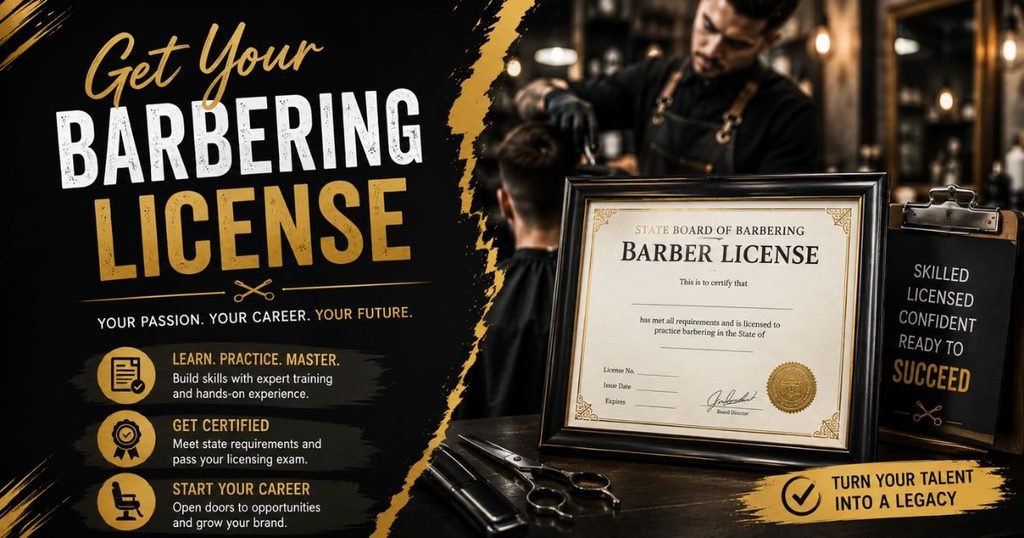
Actionable Tip: Check your specific state board’s hour requirements before enrolling, since they range widely some states require under 1,000 hours, others require closer to 1,500.
Common Pitfall: Don’t assume licensing transfers automatically between states if you plan to open somewhere new; many require reciprocity paperwork or additional exam hours.
Write A Business Plan
Overview: A business plan lays out your target market, services, pricing, and financial projections. It’s the document lenders and investors will ask for first.
Why It Matters: Without a written plan, it’s easy to underestimate costs or overestimate how fast revenue will grow.
Actionable Tip: Include an executive summary, market analysis, service menu, staffing plan, and a 12-month cash flow projection even a rough one is better than none.
Common Pitfall: Many first-time owners skip the cash flow projection because it feels tedious, then get blindsided by slow months two and three.
Choose Your Niche And Brand Identity
Overview: Decide what kind of barbershop you’re building a fast, affordable walk-in shop, a premium appointment-only lounge, or something family-focused.
Why It Matters: Your niche shapes your pricing, location, decor, and marketing, so choosing it early prevents costly rebranding later.
Actionable Tip: Look at gaps in your local market if every nearby shop targets budget clients, a mid-range or premium option may have less competition.
Common Pitfall: Trying to serve everyone usually means standing out to no one; a clear niche makes marketing dramatically easier.
Secure Startup Funding
Overview: Most new barbershops cost between $30,000 and $75,000 for a small location, or $75,000 to $200,000 for a larger or franchise build-out. Funding options include personal savings, small business loans, and investors.
Why It Matters: Undercapitalizing is the most common reasons new shops struggle you need enough runway to cover slow early months, not just opening costs.
Actionable Tip: Budget for at least three months of operating expenses beyond your build-out costs as a cash buffer.
Common Pitfall: Owners often forget ongoing costs like insurance, software subscriptions, and payroll when calculating how much funding they actually need.
Choose The Right Location
Overview: Foot traffic, visibility, and nearby competition all affect how fast a new shop builds a client base.
Why It Matters: A great haircut in a hard-to-find location still struggles to attract walk-ins.
Actionable Tip: Research what nearby barbershops charge and offer before signing a lease, and look for underserved niches rather than opening next to an established competitor.
Common Pitfall: Chasing the cheapest available rent can backfire if the location has low visibility or poor parking.
Handle Legal Structure And Permits
Overview: You’ll need to choose a legal structure sole proprietorship, LLC, partnership, or corporation and register your shop with local authorities.
Why It Matters: An LLC or corporation generally protects your personal assets if the business faces legal trouble, which a sole proprietorship doesn’t.
Actionable Tip: Check with your city or county about barbershop-specific permits, which are often separate from your individual barbering license.
Common Pitfall: Some new owners register a business name without checking trademark conflicts or domain availability first.
Get Business Insurance
Overview: Barbershops typically need general liability insurance, and if you have staff, workers’ compensation coverage as well.
Why It Matters: A single slip-and-fall claim or product reaction complaint without insurance can be financially devastating for a small shop.
Actionable Tip: Ask providers specifically about coverage for razor or chemical-related incidents, since standard policies don’t always include this.
Common Pitfall: Skipping workers’ compensation because staff are “just renting chairs” can be a costly assumption verify how your state classifies booth renters.
Design And Build Out Your Shop
Overview: Your build-out covers flooring, seating, lighting, plumbing for wash stations, and the overall look that matches your brand.
Why It Matters: The physical space is part of your client experience comfortable seating and good lighting affect how long clients stay and how they perceive quality.
Actionable Tip: Prioritize plumbing and electrical work early in the build-out, since these are the most expensive to change later.
Common Pitfall: Overspending on decor before nailing down functional basics like enough outlets per station.
Buy Equipment And Supplies
Overview: Core equipment includes barber chairs, clippers, trimmers, styling tools, and sanitation supplies for every station.
Why It Matters: Reliable equipment reduces downtime and injury risk, both of which affect client experience and staff retention.
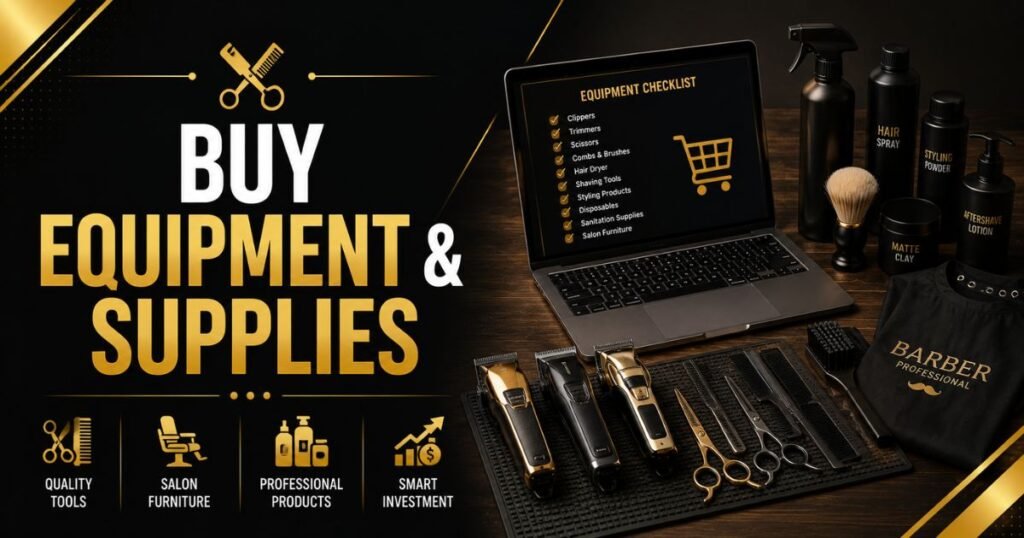
Actionable Tip: Buy commercial-grade clippers and chairs rather than salon-consumer versions they’re built for daily, all-day use.
Common Pitfall: Underbudgeting for sanitation supplies, which are a recurring cost, not a one-time purchase.
Set Up Booking And POS Software
Overview: Booking platforms like Booksy, Vagaro, or Square Appointments let clients schedule online, while a POS system handles payments and tracks sales.
Why It Matters: Online booking reduces no-shows and makes it easier for clients to rebook right after their appointment.
Actionable Tip: Choose software that combines booking and payments in one system to avoid juggling multiple subscriptions and reports.
Common Pitfall: Picking software based on price alone without checking if it supports your specific service menu or staff scheduling needs.
Set Your Pricing And Service Menu
Overview: Your service menu should reflect your niche a premium shop can charge more for add-ons like hot towel shaves, while a fast walk-in shop competes on speed and value.
Why It Matters: Pricing too low to “win on price” often backfires by attracting high volume with thin margins that don’t cover payroll and rent.
Actionable Tip: Price against what similar-quality shops in your specific area charge, not a national average.
Common Pitfall: Forgetting to periodically revisit pricing as costs rise many shops go years without an increase.
Hire Licensed Barbers
Overview: Whether you hire employees or rent chairs to independent barbers, every barber working in your shop needs a valid state license.
Why It Matters: Your shop’s reputation depends heavily on the consistency and skill of everyone behind the chair, not just you.
Actionable Tip: Look for barbers whose style and personality match your brand, not just technical skill client rapport drives repeat visits.
Common Pitfall: Rushing to fill chairs with the first available barber rather than someone who fits long-term, which often leads to turnover.
Build Your Online Presence
Overview: A basic website plus optimized Google Business Profile and Yelp listing help new clients find you and see accurate hours, location, and reviews.
Why It Matters: Most people research a barbershop online before their first visit, and incomplete or inconsistent listings cost you bookings.

Actionable Tip: Keep your business name, address, and phone number identical across every platform to avoid confusing local search results.
Common Pitfall: Launching a website without a clear way to book an appointment directly from it.
Launch Your Marketing Plan
Overview: Social media, local partnerships, and referral incentives are the most common ways new barbershops build initial awareness.
Why It Matters: Even the best haircuts won’t fill your chairs if no one in the area knows your shop exists.
Actionable Tip: Post before-and-after photos consistently on Instagram, since visual proof of skill is one of the strongest conversion tools for barbershops.
Common Pitfall: Treating marketing as a one-time launch task instead of an ongoing weekly habit.
Focus On Client Retention
Overview: A loyal repeat client base is more valuable long-term than constantly chasing new walk-ins, and it’s built through consistency and rapport.
Why It Matters: Retained clients also refer friends and family, which lowers your overall marketing costs over time.

Actionable Tip: Encourage clients to rebook their next appointment before they leave the chair, rather than hoping they call later.
Common Pitfall: Overbooking barbers so tightly that cut quality or friendliness slips consistency is what keeps clients coming back.
How To Choose The Right Business Model For You?
Not every barbershop should be built the same way. Use your budget and experience level as a starting filter:
Low budget, first-time owner: Consider a booth-rental model, where you lease chairs to independent barbers instead of hiring staff outright this lowers your fixed payroll risk.
Medium budget, experienced barber: A traditional employee-based shop with a moderate service menu balances control over quality with manageable overhead.
Higher budget, brand-focused owner: A premium, appointment-only lounge with an expanded service menu (facials, hot towel shaves) can command higher prices but requires stronger upfront marketing and design investment.
Family-focused market: A walk-in-friendly shop with flexible scheduling and a wider price range tends to perform well in suburban areas with a mix of adult and kids’ cuts.
How To Talk To Lenders And Landlords?
- Securing funding and a lease both come down to how prepared you look on paper. Keep these in mind:
- Bring your written business plan, not just a verbal pitch
- Have realistic financial projections, including slow-month scenarios
- Know your target lease terms (length, build-out allowance, exclusivity clauses) before negotiating
- Ask about hidden costs like common area maintenance fees
- Get any verbal promises from a landlord in writing before signing
- Compare at least two to three funding or lease options before committing
Keep Exploring
You’re planning to start a successful barbershop, offering a variety of popular styles can help attract different types of clients. Explore our guide to military haircuts for men for clean, practical styles that can be a useful addition to your barbershop’s service menu
Our guide to straight hair styles for men provides useful inspiration for clean, versatile looks you can consider adding to your service menu.
When you start a successful barbershop, offering timeless styles alongside modern cuts. Explore our guide to the slick back hairstyle for a polished, versatile look that can be a valuable addition to your barbershop’s service menu
A key step to start a successful barbershop is offering modern styles that match your clients’ needs. Explore these professional hairstyles for fresh inspiration and ideas for your barbershop services.
Equipment And Software Recommendations
- Barber Chairs Best For: Daily, all-day client turnover How To Use: Choose hydraulic chairs with easy-clean upholstery and confirm they meet your local sanitation code.
- Clippers & Trimmers Best For: Core cutting and detail work How To Use: Invest in commercial-grade cordless clippers with swappable blades to reduce downtime between clients.
- Booking Software Best For: Reducing no-shows and enabling online scheduling How To Use: Set automated reminder texts and require a card on file for new-client bookings to cut down last-minute cancellations.
- POS System Best For: Payment processing and sales tracking How To Use: Choose a system that also tracks product inventory if you plan to sell retail grooming products.
- Business Insurance Best For: Protecting against liability and property claims How To Use: Bundle general liability and property coverage where possible to reduce overall premium costs.
- Sanitation Supplies Best For: Health code compliance and client safety How To Use: Stock hospital-grade disinfectant for tools and restock weekly rather than waiting until supplies run low.
Final Thoughts
Opening a barbershop that lasts isn’t about one big decision it’s about handling licensing, money, location, and staffing in the right order so nothing catches you off guard later. Once the fundamentals are in place, the shops that thrive are the ones that stay consistent: same quality cut, same friendly welcome, every single visit.
If you’re just starting to plan, don’t feel like you need every step finished before moving forward. Nail your licensing and business plan first, then build out from there.
FAQs
How much does it cost to Open a Barbershop?
Most small barbershops cost between $30,000 and $75,000 to open, covering build-out, equipment, and initial licensing. Larger locations or franchise builds can run $75,000 to $200,000, depending on city and square footage
Do I need a License to Open a Barbershop?
Yes, every state requires a barbering license to legally cut hair, and many require additional local permits to operate a shop. Licensing typically involves completed training hours plus passing a state board exam.
What Equipment do I need to start a Barbershop?
Core equipment includes barber chairs, clippers, trimmers, styling tools, sanitation supplies, and a POS system. Booking software is also considered essential for managing appointments and reducing no-shows.
How Long does it take to Open a Barbershop?
Once licensed, most owners spend three to six months on planning, funding, location, build-out, and hiring before opening day. Licensing itself can take six to eighteen months depending on your state’s required training hours.
What’s the Difference Between a Barbershop and a Slon?
Barbershops traditionally focus on men’s haircuts, beard trims, and shaves, while salons offer a broader range of services including coloring and chemical treatments. Licensing requirements can also differ between the two in some states.