How Much Does It Cost to Open Barber Shop? 2026 Startup Costs & Growth Guide
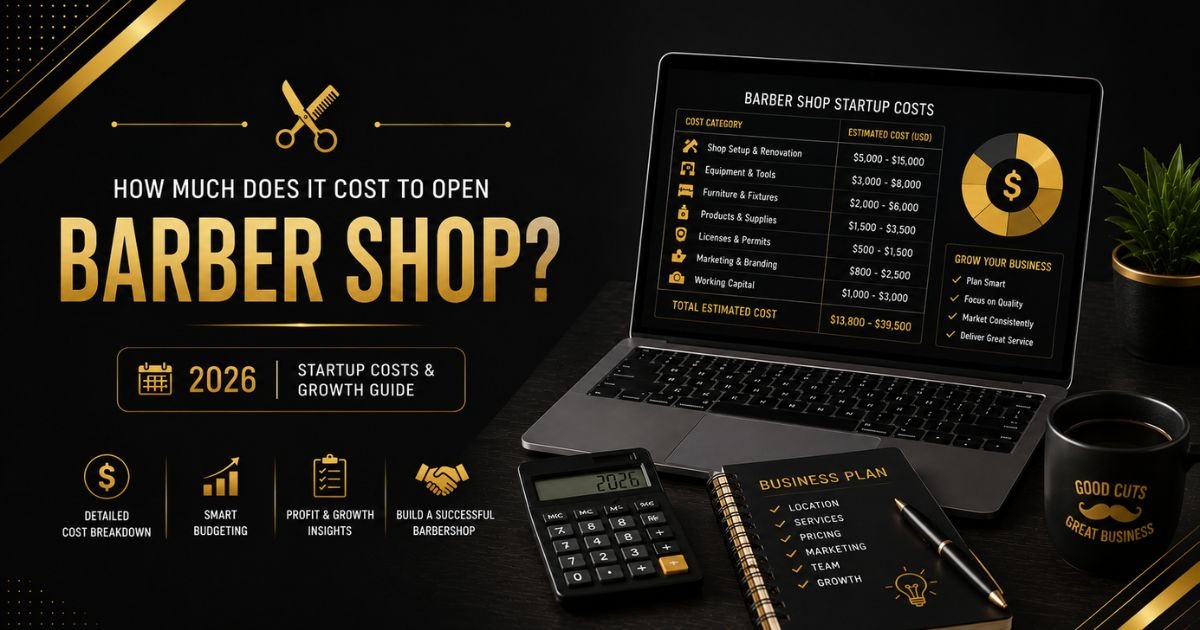
Cost to Open Barber Shop typically lies between $25,000 and $200,000, depending on location, chair count, and build-out needs. Major expenses include rent and renovation, barber chairs and stations, licensing and insurance, tools and supplies, technology, and initial marketing. Most owner-operated shops with 2–4 chairs land between $50,000 and $150,000.
You’ve already noticed the problem with most cost guides: the numbers swing wildly from $25,000 to $250,000, and none of them explain which decisions actually affect the cost to open barber shop.
Cost to Open Barber Shop at a Glance :
The Cost to open barber shop can vary significantly depending on location, shop size, equipment, renovations, licenses, and marketing.
| Shop Size | Chairs | Typical Startup Cost | Best For |
| Booth rental | 1 | $5,000–$15,000 | Building clientele before owning a shop |
| Small shop | 2–3 | $25,000–$50,000 | Owner-operator, tight budget |
| Standard shop | 3–5 | $50,000–$150,000 | Classic neighborhood barbershop |
| Premium shop | 5–8+ | $150,000–$250,000+ | Upscale, high-traffic location |
Cost to Open Barber Shop startup Categories :
This guide breaks barbershop startup costs into clear categories so you can build a realistic budget, then walks through the marketing moves that help new shops fill chairs once the doors open.
Location, Rent & Lease Deposits
Typical range: $2,000–$20,000 upfront
Landlords usually want a security deposit plus first and sometimes last month’s rent before you touch a wall. In competitive urban markets, expect the higher end; suburban or rural spaces run leaner. Confirm the space is zoned for a personal-care business before signing, since re-zoning can add weeks and unplanned fees.
Renovation & Build-Out
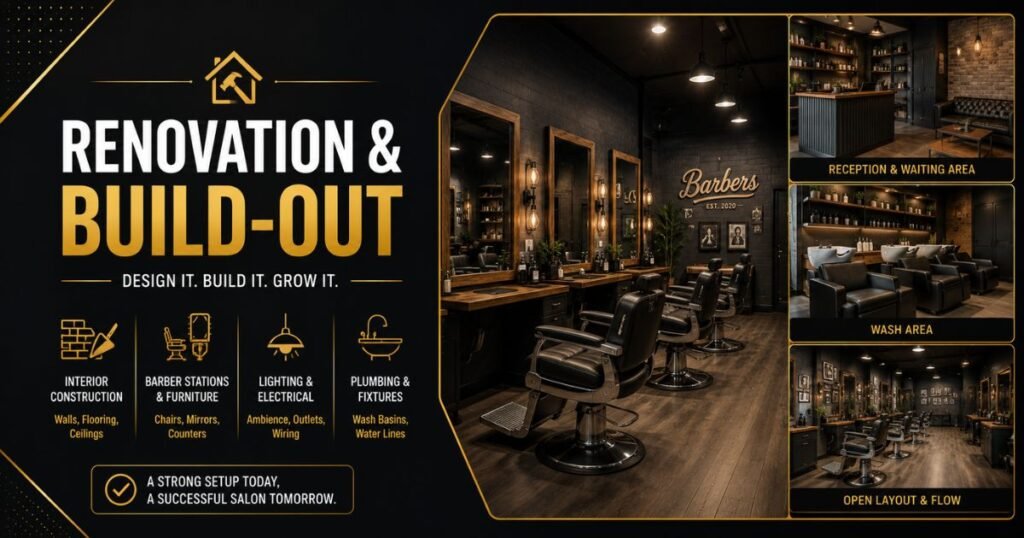
Typical range: $8,000–$52,000
Plumbing, electrical, flooring, lighting, and wall changes drive this number more than anything else. Taking over a space that was already a salon or barbershop can cut this dramatically, since sinks and wiring may already meet code. A full custom build in a raw commercial space is where budgets balloon fastest.
Barber Chairs & Station Equipment
Typical range: $5,000–$25,000+
A quality hydraulic barber chair runs $500–$3,000 depending on grade, and most owners budget $900–$1,700 for a solid mid-range option. Add stations, mirrors, storage, and anti-fatigue mats, and a two-chair shop lands around $5,000–$12,000, while a four-chair setup can reach $10,000–$25,000. Buying gently used chairs from closing shops can save 30–50%.
Tools & Daily Supplies
Typical range: $1,000–$7,500
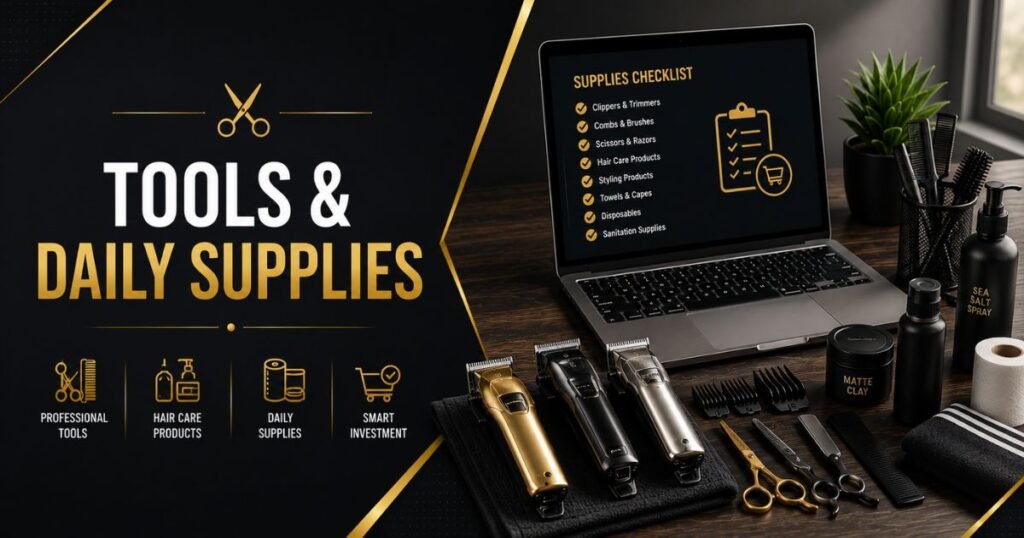
Clippers, trimmers, shears, razors, combs, capes, towels, and sanitation supplies fall here. Health-code-required disinfectant and barbicide solutions are non-negotiable. If you plan to sell retail products like pomade or beard oil, budget an extra $800–$2,000 for opening inventory.
Reception & Client Experience
Typical range: $1,250–$5,700
A front desk, waiting seating, lighting, and décor shape the first impression before a client sits down. Reception desks run $750–$3,200 and waiting-area seating adds another $500–$2,500. This category is easy to underspend on, but it’s also easy to phase in after opening if cash is tight.
Barber Shop licensing , Permits & Registration
Typical range: $500–$5,000+
Licensing works on three levels: your personal state barber license (typically requiring hundreds of training hours plus an exam), a shop or establishment license from your state board or health department, and standard business registration. LLC formation, EIN, and local permits. Costs vary significantly by state, so check your specific state board before finalizing a budget.
If you’re wondering what license do you need to open a barber shop, the answer generally includes: a business/trade license from your local municipal authority, a barber’s or cosmetology license (required for individual barbers in some regions), health and sanitation permits from your local health department, and a shop registration or signage certificate.
Insurance
Typical range: $500–$2,000 per year
General liability and professional liability coverage protect against accidents and claims. Many landlords require proof of insurance before handing over keys, so this isn’t optional build it into your opening budget rather than treating it as an afterthought.
Technology & Booking Software
Typical range: $1,000–$10,000
Booking software, a point-of-sale system, card processing, Wi-Fi, and a basic website fall here. Monthly software subscriptions add ongoing cost beyond the initial setup, so factor recurring fees into your first-year operating budget, not just opening day.
Initial Marketing & Branding
Typical range: $1,000–$10,000
Logo design, signage, photography, a Google Business Profile setup, and grand-opening promotion belong in your opening budget. This is the category most new owners underfund and it’s directly tied to how fast the chairs fill once you’re open.
Working Capital & Staffing
Typical range: Varies plan for 2–3 months of expenses
Rent, utilities, and any payroll need to be covered before consistent revenue arrives. If hiring barbers, decide between commission, booth rental, or employee pay models early, since each changes your monthly cash-flow needs significantly.
How to Choose the Right Setup for Your Budget?
- Tight budget ($25K–$50K): One or two chairs, take over an existing salon space, buy used equipment, start with booth-rental barbers
- Standard budget ($50K–$150K): Three to five chairs, moderate build-out, mix of owned and financed equipment, one or two hires
- Larger budget ($150K+): Five-plus chairs, custom interior, premium fixtures, full staff from day one
How to Get Accurate Quotes From Contractors & Vendors?
- Get at least three bids for any renovation work
- Ask contractors for a written scope, not a verbal estimate
- Confirm licensing and insurance before signing any contract
- Request itemized equipment quotes, not bundled totals
- Ask vendors about financing or leasing options for chairs and stations
- Build a 10–15% contingency into every estimate you receive
Barbershop Marketing Strategies That Actually Fill Chairs
A finished shop with no marketing plan sits empty. Here’s where to put your energy once the doors are open.
- Google Business Profile first. This is the single highest-leverage move for a new shop it’s free, and it’s how most local searches for “barber near me” get answered. Complete every field, add real photos, and respond to every review.
- Before-and-after content. Short video or photo pairs showing a transformation are the most consistently shared format in the industry. Post consistently rather than perfectly a steady stream beats one polished reel a month.
- Referral and loyalty programs. A simple “bring a friend, both get $5 off” or a punch-card loyalty system turns existing clients into a recruiting channel without any ad spend.
- Local business partnerships. Cross-promote with two or three nearby businesses that share your customer base a gym, a menswear shop, a coffee shop through shared flyers or small referral incentives.
- Retention systems. Text confirmations, a rebooking reminder around the three-week mark, and a genuine thank-you after checkout keep clients coming back. Growth in this industry increasingly comes from getting more visits out of existing clients, not just chasing new ones.
- Online booking. Making it effortless to book removes the biggest friction point between a curious new client and a filled chair.
Product Recommendations :
| Product | Best For | How to Use |
| Hair Cream | Light hold, natural finish | Work through damp hair, style by hand |
| Pomade | Classic slick or textured looks | Warm between palms, apply from mid-lengths to ends |
| Wax | Strong, matte hold | Rub into fingertips, apply to dry hair for texture |
| Clay | Thick or curly hair, matte texture | Emulsify in palms, apply evenly for separation |
| Shampoo | Daily cleansing, scalp health | Use lukewarm water, focus on scalp not just lengths |
| Conditioner | Softness, manageability | Apply mid-length to ends, rinse fully |
Related Guide
If you’re planning to promote your new barber shop on Instagram, using the right barber hashtags for Instagram can help increase visibility and attract local clients. Explore effective hashtag strategies to build your barbering brand and reach the right audience.
A proper haircare guide for men can help you maintain healthy-looking hair and make your haircut look better for longer. From choosing the right products to building a simple daily routine, good hair care is an important part of maintaining your style.
Choosing the right beard and haircut combos can make your overall style look more balanced and polished. Explore different haircut and beard pairings to find a combination that complements your personal style and facial features.
The cost to open barber shop is only the first step. Once you’ve planned your startup budget, explore our guide on how to start a successful barbershop to learn about choosing the right location, creating a business plan
Final Thoughts – Cost to Open Barber Shop
Opening a barber shop is one of the more approachable small-business paths precisely because you can scale the investment to your budget from a single rented chair to a full custom build. What separates shops that survive their first year from ones that don’t usually isn’t the size of the opening budget.
Start with a realistic number for your market, build in a contingency, and put real effort into your Google Business Profile and client-retention systems from week one. A well-run shop with a modest budget consistently outperforms a beautiful shop with no growth plan
FAQs
How much does it Cost to Open a Small Barber shop?
A small, one- or two-chair barber shop typically costs $25,000–$50,000, especially if you take over an existing salon space and buy some used equipment.
What is the Biggest Startup Cost for a Barbershop?
Rent, renovation, and equipment are usually the three biggest expenses. Build-out costs alone can range from $8,000 to over $50,000 depending on the space’s condition.
Can you Open a Barbershop with no Money?
Not entirely, but booth rental is the lowest-cost entry point, often $5,000–$15,000, letting you build clientele before committing to a full shop lease.
How Profitable is Owning a Barbershop?
Typical profit margins land between 10% and 25%, with well-managed shops earning more through retail sales and premium services alongside haircuts
How much should a Barbershop Spend on Marketing?
Initial branding and marketing usually run $1,000–$10,000, with an ongoing monthly budget afterward for content, local promotion, and any paid ads.
What’s the Average Cost to open a Barbershop?
Roughly $80,000–$100,000 for a modest 4-chair shop in the US.