Pompadour Hairstyles: 35 Modern Styles for a Sharp Look
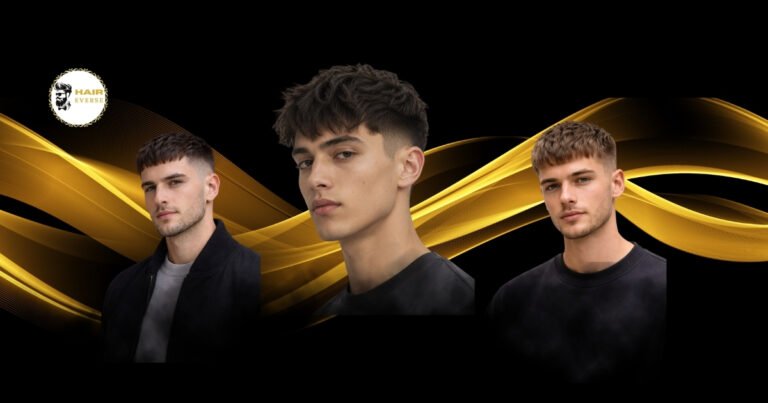
Pompadour Hairstyles: Modern Styles for a Sharp Look combine timeless elegance with modern styling, making them a standout choice for men who want volume and confidence. This classic haircut features longer hair swept up and back, paired with short or faded sides for a clean, balanced finish.
Whether your hair is straight, thick, or wavy, the right cut and styling products help maintain height and shape throughout the day. This guide explores 35 stylish pompadour variations, expert barber tips, and the best techniques for lasting hold. You’ll also learn how to ask your barber for the perfect pompadour and choose a style that matches your face shape, lifestyle, and grooming routine.
Pompadour Hairstyle Comparison Table
Here is the Comparison Table of Hairstyle, Best Hair Type, Face Shape, Maintenance, and Styling Time:
| Hairstyle | Best Hair Type | Face Shape | Maintenance | Styling Time |
| Classic Pompadour | Thick, straight | Square, oval | High | 10-15 min |
| Modern Pompadour | Thick, wavy | Oval, round | Medium | 8-12 min |
| Pompadour with Low Fade | Thick, straight | Oval, square | Medium | 8-10 min |
| Pompadour with Mid Fade | Thick, wavy | Round, square | Medium | 8-10 min |
| Pompadour with High Fade | Thick, straight | Oval, long | Medium | 7-10 min |
| Pompadour with Skin Fade | Thick, straight | Square, round | Medium | 8-10 min |
| Disconnected Pompadour | Thick, coarse | Square, oval | High | 10 min |
| Pompadour Undercut | Thick, straight | Oval, round | Medium | 8 min |
| Textured Pompadour | Wavy, thick | Round, oval | Low | 5-8 min |
| Slicked-Back Pompadour | Straight, thick | Oval, long | Medium | 6-8 min |
| Side-Part Pompadour | Straight, thick | Oval, square | Medium | 8 min |
| Pompadour with Beard | Thick, any texture | Oval, square | High | 10-12 min |
| Curly Pompadour | Curly, coily | Oval, round | Medium | 10 min |
| Wavy Pompadour | Wavy | Oval, round | Low | 6-8 min |
| Pompadour for Thick Hair | Thick | Square, oval | High | 10-12 min |
| Pompadour for Fine Hair | Fine, thin | Round, oval | Low | 5-7 min |
| Short Pompadour | Straight, thick | Round, square | Low | 5 min |
| Medium-Length Pompadour | Straight, wavy | Oval, long | Medium | 8 min |
| Full-Volume Pompadour | Thick | Oval, square | High | 12-15 min |
| Messy Pompadour | Wavy, thick | Round, oval | Low | 5 min |
| Pompadour Mohawk | Thick, straight | Oval, square | High | 10 min |
| Pompadour Quiff Hybrid | Thick, wavy | Oval, round | Medium | 8 min |
| Wet-Look Pompadour | Straight, thick | Oval, long | Medium | 6-8 min |
| Hard Part Pompadour | Straight, thick | Oval, square | Medium | 8-10 min |
| Pompadour Fringe | Straight, wavy | Round, oval | Low | 5-7 min |
| Pompadour Taper Fade | Thick, straight | Oval, square | Medium | 8 min |
| Pompadour Comb-Over | Straight, fine | Oval, long | Low | 6 min |
| Pompadour with Shaved Sides | Thick, coarse | Square, oval | Medium | 8 min |
| Businessman Pompadour | Straight, thick | Oval, square | Medium | 8-10 min |
| Retro Rockabilly Pompadour | Thick, straight | Square, oval | High | 12-15 min |
| Spiky Pompadour | Thick, coarse | Round, oval | Medium | 7 min |
| Pompadour Fauxhawk | Thick, straight | Oval, square | High | 10 min |
| Boy’s Pompadour | Any | Round, oval | Low | 5 min |
| Loose Pompadour | Wavy, thick | Oval, round | Low | 5-8 min |
| Long-Top Pompadour with Fade | Straight, thick | Oval, square | High | 12 min |
What Is a Pompadour Haircut?
The pompadour is one of the oldest hairstyles still in regular rotation, named after the 18th-century style worn at the French court and later reshaped into the men’s cut popularized by Elvis Presley in the 1950s.
The modern version keeps the core idea length and volume on top, brushed up and back while the sides can be tapered, faded, or left longer depending on the variation. Its staying power comes from how adaptable it is: the same basic shape works for a boardroom look or a night out, on straight hair or curly, short or long.
The 35 Pompadour Hairstyles
Pompadour Hairstyles: Modern Styles for a Sharp Look offer the perfect blend of classic sophistication and modern versatility for every hair type and face shape. From timeless, glossy pompadours to textured, faded, and relaxed variations.
Each hairstyle includes practical styling techniques, recommended products, and realistic maintenance expectations to help you achieve lasting volume and hold. Whether you prefer a bold statement or a professional everyday look, you’ll find a pompadour that matches your personal style.
Classic Pompadour
Overview: The original pomp: a tall, glossy wave of hair swept straight up and back, with the sides kept noticeably shorter but not faded. It’s the look most people picture first when they hear the word “pompadour.”
Why It Works: Best suited to thick, straight hair with enough natural body to hold height. It flatters square and oval faces by adding length on top without overwhelming the jawline.
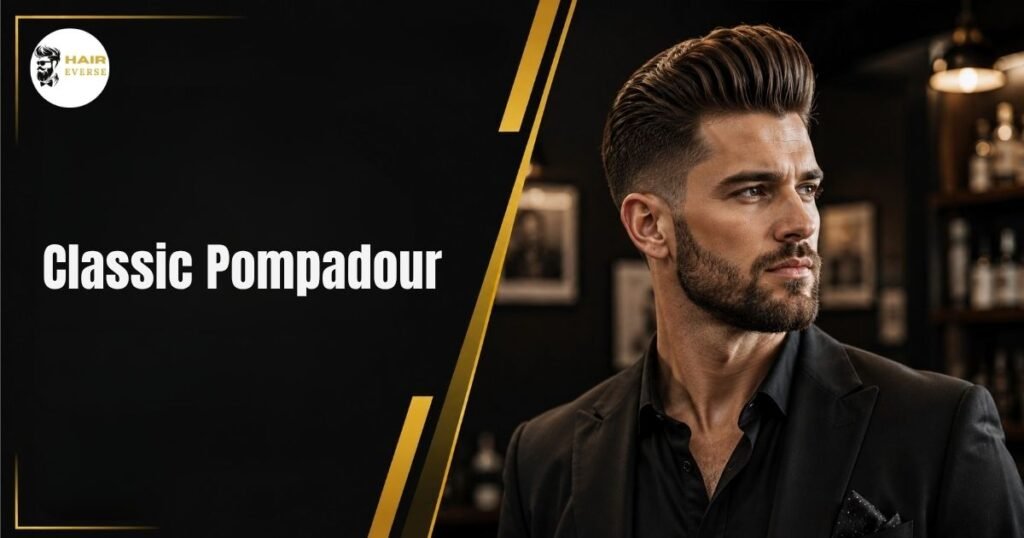
Styling Tip: Blow-dry the top upward while combing against the direction of growth, then set the shape with a strong-hold pomade for the glossy, sculpted finish this style is known for.
Maintenance: A daily touch-up is realistic here: reheat with a blow dryer and reapply a small amount of pomade each morning to rebuild the shine and hold. Maintenance and styling times are estimates and may vary by hair type.
Modern Pompadour
Overview: A looser, more textured take on the classic, with shorter sides that create a bigger contrast between the top and the cut around the ears. A modern pompadour fade offers bold volume with clean, tapered sides.
Why It Works: Works well with thick or wavy hair and suits oval or round faces, since the shorter sides visually narrow a wider face shape.
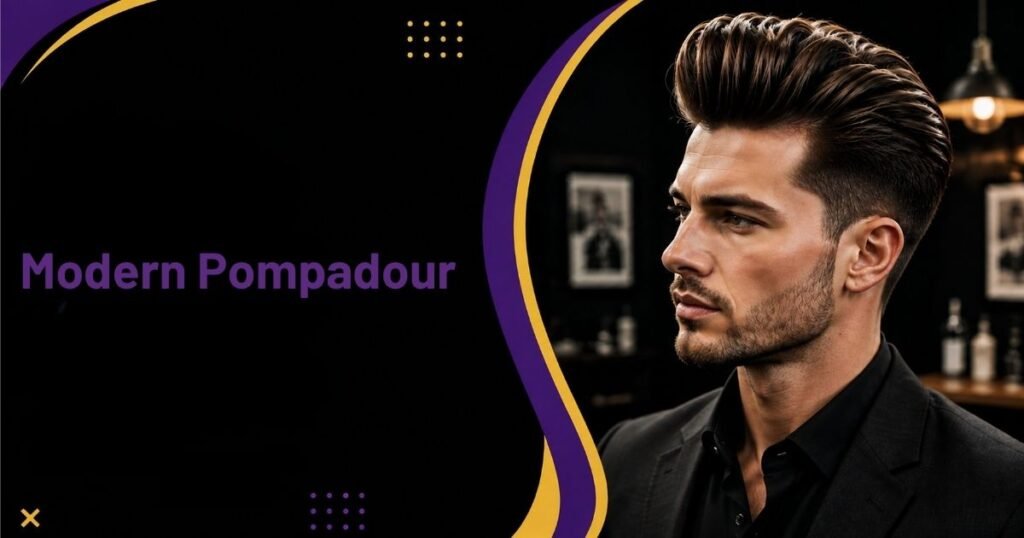
Styling Tip: Apply a matte clay to damp hair before blow-drying up and back clay gives lift without the classic’s heavy shine, which fits a more everyday look.
Maintenance: Rinse product out nightly to keep the clay from building up, and re-style each morning with a fresh dab. Maintenance and styling times are estimates and may vary by hair type.
Pompadour with Low Fade
Overview: Pairs the tall pomp top with a fade that starts just above the ear, keeping most of the length on top while still giving a clean, gradual taper.
Why It Works: A low fade is the most forgiving fade height, so it suits nearly any face shape, and works best on thick or straight hair that holds a defined top shape.
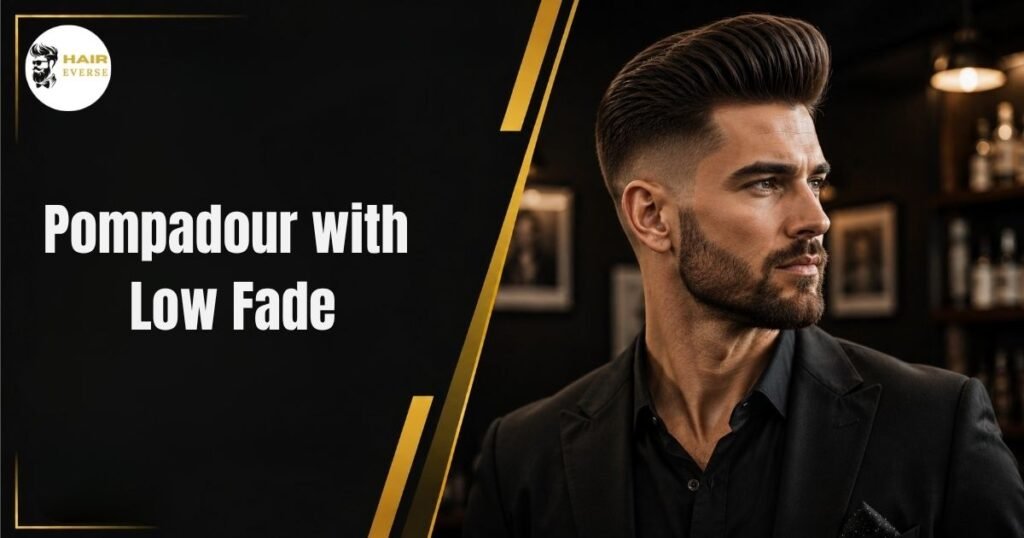
Styling Tip: Use a round brush while blow-drying to build height at the root, then lock it in with a medium-hold pomade.
Maintenance: The fade needs a barber touch-up every 2-3 weeks to stay sharp, even though daily styling of the top is quick. Maintenance and styling times are estimates and may vary by hair type.
Pompadour with Mid Fade
Overview: The fade starts around the temple, higher than a low fade, creating a sharper line between the short sides and the voluminous top.
Why It Works: Suits round or square faces especially well, since the higher fade draws the eye upward and adds visual length.
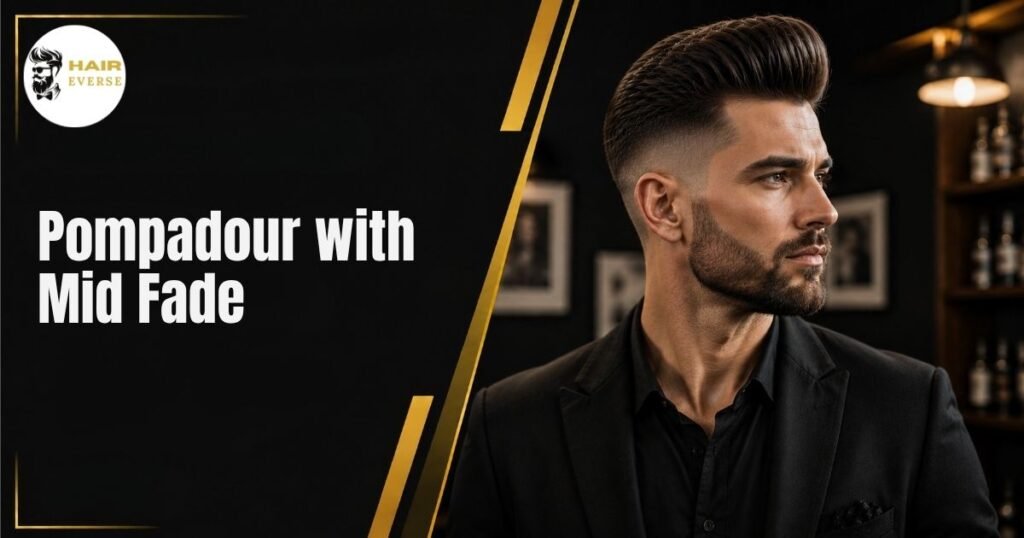
Styling Tip: Blow-dry the top forward first to build a base, then redirect it up and back while applying a molding paste for a firmer hold than a cream would give.
Maintenance: Because the contrast is sharper, regrowth shows faster plan on a fade refresh every 2 weeks. Maintenance and styling times are estimates and may vary by hair type.
Pompadour with High Fade
Overview: The fade climbs well above the temple, leaving a small, tightly cropped band of hair before it blends into the long top, the boldest, most contrast-heavy fade option.
Why It Works: Flatters oval and longer face shapes by keeping the sides minimal so all the visual weight sits on top.
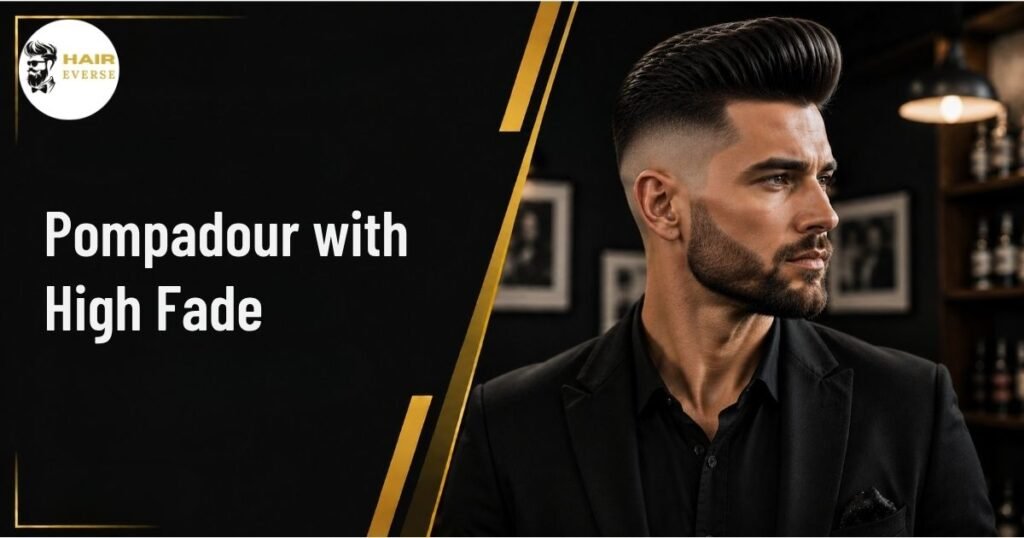
Styling Tip: Since there’s less hair to work with on the sides, focus product on the top only a lightweight hair cream keeps it from looking greasy against the short sides.
Maintenance: High fades grow out visibly within 10-14 days, so this is the highest-upkeep fade option on this list. Maintenance and styling times are estimates and may vary by hair type.
Pompadour with Skin Fade
Overview: Also called a bald fade, the sides taper all the way down to skin, leaving the pompadour top as the only visible hair.
Why It Works: Works on square or round faces and any hair texture, since the entire style rests on the top section alone.
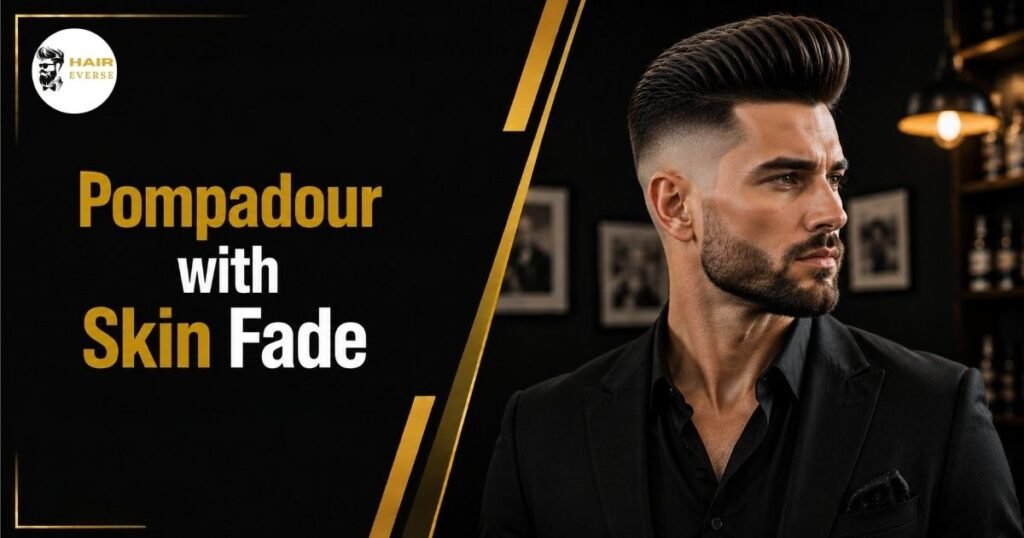
Styling Tip: A styling wax gives the top a slightly matte, textured finish that contrasts well against the smooth, skin-level sides.
Maintenance: This is a barber-dependent style. The skin fade needs a touch-up every 10-14 days to avoid looking patchy as it grows in. Maintenance and styling times are estimates and may vary by hair type.
Disconnected Pompadour
Overview: Instead of a gradual fade, the sides are cut short with a hard, visible line separating them from the long top, creating a bold, almost detached look.
Why It Works: Best on thick or coarse hair with strong natural volume, and suits square or oval faces that can handle the sharp visual break.
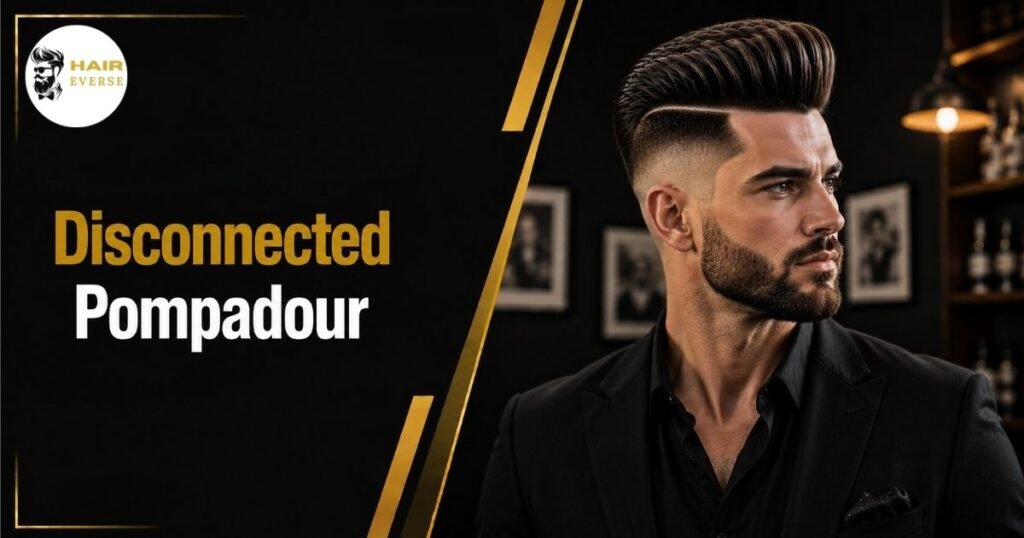
Styling Tip: Emphasize the disconnection by combing the top straight up before angling it back, then finish with a strong pomade to keep the line crisp.
Maintenance: The hard line needs regular barber upkeep to stay defined as hair grows, roughly every 2 weeks. Maintenance and styling times are estimates and may vary by hair type.
Pompadour Undercut
Overview: The sides are buzzed close with clippers rather than faded gradually, giving a more uniform, closely cropped base under the tall top.
Why It Works: Suits thick, straight hair and oval or round face shapes, since the buzzed sides slim a wider jawline.
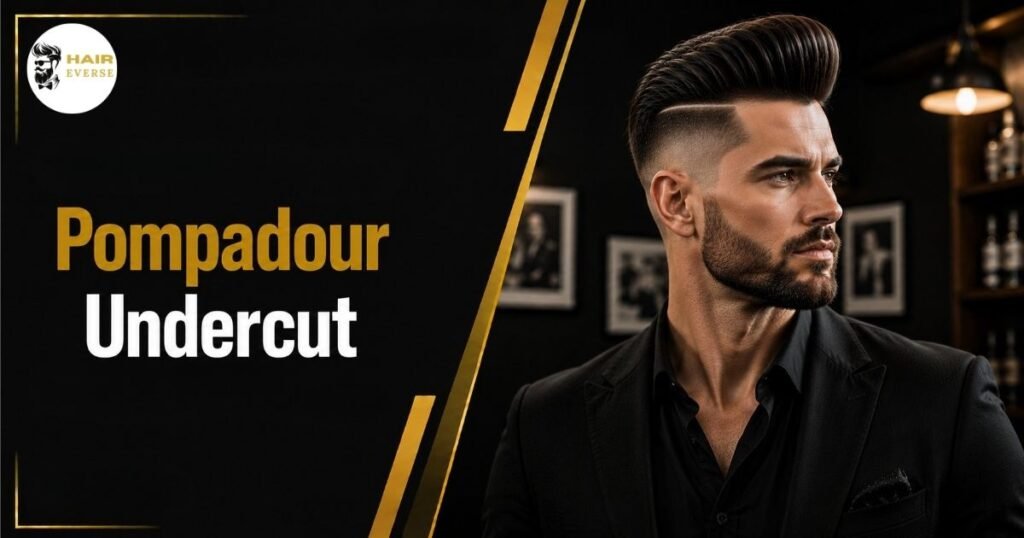
Styling Tip: Work a small amount of matte clay through damp hair, then blow-dry upward with your fingers to avoid flattening the crown.
Maintenance: Buzzed sides hold their shape longer than a fade, so barber visits can stretch to every 3 weeks. Maintenance and styling times are estimates and may vary by hair type.
Textured Pompadour
Overview: A relaxed variation that trades the classic’s smooth, glossy finish for separated, piece-y strands and a more casual overall shape.
Why It Works: Works especially well with wavy or thick hair that already has natural movement, and suits round or oval faces looking for a softer silhouette.
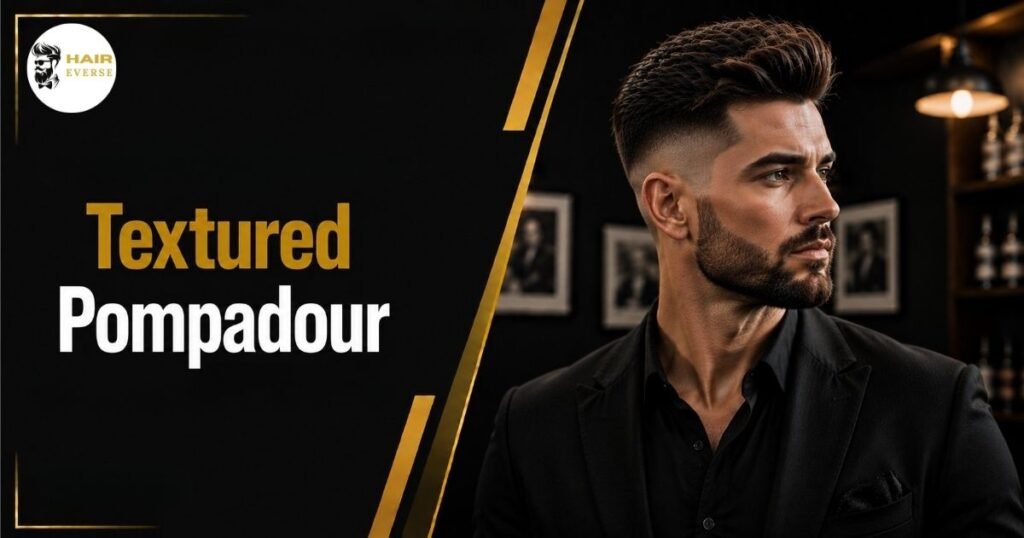
Styling Tip: Use a texture powder at the roots for lift, then rough-dry with your hands instead of a brush to keep the separated, matte look.
Maintenance: This is one of the lowest-upkeep pompadours here; a quick finger-style refresh is usually enough between washes. Maintenance and styling times are estimates and may vary by hair type.
Slicked-Back Pompadour hairstyles male
Overview: Combines the pompadour’s height with a fully slicked-back finish, so the top is pulled backward with a wet, reflective shine rather than left forward-facing.
Why It Works: Best for straight, thick hair, and flatters oval or longer face shapes that can carry a sleeker, more formal look.
Styling Tip: Apply pomade to damp hair and comb straight back with a fine-tooth comb for the smooth, wet-look finish this style depends on.
Maintenance: Reapply pomade if the shine fades during the day; otherwise this style holds its shape well without much touch-up. Maintenance and styling times are estimates and may vary by hair type.
Side-Part Pompadour hairstyle for boys
Overview: Adds a defined side part to the classic pompadour shape, giving the top more structure and an office-friendly polish.
Why It Works: Works on straight or thick hair and suits oval or square faces, since the part line adds asymmetry that softens strong angles.
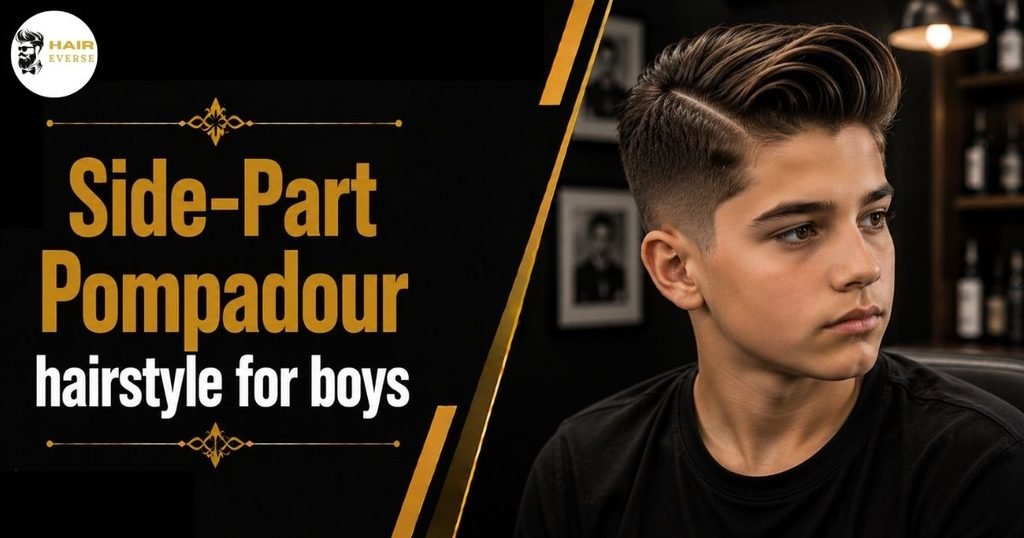
Styling Tip: Comb the part in with a fine-tooth comb while hair is damp, then blow-dry each side in its intended direction before setting with a light-hold cream.
Maintenance: Touch up the part line each morning with a comb and a small amount of product; the cut itself holds for 3-4 weeks. Maintenance and styling times are estimates and may vary by hair type.
Pompadour with Beard
Overview: Not a haircut variation on its own, but a pairing of any pompadour style combined with a full or well-groomed beard for a bolder, more mature look.
Why It Works: Works with most hair textures and particularly flatters oval or square faces, since a full beard adds width that balances the height on top.
Styling Tip: Style the pompadour first with pomade or clay, then use a small amount of beard oil to keep facial hair soft and separate the two grooming steps clearly.
Maintenance: This combination effectively doubles daily grooming time, since the beard needs its own trim and conditioning routine alongside the hair. Maintenance and styling times are estimates and may vary by hair type.
Curly Pompadour
Overview: Keeps natural curl pattern intact on top while still building the signature pompadour height, rather than forcing curls straight.
Why It Works: Built specifically for curly or coily hair, and suits oval or round faces well since curls add width that a straight pomp wouldn’t.
Styling Tip: Apply a curl-defining cream to damp curls, then diffuse-dry on low heat while lifting at the roots with your fingers to build height without frizz.
Maintenance: Avoid brushing dry curls, since it disrupts the curl pattern refresh with a spray bottle and a small amount of cream instead. Maintenance and styling times are estimates and may vary by hair type.
Wavy Pompadour hairstyles for oval face
Overview: Uses natural waves to create volume and movement instead of relying purely on blow-drying technique, giving a more relaxed, lived-in pompadour.
Why It Works: Ideal for wavy hair types and flatters oval or round faces with its softer, less structured silhouette.
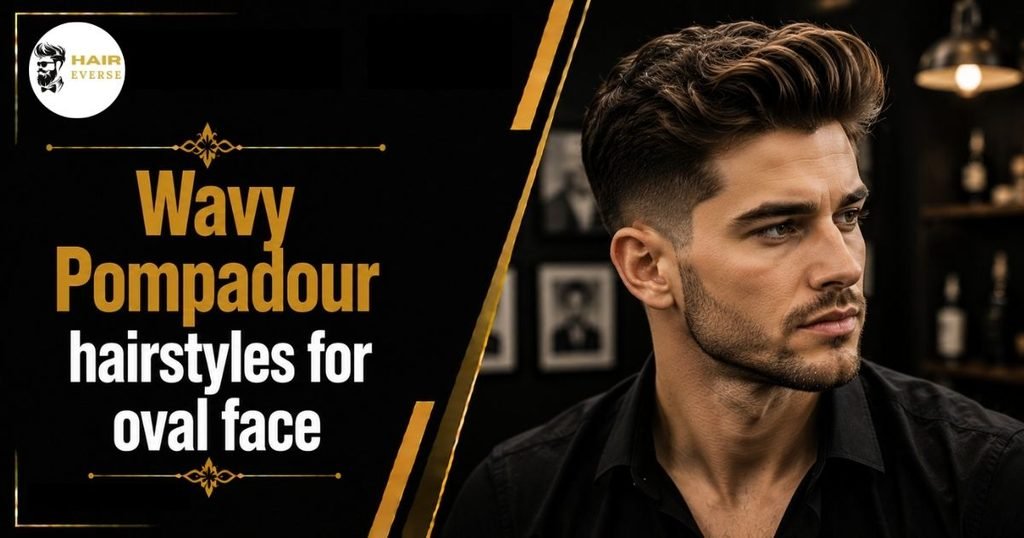
Styling Tip: Work a sea-salt spray through damp hair before air-drying, then finish with a light cream to define the waves without weighing them down.
Maintenance: One of the easiest styles to maintain day to day since the natural wave does most of the work. Maintenance and styling times are estimates and may vary by hair type.
Pompadour for Thick Hair
Overview: A version built around hair that already has abundant natural volume, so the focus shifts from creating height to controlling and directing it.
Why It Works: By definition suited to thick hair, and works on square or oval faces that can support a fuller silhouette on top.
Styling Tip: Use a firm-hold clay rather than a cream thick hair needs stronger product to stay directed instead of springing back to its natural shape.
Maintenance: Thick hair tends to hold shape well once set, but may need a mid-day touch-up in humid weather. Maintenance and styling times are estimates and may vary by hair type.
Pompadour for Fine Hair
Overview: A shorter, more compact pompadour that avoids overreaching for height that fine hair can’t naturally support, keeping the look proportionate.
Why It Works: Designed for fine or thin hair, and flatters round or oval faces without adding excess bulk on top.
Styling Tip: Apply a lightweight volumizing spray at the root before blow-drying upside down, then set with a low-weight gel that won’t drag fine strands flat.
Maintenance: Avoid heavy pomades, which weigh fine hair down fast. A light product reapplied briefly midday works better than one heavy morning application. Maintenance and styling times are estimates and may vary by hair type.
The Short Pompadour haircut
Overview: A compact take on the style with noticeably less length on top, keeping the upward, back-swept shape without the dramatic height.
Why It Works: Works with straight or thick hair and suits round or square faces that don’t need extra vertical length.
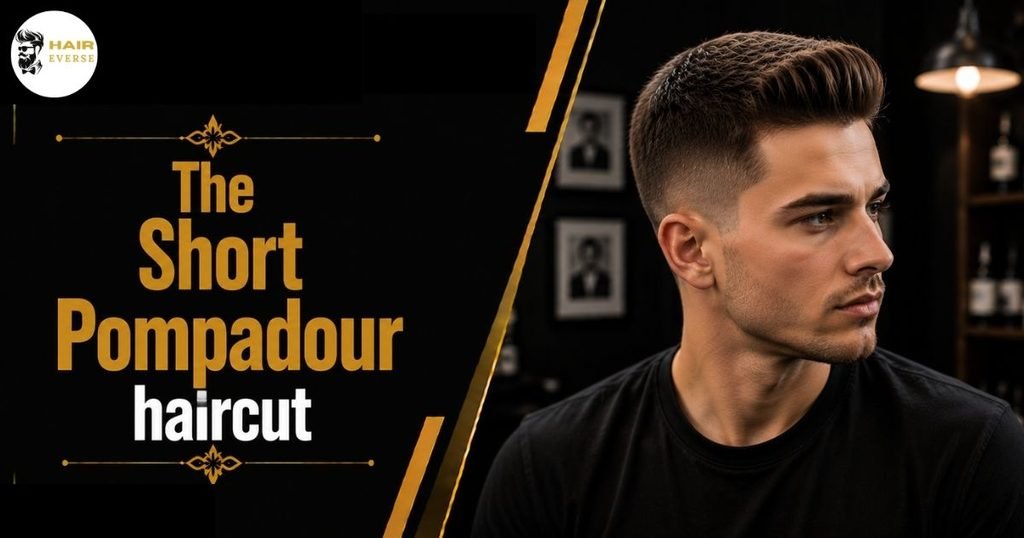
Styling Tip: A small amount of matte paste worked through with fingers is enough to build the subtle lift this shorter version needs.
Maintenance: One of the fastest pompadours to maintain daily, and the cut itself holds its shape for 4+ weeks between trims. Maintenance and styling times are estimates and may vary by hair type.
Medium-Length Pompadour
Overview: Sits between the short and full-volume versions, offering noticeable height without requiring the longest possible top length.
Why It Works: Versatile across straight and wavy hair, and suits oval or longer face shapes especially well.
Styling Tip: Blow-dry with a round brush for lift at the root, then finish with a molding paste for hold that lasts through a full workday.
Maintenance: A practical middle ground more upkeep than a short pomp, but far less demanding than a full-volume version. Maintenance and styling times are estimates and may vary by hair type.
Full-Volume Pompadour
Overview: The tallest version on this list, built for maximum height and drama on top, well beyond what a classic pompadour typically shows.
Why It Works: Requires thick hair with a strong natural body, and suits oval or square faces that can visually support the added height.
Styling Tip: Build the shape in layers, blow-dry the base first, then use a teasing comb at the root before applying a strong-hold pomade to lock in the height.
Maintenance: This is the highest-maintenance style on the list, often needing a full re-style rather than a quick touch-up if it falls during the day. Maintenance and styling times are estimates and may vary by hair type.
Messy Pompadour Hairstyles for Men
Overview: Deliberately undone, this version skips the smooth, combed finish in favor of a tousled, hand-styled look that still keeps the upward shape.
Why It Works: Works especially well with wavy or thick hair, and suits round or oval faces with its softer, less rigid outline.
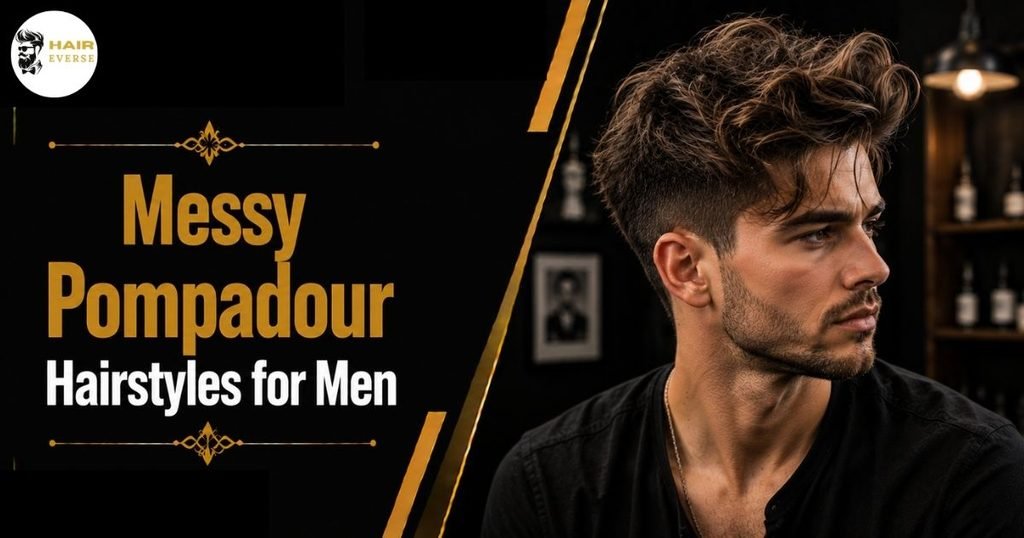
Styling Tip: Scrunch a texture powder through damp hair with your fingers, then let it air-dry or diffuse it for a natural, unstructured finish.
Maintenance: Genuinely low-effort imperfections just add to the intended look, so touch-ups take seconds. Maintenance and styling times are estimates and may vary by hair type.
Pompadour Mohawk
Overview: Narrows the pompadour’s top section into a mohawk-style strip, with the sides faded tightly for maximum contrast.
Why It Works: Suits thick, straight hair and works best on oval or square faces that can handle a bold, statement-making shape.
Styling Tip: Use a texture powder for grip at the root, then a strong-hold gel along the center strip to keep the narrowed shape defined all day.
Maintenance: The narrow center strip needs frequent barber upkeep to stay clean-edged, roughly every 2 weeks. Maintenance and styling times are estimates and may vary by hair type.
Pompadour Quiff Hybrid
Overview: Blends the pompadour’s back-swept height with the quiff’s looser, more textured front section, splitting the difference between the two styles.
Why It Works: Works with thick or wavy hair, and flatters oval or round faces that want structure without a fully slicked finish.
Styling Tip: Blow-dry the front section upward and slightly forward before sweeping the rest back, then use a styling cream for soft hold and natural shine.
Maintenance: Similar upkeep to a standard modern pompadour a daily reset with a small amount of product is usually enough. Maintenance and styling times are estimates and may vary by hair type.
Wet-Look Pompadour Haircut for Boys
Overview: Uses high-shine product to create a glossy, sculpted top that looks freshly wet even hours after styling, keeping the sides neatly trimmed for contrast.
Why It Works: Works best on straight, thick hair, and suits oval or longer faces that can carry the sleeker, more polished silhouette.
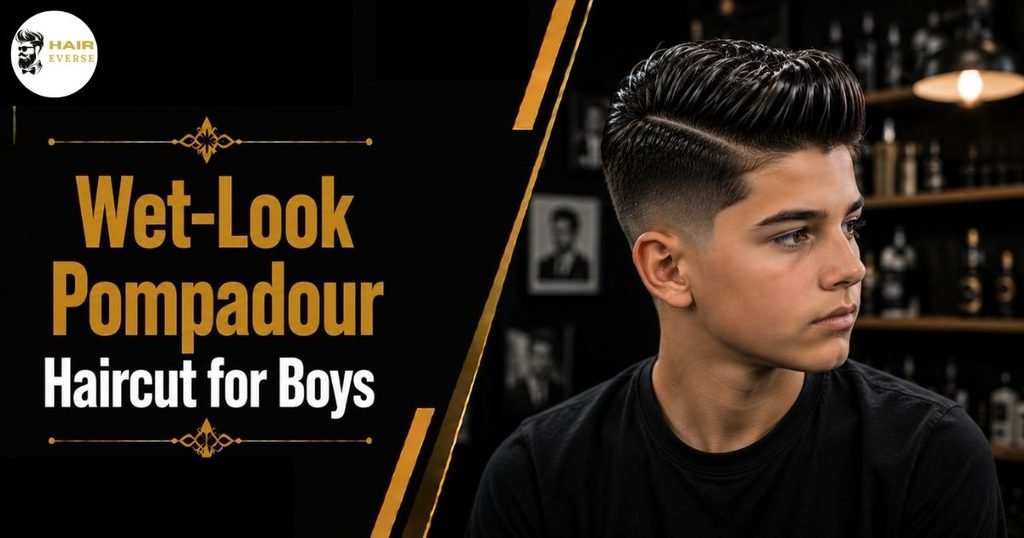
Styling Tip: Apply pomade to damp (not dry) hair and blow-dry while guiding the top backward, which is what creates the signature glossy effect.
Maintenance: The shine fades over the day, so a small pomade top-up mid-afternoon keeps the wet look consistent. Maintenance and styling times are estimates and may vary by hair type.
Hard Part Pompadour
Overview: Adds a thin, shaved line where the part would normally sit, replacing a combed part with a crisp, barber-cut one that won’t shift throughout the day.
Why It Works: Works on straight or thick hair and suits oval or square faces, since the sharp line adds a graphic, defined edge to the style.
Styling Tip: Style the pompadour as usual, then simply comb hair away from the shaved line on each side no extra product needed to maintain the part itself.
Maintenance: The shaved line needs a barber refresh every 1-2 weeks as regrowth starts to soften its edge. Maintenance and styling times are estimates and may vary by hair type.
Pompadour Fringe
Overview: Leaves a soft section of fringe forward over the forehead instead of sweeping every strand fully back, softening the overall silhouette.
Why It Works: Works with straight or wavy hair, and suits round or oval faces looking to add a touch of youthful softness.
Styling Tip: Style the back and crown up as usual, then use a light cream to shape just the fringe section forward and slightly to one side.
Maintenance: Low-effort daily styling, since only the fringe section needs regular attention while the rest holds its shape. Maintenance and styling times are estimates and may vary by hair type.
Modern Pompadour with a Taper Fade
Overview: Uses a gradual taper rather than a sharper fade, blending the sides into the top slowly for a softer, more traditional transition.
Why It Works: A safe, versatile choice across most hair types, and flatters nearly every face shape thanks to its subtle blend.
Styling Tip: Blow-dry the top up and back with a paddle brush, then apply a light-hold cream for a natural finish that suits the softer taper.
Maintenance: Because the taper is gradual, regrowth is less noticeable, so barber visits can stretch to every 4 weeks. Maintenance and styling times are estimates and may vary by hair type.
Pompadour Comb-Over
Overview: Combines the pompadour’s lift with a comb-over’s side-swept direction, so the top is styled up and then guided to one side rather than straight back.
Why It Works: Works well with straight or fine hair, and suits oval or longer faces that want a polished, low-effort look.
Styling Tip: Comb hair to one side while damp, using a fine-tooth comb to set the direction, then blow-dry to lock the shape before a light cream finish.
Maintenance: One of the simplest styles on this list to maintain a quick comb-through each morning is usually all it needs. Maintenance and styling times are estimates and may vary by hair type.
Pompadour with Shaved Sides
Overview: Takes the sides down to a very close shave rather than a graduated fade, creating the starkest possible contrast against the long top.
Why It Works: Works on thick or coarse hair, and flatters square or oval faces that can handle the bold visual break.
Styling Tip: Since the sides carry no styling needs, all products should go on top. A texture powder gives the top grip without over-styling.
Maintenance: Shaved sides need barber upkeep roughly every 10-14 days to stay clean as regrowth appears. Maintenance and styling times are estimates and may vary by hair type.
Businessman Pompadour
Overview: A toned-down, conservative pompadour with less height and a smoother finish, built to read as polished rather than statement-making.
Why It Works: Works with straight or thick hair, and flatters oval or square faces without drawing attention away from a professional look.
Styling Tip: Use a light-hold pomade rather than a strong one, blow-drying the top back with less lift than a classic pompadour would use.
Maintenance: Designed to hold cleanly through a full workday with minimal touch-ups needed. Maintenance and styling times are estimates and may vary by hair type.
Retro Rockabilly Pompadour
Overview: A deliberately vintage take that leans into exaggerated height and a glass-like shine, closest in spirit to the 1950s originators of the style.
Why It Works: Needs thick, straight hair to hold the dramatic shape, and suits square or oval faces that can carry heavy top volume.
Styling Tip: Use a classic oil-based pomade rather than a matte product. The shine is part of the retro look, so a water-based clay won’t give the right finish.
Maintenance: Among the highest-maintenance styles here, often requiring a midday re-comb and touch-up to hold the exaggerated shape. Maintenance and styling times are estimates and may vary by hair type.
Spiky Pompadour
Overview: Trades the pompadour’s smooth wave for sharper, more defined spikes, giving the top an edgier finish while keeping the overall upward, back-leaning shape.
Why It Works: Works best on thick or coarse hair, and suits round or oval faces looking for a more angular top silhouette.
Styling Tip: Apply a strong-hold gel to damp hair, then use your fingers rather than a comb to pull individual sections into defined spikes.
Maintenance: Gel-based styles can feel stiff by day’s end a small amount of water worked back through the spikes refreshes them without a full restyle. Maintenance and styling times are estimates and may vary by hair type.
Pompadour Fauxhawk
Overview: Narrows the classic pompadour shape toward the center of the head, similar to the mohawk variation but with softer, less shaved edges on the sides.
Why It Works: Works with thick, straight hair, and suits oval or square faces that can support a bold central focal point.
Styling Tip: Comb hair toward the center from both sides before lifting it upward, then set with a strong gel to keep the narrowed shape from spreading out.
Maintenance: Needs consistent daily restyling to keep the center section narrow and defined rather than drifting wider. Maintenance and styling times are estimates and may vary by hair type.
Boy’s Pompadour
Overview: A scaled-down, softer version of the pompadour designed for younger boys, with less dramatic height and a shape that’s simple for a parent to recreate at home.
Why It Works: Works with any hair texture and suits round or oval faces, since kids’ hair is usually finer and doesn’t need heavy product to hold shape.
Styling Tip: A small amount of kid-safe styling gel or light hair cream is enough to avoid strong-hold pomades, which are unnecessary and harder to wash out of a child’s hair.
Maintenance: One of the easiest styles on this list, needing just a quick comb and a touch of product before school. Maintenance and styling times are estimates and may vary by hair type.
Loose Pompadour
Overview: Keeps the pompadour’s upward direction without combing it into a tight, structured shape, letting the hair fall more naturally for a relaxed finish.
Why It Works: Works especially well with wavy or thick hair, and suits oval or round faces that want height without a stiff, overly styled look.
Styling Tip: Use a lightweight styling cream and finger-style the top upward, avoiding a brush or comb that would create too clean a line.
Maintenance: Genuinely easygoing a light re-style with your fingers is usually all it needs through the day. Maintenance and styling times are estimates and may vary by hair type.
Long-Top Pompadour with Fade
Overview: Pushes the top length further than a standard pompadour while pairing it with a fade on the sides, giving the most dramatic length-to-contrast ratio on this list.
Why It Works: Needs thick, straight hair with a strong natural body, and suits oval or square faces that can visually balance the extra top length.
Styling Tip: Build the shape in sections with a round brush, working from the front hairline back, then finish with a firm-hold pomade to control the extra length.
Maintenance: The longer top takes noticeably longer to style and holds less predictably in humidity, making this one of the higher-effort options here. Maintenance and styling times are estimates and may vary by hair type.
How to Choose the Right Pompadour
Picking a style starts with two things: what your hair can naturally do, and what shape flatters your face.
By Hair Type:
- Thick hair — has the natural body to support the tallest, most dramatic pompadours (Classic, Full-Volume, Rockabilly)
- Thin hair — does better with shorter, more compact versions that don’t overreach for height (Pompadour for Fine Hair, Short Pompadour)
- Curly hair — should lean into the curl pattern rather than fighting it (Curly Pompadour) instead of forcing a slicked, straight finish
- Straight hair — is the most versatile base and works with nearly every variation on this list
- Wavy hair — pairs naturally with textured or messy finishes that let the wave show through (Wavy Pompadour, Messy Pompadour)
By Face Shape:
- Oval faces — can wear almost any pompadour variation, since this shape has the most balanced proportions to begin with
- Round faces — benefit from added height and shorter, tighter sides, which visually lengthen the face (High Fade Pompadour, Mohawk Pompadour)
- Square faces — suit styles with strong height and clean lines that complement a defined jaw (Classic Pompadour, Disconnected Pompadour)
- Long faces — do best with shorter top volume and a fringe or side-swept element that avoids adding extra vertical length (Pompadour Fringe, Comb-Over)
Pompadour vs. Quiff: What’s the Difference?
The two styles are often confused because both involve brushing hair upward for volume, but the direction and finish set them apart. A pompadour is combed straight up and then back, creating a dense, uniform wave of volume concentrated toward the front.
A quiff is brushed up and slightly forward with a looser, more textured finish, often bundled off to one side rather than swept fully back. In short a pompadour reads as sleek and controlled, while a quiff reads as textured and a little more casual.
Can Boys Wear a Pompadour?
Yes, the Boy’s Pompadour above is built specifically for this. Kids’ hair is usually finer than an adult’s, so the same tall, heavily product-dependent versions aren’t a good fit. A softer, lower-maintenance pompadour with light product works well for school-age boys and is easy for a parent to recreate at home between barber visits.
How to Ask Your Barber
Getting the exact look from a photo depends on how clearly you communicate it. Six things to cover before the clippers come out:
- Bring a reference photo, ideally from a similar hair type and length to your own
- Explain the exact length you want on top, in inches if you know it, since “not too long” means different things to different barbers
- Specify the fade height (low, mid, high, or skin) if you want one, since this is the detail most often miscommunicated
- Mention your daily styling routine and how much time you realistically want to spend each morning
- Explain your workplace or lifestyle needs, since a tall rockabilly pomp and a businessman pompadour need very different upkeep
- Confirm the final shape and length before the barber puts scissors or clippers to hair, not after
Product Recommendations
Here is the Comparison Table of Product, Best for, and How to Use:
| Product | Best For | How to Use |
| Hair Cream | Fine hair, low-hold looks, everyday texture | Work a dime-sized amount through damp hair before blow-drying for light hold and natural shine |
| Pomade | Classic, glossy, or slicked-back pompadours | Warm a small amount between palms, apply to damp or dry hair, then comb or brush into shape |
| Wax | Textured or matte finishes | Rub between fingertips until pliable, then work through dry hair for definition without heavy shine |
| Clay | Thick hair needing strong, matte hold | Apply to damp hair before blow-drying for maximum root lift and all-day hold |
| Shampoo | Removing product buildup before restyling | Use every wash to fully clear pomade or wax residue, which otherwise weighs hair down over time |
| Conditioner | Keeping hair manageable under daily product use | Focus on mid-lengths and ends after shampooing to prevent dryness from frequent styling |
Pair It With These Related Looks
- Check out our Pompadour or Quiff comparison to see which style fits your hair type. It breaks down 25 variations side by side so you can pick the easier routine.
- The Ivy League haircut offers similar structure with a more tailored finish. It’s a great middle-ground pick if the pompadour feels too bold for daily wear.
- Our guide to beard and haircut combos helps you balance the two. It’s organized by face shape, so you can match the pairing to your features.
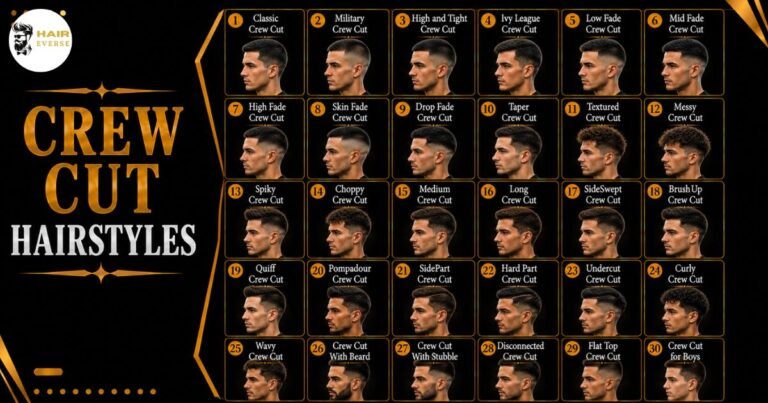
- The crew cut hairstyle remains a popular choice for men who prefer a neat and masculine appearance. Its shorter sides and slightly longer top create a balanced shape that looks sharp with minimal styling. The cut can easily transition from casual settings to professional environments.
- Understanding the cost to open barber shop is an important step before entering the grooming industry. Expenses can include rent, renovations, barber equipment, licenses, furniture, supplies, and marketing. Creating a realistic budget helps prevent unexpected financial pressure during the launch.
- Learning how to start a successful barbershop requires more than simply renting a space and purchasing equipment. A clear business concept, quality services, skilled barbers, and excellent customer care are essential. Building a recognizable identity can also help a new shop stand out from nearby competitors.
Final Thoughts
A pompadour works because it’s genuinely adaptable; the same basic principle of height and back-swept volume can look buttoned-up in a boardroom or bold enough for a night out, depending on the fade, length, and product you choose. What matters most is picking a version that matches the hair you actually have, not the hair in the photo you’re bringing to the barber.
Don’t be afraid to try a shorter, lower-maintenance version first before committing to a full-volume rockabilly pomp. You can always build up the height and drama once you’ve got the daily styling routine down. Ready to find your fit? Book a consultation with your barber and bring this guide along.
FAQs
What is a Pompadour Haircut?
A pompadour is a men’s hairstyle where the top hair is grown longer and brushed up and back to create height, while the sides are cut shorter or faded. It’s one of the most recognizable classic hairstyles, dating back to 1950s icons like Elvis Presley.
Is a Pompadour Hard to Maintain?
It depends on the version. Taller styles like the Full-Volume or Rockabilly Pompadour need daily restyling and strong-hold product, while shorter or textured versions, like the Short or Messy Pompadour, take just a few minutes each morning.
Can you get a Pompadour with Curly Hair?
Yes. The Curly Pompadour is built specifically around a natural curl pattern, using a curl-defining cream and diffuser instead of forcing curls straight, which keeps the look manageable and true to your natural texture.
What Products do you Need for a Pompadour?
At minimum, a strong-hold pomade, wax, or clay for styling, plus a blow dryer and round brush to build height at the root. A texture powder helps with volume for fine or thin hair specifically.
How Long does it take to Style a Pompadour?
Most versions take 5-15 minutes, depending on top length and desired height. Shorter or textured styles style fastest, while full-volume and rockabilly versions take the longest to build and set properly.