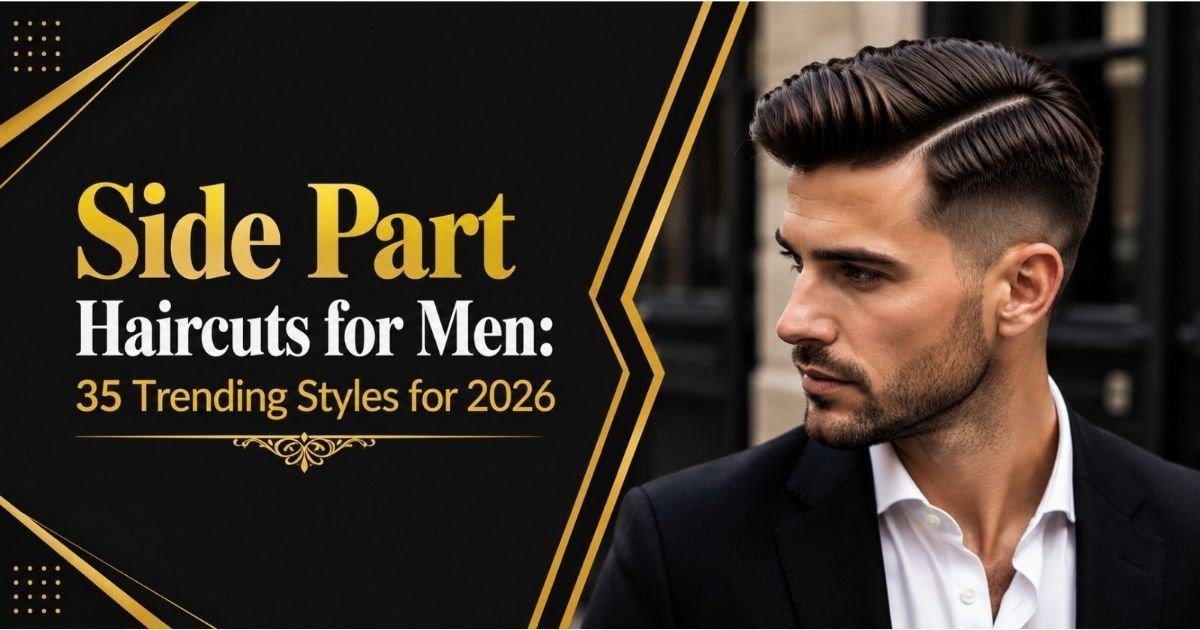
Side Part Haircuts for Men: 35 Trending Styles for 2026
Side part haircuts for men remain one of the most versatile and timeless styles in modern grooming, easily shifting between sharp and professional or relaxed and casual depending on how it’s styled.
The beauty of side part haircuts for men lies in their adaptability pair a crisp, deep part with a skin fade for a bold, structured look, or keep it soft and textured for an easy, everyday vibe. Whatever your hair type or face shape, this guide breaks down 35 trending side part haircuts for men, plus simple tips to keep your style sharp all day long.
The 35 Best Side Part Haircuts for Men
The side part haircut has remained one of the most popular men’s hairstyles because it combines timeless style with modern versatility. Whether you prefer a clean business look, a trendy fade, or a textured finish, there’s a side part to match every hair type, face shape, and lifestyle.
Side Part Haircut Comparison Table
This side part haircut comparison table makes it easy to find the best style based on your hair type, face shape, maintenance level, and daily styling time. Whether you prefer a classic, modern, or trendy look, it helps you compare popular side part variations and choose the one that best fits your lifestyle and grooming routine.
| Hairstyle | Best Hair Type | Face Shape | Maintenance | Styling Time |
| Classic Side Part | Straight, thick | Oval, square | Medium | 5-10 min |
| Hard Part Side Part | Straight, wavy | Oval, round | Medium | 5-8 min |
| Side Part with Skin Fade | Any | Oval, square | High | 8-12 min |
| Side Part with Taper Fade | Any | Oval, round | Medium | 8-10 min |
| Deep Side Part | Straight, wavy | Round, long | Low | 3-5 min |
| 70/30 Side Part | Straight, wavy | Oval, square | Low | 4-6 min |
| Side Part Comb Over | Thinning, fine | Round, long | Medium | 6-10 min |
| Side Part Pompadour | Thick, straight | Oval, long | High | 10-15 min |
| Side Part Quiff | Straight, wavy | Oval, square | Medium | 8-12 min |
| Ivy League Side Part | Straight, thick | Oval, square | Medium | 5-8 min |
| Side Part Undercut | Any | Oval, round | Medium | 6-10 min |
| Textured Side Part | Wavy, thick | Oval, square | Medium | 8-10 min |
| Wavy Side Part | Wavy | Oval, round | Low | 5-8 min |
| Curly Side Part | Curly, coily | Oval, long | Medium | 10-15 min |
| Side Part for Thin Hair | Thin, fine | Oval, heart | Low | 5-7 min |
| Side Part for Thick Hair | Thick | Square, oval | Medium | 8-10 min |
| Long Side Part | Straight, wavy | Long, oval | High | 10-15 min |
| Medium Side Part | Any | Oval, square | Medium | 6-9 min |
| Short Side Part | Straight, thick | Round, square | Low | 3-5 min |
| Side Part with Beard | Any | Square, oval | Medium | 6-10 min |
| Side Part for Receding Hairline | Thinning | Oval, long | Medium | 6-8 min |
| Side Part Crop | Thick, wavy | Oval, square | Low | 4-6 min |
| French Crop Side Part | Thick, straight | Square, oval | Low | 4-6 min |
| Side Part Mullet | Straight, wavy | Oval, long | High | 10-12 min |
| Slicked-Back Side Part | Straight | Oval, square | Medium | 6-8 min |
| Messy Side Part | Wavy, thick | Round, oval | Low | 3-5 min |
| Side Part with Burst Fade | Any | Oval, round | High | 8-12 min |
| Side Part with Low Fade | Any | Oval, square | Medium | 6-9 min |
| Side Part with Mid Fade | Any | Oval, round | Medium | 7-10 min |
| Side Part with High Fade | Any | Oval, square | High | 8-12 min |
| Business Side Part | Straight, thick | Oval, square | Low | 4-6 min |
| Old Money Side Part | Straight, thick | Oval, square | Low | 5-7 min |
| Two-Block Side Part | Thick, straight | Oval, round | Medium | 8-10 min |
| Korean Side Part | Straight, thick | Oval, round | Medium | 8-10 min |
| Side Part with Line Up | Any | Oval, square | High | 6-10 min |
Classic Side Part Haircuts for Men
Overview: The classic side part is the original version of this cut hair combed neatly to one side along a straight, defined line, with the sides kept short and tidy. It’s the style most barbers picture when a client says “side part” without further explanation.
Why It Works: Straight to slightly wavy, medium-to-thick hair holds this part best, and it flatters oval and square face shapes by adding clean vertical lines. It reads as put-together for interviews, weddings, or the office without looking overly formal.
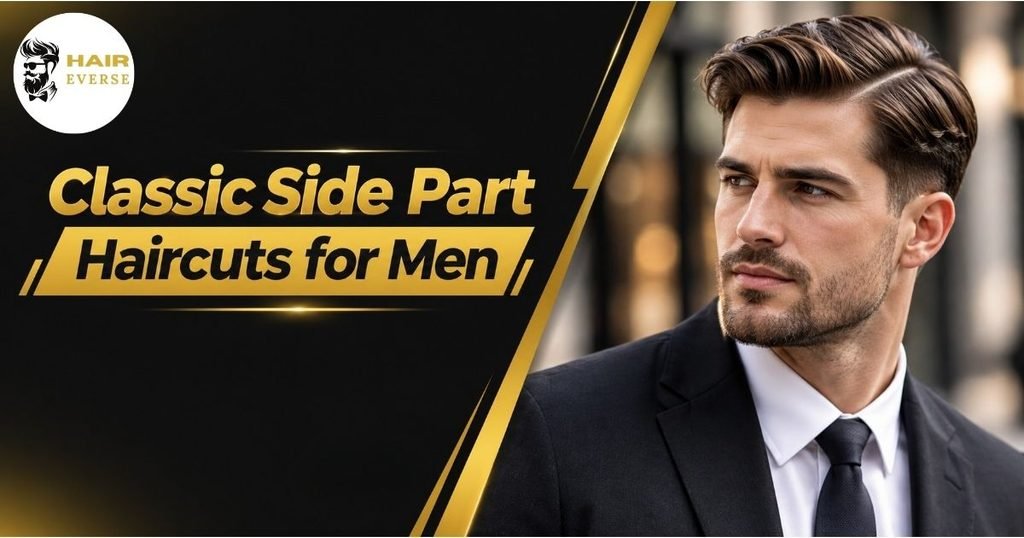
Styling Tip: Comb a dime-sized amount of pomade through damp hair, working from the part outward, then use a fine-tooth comb to sharpen the line while the hair is still slightly damp.
Maintenance: Rebuild the part each morning with a comb rather than just brushing brushing alone tends to blur the line by midday. Maintenance and styling times are estimates and may vary by hair type.
Hard Part Side Part
Overview: Instead of relying on a comb to hold the line, this version has the part shaved directly into the scalp with clippers, usually on a short Caesar-style cut. The result is a permanent, razor-sharp division that doesn’t shift throughout the day.
Why It Works: Because the part is cut in rather than styled in, it works for almost any hair type, including coarse or thick hair that resists holding a comb-created line. It suits round and oval faces particularly well, since the hard line adds visual structure.

Styling Tip: Use a light matte clay on the top section only heavy product can make the shaved line look greasy rather than sharp.
Maintenance: The shaved line needs a touch-up every 2-3 weeks to stay crisp, faster than the rest of the cut grows out. Maintenance and styling times are estimates and may vary by hair type.
Side Part with Skin Fade
Overview: This pairs a defined side part on top with sides faded all the way down to skin, creating maximum contrast between the length on top and the close-cropped sides. It’s one of the boldest, most modern takes on the traditional side part.
Why It Works: Any hair type can wear this since the drama comes from the fade, not the texture on top. Oval and square face shapes handle the high contrast best, since the skin fade draws the eye upward and can make a round face look wider.
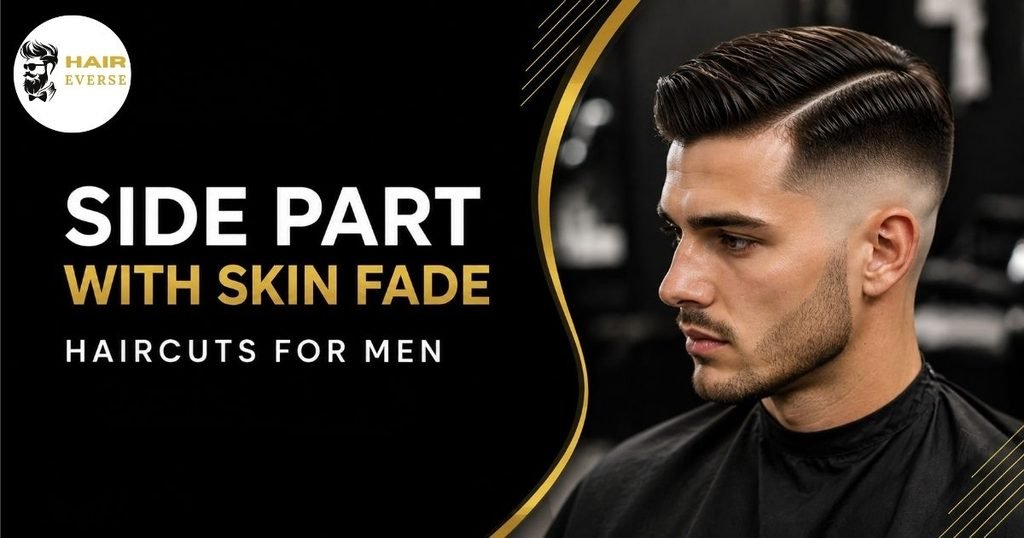
Styling Tip: Blow-dry the top section toward the part using a round brush for lift, then set with a strong-hold pomade so the height survives the day.
Maintenance: Skin fades grow out visibly fast plan on a barber visit every 2 weeks to keep the contrast sharp. Maintenance and styling times are estimates and may vary by hair type.
Side Part with Taper Fade
Overview: A taper fade blends the sides gradually rather than dropping to skin, keeping a bit more length near the ears and neckline. Tapered side part offers a clean, sharp, and timeless look.
Why It Works: This works especially well for thicker or coarser hair, since the gradual blend hides the transition better than a sharp fade would. It suits most face shapes, and it’s a safe choice for workplaces with conservative grooming expectations.
Styling Tip: Use a styling cream rather than pomade if your hair is on the drier side cream adds moisture along with hold, preventing the top from looking flat by evening.
Maintenance: A taper grows out more forgivingly than a skin fade, so trims every 3-4 weeks are usually enough. Maintenance and styling times are estimates and may vary by hair type.
Deep Side Part Haircut
Overview: The deep side part moves the dividing line much lower than usual, closer to above the ear, so significantly more hair falls on one side than the other. It creates a swept, asymmetrical look with minimal effort.
Why It Works: Straight and wavy hair fall into this shape naturally, making it one of the lowest-maintenance options on this list. Round and long face shapes benefit most, since the diagonal line breaks up width or length.
Styling Tip: A few spritzes of sea salt spray on damp hair before air-drying gives the swept side enough texture to hold its shape without stiff product buildup.
Maintenance: Because it relies on natural fall rather than a hard line, this style hides regrowth well between trims. Maintenance and styling times are estimates and may vary by hair type.
70/30 Side Part Haircut Men
Overview: Named for its roughly 70/30 hair distribution, this part sits closer to center than a deep side part but still clearly favors one side. It’s a middle-ground option between the sharp classic side part and the more dramatic deep side part.
Why It Works: It suits straight to wavy hair of medium thickness and works especially well on oval and square faces where a true center part might look too plain. The moderate ratio makes it easy to style quickly without looking overly done.
Styling Tip: Apply a light-hold gel while hair is damp, comb the part into place, then let it air-dry for a more natural, less “set” finish.
Maintenance: This part is forgiving day-to-day since small shifts in the line still look intentional. Maintenance and styling times are estimates and may vary by hair type.
Side Part Comb Over
Overview: A comb over keeps more length on top than a typical side part and sweeps it further across the head, sometimes toward the opposite ear. It offers more coverage and volume than a standard side part while keeping the sides shorter.
Why It Works: This is a strong option for fine or thinning hair, since the extra length on top adds the appearance of fullness. It works particularly well on round and long face shapes, where the horizontal sweep adds width.
Styling Tip: Blow-dry against the direction of the comb over first to build root lift, then comb it into its final position and lock it down with a strong-hold cream.
Maintenance: Keep the sides trimmed shorter than the top on a regular schedule so the length contrast stays intentional rather than shaggy. Maintenance and styling times are estimates and may vary by hair type.
Side Part Pompadour
Overview: This combines a defined side part with pompadour-style volume, where the top is lifted and swept upward and back before falling into place. It’s a bolder, retro-inflected take that still keeps the discipline of a clean part.
Why It Works: Thick, straight hair holds this shape most reliably, since fine hair may need extra product to maintain the lift. Oval and longer face shapes suit it best, as the height elongates the face slightly.
Styling Tip: Blow-dry the roots upward with a round brush before applying a strong-hold clay, working it in while the hair is still warm from the dryer.
Maintenance: This is one of the higher-upkeep styles here, requiring daily restyling since the volume won’t hold overnight. Maintenance and styling times are estimates and may vary by hair type.
Side Part Quiff
Overview: A quiff lifts and pushes the front section of hair upward and slightly forward, while the rest is combed into a clear side part. It’s less structured than a pompadour but still adds noticeable height at the front.
Why It Works: Straight and wavy hair types respond well to the lift, and the added height at the front flatters oval and square faces without overwhelming smaller features. It’s versatile enough for both casual and semi-formal settings.
Styling Tip: Apply texture powder at the roots before blow-drying for lift that lasts, then finish with a light clay to keep the ends from separating too much.
Maintenance: A quick reset with the fingers and a bit of extra product usually restores the shape by midday if it starts to fall. Maintenance and styling times are estimates and may vary by hair type.
Ivy League Side Part
Overview: The Ivy League cut keeps the top slightly longer than a crew cut but still short overall, with tapered sides and a neat side part. It’s one of the most enduring, low-drama versions of this hairstyle.
Why It Works: Straight and thick hair types hold this short length cleanly, and the tidy silhouette flatters oval and square faces in professional settings. It’s an easy style to maintain between barber visits since there’s little length to manage.
Styling Tip: A small amount of styling cream combed through damp hair is usually all this length needs heavier products can weigh the short top down.
Maintenance: Because the cut is short overall, regrowth is less noticeable, so trims every 4 weeks keep it looking sharp without frequent upkeep. Maintenance and styling times are estimates and may vary by hair type.
Side Part Undercut
Overview: An undercut trims the sides and back much shorter than the top, creating a sharp break rather than a gradual fade, then finishes the longer top with a clean side part. The contrast is more abrupt than a fade but reads as equally intentional.
Why It Works: Any hair type can wear this since the top length can be adjusted to suit texture, and the strong contrast flatters oval and round faces by adding structure. It pairs especially well with a beard for a more grown-up finish.
Styling Tip: Work a molding paste through the top for flexible hold that lets you reshape the part throughout the day without stiffness.
Maintenance: The short sides need trimming every 2-3 weeks to keep the contrast with the longer top looking deliberate. Maintenance and styling times are estimates and may vary by hair type.
Textured Side Part
Overview: This version uses layered cutting techniques to add movement and texture to the top, so the part reads as clean but the length around it looks purposefully undone. It’s a modern alternative to the smooth, glossy classic side part.
Why It Works: Wavy and thick hair show off the layering best, since straight, fine hair may look thin rather than textured. It suits oval and square faces and works well for guys who want a side part that doesn’t look too formal.
Styling Tip: Scrunch a matte texture powder or clay into damp hair rather than combing it smooth, to preserve the separated, piece-y look.
Maintenance: Regular trims that maintain the layering are more important than daily styling here ask your barber to keep the layers refreshed every 4-6 weeks. Maintenance and styling times are estimates and may vary by hair type.
Wavy Side Part
Overview: Rather than fighting natural wave patterns, this style works with them, letting the hair fall into a soft side part with visible movement instead of a razor-sharp line. It looks effortless because it largely is.
Why It Works: This is built specifically for wavy hair, where the natural texture does most of the styling work. It suits oval and round faces well, adding softness without looking undone.
Styling Tip: Apply a lightweight sea salt spray or curl cream to damp hair and let it air-dry, guiding the part into place with your fingers rather than a comb.
Maintenance: Avoid over-brushing, which flattens the wave pattern finger-styling preserves the texture better day to day. Maintenance and styling times are estimates and may vary by hair type.
Curly Side Part
Overview: This style keeps extra length on top so the natural curl pattern can be seen and shaped, with a part carved through the curls rather than a flat, combed line. It’s a great way to add structure to curly hair without straightening it.
Why It Works: It’s designed specifically for curly and coily hair types, and the added length on top flatters oval and longer face shapes by adding volume where it’s needed. Shorter sides keep the overall look tidy.
Styling Tip: Apply a curl-defining cream to soaking-wet hair and diffuse-dry on low heat, using your fingers to guide the part while the curls are still setting.
Maintenance: Avoid washing daily, since curly hair holds shape and moisture better with a few days between washes. Maintenance and styling times are estimates and may vary by hair type.
Side Part for Thin Hair
Overview: This version keeps the top at a moderate length and uses lightweight layering to prevent thin hair from looking flat or sparse. The part itself stays modest rather than razor-sharp, since a hard line can emphasize thinning areas.
Why It Works: It’s built specifically for thin or fine hair, and the soft, layered top flatters oval and heart-shaped faces without drawing attention to lower density. Shorter sides keep the proportions balanced.
Styling Tip: Use a lightweight volumizing mousse rather than a heavy pomade, which can weigh thin hair down and make it look thinner, not sharper.
Maintenance: Avoid over-washing, since natural oils help thin hair look fuller every other day is usually enough. Maintenance and styling times are estimates and may vary by hair type.
Side Part for Thick Hair
Overview: Thick hair can overpower a delicate side part, so this version uses heavier layering underneath to reduce bulk while keeping a strong, visible part line on top. It stays structured even with a lot of hair to manage.
Why It Works: It’s designed for thick or coarse hair types, and the reduced bulk flatters square and oval faces by avoiding an overly heavy silhouette. It holds its shape well through humidity and long days.
Styling Tip: A strong-hold clay or wax is usually necessary here lighter products get absorbed quickly by thick hair without providing lasting control.
Maintenance: Regular thinning during trims prevents the top from becoming too heavy between cuts. Maintenance and styling times are estimates and may vary by hair type.
Long Side Part
Overview: This keeps significant length on top, several inches or more, swept dramatically to one side for a bold, flowing silhouette. It’s the longest and most attention-grabbing version of the side part on this list.
Why It Works: Straight to wavy hair with a natural body carries this length best, and it particularly suits long or oval faces that can handle the added visual weight up top. It’s a striking option for guys wanting to stand out.
Styling Tip: Blow-dry with a large round brush to build volume at the roots, then finish with a texture clay so the length doesn’t fall flat by afternoon.
Maintenance: Longer hair needs more frequent washing and conditioning to avoid looking greasy, and trims every 6-8 weeks keep the ends healthy. Maintenance and styling times are estimates and may vary by hair type.
Medium Side Part
Overview: Sitting between short and long, this style offers enough length for movement and volume without requiring the daily commitment of a longer cut. It’s a practical, everyday version of the side part.
Why It Works: It works across most hair types and is especially flattering on oval and square faces, since there’s enough length to add shape without overwhelming the features. It transitions easily from work to weekend.
Styling Tip: A styling cream gives this length a natural-looking hold without the stiffness a stronger clay might add.
Maintenance: This length is forgiving between trims, typically holding its shape well for 5-6 weeks. Maintenance and styling times are estimates and may vary by hair type.
Short Side Part Haircuts for Men
Overview: This trims the top down to a short, close length while still leaving enough hair to comb a visible part. It’s the fastest and lowest-effort version of the style to maintain day to day.
Why It Works: Straight and thick hair holds a short part cleanly, and the tight silhouette flatters round and square faces by keeping the focus on facial structure rather than hair volume. It’s a practical choice for active lifestyles.
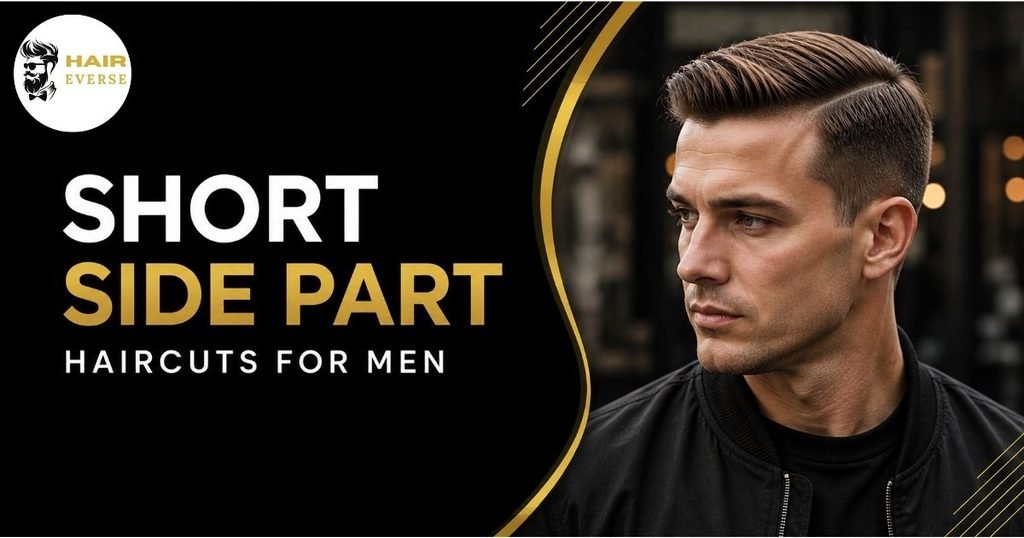
Styling Tip: A small amount of matte clay is usually enough to set a short top there isn’t enough length here for heavier styling products to be useful.
Maintenance: Short cuts show regrowth fastest, so plan on trims every 3 weeks to keep the part crisp. Maintenance and styling times are estimates and may vary by hair type.
Side Part with Beard
Overview: This isn’t a different cut so much as a styling pairing any side part variation combined with a fuller beard, with the sides of the haircut blended to meet the beard line smoothly. It creates a cohesive, grown-up look from hairline to jaw.
Why It Works: It works with any hair type, and the added facial hair balances square and oval faces particularly well by adding definition to the jawline. The key is making sure the barber blends the haircut and beard together rather than treating them separately.
Styling Tip: Use a beard oil alongside your usual hair product so both areas have consistent shine and texture rather than looking mismatched.
Maintenance: Beard trims should happen on roughly the same schedule as haircuts so the two never grow noticeably out of sync. Maintenance and styling times are estimates and may vary by hair type.
Side Part for Receding Hairline
Overview: This positions the part further back and keeps slightly more length at the front so hair can be styled across thinning areas rather than away from them. The sides stay shorter to keep the overall proportions balanced.
Why It Works: It’s designed for thinning or receding hairlines specifically, and it suits oval and longer faces by softening the forehead area. It avoids drawing extra attention to the hairline the way a very short or slicked-back style might.
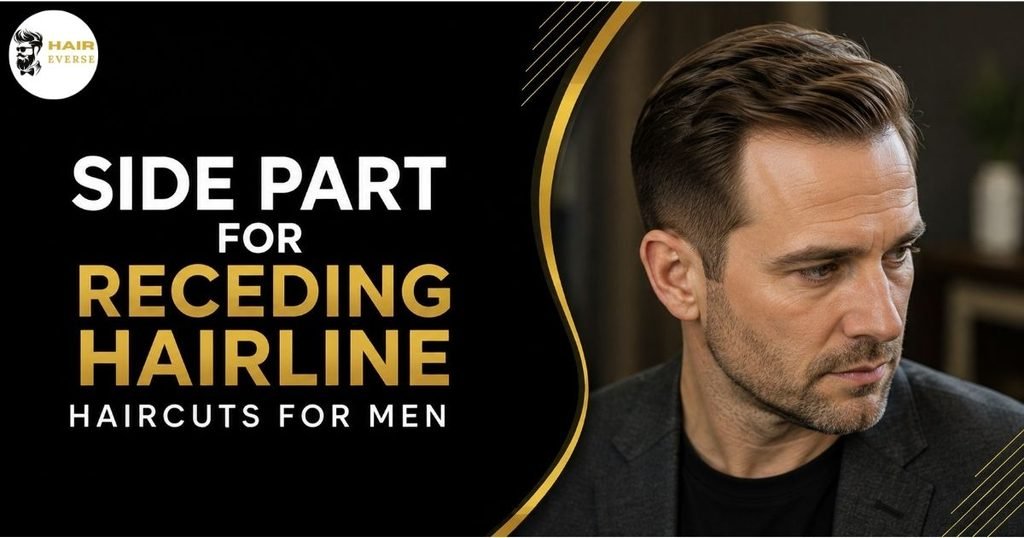
Styling Tip: A pomade with light hold and shine helps smooth the front section into place without looking stiff or overly styled.
Maintenance: Keeping the sides trimmed short reduces the contrast with the thinning top, making regrowth less noticeable between cuts. Maintenance and styling times are estimates and may vary by hair type.
Side Part Crop
Overview: A crop keeps the top short and textured with a fringe that falls forward, and a subtle part carved through it rather than a fully combed line. It’s a casual, low-fuss take on the side part of the family.
Why It Works: Thick and wavy hair holds the cropped texture best, and it flatters oval and square faces with a relaxed, youthful finish. It works well for guys who want the idea of a side part without the daily upkeep of a sharp one.
Styling Tip: Work a small amount of clay through dry hair with your fingers rather than a comb to keep the cropped texture looking natural.
Maintenance: This style needs regular trims to keep the fringe from growing past the eyebrows and losing its shape. Maintenance and styling times are estimates and may vary by hair type.
French Crop Side Part
Overview: This pairs the classic French crop’s straight-across fringe with faded sides and a subtle part running through the fringe rather than off to one side dramatically. It’s a modern, minimalist variation.
Why It Works: Thick, straight hair holds the blunt fringe shape best, and it suits square and oval faces by framing the forehead cleanly. It’s an efficient style for guys who don’t want to spend much time in front of the mirror.
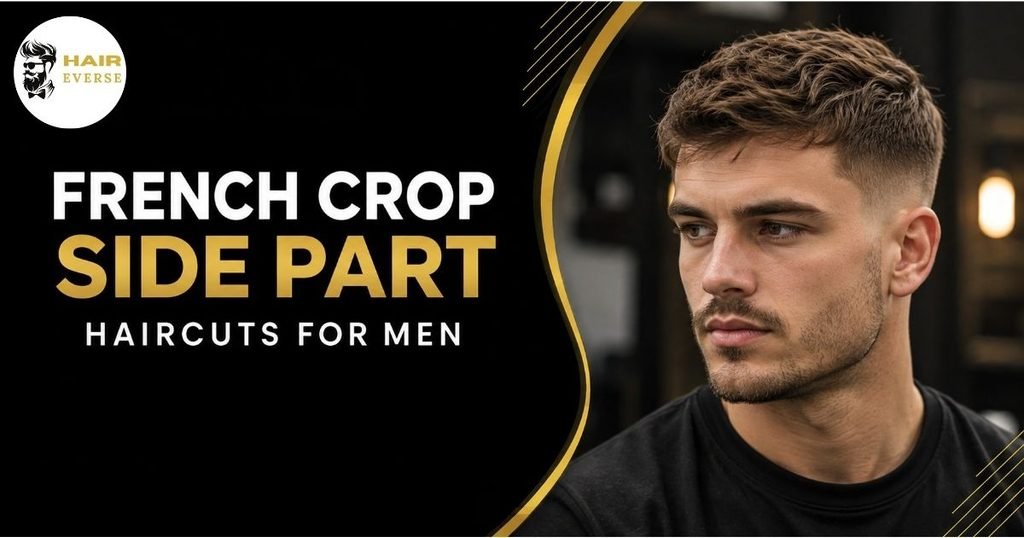
Styling Tip: Apply a light matte paste and press the fringe forward and slightly down rather than up, to keep the French crop’s signature low profile.
Maintenance: Trim every 3-4 weeks to keep the fringe from growing long enough to droop into the eyes. Maintenance and styling times are estimates and may vary by hair type.
Side Part Mullet
Overview: This blends the retro mullet silhouette, short sides and top with longer hair at the back, with a defined side part running through the top section. It’s a bolder, trend-forward pick for guys comfortable standing out.
Why It Works: Straight to wavy hair handles the length contrast well, and the style suits oval and longer face shapes since the visual weight sits toward the back and sides rather than the front. It works especially well for a more alternative or creative dress code.
Styling Tip: Style the top and back separately clay for hold on the parted top, a texturizing spray for movement in the longer back section.
Maintenance: The top and back grow at different visual rates, so ask your barber to maintain the contrast at each visit rather than letting it blur together. Maintenance and styling times are estimates and may vary by hair type.
Slicked-Back Side Part
Overview: This combs the top back and to one side with a high-shine finish, closer to a traditional slick-back but retaining a visible part rather than eliminating it entirely. It reads as polished and formal.
Why It Works: Straight hair takes the glossy finish most evenly, and the sleek silhouette flatters oval and square faces especially well in professional or formal settings. It’s a strong choice for interviews or events.
Styling Tip: A water-based pomade with high shine gives this look its signature glossy finish without the stiffness of wax-based products.
Maintenance: Reapply a small amount of product midday if the shine starts to fade, rather than a full restyle. Maintenance and styling times are estimates and may vary by hair type.
Messy Side Part Haircuts for Older Man
Overview: This keeps the defined part line but leaves the rest of the top deliberately tousled rather than combed smooth, striking a balance between structure and a relaxed, undone finish. It’s one of the more forgiving styles to maintain.
Why It Works: Wavy and thick hair create the tousled texture most naturally, and it suits round and oval faces with a casual, youthful energy. It’s an easy everyday option that doesn’t require precision styling.
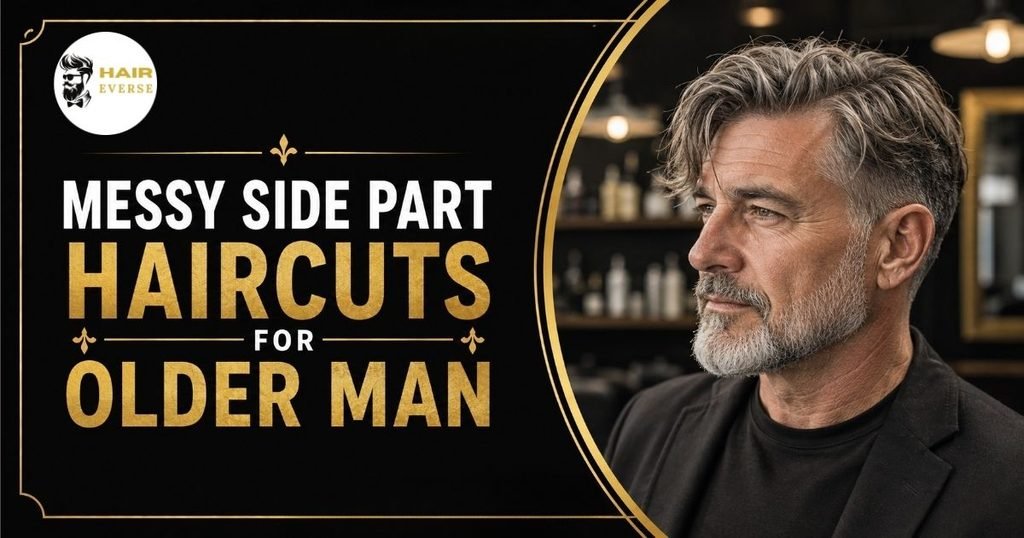
Styling Tip: Scrunch a small amount of texture clay through damp hair with your fingers, then leave it to air-dry rather than smoothing it with a brush.
Maintenance: This style actually benefits from a day or two of natural buildup, since slightly dirty hair holds texture better than freshly washed hair. Maintenance and styling times are estimates and may vary by hair type.
Side Part with Burst Fade
Overview: A burst fade curves the fade specifically around the ear rather than running it evenly across the whole side, leaving more length toward the back. Paired with a side part on top, it creates an asymmetrical, detailed finish.
Why It Works: It works with any hair type since the fade does the visual work, and it flatters oval and round faces by adding sharp definition near the temple. It’s a detailed style best suited to barbers experienced with precision fades.
Styling Tip: Keep product minimal near the faded area and concentrate it on top, so the contrast between the smooth fade and textured top stays crisp.
Maintenance: Burst fades need touch-ups every 2 weeks since the curved line around the ear grows out unevenly. Maintenance and styling times are estimates and may vary by hair type.
Side Part with Low Fade
Overview: A low fade keeps most of the side length intact and only fades close to the hairline and neckline, making it the most subtle fade option paired with a side part. It’s a safe middle ground for guys new to fades.
Why It Works: It suits any hair type and works well on oval and square faces without drawing too much attention to the sides. It’s an easy style to maintain since the fade line sits low and grows out gradually.
Styling Tip: Focus your styling product on the top section a low fade needs little to no product on the sides to look finished.
Maintenance: Trims every 4 weeks are usually enough, since a low fade grows out more gracefully than a high or skin fade. Maintenance and styling times are estimates and may vary by hair type.
Side Part with Mid Fade
Overview: A mid fade sits between low and high, starting the blend around temple height for a balanced amount of contrast. Combined with a side part, it offers noticeable definition without the boldness of a high or skin fade.
Why It Works: Any hair type can wear a mid fade, and it flatters oval and round faces by adding moderate structure. It’s a versatile choice that works equally well in casual and professional settings.
Styling Tip: Use a texture powder at the roots for lift before combing the part into place, which helps the top stand out against the faded sides.
Maintenance: A mid fade typically needs a refresh every 3 weeks to keep the blend looking clean. Maintenance and styling times are estimates and may vary by hair type.
Side Part with High Fade
Overview: A high fade starts the blend well above the ear, leaving only a small amount of length on top for a dramatic contrast with the side part. It’s the boldest, most attention-grabbing fade pairing on this list.
Why It Works: It works with any hair type and suits oval and square faces best, since the high contrast draws the eye upward and can slim a rounder face shape. It’s best worn with confidence, since it’s a noticeable, statement-making cut.
Styling Tip: A strong-hold pomade or clay is essential here the small amount of length on top needs to hold its shape without any help from surrounding hair.
Maintenance: High fades grow out the fastest of any fade style, so weekly touch-ups may be necessary to keep the contrast sharp. Maintenance and styling times are estimates and may vary by hair type.
Business Side Part
Overview: The best side part haircuts for men combine classic style with a sharp, modern finish. This keeps the cut conservative overall, moderate length on top, tapered sides, and a clean, understated part, built specifically for professional environments.
Why It Works: Straight and thick hair holds this style most consistently through a full workday, and it flatters oval and square faces in a way that reads as reliable and put-together. It’s a dependable choice for client-facing roles.
Styling Tip: A light-hold pomade keeps this look neat without excessive shine, which can appear less professional in some workplace settings.
Maintenance: Regular trims every 3-4 weeks keep this style looking consistently tidy, which matters more here than in more casual cuts. Maintenance and styling times are estimates and may vary by hair type.
Old Money Side Part
Overview: This style favors a soft, natural-looking taper over a sharp fade, with medium length on top combed cleanly to one side. The part looks understated rather than razor-precise, aiming for an heirloom, quietly polished aesthetic.
Why It Works: Straight and thick hair carries this natural volume best, and it flatters oval and square faces with a classic, unfussy silhouette. It pairs well with a more traditional, tailored personal style.
Styling Tip: Blow-dry with light lift at the front, then use a small amount of pomade for a subtle sheen rather than a high-shine finish.
Maintenance: Because the taper is soft rather than sharp, this style grows out gracefully and can go 5-6 weeks between trims. Maintenance and styling times are estimates and may vary by hair type.
Two-Block Side Part
Overview: Originating from Korean barbering, the two-block cut keeps the sides and back noticeably shorter, then leaves significantly more length on top, styled here with a defined part. The two lengths create a distinct, layered silhouette.
Why It Works: Thick and straight hair holds the top’s volume most effectively, and the style flatters oval and round faces by adding height and structure. It’s a popular choice among guys drawn to K-pop-influenced grooming trends.
Styling Tip: Blow-dry the top forward and into the part, then set with a styling cream for movement that still holds through the day.
Maintenance: The two length zones need separate attention at each trim to keep the contrast between them looking sharp. Maintenance and styling times are estimates and may vary by hair type.
Korean Good Side Part Haircut Men
Overview: This style favors soft, rounded volume over sharp lines, with the top styled slightly upward and back before falling into a gentle side part. Tapered sides keep the overall look neat without harsh contrast.
Why It Works: Straight and thick hair hold this soft volume most reliably, and it flatters oval and round faces with a youthful, controlled fullness. It’s a popular style for guys wanting a modern look that still feels tidy.
Styling Tip: Use a styling cream first for shape, then a texture powder at the roots for lift that lasts through humidity.
Maintenance: Regular trims every 3-4 weeks keep the top’s volume looking intentional rather than overgrown. Maintenance and styling times are estimates and may vary by hair type.
Side Part with Line Up
Overview: A line up adds a crisp, razor-defined edge along the hairline and temples, sharpening the frame around any side part variation underneath it. It’s less a standalone cut than a finishing detail that makes the whole style look freshly done.
Why It Works: It works with any hair type and flatters oval and square faces by adding a clean geometric edge around the face. It’s a popular add-on for guys who want their haircut to look barbershop-fresh for as long as possible.
Styling Tip: Avoid heavy products near the line up itself it can blur the sharp edge and keep styling focused on the top section instead.
Maintenance: A line up fades fastest of any detail here, often needing a touch-up within a week or two to stay crisp. Maintenance and styling times are estimates and may vary by hair type.
How To Choose The Right Hairstyle
The right side depends on two things: your hair’s natural texture and your face shape. Here’s a beginner-friendly breakdown.
By Hair Type
- Thick hair: Look for styles with fades or tapers to reduce bulk (Side Part with Skin Fade, Side Part for Thick Hair)
- Thin hair: Choose softer, layered options that add the appearance of volume rather than a razor-sharp line (Side Part for Thin Hair, Messy Side Part)
- Curly hair: Keep more length on top so the part can be carved through the curl pattern rather than fighting it (Curly Side Part)
- Straight hair: Almost any style on this list works, since straight hair holds a defined part most easily (Classic Side Part, Slicked-Back Side Part)
- Wavy hair: Lean into styles that work with natural movement rather than forcing a flat finish (Wavy Side Part, Textured Side Part)
By Face Shape
- Oval: The most versatile face shape nearly every style on this list works well
- Round: Styles with height or a high-contrast fade help add structure (Side Part Pompadour, Side Part with High Fade)
- Square: Clean, defined lines complement strong jaw structure (Classic Side Part, Ivy League Side Part)
- Long: Fuller tops and softer parts avoid elongating the face further (Long Side Part, Side Part Comb Over)
You may also read about: Hairstyles for Men
How To Ask Your Barber For This Style
A great side part starts before the clippers ever touch your hair. These tips help you leave the chair with the exact cut you pictured.
- Bring a reference photo of the specific style, not just “a side part”
- Explain your preferred length on top in inches or fingers, not just “shorter” or “longer”
- Mention your daily styling routine so your barber can cut for how you’ll actually maintain it
- Ask specifically about maintenance frequency for that cut before committing
- Explain your workplace or lifestyle needs, such as a conservative office dress code
- Confirm the final part placement and fade height before the barber starts cutting
Product Recommendations
Hair Cream
- Best For: Fine to medium hair needing natural, flexible hold
- How To Use: Work a dime-sized amount through damp hair before styling, focusing on the top section
Pomade
- Best For: Classic, glossy finishes like the Classic Side Part or Slicked-Back Side Part
- How To Use: Warm a small amount between your palms, then comb through from root to tip along the part line
Wax
- Best For: Shorter styles needing a strong, matte hold
- How To Use: Rub a pea-sized amount between fingertips until warm, then work through dry or towel-dried hair
Clay
- Best For: Thick or textured hair needing volume without shine
- How To Use: Break up a small amount in your palms and apply to damp hair, scrunching for texture rather than combing smooth
Shampoo
- Best For: Removing product buildup before restyling, especially for high-maintenance fades
- How To Use: Use 2-3 times per week; over-washing can strip natural oils that help hold a part
Conditioner
- Best For: Keeping longer or curlier side part styles manageable and frizz-free
- How To Use: Apply after shampooing, focusing on mid-lengths and ends, and rinse with cool water for extra shine
Build and Manage a Successful Barbershop
- How to find a good barber starts with choosing someone who understands your hair type, face shape, and preferred style. A skilled professional listens carefully and recommends a haircut that suits your overall appearance.
- Spiky Hairstyles for Men offer a bold and stylish look that works with many modern haircuts. From subtle textured spikes to dramatic styles, there are plenty of options to match your personality.
- Start a successful barbershop by creating a strong business plan, choosing the right location, delivering excellent service, and building a loyal customer base through effective marketing and consistent quality.
Final Thoughts
A side part works because it adapts to whatever you bring to it, straight or curly, thick or fine, low-key or bold. The 35 styles above cover that full range, and the comparison table earlier in this guide is worth bookmarking the next time you’re due for a trim and can’t decide what to ask for.
Don’t be afraid to try a variation you haven’t worn before. A fade or a bit of texture can update a classic look without losing what made it work in the first place, and your barber can always dial a style back if it turns out to be more than you wanted. Bring this guide with you for your next appointment and start the conversation from there.
FAQs
What is a Side Part Haircut?
A side part haircut is a men’s hairstyle where hair is combed to one side along a defined line. It works with straight, wavy, curly, or thick hair and suits both formal and casual settings depending on how it’s styled.
Is a Side Part in Style in 2026?
Yes, the side part remains one of the most consistently popular men’s hairstyles. It continues to evolve through fade pairings, textured tops, and modern variations rather than going out of fashion.
How Often Should I Trim a Side Part?
Most side part styles need a trim every 3-4 weeks to stay sharp. Fades and line ups grow out
Can I get a Side Part with Curly Hair?
Yes, curly hair works well with a side part if extra length is kept on top. A curl-defining cream and diffuser help shape the curls around the part line.
Does a Side Part Suit Thin Hair?
Yes, a side part can suit thin hair when paired with lightweight layering and a volumizing product. Avoid heavy pomades, which can weigh thin hair down and reduce the appearance of fullness.
How to Cut Men’s Hair with Side Parting?
To cut a men’s side parting, comb wet hair to find the natural part line and separate the top from the sides. Use clippers with a short guard on the back and sides, then use scissors to trim the top longer and blend it smoothly.
How to Cut Men’s Side Part Haircut?
To cut a men’s side part, comb wet hair to set the parting line and separate the top section. Clipper the back and sides short, then use scissors to trim the top longer and blend it smoothly.