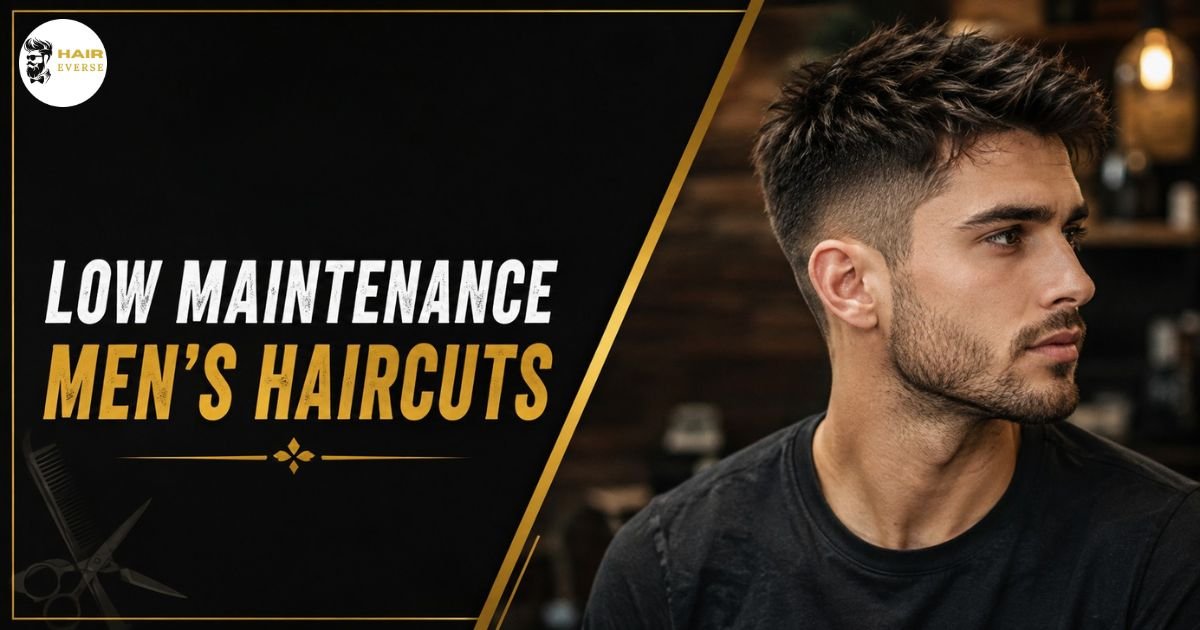
Low Maintenance Men’s Haircuts: 35 Easy and Clean Styles
Low maintenance men’s haircuts are designed to keep their shape with minimal styling, making them ideal for busy lifestyles. The best choice depends on your hair type, face shape, and personal routine.
This guide features 35 low maintenance men’s haircuts for 2026, organized by hair type and face shape, along with expert barber recommendations to help you find a sharp, effortless style that requires little daily upkeep.
Low Maintenance Men’s Haircuts Comparison Table
The table shows the comparison of low maintenance men’s haircuts including different hairstyles, along with best hair type, face shape, maintenance requirements, and styling time.
| Hairstyle | Best Hair Type | Face Shape | Maintenance | Styling Time |
| Classic Buzz Cut | All types | Oval, square | Low | 0 minutes |
| Crew Cut | All types | Any | Low | 2-3 minutes |
| Ivy League Cut | Straight, wavy | Oval, long | Medium | 5 minutes |
| Caesar Cut | Straight, thick | Round, square | Low | 3 minutes |
| French Crop | Thick, wavy | Square, oval | Medium | 5 minutes |
| Textured Crop | Thick, wavy | Any | Medium | 5-7 minutes |
| Taper Fade Textured Top | All types | Any | Medium | 5 minutes |
| Skin Fade Buzz Cut | All types | Oval, square | Low | 0-2 minutes |
| Induction Cut | All types | Round, oval | Lowest | 0 minutes |
| Butch Cut | Thick | Square, round | Low | 1 minute |
| Low-Maintenance Slick Back | Straight | Oval, long | Medium | 5-8 minutes |
| Classic Side Part | Straight, fine | Oval, long | Medium | 5 minutes |
| Comb-Over Fade | Straight, wavy | Round, square | Medium | 5-6 minutes |
| Low Fade Crew Cut | All types | Any | Low | 3 minutes |
| High and Tight | Thick | Square, round | Low | 1 minute |
| Curly Crop with Fade | Curly | Round, oval | Medium | 5 minutes |
| Wash-and-Go Curls | Curly | Any | Low | 2-3 minutes |
| Wavy Textured Crop | Wavy | Oval, square | Medium | 5 minutes |
| Natural Curtains | Wavy, straight | Oval, long | Medium | 4-6 minutes |
| Center-Part Straight Crop | Straight, fine | Oval, round | Low-Medium | 4 minutes |
| Textured Fringe | Fine, thin | Round, square | Medium | 5 minutes |
| Short Pompadour | Thick, wavy | Oval, long | Medium | 6-8 minutes |
| Faux Hawk Crop | Thick | Square, oval | Medium | 5 minutes |
| Spiky Crop | Thick | Round, oval | Medium | 4-5 minutes |
| Brush-Up Crop | All types | Any | Low-Medium | 3-4 minutes |
| Disconnected Undercut | All types | Oval, square | Medium | 5 minutes |
| Man Bun with Undercut | Long, thick | Any | Medium | 3-5 minutes |
| Short Top Knot | Long, straight/wavy | Oval, round | Medium | 4 minutes |
| Mini Quiff | Thick, wavy | Oval, long | Medium | 5 minutes |
| Boys’ Buzz Cut | All types | Any | Lowest | 0 minutes |
| Boys’ Crew Cut | All types | Any | Low | 2 minutes |
| Boys’ Caesar Cut | Straight, thick | Round, square | Low | 2-3 minutes |
| Boys’ Textured Crop | Thick, wavy | Any | Medium | 3-4 minutes |
| Fine Thin Hair Crop | Thin | Oval, round | Low-Medium | 4 minutes |
| Thick Hair Taper | Thick | Square, round | Medium | 5 minutes |
Low Maintenance Men’s Haircuts
Low maintenance men’s haircuts are designed to keep you looking neat and stylish with minimal daily effort. These easy-to-manage styles suit different hair types and lifestyles, making them perfect for busy men who want a clean, polished look without spending extra time on grooming.
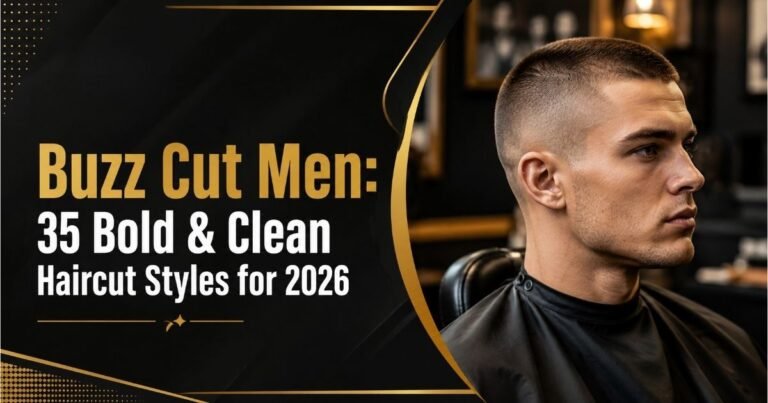
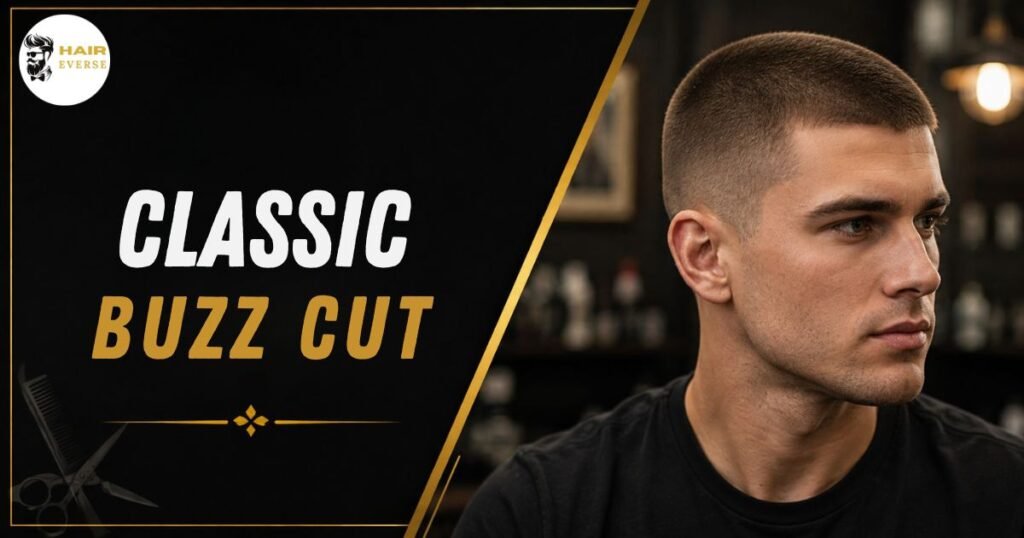
Classic Buzz Cut
Overview: An all-over clipper cut using a single guard length, usually a #2 or #3, with no separation between the top and sides.
Why It Works: Works on almost any hair type and hides thinning patches well, and suits oval or square face shapes since it doesn’t add extra width or length.
Styling Tip: There’s genuinely nothing to style, but a small amount of matte clay rubbed over damp hair adds a subtle texture if you want more than a plain shave-and-go look.
Maintenance: Rebook every three to four weeks before the guard lines start blurring at the neckline. Maintenance and styling times are estimates and may vary by hair type.
Crew Cut
Overview: Short, tapered sides paired with a slightly longer top, usually left at around an inch, giving a clean military-inspired shape.
Why It Works: Suits thick or coarse hair particularly well since the shorter length reduces bulk, and it flatters most face shapes by keeping the silhouette tight and neat.
Styling Tip: Rub a dime-sized amount of texture powder into towel-dried hair to lift the roots without stiffness.
Maintenance: Ask your barber to keep the taper blended each visit so the sides don’t grow out into an awkward shelf. Maintenance and styling times are estimates and may vary by hair type.
Ivy League Cut
Overview: A longer cousin of the crew cut, with one and a half to two inches on top left long enough to comb into a soft side part.
Why It Works: Straight and wavy hair holds this shape best, and the length balances out longer or oval face shapes nicely.
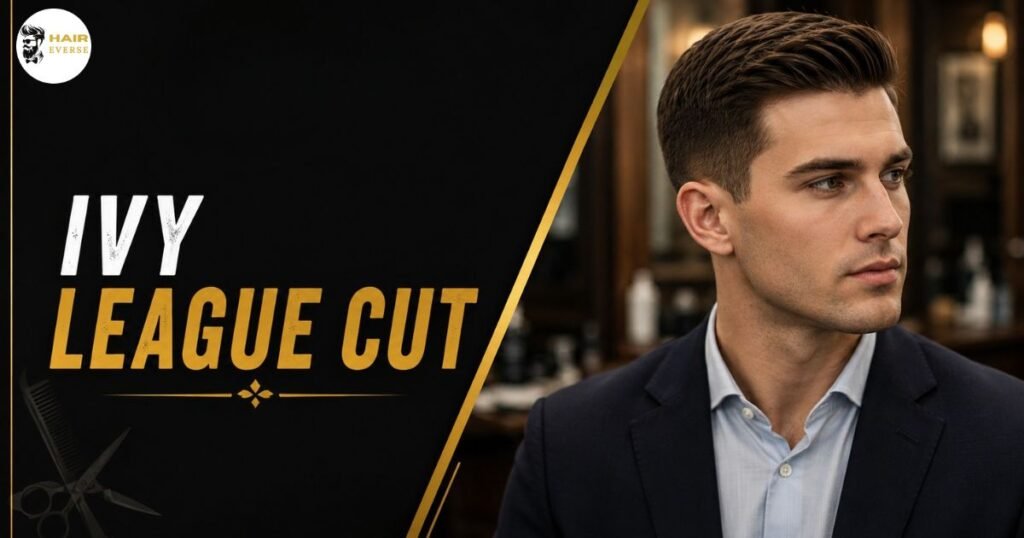
Styling Tip: A light hold cream, worked through damp hair before combing, keeps the part crisp without looking greasy.
Maintenance: A trim every four to five weeks keeps the part line from drifting as the top grows. Maintenance and styling times are estimates and may vary by hair type.
Caesar Cut
Overview: Short, even length all around with a horizontal fringe cut just above the eyebrows, popularized by classic Roman-style crops.
Why It Works: Works especially well for straight or thick hair and rounds out square or angular jawlines by softening the forehead line.
Styling Tip: Comb a small amount of pomade through the fringe forward for a natural, non-shiny finish.
Maintenance: This cut holds its own shape well between visits, but book a trim every three to four weeks so the fringe doesn’t creep past the brow. Maintenance and styling times are estimates and may vary by hair type.
French Crop
Overview: Short faded or tapered sides with a textured, blunt fringe left slightly longer on top for definition.
Why It Works: Thick and wavy hair types show off the texture best, and the blunt fringe can visually shorten a longer face shape.
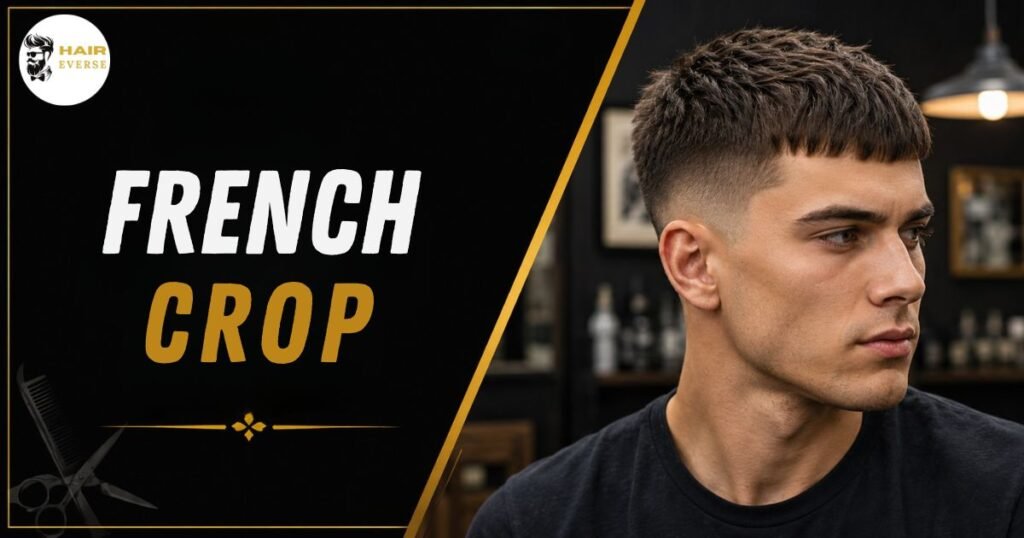
Styling Tip: Apply sea salt spray to damp hair and scrunch with your fingers before it air dries for natural movement.
Maintenance: Because the fringe grows forward first, plan on a trim every three to four weeks to keep it off your eyebrows. Maintenance and styling times are estimates and may vary by hair type.
Textured Crop
Overview: Choppy, uneven layers on top paired with short or faded sides, giving a deliberately messy but structured finish.
Why It Works: Suits thick and wavy hair since the layering removes bulk, and the broken top line works on almost every face shape.
Styling Tip: Work a small amount of matte paste between your palms, then rake it through dry hair with your fingers rather than a comb.
Maintenance: Book a trim every four weeks to keep the choppy layers from growing into a shapeless mop. Maintenance and styling times are estimates and may vary by hair type.
Taper Fade with Textured Top
Overview: A gradual taper fade on the sides that blends into a textured, slightly longer top with visible separation.
Why It Works: This is one of the most flexible cuts across hair types and works on nearly every face shape thanks to the soft, gradual blend.
Styling Tip: A small amount of hair clay gives definition to individual pieces without looking wet or heavy.
Maintenance: Get the fade refreshed every three weeks since tapers grow out faster around the ears than on top. Maintenance and styling times are estimates and may vary by hair type.
Skin Fade Buzz Cut
Overview: A short buzzed top combined with sides faded down to skin, creating sharp contrast without any length up top to manage.
Why It Works: Great for thick or coarse hair that resists lying flat, and the skin fade sharpens an oval or square face shape.
Styling Tip: If you want a slight sheen, rub a fingertip of hair cream across the top only.
Maintenance: The skin fade needs refreshing every two to three weeks, faster than the buzzed top itself, so plan visits around the fade line. Maintenance and styling times are estimates and may vary by hair type.
Induction Cut
Overview: An extremely short, uniform clipper cut using a #0 or #1 guard across the entire head, sometimes called a “zero cut.”
Why It Works: Ideal for thick or thinning hair alike, and it draws attention to strong facial features on round or oval face shapes.
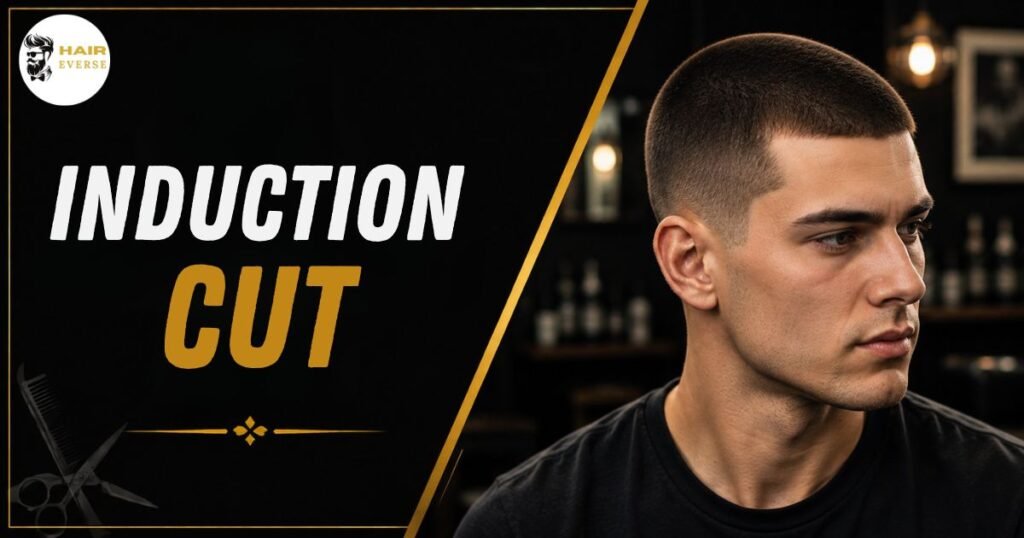
Maintenance: Because there’s so little length, you can stretch visits to five or six weeks before it looks noticeably grown out. Maintenance and styling times are estimates and may vary by hair type.
Styling Tip: No product needed, though a light scalp moisturizer keeps the skin comfortable if you’re prone to dryness.
Butch Cut
Overview: A slightly longer version of the buzz cut, usually a #3 or #4 guard, giving a touch more length while staying essentially wash-and-go.
Why It Works: Thick hair types benefit most since the extra length still resists getting unruly, and it suits square or round face shapes well.
Styling Tip: Run a small amount of matte cream through damp hair for a slight matte finish rather than a shiny one.
Maintenance: A trim every four weeks keeps the guard length consistent as it grows past the original cut line. Maintenance and styling times are estimates and may vary by hair type.
Low-Maintenance Slick Back
Overview: Medium to long hair on top, combed straight back off the face, with a short taper or low fade on the sides to keep the overall look controlled.
Why It Works: Straight hair holds this shape most reliably, and the swept-back top elongates a rounder face shape.
Styling Tip: Work a small amount of thick styling cream through damp hair before combing back, then set with a quick blast of cool air from a blow dryer.
Maintenance: Trim the sides every three weeks so the taper doesn’t outgrow the swept-back top. Maintenance and styling times are estimates and may vary by hair type.
Classic Side Part
Overview: A defined part on one side of the head with the top combed neatly across, a traditional professional-looking style.
Why It Works: This is one of the better low maintenance men’s haircuts for straight, fine hair since it relies on natural fall rather than heavy texture.
Styling Tip: A light-hold pomade combed through damp hair keeps fine hair from looking flat by midday.
Maintenance: Trim every four to five weeks, and touch up the part line yourself between cuts with a fine-tooth comb. Maintenance and styling times are estimates and may vary by hair type.
Comb-Over Fade
Overview: Longer hair on top combed over to one side, contrasted with a tapered or faded side, giving a sharp, structured look.
Why It Works: Wavy and straight hair types both take well to this style, and the combed-over top can visually narrow a round face.
Styling Tip: Use a wide-tooth comb with a small amount of styling cream to direct the top hair cleanly to one side.
Maintenance: The fade needs a refresh every three weeks even though the top itself can go longer between trims. Maintenance and styling times are estimates and may vary by hair type.
Low Fade Crew Cut
Overview: A crew cut with the fade starting lower, just above the ears, for a subtler transition than a high or skin fade.
Why It Works: This gentler fade line suits nearly any hair type and works especially well for men who want something office-appropriate.
Styling Tip: A dab of matte clay on top adds texture without drawing attention to the fade itself.
Maintenance: The lower fade line grows out more slowly than a high fade, so four weeks between visits usually works fine. Maintenance and styling times are estimates and may vary by hair type.
High and Tight
Overview: Very short, tightly faded sides and back with a small amount of length left on top, a classic military-inspired cut.
Why It Works: Thick hair looks especially clean in this style, and the tight sides suit square or round face shapes by adding visual length.
Styling Tip: If you want the top to sit up slightly, a small amount of matte wax pushed in with your fingers does the job.
Maintenance: Because the fade is so tight, book a trim every two to three weeks to keep the contrast sharp. Maintenance and styling times are estimates and may vary by hair type.
Curly Crop with Fade
Overview: Natural curls left with enough length to show their shape on top, paired with a low or mid fade on the sides for contrast.
Why It Works: Purpose-built for curly hair, since faded sides reduce bulk while letting the curls stay the star of the look.
Styling Tip: Apply a curl-defining cream to damp curls and let them air dry to avoid frizz from heat styling.
Maintenance: Curls hide regrowth well, so a trim every five to six weeks is usually enough. Maintenance and styling times are estimates and may vary by hair type.
Wash-and-Go Curls
Overview: Curls kept at a uniform medium length all over with no fade or hard lines, letting the natural curl pattern do the work.
Why It Works: This is about as close to zero-effort as curly hair gets, and it flatters oval and round face shapes by adding soft volume.
Styling Tip: Scrunch a lightweight curl cream through soaking-wet hair, then let it dry naturally without touching it.
Maintenance: Trim every six to eight weeks since there’s no fade to grow out, just length to manage. Maintenance and styling times are estimates and may vary by hair type.
Wavy Textured Crop
Overview: A textured crop cut specifically to work with natural wave pattern instead of fighting it, with tapered sides underneath.
Why It Works: Wavy hair holds texture longer than straight hair, so this cut needs less daily upkeep than it looks like it should.
Styling Tip: Sea salt spray on damp hair enhances the wave pattern instead of flattening it.
Maintenance: A trim every four weeks keeps the waves from getting weighed down by excess length. Maintenance and styling times are estimates and may vary by hair type.
Natural Curtains
Overview: Medium-length hair parted down the middle and left to fall naturally to either side, blended into shorter or tapered sides.
Why It Works: Wavy or slightly textured hair falls into this shape with the least effort, and the framing suits longer or oval face shapes.
Styling Tip: Condition more than you shampoo to keep the strands soft enough to fall naturally, then finger-part while damp.
Maintenance: Trim every five weeks to keep the length balanced so both sides fall evenly. Maintenance and styling times are estimates and may vary by hair type.
Center-Part Straight Crop
Overview: A straight, sleek center part with a slightly longer top, built specifically around fine or straight hair that lies flat naturally.
Why It Works: One of the better low maintenance men’s haircuts for a straight fine hair type, since it works with the hair’s natural fall instead of forcing volume.
Styling Tip: A lightweight leave-in cream keeps fine strands from looking limp without adding heaviness.
Maintenance: Trim every four weeks since fine hair shows split ends and shapelessness faster than thicker types. Maintenance and styling times are estimates and may vary by hair type.
Textured Fringe
Overview: A choppy, textured fringe left slightly longer at the front, paired with shorter sides to create the illusion of extra density.
Why It Works: This is a strong pick among low maintenance men’s haircuts for thin hair, since textured layering visually adds thickness without extensions or products doing all the work.
Styling Tip: A texture powder tapped into dry roots lifts thin strands for extra volume that lasts most of the day.
Maintenance: Book a trim every four weeks so the texturing stays sharp instead of growing into limp layers. Maintenance and styling times are estimates and may vary by hair type.
Short Pompadour
Overview: A compact version of the classic pompadour, with two to three inches on top swept upward and back, faded sides underneath.
Why It Works: Thick or wavy hair holds the lift best, and the added height flatters a rounder face shape.
Styling Tip: Blow-dry the top upward while brushing, then set with a small amount of soft putty for hold without stiffness.
Maintenance: Get the sides re-faded every three weeks, though the top can go longer between trims. Maintenance and styling times are estimates and may vary by hair type.
Faux Hawk Crop
Overview: A subtle version of the mohawk, with slightly more length down the center of the top and faded or short sides, without shaving anything fully bald.
Why It Works: Thick hair gives the center strip enough body to stand up without heavy product, and it suits square or oval face shapes.
Styling Tip: Work a small amount of strong-hold clay through the center section, pushing hair upward with your fingers.
Maintenance: Trim every four weeks to keep the sides from catching up in length to the center strip. Maintenance and styling times are estimates and may vary by hair type.
Spiky Crop
Overview: Short, choppy layers on top styled into loose spikes, with a faded or tapered side for contrast.
Why It Works: This is a natural fit among low maintenance men’s haircuts for thick hair, since the layering removes bulk while spikes give the texture somewhere to go.
Styling Tip: Rub a small amount of matte wax between your palms, then push hair upward in sections rather than smoothing it down.
Maintenance: A trim every four weeks keeps the spikes from softening into a shapeless mess. Maintenance and styling times are estimates and may vary by hair type.
Brush-Up Crop
Overview: Short top brushed straight upward and slightly forward, paired with tapered or faded sides for a clean contrast.
Why It Works: Works with nearly any hair type since the short length limits how much styling is even possible, and it suits most face shapes.
Styling Tip: A small amount of hair paste brushed through with a boar-bristle brush keeps the direction consistent all day.
Maintenance: Trim every three to four weeks so the brushed-up section doesn’t flop forward as it grows. Maintenance and styling times are estimates and may vary by hair type.
Disconnected Undercut
Overview: A hard, visible line separating a longer top from very short or shaved sides, rather than a gradual fade blend.
Why It Works: Any hair type can carry this cut since the contrast comes from the cutting technique, not the texture, and it flatters oval or square faces.
Styling Tip: Use a small amount of matte clay to keep the top textured and separated rather than slicked down.
Maintenance: The hard line needs re-cutting every two to three weeks or it starts to blur into a soft fade. Maintenance and styling times are estimates and may vary by hair type.
Man Bun with Undercut
Overview: Long hair on top gathered into a small bun, with the sides and back cut into a short undercut for contrast.
Why It Works: Thick or long straight hair holds a bun shape best, and pulling hair back off the face suits nearly every face shape.
Styling Tip: A texturizing paste worked through before tying the bun helps stray strands stay in place.
Maintenance: The undercut needs a refresh every three weeks while the top can go months without trimming. Maintenance and styling times are estimates and may vary by hair type.
Short Top Knot
Overview: A compact top knot using shorter, shoulder-length hair, paired with tapered or short sides for balance.
Why It Works: Straight or wavy hair ties into a neater knot than very curly hair, and pulling hair up flatters rounder face shapes.
Styling Tip: A small amount of texturizing spray before tying gives the hair enough grip to hold the knot without slipping.
Maintenance: Trim the sides every three to four weeks, keeping the top length as flexible as you like. Maintenance and styling times are estimates and may vary by hair type.
Mini Quiff
Overview: A shorter, more relaxed version of the traditional quiff, with just enough length on top to lift and push slightly back.
Why It Works: Thick or wavy hair holds this small amount of lift with minimal product, and it suits oval and longer face shapes well.
Styling Tip: Blow-dry the front section upward for a few seconds, then set with a light-hold paste.
Maintenance: A trim every four weeks keeps the quiff section from flattening out as it grows longer. Maintenance and styling times are estimates and may vary by hair type.
Boys’ Buzz Cut
Overview: A simple, uniform clipper cut using one guard length all over, the same practical option barbers suggest for younger kids who won’t sit still for styling.
Why It Works: Works with any hair type and needs zero morning routine, which matters for busy school mornings.
Styling Tip: No product is really needed, though a touch of children’s-safe scalp lotion helps if the skin gets dry after swimming or sports.
Maintenance: A trim every three to four weeks keeps it looking neat as kids’ hair tends to grow quickly. Maintenance and styling times are estimates and may vary by hair type.
Boys’ Crew Cut
Overview: Short tapered sides with a slightly longer top, the same classic shape as the adult crew cut, scaled for younger hair routines.
Why It Works: This one suits thick or coarse boys’ hair especially well, since the shorter length keeps things manageable through PE class and swim practice.
Styling Tip: A small amount of children’s-safe styling cream can be combed through if a parent wants a slightly more finished look for photos.
Maintenance: Trim every four weeks to keep the taper from growing shaggy at the sides. Maintenance and styling times are estimates and may vary by hair type.
Boys’ Caesar Cut
Overview: Short, even length all around with a small forward fringe, a scaled-down version of the classic adult Caesar cut.
Why It Works: Straight or thick boys’ hair holds this shape without needing a comb most mornings, which is ideal for younger kids getting ready for school alone.
Styling Tip: If the fringe flips up, a damp comb-through in the morning usually settles it without any product.
Maintenance: Trim every three to four weeks, watching the fringe so it doesn’t drop into the eyes. Maintenance and styling times are estimates and may vary by hair type.
Boys’ Textured Crop
Overview: A slightly longer, choppy top over short sides, giving boys with thicker or wavier hair a bit more personality than a plain buzz or crew cut.
Why It Works: The choppy top hides cowlicks better than a flat cut, which is a common frustration for parents dealing with thick or wavy boys’ hair.
Styling Tip: A pea-sized amount of kid-safe texture cream, rubbed between the palms and scrunched through damp hair, controls flyaways.
Maintenance: Book a trim every four weeks since the choppy layers grow out unevenly faster than a uniform cut. Maintenance and styling times are estimates and may vary by hair type.
Fine Thin Hair Crop
Overview: A short crop with subtle layering built specifically to create the appearance of density on thin hair, paired with a tapered side.
Why It Works: Among low maintenance men’s haircuts for thin hair, shorter lengths photograph fuller since there’s less weight pulling strands flat against the scalp.
Styling Tip: A light dusting of texture powder at the roots is often more effective for thin hair than heavier creams, which can weigh it down.
Maintenance: Trim every three to four weeks, since thin hair shows unevenness faster than thicker types as it grows. Maintenance and styling times are estimates and may vary by hair type.
Thick Hair Taper
Overview: A gradual taper on the sides with enough length left on top to manage volume without the hair pushing outward.
Why It Works: This is one of the most dependable low maintenance men’s haircuts for thick hair, since removing bulk on the sides balances out density on top.
Styling Tip: A matte clay, rather than a shine-heavy pomade, controls thick hair’s natural volume without making it look greasy.
Maintenance: Trim every three to four weeks, since thick hair tends to push outward and lose shape faster than fine hair. Maintenance and styling times are estimates and may vary by hair type.
How to Choose the Right Hairstyle
Picking from so many low maintenance men’s haircuts comes down to two things: your hair’s natural texture and your face shape.
By Hair Type
- Thick hair: Look for cuts that remove bulk, like a taper, textured crop, or French crop. Heavy layering or all-over length just adds weight.
- Thin hair: Shorter, slightly layered crops create the appearance of density better than longer styles, which tend to lie flat.
- Curly hair: Let the curls keep some length on top and pair them with a fade underneath to reduce overall volume without losing texture.
- Straight hair: Side parts, Ivy League cuts, and slick backs all rely on straight hair’s natural fall, which is why they need so little daily effort.
- Wavy hair: Textured crops and natural curtains work with the wave pattern instead of trying to flatten it out.
By Face Shape
- Oval: Almost every cut on this list works, so choose based on hair type and lifestyle first.
- Round: Cuts with height on top, like a mini quiff or short pompadour, add length and balance out width.
- Square: Textured crops and disconnected undercuts soften strong jawlines without hiding them.
- Long: Cuts with width, like an Ivy League or side part, help balance out extra face length.
How to Ask Your Barber
- Getting the exact cut you researched depends on how clearly you communicate it.
- Bring one or two reference photos, ideally from the same angle you’ll actually see in the mirror.
- State the guard number or exact length you want on the sides and top separately.
- Mention your normal morning styling routine so the barber can plan for it.
- Ask specifically about the maintenance schedule for that particular cut.
- Explain your workplace or lifestyle needs, like whether a fade is too sharp for your office.
- Confirm the final shape and length in the mirror before the barber puts away the clippers
Product Recommendations
Hair Cream
- Best For: Straight or wavy hair that needs light control without stiffness.
- How To Use: Work a small amount through damp hair before combing or air-drying.
Pomade
- Best For: Slick backs, side parts, and any style that needs a defined, combed finish.
- How To Use: Warm a small amount between your palms, then comb through from roots to ends.
Wax
- Best For: Spiky crops, faux hawks, and styles needing strong, piece-y hold.
- How To Use: Rub between fingertips until slightly tacky, then push into small sections rather than smoothing.
Clay
- Best For: Thick or textured hair that needs volume control with a matte finish.
- How To Use: Apply to damp or dry hair and scrunch or push upward for texture.
Shampoo
- Best For: Removing product buildup and daily oil without over-drying the scalp.
- How To Use: Use every other day for most hair types, more often if you use heavy styling products.
Conditioner
- Best For: Keeping longer or wavy styles like natural curtains soft enough to fall naturally.
- How To Use: Apply after shampooing, focus on the mid-lengths and ends, and rinse thoroughly.
Explore More Men’s Haircuts
Looking for more haircut inspiration? Explore these popular men’s hairstyles to find the perfect look for your hair type, face shape, and personal style. Whether you prefer classic cuts or modern fades, these guides can help you choose your next haircut.
- Haircuts for teenage boys blend clean, low-maintenance shapes with just enough edge to feel current, making them easy to style for school, sports, or hanging out. Once limited to a few safe, classic options, teen haircuts now come with sharp fades, textured crops, and messy tousled finishes for a more modern, confident look. This guide rounds up 35 trendy styles to help you find the right cut for a sharp, on-trend look.
- If you’re aiming for a sharper, more defined look, check out our guide to Beard Fade Styles, packed with modern looks for a sharp jawline. It covers everything from skin fades to textured tops, making it easy to find the right style to complement your beard and face shape.
- Big forehead hairstyles work with fringe, texture, and volume to balance proportions and frame the face in a flattering way. If you’re looking to balance your proportions with the right cut, check out our guide to Big Forehead Hairstyles, packed with modern styles for a sharp look. It covers everything from soft fringes to textured quiffs, making it easy to find a style that flatters your face shape.
- Buzz cut men styles keep things short, sharp, and effortlessly low-maintenance while still leaving room for subtle personality through fades and skin-close details. If you’re going for a low-maintenance yet sharp look, check out our guide to Buzz Cut Men, packed with 35 bold and clean haircut styles for 2026. It covers everything from crisp fades to textured variations, making it easy to find the right buzz cut to suit your style.
- The Ivy League haircut pairs short, tapered sides with more length on top for a neat, versatile look that’s easy to style. Check out our guide to Ivy League Haircut, packed with 30 modern styles for a sharp look. It covers everything from tapered sides to textured tops, making it easy to find the right version to suit your style.
Final Thoughts
Low maintenance men’s haircuts should simplify your daily routine, not add extra work. Choose a style that suits your hair type, lifestyle, and grooming preferences. Options like buzz cuts and textured crops offer both style and convenience. The right haircut keeps you looking sharp with minimal effort every day.
Haircuts for teenage boys blend clean, low-maintenance shapes with just enough edge to feel current, making them easy to style for school, sports, or hanging out. Once limited to a few safe, classic options, teen haircuts now come with sharp fades, textured crops, and messy tousled finishes for a more modern, confident look.
FAQs
What is the Lowest Maintenance Haircut for Men?
The induction cut and classic buzz cut are the lowest maintenance options, since both use a single clipper guard with no styling required. They work with any hair type and only need a trim every four to six weeks.
How Often Should I Get a Low-Maintenance Haircut Trimmed?
Most low-maintenance cuts need a trim every three to four weeks, though tighter fades may need refreshing every two to three weeks to keep the line sharp.
Do Low-Maintenance Haircuts Work for Curly Hair?
Yes. A curly crop with a fade or a simple wash-and-go length both work well, since fading the sides reduces bulk while letting the natural curl pattern do most of the styling work.
Is a Buzz Cut Easier to Maintain Than a Fade?
Generally yes. A buzz cut uses one guard length throughout, so it grows out evenly. A fade blends multiple lengths, which means the fade line needs more frequent touch-ups to stay sharp.
What Products Do I Need For a Low-Maintenance Haircut?
Most low-maintenance cuts only need one product, such as a matte clay, texture powder, or light cream, plus a basic shampoo and conditioner. Heavier styling products usually aren’t necessary.
Can Boys Get the Same Low-Maintenance Cuts as Adult Men?
Yes, scaled-down versions of buzz cuts, crew cuts, and Caesar cuts all work well for boys and hold up especially well through school and sports schedules.