40 Best Hairstyles for Men With Thick Hair: Low Fade vs Mid Fade
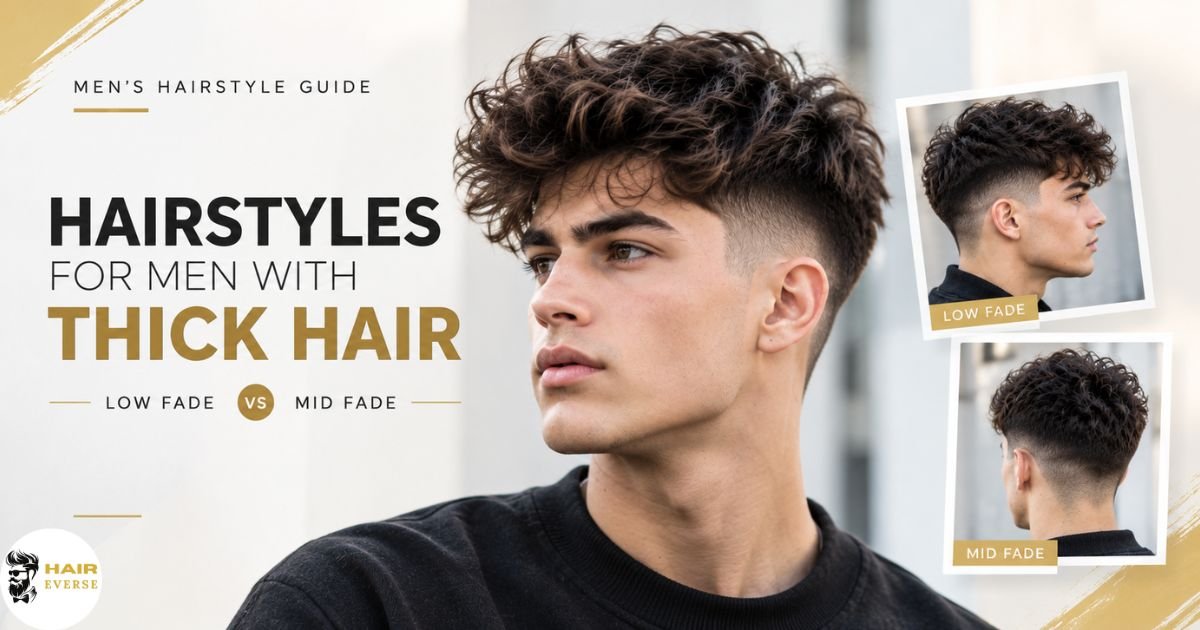
Hairstyles for men with thick hair look their best when the fade is matched to your hair’s natural density. A low fade creates a clean, professional finish, while a mid fade starts around the temple to add more contrast. For most hairstyles for men with thick hair, a mid or high fade removes excess bulk from the sides, making the volume on top easier to style and maintain.
One of the biggest advantages of hairstyles for men with thick hair is the natural fullness that creates texture, height, and movement. The challenge is controlling that volume without making the hair appear bulky or heavy. .
Hairstyle Comparison Table
Use this hairstyle comparison table to compare the best Hairstyles for men with thick hair based on hair type, face shape, maintenance, and styling time. It helps you choose a style that complements your thick hair while matching your lifestyle and grooming routine.
| Hairstyle | Best Hair Type | Face Shape | Maintenance | Styling Time |
| Low Taper Fade | All types | Oval, Square | Low | 5 min |
| Mid Fade | Thick, Wavy | All shapes | Medium | 5–10 min |
| High Fade + Texture | Thick, Curly | Round, Square | Medium | 10 min |
| Skin Fade Pompadour | Thick, Straight | Oval, Long | Medium | 10–15 min |
| Textured Quiff | Thick, Wavy | Round, Square | Medium | 10 min |
| French Crop | Thick, Straight | All shapes | Low | 5 min |
| Buzz Cut | All types | Oval, Square | Low | 0–2 min |
| Crew Cut | Thick, Straight | Round, Square | Low | 5 min |
| Ivy League | Thick, Straight | Oval, Long | Medium | 5–10 min |
| Slicked Back Undercut | Thick, Straight | Square, Oval | Medium | 10 min |
| Textured Crop + Fringe | Thick, Wavy | Round, Square | Low | 5 min |
| Side Part Fade | Thick, Straight | Oval, Long | Medium | 5–10 min |
| Comb Over Fade | Thick, Straight | All shapes | Medium | 10 min |
| Faux Hawk | Thick, Wavy | Round, Square | Medium | 10–15 min |
| Man Bun + Fade | Thick, Long | Oval, Square | Low | 3–5 min |
| Long Layered Flow | Thick, Wavy | Oval, Long | Medium | 10 min |
| Curly Top + Low Fade | Curly, Thick | Round, Square | Medium | 10 min |
| Afro + Taper Fade | Coily, Thick | All shapes | Medium | 5–10 min |
| Burst Fade | Thick, Curly | Round, Square | Medium | 10 min |
| Drop Fade | Thick, Wavy | Square, Round | Medium | 10 min |
| Spiky Textured Top | Thick, Straight | Round, Square | High | 10–15 min |
| Mohawk Fade | Thick, Straight | Oval, Square | High | 15 min |
| Textured Caesar Crop | Thick, Wavy | All shapes | Low | 5 min |
| Modern Mullet | Thick, Wavy | Oval, Long | Medium | 10 min |
| Undercut + Long Top | Thick, Straight | Square, Oval | Medium | 10 min |
| Hard Part Fade | Thick, Straight | All shapes | Medium | 10 min |
| Pompadour Fade | Thick, Straight | Long, Oval | Medium | 10–15 min |
| Brush Up | Thick, Straight | Round, Square | Medium | 5–10 min |
| Wavy Crop | Wavy, Thick | All shapes | Low | 5 min |
| Shag Haircut | Thick, Wavy | Oval, Square | Medium | 10 min |
| High and Tight | Thick, Straight | Square, Round | Low | 2 min |
| Box Fade | Thick, Coily | Square, Round | Medium | 10 min |
| Textured French Crop | Thick, Wavy | All shapes | Low | 5 min |
| Middle Part | Thick, Straight | Oval, Long | Medium | 5–10 min |
| Curtains | Thick, Wavy | Oval, Square | Medium | 5–10 min |
| Slick Back (No Fade) | Thick, Straight | All shapes | Medium | 5–10 min |
| Bro Flow | Thick, Wavy | Oval, Long | Low | 5 min |
| Two-Block Haircut | Thick, Straight | Round, Square | Medium | 10 min |
| Twist Fade | Coily, Thick | All shapes | Medium | 10 min |
| Zero Fade (Taper Only) | All types | Oval, Long | Low | 5 min |
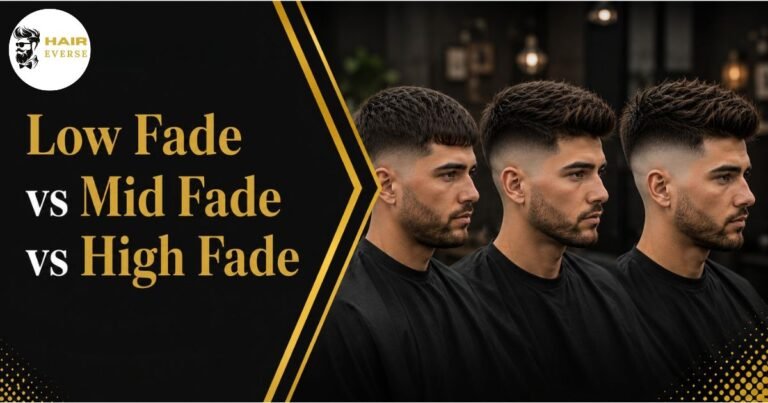
What’s the Difference Between a Low Fade and a Mid Fade?
A low fade starts just above the ear and blends into the skin gradually, leaving more length on the sides it’s the subtler, more conservative option. A mid fade starts higher, roughly at the midpoint between the ear and temple, and creates noticeably more contrast between the sides and the top.
For thick hair specifically, a mid fade usually wins out: it removes more bulk from the sides, which keeps the extra volume on top from spreading outward into that “wide” look thick hair is prone to.
Guidence of Hairstyle
This guide walks through 40 cuts built around that idea, plus a clear breakdown of low fade vs mid fade so you know exactly what to ask for.
Low Taper Fade with Side Part
Overview: The sides taper gradually from the ear down to the skin, keeping more length than a full fade while still looking sharp.
Why It Works: Works with nearly every hair type and flatters oval and square face shapes by softening the jawline without removing too much side coverage.
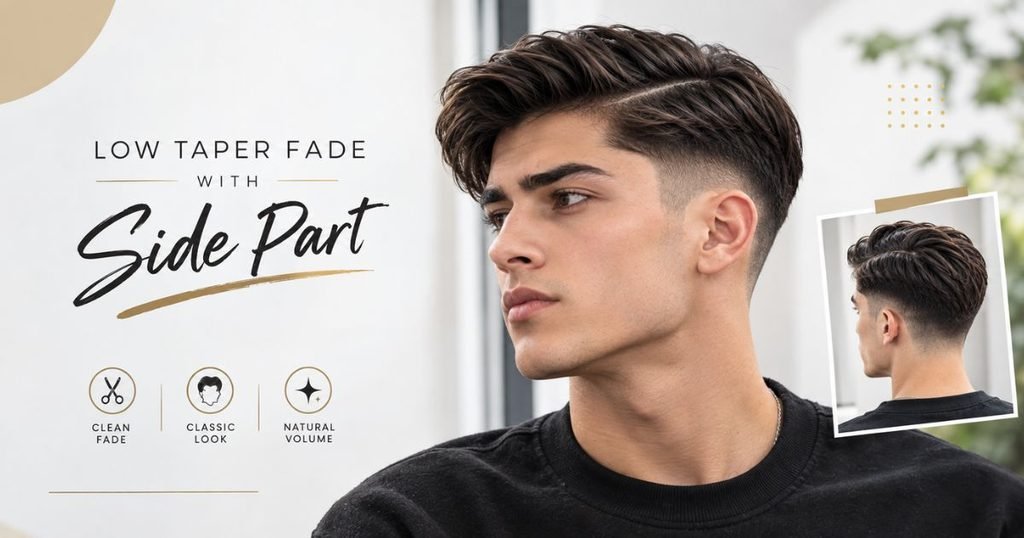
Styling Tip: Work a small amount of matte clay through damp hair on top to build texture without shine.
Maintenance: Book a trim every 3–4 weeks the low blend grows out more gracefully than higher fades, so you can stretch appointments a little longer. Maintenance and styling times are estimates and may vary by hair type.
Mid Fade with Textured Top
Overview: The blend starts around the temple, creating a sharper line between the short sides and the fuller top than a low fade offers.
Why It Works: This is the go-to for thick hair because it strips weight higher up the head, so the density on top reads as intentional volume instead of bulk.
Styling Tip: Apply a lightweight sea salt spray to damp hair for texture that won’t weigh down the thickness.
Maintenance: Get it refreshed every 2–3 weeks so the contrast line stays crisp as your natural hair growth softens it. Maintenance and styling times are estimates and may vary by hair type.
High Fade With Texture
Overview: Sides fade to skin high up the head, leaving a compact but textured section of longer hair on top.
Why It Works: Best for round or square faces, it takes the most weight off the sides of any fade, making it the top pick when hair is genuinely dense.
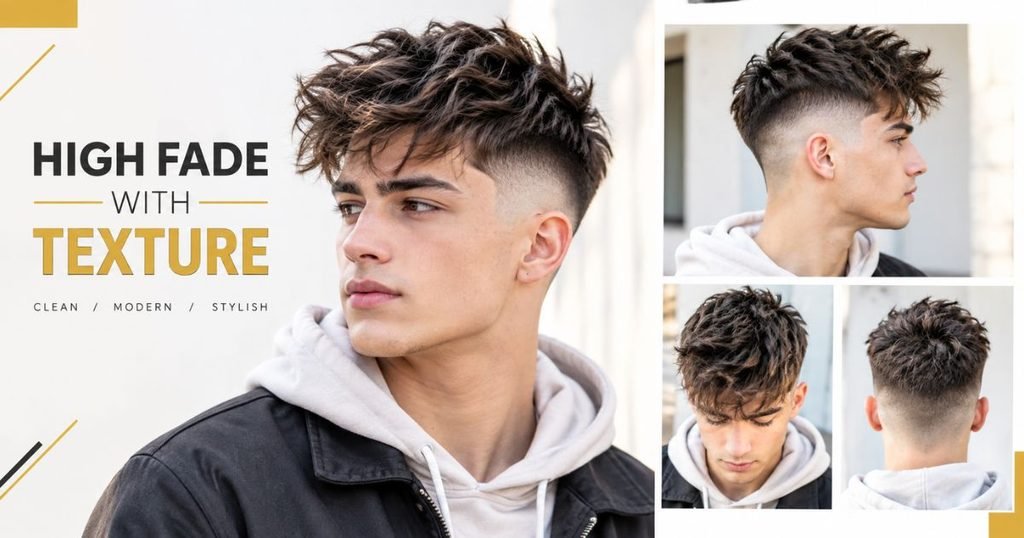
Styling Tip: Use a matte paste and finger-comb it through for defined, separated pieces rather than a slicked finish.
Maintenance: Plan for a touch-up every 2 weeks high fades show regrowth fastest of all the fade heights. Maintenance and styling times are estimates and may vary by hair type.
Skin Fade Pompadour
Overview: A voluminous swept-back top paired with a fade that runs all the way to the skin on the sides.
Why It Works: Thick, straight hair holds the pompadour’s height naturally, and works especially well for long or oval faces that can carry extra volume up top.
Styling Tip: Blow-dry the top upward and back while it’s damp, then set with a firm-hold pomade for lasting height.
Maintenance: Trim the fade every 2 weeks, and expect to restyle daily since the height relaxes overnight. Maintenance and styling times are estimates and may vary by hair type.
Textured Quiff
Overview: Shorter than a pompadour, the quiff lifts hair up and slightly forward for a relaxed, textured peak.
Why It Works: Ideal for round or square faces, it uses thick hair’s natural body to create height without needing much product.
Styling Tip: A small amount of matte clay worked through the roots gives lift without the greasy look some pomades leave behind.
Maintenance: A 3-week trim cycle keeps the shape; restyle it each morning with your fingers rather than a comb for a more natural texture. Maintenance and styling times are estimates and may vary by hair type.
French Crop Hairstyle
Overview: Short, textured hair on top with a straight-cut fringe, paired with a taper or fade on the sides.
Why It Works: Works across nearly all face shapes and is one of the lowest-effort ways to show off thick hair’s natural texture.
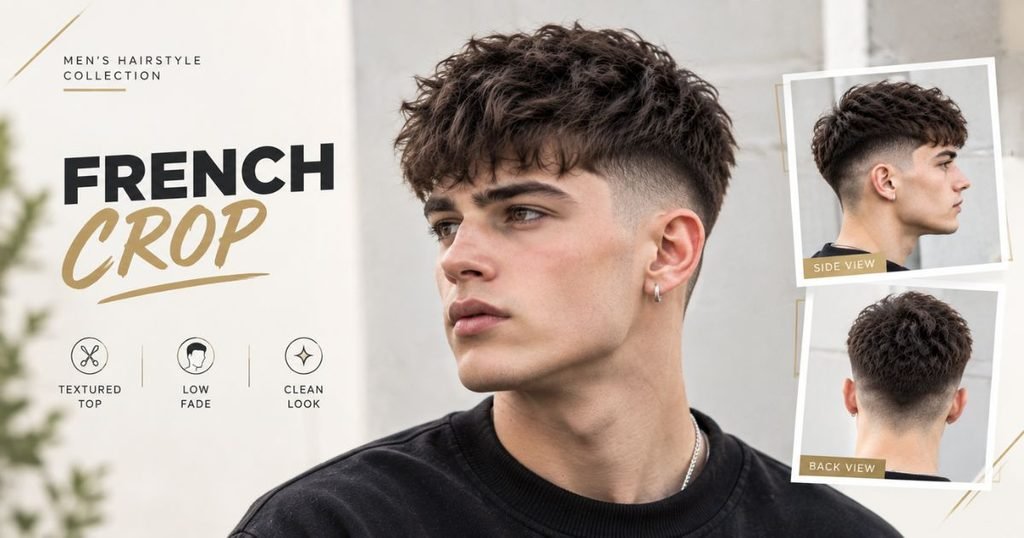
Styling Tip: Rub a pea-sized amount of hair cream between your palms and press it through for texture without stiffness.
Maintenance: Every 3–4 weeks keeps the fringe length in check before it starts covering your eyebrows. Maintenance and styling times are estimates and may vary by hair type.
Buzz Cut Hairstyle Boy
Overview: Uniform short length all over, clipped with a single guard for a clean, no-fuss look.
Why It Works: Suits every face shape and hair type, and thick hair actually holds a buzz cut’s shape better than fine hair does, since there’s more density to fill it out.
Styling Tip: No product is required, though a light matte cream can tame any flyaways after a shower.
Maintenance: Rebuzz every 2–3 weeks to keep the length consistent — thick hair grows out visibly faster than a buzz cut on finer hair. Maintenance and styling times are estimates and may vary by hair type.
Crew Cut High Fade
Overview: Short on the sides with slightly more length on top, tapered or faded depending on preference.
Why It Works: A dependable option for round and square faces, giving thick hair just enough length on top to style without extra bulk.
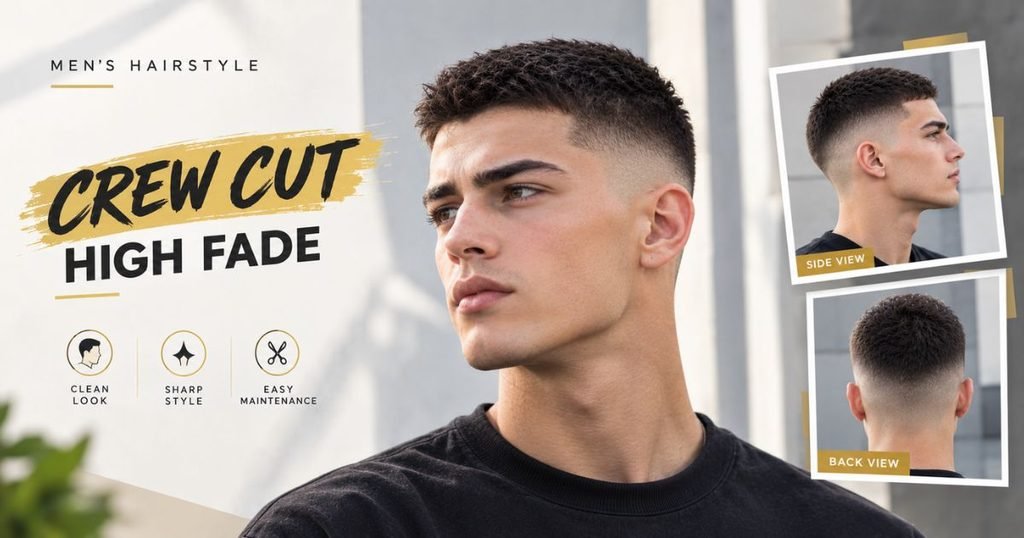
Styling Tip: A small dab of pomade combed straight back or slightly to the side keeps it neat for the office.
Maintenance: A 3-week trim schedule is standard; thick hair on top will start looking shaggy before the sides need work. Maintenance and styling times are estimates and may vary by hair type.
Ivy League
Overview: A longer, styleable crew cut variation with enough length on top for a defined side part or brush-back.
Why It Works: Flatters oval and longer face shapes and gives thick hair enough length to move without losing shape.
Styling Tip: Comb a light-hold pomade through damp hair to set the part before it dries.
Maintenance: Every 3 weeks keeps the part clean; thick hair can start hiding the part line if it grows out too far. Maintenance and styling times are estimates and may vary by hair type.
Slicked Back Undercut Hairstyle
Overview: Disconnected short sides beneath a longer top that’s combed straight back for a sharp, formal finish.
Why It Works: Best on square or oval faces, and thick hair provides the density needed to hold a slicked-back shape without looking thin or patchy.
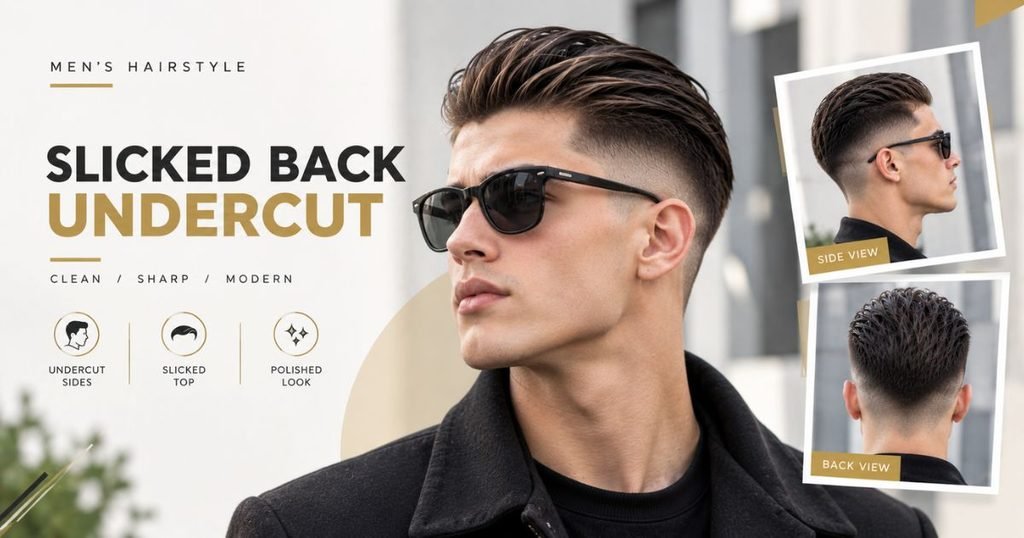
Styling Tip: Use a strong-hold pomade on damp hair and comb through in sections for an even, glossy finish.
Maintenance: Trim every 3 weeks; the contrast between the short sides and long top becomes obvious quickly as hair grows. Maintenance and styling times are estimates and may vary by hair type.
Textured Crop With Fringe
Overview: Short, choppy layers on top with a forward-styled fringe, kept low-maintenance with a taper on the sides.
Why It Works: Works especially well for round and square faces, since the fringe breaks up a wide forehead.
Styling Tip: Scrunch a matte texturizing paste into damp hair, then press the fringe forward with your fingers.
Maintenance: A 3-week cycle keeps the fringe from creeping past the eyebrows. Maintenance and styling times are estimates and may vary by hair type.
Side Part Fade
Overview: A defined side part on top paired with a fade on the sides for a classic, put-together look.
Why It Works: Suits oval and longer faces and gives thick hair a structured shape that resists the “puffing out” thick hair is known for.
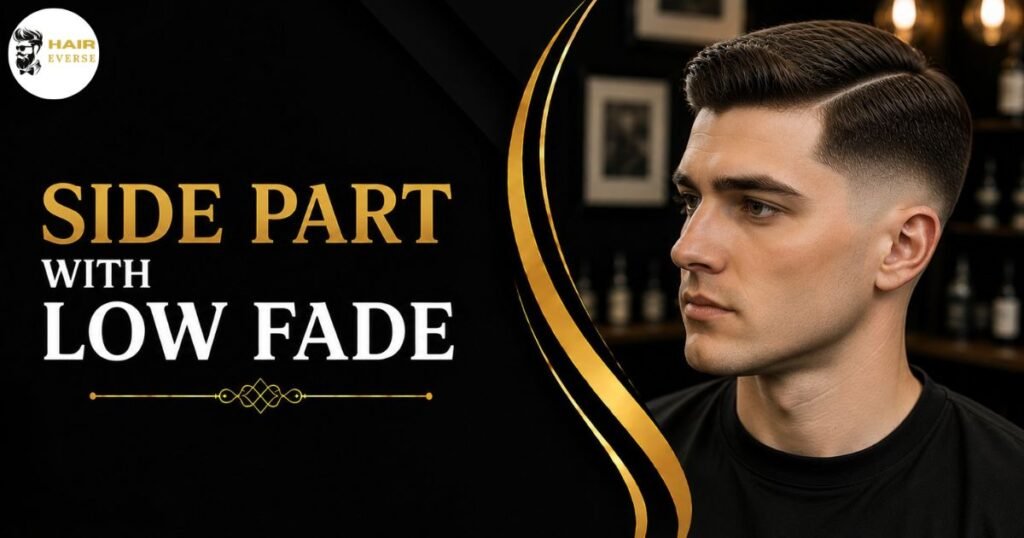
Styling Tip: Comb a pomade through with a fine-tooth comb to lock the part in place before it air-dries.
Maintenance: Every 3 weeks keeps the part crisp thick hair tends to blur a part line faster than finer textures. Maintenance and styling times are estimates and may vary by hair type.
Comb Over Fade
Overview: Longer hair on top combed to one side over a tight fade, giving a modern, tailored update on the classic comb-over.
Why It Works: Works for nearly all face shapes and channels thick hair’s natural weight into a clean, sweeping line instead of letting it sit flat.
Styling Tip: Blow-dry the top to the side while damp, then finish with a medium-hold cream for a natural sheen.
Maintenance: A 2–3 week trim keeps the fade sharp underneath the sweep. Maintenance and styling times are estimates and may vary by hair type.
Faux Hawk Hairstyle
Overview: Hair is styled upward through the center of the head while the sides stay short or faded, mimicking a mohawk without the shaved sides.
Why It Works: Great for round and square faces, using thick hair’s density to build height down the center without extra product buildup.
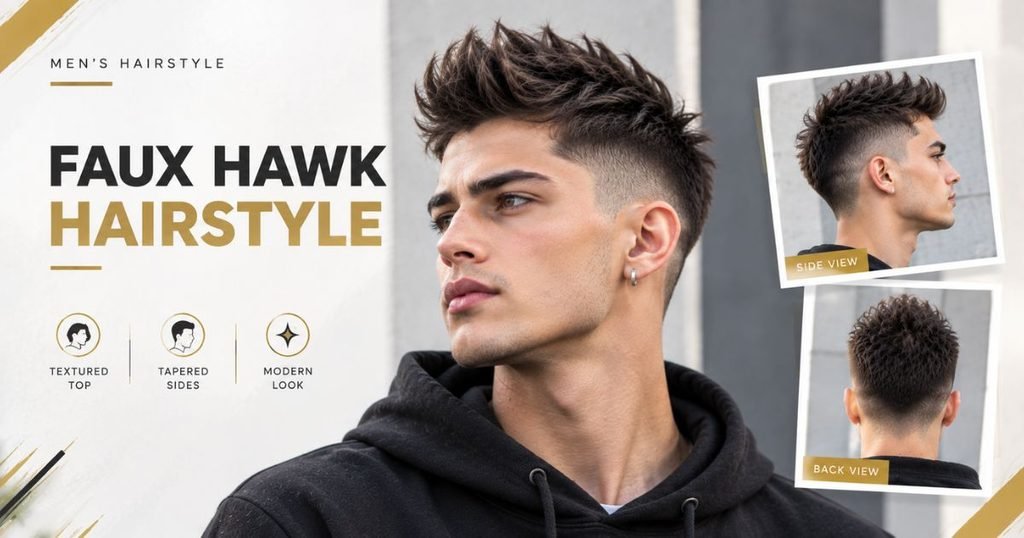
Styling Tip: Apply a strong-hold wax to the center section only and push it upward with your fingertips.
Maintenance: Trim every 2–3 weeks and expect to restyle it daily, since the center section needs consistent product to hold. Maintenance and styling times are estimates and may vary by hair type.
Man Bun With Fade
Overview: Long hair on top tied back into a bun, with short or faded sides to keep the overall look tidy.
Why It Works: Flatters oval and square faces and gives thick, longer hair somewhere to go instead of falling forward all day.
Styling Tip: Use a light leave-in conditioner before tying it back to prevent frizz from the hair’s natural density.
Maintenance: The sides need a fade touch-up every 2–3 weeks; the top just needs regular trims to avoid split ends. Maintenance and styling times are estimates and may vary by hair type.
Long Layered Flow
Overview: Medium-to-long hair layered throughout and pushed back off the face for natural movement.
Why It Works: Works best on oval and longer faces, and relies on thick hair’s weight to create the flow other hair types struggle to fake.
Styling Tip: Apply a sea salt spray to damp hair and let it air-dry for texture that holds the flow shape.
Maintenance: Layers should be refreshed every 6–8 weeks to keep the shape from growing shapeless. Maintenance and styling times are estimates and may vary by hair type.
Curly Top With Low Fade
Overview: Natural curls are kept longer on top while a low fade cleans up the sides without disturbing the curl pattern.
Why It Works: Purpose-built for curly, thick hair and round or square faces, letting the curls stay the visual focus.
Styling Tip: Use a curl-defining cream on damp hair, scrunching upward rather than combing through.
Maintenance: Trim every 4–6 weeks to keep shape, and moisturize curls daily since thick, curly hair dries out faster than straight textures. Maintenance and styling times are estimates and may vary by hair type.
Afro With Taper Fade
Overview: A rounded afro shape on top with a tapered fade cleaning up the sides for a defined outline.
Why It Works: Works well with most face shapes, and thick, coily hair gives the afro the density needed to hold its rounded shape.
Styling Tip: A leave-in conditioner and light curl cream keep the afro moisturized and reduce shrinkage.
Maintenance: Line up the fade every 2 weeks; shape the afro with a pick between trims to maintain volume. Maintenance and styling times are estimates and may vary by hair type.
Burst Fade Curly Hair
Overview: The fade curves around the ear rather than running in a straight line, blending into longer hair at the back.
Why It Works: Suits round and square faces and pairs naturally with thick, curly, or wavy hair since the curved line softens harder textures.
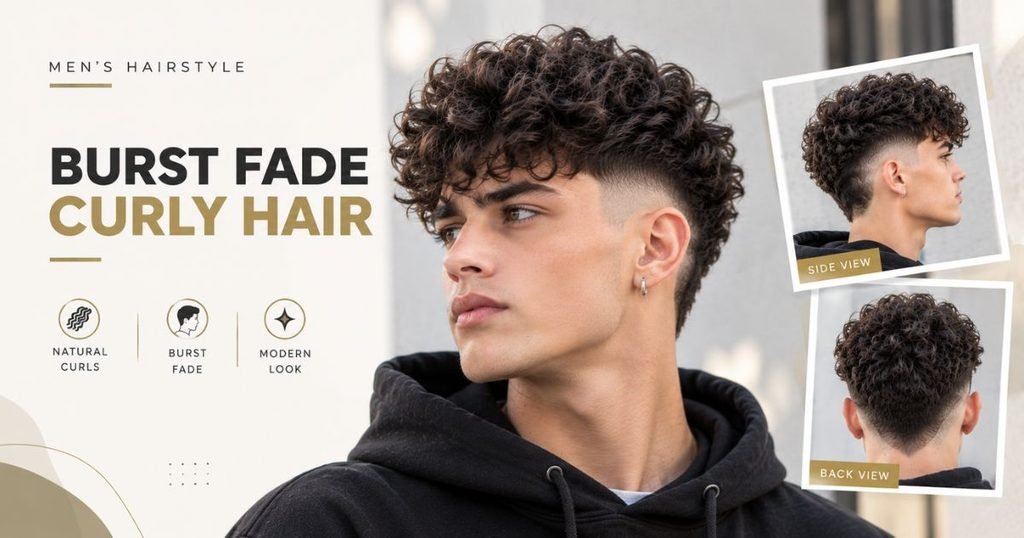
Styling Tip: A light curl cream or texturizing spray helps define the top without overpowering the natural pattern.
Maintenance: The curved line needs a refresh every 2–3 weeks to stay sharp. Maintenance and styling times are estimates and may vary by hair type.
Drop Fade
Overview: The fade line dips down behind the ear instead of staying level, following the natural curve of the head.
Why It Works: Flatters square and round faces, and works particularly well on thick or wavy hair by softening the transition from top to sides.
Styling Tip: Apply matte clay to the top and work it in circular motions for texture that highlights the curved fade line.
Maintenance: Every 2–3 weeks keeps the dropped line looking deliberate rather than grown-out. Maintenance and styling times are estimates and may vary by hair type.
Spiky Textured Top
Overview: Short sides paired with a longer, choppy top styled upward into defined spikes.
Why It Works: Best for round and square faces, and thick hair holds spikes far longer through the day than finer hair types.
Styling Tip: Use a strong-hold wax on towel-dried hair, pinching small sections upward for definition.
Maintenance: A 3-week trim cycle, but daily restyling is required since the spikes fall without fresh product. Maintenance and styling times are estimates and may vary by hair type.
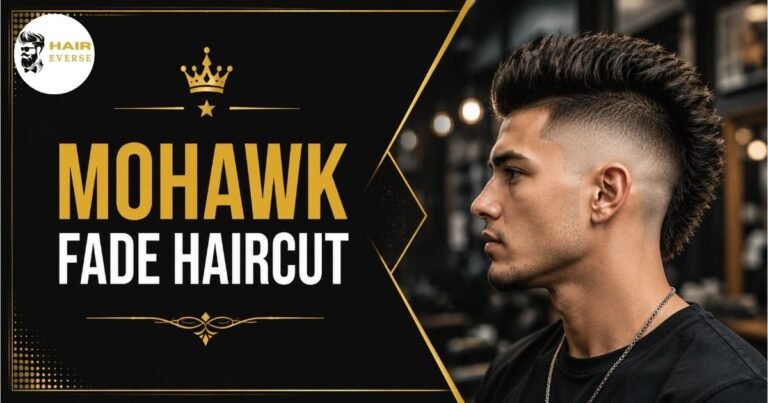
Mohawk Fade
Overview: Sides are shaved or faded down to skin, leaving a bold strip of longer hair through the center of the head.
Why It Works: Best suited to oval and square faces, and thick hair gives the center strip the volume needed to stand upright.
Styling Tip: Blow-dry the center strip upward while applying a strong-hold gel, then set with a comb for clean lines.
Maintenance: The sides need attention every 1–2 weeks to keep the contrast sharp. Maintenance and styling times are estimates and may vary by hair type.
Textured Caesar Crop
Overview: Short, horizontally-cut fringe with textured length on top, kept simple with a taper on the sides.
Why It Works: Works across all face shapes and is one of the most low-effort ways to wear thick hair without daily restyling.
Styling Tip: A small amount of matte cream worked through damp hair keeps the texture defined without gloss.
Maintenance: Every 3–4 weeks keeps the fringe from drooping into the eyes. Maintenance and styling times are estimates and may vary by hair type.
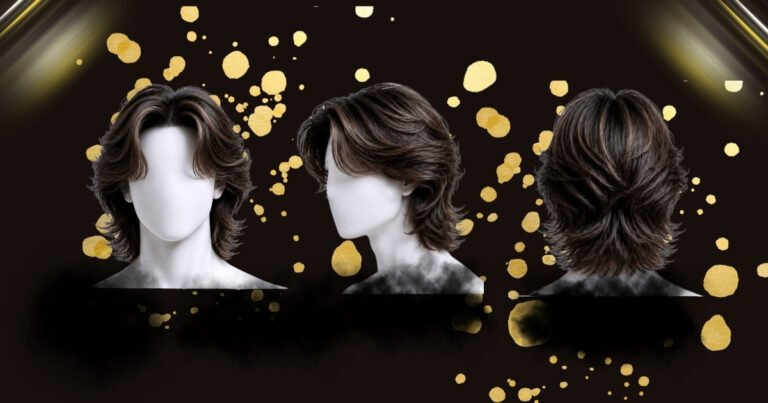
Modern Mullet
Overview: Shorter, textured sides and top up front transition into longer length at the back and nape.
Why It Works: Suits oval and longer faces, and thick or wavy hair gives the back section natural body instead of hanging flat.
Styling Tip: Use sea salt spray on damp hair and scrunch the back section to encourage natural wave.
Maintenance: Trim the front every 4 weeks; let the back grow longer between visits for the classic mullet contrast. Maintenance and styling times are estimates and may vary by hair type.
Undercut With Long Top
Overview: A hard, disconnected line separates buzzed sides from noticeably longer hair left on top.
Why It Works: Works well on square and oval faces, and the sharp contrast makes thick hair’s volume look intentional instead of overgrown.
Styling Tip: Apply a firm-hold pomade to damp hair and style with a comb for a defined, structured shape.
Maintenance: The buzzed sides need attention every 2 weeks to keep the disconnection crisp against the longer top. Maintenance and styling times are estimates and may vary by hair type.
Hard Part Fade
Overview: A shaved line marks a side part on top, paired with a mid or low fade for extra definition.
Why It Works: Works on nearly every face shape and keeps thick hair’s part visible even as the hair grows and thickens the line.
Styling Tip: Comb pomade through in the direction of the part to keep the shaved line clean and visible.
Maintenance: The shaved line needs a refresh every 2 weeks since thick hair grows over it quickly. Maintenance and styling times are estimates and may vary by hair type.
Pompadour Fade
Overview: A tapered or faded side pairs with a swept-up, voluminous top for a bold, classic silhouette.
Why It Works: Flatters long and oval faces, using thick hair’s natural body to hold height that finer hair would need extra product for.
Styling Tip: Blow-dry upward at the roots, then set with a firm pomade for all-day hold.
Maintenance: Trim every 3 weeks and expect a few minutes of daily restyling to rebuild the height. Maintenance and styling times are estimates and may vary by hair type.
Brush Up
Overview: Top hair is brushed straight up and slightly back for a rounded, textured finish, usually paired with a fade.
Why It Works: Suits round and square faces, adding height that balances a wider jawline.
Styling Tip: Use a round brush while blow-drying upward, then finish with a matte paste for texture.
Maintenance: A 3-week trim keeps the length manageable for daily brushing. Maintenance and styling times are estimates and may vary by hair type.
Wavy Crop
Overview: Short, textured length on top that lets natural waves show, kept simple with a taper on the sides.
Why It Works: Works for all face shapes and is one of the easiest ways to wear thick, wavy hair without much daily effort.
Styling Tip: Scrunch a sea salt spray into damp hair and let it air-dry to enhance the natural wave pattern.
Maintenance: Every 3–4 weeks keeps the waves from getting weighed down by excess length. Maintenance and styling times are estimates and may vary by hair type.
Shag Haircut
Overview: Heavily layered, medium-length hair with a textured fringe for a relaxed, lived-in look.
Why It Works: Suits oval and square faces, and the layering removes weight that thick hair otherwise holds onto.
Styling Tip: Apply a texturizing spray to damp hair and scrunch for definition without flattening the layers.
Maintenance: Trim every 6–8 weeks to keep the layered shape from growing out into a single heavy mass. Maintenance and styling times are estimates and may vary by hair type.
High and Tight
Overview: Very short or faded sides up to a compact, short top, inspired by military cuts.
Why It Works: Works for square and round faces and gives thick hair texture even at a short length instead of looking flat.
Styling Tip: A light matte cream is optional for controlling texture on top, though the cut looks clean without any product.
Maintenance: Every 2 weeks keeps the high contrast sharp. Maintenance and styling times are estimates and may vary by hair type.
Box Fade Haircut Black Men
Overview: A geometric, boxed shape on top sits above a clean fade on the sides for a bold, structured silhouette.
Why It Works: Works best on square and round faces, and relies on thick or coily hair’s density to hold the defined box shape.
Styling Tip: Use an edge control gel along the perimeter to keep the box shape crisp between trims.
Maintenance: The shape needs a line-up every 1–2 weeks to keep its geometric edges. Maintenance and styling times are estimates and may vary by hair type.
Textured French Crop
Overview: A messier take on the classic French crop, with more texture and a slightly looser fringe.
Why It Works: Works across all face shapes and lets thick or wavy hair’s natural texture do most of the styling work.
Styling Tip: Rub a texturizing paste between your palms and press it into damp hair rather than combing it through.
Maintenance: Every 4 weeks keeps the fringe length in check without losing the relaxed texture. Maintenance and styling times are estimates and may vary by hair type.
Middle Parting Hairstyles
Overview: A retro-inspired style with hair parted straight down the middle and framing both sides of the face.
Why It Works: Works best on oval and long faces, using thick hair’s natural weight to keep both sides falling evenly.
Styling Tip: Apply a light-hold cream to damp hair and comb straight down from the center part.
Maintenance: Trim every 4–5 weeks; this style needs almost no daily styling once the length is set. Maintenance and styling times are estimates and may vary by hair type.
Curtains Hairstyle Men
Overview: A softer center part with hair swept to both sides, framing the forehead like curtains.
Why It Works: Suits oval and square faces, and thick hair’s natural weight helps the strands fall neatly instead of sticking up.
Styling Tip: Blow-dry with your fingers, pushing hair outward from the center, then set with a light cream.
Maintenance: Every 4 weeks keeps the length balanced on both sides. Maintenance and styling times are estimates and may vary by hair type.
Slick Back (No Fade)
Overview: All hair, top and sides, is combed straight back without any fade or taper for a timeless, formal look.
Why It Works: Works for every face shape, and thick hair provides the volume needed to hold this style without looking thin at the crown.
Styling Tip: Comb a strong-hold pomade through damp hair from front to back in even strokes.
Maintenance: A trim every 5–6 weeks is enough since there’s no fade line to maintain. Maintenance and styling times are estimates and may vary by hair type.
Bro Flow Hairstyle Men
Overview: Medium-length hair pushed straight back off the face with minimal shaping, popular in casual and athletic settings.
Why It Works: Works well for oval and long faces, and thick, wavy hair naturally holds this relaxed, swept-back shape.
Styling Tip: A light sea salt spray on damp hair, air-dried, is usually all this style needs.
Maintenance: Trim every 6–8 weeks to keep the length manageable without losing the flow. Maintenance and styling times are estimates and may vary by hair type.
Two-Block Haircut
Overview: Short, faded sides beneath a noticeably longer, textured top styled forward or upward.
Why It Works: Suits round and square faces, and thick hair’s density gives the top section the volume this Korean-barbershop staple depends on.
Styling Tip: Apply a matte wax and style the top forward with your fingers for a soft, textured finish.
Maintenance: The sides need attention every 2 weeks to keep the contrast against the longer top. Maintenance and styling times are estimates and may vary by hair type.
Twist Fade Hairstyle
Overview: Two-strand twists on top paired with a fade on the sides for definition and contrast.
Why It Works: Built for coily, thick hair, and works with most face shapes by keeping the twists close to the head.
Styling Tip: Use a twisting cream on damp, sectioned hair to define each twist and reduce frizz.
Maintenance: Re-twist every 2–3 weeks and moisturize daily, since thick, coily hair dries out faster than other textures. Maintenance and styling times are estimates and may vary by hair type.
Zero Fade (Taper Only)
Overview: A soft taper with no hard fade line, blending gradually without exposing the skin at any point.
Why It Works: Works on all hair types and flatters oval and long faces, offering the subtlest possible transition for guys who want minimal contrast.
Styling Tip: A light hair cream is enough to add shine and control without changing the natural shape.
Maintenance: Every 4–5 weeks is enough, since the soft taper hides regrowth better than any fade height. Maintenance and styling times are estimates and may vary by hair type.
How To Choose The Right Hairstyle?
Choosing the right hairstyles for men with thick hair starts with understanding your hair texture, face shape, and lifestyle.
By hair type:
- Thick: Favor mid or high fades that remove weight from the sides this keeps the volume on top from spreading outward.
- Thin: A low fade or taper keeps more coverage on the sides, creating the illusion of fullness.
- Curly: A mid fade with a curl-defining cream on top lets the curl pattern stay visible while keeping the sides tidy.
- Straight: Nearly any fade height works, since straight hair naturally lies flat and follows the shape of the cut.
- Wavy: A burst or drop fade complements the natural movement without fighting it.
By face shape:
- Oval: The most flexible shape pompadours haircut , side parts, and slicked-back styles all work well.
- Round: Add height on top (quiff, faux hawk, spiky top) and keep the sides tighter to elongate the face.
- Square: Textured crops and undercuts soften strong jawlines without competing with them.
- Long: Middle parts and curtains add width and break up vertical length.
How To Ask Your Barber?
- Bring one or two reference photos verbal descriptions of “low fade vs. mid fade” get interpreted differently by every barber.
- Point to exactly where you want the fade to start, using your ear or temple as a landmark.
- Tell them how much length you want left on top in inches or finger-widths, not just “not too short.”
- Mention your daily routine a 5-minute morning versus a 15-minute one changes which cut actually makes sense.
- Ask what maintenance schedule the cut needs before you commit, especially for higher fades.
- Confirm the final shape and fade height before they pick up the clippers, not after the first pass.
Product Recommendations
Hair Cream
- Best For: Straight to wavy thick hair that needs light control and shine.
- How To Use: Work a small amount through damp hair for a natural, low-shine finish.
Pomade
- Best For: Slicked-back and pompadour styles needing strong, long-lasting hold.
- How To Use: Warm a small amount between your palms and comb through hair in the direction of your style.
Wax
- Best For: Spiky or faux hawk styles that need maximum hold and separation.
- How To Use: Rub between fingertips until pliable, then apply to dry hair section by section.
Clay
- Best For: Textured, matte finishes like quiffs and textured crops.
- How To Use: Distribute evenly through damp hair before styling for texture without shine.
Shampoo
- Best For: Removing product buildup, which thick hair traps more than fine hair.
- How To Use: Focus on the scalp, massaging gently, and rinse thoroughly to avoid residue.
Conditioner
- Best For: Curly or coily thick hair prone to dryness and frizz.
- How To Use: Apply from mid-length to ends after shampooing, and rinse with cool water to seal the cut
Find Your Next Hairstyle
- If you’re considering growing out your hair instead of keeping it faded, explore our guide to long hairstyles for men for stylish options that make the most of natural volume and texture.
- If you’re looking for a bolder option, a modern mullet is a great addition to the list of hairstyles for men with thick hair.
- If you’re deciding between layered styles, our guide on the wolf cut vs shag cut explains the key differences in texture, volume, and maintenance.
- Finding the right fade can make a big difference when styling hairstyles for men with thick hair. Explore our guide on how to ask your barber for a fade to learn how to explain your desired cut, choose the right fade level, and get a style that works best with your hair texture, face shape, and personal preference.
Final Thoughts
Hairstyles for men with thick hair offer incredible versatility because natural density creates volume, texture, and long-lasting shape. While thick hair can be difficult to manage without the right cut, choosing the proper fade makes styling much easier and enhances the overall look. Once the fade is right, the hairstyle on top becomes easier to maintain and style.
The best hairstyles for men with thick hair depend on your face shape, hair texture, and personal style. A haircut that suits straight hair may not be the best option for curly or wavy hair.
FAQs
What’s the Difference between a Low Fade and a Mid Fade?
A low fade starts just above the ear and keeps more length on the sides. A mid fade starts higher, around the temple, and creates more contrast between the sides and the top of the head.
Which Fade is best for Thick Hair?
Mid and high fades generally work best for thick hair because they remove more weight from the sides, helping balance the extra volume left on top.
Does Thick Hair High Fade?
Yes. High fades take the most bulk off the sides of any fade height, which makes them a strong option when hair is genuinely dense and prone to looking heavy.
Can Thick Hair be Low Maintenance?
Yes, with the right cut. Buzz cuts, crew cuts, and low fades all require minimal daily styling while still looking clean between trims.
Is a Mid Fade more Popular than a Low Fade?
Mid fades tend to be requested more often because they offer a balance of contrast and versatility, working with a wider range of styles on top than a low fade.
What type of hair is best for a Slicked Back Undercut?
Medium to thick hair works best because it provides enough volume and texture. However, men with straight, wavy, or slightly curly hair can also achieve this style with the right products.