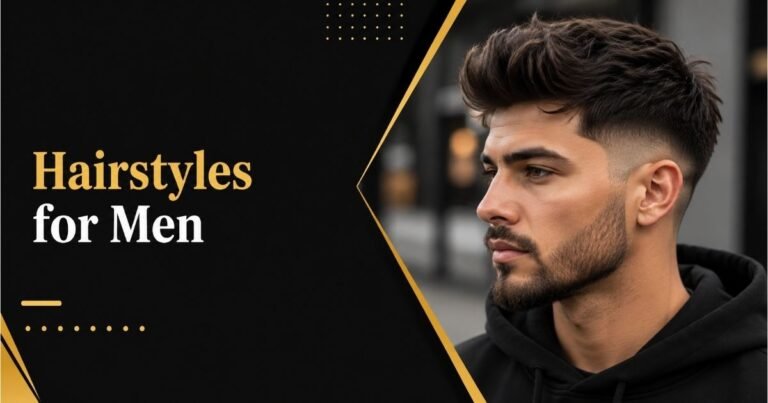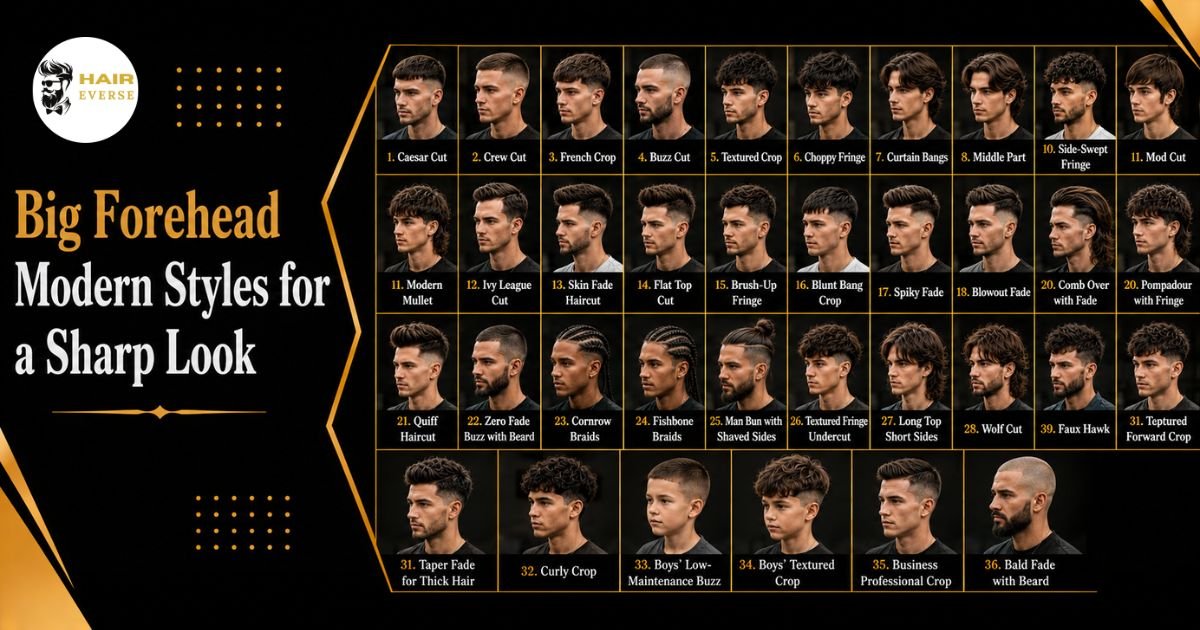
Top 37 Big Forehead Hairstyles : Modern Styles for a Sharp Look
A big forehead hairstyles can feel like it’s steering every haircut decision, especially when the wrong cut leaves it looking even more exposed. The truth is, a big forehead isn’t a flaw to hide so much as a feature to work with, but only if the cut is chosen deliberately. That breaks down 37 hairstyles built specifically around big foreheads hairstyles , covering every hair type from thin and straight to thick and curly.
Barbers see the same mistake constantly: clients asking for a slickedback style that pulls hair away from the face, which only draws more attention to the hairline it was meant to soften. Get the cut right, and a big forehead hair styles for men becomes just another part of a sharp, deliberate look.
Big Forehead Hairstyles Comparison Table
Here we discussed about hairstyle, type, faceshape, maintenance and exact styling time in detail.
| Hairstyle | Best Hair Type | Face Shape | Maintenance | Styling Time |
| Caesar Cut | Straight, Thick | Oval, Long | Medium | 510 min |
| Crew Cut | All types | Oval, Square, Round | Low | 5 min |
| French Crop | All types | Oval, Round, Square | Low | 510 min |
| Buzz Cut | All types | Oval, Square, Diamond | Low | 02 min |
| Textured Crop | Straight, Wavy | Oval, Triangle | Medium | 510 min |
| Choppy Fringe | Wavy, Curly | Square, Oval, Round | Medium | 10 min |
| Curtain Bangs | Straight, Wavy | Heart, Oval | Medium | 10 min |
| Middle Part | Straight, Wavy | Oval, Round, Square | Medium | 10 min |
| SideSwept Fringe | All types | Any | Medium | 510 min |
| Curly Taper | Curly | Square, Oval, Round | Medium | 1015 min |
| Mod Cut | Straight, Wavy | Round, Square, Triangle | Medium | 10 min |
| Modern Mullet | All types | Oblong, Oval | Medium | 10 min |
| Ivy League Cut | Straight, Thick | Oval, Square | Low | 5 min |
| Skin Fade Haircut | All types | Any | Low | 5 min |
| Flat Top Cut | Thick, Coarse | Square | Medium | 10 min |
| BrushUp Fringe | Wavy, Thick | Oval, Round | Medium | 10 min |
| Blunt Bang Crop | Straight, Thick | Oval | Medium | 510 min |
| Spiky Fade | Straight, Thick | Round, Oval | Medium | 510 min |
| Blowout Fade | Thick, Wavy | Any | Medium | 10 min |
| Comb Over with Fade | Straight | Oval, Heart | Low | 510 min |
| Pompadour with Fringe | Thick, Wavy | Oval, Long | Medium | 10 min |
| Quiff Haircut | Straight, Wavy | Round, Oval | Medium | 510 min |
| Zero Fade Buzz with Beard | All types | Square, Diamond | Low | 25 min |
| Cornrow Braids | Coily, Curly | Any | High | 15+ min |
| Fishbone Braids | Coily, Curly | Any | High | 15+ min |
| Man Bun with Shaved Sides | Long, Thick | Oval, Long | Medium | 10 min |
| Textured Fringe Undercut | Straight, Wavy | Oval, Round | Medium | 10 min |
| Long Top Short Sides | Straight, Wavy | Any | Medium | 510 min |
| Wolf Cut | Wavy, Curly | Round, Oval | Medium | 1015 min |
| Faux Hawk | Straight, Thick | Square, Oval | Medium | 10 min |
| Textured Forward Crop | Straight | Oval, Round | Low | 5 min |
| Taper Fade for Thick Hair | Thick, Coarse | Any | Low | 510 min |
| Curly Crop | Curly | Oval, Round | Medium | 10 min |
| Boys’ LowMaintenance Buzz | All types | Any | Low | 2 min |
| Boys’ Textured Crop | Straight, Wavy | Any | Low | 5 min |
| Business Professional Crop | Straight, Wavy | Any | Low | 5 min |
| Bald Fade with Beard | All types | Square, Diamond | Low | 5 min |
Caesar Cut
Overview: A short, horizontal fringe is styled forward while the sides stay relatively long, creating a soft, defined line across the top of the forehead.
Why It Works: Suits straight or thick hair with enough density to hold a forward line, and its blunt fringe adds width that balances oval or long face shapes.
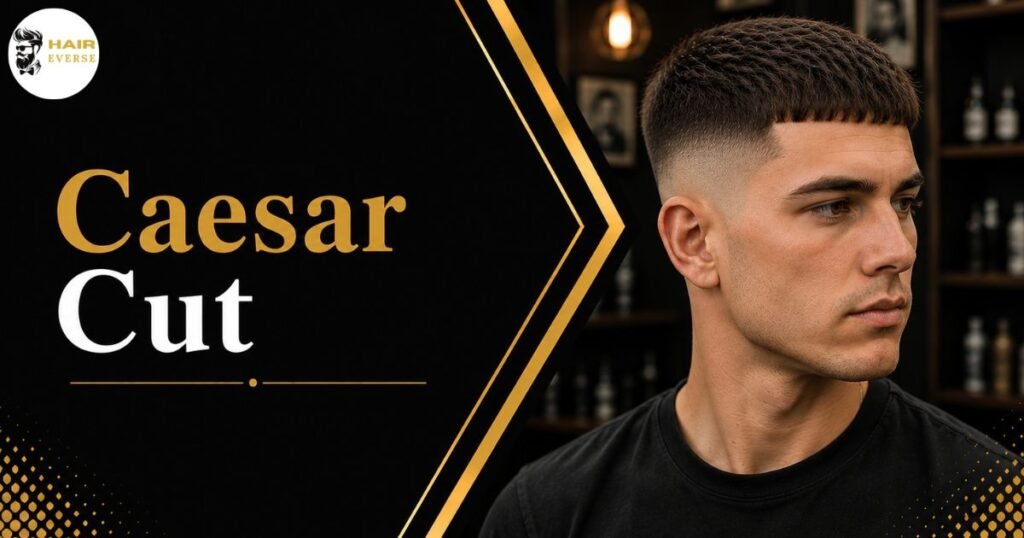
Styling Tip: Rub texture powder into dry hair and press the fringe forward and down with your fingertips.
Maintenance: Trim the fringe line every 23 weeks so it doesn’t grow past the point where it stops covering the forehead. Maintenance and styling times are estimates and may vary by hair type.
Crew Cut
Overview: A classic short cut with slightly longer clipper length on top than the tapered or faded sides, giving a clean, structured silhouette.
Why It Works: Works for nearly any hair type since it relies on clipper length rather than volume, and flatters oval, square, or round faces by emphasizing the jaw.
Styling Tip: A small amount of matte cream adds texture on top without weighing down the short length.
Maintenance: Rebook every 34 weeks since the short length grows out of shape faster than longer styles. Maintenance and styling times are estimates and may vary by hair type.
French Crop for Big Forehead Oval Face Hairstyle Male
Overview: Clean, tapered sides pair with a slightly longer, textured top that’s styled forward into a soft fringe over the forehead.
Why It Works: Suits all hair types and is especially popular for receding hairlines, and its forward texture flatters oval, round, and square faces.
Styling Tip: Apply texture powder to dry hair and press forward for a natural, worn-in fringe rather than a stiff line.
Maintenance: The fringe needs shaping every 3 weeks; the tapered sides can stretch to 45 weeks between visits. Maintenance and styling times are estimates and may vary by hair type.
Big Borehead Buzz Cut
Overview: Uniform, ultrashort hair across the entire head using an electric clipper, leaving the natural head and hairline shape fully visible.
Why It Works: Works on any hair type, and rather than concealing a buzz cut big forehead, it embraces facial structure a strategy that particularly flatters oval, square, or diamond faces.
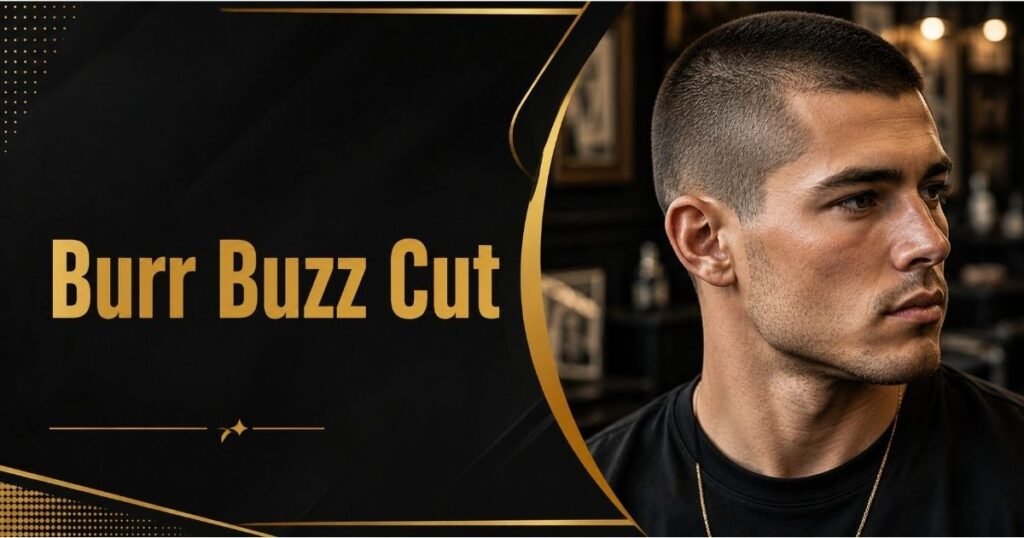
Styling Tip: No product needed daily, though a light matte spray can add texture if the guard length leaves a few millimeters.
Maintenance: Rebuzz every 12 weeks since short buzz lengths grow out and lose their clean edge quickly. Maintenance and styling times are estimates and may vary by hair type.
Textured Crop
Overview: Pointcut layers on top create a choppy, textured finish that can be styled up into a quiff or down into a fringe depending on the day.
Why It Works: Suits straight or wavy hair with medium density, and its texture flatters oval and triangle face shapes by adding visual movement.
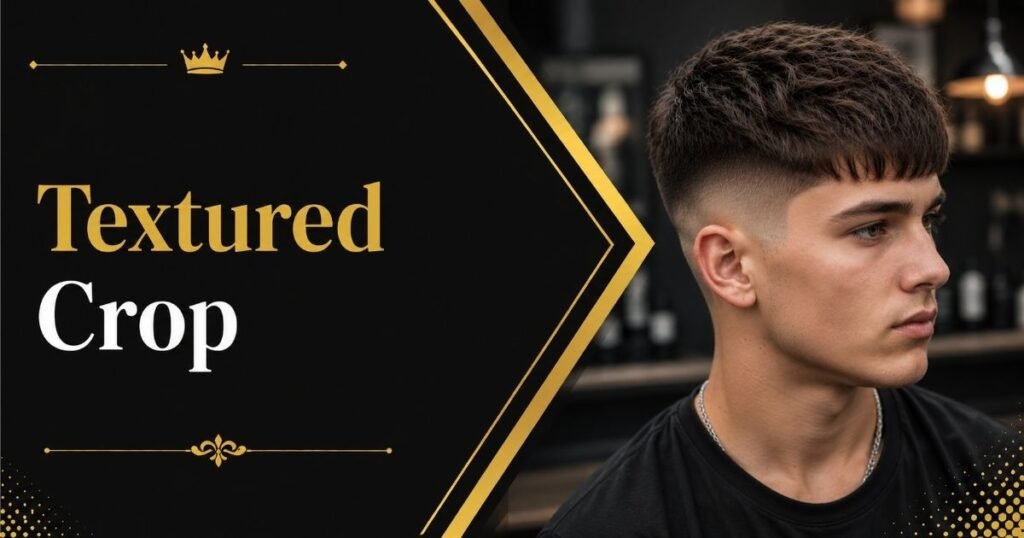
Styling Tip: Work matte clay through damp hair and use your fingers to separate strands for a livedin texture.
Maintenance: Pointcut layers need reshaping every 4 weeks to keep the texture from growing flat. Maintenance and styling times are estimates and may vary by hair type.
Choppy Fringe
Overview: Longer, layered hair on top forms a wavy or messy fringe that falls forward, showcasing natural texture while covering the top of the forehead.
Why It Works: Best on wavy or curly hair with natural body, and this coverage-focused fringe suits square, oval, or round faces.
Styling Tip: Scrunch mousse into damp hair, then set the fringe in place with a lighthold hairspray.
Maintenance: Trim only the fringe every 23 weeks to maintain coverage without cutting into the length at the crown. Maintenance and styling times are estimates and may vary by hair type.
Curtain Bangs Hairstyle to cover Forehead Male
Overview: Hair is parted near the center and swept to both sides, framing the face while softening the width of the forehead on each side.
Why It Works: Suits straight or wavy hair with enough length to part cleanly, and flatters heart or oval faces by drawing focus toward the cheekbones.
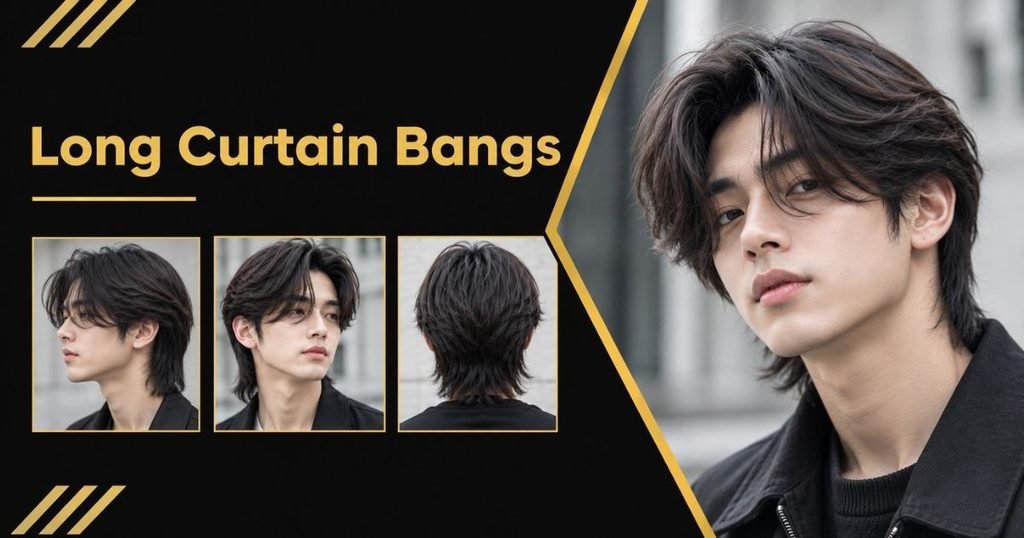
Styling Tip: Blowdry with a round brush, directing each side outward and slightly downward from the part.
Maintenance: Trim every 34 weeks so the curtains stay at framing length instead of falling into the eyes. Maintenance and styling times are estimates and may vary by hair type.
Big Forehead Hairstyle Men Long Hair: Middle Part
Overview: A clearly defined center part sends hair falling naturally to both sides, forming soft curtainlike coverage over the forehead’s edges.
Why It Works: Works on straight or wavy hair with natural movement, and suits oval, round, or square faces evenly since the coverage is symmetrical.
Styling Tip: Use a comb to define the part on damp hair, then apply a light cream to hold the fall in place.
Maintenance: Reinforce the part with a trim every 4 weeks to keep the sides from growing unevenly. Maintenance and styling times are estimates and may vary by hair type.
SideSwept Fringe
Overview: Longer top hair is directed across the forehead to one side, with tapered or undercut sides keeping the overall shape balanced.
Why It Works: Works across nearly all hair types, and the asymmetrical sweep suits most face shapes by breaking up the forehead’s straight hairline.
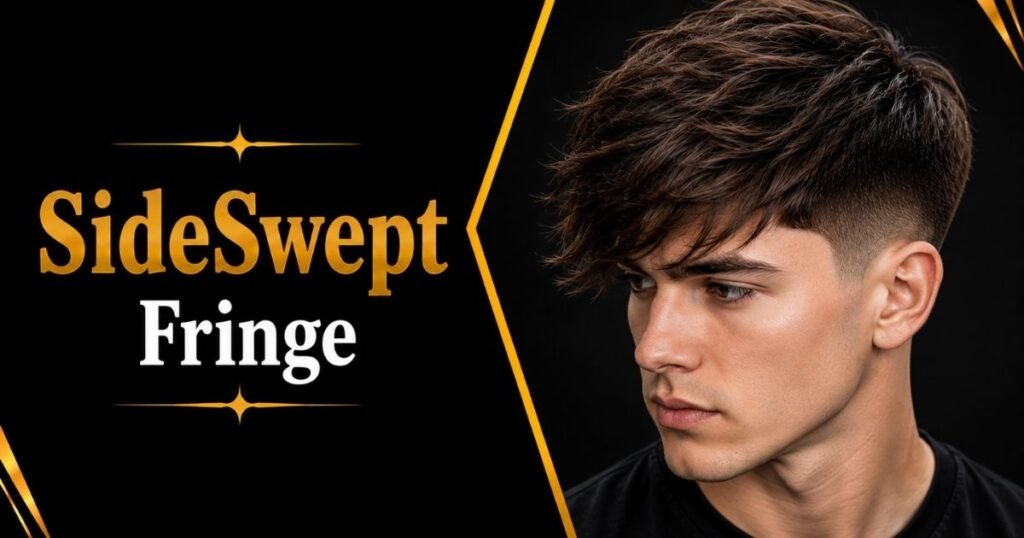
Styling Tip: Apply a matte clay to damp hair and use your fingers to direct the fringe down and across.
Maintenance: Trim every 34 weeks to keep the swept length from growing too heavy to hold its direction. Maintenance and styling times are estimates and may vary by hair type.
Curly Taper
Overview: Curly hair on top keeps its natural volume while the sides gradually fade down, letting the curls add width and softness near the hairline.
Why It Works: Built specifically for curly hair types, and its added crown volume flatters square, oval, or round faces by reducing the visual dominance of the forehead.
Styling Tip: Mist sea salt spray onto the top, then diffuse dry on low heat to define curls without frizz.
Maintenance: Keep the blend point below the temple line and refresh the fade every 3 weeks. Maintenance and styling times are estimates and may vary by hair type.
Mod Cut
Overview: A soft, feathered fringe sits at the front with longer sideburns framing the face, blending retro shape with modern texture.
Why It Works: Works on straight or wavy hair with medium density, and its forward fringe flatters round, square, or triangle face shapes.
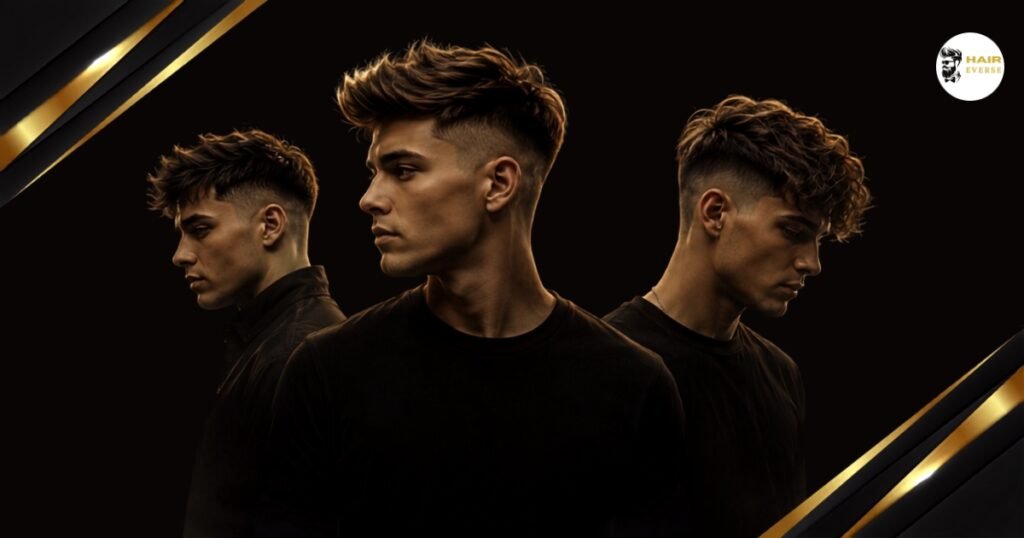
Styling Tip: Pointcut texture holds best with a light texture powder worked through the fringe.
Maintenance: The feathered fringe needs regular reshaping every 3 weeks since it relies on precise texturing to look intentional. Maintenance and styling times are estimates and may vary by hair type.
Modern Mullet
Overview: A messy, textured fringe at the front pairs with mullet length at the back, keeping the front section long enough to cover the hairline.
Why It Works: Works on most hair types, and this frontheavy silhouette flatters oblong or oval faces by adding forward volume.
Styling Tip: Use a texturizing powder or sea salt spray on the front to mold coverage without adding heavy weight.
Maintenance: Pointcut the top every 34 weeks to maintain coverage while letting the back keep growing. Maintenance and styling times are estimates and may vary by hair type.
Ivy League Cut
Overview: A slightly longer, more structured version of the crew cut with enough length on top to comb into a soft, forward-leaning shape.
Why It Works: Suits straight or thick hair, and its neat, structured build flatters oval and square faces by adding tidy proportions.
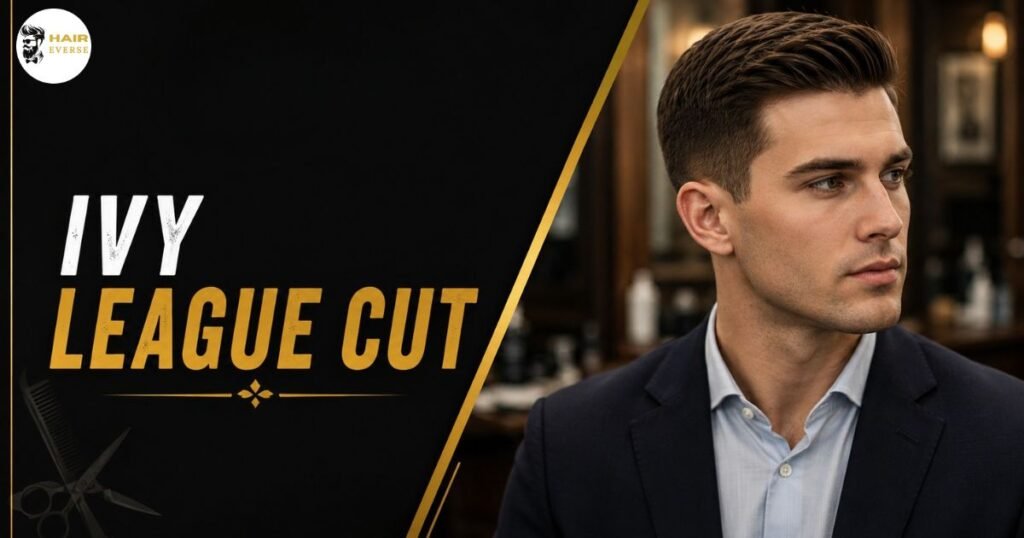
Styling Tip: A light pomade combed through damp hair gives the top a polished, controlled finish.
Maintenance: Rebook every 34 weeks to maintain the contrast between the top length and tapered sides. Maintenance and styling times are estimates and may vary by hair type.
Skin Fade Haircut
Overview: Sides fade down to bare skin while the top keeps enough length for light texture, often paired with a full beard for balance.
Why It Works: Works for any hair type, and this high contrast style suits nearly every face shape, especially when paired with facial hair.
Styling Tip: A matte clay adds texture on top without the shine that can draw extra attention to a smooth fade.
Maintenance: Book a fade refresh every 2 weeks since bareskin fades grow out and lose their sharp line quickly. Maintenance and styling times are estimates and may vary by hair type.
Flat Top Cut
Overview: A squaredoff, level crown adds height above faded sides, drawing the eye upward and giving the forehead a more proportional frame.
Why It Works: Best for thick, coarse, straight hair that can hold a flat shape, and suits square faces by adding structured height.
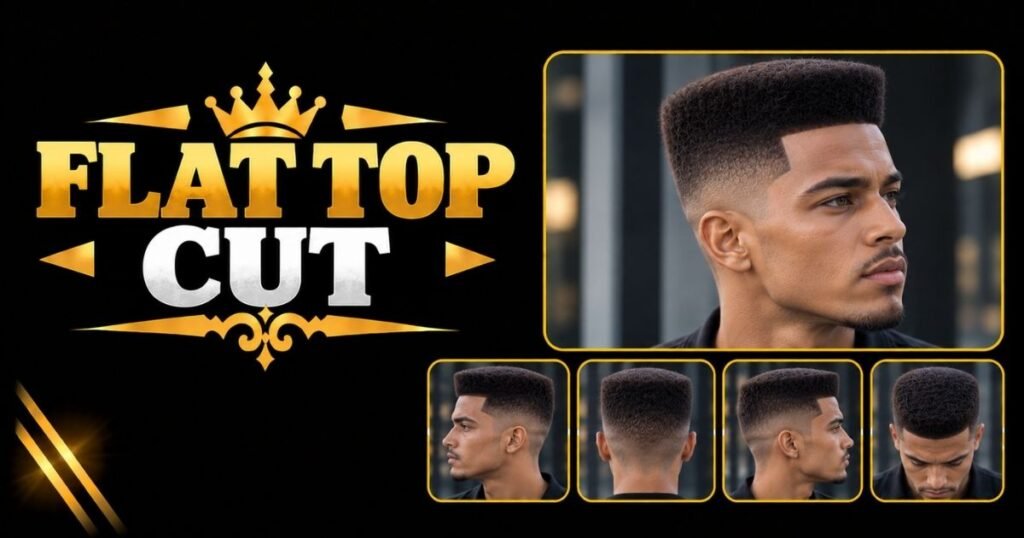
Styling Tip: Comb stronghold pomade straight up with a flat brush, then trim the top level before it dries.
Maintenance: Recut the flat crown every 2 weeks, since even small growth softens its defining edge. Maintenance and styling times are estimates and may vary by hair type.
BrushUp Fringe
Overview: Medium length hair on top is lifted at the roots and tousled upward and forward, creating volume that softens a high hairline.
Why It Works: Suits wavy or thick hair with natural lift, and this crownfocused volume flatters oval or round faces.
Styling Tip: Lift hair at the roots with a brush while blowdrying, then tousle with fingers and set with a light styling cream.
Maintenance: Trim every 4 weeks to keep the top length manageable enough to brush up daily. Maintenance and styling times are estimates and may vary by hair type.
Blunt Bang Crop
Overview: Short, choppy layers on top end in a blunt, straight cut fringe line that sits directly across the forehead for maximum coverage.
Why It Works: Works on straight or thick hair, and its bold horizontal line flatters oval faces especially well by adding structure up top.
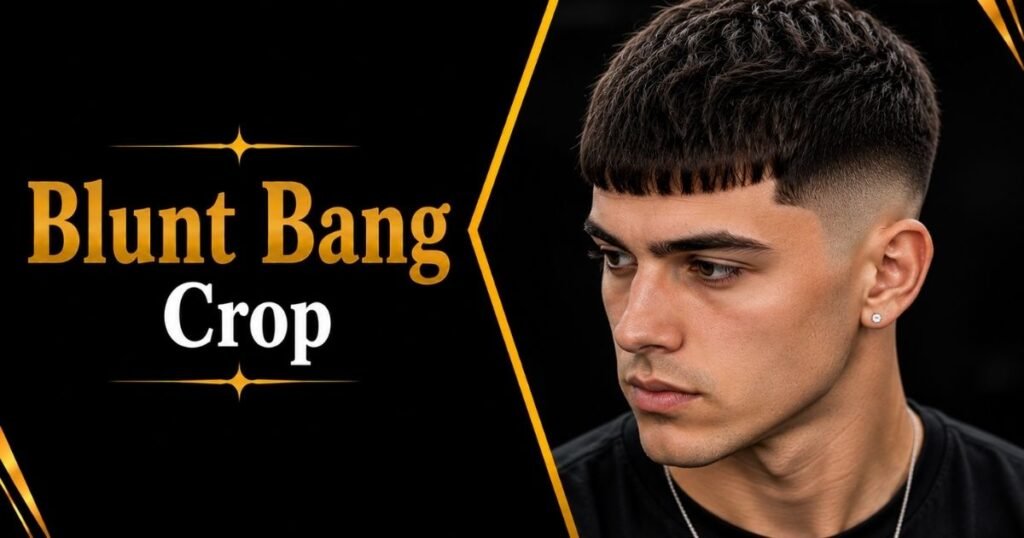
Styling Tip: Blowdry the fringe flat using a paddle brush, then lock it in place with a lighthold spray.
Maintenance: The blunt line needs a trim every 23 weeks to stay sharp as hair grows unevenly along the front. Maintenance and styling times are estimates and may vary by hair type.
Spiky Fade
Overview: Short, choppy hair on top is styled into defined spikes above a high or mid fade, adding texture and height rather than coverage.
Why It Works: Best for straight or thick hair with enough density to hold spikes, and this heightfocused style flatters round faces.
Styling Tip: Work gel into damp roots and pull sections upward with fingers to create separated, defined spikes.
Maintenance: Refresh the fade every 23 weeks; the spiky top only needs light trimming to keep its shape. Maintenance and styling times are estimates and may vary by hair type.
Blowout Fade
Overview: Extra volume is built into the top through blowdrying and cutting technique, paired with clean, tight sides for maximum contrast.
Why It Works: Suits thick or wavy hair with good density, and the upward volume draws the eye toward the crown, balancing nearly any face shape.
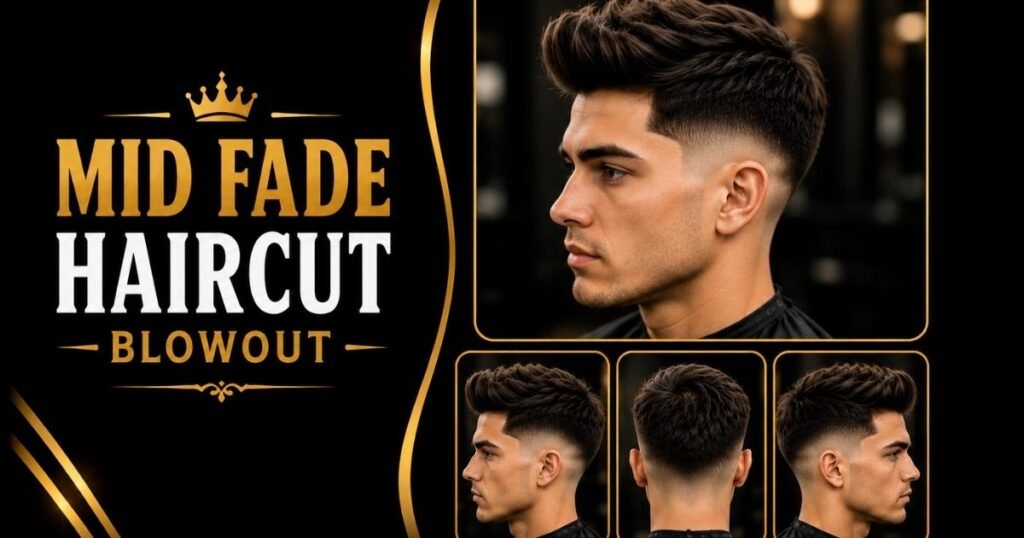
Styling Tip: Blowdry the top upward with a round brush while it’s damp, then set with a medium gold pomade.
Maintenance: Keep the sides tight with a fade touchup every 23 weeks while the top only needs shaping every 45 weeks. Maintenance and styling times are estimates and may vary by hair type.
Comb Over with Fade
Overview: A defined side part directs longer top hair across the head in a neat sweep, paired with a low fade for a polished, controlled look.
Why It Works: Works well on straight hair, and this is directed shape suits oval or heartshaped faces, especially for men who wear glasses.
Styling Tip: Comb pomade through damp hair in the direction of the part, then set with a cool blast from the blow dryer.
Maintenance: Refresh the part line and fade every 34 weeks to keep regrowth from blurring the combover shape. Maintenance and styling times are estimates and may vary by hair type.
Pompadour with Fringe
Overview: Volume is built at the crown while a section of fringe is left forward to soften the hairline instead of fully slicking it back.
Why It Works: Best on thick or wavy hair with enough length to build height, and flatters oval or long faces by adding crown volume with partial coverage.
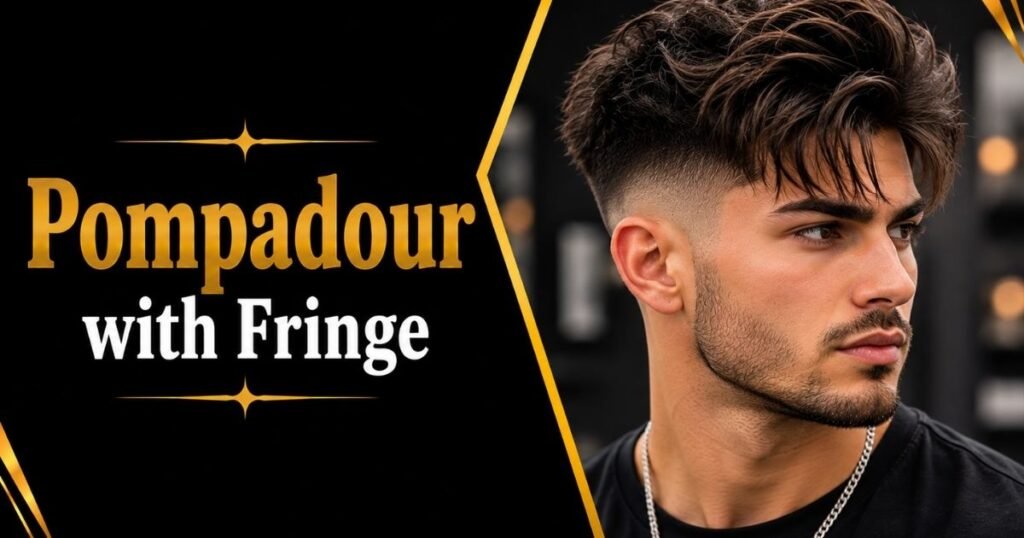
Styling Tip: Blowdry the crown upward and back while brushing the front fringe forward, then set with a stronghold pomade.
Maintenance: Trim every 34 weeks to keep the balance between the lifted crown and the forward fringe. Maintenance and styling times are estimates and may vary by hair type.
Quiff Haircut
Overview: Hair on top is swept up and slightly forward into a rounded quiff shape, adding lift without fully exposing the hairline like a pompadour does.
Why It Works: Suits straight or wavy hair, and this moderate height style flatters round or oval faces without overemphasizing the forehead.
Styling Tip: Apply a light gel to damp hair and push it upward and forward with fingers before it sets.
Maintenance: Trim every 4 weeks to maintain the length needed for a clean quiff shape. Maintenance and styling times are estimates and may vary by hair type.
Zero Fade Buzz with Beard
Overview: A short, uniform buzz on top blends into shaved sides and back, with a full beard adding balance and lower face definition.
Why It Works: Works for any hair type, and pairing this low-maintenance cut with facial hair particularly suits square or diamond face shapes.
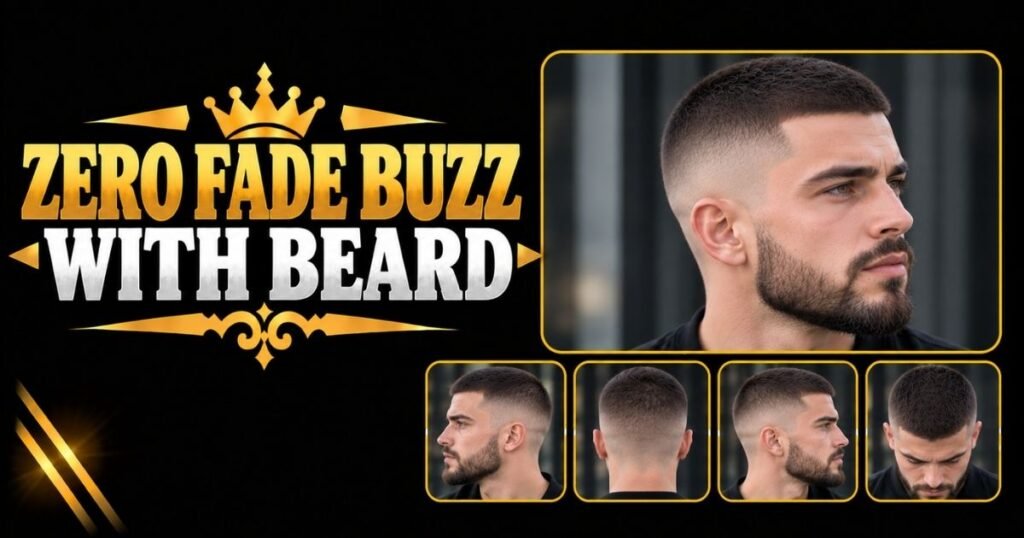
Styling Tip: Keep beard oil in daily rotation to maintain a neat, defined beard line that complements the closecropped top.
Maintenance: Rebuzz every 12 weeks and trim the beard weekly to keep both elements looking equally sharp. Maintenance and styling times are estimates and may vary by hair type.
Big forehead Hairstyles for Black Male: Cornrow Braids
Overview: Hair is braided tightly against the scalp in structured rows, often paired with a fade or shaved sides for a clean finish.
Why It Works: Best suited to coily or curly hair types, and the structured rows work across all face shapes by adding graphic linework near the hairline.
Styling Tip: Apply braid gel or edge control along the hairline to keep flyaways smooth between salon visits.
Maintenance: Cornrows typically last 23 weeks before needing a fresh install, and the scalp should be moisturized regularly in between. Maintenance and styling times are estimates and may vary by hair type.
Fishbone Braids
Overview: A more intricate braiding pattern than standard cornrows, often combined with a temple fade for a striking, structured silhouette.
Why It Works: Works well on coily or curly hair, and the detailed pattern near the hairline suits any face shape by drawing attention to craftsmanship rather than forehead size.
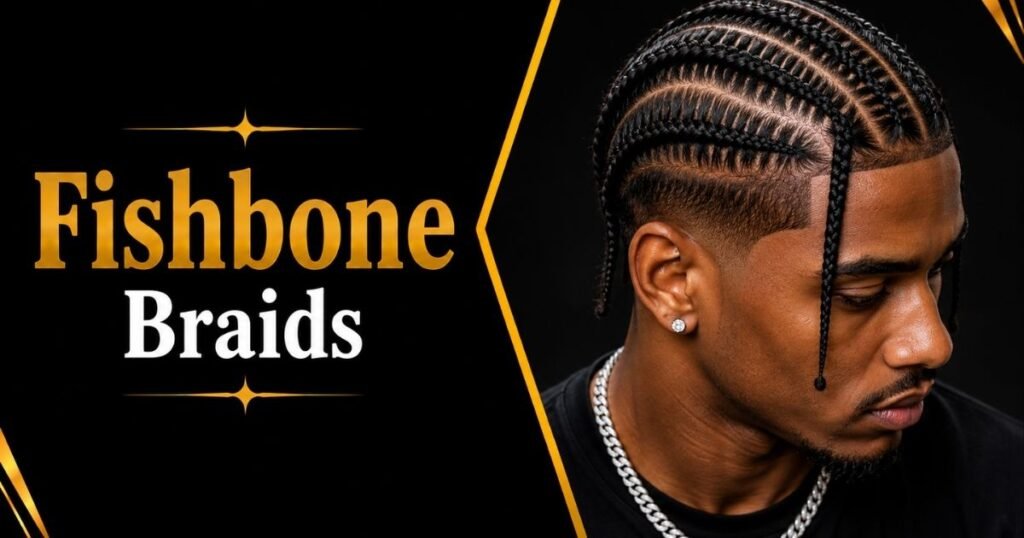
Styling Tip: Use a light braid spray to keep the pattern glossy and reduce frizz without weighing hair down.
Maintenance: Plan for a fresh install every 23 weeks and keep the scalp moisturized to avoid dryness underneath the braids. Maintenance and styling times are estimates and may vary by hair type.
Man Bun with Shaved Sides
Overview: Long top hair is pulled back and tied into a bun, while the sides are shaved or faded for contrast, keeping the front hairline exposed by design.
Why It Works: Suits long or thick hair with enough length to gather, and its clean silhouette flatters oval or long faces.
Styling Tip: Apply texturizing spray before tying the bun to add grip and reduce slipping through the day.
Maintenance: The shaved sides need a refresh every 2 weeks, while the bun length only needs trimming every 810 weeks. Maintenance and styling times are estimates and may vary by hair type.
Textured Fringe Undercut
Overview: A disconnected undercut on the sides contrasts with longer, textured fringe on top that falls forward to cover the hairline.
Why It Works: Works on straight or wavy hair, and this highcontrast, fringeforward style flatters oval or round faces.
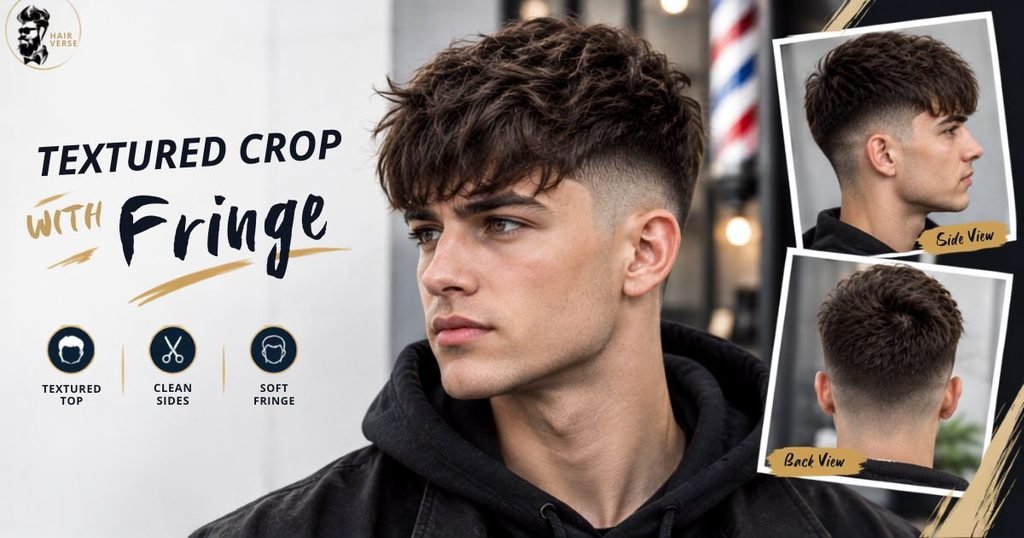
Styling Tip: Apply matte clay to damp hair and press the fringe forward, focusing product at the roots for lift.
Maintenance: Refresh the undercut every 3 weeks while trimming the fringe as needed to maintain coverage. Maintenance and styling times are estimates and may vary by hair type.
Long Top Short Sides
Overview: A longer, slightly messy top breaks up the visual continuity of the forehead while short, faded sides keep the overall look neat.
Why It Works: Works for straight or wavy hair, and this style suits nearly any face shape since the length can be adjusted to match proportions.
Styling Tip: Use a matte paste to add texture and separation on top without stiffening the movement.
Maintenance: Refresh the sides every 23 weeks while letting the top grow toward your preferred length. Maintenance and styling times are estimates and may vary by hair type.
Wolf Cut
Overview: Heavy layering throughout the top creates a shaggy, feathered fringe that falls forward, blending shag and mullet textures for full coverage.
Why It Works: Best on wavy or curly hair that shows off the layering, and its texture-driven volume flatters round or oval faces.
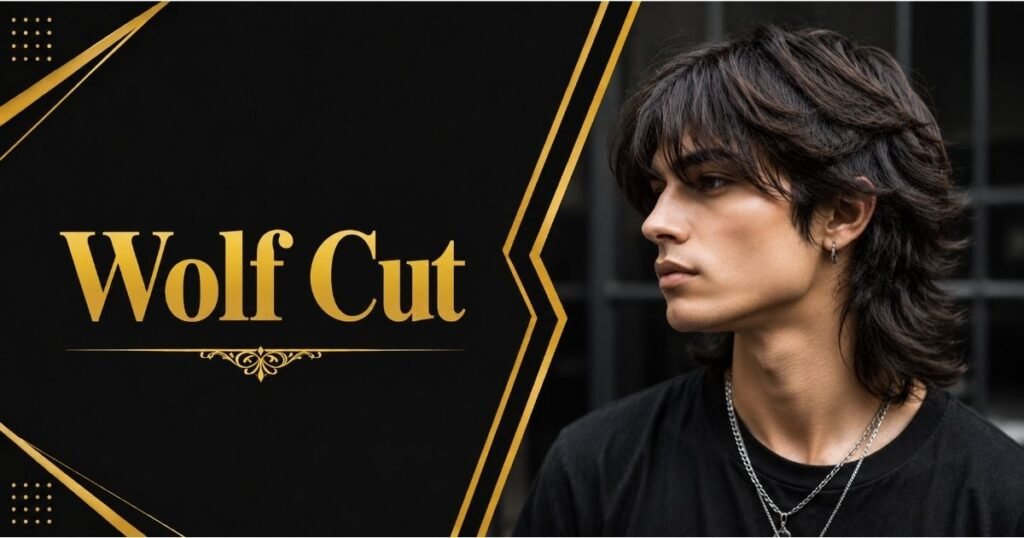
Styling Tip: Scrunch sea salt spray into damp hair and let it air dry to enhance natural texture and separation.
Maintenance: Reshape the layers every 68 weeks to keep the shaggy silhouette from losing definition. Maintenance and styling times are estimates and may vary by hair type.
Faux Hawk
Overview: A center strip of longer hair runs from the fringe to the crown, flanked by tight fades, drawing the eye vertically instead of across the forehead.
Why It Works: Works on straight or thick hair with enough density to hold a center ridge, and suits square or oval faces.
Styling Tip: Apply hair clay and twist small sections upward with fingers to define the center strip.
Maintenance: The fade needs a touchup every 23 weeks to keep contrast against the center strip sharp. Maintenance and styling times are estimates and may vary by hair type.
Textured Forward Crop
Overview: Short, choppy layers are cut and styled to fall forward uniformly, creating a soft, textured line across the top of the forehead.
Why It Works: Suits straight hair with a natural fall, and this understated coverage flatters oval or round faces without much daily effort.
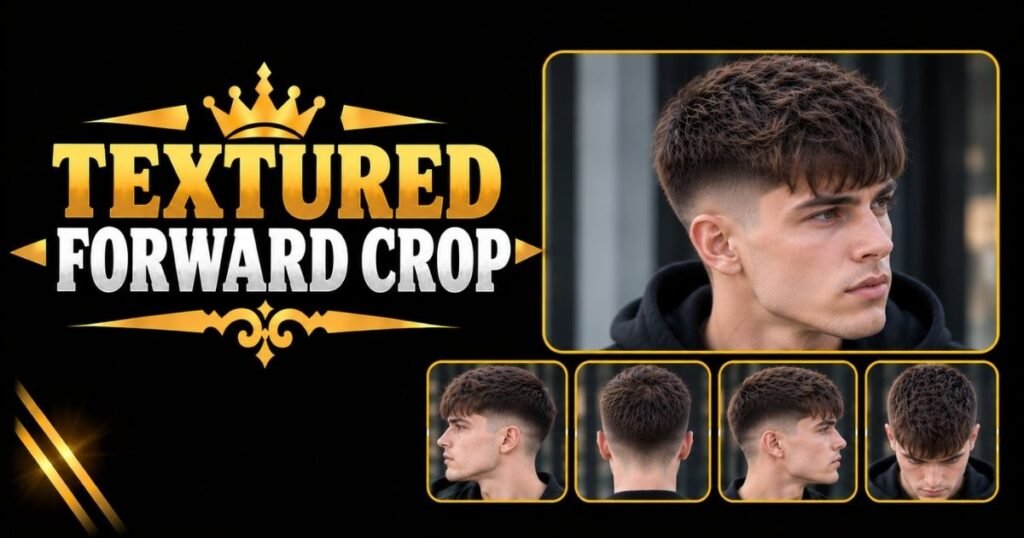
Styling Tip: A small amount of matte cream pressed into dry hair keeps the forward direction all day.
Maintenance: Trim every 3 weeks to maintain the forward fall before it grows long enough to flop unevenly. Maintenance and styling times are estimates and may vary by hair type.
Taper Fade for Thick Hair
Overview: Sides gradually taper down in length, removing bulk from thick hair while keeping enough length on top to style with texture.
Why It Works: Built specifically for thick or coarse hair that needs weight removed, and this style flatters most face shapes by softening a wide hairline.
Styling Tip: Use a matte clay on dry hair to separate texture without adding extra bulk to already dense strands.
Maintenance: The taper holds its shape for 45 weeks since there’s no hard fade line to maintain. Maintenance and styling times are estimates and may vary by hair type.
Round Face Big Forehead Hairstyles Male: Curly Crop
Overview: Natural curls are kept short on top and layered to fall forward, using curl volume itself as the primary source of forehead coverage.
Why It Works: Built for curly or coily hair, and the added volume flatters oval or round faces by softening the hairline naturally.
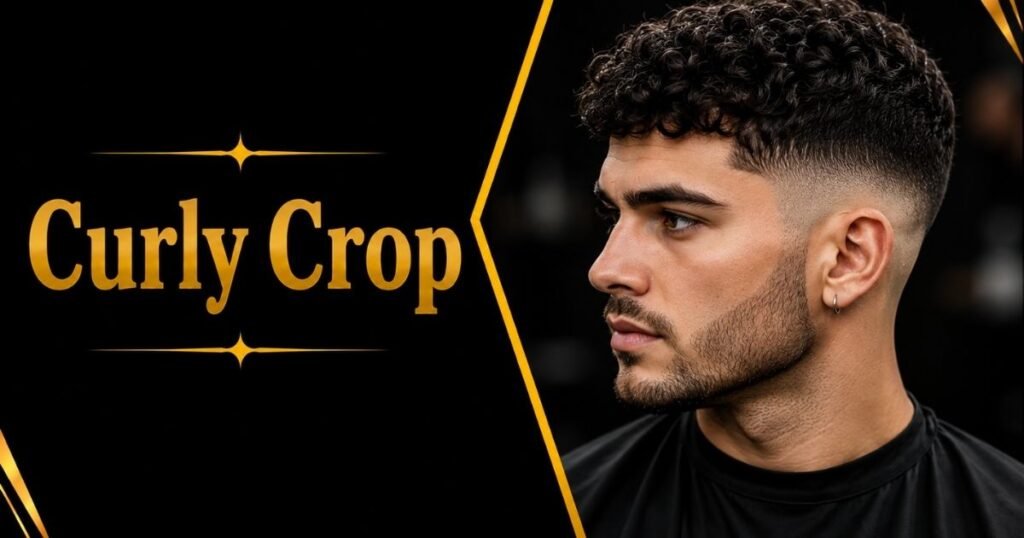
Styling Tip: Apply curl cream to soaking wet hair and scrunch upward before airdrying to preserve definition.
Maintenance: Trim only dead ends every 68 weeks to keep the curl pattern intact and avoid thinning the coverage. Maintenance and styling times are estimates and may vary by hair type.
Boys’ LowMaintenance Buzz
Overview: A short, uniform clipper cut across the entire head, simple to maintain and practical for active kids.
Why It Works: Works for any hair type in younger boys, and its clean, structured look flatters most young face shapes without any daily styling.
Styling Tip: No product needed, though a light water based gel can smooth stray hairs for photos or school events.
Maintenance: Rebuzz every 34 weeks as boys’ hair tends to grow noticeably faster than adult styling schedules assume. Maintenance and styling times are estimates and may vary by hair type.
Boys’ Textured Crop
Overview: A slightly longer crop with light texture on top, giving boys a bit of forward coverage without complicated daily styling.
Why It Works: Works well for straight or wavy hair in boys, and the light forward texture suits most young face shapes.
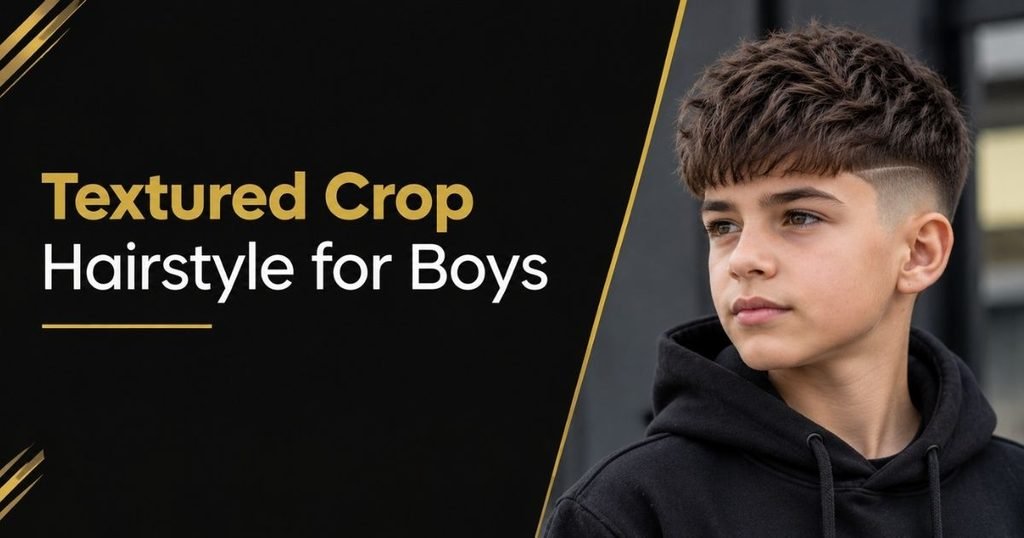
Styling Tip: A small amount of kidsafe styling cream keeps the top neat without stiffness or shine.
Maintenance: Trim every 4 weeks to keep the crop tidy as it grows out quickly on younger, faster-growing hair. Maintenance and styling times are estimates and may vary by hair type.
Business Professional Crop
Overview: A neat, understated crop with a soft taper and light forward texture, built to look polished in an office setting while still softening the hairline.
Why It Works: Works on straight or wavy hair of any density, and its conservative shape suits nearly every face shape without drawing attention.
Styling Tip: A lighthold cream keeps hair controlled through a full workday without an overstyled finish.
Maintenance: A trim every 4 weeks keeps the taper professional and the front length consistent. Maintenance and styling times are estimates and may vary by hair type.
Bald Fade with Beard
Overview: Sides fade completely to skin while the top is kept short and textured, with a full beard adding definition to balance out the exposed forehead.
Why It Works: Works for any hair type, and the beard’s added lower face width particularly flatters square or diamond faces.
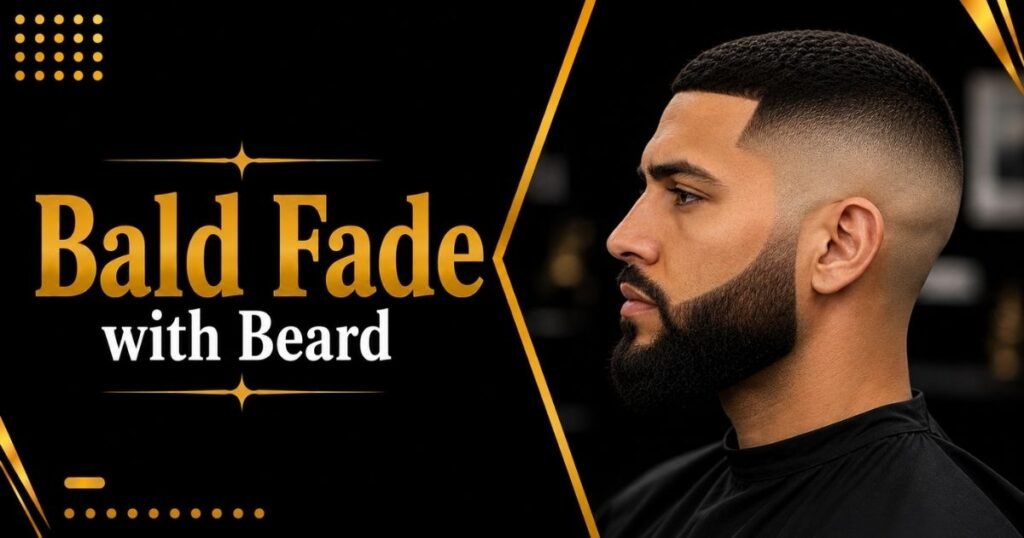
Styling Tip: Apply beard balm daily to keep facial hair looking as deliberate and groomed as the fade itself.
Maintenance: Refresh the bald fade every 2 weeks and trim the beard weekly to maintain the balance between both elements. Maintenance and styling times are estimates and may vary by hair type.
How to Choose the Right Hairstyle for Big Forehead
By Hair Type:
- Thick hair: Taper Fade for Thick Hair or the Blowout Fade remove bulk while still building usable volume on top.
- Thin hair: Skin Fade Haircut or Crew Cut avoid the flat, thin look that longer layers can create on fine strands.
- Curly hair: Curly Taper, Curly Crop, and Curly Taper each work with the curl pattern instead of fighting it.
- Straight hair: Caesar Cut and French Crop hold a forward fringe shape cleanly with minimal daily effort.
- Wavy hair: BrushUp Fringe and Choppy Fringe make the most of natural movement for coverage.
By Face Shape:
- Oval: Nearly every style on this list works, but French Crop and Textured Crop are safe, versatile starting points.
- Round: Choose styles with height, like the Quiff Haircut or Flat Top Cut, to elongate the face visually.
- Square: Faux Hawk or Zero Fade Buzz with Beard add angles that complement a strong jawline.
- Long: Modern Mullet or Pompadour with Fringe add width through fringe and crown volume.
What to Avoid
Slickedback styles, highvolume pompadours pulled straight back, and anything that fully exposes the hairline tend to backfire on a big forehead, since pulling hair away from the face only draws more attention to its height and width.
Wetlook products can make the same mistake worse, especially on thinning hair, since shine emphasizes rather than softens the hairline. If in doubt, favor styles with forward texture or fringe over anything styled directly backward.
How to Ask Your Barber Big Forehead Haircut for Men
- Bring 12 reference photos showing the exact fringe length and coverage you want, since “cover my forehead” means different things to different barbers.
- Explain your preferred length in fingerwidths or inches for the top section specifically.
- Mention your daily styling routine so the barber builds a cut that matches how much time you’ll actually spend on it.
- Ask directly whether the style is prone to “growing into” your forehead awkwardly between cuts.
- Explain any workplace dress code or lifestyle needs upfront, especially for bolder styles like braids or a faux hawk.
- Confirm the fringe length and fade height before the clippers start, not after the first pass.
Product Recommendations for Big Forehead Hairstyles
Hair Cream Best For: Straight to wavy hair needing light, natural hold for forwardstyled fringe. How to Use: Rub a dimesize amount between palms and work through damp hair from midlength to ends.
Pomade Best For: Combover and quiff styles needing shine and directional control. How to Use: Warm a small amount in your palms and comb through damp hair in your chosen direction.
Wax Best For: Short, textured tops like the French Crop or Textured Forward Crop. How to Use: Apply to dry hair and mold with fingertips for defined, piecey texture.
Clay Best For: Matte, highhold looks like the Faux Hawk or Textured Fringe Undercut. How to Use: Work into damp or dry hair and shape immediately, since clay sets fast.
Shampoo Best For: Removing product buildup, especially on longer fringe styles used daily. How to Use: Lather at the scalp two to three times weekly and rinse thoroughly to avoid residue.
Conditioner Best For: Curly or longer styles prone to dryness at the ends. How to Use: Apply from midlength to ends after every wash and rinse with cool water to seal the cuticle.
If you want some more Haircuts
- You must go for undercut haircut pairs closely shaved sides with longer hair on top for a bold, high-contrast look. Once a retro throwback, it’s now reimagined with fades, disconnected lines, and slicked-back or textured finishes.
- You may also go for the right hairstyles for men in 2026 means matching the cut to your face shape, hair texture, and how much styling time you’re willing to put in each day. This year from textured crops and disconnected fades to modern mullets and sleek side parts each selected for its versatility and sharp, put-together look.
- Must try the right men hair style comes down to matching a cut to your face shape, hair texture, and how much time you actually want to spend styling each morning. No matter your hair type or personal style, you’ll find a men hair style here built to deliver a clean, confident look all year.
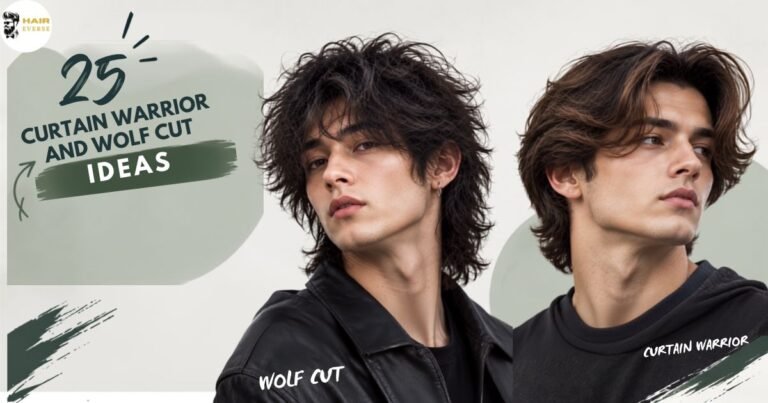
- There’s no shortage of styles worth exploring once you’ve nailed the basics. If you like a textured, tousled look, compare wolf cut vs shag cut or browse our full roundup of wolf cut hairstyles.
- For sharper, cleaner options, check out our picks for professional hairstyles and professional hairstyles for men, or the classic structure of a pompadour hairstyle and a slick back hairstyle.
- If you spend a lot of time outdoors, our guide to the surfer hairstyle for men is worth a look, and for something globally inspired, see our take on Korean hairstyles for men.
- Fans of low-maintenance fades should check our breakdown of low fade vs mid fade vs high fade, the low taper fade, and our full list of low-maintenance men’s haircuts.
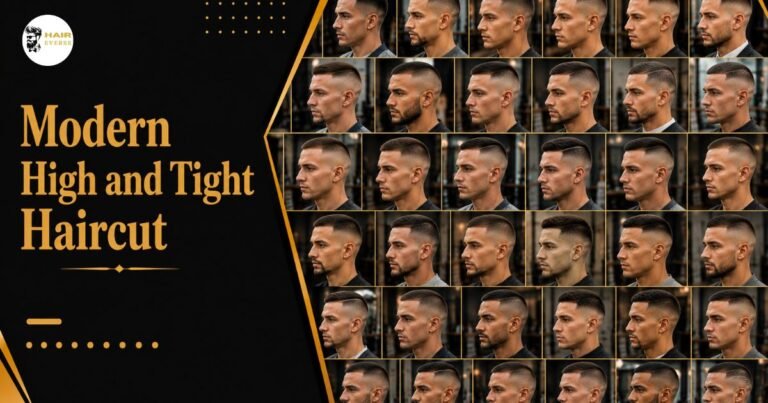
- If you’re keeping things sharp and structured, our guides to the high and tight haircut, middle part hairstyles for men, an over-50 old man fade haircut, and long hairstyles for men round out the options.
- Once you’ve picked a style, the right products and pricing knowledge go a long way. Our comparison of pomade or hair clay helps you choose the right finish, and our broader hair products guide covers everything else you’ll need.
- If you’re curious about what to budget for your next visit, our breakdown of men’s haircut prices offers a helpful benchmark.
- For readers on the business side of barbering, we’ve got you covered too. Learn how to find a good barber or how to ask your barber for a fade to get exactly what you want in the chair.
- If you’re thinking about opening your own shop, our guides on the cost to open a barber shop, tips to start a successful barbershop, advice on business banking and the QBI deduction, strategies to build a loyal clientele as a new barber, and our list of barbershop marketing ideas cover everything from day one to long-term growth.
Final Thoughts for Having Big forehead Hairstyles
A big forehead only looks like a problem when the haircut fights against it. Choose a style built around your hair type, whether that means forward texture to add coverage or a buzz cut that leans into your natural structure, and the cut will read as intentional rather than accidental.
From the low maintenance Crew Cut to the bold Faux Hawk, the right big forehead hairstyle comes down to matching hair type, face shape, and how much daily styling you’re realistically willing to do.
Talk openly with your barber about what you want the fringe or fade to accomplish, and don’t be afraid to experiment with texture products until you land on what actually works. Ready to book your next cut? Bring this guide along and show your barber exactly which style you’re after.
FAQs
What hairstyles hide a Big Forehead Hairstyles?
Styles with forward fringe or texture, like the French Crop, Curtain Bangs, or Choppy Fringe, add coverage by bringing hair down over the hairline instead of pulling it back and exposing more skin.
Do bangs help with a Big Forehead Hairstyles?
Yes. Bangs or a forward fringe, whether blunt or textured, visually shorten the space between the eyebrows and hairline, which is the main effect people want when addressing a big forehead hairstyles.
Is a fade good for a Big Forehead Hairstyles?
Yes, especially when paired with some length or texture on top. A fade alone draws attention to the sides and structure of the face rather than concealing the forehead, so it works best combined with a fringe or textured crop.
Can curly hair help hide a Big Forehead Hairstyles?
Absolutely. Natural curl volume adds width and softness near the hairline, which is why styles like the Curly Taper and Curly Crop are specifically built around that natural coverage.
What haircuts work for Big Foreheads Hairstyles and thin hair?
Close, low maintenance cuts like the Skin Fade Haircut, Crew Cut, or Taper Fade for Thick Hair (adapted with shorter clipper guards) tend to work best, since thin hair struggles to hold long layers without looking flat.