
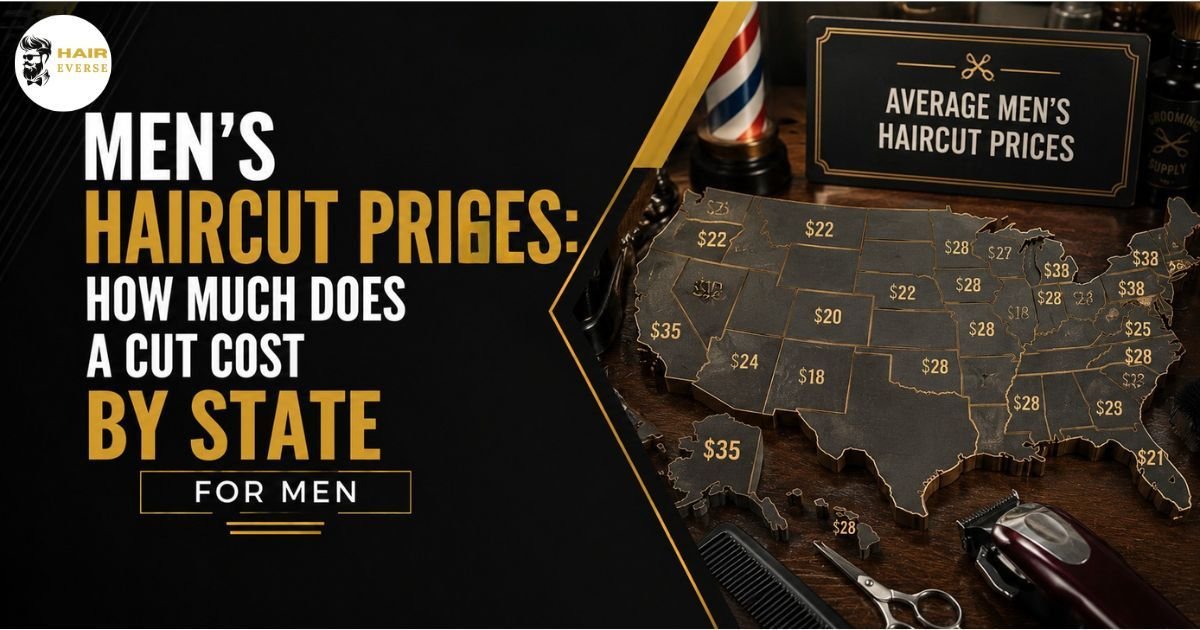
Men’s Haircut Prices: How Much Does A Cut Cost by State
Booking a haircut in a new city and getting quoted twice what you paid at home is a common, confusing moment. Men’s haircut prices vary more than almost any other routine personal service. The gap between a $25 cut and an $80 cut often has less to do with skill than with the real estate and wages underneath the shop.
Barbers who’ve worked in more than one market tend to notice this fast: the same fade that costs $30 in one city can run $65 two states over. Explore three honest price tiers, so you know what to actually expect before you sit in the chair.
Price Tier Overview
The table below provides a complete overview of all three city tiers, from premium to budget-friendly. It highlights their typical price ranges, what each tier represents, and examples of cities that fall into each category, making it easier to compare costs and choose the option that best fits your budget and travel preferences.
| Tier | Typical Range | Represents | Example Cities |
| Tier 1: Premium Metro | $55–$100+ | High cost-of-living coastal and major metro markets | San Francisco, New York City, Boston |
| Tier 2: Mid-Range Metro | $35–$55 | Large or mid-sized cities with moderate cost of living | Chicago, Denver, Atlanta |
| Tier 3: Budget-Friendly | $20–$40 | Lower cost-of-living metros and traditional pricing markets | Houston, Louisville, Jackson |
How Much Does a Men’s Haircut Cost on Average?
The national average for a standard men’s haircut currently sits around $43, based on multiple published industry surveys. Budget chains and franchise shops tend to run $20 to $30.
Standard independent barbershops fall between $35 and $50, and premium barbershops or full-service salons can run $55 to $80 or more before tip. Prices have climbed steadily since 2020, driven by rising rent, wages, and insurance costs across the industry.
Why Do Haircut Prices Vary So Much by State?
The biggest driver is regional cost of living, not skill or quality. The U.S. Bureau of Economic Analysis tracks Regional Price Parities, an index comparing how expensive goods and services are in each state relative to the national average.
States like California, Hawaii, and New Jersey consistently post the highest price levels in the country, while states like Arkansas, Mississippi, and Oklahoma post the lowest. Since haircuts can’t be automated or mass-produced, a barber’s local rent and wage costs get passed directly into the price of every cut.
Tier 1 Ctities, Premium Metro Pricing
These cities sit in states or metro areas with some of the highest cost-of-living levels in the country, and haircut pricing follows that pattern closely.

San Francisco, CA
- Estimated Range: $60–$100+
- Why This Tier: California carries one of the highest regional price parities in the country, and San Francisco’s commercial rents are near the national peak.
New York City, NY
- Estimated Range: $60–$110+
- Why This Tier: Extremely high commercial rent and wage costs in Manhattan and the outer boroughs push premium barbershop pricing to the top of the national range.
Los Angeles, CA
- Estimated Range: $55–$95
- Why This Tier: A large, style-conscious client base and California’s high statewide cost of living support strong premium pricing.
Boston, MA
- Estimated Range: $55–$90
- Why This Tier: Massachusetts combines high labor costs with dense urban demand, keeping prices well above the national average.
Seattle, WA
- Estimated Range: $55–$90
- Why This Tier: Washington’s tech-driven economy and high local wages support premium barbershop pricing throughout the metro.
Washington, D.C.
- Estimated Range: $55–$90
- Why This Tier: The District posts one of the highest regional price levels in the country, driven largely by housing and commercial rent costs.
Honolulu, HI
- Estimated Range: $55–$90
- Why This Tier: Hawaii’s isolated island economy and shipping costs for goods keep overall prices, including services, consistently elevated.
San Diego, CA
- Estimated Range: $50–$85
- Why This Tier: Coastal California cost of living keeps pricing high, even outside the state’s largest metro areas.
San Jose, CA
- Estimated Range: $55–$95
- Why This Tier: High local wages tied to the tech industry translate into some of the highest service prices in the state.
Portland, OR
- Estimated Range: $50–$85
- Why This Tier: A strong independent barbershop culture and rising Pacific Northwest cost of living keep prices firmly in the premium range.
What Is the Most Expensive State for a Men’s Haircut?
Based on published Regional Price Parity data, California, Hawaii, and New Jersey consistently post the highest overall cost-of-living levels among U.S. states.
The haircut pricing in their major metro areas tends to track that pattern closely. This doesn’t guarantee any single shop’s price, but it’s a reliable signal for what to expect walking in.
Tier 2 Cities, Mid-Range Metro Pricing
These cities sit in states with moderate cost-of-living levels, typically landing close to or somewhat above the national average.
Chicago, IL
- Estimated Range: $35–$60
- Why This Tier: A large, competitive barbering market with real variation between neighborhoods and downtown pricing.
Denver, CO
- Estimated Range: $38–$60
- Why This Tier: Rapid population growth has pushed Colorado’s cost of living, and haircut pricing, above the national midpoint.
Austin, TX
- Estimated Range: $35–$55
- Why This Tier: A fast-growing metro with rising rents, though Texas overall carries a moderate statewide cost of living.
Dallas, TX
- Estimated Range: $35–$55
- Why This Tier: A large metro market with strong demand but more moderate regional pricing than the coasts.
Miami, FL
- Estimated Range: $38–$65
- Why This Tier: Tourism and a dense, style-conscious client base push Miami above Florida’s statewide average.
Atlanta, GA
- Estimated Range: $35–$60
- Why This Tier: A large, competitive metro with a strong specialty barbering scene, particularly for fades and textured cuts.
Philadelphia, PA
- Estimated Range: $30–$50
- Why This Tier: A historic barbering city with a mix of traditional and premium shops, keeping pricing moderate overall.
Minneapolis, MN
- Estimated Range: $35–$60
- Why This Tier: A strong local economy supports mid-range pricing above much of the surrounding Midwest.
Nashville, TN
- Estimated Range: $32–$55
- Why This Tier: Rapid growth and a booming music and hospitality scene have pushed local pricing up in recent years.
Charlotte, NC
- Estimated Range: $30–$50
- Why This Tier: A growing financial hub with rising demand for specialized barbering services.
Phoenix, AZ
- Estimated Range: $32–$55
- Why This Tier: A large, growing metro with moderate Arizona cost of living overall.
Las Vegas, NV
- Estimated Range: $35–$60
- Why This Tier: A tourism-driven economy supports higher pricing than Nevada’s smaller markets.
Salt Lake City, UT
- Estimated Range: $32–$55
- Why This Tier: Steady population growth has pushed pricing above much of the surrounding Mountain West.
Sacramento, CA
- Estimated Range: $38–$60
- Why This Tier: Lower than California’s coastal metros, but still elevated by the state’s overall cost of living.
Raleigh, NC
- Estimated Range: $30–$50
- Why This Tier: A growing tech and research hub with moderate regional pricing overall.
Are Haircuts More Expensive in Cities Than Rural Areas?
Almost always, yes. Urban barbershops face higher commercial rent, higher wage expectations, and denser competition based on specialization rather than price.
Rural and small-town shops typically rely on long-standing client relationships and lower overhead, which keeps prices lower even within the same state.
Tier 3 Cities, Budget-Friendly Pricing
These cities sit in states or regions with some of the lowest cost-of-living levels in the country, and traditional barbershop pricing reflects that.

Houston, TX
- Estimated Range: $25–$45
- Why This Tier: A large metro with a strong base of traditional, community-focused barbershops keeping prices accessible.
San Antonio, TX
- Estimated Range: $22–$40
- Why This Tier: Lower commercial rents than Texas’s larger metros support more affordable pricing.
Indianapolis, IN
- Estimated Range: $22–$40
- Why This Tier: Indiana’s overall cost of living sits below the national average, and pricing follows closely.
Columbus, OH
- Estimated Range: $24–$42
- Why This Tier: A large city with a moderate-to-low cost of living relative to major coastal metros.
Kansas City, MO
- Estimated Range: $22–$40
- Why This Tier: Lower regional wages and rent keep pricing well below the national average.
Memphis, TN
- Estimated Range: $20–$38
- Why This Tier: A strong tradition of accessible, community-based barbershops keeps prices low relative to Nashville’s growth-driven pricing.
Louisville, KY
- Estimated Range: $22–$40
- Why This Tier: Kentucky’s overall cost of living sits comfortably below the national average.
Oklahoma City, OK
- Estimated Range: $20–$38
- Why This Tier: Oklahoma consistently posts one of the lowest regional price levels in the country.
Birmingham, AL
- Estimated Range: $20–$38
- Why This Tier: Alabama’s low cost of living supports traditional, accessible barbershop pricing statewide.
Jackson, MS
- Estimated Range: $19–$35
- Why This Tier: Mississippi consistently posts the lowest or near-lowest regional price level of any U.S. state.
Is It Worth Paying More for a Premium Barbershop?
It depends on what you value. Premium pricing often reflects appointment-only access, a specialist’s experience with a specific technique, and consistency across visits, not simply a nicer waiting room.
If you switch barbers often or don’t need a highly specialized cut, a mid-range or budget shop may serve you just as well. If consistency and specialization matter to you, the premium tier is where that expertise tends to concentrate.
How to Talk to Your Barber About Price
If a price surprises you, ask directly rather than assuming you’re being overcharged. A quick, honest question usually gets a clear answer: many barbers are glad to explain what’s included, whether add-ons like beard work are bundled in, and why their pricing sits where it does locally. Understanding what you’re paying for, not just the number itself, is the most useful habit here.
Tipping Guide by Price Tier
- Tier 3, Budget-Friendly: 15–20% is standard and appreciated.
- Tier 2, Mid-Range: 15–20%, trending toward 20% for a barber you see regularly.
- Tier 1, Premium: 20–25% is common, reflecting the specialization and consistency premium shops are priced around.
Style Guides for You
- Styling a younger guy’s look, check out haircuts for teenage boys, which covers 35 trending cuts, from low taper fades to shaggy layers. It breaks down the best options by hair type and face shape, plus barber tips and product recommendations to help teens find a style that’s easy to maintain and school-friendly.
- If you are looking for the right cut for a younger guy our guide on haircuts for teenage boys rounds up 35 of the top styles, ranging from clean low taper fades to relaxed wolf cuts and shaggy layers. Pick a style based on hair type and face shape, with barber-approved tips and product picks to keep the cut looking sharp with minimal effort.
- Trying to decide between two low-maintenance classics? This Crew Cut vs Buzz Cut guide breaks down 35 styles across both, from induction cuts to Ivy League crews with fades. It compares maintenance, styling time, and face shape fit to help you pick the right one for you.
Final Thoughts
Men’s haircut prices vary as much as they do because rent, wages, and local demand shape every single cut, not because one region’s barbers are more or less skilled than another’s. Use the tiers above as a starting point, then decide what actually matters to you: cost, convenience, or the consistency a specialist barber can offer.
Don’t assume the cheapest option nearby is automatically the best value, or that the priciest one automatically means better work. If you’re a barber thinking through your own pricing strategy, our guide on building a loyal clientele as a new barber is a useful next step.
FAQs
What is the Cheapest State for a Men’s Haircut?
States with the lowest overall cost of living, such as Mississippi, Arkansas, and Oklahoma, tend to have the most affordable haircut pricing nationally, often running well below the $43 national average.
How Much Should you Tip a Barber?
A standard tip is 15 to 20% for most barbershops, rising to 20 to 25% at premium shops or for a barber you see regularly. Tips matter more in an industry where pricing is often constrained by time and chair capacity.
What’s Included in a Standard Men’s Haircut Price?
A standard price typically covers the haircut itself, including a basic consultation and finishing style. Add-ons like beard trims, hot towel shaves, or deep conditioning treatments are usually priced separately.
Do Chain Salons Charge less than Independent Barbershops?
Generally yes. Chains and franchises typically run $20 to $30 nationally, prioritizing speed and accessibility, while independent barbershops often charge $35 to $65 or more for a more personalized, specialized experience.
How Much has the Cost of a Haircut Increased Since 2020?
Industry surveys report haircut prices rising roughly 5 to 6% between 2020 and recent years, driven by inflation in rent, wages, and supply costs across the personal care industry.