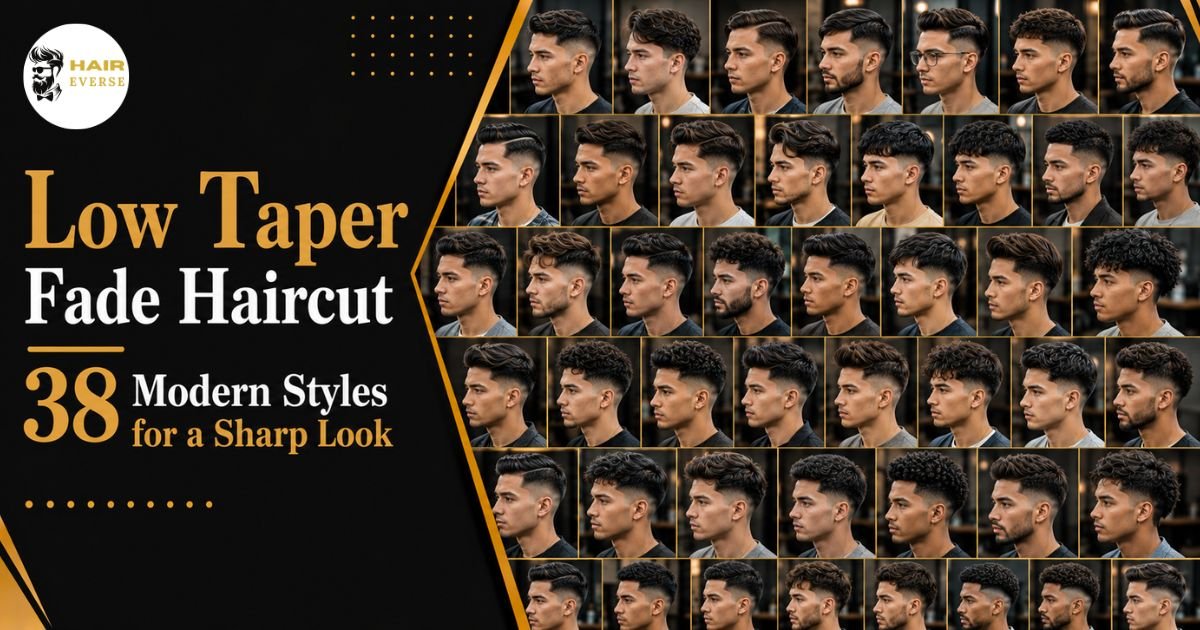
Low Taper Fade Haircut: 38 Modern Styles for a Sharp Look
A low taper fade haircut is a men’s cut where the hair gradually shortens starting just above the ears and around the neckline, blending into longer hair on top. Unlike a high or skin fade, it keeps a soft, natural transition making it low-maintenance, versatile, and suitable for nearly any hair type or occasion.
Picking the right variation is the hard part. Barbers see the same mistake constantly: a client points at a photo without mentioning their hair texture, face shape, or how much time they actually want to spend styling in the morning, and the result doesn’t hold up past week two.
Low Taper Fade Haircut Comparison Table
Here are style, type, face shape, mintenance and styling time comparison detailed table.
| Hairstyle | Best Hair Type | Face Shape | Maintenance | Styling Time |
| Classic Low Taper Fade | Straight, wavy | Oval, square | Low | 5 min |
| Low Taper with Textured Top | Straight, thick | Round, oval | Medium | 10 min |
| Low Taper Buzz Cut | All types | Any | Low | 2 min |
| Low Taper Comb Over | Straight, wavy | Long, oval | Medium | 8 min |
| Low Taper Side Part | Straight, fine | Square, oval | Medium | 7 min |
| Low Taper Pompadour | Thick, straight | Round, square | High | 12 min |
| Low Taper Quiff | Wavy, thick | Oval, round | Medium | 8 min |
| Low Taper Slick Back | Straight, wavy | Oval, long | Medium | 6 min |
| Low Taper Crew Cut | All types | Any | Low | 3 min |
| Low Taper French Crop | Thick, straight | Square, oval | Low | 5 min |
| Low Taper Faux Hawk | Thick, wavy | Round, oval | High | 10 min |
| Low Taper Mullet | Wavy, curly | Long, oval | Medium | 8 min |
| Low Taper Undercut | Thick, straight | Square, round | Medium | 7 min |
| Low Taper Ivy League | Straight, wavy | Oval, long | Medium | 8 min |
| Afro Low Taper Fade | Coily, curly | Round, square | Medium | 10 min |
| Low Taper Curly Top | Curly | Oval, round | Medium | 10 min |
| Low Taper 360 Waves | Coily | Any | High | 5 min |
| Low Taper Twists | Coily, curly | Any | Medium | 5 min |
| Low Taper Locs | Coily, curly | Any | Low | 3 min |
| Low Taper Cornrows | Coily | Any | Low | 2 min |
| Low Taper Blowout | Curly, coily | Round, oval | High | 15 min |
| Low Skin Taper | All types | Square, oval | High | 5 min |
| Low Temp Fade | All types | Any | High | 5 min |
| Low Drop Fade | Straight, wavy | Oval, round | Medium | 7 min |
| Low Burst Fade | Curly, wavy | Round, oval | Medium | 8 min |
| Low Taper Hard Part | Straight, thick | Square, oval | Medium | 8 min |
| Low Taper With Design | All types | Any | High | 5 min |
| Low Taper Fringe | Straight, wavy | Oval, long | Medium | 8 min |
| Low Taper Beard Combo | All types | Round, square | Medium | 10 min |
| Low Taper Top Knot | Thick, wavy | Oval, long | Medium | 6 min |
| Low Taper Spiky Top | Straight, thick | Round, square | Medium | 8 min |
| Low Taper Wavy Fringe | Wavy | Oval, round | Medium | 8 min |
| Low Taper for Straight Hair | Straight | Oval, square | Low | 5 min |
| Low Taper for Thick Hair | Thick | Round, square | Medium | 10 min |
| Low Taper for Thin Hair | Fine, thin | Oval, long | Low | 6 min |
| Low Taper Business Cut | Straight, wavy | Oval, square | Low | 6 min |
| Low Taper for Teen Boys | All types | Any | Low | 5 min |
| Low Taper UK Gentleman Style | Straight, wavy | Oval, square | Medium | 8 min |
Classic Low Taper Fade Haircut Black
Overview: This is the baseline low taper haircut hair fades gradually starting just above the ears and around the neckline, staying longer on top for a natural, everyday finish.
Why It Works: Suits straight and wavy hair best and flatters oval and square face shapes by softening sharp angles without adding bulk.
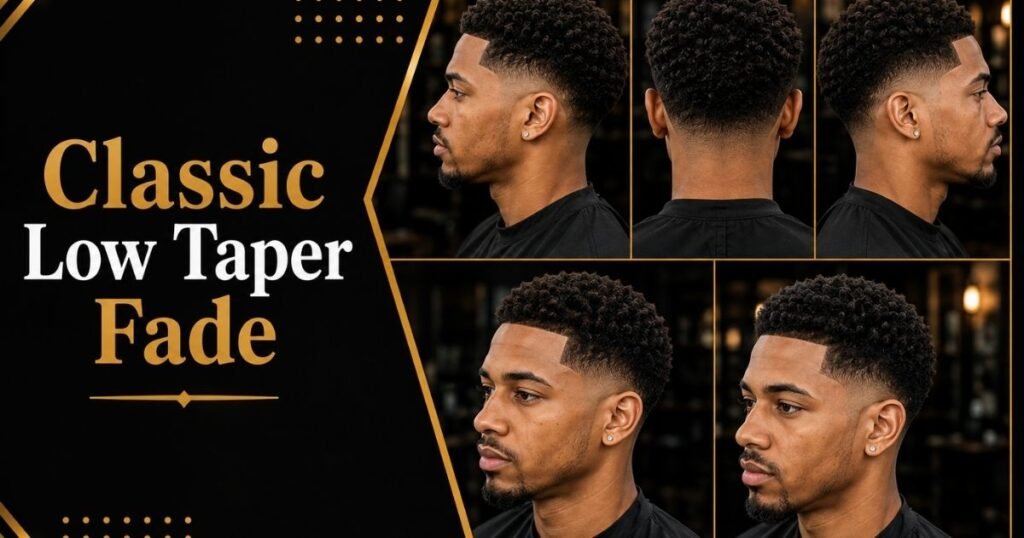
Styling Tip: Work a small amount of matte clay through damp hair and comb it in your natural direction; clay gives hold without shine, keeping the look casual rather than slicked.
Maintenance: Book a touch-up every 4–5 weeks since the fade line is soft and grows out gradually rather than looking patchy. Maintenance and styling times are estimates and may vary by hair type.
Low Taper Fade with Textured Top
Overview: The sides fade low and clean while the top is cut with point-cutting or razor techniques to add movement and separation instead of lying flat.
Why It Works: Best suited to thick or medium-density straight hair, since texturizing removes bulk; flatters round faces by adding vertical lift.
Styling Tip: Use a texturizing cream on towel-dried hair, then scrunch upward with your fingers rather than combing, to keep the piecey, separated look.
Maintenance: Texturized ends need trimming every 4 weeks or the piece-y effect grows out into a shapeless mop. Maintenance and styling times are estimates and may vary by hair type.
Low Taper Fade Buzz Cut
Overview: A uniform short length on top paired with a low taper on the sides, keeping the whole head close-cropped but with subtle contrast at the neckline.
Why It Works: Works on virtually any hair type and face shape since there’s minimal length to style, making it a reliable, no-fuss option.
Styling Tip: No product is strictly required, but a dab of matte pomade rubbed between palms and patted (not combed) on adds slight texture without shine.
Maintenance: Rebuzz every 2–3 weeks since short, uniform lengths show regrowth faster than longer styles. Maintenance and styling times are estimates and may vary by hair type.
Low Taper Fade Comb Over
Overview: Hair on top is left longer and swept to one side over a deep or side part, while the low taper keeps the sides controlled and clean underneath.
Why It Works: Flatters long and oval face shapes by adding horizontal width; works best on straight to slightly wavy hair that holds a defined part.
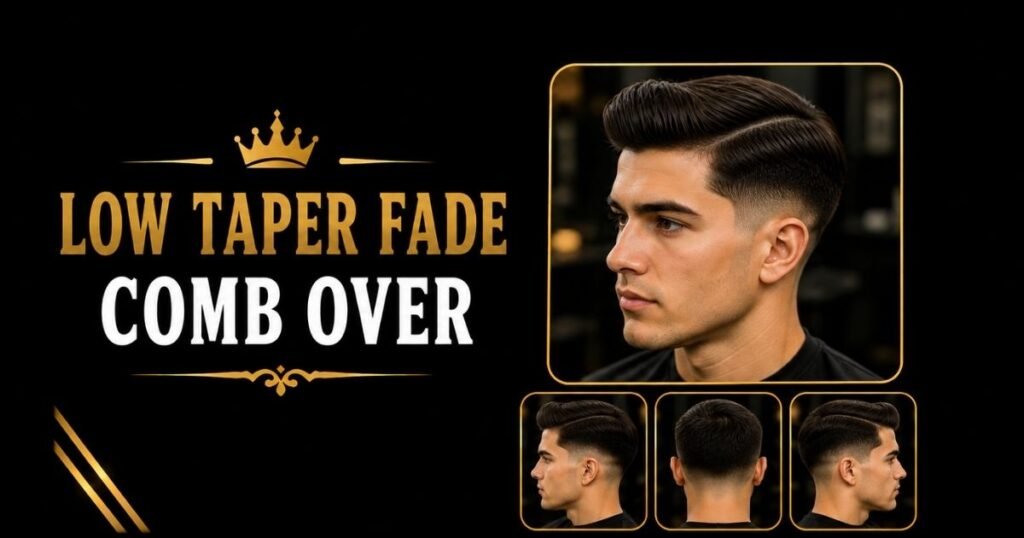
Styling Tip: Blow-dry the part in first with a vent brush, then set with a light-hold pomade so the comb-over doesn’t stiffen or look wet all day.
Maintenance: Keep the part line fresh by having your barber redefine it every 3–4 weeks. Maintenance and styling times are estimates and may vary by hair type.
Low Taper Fade Haircut Straight Hair: Side Part
Overview: A crisp, barber-cut side part sits above a low taper, giving a polished, structured look that reads more formal than a loose comb-over.
Why It Works: Ideal for fine to medium straight hair and square or oval faces, since the hard line adds definition without overwhelming smaller features.
Styling Tip: Apply pomade to damp hair before drying, then use a fine-tooth comb to lock the part in place as the hair cools and sets.
Maintenance: The hard part line needs a barber refresh every 2–3 weeks to stay crisp instead of fuzzy. Maintenance and styling times are estimates and may vary by hair type.
Low Taper Fade Pompadour
Overview: Hair is built up and swept back off the forehead for height and volume, while the low taper keeps the sides sharp in contrast.
Why It Works: Best on thick, straight hair with enough density to hold height; balances round or square faces by adding vertical length.
Styling Tip: Blow-dry with a round brush lifting the roots forward, then apply a strong-hold pomade and comb back for structure that lasts the day.
Maintenance: Trim the front section every 3 weeks to keep enough length for height without it flopping forward. Maintenance and styling times are estimates and may vary by hair type.
Low Taper Fade Quiff
Overview: A shorter, more relaxed cousin of the pompadour, the quiff brushes hair up and slightly back at the front for volume without a stiff, sculpted shape.
Why It Works: Suits wavy to thick hair and flatters oval or round faces by drawing the eye upward and adding shape at the crown.
Styling Tip: Work a texturizing paste through damp hair, then push the front up and back with your fingers instead of a comb for a looser finish.
Maintenance: A monthly trim keeps the front section long enough to style while the taper stays sharp underneath. Maintenance and styling times are estimates and may vary by hair type.
Low Taper Fade Slick Back
Overview: All the top hair is combed straight back off the face for a sleek, uniform finish, with the low taper adding definition at the sides.
Why It Works: Works best on straight to wavy hair with some length; suits oval and long face shapes since the style elongates rather than widens.
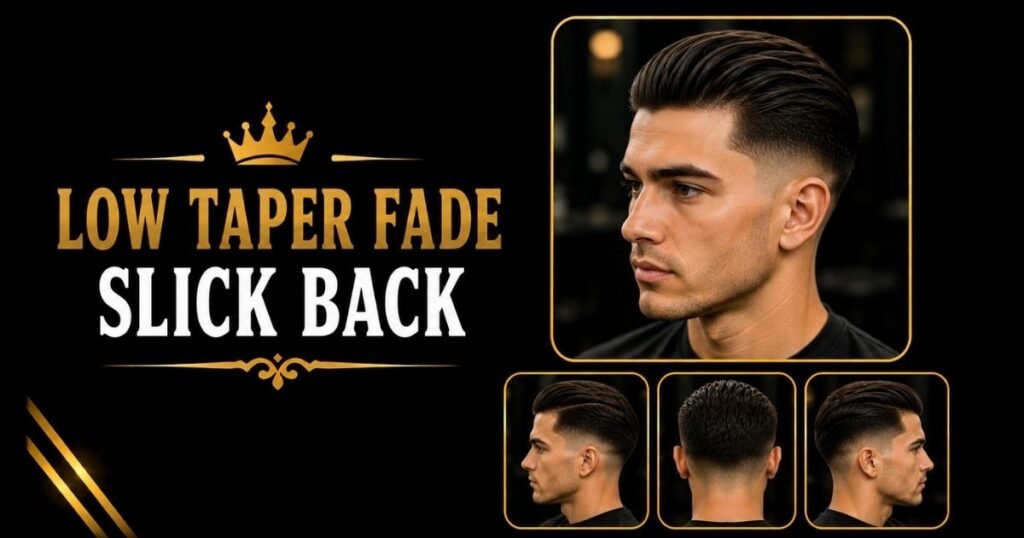
Styling Tip: Apply a water-based pomade to damp hair and comb straight back in one motion for an even, streak-free shine.
Maintenance: Grows out gracefully, but a trim every 5 weeks keeps the length manageable for slicking. Maintenance and styling times are estimates and may vary by hair type.
Low Taper Fade Crew Cut
Overview: Short, neat length on top with slight texture, tapering smoothly into a low fade at the sides a timeless, easy-care shape.
Why It Works: Works on nearly all hair types and face shapes, which is why it remains a go-to for first-timers trying a taper.
Styling Tip: A small amount of matte cream rubbed through damp hair and pressed forward with fingertips adds texture without looking overstyled.
Maintenance: Touch up every 3–4 weeks since the short top shows growth quickly around the crown. Maintenance and styling times are estimates and may vary by hair type.
Low Taper Fade French Crop
Overview: A textured fringe sits low on the forehead while the low taper trims everything else close, creating a modern, low-fuss silhouette.
Why It Works: Flatters square and oval faces by framing the forehead; best on straight to wavy hair with enough density to hold a fringe.
Styling Tip: Apply a light matte paste and press the fringe forward and down with your palm rather than a comb, keeping it soft, not spiky.
Maintenance: Trim the fringe every 3 weeks to stop it from falling into the eyes. Maintenance and styling times are estimates and may vary by hair type.
Low Taper Fade Faux Hawk
Overview: The center strip of hair is styled upward for a subtle mohawk effect, while the low taper keeps the sides controlled instead of shaved.
Why It Works: Best on thick, wavy hair with enough length to hold shape; suits round or oval faces by adding height through the center.
Styling Tip: Use a strong-hold wax on damp hair, pinching the center section upward as it dries to build a defined ridge.
Maintenance: Keep the center section a bit longer at each cut so there’s enough hair to grip and shape. Maintenance and styling times are estimates and may vary by hair type.
Low Taper Fade Mullet
Overview: A modern take on the mullet keeps the back longer while the low taper cleans up the sides, softening the throwback shape into something wearable today.
Why It Works: Works well on wavy or curly hair, which adds natural movement to the back length; suits long and oval faces.
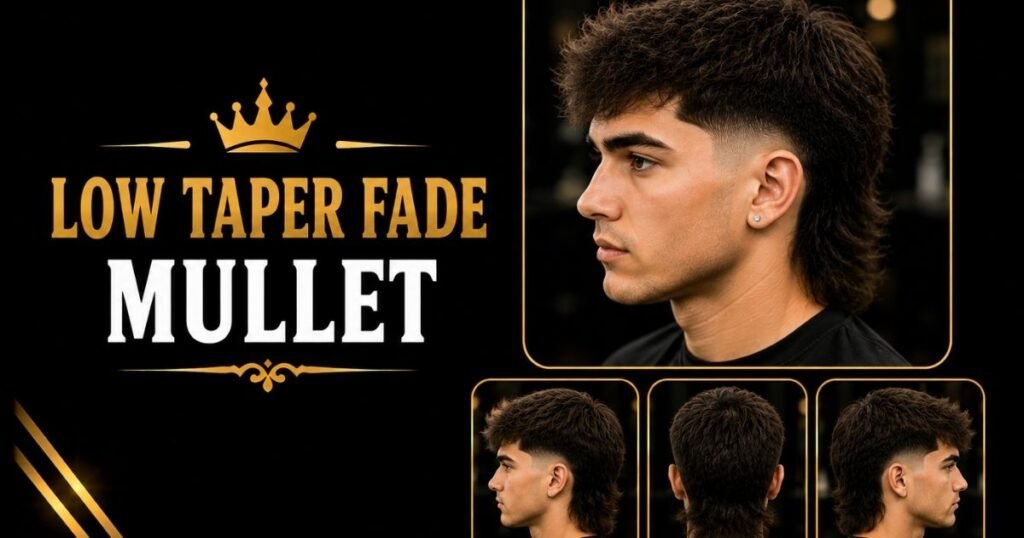
Styling Tip: Apply a sea salt spray to damp hair and air-dry or diffuse to enhance natural texture in the back section.
Maintenance: Have the sides refreshed every 4 weeks while letting the back grow out longer between visits. Maintenance and styling times are estimates and may vary by hair type.
Low Taper Fade Undercut
Overview: A sharper disconnect between the top and sides than a standard taper, with the low fade beginning right where the longer top hair ends.
Why It Works: Best on thick, straight hair with enough weight to hold a defined top shape; flatters square and round face shapes.
Styling Tip: Blow-dry the top backward first, then finish with a matte clay to hold the disconnected shape without excess shine.
Maintenance: The disconnect line needs sharpening every 3 weeks to keep the contrast crisp. Maintenance and styling times are estimates and may vary by hair type.
Low Taper Fade Ivy League
Overview: A slightly longer, classic top that rolls forward for lift, sitting above a neatly rounded low taper for a preppy, polished shape.
Why It Works: Suits straight to wavy hair and oval or long face shapes, giving a timeless look that works in conservative settings.
Styling Tip: Use a light pomade on damp hair, combing the top slightly forward and to the side rather than straight back.
Maintenance: A trim every 4 weeks keeps the top length manageable and the taper looking intentional. Maintenance and styling times are estimates and may vary by hair type.
Low Temp Fade Afro
Overview: Natural afro volume is preserved on top while the sides and back taper low and gradually, keeping the shape rounded rather than boxy.
Why It Works: Purpose-built for coily and curly hair types; flatters round and square faces by adding height without excess width.
Styling Tip: Apply a curl cream to damp hair and shape with a pick rather than a brush to avoid disrupting the natural curl pattern.
Maintenance: Line up the taper every 2–3 weeks since coily hair shows new growth at the hairline quickly. Maintenance and styling times are estimates and may vary by hair type.
Low Taper Fade Haircut Curly Hair Top
Overview: Loose to medium curls are left longer on top and allowed to fall naturally, while the low taper keeps the sides from competing for volume.
Why It Works: Designed for curly hair specifically; suits oval and round faces by softening the jawline with movement on top.
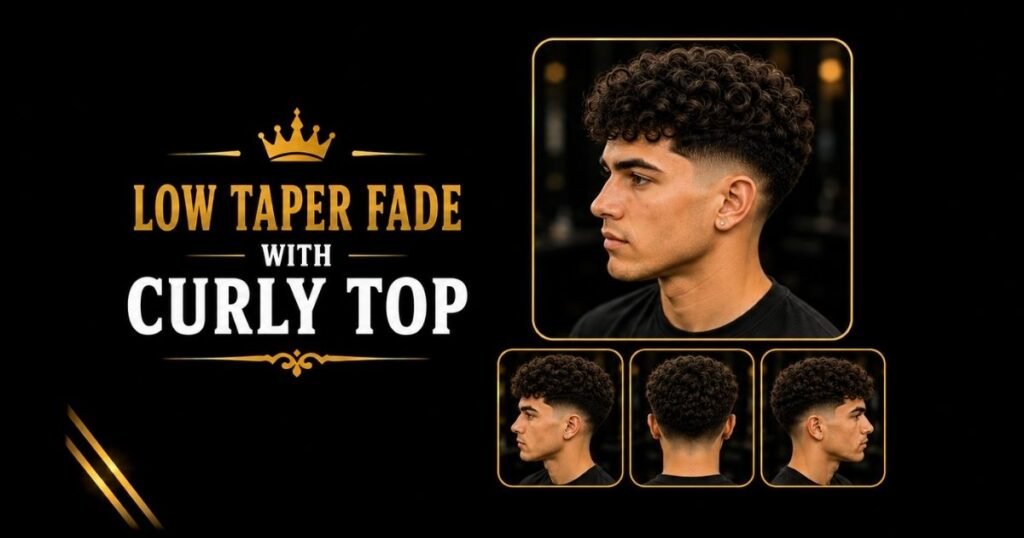
Styling Tip: Apply a curl-defining gel to soaking-wet hair using the scrunching method, then air-dry to avoid frizz from heat styling.
Maintenance: Trim only the ends every 6 weeks to preserve curl length and shape. Maintenance and styling times are estimates and may vary by hair type.
Low Taper Fade with 360 Waves
Overview: Short, uniform length on top is brushed consistently to train a wave pattern that radiates outward, with the low taper providing a clean edge at the sides.
Why It Works: Specific to coily hair with a natural curl pattern that responds to brushing; works with any face shape due to its close-cropped nature.
Styling Tip: Apply a light wave pomade and brush in a circular pattern morning and night, then cover with a durag while sleeping to lock in the pattern.
Maintenance: Rebuzz every 2–3 weeks to keep the hair short enough for the waves to stay visible. Maintenance and styling times are estimates and may vary by hair type.
Low Taper Fade with Twists
Overview: Two-strand twists sit on top while the low taper trims the sides close, creating contrast between the textured crown and clean perimeter.
Why It Works: Suited to coily and curly hair with enough length to twist; works well with any face shape since the twists add height, not width.
Styling Tip: Apply a twisting cream to damp, sectioned hair, twisting from root to tip for definition that holds for several days.
Maintenance: Re-twist every 1–2 weeks and get the taper refreshed every 3 weeks to keep both elements sharp. Maintenance and styling times are estimates and may vary by hair type.
Low Taper Fade with Locs
Overview: Established locs are left full-length on top while the low taper keeps the sides and back neatly maintained around the base of the locs.
Why It Works: Designed for coily hair with established locs; works with any face shape and is popular for its low daily-styling demand.
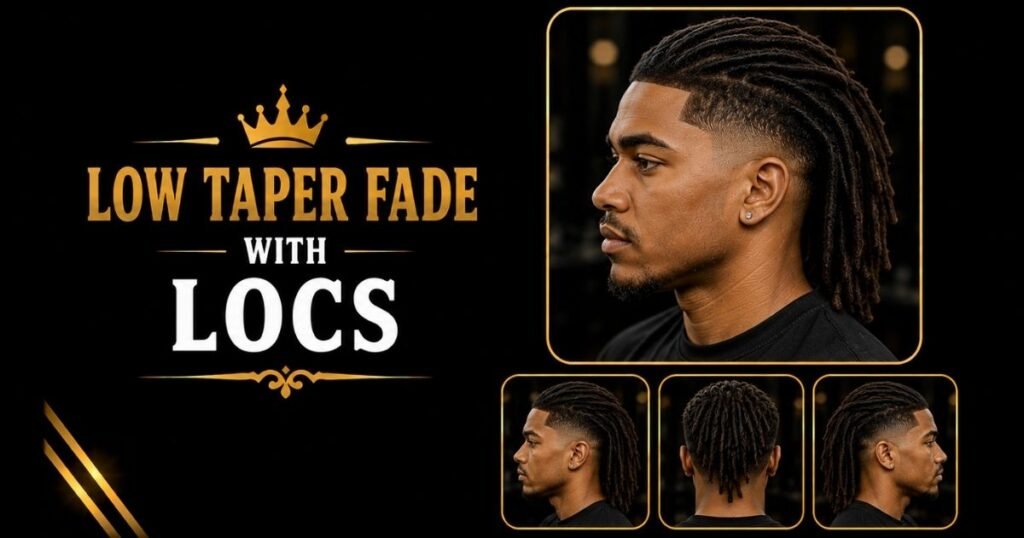
Styling Tip: Use a light, non-greasy loc oil at the roots only to avoid buildup, and retwist new growth at the root every 4–6 weeks.
Maintenance: The taper around the perimeter needs a refresh every 3–4 weeks to stay defined against the longer locs. Maintenance and styling times are estimates and may vary by hair type.
Low Taper Fade with Cornrows
Overview: Hair on top is braided close to the scalp in straight or curved rows, while the low taper cleans up the sides for a sharp perimeter.
Why It Works: Built for coily hair long enough to braid; flatters any face shape thanks to its close, structured design.
Styling Tip: Apply a light braid gel to the scalp before braiding to smooth flyaways and add shine without heaviness.
Maintenance: Cornrows typically last 2–3 weeks before needing to be redone, with the taper touched up at the same visit. Maintenance and styling times are estimates and may vary by hair type.
Low Taper Fade Blowout
Overview: Curly or coily hair on top is dried and lifted for maximum volume and roundness, while the low taper stays tight at the temples and nape for contrast.
Why It Works: Best for curly and coily hair with natural volume; flatters oval and long faces by adding width and height on top.
Styling Tip: Use a diffuser attachment on low heat, lifting hair at the roots as you dry to build volume without frizz.
Maintenance: Keep the taper close and clean every 2–3 weeks so it doesn’t compete with the volume up top. Maintenance and styling times are estimates and may vary by hair type.
Low Skin Taper
Overview: This variation fades all the way down to the skin at the lowest point near the ears and neckline, giving sharper contrast than a standard soft taper.
Why It Works: Works on all hair types but shows off density best on thicker hair; suits square and oval faces by adding a crisp, defined edge.
Styling Tip: Apply a light matte cream to the top only, keeping the skin-faded area product-free so it stays clean-looking.
Maintenance: Because it fades to skin, this style needs a touch-up every 2 weeks to avoid a grown-out, uneven edge. Maintenance and styling times are estimates and may vary by hair type.
Low Taper Fade Haircut with Italian Beard
Overview: Also called a temple fade, this style tapers the hair around the temples and sideburns specifically, leaving the rest of the perimeter longer for a distinct shape.
Why It Works: Works with most hair types and pairs especially well with square or angular face shapes by framing the temple area.
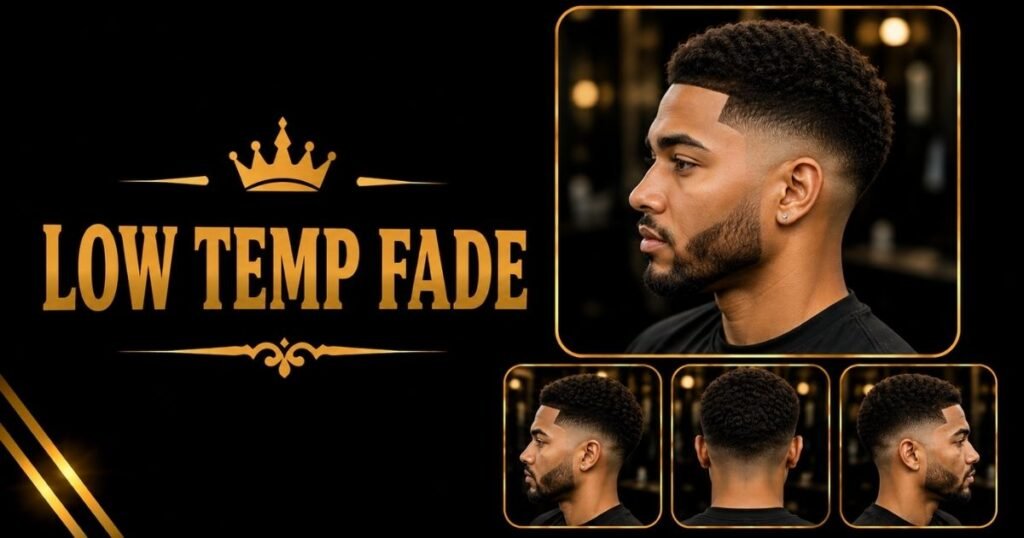
Styling Tip: Keep the top styled simply with a matte pomade so attention stays on the temple detailing rather than competing for focus.
Maintenance: The temple area grows out fastest, so plan on a touch-up every 2–3 weeks. Maintenance and styling times are estimates and may vary by hair type.
Low Drop Fade
Overview: The fade line curves downward behind the ear instead of staying level, following the natural shape of the skull for a rounder finish.
Why It Works: Flatters round and oval faces particularly well by echoing the head’s natural curve; suits straight to wavy hair types.
Styling Tip: Keep top styling minimal a light cream comb-through so the curved fade line remains the visual focus.
Maintenance: Touch up every 3–4 weeks to keep the curved line crisp as it grows out unevenly. Maintenance and styling times are estimates and may vary by hair type.
Low Burst Fade
Overview: The fade fans out in a semicircle around the ear rather than running in a straight line, creating a burst-like shape that’s popular with curlier textures.
Why It Works: Pairs especially well with curly or wavy hair on top; suits round and oval face shapes by softening the area around the ear.
Styling Tip: Use a curl cream or texture paste on top to keep the contrast between the textured crown and the clean burst shape.
Maintenance: The rounded burst shape needs redefining every 3 weeks to avoid growing into a blurred line. Maintenance and styling times are estimates and may vary by hair type.
Low Taper Fade with Hard Part
Overview: A shaved line is added at the part to create sharp definition between the top section and the side hair, sitting just above the low taper.
Why It Works: Works on straight to wavy, medium-to-thick hair; suits square and oval faces by adding a crisp geometric line.
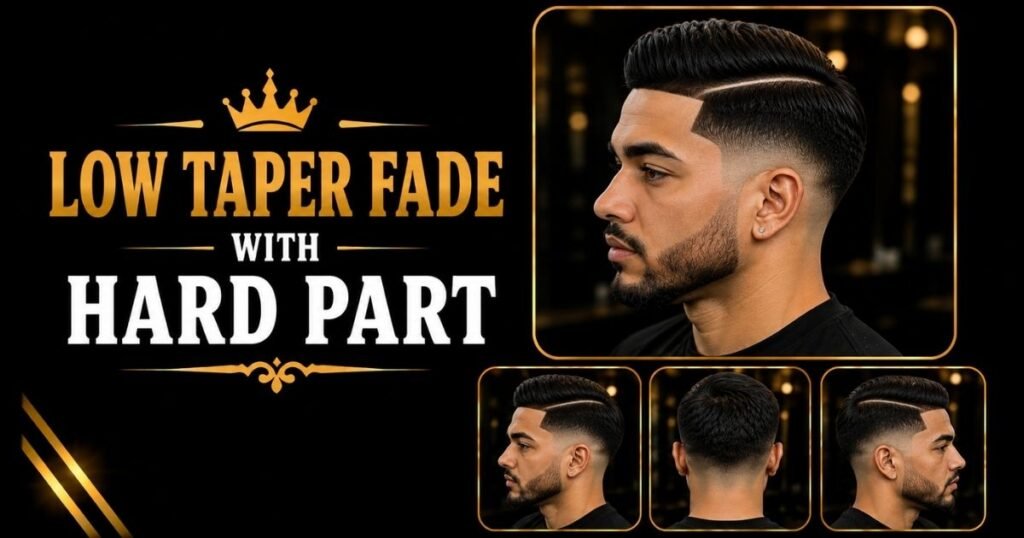
Styling Tip: Style the top with a strong-hold pomade combed away from the hard part to keep the line visible and unobstructed.
Maintenance: The shaved line needs refreshing every 2 weeks since new growth blurs it quickly. Maintenance and styling times are estimates and may vary by hair type.
Low Taper Fade with a Design
Overview: A custom pattern lines, a lightning bolt, initials, or geometric shapes is shaved into the low taper area near the temple for a personalized finish.
Why It Works: Works on any hair type, though designs show up most clearly against darker hair or a very close fade; suits any face shape since it’s a detail, not a structural change.
Styling Tip: Keep the top simple with light hold product so the design stays the visual focal point rather than competing with heavy styling.
Maintenance: Designs need touch-ups every 1–2 weeks to stay sharp, since even small regrowth blurs fine lines. Maintenance and styling times are estimates and may vary by hair type.
Low Taper Fade Fringe
Overview: A full fringe is left long across the forehead while the low taper cleans up the sides and back, creating a modern, slightly edgy shape.
Why It Works: Suits straight to wavy hair with enough length to fall forward; flatters long and oval faces by shortening visual face length.
Styling Tip: Blow-dry the fringe forward and down using a paddle brush, then set with a light matte paste to avoid a greasy look.
Maintenance: Trim the fringe every 3 weeks to keep it above the eyebrows and out of the eyes. Maintenance and styling times are estimates and may vary by hair type.
Low Taper Fade Haircut with Beard Combo
Overview: Any low taper style is paired with a well-groomed beard, with the fade often blending directly into the beard line for a seamless transition.
Why It Works: Especially flattering on round or square faces, since a full beard adds definition to the jawline that the fade alone doesn’t provide.
Styling Tip: Use beard oil daily to keep facial hair soft, and ask your barber to blend the sideburns directly into the beard for a connected look.
Maintenance: Beard shaping needs upkeep every 2 weeks alongside the taper touch-up to keep both elements aligned. Maintenance and styling times are estimates and may vary by hair type.
Low Taper Fade Top Knot
Overview: Longer hair on top is gathered and tied into a small knot, while the low taper keeps the sides short so the knot reads as the clear focal point.
Why It Works: Requires thick or wavy hair with enough length to tie; suits oval and long face shapes by adding height at the crown.
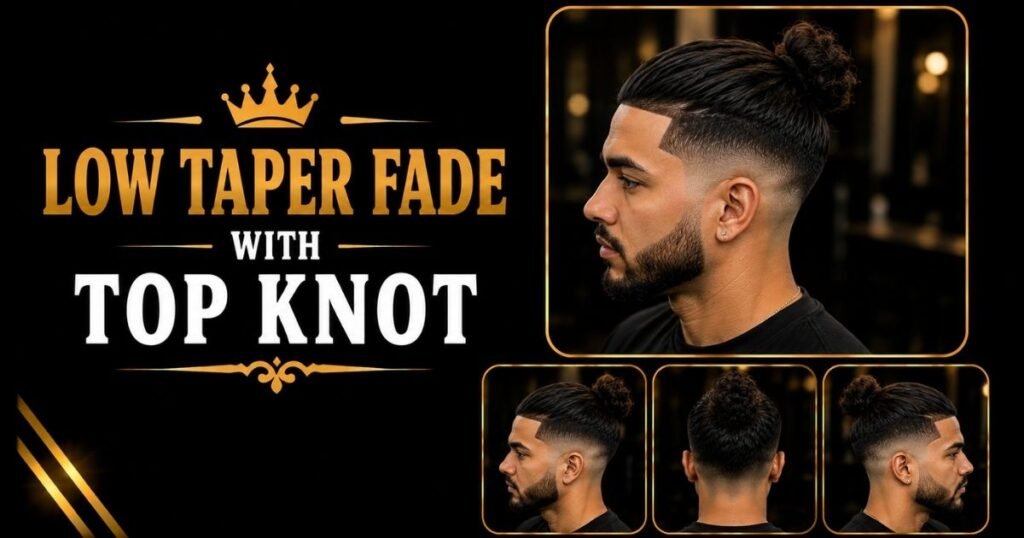
Styling Tip: Apply a light texturizing spray before tying to add grip, and use a small elastic to avoid unnecessary tension on the hairline.
Maintenance: The sides need refreshing every 3–4 weeks while the top is left to grow for the knot. Maintenance and styling times are estimates and may vary by hair type.
Low Taper Fade Spiky Top
Overview: Short-to-medium hair on top is styled into defined spikes using a strong-hold product, while the low taper keeps the sides from distracting.
Why It Works: Best on straight or thick hair that holds shape well; suits round and square faces by adding upward visual interest.
Styling Tip: Apply wax to dry hair in small sections, pinching pieces upward between fingers to build individual, textured spikes.
Maintenance: A trim every 4 weeks keeps the top at the right length for spiking without losing shape. Maintenance and styling times are estimates and may vary by hair type.
Low Taper Fade Haircut Male: Wavy Fringe
Overview: Natural waves are left longer at the front and allowed to fall across the forehead, while the low taper handles the sides with a clean, controlled fade.
Why It Works: Purpose-built for wavy hair; flatters oval and round faces by softening the hairline with natural movement.
Styling Tip: Scrunch a sea salt spray into damp hair and let it air-dry to enhance the wave pattern without flattening it.
Maintenance: Trim the fringe every 4 weeks to maintain shape while preserving enough length for the wave to show. Maintenance and styling times are estimates and may vary by hair type.
Low Taper Fade for Straight Hair
Overview: A clean, controlled taper that relies on straight hair’s natural tendency to lie flat, giving a smooth, structured finish with minimal effort.
Why It Works: Naturally suited to straight hair types; works well on oval and square faces without adding unwanted width.
Styling Tip: A light cream is usually enough straight hair holds shape without needing a heavy-hold product.
Maintenance: Grows out cleanly, so a 4–5 week schedule keeps the shape without frequent visits. Maintenance and styling times are estimates and may vary by hair type.
Low Taper Fade Haircut Textured Top for Thick Hair
Overview: The taper removes bulk at the sides so dense hair on top doesn’t look overwhelming, creating better proportion across the whole head.
Why It Works: Specifically addresses the styling challenge of thick hair; suits round and square faces by streamlining a fuller silhouette.
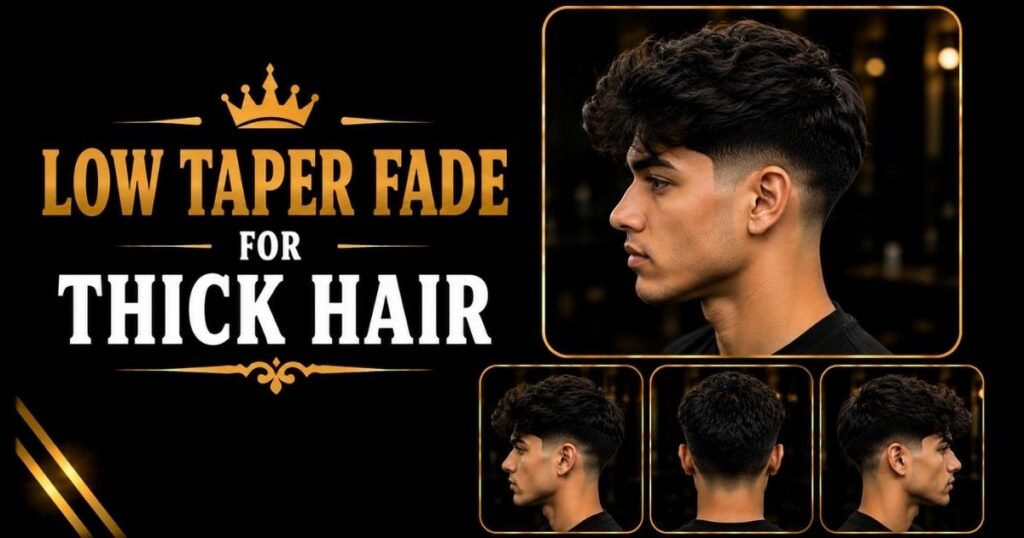
Styling Tip: Use a matte clay rather than a cream clay has more grip to control thick strands without adding extra volume.
Maintenance: Thick hair grows out less noticeably, so a 5-week schedule usually works well. Maintenance and styling times are estimates and may vary by hair type.
Low Taper Fade for Thin Hair
Overview: Shorter overall length on top keeps thin hair looking intentional rather than sparse, while the low taper adds contrast without competing for visual density.
Why It Works: Helps fine hair appear fuller by reducing length-to-density imbalance; suits oval and long face shapes.
Styling Tip: Use a lightweight volumizing spray on damp roots before drying to add lift without weighing hair down.
Maintenance: A trim every 4 weeks prevents thin hair from looking limp as it grows past its ideal length. Maintenance and styling times are estimates and may vary by hair type.
Low Taper Fade Haircut For Men: Business Professional Cut
Overview: A conservative version of the low taper with a neat side part or simple comb, keeping the length short enough to stay polished through a full workday.
Why It Works: Suits straight to wavy hair and works with nearly any face shape, since the goal here is neatness over statement-making.
Styling Tip: A light pomade with satin (not high-gloss) finish keeps hair controlled without looking overly styled for an office setting.
Maintenance: A 4-week schedule keeps the cut sharp for meetings without requiring daily restyling effort. Maintenance and styling times are estimates and may vary by hair type.
Low Taper Fade Haircut for Boys
Overview: A simplified, easy-care version of the low taper often paired with a textured crop or crew cut on top built for low daily maintenance.
Why It Works: Works with any hair type and face shape at this age; it’s forgiving as features and hair texture are still developing.
Styling Tip: A small amount of matte paste worked through with fingers is plenty heavy styling products aren’t necessary for shorter lengths.
Maintenance: A 3–4 week schedule keeps things neat for school without frequent barber trips. Maintenance and styling times are estimates and may vary by hair type.
Low Taper Fade UK Gentleman Style
Overview: A slightly more conservative take common in UK barbershops, favoring a soft taper with a neat side part or classic crop rather than aggressive contrast.
Why It Works: Suits straight to wavy hair and oval or square faces, leaning toward understated over statement styling.
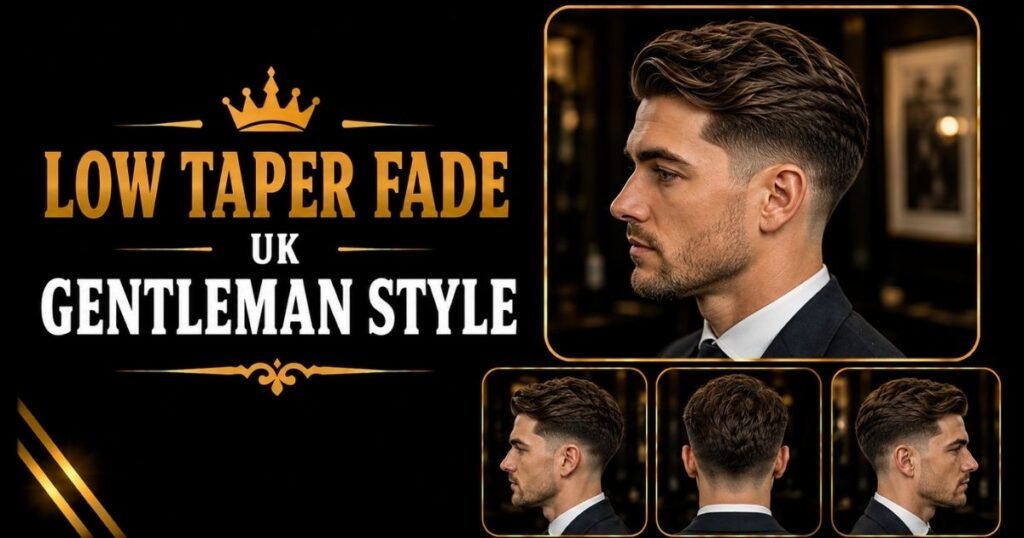
Styling Tip: A light, natural-finish pomade is typical in this style the goal is polish rather than high shine or heavy hold.
Maintenance: A 4-week schedule is standard, matching the soft, low-contrast fade line that grows out gradually. Maintenance and styling times are estimates and may vary by hair type.
How to Choose the Right Hairstyle
By Hair Type:
- Straight hair: Holds clean lines well classic tapers, side parts, and slick backs all work with minimal product.
- Wavy hair: Adds natural texture to quiffs, fringes, and mullets without extra styling effort.
- Curly hair: Needs moisture-focused products and gentle detangling; curl-preserving cuts like the curly top or burst fade work best.
- Coily/afro hair: Benefits from styles that work with natural volume afro tapers, twists, locs, or cornrows rather than fighting the texture.
By Face Shape:
- Oval: The most flexible shape nearly every style on this list works well.
- Round: Styles with height on top (quiff, pompadour, faux hawk) add length and balance width.
- Square: Softer, textured tops (textured crop, curly top) ease the angularity of a strong jawline.
- Long: Styles with width, like a side part or comb over, help balance vertical length.
How to Ask Your Barber for a Low Taper Haircut
- Bring one or two reference photos, but describe your hair type and texture too a photo alone doesn’t tell your barber how your hair actually behaves
- Specify where you want the fade to start (“just above the ears,” “at the neckline”) rather than saying “low” alone
- Mention how much time you’re willing to spend styling each morning so they can recommend a realistic top length
- Ask about your ideal maintenance schedule upfront so you know when to rebook
- Explain any workplace or lifestyle restrictions, like a conservative office dress code
- Confirm the final shape and length verbally before the clippers start, especially for design or skin-fade details
Product Recommendations
Hair Cream
- Best For: Straight to wavy hair needing light, natural-looking control
- How To Use: Rub a dime-sized amount between palms and work through damp hair from mid-length to ends
Pomade
- Best For: Side parts, slick backs, and comb-overs needing shine and hold
- How To Use: Warm a small amount between palms, apply to damp or dry hair, and comb into shape
Wax
- Best For: Spiky or piecey styles needing strong, matte hold
- How To Use: Work into dry hair in small sections, styling with fingertips for texture
Clay
- Best For: Thick hair needing volume control with a matte finish
- How To Use: Apply to dry hair, working from roots to create separation without shine
Shampoo
- Best For: Removing product buildup, especially with frequent styling
- How To Use: Use 2–3 times weekly; over-washing can dry out both scalp and hair
Conditioner
- Best For: Curly and coily hair types needing extra moisture
- How To Use: Apply after shampooing, focusing on mid-length to ends, and rinse with cool water to seal the cuticle
Fade Haircuts
Fade haircuts for Black men remain one of the most versatile and in-demand style categories in 2026, prized for their clean lines, sharp edges, and ability to complement virtually any hair texture from tight coils to looser curls.
This complete guide rounds up 75 standout fade haircuts for Black men, spanning classic low and high fades to bold designs, twist fades, and taper combinations paired with waves, afros, or braids on top.
Choosing between low fade vs mid fade vs high fade comes down to where the blend starts: subtle above the ear, balanced at the temple, or dramatic near the crown. The right pick in the low fade vs mid fade vs high fade debate depends on your face shape, hair type, and how much upkeep you want.
Beard fade styles create a polished, balanced look by blending your beard seamlessly into your haircut. With 35 combinations, from subtle tapers to bold skin fades, beard fade styles complement different face shapes, hair textures, and personal preferences for a sharper, more defined jawline.
Explore More Haircuts
- The wolf cut vs shag cut choice comes down to style preference. The wolf cut blends choppy top layers with longer strands for an edgy finish, while the shag cut uses feathered layers for a softer, retro feel. Both suit wavy or curly hair.
- The undercut haircut keeps sides short or faded while leaving the top longer for styling. With 35 fresh variations to choose from, the undercut haircut suits nearly every hair type and face shape, delivering a sharp, versatile look for 2026.
- A textured crop hairstyle men love pairs short, choppy layers on top with tapered or faded sides for a sharp, modern finish. With 36 variations, it adapts to nearly any hair type or face shape, delivering a versatile look with minimal daily styling.
- Side part haircuts for men remain a timeless, versatile choice that shifts easily between sharp and casual. With 35 trending styles, from skin fades to textured finishes, side part haircuts for men suit nearly any hair type or face shape.
- Modern bowl cut hairstyles update the flat, home-scissors look with tapers, fades, and texture for a current finish. With 35 variations, modern bowl cut hairstyles flatter nearly any face shape and stay low-maintenance for kids and adults alike.
- Middle part hairstyles for men bring a relaxed, effortless edge, but getting it right depends on hair length, texture, and technique. From curtains to fades, middle part hairstyles for men adapt to nearly any hair type for a natural, sharp finish.
- Military haircuts for men offer practical, low-maintenance styles that stay neat for work and everyday life. From the buzz cut to modern fades, military haircuts for men suit nearly every hair type and face shape for a sharp, disciplined look.
- A men hair style should suit your hair type, face shape, and lifestyle, not just follow trends. With 37 options ranging from pompadour fades to textured crops, men hair style choices balance texture, maintenance, and personal preference for a clean, polished look with minimal effort.
- The Ivy League haircut solves the classic problem of hair too short to style but too long to look sharp. With 30 variations, from fades to curly versions, the Ivy League haircut stays clean and professional while leaving room to style.
- Learning how to find a good barber starts with recommendations from friends, recent Google reviews, and a shop’s Instagram portfolio. Look for someone who asks detailed questions and keeps tools clean, and start with a simple trim before trusting them with a bigger change.
- Mod haircuts for men are rooted in 1960s British culture, defined by a textured fringe, layered top, and neatly finished sides. With 35 variations, from mop tops to modern undercut hybrids, mod haircuts for men adapt to straight, wavy, curly, and thick hair for a sharp, retro-inspired look.
Final Thoughts
A low taper haircut earns its popularity honestly it’s flattering nearly every hair type and face shape, and it grows out without looking messy between appointments. The key is matching the top style to your actual hair texture and daily routine, not just picking whatever looks best in a photo.
Don’t be afraid to experiment with a design, a design-free classic, or a texture-forward top the next time you’re in the chair. A good barber can adjust any of these 38 low taper fade variations to your specific hairline, density, and lifestyle the version that suits someone else’s hair might need small tweaks to work for yours, and that conversation is worth having before the clippers start.
FAQs
What is a low taper haircut?
A low taper haircut is a men’s cut where hair gradually shortens starting just above the ears and around the neckline, blending into longer hair on top. It’s subtler than a high or skin fade and works across nearly all hair types.
How often do you need to get a low taper fade touched up?
Most low taper fades need a touch-up every 3–5 weeks. Skin-close variations, temple fades, or shaved designs grow out faster and may need attention every 1–2 weeks to stay sharp.
Does a low taper fade work for curly or afro hair?
Yes. Variations like the afro low taper, curly top, twists, and locs are specifically designed around coily and curly textures, preserving natural volume on top while keeping the sides clean.
Can you get a low taper fade with a design?
Yes, a shaved line, pattern, or shape can be added into the taper area near the temple. Designs need more frequent touch-ups, roughly every 1–2 weeks, since even light regrowth blurs fine lines.
Is a low taper fade the same in the UK as in the US?
The core technique is the same, but UK barbershops often favor a softer, more conservative version with less contrast, while US shops lean toward sharper, higher-contrast styling. The term “taper fade UK” typically points to this more understated finish.