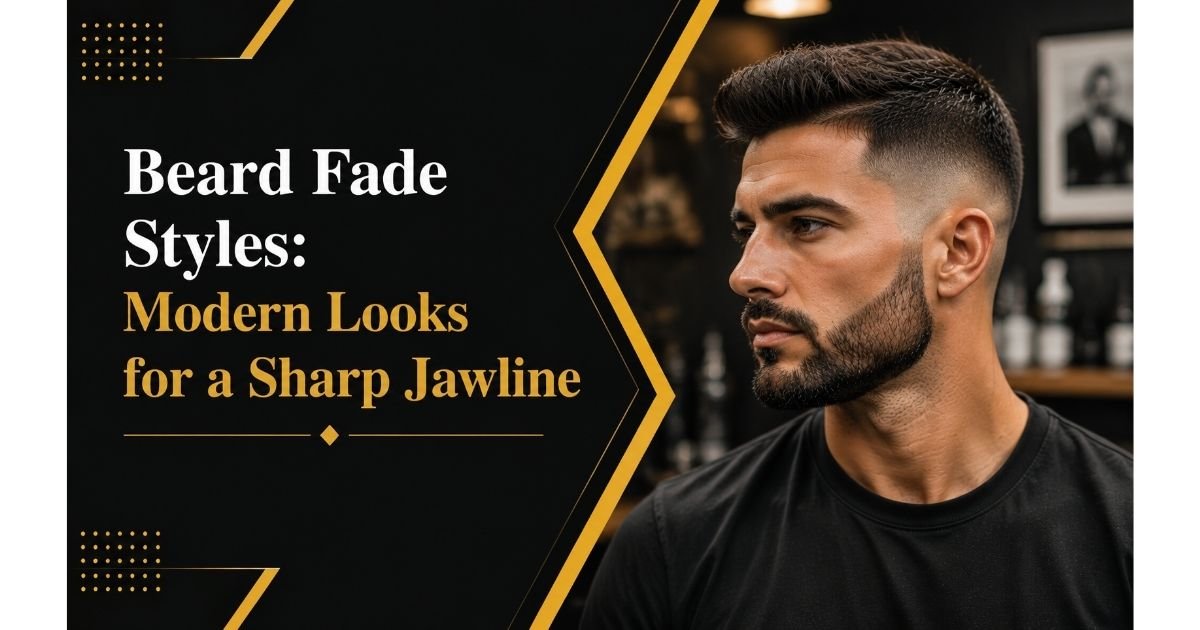
Beard Fade Styles: Modern Looks for a Sharp Jawline
Beard Fade Styles help create a polished, balanced look by pairing the right beard with the perfect haircut. The best combinations complement your face shape, hair texture, and personal style for a sharper appearance.
A well-matched beard and haircut enhance your overall proportions, while the wrong pairing can look unbalanced. From classic cuts to modern fades, choosing the right combination makes styling easier and more flattering. This guide features 35 beard and haircut combos to help you find a look that suits you and makes your next barber visit much easier.
Beard Fade Style Name with Their Comparison Table
Here is the Comparison Table of Hairstyle, Best Hair Type, Face Shape, Maintenance, and Styling Time:
| Hairstyle | Best Hair Type | Face Shape | Maintenance | Styling Time |
| Low Skin Fade Beard | Straight, wavy | Square, oval | Medium | 5 min |
| High Skin Fade Beard | Straight, thick | Round | High | 10 min |
| Mid Fade Beard | All types | Oval, rectangular | Medium | 5-8 min |
| Taper Fade Beard | Straight, wavy | Any | Low | 5 min |
| Bald Fade Beard | Any | Round, square | High | 10-15 min |
| Drop Fade Beard | Curly, wavy | Round | Medium | 8 min |
| Burst Fade Beard | Curly | Oval | Medium | 8 min |
| Temple Fade Beard | Straight | Square | Low | 5 min |
| Low Taper + Full Beard | Thick | Square | Medium | 10 min |
| High Taper + Full Beard | Thick | Round | High | 12 min |
Best Modern Looks for a Sharp Jawline
Beard Fade Styles offer the perfect way to create a clean, modern look by blending your beard seamlessly into your haircut. Whether you prefer a subtle taper or a bold skin fade, there’s a beard fade to match every personal style. Choosing the right combination can make grooming easier while keeping your look sharp and well-defined. There are 35 Best Beard Fade Styles given below:
Low Skin Fade Beard
Overview: The fade starts just above the ear and disappears into skin within an inch, leaving most of the beard length untouched higher up.
Why It Works: Best for straight or wavy hair with square or oval face shapes it keeps attention on the jawline without adding bulk.
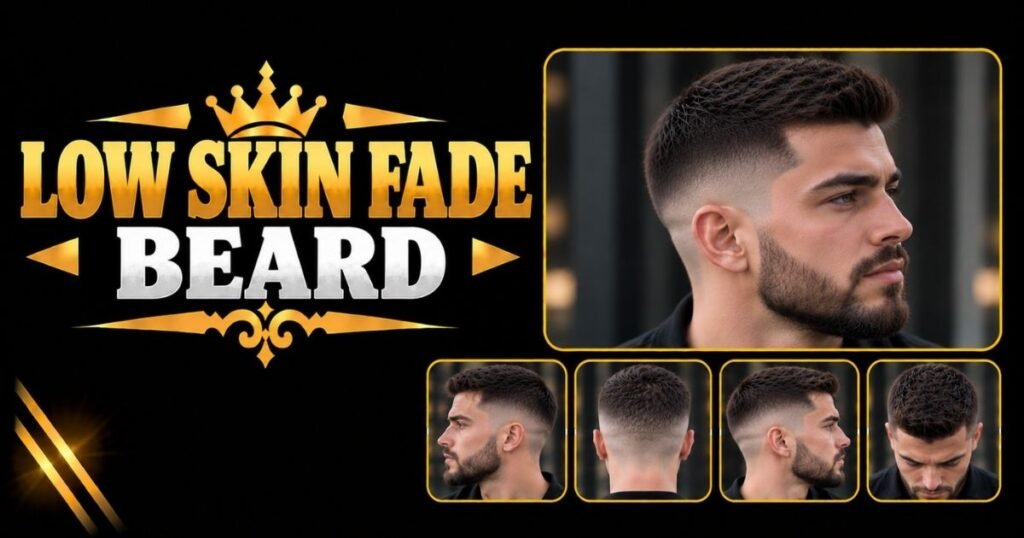
Styling Tip: Run a small amount of beard balm through the top length daily to keep the contrast between full beard and fade clean-looking.
Maintenance: Ask your barber to redo the fade line every 2-3 weeks; it grows out faster than the beard itself. Maintenance and styling times are estimates and may vary by hair type.
High Fade Beard
Overview: The fade climbs much higher up the sides and back, creating a bold, closely cropped frame around a fuller beard.
Why It Works: Suits round faces since the higher fade line visually narrows the jaw and adds length.
Styling Tip: Use a matte clay on the beard’s top length to avoid shine that competes with the sharp, high-contrast fade line.
Maintenance: Book touch-ups every 10-14 days a high fade shows regrowth fastest. Maintenance and styling times are estimates and may vary by hair type.
Mid Fade Beard
Overview: Sitting between low and high, the mid fade starts around temple height, offering a versatile middle-ground blend.
Why It Works: Works across nearly all hair types and flatters oval and rectangular faces by adding balanced width.
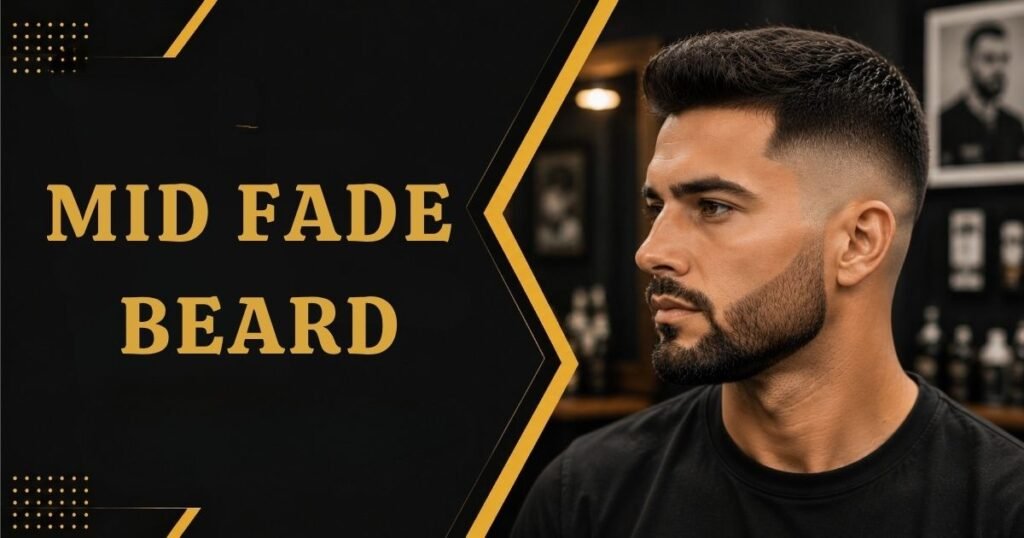
Styling Tip: A light pomade smooths fly away along the fade edge without weighing down the fuller beard above it.
Maintenance: Refresh every 2-3 weeks to keep the line from blurring into an uneven grow-out. Maintenance and styling times are estimates and may vary by hair type.
Taper Fade Beard
Overview: A gentler gradient than a full fade hair shortens gradually rather than blending all the way to skin.
Why It Works: Ideal for straight or wavy hair on any face shape; it’s the safest first fade for beginners.
Styling Tip: A dime-sized amount of hair cream keeps the taper’s soft edges looking neat without hard lines.
Maintenance: This is the lowest-upkeep fade a trim every 3-4 weeks usually holds the shape. Maintenance and styling times are estimates and may vary by hair type.
Bald Fade Beard
Overview: The most extreme fade, going completely to skin at the temples and neckline before building back to full beard.
Why It Works: Great for round or square faces that want maximum definition and a bold, modern edge.
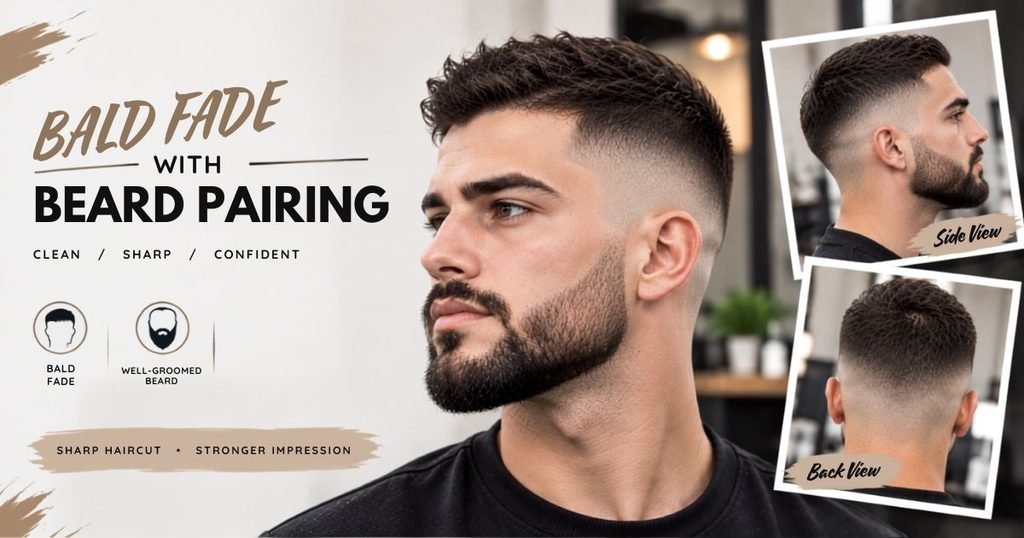
Styling Tip: Sea salt spray on the beard top adds texture that contrasts nicely against the skin-close sides.
Maintenance: Needs a barber visit every 7-10 days to stay sharp plan for this before committing. Maintenance and styling times are estimates and may vary by hair type.
Beard Fade Style with Curly Hair: Drop Fade
Overview: The fade line curves downward behind the ear instead of staying straight, following the head’s natural shape.
Why It Works: Flatters curly or wavy hair and rounder faces by adding a subtle curve that softens the jawline.
Styling Tip: Curl-defining gel on top keeps texture consistent with the curved fade line below.
Maintenance: The curve grows out unevenly, so plan touch-ups every 2 weeks. Maintenance and styling times are estimates and may vary by hair type.
Burst Fade Beard
Overview: The fade radiates in a semi-circle around the ear rather than running in a straight line down the side.
Why It Works: Works especially well with curly hair and oval faces, giving a rounded, modern silhouette.
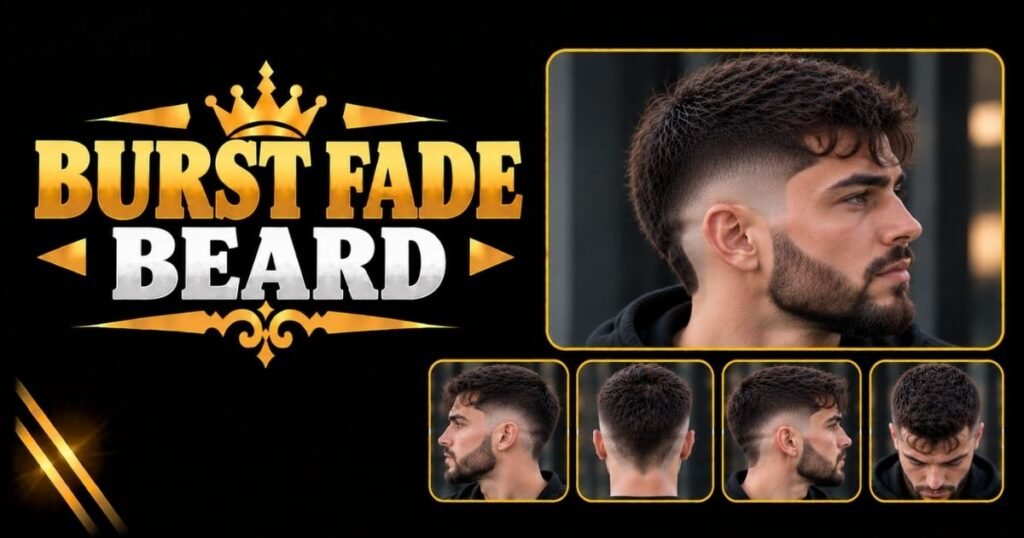
Styling Tip: Apply matte clay while hair is slightly damp to define the burst shape without stiffness.
Maintenance: Ask for a refresh every 2 weeks since the curved edge is the first part to blur. Maintenance and styling times are estimates and may vary by hair type.
Temple Fade Beard
Overview: A small, subtle fade limited to the temple area, leaving most of the beard’s length and shape untouched.
Why It Works: A safe, low-commitment option for straight hair and square faces who want definition without a bold statement.
Styling Tip: A pea-sized amount of pomade along the temple keeps this understated fade looking deliberate, not accidental.
Maintenance: Because it’s subtle, it can go 3-4 weeks between trims. Maintenance and styling times are estimates and may vary by hair type.
Low Taper Fade with Full Beard
Overview: Combines a gentle low taper with a dense, full beard left long and shaped at the chin.
Why It Works: Best for thick hair on square faces, since the fullness balances the fade’s cleaner sides.
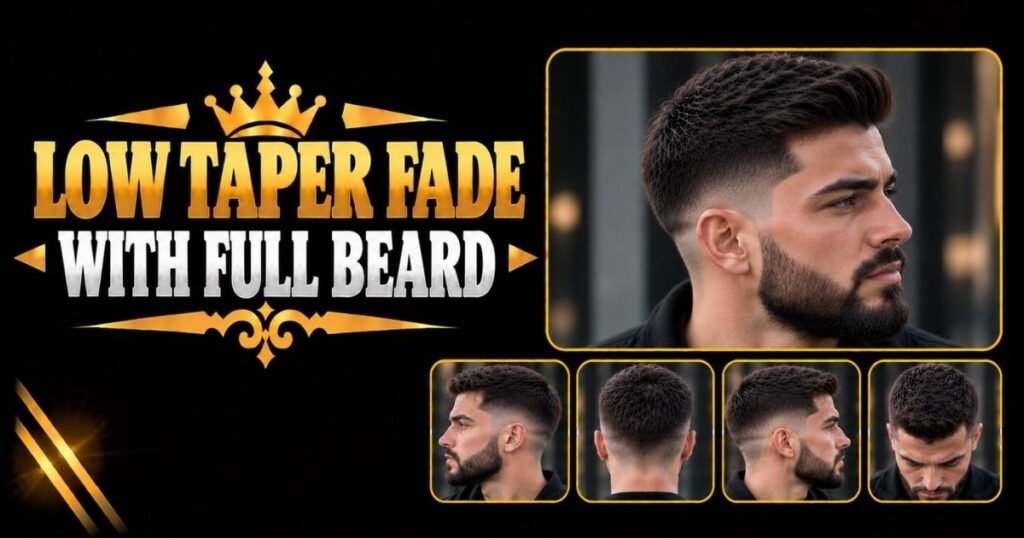
Styling Tip: Work beard oil through daily to keep a full beard soft and prevent it from looking unkempt next to a crisp fade.
Maintenance: The beard itself needs weekly shaping; the fade line needs refreshing every 3 weeks. Maintenance and styling times are estimates and may vary by hair type.
High Taper Fade with Full Beard
Overview: A more dramatic taper reaching higher up the head, paired with a substantial, longer beard.
Why It Works: Great for thick hair and round faces looking for maximum contrast and a bold silhouette.
Styling Tip: A leave-in beard conditioner keeps longer growth manageable so it doesn’t overwhelm the sharper fade.
Maintenance: Expect touch-ups every 10-14 days to keep the higher fade line crisp. Maintenance and styling times are estimates and may vary by hair type.
Fade with Beard Line-Up
Overview: Adds razor-sharp straight lines along the cheeks and neckline on top of a standard fade.
Why It Works: Suits any hair type and works especially well for square jaws that want extra definition.
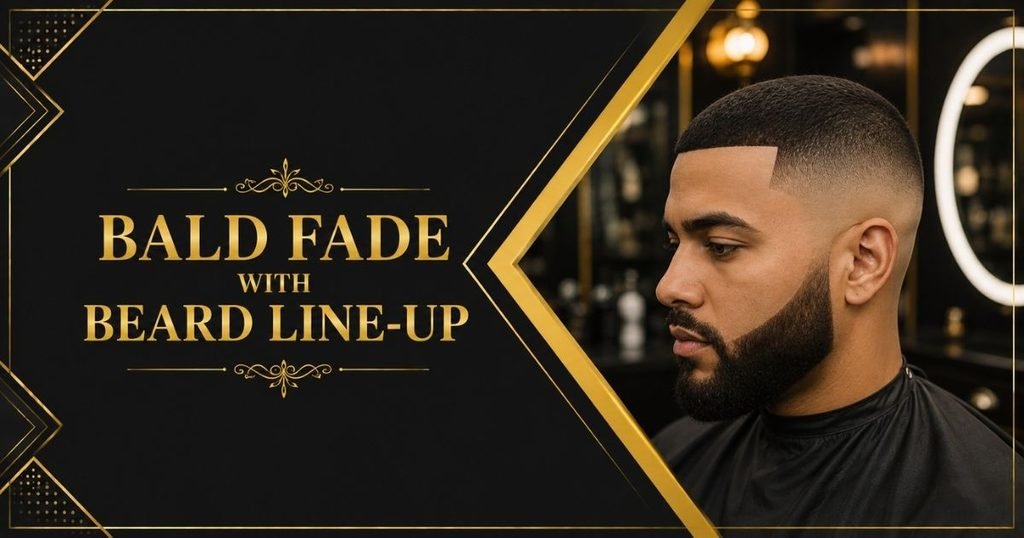
Styling Tip: Clear shaving gel and a straight razor keep the line-up crisp between barber visits.
Maintenance: Lines blur fastest of any fade style, so plan for touch-ups every 7-10 days. Maintenance and styling times are estimates and may vary by hair type.
Fade with Chin Strap
Overview: A thin strip of beard traces the jawline while the sides fade into skin, skipping a full mustache.
Why It Works: Best for oval faces and straight or wavy hair, since the thin line elongates the jaw subtly.
Styling Tip: A small precision trimmer keeps the chin strap’s width consistent; uneven width is the most common mistake.
Maintenance: The thin line needs edging every 5-7 days to avoid looking patchy. Maintenance and styling times are estimates and may vary by hair type.
Fade with Van Dyke Beard
Overview: A detached mustache and pointed goatee combo, paired with a fade for a sharp, classic-meets-modern look.
Why It Works: Works well on round faces since the pointed chin adds length while the fade slims the sides.
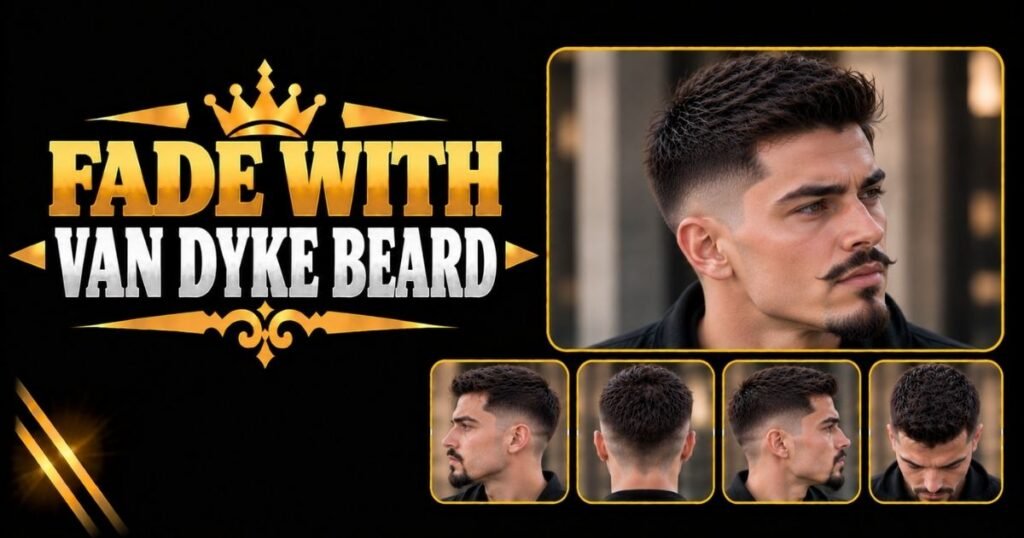
Styling Tip: Wax the mustache tips lightly to keep the detached shape distinct from the chin beard below.
Maintenance: Both the fade and the detailed shaping need attention every 2 weeks. Maintenance and styling times are estimates and may vary by hair type.
Fade with Circle Beard (Goatee)
Overview: A connected mustache and chin beard forming a neat circle, with fade at the sides for contrast.
Why It Works: Flatters square faces by softening angular jawlines while the fade keeps the overall look tidy.
Styling Tip: A fine-tooth comb helps keep the circle’s connection point even during daily grooming.
Maintenance: Shape the circle every 5-7 days; fade the sides every 2-3 weeks. Maintenance and styling times are estimates and may vary by hair type.
Short Beard Fade Style: Anchor Beard
Overview: A pointed chin beard tracing the jaw, paired with a mustache and a clean fade up the sides.
Why It Works: Works especially well for round faces, since the pointed anchor shape adds visual length.
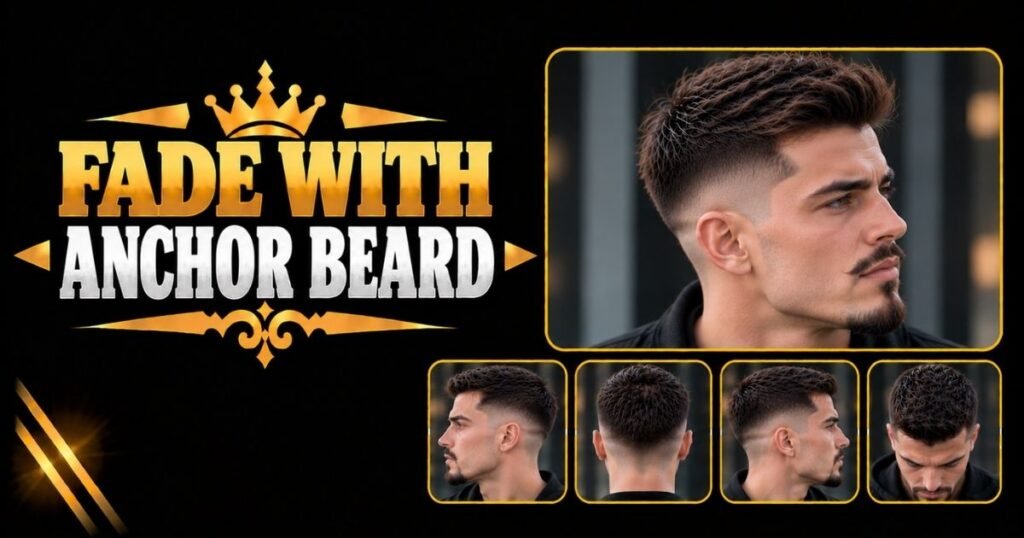
Styling Tip: Beard balm holds the anchor’s point in place through the day without looking stiff.
Maintenance: The pointed shape needs re-edging every week to stay crisp. Maintenance and styling times are estimates and may vary by hair type.
Fade with Balbo Beard
Overview: A floating mustache with no sideburn connection, paired with a fade for an edgy, modern silhouette.
Why It Works: Best for oval or square faces with straight hair, since the disconnected shapes need clean, sharp edges.
Styling Tip: A small precision trimmer keeps the mustache separated cleanly from the chin beard.
Maintenance: This detailed shape needs upkeep every 5-7 days alongside a fade touch-up every 2-3 weeks. Maintenance and styling times are estimates and may vary by hair type.
Fade with Mutton Chops
Overview: Thick, long sideburns extending down the cheeks, connecting to a mustache, with a fade below for contrast.
Why It Works: Suits rectangular faces with thick hair, adding width where a long face needs it most.
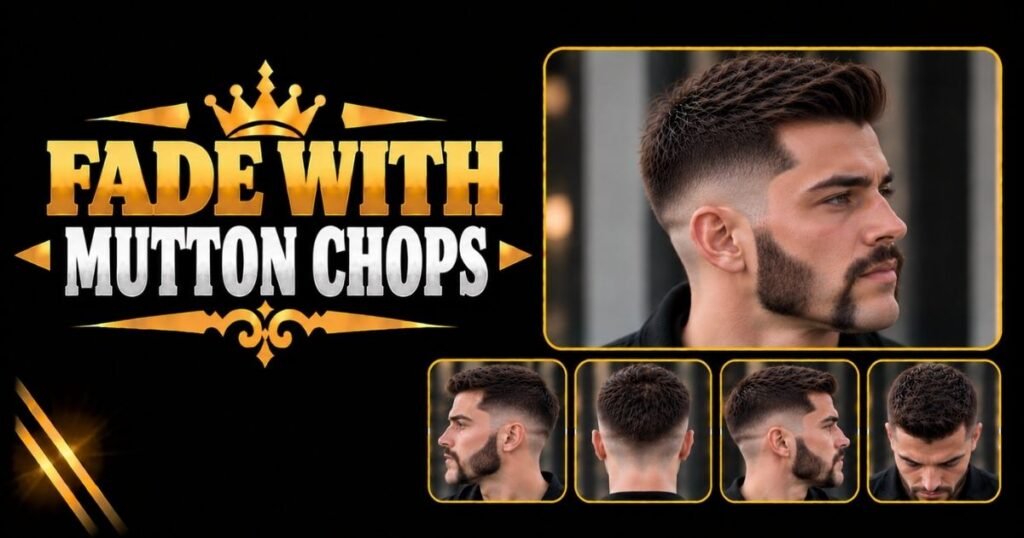
Styling Tip: Beard oil keeps the thick chop length soft, since dryness makes this bold style look rough rather than intentional.
Maintenance: Trim chop shape weekly; fade the lower neckline every 2-3 weeks. Maintenance and styling times are estimates and may vary by hair type.
Curly Beard Fade
Overview: A fade built specifically for curly or coily facial hair, where curls stay full up top and blend into skin at the sides.
Why It Works: Best for curly hair on any face shape the fade keeps volume from reading as unshaped.
Styling Tip: A curl-defining cream, worked in while damp, keeps the curl pattern intact without frizz against the fade.
Maintenance: Curly fades hide regrowth well, so a 3-week touch-up schedule usually works. Maintenance and styling times are estimates and may vary by hair type.
Fade with Boxed Beard
Overview: Sharp, straight lines along the cheeks and jaw create a “boxed” outline, fading into skin at the sides.
Why It Works: A versatile pick for straight or wavy hair on nearly any face shape, especially oval and square.
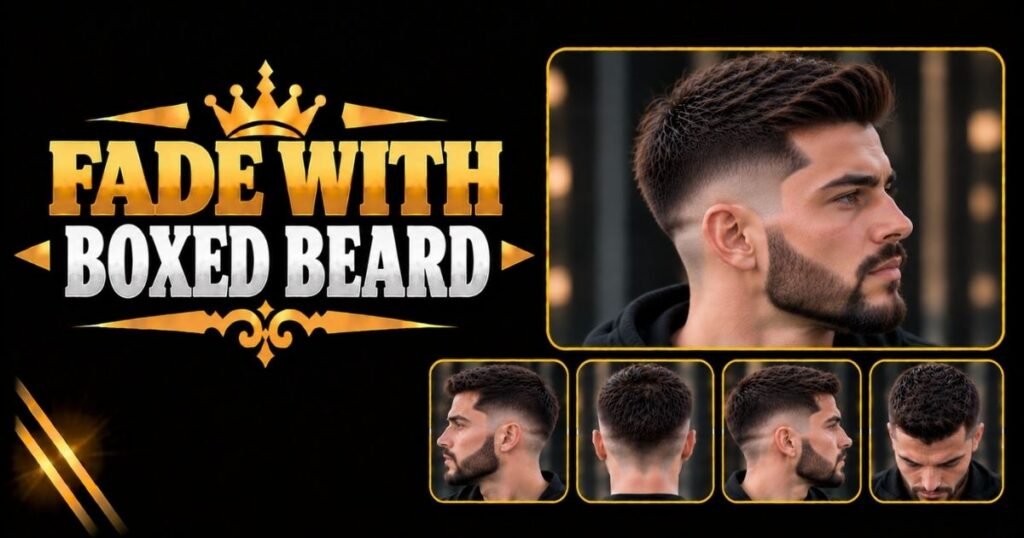
Styling Tip: A boar-bristle brush trains the boxed shape to lie flat and even each morning.
Maintenance: Re-line the box shape every 1-2 weeks to keep edges from softening. Maintenance and styling times are estimates and may vary by hair type.
Fade with Stubble
Overview: Short, even stubble length across the jaw, fading gently into a low or temple fade for a clean-cut look.
Why It Works: Works for nearly all face shapes and hair types, a great entry point for a first fade.
Styling Tip: A stubble-specific trimmer guard keeps length consistent so the fade transition looks intentional.
Maintenance: Because stubble is short overall, a trim every 3-4 weeks is usually enough. Maintenance and styling times are estimates and may vary by hair type.
Fade with Full Thick Beard
Overview: Maximum beard density and length left mostly untouched, with a fade doing all the shaping work at the sides.
Why It Works: Ideal for thick hair on square or oval faces that can carry heavier volume without looking overgrown.
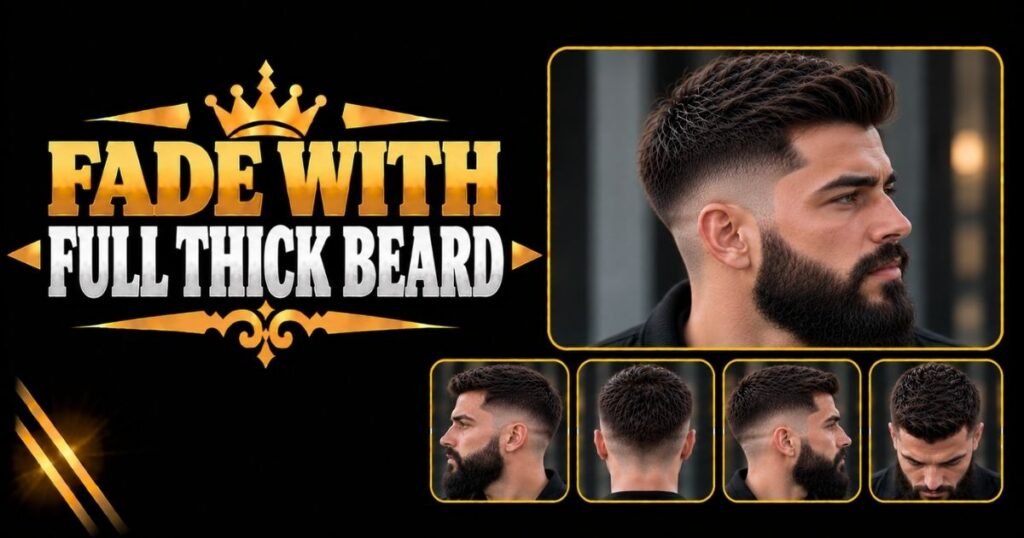
Styling Tip: A wide-tooth comb followed by beard oil detangles thick growth before it’s shaped for the day.
Maintenance: The fade needs refreshing every 2-3 weeks; the beard itself needs a length trim monthly. Maintenance and styling times are estimates and may vary by hair type.
Fade with Corporate Beard
Overview: A short, neatly trimmed beard with a subtle, low fade polished enough for client-facing workplaces.
Why It Works: Suits straight or wavy hair on any face shape and reads as professional without looking severe.
Styling Tip: A small amount of hair cream keeps everything smooth without shine for meetings or photos.
Maintenance: Low-key by design a trim every 3 weeks holds this shape well. Maintenance and styling times are estimates and may vary by hair type.
Fade with Garibaldi Beard
Overview: A full, rounded beard of moderate length with a fade to keep the sides from ballooning outward.
Why It Works: Best for thick or wavy hair on square faces, adding fullness while the fade keeps proportions balanced.
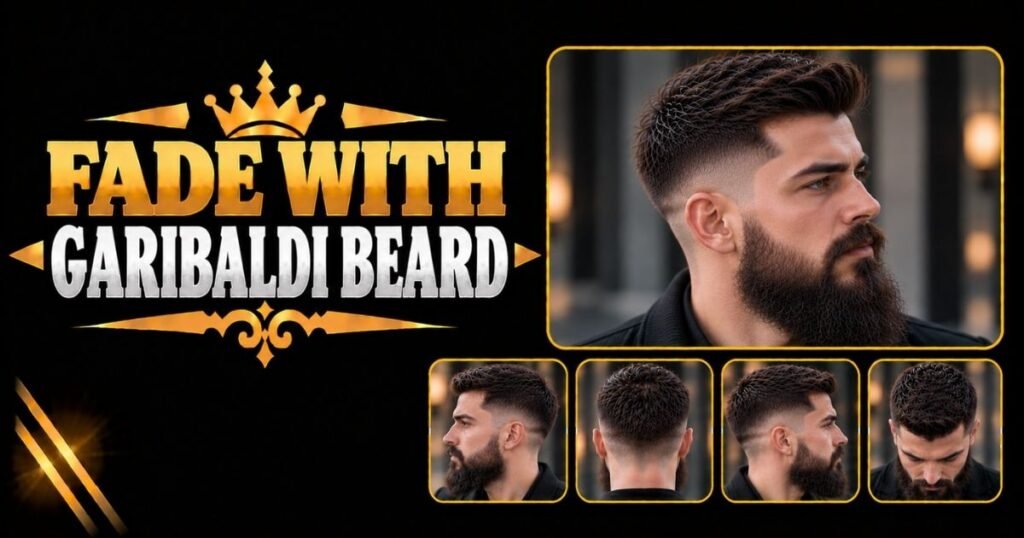
Styling Tip: Beard balm shapes the rounded bottom edge without stiffening the natural fullness.
Maintenance: Round the bottom edge every 2 weeks; fade the sides on the same schedule. Maintenance and styling times are estimates and may vary by hair type.
Fade with Band hole Beard
Overview: An all-natural, fuller beard left mostly untouched in shape, contrasted with a clean fade at the sides.
Why It Works: Great for thick hair on any face shape that wants a rugged, natural look without looking unkempt.
Styling Tip: Daily beard oil keeps a fuller natural beard soft and glossy instead of dry and wiry.
Maintenance: Length stays mostly untouched; only the fade needs a refresh every 2-3 weeks. Maintenance and styling times are estimates and may vary by hair type.
Fade with French Fork Beard
Overview: The chin beard splits into two distinct sections at the bottom, paired with a fade at the sides.
Why It Works: Works for longer, thicker hair on oval faces looking for a distinctive, statement-making shape.
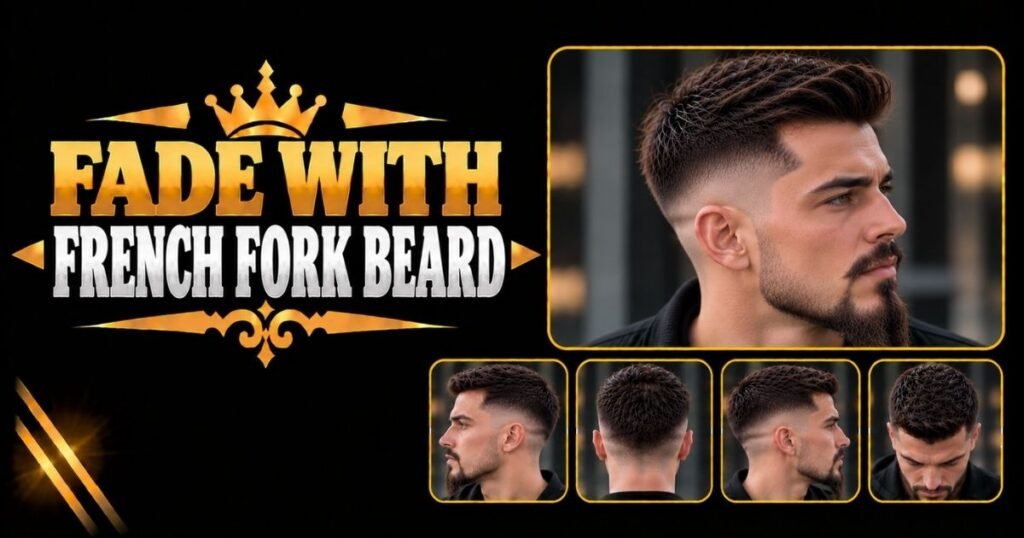
Styling Tip: Beard wax holds the split shape in place and reapplies midday if the fork starts merging back together.
Maintenance: The split needs re-shaping every week; the fade every 2-3 weeks. Maintenance and styling times are estimates and may vary by hair type.
Fade with Ducktail Beard
Overview: The chin beard tapers to a point resembling a duck’s tail, with a fade cleaning up the sides.
Why It Works: Flatters round or square faces by drawing the eye downward and adding perceived length.
Styling Tip: A comb-and-scissor combo keeps the point symmetrical uneven pointing is the most common mistake here.
Maintenance: Reshape the point every 1-2 weeks alongside a fade refresh every 3 weeks. Maintenance and styling times are estimates and may vary by hair type.
Fade with Years (Long Beard)
Overview: A beard grown for a year or more, left long and full, contrasted with a fade to prevent an unshaped, bushy look.
Why It Works: Suits thick hair on any face shape, since a fade is essential to keep this much length from overwhelming the head.
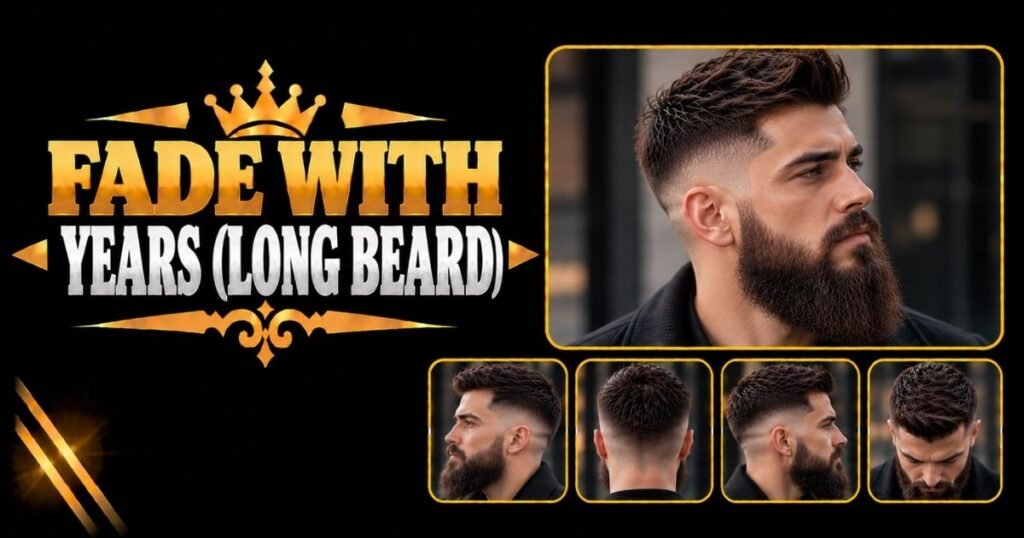
Styling Tip: A leave-in beard conditioner and wide comb are non-negotiable at this length to prevent tangling and split ends.
Maintenance: The fade needs redoing every 2 weeks; length maintenance is closer to a monthly dust-off trim. Maintenance and styling times are estimates and may vary by hair type.
Fade with Extended Goatee
Overview: A goatee that extends along the jawline without full cheek coverage, faded at the sides for definition.
Why It Works: Works well for oval or square faces and straight to wavy hair, balancing coverage with a tidy edge.
Styling Tip: A jawline-tracing trim guide keeps the extension symmetrical on both sides.
Maintenance: Edge the jawline every 1-2 weeks; fade the sides every 3 weeks. Maintenance and styling times are estimates and may vary by hair type.
Fade with Chinstrap Goatee Combo
Overview: A thin chinstrap line connects to a fuller chin goatee, all set against a clean fade at the sides.
Why It Works: Best for square or oval faces with straight hair, giving a defined outline without full cheek coverage.
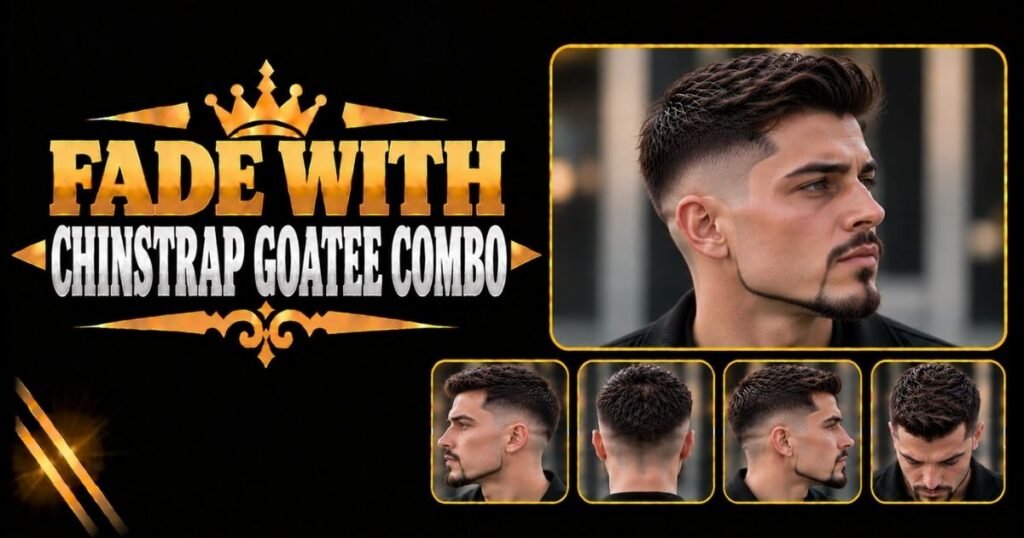
Styling Tip: A precision trimmer with a narrow guard keeps the chinstrap width consistent day to day.
Maintenance: The thin strap needs edging every 5-7 days to avoid a patchy appearance. Maintenance and styling times are estimates and may vary by hair type.
Low Fade Fringe with Beard
Overview: A textured fringe on top pairs with a low fade and a moderate beard for a softer, modern silhouette.
Why It Works: Suits wavy or straight hair on rounder faces, since the fringe balances a fuller beard below.
Styling Tip: A matte clay defines the fringe’s texture without adding shine that clashes with the beard’s natural finish.
Maintenance: Fringe needs a trim every 3-4 weeks; the fade every 2-3 weeks. Maintenance and styling times are estimates and may vary by hair type.
Beard Fade Style Bald Head
Overview: A fully shaved or closely shaved head fades directly into a fuller beard, putting all the visual weight on the facial hair.
Why It Works: Works for any hair type on square or oval faces, and it’s a popular choice for men dealing with thinning hair.
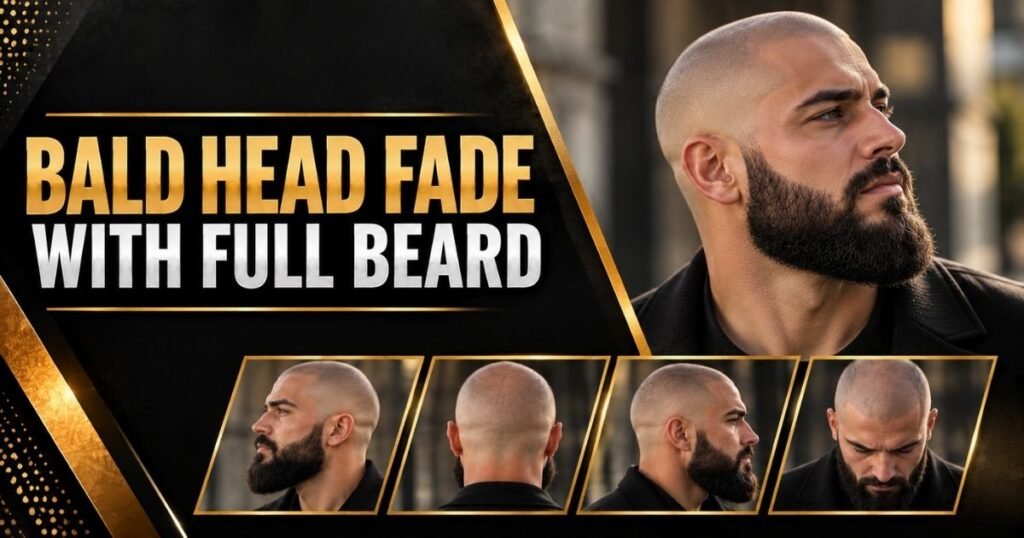
Styling Tip: SPF-infused moisturizer on the scalp protects skin that’s now more exposed to the sun.
Maintenance: Head shaving every few days, beard shaping weekly but no fade line to maintain separately. Maintenance and styling times are estimates and may vary by hair type.
Fade with Horseshoe Mustache
Overview: A bold mustache with bars extending down to the jawline, paired with a fade at the sides for a rugged look.
Why It Works: Suits thicker hair on oval or rectangular faces, giving a distinctive, vintage-inspired shape.
Styling Tip: Mustache wax keeps the bars from drooping over the lip throughout the day.
Maintenance: Trim the mustache bars weekly; fade the sides every 2-3 weeks. Maintenance and styling times are estimates and may vary by hair type.
Fade with Chevron Mustache Beard
Overview: A thick mustache covering the entire upper lip, paired with a shorter faded beard below.
Why It Works: Works for most hair types and face shapes, offering a bold upper-lip statement without a heavy beard.
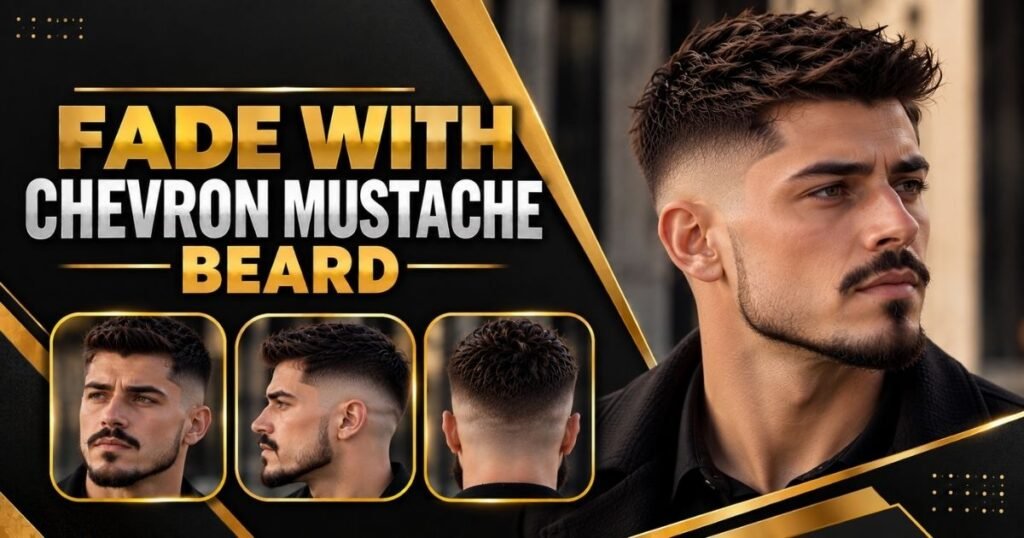
Styling Tip: A small mustache comb keeps the chevron’s width even and prevents stray hairs from covering the lip.
Maintenance: Trim the mustache every week; fade the beard every 2-3 weeks. Maintenance and styling times are estimates and may vary by hair type.
Faded Sideburns Only
Overview: Only the sideburn area fades into the haircut, leaving the rest of a short beard untouched in length.
Why It Works: A subtle option for straight hair on any face shape that wants a fade without a dramatic change.
Styling Tip: A light hair cream blends the sideburn fade into the haircut so there’s no visible seam.
Maintenance: This subtle fade holds for 3-4 weeks between touch-ups. Maintenance and styling times are estimates and may vary by hair type.
Skin Fade with Beard for Gray Hair
Overview: A standard skin fade adapted for salt-and-pepper or fully gray beards, where contrast against skin reads even sharper.
Why It Works: Suits any face shape, and the fade’s clean lines help gray or graying beards look deliberate rather than unkempt.
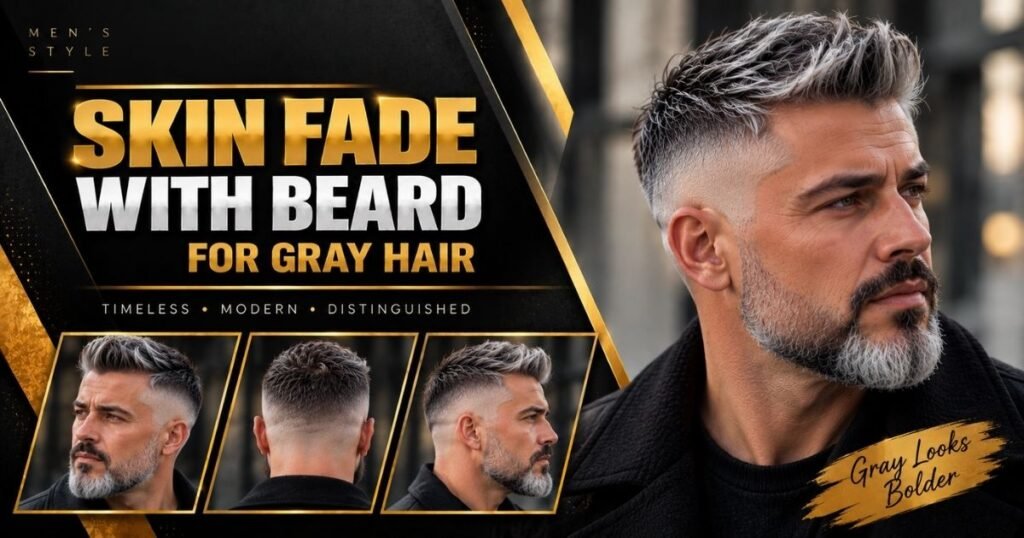
Styling Tip: A color-safe beard oil keeps gray hair from looking dull or straw-like next to the crisp fade line.
Maintenance: Gray hair can show regrowth faster against skin, so plan touch-ups every 2 weeks. Maintenance and styling times are estimates and may vary by hair type.
You May Read About: Side Part Haircuts for Men
How to Choose the Right Beard Fade Style
By Hair Type:
- Thick hair: Handles high fades and fuller beard pairings (Bandholz, Garibaldi, years) without looking heavy.
- Thin hair: Lower, subtler fades (temple fade, faded sideburns) avoid drawing attention to sparse areas.
- Curly hair: Drop fades and burst fades follow natural curl patterns better than straight-line fades.
- Straight hair: Nearly any fade works cleanly, since straight hair holds a crisp line longest.
- Wavy hair: Mid fades and taper fades blend well with wave patterns without extra styling effort.
By Face Shape:
- Oval: Most fades work burst fade, circle beard fade, and chevron mustache combos all suit balanced proportions.
- Round: High fades, drop fades, and Van Dyke or anchor combos add visual length and angle.
- Square: Low fades and temple fades let a strong jaw stand out without extra bulk.
- Long/Rectangular: Mutton chops or Garibaldi fades add width at the sides to balance face length.
How to Ask Your Barber For a Beard Fade
- Bring 2-3 reference photos from straight-on and side angles lighting changes how a fade reads
- Name the fade height you want (low, mid, high) rather than just pointing at a picture
- Mention your hair type (curly, straight, thick) so the barber adjusts guard sequence accordingly
- Explain your daily styling routine so the barber knows how much upkeep to build into the shape
- Ask about touch-up frequency before you leave, so you know when to rebook
- Confirm the final beard length and fade height together before any clippers touch your face
Explore More Best Haircut According to Your Style
- Fades continue to dominate men’s grooming trends, and there’s a style for every preference. Our guide to the mid fade haircut breaks down one of the most versatile options, while our deep dive into high fade haircuts for men covers the boldest version of the blend. If you want to compare your options side by side, our breakdown of low fade vs mid fade vs high fade and guide to the low taper fade will help you decide.
- For something with more attitude, check out the mohawk fade haircut, our guide to skin fade haircuts, or clear up the confusion with our comparison of taper vs fade haircut.
- We’ve also got dedicated guides on fade haircuts for black men, the sharp and structured high and tight haircut, and an age-specific take with our over-50 old man fade haircut guide.
- Not sure how to explain what you want? Our tips on how to ask your barber for a fade will help you communicate it clearly.
- If you’re after something more textured or trend-driven, there’s plenty to explore. Our guide to the curtain and wolf cut and full roundup of wolf cut hairstyles cover one of the biggest trends right now, alongside our breakdown of the textured crop hairstyle for men.
- For lower-maintenance options, see our guide to modern mullet and buzz haircuts, the retro-cool comma haircut, and a fresh take on mod haircuts for men.
- We’ve also covered the resurgence of the modern bowl cut, the ever-popular undercut haircut, and bold options like warrior haircuts for men and spiky hairstyles for men.
- If your hair has natural texture, check out our guide to curly hairstyles for men for styling tips tailored to curls.
- For more classic and professional looks, our guides to the comb over haircut, crew cut hairstyle, and Ivy League haircut are great starting points, and our comparison of the crew cut vs buzz cut helps you pick between two low-maintenance staples.
- If you prefer a sleek finish, check out our guide to the slick back hairstyle, the middle part hairstyle for men, and our roundup of professional hairstyles for the office.
- Looking for inspiration from global trends or specific needs? Our guides to the K-pop haircut, Korean hairstyle for men, and afro hairstyles for men highlight some standout international styles.
- If you’re dealing with specific concerns, our guide to big forehead hairstyles offers practical solutions, and athletes can check out our picks for hairstyles for soccer players.
- For a broader overview, browse our full guides to hairstyles for men, hair styles for men, and long hairstyles for men. Once you’ve picked a style, our hair care guide for men covers how to keep it looking its best.
- If you’re on the business side of things, our breakdown of current men’s haircut prices offers a useful benchmark, our list of barbershop marketing ideas can help grow your client base, and our roundup of barber hashtags for Instagram can boost your social presence.
Product Recommendations
Hair Cream
- Best For: Adding light hold and shine to top hair without weighing down a fade’s clean lines.
- How To Use: Rub a dime-sized amount between palms and work through damp hair from roots to ends.
Pomade
- Best For: Stronger hold for fades paired with styled top hair (like a fringe or textured crop).
- How To Use: Warm a small amount between fingers before applying to dry or towel-dried hair.
Wax
- Best For: Shaping mustache tips and pointed beard styles like the Van Dyke or French fork.
- How To Use: Warm between fingertips and apply sparingly to targeted sections only.
Clay
- Best For: Matte texture and separation on fringe or textured styles paired with a fade.
- How To Use: Rub into palms until slightly tacky, then work through dry hair for texture.
Shampoo
- Best For: Cleansing beard and scalp without stripping natural oils that keep skin near the fade calm.
- How To Use: Use a beard-specific formula 2-3 times weekly rather than daily to avoid dryness.
Conditioner
- Best For: Softening coarse or curly beard hair so it lies smoothly against a fade line.
- How To Use: Apply after shampooing, leave for one minute, then rinse thoroughly.
Final Thoughts
A sharp beard fade comes down to two things: picking a style that actually fits your face shape and hair type, and staying on top of touch-ups before the line blurs. Don’t be afraid to start with a lower-maintenance option like a taper fade or temple fade before working up to something bolder like a bald fade or burst fade; the goal is a look you’ll actually keep up with, not just one that photographs well on day one.
Whichever of these 35 styles you land on, bring a couple of reference photos to your next barber visit and be specific about fade height and beard length. That conversation is what separates a fade that looks intentional from one that looks like a guess.
FAQ SECTION
What is a Beard Fade Called?
It’s most commonly called a “beard fade” or “faded beard,” with variations named by height low fade, mid fade, or high fade depending on where the blend starts.
How Long does a Beard Fade Last?
Most beard fades hold their sharp line for 1-3 weeks before regrowth blurs the transition, though high fades and skin fades typically need touch-ups sooner.
What Guard Size do you use for a Beard Fade?
It varies by fade height, but many barbers start with a guard around #1-2 near the skin and blend upward, adjusting length as they move toward the beard.
How Often should you Touch up a Beard?
Most styles need a refresh every 2-3 weeks, though high fades, bald fades, and detailed line-ups often need attention every 7-10 days to stay crisp.
Is a Beard Fade Good for a Round Face?
Yes higher fades, drop fades, and angular combos like the Van Dyke or anchor beard add visual length and definition to rounder faces.
What is Italian Beard Fade Style?
The beard fade style Italian is a grooming style that features a smooth gradient fading down from the upper cheeks while leaving heavier volume, weight, and fullness concentrated around the chin and jawline.