Wolf cut vs Shag cut for Men: 40 Modern Styles for a Sharp Look
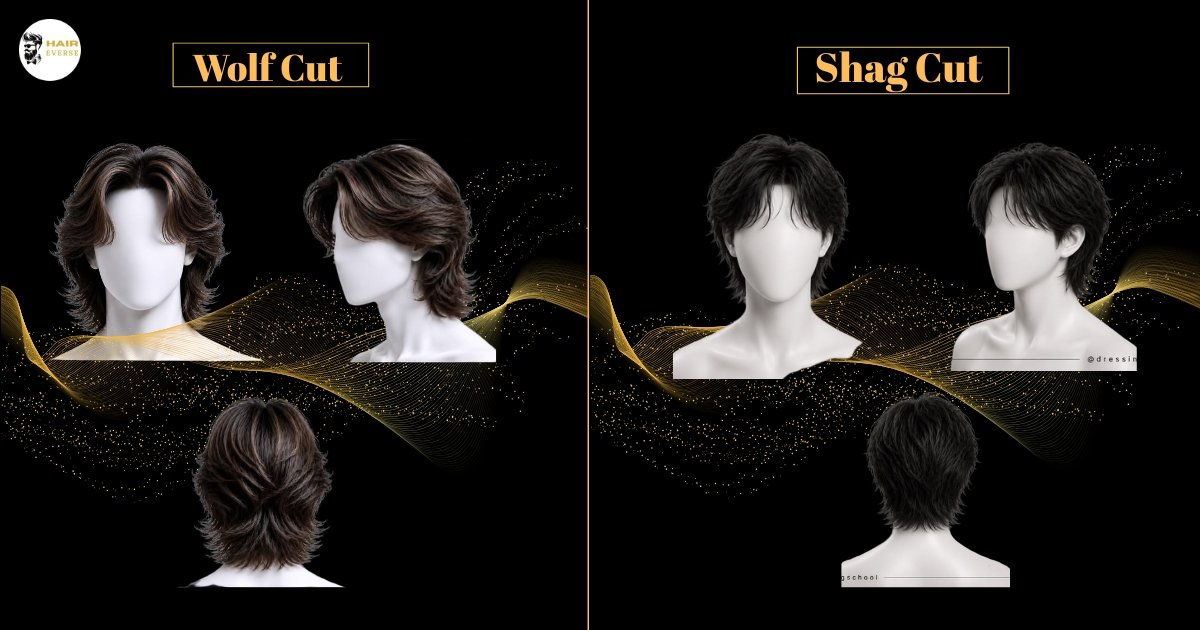
A wolf cut features short, choppy, disconnected layers piled at the crown with dramatically longer hair left in back, creating a mullet-like contrast. A shag uses even, blended layers all over the head with softer face-framing bangs.
Once you can spot that difference, choosing between a wolf cut vs shag cut stops being a guessing game.
Wolf cut vs Shag cut Comparison Table
This guide breaks down the wolf cut vs shag by layers, hair type, and face shape, then walks through 40 real, named styles for men so you can walk into your next appointment with an exact request instead of a vague screenshot..
| Style | Best Hair Type | Face Shape | Maintenance | Styling Time |
| Classic Wolf Cut | Wavy, curly | Round, square | High | 10–15 min |
| Classic 70s Shag | Straight, wavy | Oval, long | Low | 0–5 min |
| Sholf (Hybrid) | Wavy | Most shapes | Medium | 5–10 min |
| Wolf Mullet | Thick, curly | Square, diamond | High | 10–15 min |
| Curtain Bang Shag | Straight, wavy | Round, heart | Low–Medium | 5 min |
What Is a Wolf Cut?
The men’s wolf cut blends the choppy volume of a 1970s shag with the sharp length drop of a mullet. The crown is cut short and texturized to stand up on its own, while the back and sides are left noticeably longer, creating a two-zone silhouette.
That contrast is the entire point of the style: a smooth, gradual taper would defeat the look. Wolf cuts lean on natural or product-added texture. Straight, flat hair can make the crown look thin instead of lifted, so most barbers recommend some wave, curl, or a texturizing product before committing.
It reads as edgier and more fashion-forward than a shag, which is exactly why it has become a favorite reference photo among men aged 18–35.
What Is a Shag?
The shag haircut for men dates back to the 1970s and has resurfaced in nearly every decade since, because it genuinely works on most hair types and face shapes. Instead of a hard contrast between zones, the shag uses continuous, blended layering from the crown down through the ends.
Curtain bangs are the shag’s signature move, softening the forehead and framing the face without the choppy disconnection of a wolf cut. The overall shape is rounder, fuller, and more forgiving in day-to-day styling, which is why barbers often recommend it as a first layered cut for men who have never worn one before.
Wolf Cut vs Shag Cut: Key Differences
Layer placement.
A shag steps down gradually from crown to ends. A wolf cut jumps short crown, then a deliberate leap to much longer back and side length.
The fringe.
Shag fringe is soft and blended into face-framing layers, usually as a curtain bang. Wolf cut fringe sits chunkier and often pushes back toward the ear rather than falling over the forehead.
Silhouette.
A shag reads as a rounded, unified shape. A wolf cut reads as two shapes stacked together short and lifted on top, long and loose underneath, which is where the “mullet energy” comparison comes from.
Styling requirements.
A shag can air-dry into a wearable shape. A wolf cut generally needs a texturizing product, a diffuser, or natural wave to avoid looking flat or shapeless.
Which Cut Grows Out Better?
This is the question most competitor guides skip. A shag grows out gracefully the layers keep blending as they lengthen, and most men can stretch 8 to 10 weeks between trims without the shape falling apart.
A wolf cut is far less forgiving: the crown keeps getting shorter relative to the back, and by week 6 to 8 the two zones can start to look like separate haircuts that need a reshape, not just a trim.
40 Wolf Cut, Shag, and Hybrid Styles for Men
Whether you prefer the edgy texture of a wolf cut, the effortless layers of a shag, or the versatility of a hybrid hairstyle, this guide covers them all.Explore 40 handpicked styles :
Wolf Cut Styles :
A wolf cut is all about bold texture, layered volume, and a relaxed finish..
Classic Wolf Cut
- Overview: Short, choppy layers pile up at the crown while the back and sides run noticeably longer, creating the signature two-length silhouette. It’s the baseline every other wolf cut variation on this list builds from.
- Why It Works: Best on wavy to curly hair with a round or square face, since the crown volume adds height and the longer back balances wider jawlines.
- Styling Tip: Work a dime-sized amount of matte clay into damp hair, then scrunch the crown upward with your fingers to encourage lift and separation.
- Maintenance: Trim the crown every 4–5 weeks to keep the contrast sharp; let the back grow freely. Maintenance and styling times are estimates and may vary by hair type.
Short Wolf Cut
- Overview: A compact version of the wolf cut where even the “long” back stays above the collar, making it wearable in more conservative settings while keeping the choppy crown texture.
- Why It Works: Suits thick or fine hair equally well since there’s less length overall to manage, and it flatters most face shapes because the contrast is subtler.
- Styling Tip: Use a light sea salt spray on damp hair before blow-drying with your fingers to rough up the crown without weighing it down.
- Maintenance: Because there’s less length differential, this version holds its shape 1–2 weeks longer than a classic wolf cut. Maintenance and styling times are estimates and may vary by hair type.
Long Wolf Cut
- Overview: The back layers are grown out to shoulder length or beyond, maximizing the drama of the crown-to-back contrast that defines the style.
- Why It Works: Ideal for men with thick, wavy hair who already have length to work with and want the most dramatic version of the cut; suits long or oval faces best.
- Styling Tip: Apply a lightweight hair cream through the ends to control frizz on the longer back sections while keeping the crown product-light for lift.
- Maintenance: Expect more frequent crown touch-ups since the length gap is more visible when it closes. Maintenance and styling times are estimates and may vary by hair type.
Curly Wolf Cut
- Overview: Natural curls do most of the styling work here, springing up at the crown for built-in volume while the back curls hang with more weight and length.
- Why It Works: This is the single best hair type for a wolf cut, since curl pattern naturally creates the disconnection the style is chasing.
- Styling Tip: Apply curl-defining gel to soaking wet hair and let it air dry or diffuse on low heat to avoid frizz.
- Maintenance: Curls disguise regrowth well, so trims can stretch to 6–8 weeks without losing the shape. Maintenance and styling times are estimates and may vary by hair type.
Straight Wolf Cut
- Overview: Without natural texture to help, the crown layers are cut with heavier point-cutting to force separation, and the back is left long enough to counterbalance the flatness on top.
- Why It Works: Works best on men willing to add texture daily; suits square or diamond faces where the added height corrects proportion.
- Styling Tip: Blow-dry the crown upside down with a round brush, then finish with a texturizing spray to fake the lift that straight hair won’t hold on its own.
- Maintenance: Without daily product, straight wolf cuts go flat fastest of any variation on this list. Maintenance and styling times are estimates and may vary by hair type.
Wolf Cut With Fringe
- Overview: A chunky, piecey fringe sits farther back toward the ear than a shag’s soft curtain bang, blending directly into the short crown layers instead of framing the forehead.
- Why It Works: Great for men who want texture at the front without full curtain bangs; flatters oval and heart face shapes especially well.
- Styling Tip: Point a diffuser at the fringe while scrunching to push pieces sideways rather than forward.
- Maintenance: The fringe needs the most frequent trims of the whole cut since it grows into the eyes fastest. Maintenance and styling times are estimates and may vary by hair type.
Wolf Mullet
- Overview: The most exaggerated wolf variation, leaning harder into mullet territory with an even bigger length gap between the short crown and the long, squared-off back.
- Why It Works: Best for men with thick, coarse hair and a square or diamond face who want a bold, statement cut rather than something subtle.
- Styling Tip: Use a strong-hold pomade on the crown for sharp separation, keeping the back product-free for natural movement.
- Maintenance: This is the highest-upkeep style on the list the crown needs trimming every 3–4 weeks to preserve the contrast. Maintenance and styling times are estimates and may vary by hair type.
Textured Wolf Crop
- Overview: Combines the popular men’s textured crop fringe with wolf-style crown layering, keeping the back shorter than most wolf variations for an easier everyday cut.
- Why It Works: A good entry point for men new to layered cuts; suits nearly every face shape since the back stays moderate in length.
- Styling Tip: Rub matte clay between your palms and press don’t rake into the fringe for a textured, matte finish.
- Maintenance: More forgiving grow-out than a full wolf cut since the length gap is smaller from the start. Maintenance and styling times are estimates and may vary by hair type.
K-Pop Wolf Cut
- Overview: A softer take popular in South Korea, pairing wispy, face-framing crown pieces with a moderate not extreme length drop to the back, often finished with a subtle wave perm.
- Why It Works: Flatters oval and heart face shapes and works especially well with a light digital perm added for texture, common in Korean barbershops.
- Styling Tip: Apply a lightweight styling cream and blow-dry pieces forward and down for the soft, wispy K-pop finish rather than the choppier Western version.
- Maintenance: Regular trims every 5–6 weeks keep the wispy shape from growing into a shapeless mop. Maintenance and styling times are estimates and may vary by hair type.
Wolf Cut Undercut
- Overview: Pairs the long-crown, choppy-top wolf silhouette with tightly shaved or clipper-faded sides, sharpening the overall shape and adding contrast beyond just length.
- Why It Works: A strong option for men with thick hair who want the wolf texture without the extra bulk around the ears; suits round and oval faces well.
- Styling Tip: Style the top with a matte paste while keeping the undercut sides product-free for a clean line against the textured crown.
- Maintenance: The undercut needs its own touch-up every 2–3 weeks in addition to the crown trims. Maintenance and styling times are estimates and may vary by hair type.
Two-Tone Wolf Cut
- Overview: Uses contrasting color between the short crown and the longer back often a lighter or bleached top against a natural-toned base to physically visualize the cut’s two zones.Why It Works: Best for men who already have healthy, undamaged hair, since lightening adds an extra styling and upkeep step on top of the cut itself.
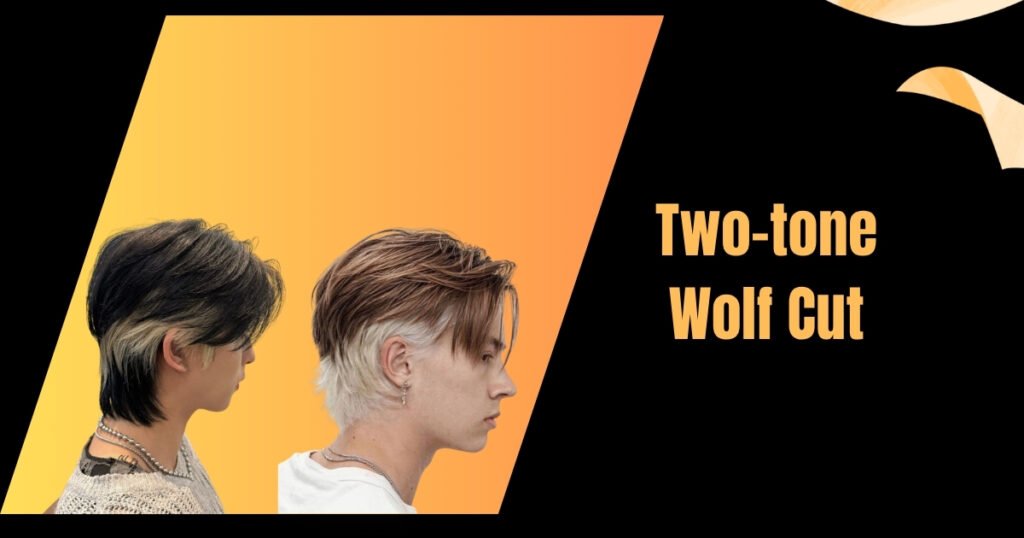
- Styling Tip: Use a color-safe matte clay to avoid dulling the lightened section, and always apply a UV-protecting leave-in if styling outdoors often.
- Maintenance: Color needs root touch-ups roughly every 6 weeks alongside the usual crown trims. Maintenance and styling times are estimates and may vary by hair type.
Wolf Cut With Fade
- Overview: Blends a barbershop skin fade into the sides while keeping the classic short-crown, long-back wolf shape on top, giving the style a cleaner, more polished edge.
- Why It Works: A great choice for workplaces with looser grooming standards, since the fade reads as intentional and tidy even with the choppy top; suits most face shapes.
- Styling Tip: Style the top with sea salt spray for texture and use a small amount of pomade to define the line between the fade and the longer hair above it.
- Maintenance: The fade grows out faster than the cut itself, so plan on a fade-only touch-up every 2–3 weeks. Maintenance and styling times are estimates and may vary by hair type.
Wolf Cut for Fine Hair
- Overview: A carefully adapted version that keeps more weight in the back to avoid a stringy look, while the crown uses shorter, blunter layers instead of heavy texturizing for the illusion of density.
- Why It Works: The short crown layers add lift where fine hair usually falls flat, while the untouched back length creates the illusion of thickness overall.
- Styling Tip: Use a volumizing mousse at the root before blow-drying the crown upward, avoiding heavy creams that weigh fine hair down.
- Maintenance: Ask your barber specifically not to thin the back ends, or the style can start to look thin and wispy. Maintenance and styling times are estimates and may vary by hair type.
Shag Styles :
Explore these shag variations to find the one that suits your hair type and personality..
Classic 70s Shag
- Overview: The original evenly blended layers all over the head with soft, feathered ends and a fringe that falls naturally over the forehead, exactly as worn in the decade it’s named after.
- Why It Works: Genuinely versatile across hair types and face shapes, which is why it keeps resurfacing decade after decade.
- Styling Tip: Air-dry with a light styling cream scrunched through damp hair for natural, undone movement.
- Maintenance: One of the lowest-maintenance layered cuts available trims every 8–10 weeks keep it looking intentional. Maintenance and styling times are estimates and may vary by hair type.
Modern Shag
- Overview: A slightly tighter, more precise take on the 70s original, with shorter internal layers around the crown for a bit more structure while keeping the same soft, blended feel.
- Why It Works: Reads as more polished for office environments while retaining the shag’s easy, forgiving growth pattern.
- Styling Tip: Use a matte cream instead of a shine product to keep the modern version looking textured rather than slick.
- Maintenance: Slightly more structured layers mean trims every 6–8 weeks instead of the classic version’s longer stretch. Maintenance and styling times are estimates and may vary by hair type.
Curly Shag
- Overview: Internal layering removes weight from inside the curl pattern rather than cutting the outer shape round, preventing the pyramid effect curly hair can create in a standard shag.
- Why It Works: Requires a stylist experienced with curl-cutting specifically, but rewards curly-haired men with volume and shape that a blunt cut can’t match.
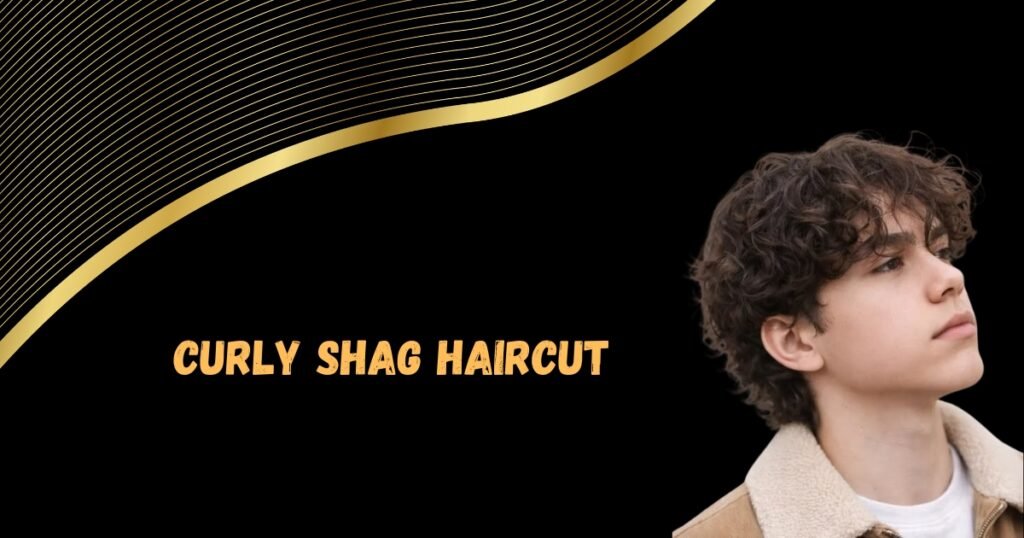
- Styling Tip: Apply curl cream to soaking wet hair and scrunch upward, never brushing dry curls.
- Maintenance: Ask specifically for internal layers, not perimeter rounding, or the shape can widen at the sides over time. Maintenance and styling times are estimates and may vary by hair type.
Straight Shag
- Overview: Relies on precise layering rather than natural texture, so the cut itself has to do more of the visual work through blunt-to-feathered blending.
- Why It Works: A safe, versatile choice for straight hair since it doesn’t require the styling effort a wolf cut would demand.
- Styling Tip: A light wave from a curling iron or a texturizing spray adds the movement straight hair lacks on its own.
- Maintenance: Without added texture, straight shags can look flat by day two a light dry shampoo at the roots helps extend it. Maintenance and styling times are estimates and may vary by hair type.
Shag With Curtain Bangs
- Overview: The definitive shag signature a center-parted, face-framing fringe blended smoothly into the surrounding layers instead of cut straight across.
- Why It Works: Especially flattering for heart and round face shapes, since the parted bangs soften a wide forehead.
- Styling Tip: Blow-dry the bangs downward and outward using a round brush to set the parted shape.
- Maintenance: The bangs need trimming every 4–5 weeks even if the rest of the cut is left alone longer. Maintenance and styling times are estimates and may vary by hair type.
Long Shag
- Overview: Extends the shag’s layering technique across shoulder-length hair, keeping movement and volume even at a longer overall length.
- Why It Works: Great for men growing their hair out who still want shape rather than one solid length; suits long and oval faces.
- Styling Tip: Use a lightweight sea salt spray to add texture without the frizz that longer hair is prone to.
- Maintenance: Because the layers are longer, grow-out is barely noticeable, letting you stretch trims to 10–12 weeks. Maintenance and styling times are estimates and may vary by hair type.
Short Shag
- Overview: A cropped version that keeps the shag’s blended, feathered layering but stays above the ears, making it workplace-friendly and low-effort.
- Why It Works: Works on almost any hair type and face shape since there’s minimal length to manage or misjudge.
- Styling Tip: A pea-sized amount of matte pomade worked through damp hair is all this style needs.
- Maintenance: The easiest style on this entire list to maintain trims every 6 weeks keep it sharp. Maintenance and styling times are estimates and may vary by hair type.
Shag Mullet (Shullet)
- Overview: Adds a mullet-style length drop to the back of a shag while keeping the front and crown fully blended, splitting the difference between a shag and a wolf cut but staying closer to shag territory.
- Why It Works: A good middle-ground pick for men who want a bit of the wolf cut’s drama without committing to its high-maintenance crown.
- Styling Tip: Style the top as you would a normal shag, then leave the back length product-free to move naturally.
- Maintenance: Because the front stays blended, this grows out more like a shag than a wolf cut. Maintenance and styling times are estimates and may vary by hair type.
Textured Crop Shag
- Overview: Merges the popular men’s textured crop fringe with shag-style body through the crown and sides, for a cut that photographs as trendy but styles as simply as a crop.
- Why It Works: A strong first-time layered cut for men transitioning from a standard crop or fade; suits nearly every face shape.
- Styling Tip: Rub matte clay between your palms and press into the fringe, leaving the rest of the shag layers product-free.
- Maintenance: One of the more forgiving options here is the shorter fringe grows out gracefully alongside the longer shag body. Maintenance and styling times are estimates and may vary by hair type.
Wavy Shag
- Overview: Natural waves fill in the shag’s layering evenly, giving the cut effortless movement without much styling effort required.
- Why It Works: Considered the ideal hair type for a shag the texture does most of the shaping work on its own.
- Styling Tip: Air-dry, scrunch with a texturizing spray, and let the natural wave pattern settle into place.
- Maintenance: Waves hide regrowth exceptionally well, allowing longer stretches between trims. Maintenance and styling times are estimates and may vary by hair type.
Shag Fade
- Overview: Combines a tight skin fade on the sides with full shag layering and curtain bangs up top, delivering a cleaner, more contemporary silhouette.
- Why It Works: A dependable choice for professional settings, since the fade tidies up the sides while the top keeps the shag’s soft movement.
- Styling Tip: Style the top with a lightweight cream and keep the faded sides product-free for contrast.
- Maintenance: Plan a fade touch-up every 2–3 weeks separately from the longer shag trims on top. Maintenance and styling times are estimates and may vary by hair type.
Shag for Thick Hair
- Overview: Heavier layering removes bulk throughout the crown and sides so the natural density reads as full and voluminous rather than heavy or helmet-like.
- Why It Works: Thick hair holds a shag’s volume beautifully once excess weight is thinned out properly by an experienced barber.
- Styling Tip: Use a lightweight styling cream rather than a heavy pomade, which can weigh thick hair down further.
- Maintenance: Regular thinning every 6–8 weeks prevents the cut from growing bulky and shapeless. Maintenance and styling times are estimates and may vary by hair type.
Shag for Fine Hair
- Overview: Keeps layering lighter and less aggressive than a standard shag to avoid over-thinning already fine strands, prioritizing volume over heavy texture.
- Why It Works: Adds the illusion of density without the thinning that can make fine hair look wispy or scalp-revealing.
- Styling Tip: Apply a volumizing mousse at the root before blow-drying upward and away from the face.
- Maintenance: Ask your barber to avoid heavy point-cutting on fine hair, which can accelerate a thin look at the ends. Maintenance and styling times are estimates and may vary by hair type.
Feathered Shag
- Overview: Ends are cut and styled to flick outward rather than lay flat, giving the classic shag an extra dose of that signature 1970s feathered movement.
- Why It Works: A great option for men wanting a more retro-leaning shag without going full period-costume; flatters most face shapes.
- Styling Tip: Use a round brush and blow-dryer to flick the ends outward while the hair is 80% dry.
- Maintenance: Behaves like a standard shag for grow-out trims every 8 weeks keep the flick defined. Maintenance and styling times are estimates and may vary by hair type.
Wolf-Shag Hybrid (“Sholf”) Styles
Hybrid styles combine the best features of multiple cuts, giving you a unique look that balances texture, shape, and versatility for everyday wear..
Sholf Cut (Shag-Wolf Hybrid)
- Overview: Splits the difference directly to moderate crown layering (not as short as a wolf cut) blended into a moderate length drop in back (not as long as a full wolf cut).
- Why It Works: The most versatile hybrid on this list, suiting a wider range of hair types and face shapes than either parent style alone.
- Styling Tip: A texturizing spray applied to damp hair, then air-dried, gives just enough lift without the heavy styling a full wolf cut demands.
- Maintenance: Because neither zone is extreme, this hybrid tolerates longer stretches between trims than a true wolf cut. Maintenance and styling times are estimates and may vary by hair type.
Soft Wolf Shag
- Overview: Leans closer to shag territory, using the wolf cut’s crown volume idea but with blended, softer edges instead of the choppy disconnection.
- Why It Works: A gentle entry point for men curious about the wolf cut look who aren’t ready for its higher maintenance demands.
- Styling Tip: Use a lightweight cream through the crown for soft lift rather than the stiffer clay a true wolf cut needs.
- Maintenance: Grows out closer to a standard shag timeline thanks to the blended layering. Maintenance and styling times are estimates and may vary by hair type.
Business Wolf Shag
- Overview: Keeps both the crown height and the back length conservative, delivering the wolf cut’s layered texture in a shape that clears most workplace grooming standards.
- Why It Works: Suits men who like the trend but need something office-appropriate; works across most hair types with minor adjustment.
- Styling Tip: A small amount of matte paste combed through, rather than scrunched, keeps the finish neat instead of choppy.
- Maintenance: The most low-key hybrid on the list, needing only standard 6-week trims. Maintenance and styling times are estimates and may vary by hair type.
Korean Wolf Shag
- Overview: Combines the wispy, face-framing fringe common in South Korean men’s styling with a moderate wolf-style crown, often finished with a soft digital perm.
- Why It Works: Popular across South Korea for its balance of trend-forward texture and everyday wearability; flatters oval and heart faces especially.
- Styling Tip: Apply a lightweight styling cream and finger-dry pieces forward for the soft, tousled Korean finish.
- Maintenance: A light perm can extend the style’s texture between visits, reducing daily styling time. Maintenance and styling times are estimates and may vary by hair type.
Curly Sholf
- Overview: Uses natural curl pattern to create the crown volume a wolf cut needs while the shag’s blended layering keeps the overall shape rounder and less choppy.
- Why It Works: Curly hair adapts naturally to this hybrid’s dual demands, making it easier to maintain than a straight-hair sholf.
- Styling Tip: Apply curl cream to wet hair and diffuse on low heat, focusing airflow at the crown for lift.
- Maintenance: Curl pattern disguises the transition between the two layer zones, extending time between trims. Maintenance and styling times are estimates and may vary by hair type.
Blonde Wolf Shag
- Overview: Applies a full or partial blonde lightening service to the moderate-contrast sholf shape, using color to add extra dimension to the layering.
- Why It Works: Best suited to men with healthy hair who are comfortable with the extra upkeep color required alongside the cut itself.
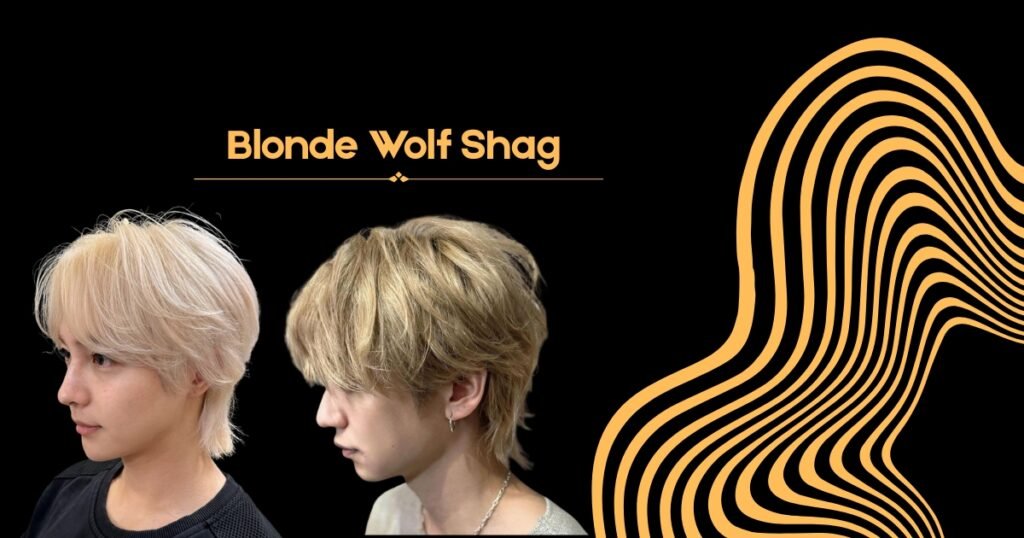
- Styling Tip: Use a purple-toning shampoo weekly to keep the blonde from turning brassy between salon visits.
- Maintenance: Root touch-ups every 5–6 weeks are needed in addition to the standard hybrid trim schedule. Maintenance and styling times are estimates and may vary by hair type.
Undercut Sholf
- Overview: Pairs the moderate-contrast sholf shape on top with fully shaved or heavily clippered sides, sharpening the silhouette with a strong line of contrast.
- Why It Works: A good option for men with thick hair who want the hybrid’s texture without extra bulk around the ears.
- Styling Tip: Style the top with matte clay while keeping the shaved sides clean and product-free.
- Maintenance: The undercut needs its own upkeep every 2–3 weeks separate from the top’s regular trim cycle. Maintenance and styling times are estimates and may vary by hair type.
Long Layered Wolf Shag
- Overview: Extends the sholf’s moderate-contrast layering across longer overall hair, giving both movement at the crown and flowing length through the back and sides.
- Why It Works: A strong option for men growing their hair out who still want defined shape rather than one uniform length.
- Styling Tip: Use a lightweight sea salt spray focused at the crown to maintain lift without weighing down the longer ends.
- Maintenance: The added length hides regrowth well, allowing 8-week-plus stretches between trims. Maintenance and styling times are estimates and may vary by hair type.
Low-Maintenance Wolf Shag
- Overview: Minimizes the length contrast between crown and back further than a standard shelf, prioritizing easy grow-out over dramatic styling.
- Why It Works: Built specifically for men who want the wolf-shag look without daily styling commitment; works across most hair types.
- Styling Tip: A leave-in cream applied to damp hair and air-dried is typically all this style requires.
- Maintenance: The smallest length gap on the hybrid list means the longest stretch between required trims. Maintenance and styling times are estimates and may vary by hair type.
Wolf Shag With Bangs
- Overview: Adds a soft, shag-style curtain bang to the moderate wolf-shag crown, softening the forehead while keeping the back’s longer, textured length.
- Why It Works: Particularly flattering on round and heart face shapes, where the parted bangs help balance a wider forehead.
- Styling Tip: Blow-dry the bangs down and to the side with a round brush before styling the rest of the crown for lift.
- Maintenance: The bangs need trimming every 4–5 weeks even if the rest of the cut is stretched longer. Maintenance and styling times are estimates and may vary by hair type.
Textured Crop Wolf Shag
- Overview: Merges the popular textured crop fringe with the hybrid’s moderate crown-to-back contrast, giving a trend-forward front with an easier-to-manage overall shape.
- Why It Works: A dependable transition cut for men moving from a standard crop toward a fuller layered style; suits nearly every face shape.
- Styling Tip: Press matte clay into the fringe only, leaving the rest of the layers product-free for natural movement.
- Maintenance: One of the easier hybrids to maintain since the fringe is the only section needing frequent attention. Maintenance and styling times are estimates and may vary by hair type.
Round Face Wolf Shag
- Overview: Adds extra crown height and keeps the sides closer to the head than a standard shoulder, specifically to elongate a rounder face shape.
- Why It Works: The added vertical volume at the crown visually lengthens the face, a targeted fix round-face guys often struggle to find in wolf cuts alone.
- Styling Tip: Blow-dry the crown upward with a round brush before applying a strong-hold clay to lock in the height.
- Maintenance: Crown height needs regular trims to stay lifted, or the face-lengthening effect fades quickly. Maintenance and styling times are estimates and may vary by hair type.
Square Face Wolf Shag
- Overview: Uses softer, feathered face-framing pieces at the front to blunt a square jawline, while keeping the moderate wolf-shag contrast through the crown and back.
- Why It Works: The feathered framing draws attention away from strong jaw angles without losing the hybrid’s textured, trend-forward look.
- Styling Tip: Apply a lightweight cream to the face-framing pieces specifically, keeping them soft rather than choppy.
- Maintenance: Keep the front framing pieces trimmed regularly since they do the most work softening the jawline. Maintenance and styling times are estimates and may vary by hair type.
How to Choose the Right Hairstyle
Here are two choices by hair and face:
By Hair Type:
- Thick hair: Both cuts work, but a wolf cut removes bulk for movement while a shag softens and controls volume without added weight.
- Thin hair: A shag is generally the safer pick since it adds volume without over-thinning; a wolf cut can work if the back is left with extra weight.
- Curly hair: The best hair type for a wolf cut natural curl pattern creates the disconnection the style is built around. Shags need an experienced curl-cutter to avoid a pyramid shape.
- Straight hair: A shag is the more forgiving choice, since a wolf cut on straight hair needs daily product to avoid looking flat.
- Wavy hair: Both cuts thrive here; wavy hair naturally supports the texture both styles depend on.
By Face Shape :
- Oval: Both cuts work well and proportions are balanced enough to suit almost any layered style.
- Round: A wolf cut’s crown volume and longer back help elongate the face; a shag’s piecey layers achieve a similar effect more gently.
- Square: Softer, feathered framing in either cut helps blunt strong jaw angles.
- Long: A shag’s width and fullness balance a longer face better than a wolf cut, which can elongate it further.
How to Ask Your Barber for This Style?
- Bring a reference photo, but make sure the hair texture and thickness in the photo matches your own.
- Name the specific style from this guide (for example, “wolf mullet” or “sholf”) rather than a vague description.
- Explain your preferred length for both the crown and the back separately.
- Describe your current styling routine so your barber can match the cut to how much effort you’ll actually put in daily.
- Ask directly about the maintenance schedule for that specific style before the scissors come out.
- Confirm the final shape and length contrast before your barber starts cutting, not after.
Product Recommendations :
Healthy hair needs healthy care routine :
Hair Cream
- Best For : Adding soft movement and control without stiffness, ideal for shags and softer hybrids.
- How To Use : Warm a small amount between palms and work through damp or dry hair, focusing on mid-lengths and ends.
Pomade
- Best For : Defined separation and hold on wolf cut crowns.
- How To Use : Rub a pea-sized amount between fingertips and pinch through dry hair for textured, defined pieces.
Wax
- Best For : Piecey texture on shorter wolf cut and hybrid fringes.
- How To Use : Warm between fingers until pliable, then apply to small sections for sharp, separated definition.
Clay
- Best For : Strong, matte hold for high-contrast wolf cuts and undercut variations.
- How To Use : Apply to damp hair and scrunch or press upward at the crown for lift and volume.
Shampoo
- Best For : Maintaining texture and scalp health across all layered cuts without stripping natural oils.
- How To Use : Use 2–3 times weekly, focusing on the scalp rather than the lengths, especially with textured or curly styles.
Conditioner
- Best For : Keeping longer back sections on wolf cuts and shags soft and manageable.
- How To Use : Apply from mid-length to ends after shampooing, avoiding the roots to prevent flatness at the crown.
Final Thoughts :
There’s no universally “better” choice between a wolf cut and a shag, only the one that fits your hair type, your face shape, and honestly, how much time you’re willing to spend in front of a mirror each morning.
If you want bold contrast and don’t mind reaching for product daily, the wolf cut and its higher-drama variations deliver. If you’d rather wake up, run your fingers through it, and walk out the door, a shag or one of the softer hybrids will serve you better.
For More Hairstyles :
If you prefer cleaner sides with a modern finish, a burst fade can completely transform your hairstyle. Explore our Burst Fade Haircuts for Men guide to discover stylish fade variations that pair well with both wolf cuts and shag-inspired looks.
Love longer, textured hairstyles? A middle part is another timeless option that complements natural volume and layered cuts. Check out our Middle Part Hairstyles for Men guide for trendy styles that suit different hair lengths and face shapes.
FAQs
What is the difference between a wolf cut and a shag?
A wolf cut has short, choppy crown layers contrasted sharply against a much longer back, borrowing from the mullet. A shag uses even, blended layers all over with softer face-framing bangs and a more unified, rounded shape.
Does a wolf cut work on straight hair?
Yes, but it needs help. Straight hair lacks the natural texture a wolf cut relies on, so daily styling with a texturizing spray, diffuser, or light wave is usually necessary to avoid a flat, shapeless crown.
What face shape suits a shag haircut best?
Shags flatter nearly every face shape, but they’re especially strong on round, long, and heart-shaped faces, where the soft, piecey layers and curtain bangs help balance proportions.
Is a shag or wolf cut easier to maintain?
The shag is easier to maintain. It grows out gracefully, tolerates air-drying, and typically only needs trims every 8 to 10 weeks, while a wolf cut needs more frequent shaping to preserve its length contrast.
Can boys get a wolf cut?
Yes, wolf cuts work well for boys, particularly those with natural waves or curls. Barbers typically scale down the length contrast slightly for younger clients to keep the style easier to manage day to day.