25 Curtain Warrior and Wolf Cut Ideas: The Ultimate Guide for Men and Boys
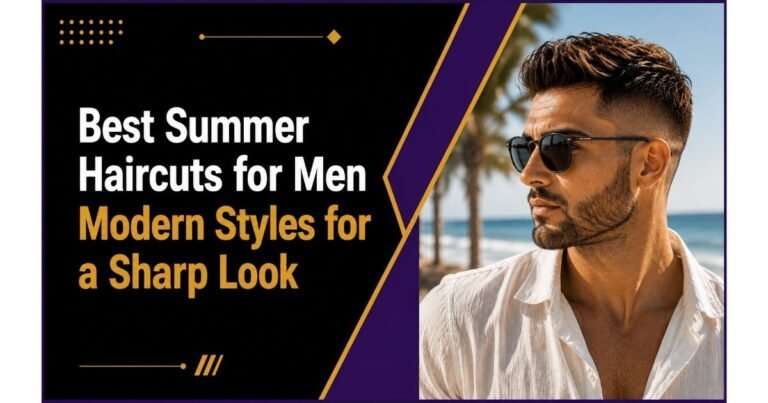
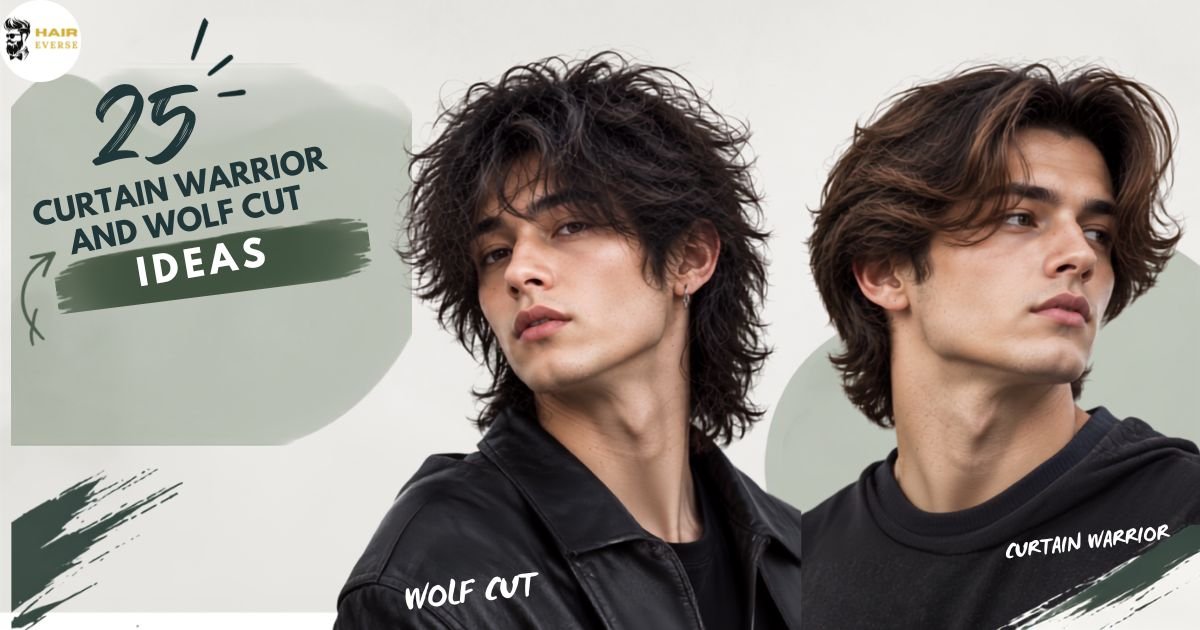
Curtain warrior and wolf cut ideas are among the most popular men’s hairstyles . Whether you prefer a clean middle-part curtain, a bold warrior cut, or a textured wolf cut, there’s a style to suit every hair type and face shape.
This guide showcases 25 of the best variations, along with styling tips, maintenance advice, and barber recommendations to help you choose the perfect look.That’s exactly the gap a 25 curtain warrior and wolf cut ideas: The Ultimate Guide for Men and Boys, or wolf cut fills.
Hairstyle Comparison Table
Use this hairstyle comparison table to quickly compare the best hair type, face shape, maintenance level, and styling time for each haircut. It helps you choose a style that matches your hair texture, complements your features, and fits your daily grooming routine.
| Hairstyle | Best Hair Type | Face Shape | Maintenance | Styling Time |
| Classic Curtain Fringe | Straight, Wavy | Oval, Square | Medium | 5-10 min |
| Curtain with Low Taper Fade | All types | Oval, Round | Medium | 5-10 min |
| Curtain with Burst Fade | Straight, Thick | Square, Diamond | Medium | 5-10 min |
| Curly Curtain Haircut | Curly, Coily | Round, Oval | Medium | 10-15 min |
| Long Curtain Bangs | Straight, Wavy | Oblong, Oval | High | 10-15 min |
| Short Textured Curtain Crop | Fine, Thin | Round, Square | Low | 5 min |
| Curtain Mullet | Wavy, Thick | Oval, Square | High | 10-15 min |
| Korean Middle Part | Straight | Oval, Heart | Medium | 10 min |
| Wavy Surfer Curtains | Wavy | Oval, Round | Low | 5 min |
| Undercut Curtain | Straight, Thick | Square, Diamond | Medium | 5-10 min |
| Messy Grown-Out Curtains | All types | Oval, Oblong | Low | 5 min |
| Classic Warrior Cut | Thick, Wavy | Square, Oval | High | 10-15 min |
| Warrior Cut with Fade | All types | Square, Round | Medium | 10 min |
| Braided Warrior Cut | Thick, Curly | Any | High | 15-20 min |
| Top Knot Warrior Cut | Thick, Straight | Oval, Square | Medium | 5 min |
| Modern Wolf Cut | Straight, Wavy | Heart, Oval | Medium | 10 min |
| Wolf Cut with Curtain Fringe | Wavy, Curly | Round, Oval | Medium | 10 min |
| Shaggy Wolf Cut (Fine Hair) | Fine, Thin | Round, Square | Low | 5-10 min |
| Wolf Cut with Burst Fade | Thick, Straight | Square, Diamond | Medium | 10 min |
| Boys’ Textured Crop | All types | Any | Low | 5 min |
| Low Taper Fade Crew Cut | All types | Round, Square | Low | 5 min |
| Burst Fade Textured Top | Straight, Wavy | Square, Oval | Medium | 5-10 min |
| Grow-Out Buzz to Curtain | All types | Any | Low | 5 min |
| Side-Part Curtain (Thick Hair) | Thick | Oblong, Square | Medium | 10 min |
| Senior Low-Maintenance Curtain Crop | Fine, Thinning | Oval, Round | Low | 5 min |
What Is a Curtain and Warrior and wolf cut ?
A curtain haircut is a middle-parted style where the top hair splits and falls to each side of the face, like curtains framing a window. A warrior cut takes that same middle part but keeps more length and weight through the crown, giving a bolder, almost tribal-inspired shape.
Both differ from a wolf cut, which layers shorter pieces on top with longer, shaggy ends more texture, less symmetry.
Wolf Cut with Curtain Bangs and Layers with Classic Fringe
Overview: Hair splits down the center and falls just above the eyebrows on both sides, with shorter sides for contrast.
Why It Works: Suits straight or wavy hair and flatters oval and square faces by softening a strong jawline.
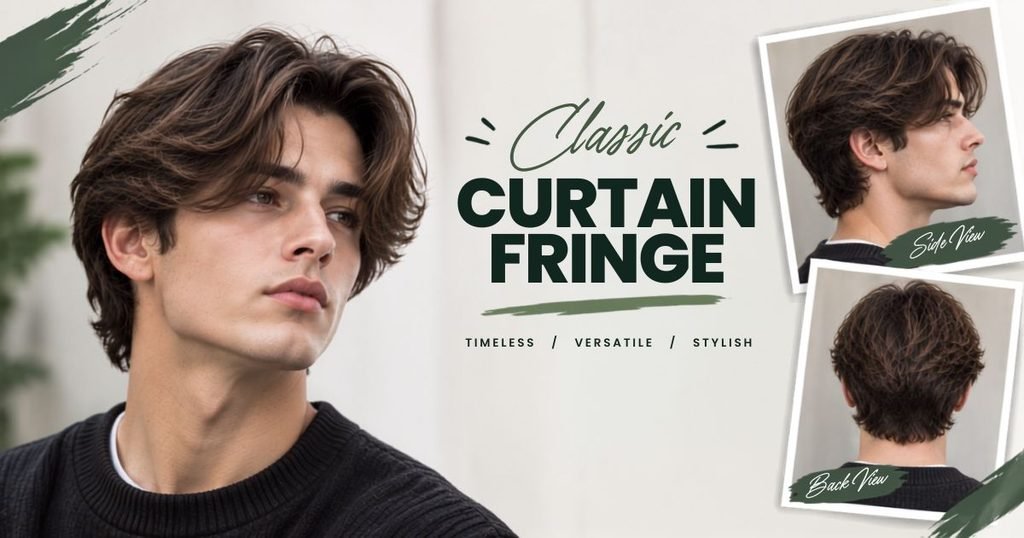
Styling Tip: Apply a dime-sized amount of texture clay to damp hair, then finger-comb the part down the middle and push each side outward.
Maintenance: Trim every 4-5 weeks to keep the fringe above the eyes; a light leave-in conditioner prevents split ends from the exposed length. Maintenance and styling times are estimates and may vary by hair type.
Short Wolf Cut Curtain with Low Taper Fade
Overview: The classic curtain top stays long, while the sides fade gradually starting just above the ear.
Why It Works: Works on nearly every hair type and face shape because the fade keeps bulk in check while the top adds softness.
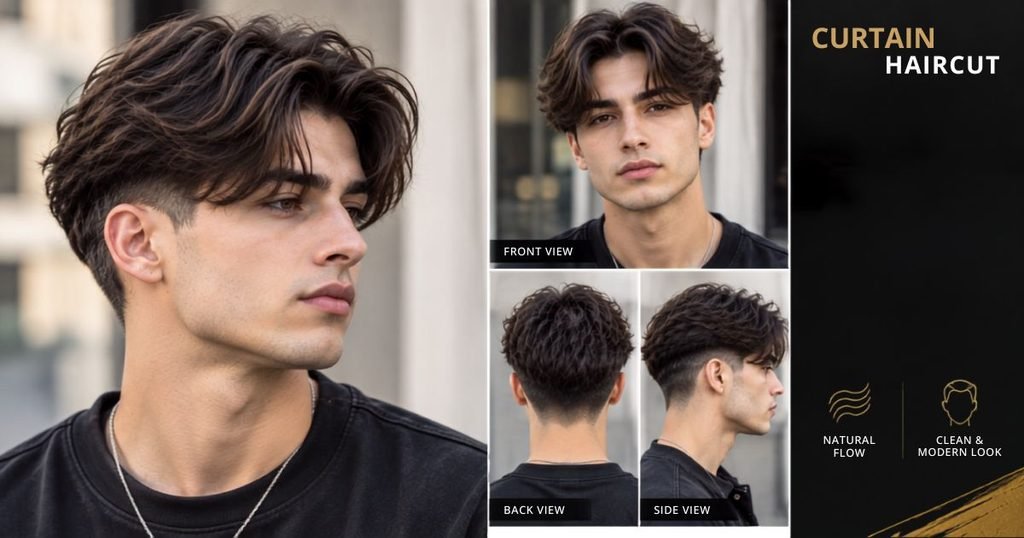
Styling Tip: Use a matte pomade rather than a shiny one it holds the part without making the fade look greasy.
Maintenance: Fades need a barber touch-up every 2-3 weeks even if the top isn’t cut, since the faded line grows out fastest. Maintenance and styling times are estimates and may vary by hair type.
Curtain Haircut with Burst Fade
Overview: The fade curves around the ear instead of running in a straight line, leaving more length at the back of the neck.
Why It Works: Best for thick or straight hair on square and diamond face shapes, since the curved fade softens angular jawlines.
Styling Tip: Blow-dry the top on a cool setting while brushing it into the part to lock the shape before adding product.
Maintenance: Because the fade line curves, ask specifically for a “burst fade refresh” every 2-3 weeks so the shape doesn’t blur. Maintenance and styling times are estimates and may vary by hair type.
Curly Curtain Haircut Men
Overview: Natural curls are layered so they fall into a center part on their own, without heat styling.
Why It Works: Ideal for curly or coily hair types, and flattering on round or oval faces since the volume adds height.
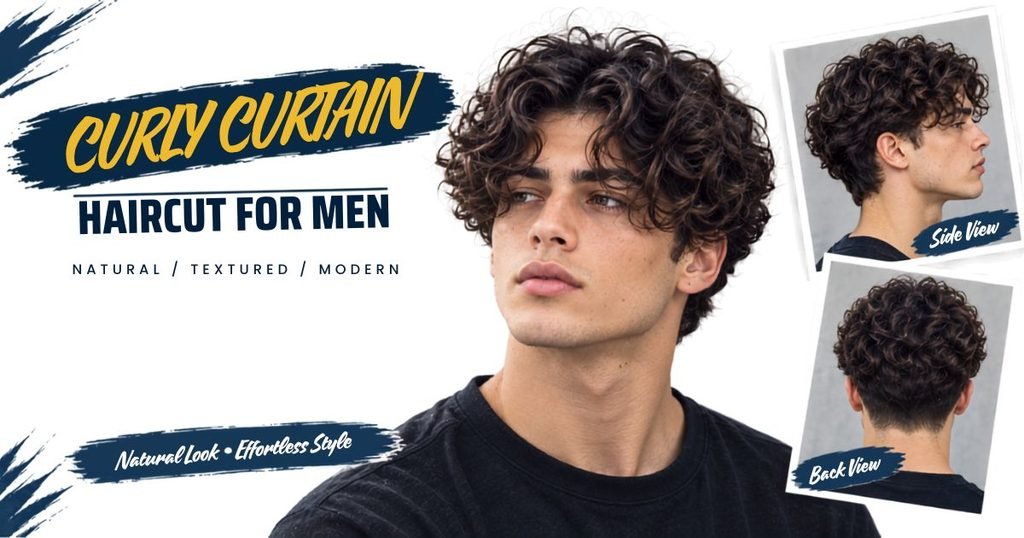
Styling Tip: Scrunch a curl-defining gel into damp curls, then let them air-dry instead of brushing, which breaks up the curl pattern.
Maintenance: Trim every 6-8 weeks using curl-specific cutting techniques so shrinkage doesn’t ruin the shape. Maintenance and styling times are estimates and may vary by hair type.
Long Curtain Bangs
Overview: The fringe grows past the eyebrows toward the cheekbones for a fuller, more dramatic frame.
Why It Works: Best on straight or wavy hair, and flattering on oblong or oval faces where extra width around the cheeks helps.
Styling Tip: A round brush and blow dryer on medium heat give the ends a slight inward curve for a polished finish.
Maintenance: The length needs trims every 5-6 weeks to avoid a shapeless, overgrown look, plus regular conditioning to fight breakage. Maintenance and styling times are estimates and may vary by hair type.
Short Textured Curtain Male Bangs with Crop
Overview: A shortened curtain that barely reaches the brow, with heavy texturizing on top for movement.
Why It Works: Great for fine or thin hair on round and square faces, since the short length prevents flattening.
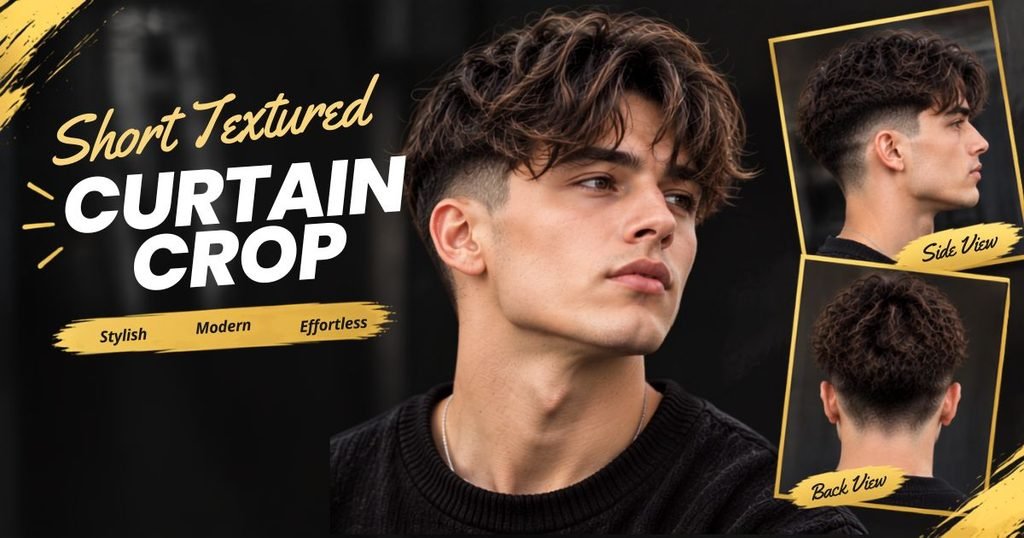
Styling Tip: Work a light sea salt spray through damp hair for grip without the weight of a heavier cream.
Maintenance: Fine hair grows out fast on top, so plan on a trim every 3-4 weeks to keep the texture crisp. Maintenance and styling times are estimates and may vary by hair type.
Curtain Mullet Wolf Cut Male
Overview: Curtain-style fringe up front pairs with noticeably longer hair at the back and nape.
Why It Works: Suits thick or wavy hair on oval and square faces, and works well for creative or casual lifestyles.
Styling Tip: Use texture clay on the front for hold, and a light-hold spray on the back so it moves naturally.
Maintenance: Because the front and back grow at different visual rates, get the fringe trimmed every 4 weeks while letting the back grow longer between cuts. Maintenance and styling times are estimates and may vary by hair type.
Korean Middle Part Curtain
Overview: A softer, more polished take on the curtain with straighter, sleeker layers and minimal flare.
Why It Works: Best for straight hair on oval or heart-shaped faces where a clean, symmetrical part looks most natural.
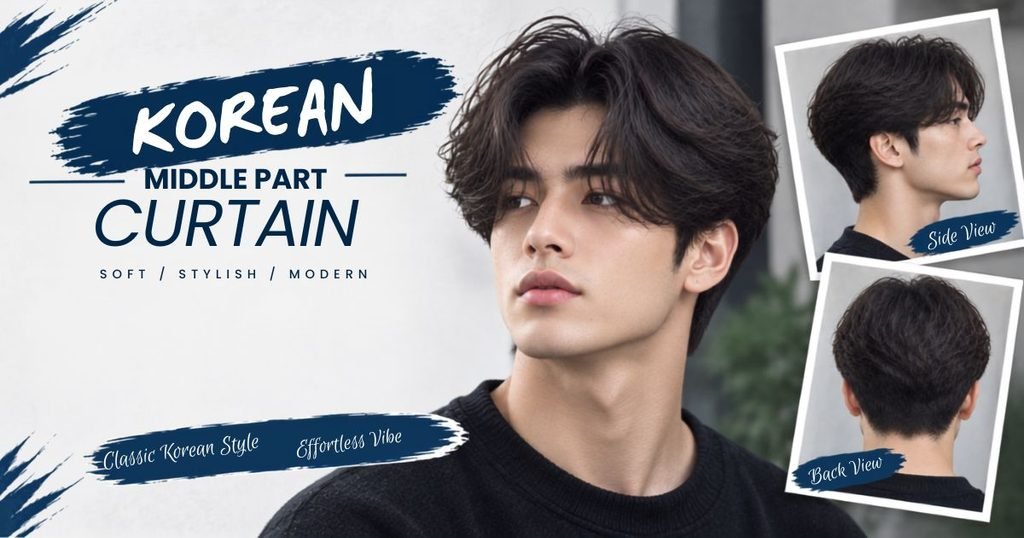
Styling Tip: Apply a lightweight styling cream and use a fine-tooth comb to define a razor-sharp center part.
Maintenance: Regular trims every 4-5 weeks keep the sleek shape from growing shaggy at the ends. Maintenance and styling times are estimates and may vary by hair type.
Wavy Surfer Curtains
Overview: A relaxed, beach-inspired curtain with natural wave left untouched by heat tools.
Why It Works: Works best on naturally wavy hair for oval and round faces, and suits an active, low-fuss lifestyle.
Styling Tip: Scrunch in a sea salt spray while hair is damp, then let it air-dry for natural texture.
Maintenance: Low-maintenance by design a trim every 6-8 weeks keeps the shape without needing daily styling. Maintenance and styling times are estimates and may vary by hair type.
Undercut Curtain Haircut
Overview: Sides are shaved or clipped very short with a hard line, while the curtain top stays long and flowing.
Why It Works: The sharp contrast flatters square and diamond faces, and works with straight or thick hair that holds a part well.
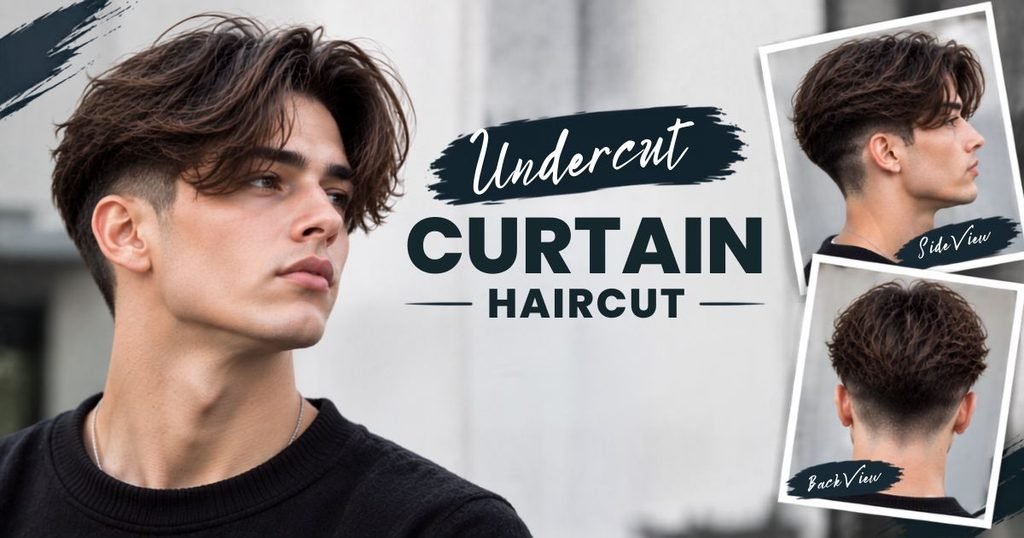
Styling Tip: Blow-dry the roots for lift before applying a matte clay so the top doesn’t collapse flat against the shaved sides.
Maintenance: The shaved sides grow out visibly fast, so book a touch-up every 2 weeks even between full haircuts. Maintenance and styling times are estimates and may vary by hair type.
Messy Grown-Out Curtains
Overview: An undone, imperfect version of the curtain with no stiff hold or sharp lines.
Why It Works: Works for any hair type, especially between cuts, and flatters oval and oblong faces with its relaxed drape.
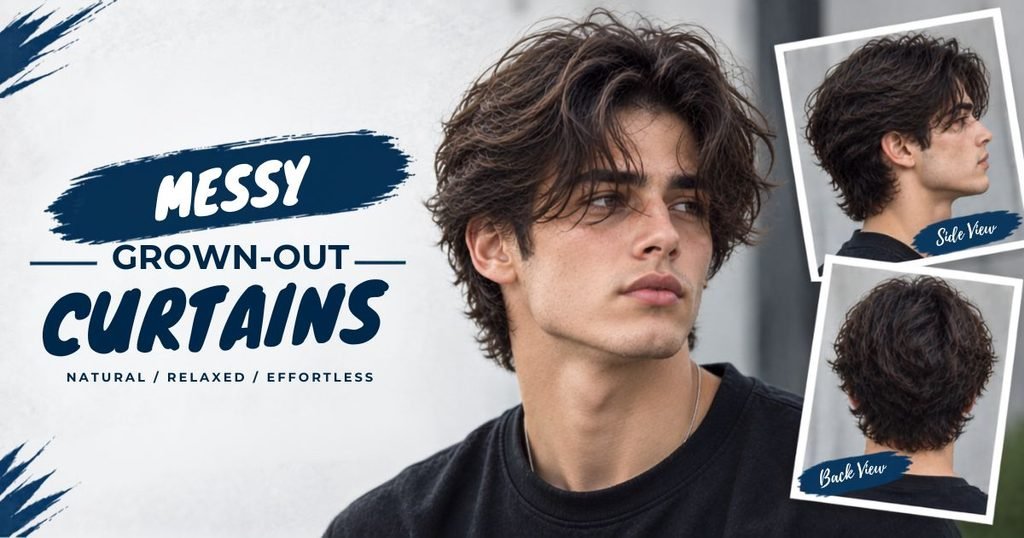
Styling Tip: Use the palm-to-palm technique with a small amount of light paste, rubbing it between hands before running through hair.
Maintenance: Almost no upkeep required this style is designed to look good even a week or two past your usual trim date. Maintenance and styling times are estimates and may vary by hair type.
Classic Warrior Cut
Overview: Long layers sweep back from a center part, with noticeable volume and length through the crown.
Why It Works: Best suited to thick or wavy hair on square and oval faces, where the extra volume balances broader features.
Styling Tip: Apply a strong-hold cream and blow-dry hair backward, lifting at the roots for the signature volume.
Maintenance: Deep conditioning weekly keeps the longer length from looking dry, with trims every 6-8 weeks to maintain shape. Maintenance and styling times are estimates and may vary by hair type.
Warrior Cut with Fade
Overview: The bold warrior-cut top is balanced by a clean fade on the sides for a more modern, wearable shape.
Why It Works: Fits most hair types and flatters square and round faces by adding definition around the jaw.
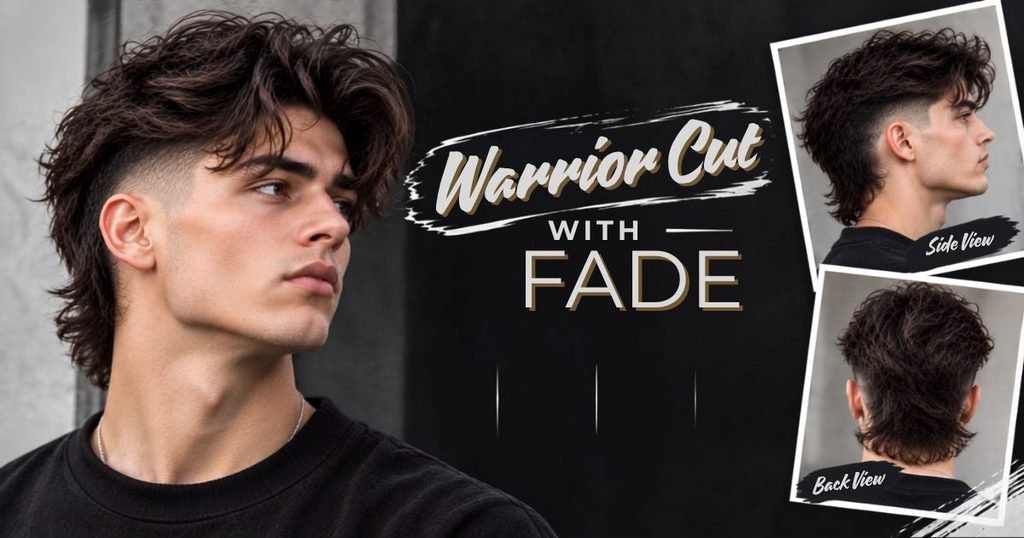
Styling Tip: A firm-hold pomade keeps the volume on top while the fade stays crisp and low-maintenance.
Maintenance: Fade lines need refreshing every 2-3 weeks, though the top only needs shaping every 6 weeks. Maintenance and styling times are estimates and may vary by hair type.
Braided Warrior Cut
Overview: Longer top sections are braided close to the scalp, adding a structured, textured pattern to the classic warrior shape.
Why It Works: Works with thick or curly hair on most face shapes, since the braids add visual structure without extra bulk.
Styling Tip: Use a light styling gel on damp hair before braiding to control flyaways and add shine.
Maintenance: Rebraid every 1-2 weeks and use a scalp-friendly oil to prevent dryness at the part lines. Maintenance and styling times are estimates and may vary by hair type.
Top Knot Warrior Cut
Overview: The long warrior-cut top is gathered and tied into a small knot, with shorter sides left loose.
Why It Works: A practical option for thick or straight hair on oval and square faces, especially useful for workouts or hot weather.
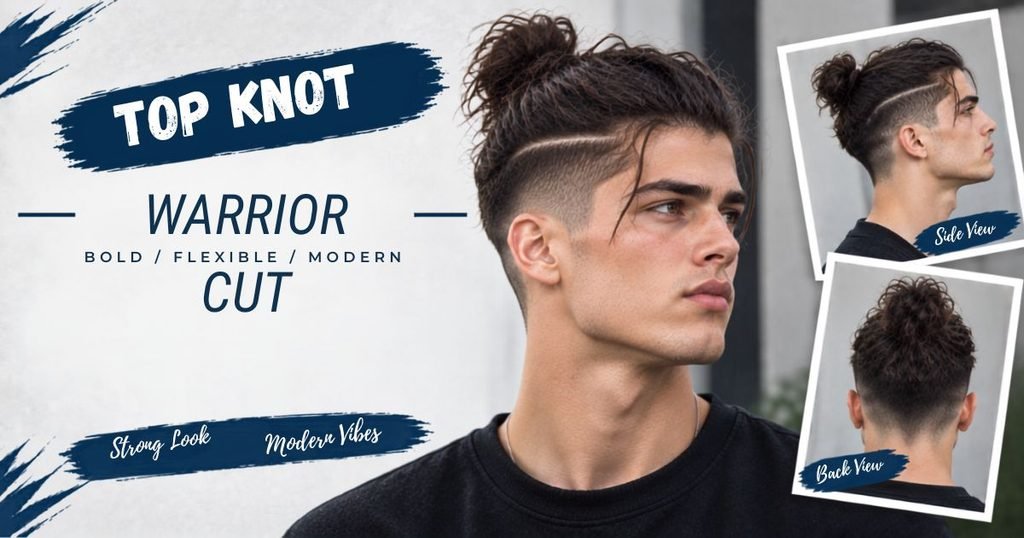
Styling Tip: Use a soft elastic band rather than a tight one to avoid breakage at the hairline over time.
Maintenance: Rotate where the knot sits day to day to prevent thinning at one stress point, and trim every 8 weeks. Maintenance and styling times are estimates and may vary by hair type.
Modern Wolf Cut
Overview: Short, choppy layers on top blend into longer, shaggier pieces at the back and sides for a rugged, textured look.
Why It Works: Flatters heart and oval faces and works especially well on straight or wavy hair with natural body.
Styling Tip: Rough-dry hair with your fingers rather than a brush to keep the layers separated and textured.
Maintenance: Trim every 6 weeks to keep the layers distinct; overgrowth quickly turns this shaggy style into a flat mess. Maintenance and styling times are estimates and may vary by hair type.
Curtain Wolf Cut Male with Fringe
Overview: Wolf-cut layering through the crown pairs with a soft, center-parted fringe at the front.
Why It Works: Works well on wavy or curly hair for round and oval faces, blending two trend families into one cohesive shape.
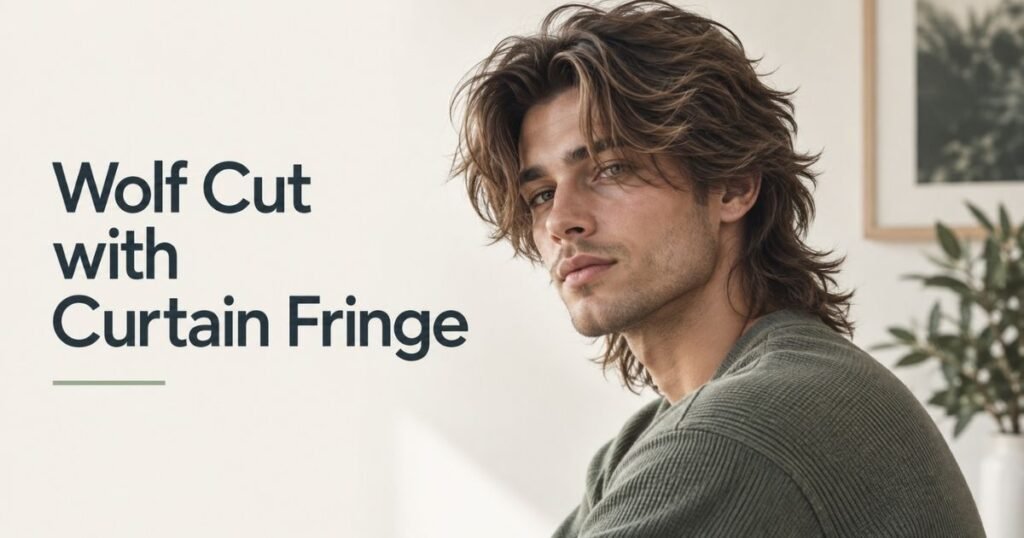
Styling Tip: Apply texture clay only to the mid-lengths and ends, keeping the roots product-free for natural lift.
Maintenance: Because two techniques overlap, ask your barber for a “wolf-curtain blend” trim every 6 weeks to keep both elements balanced. Maintenance and styling times are estimates and may vary by hair type.
Short Korean Wolf Cut Male Shaggy for Fine Hair
Overview: Lighter layering than a standard wolf cut, designed to add the appearance of density without heavy thinning.
Why It Works: Specifically suited to fine or thin hair on round and square faces, where volume is the main goal.
Styling Tip: A volumizing mousse applied at the roots before blow-drying upside down adds noticeable lift.
Maintenance: Fine hair holds shape well between cuts, so a trim every 8 weeks is usually enough. Maintenance and styling times are estimates and may vary by hair type.
Full Wolf Cut with Burst Fade
Overview: The shaggy wolf-cut layers on top meet a curved burst fade around the ear for added contrast.
Why It Works: Best for thick or straight hair on square and diamond faces, where the fade sharpens an otherwise loose style.
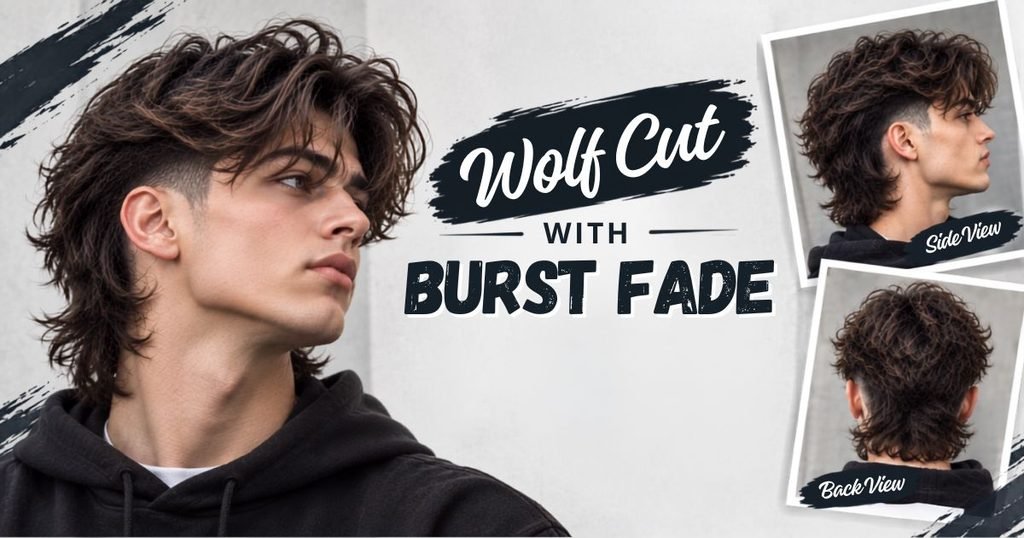
Styling Tip: Use a matte paste worked only through the top layers so the fade underneath stays visibly clean.
Maintenance: The fade needs upkeep every 2-3 weeks; the shaggy top can stretch to 6-7 weeks between full trims. Maintenance and styling times are estimates and may vary by hair type.
Boys’ Textured Crop
Overview: A short, uniform crop with light texturizing on top and minimal length anywhere, easy for parents to manage.
Why It Works: Suits any hair type and face shape, making it a safe, practical choice for younger boys.
Styling Tip: A small amount of matte clay is enough avoid shiny gels, which look unnatural on kids’ hair.
Maintenance: A trim every 3-4 weeks keeps it neat for school and sports, with almost no daily styling needed. Maintenance and styling times are estimates and may vary by hair type.
Low Taper Fade Crew Cut
Overview: Short, even length on top with a subtle taper starting low near the ears, keeping the overall look clean and classic.
Why It Works: Works on virtually any hair type and face shape, and is a dependable low-fuss option across age groups.
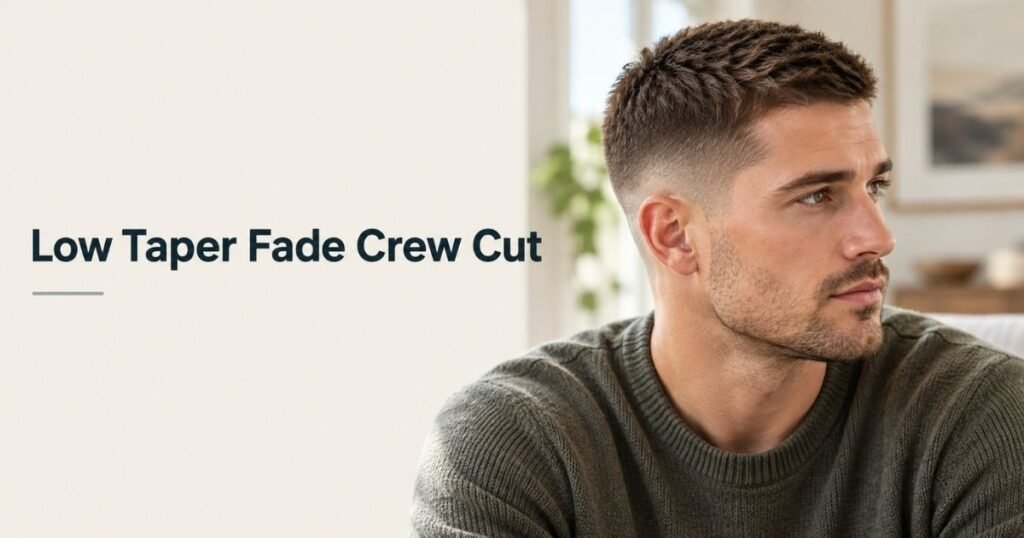
Styling Tip: A light pomade run through slightly damp hair adds just enough hold without looking overstyled.
Maintenance: Trim every 3-4 weeks, since a low taper grows out visibly faster than the top length. Maintenance and styling times are estimates and may vary by hair type.
Burst Fade Textured Top
Overview: A textured, slightly longer top meets a curved burst fade for a modern, everyday-wearable shape.
Why It Works: Suits straight or wavy hair on square and oval faces, offering more versatility than a straight-line fade.
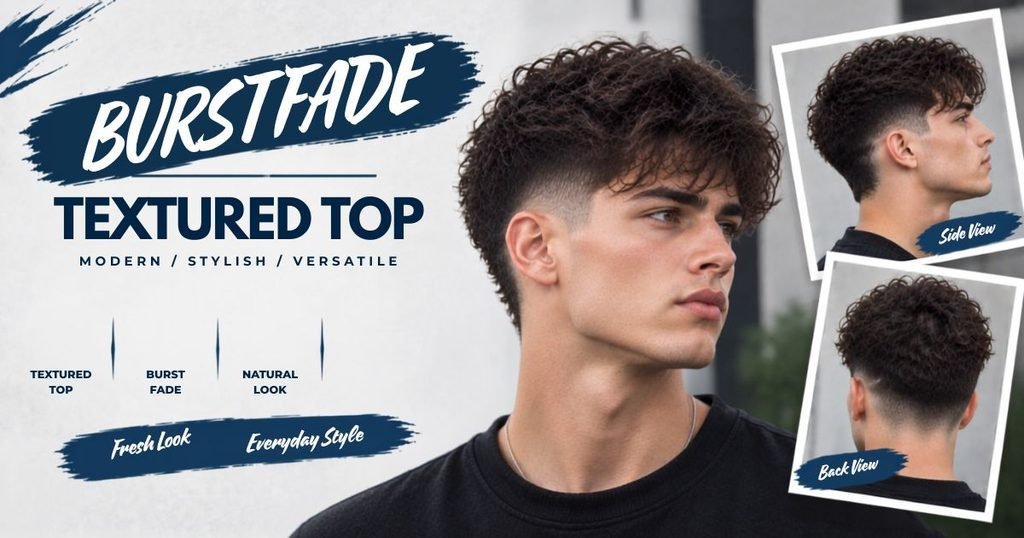
Styling Tip: Work texture clay through damp hair, then use fingers rather than a comb to keep the piecey texture visible.
Maintenance: Refresh the fade every 2-3 weeks; the top can go 5-6 weeks between shape-ups. Maintenance and styling times are estimates and may vary by hair type.
Grow-Out Buzz to Curtain
Overview: A shaping cut designed for the in-between stage when hair is too short for a full curtain but growing toward one.
Why It Works: Works for any hair type or face shape since it’s a transitional step, not a finished style.
Styling Tip: A light sea salt spray helps train the part direction early, before there’s enough length for a full curtain fall.
Maintenance: Get the sides shaped every 3 weeks while letting the top grow undisturbed for 8-10 weeks total. Maintenance and styling times are estimates and may vary by hair type.
Side-Part Curtain for Thick Hair
Overview: An off-center variation of the curtain that reduces bulk on one side, better suited to naturally dense hair.
Why It Works: Specifically built for thick hair on oblong and square faces, where a dead-center part can look too heavy.
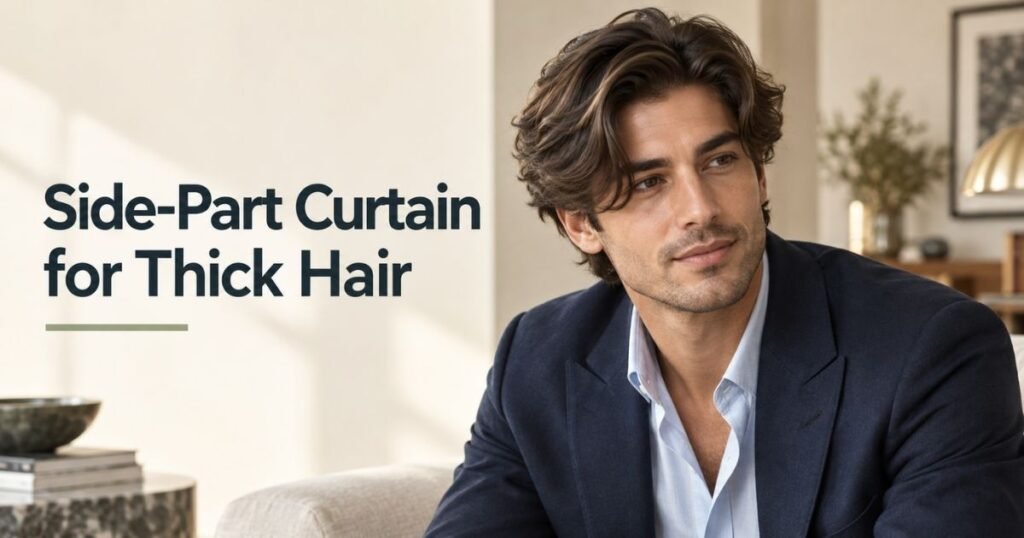
Styling Tip: Blow-dry the deeper side flat against the head first, then let the shorter side keep more natural volume.
Maintenance: Thick hair needs trims every 4-5 weeks to prevent the shape from becoming too heavy and hard to part. Maintenance and styling times are estimates and may vary by hair type.
Senior Low-Maintenance Curtain Crop
Overview: A shortened, softened curtain with less length up top, designed to work with finer or thinning hair common in older men.
Why It Works: Suits fine or thinning hair on oval and round faces, giving texture and movement without needing daily heat styling.
Styling Tip: A lightweight volumizing cream applied to damp hair adds body without weighing thinner strands down.
Maintenance: A trim every 5-6 weeks keeps the shape neat, and this style needs no daily restyling just a quick comb-through. Maintenance and styling times are estimates and may vary by hair type.
How To Choose The Right Hairstyle?
Choosing the right hairstyle starts with your hair type, face shape, and daily routine. Pick a style that complements your features, matches your hair texture, and fits the amount of time you’re willing to spend on styling and maintenance for the best long-term results.
By Hair Type:
- Thick hair: Undercut curtains, warrior cuts, and burst fade pairings manage bulk best.
- Thin hair: Short textured crops, shaggy wolf cuts, and low-maintenance curtain crops add the appearance of density.
- Curly hair: Curly curtain cuts and wolf-curtain blends work with natural texture instead of fighting it.
- Straight hair: Korean middle parts and classic curtains hold a clean part with minimal effort.
- Wavy hair: Surfer curtains and modern wolf cuts let natural movement do most of the styling work.
By Face Shape:
- Oval: Almost every style on this list works well Korean middle parts and classic curtains are safe, versatile picks.
- Round: Textured crops and burst-fade pairings add angles and height.
- Square: Warrior cuts and undercut curtains balance a strong jawline.
- Long/Oblong: Side-part curtains and curtain mullets add width instead of extra length.
Recommended Haircut Guides
- If you want to give your Curtain hairstyle a sharper, more modern finish, explore our guide to burst fade haircuts. Pairing a burst fade with a curtain style creates a clean contrast that adds definition while keeping the longer top as the focal point, making it a great choice for men and boys seeking a fresh, stylish loo
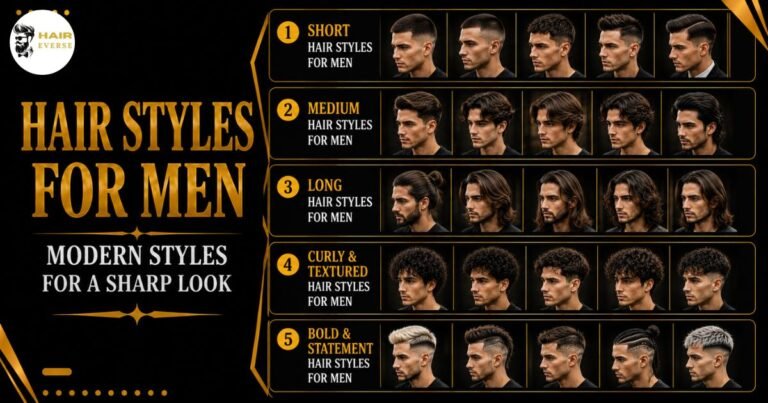
- You’re looking for even more inspiration beyond Curtain Warrior and Wolf Cut styles, explore our guide to hairstyles for men.
- A fan of the Curtain Warrior and Wolf Cut, you’ll also enjoy the effortless appeal of the surfer hairstyle for men. With its natural texture, longer layers, and laid-back finish, it’s a great choice for anyone looking to explore another modern, stylish haircut.
- If you’re exploring more Curtain Warrior and Wolf Cut ideas, be sure to check out our guide to men hair style trends.
- you like the bold look of the Curtain Warrior and Wolf Cut but prefer something easier to manage, explore our guide to low-maintenance men’s haircuts. You’ll find stylish options that require less daily styling while still delivering a clean, modern appearance.
- Fades continue to dominate men’s grooming trends, and there’s a style for every preference. Our guide to the mid fade haircut breaks down one of the most versatile options, while our deep dive into high fade haircuts for men covers the boldest version of the blend.
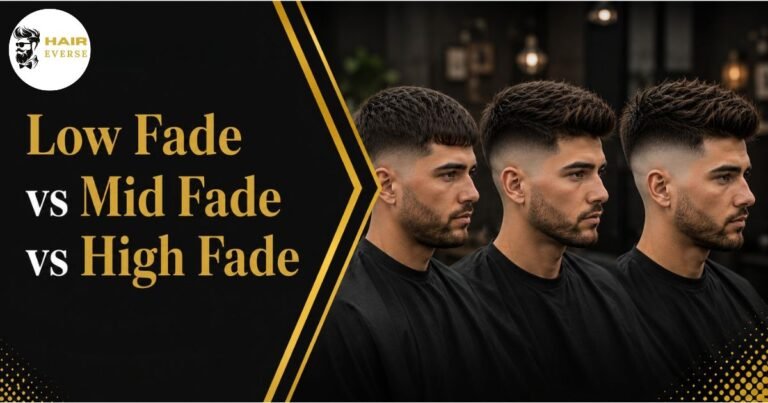
- If you want to compare your options side by side, our breakdown of low fade vs mid fade vs high fade and guide to the low taper fade will help you decide.
- For something with more attitude, check out the mohawk fade haircut, our guide to skin fade haircuts, or clear up the confusion with our comparison of taper vs fade haircut.
- We’ve also got dedicated guides on fade haircuts for black men, the sharp and structured high and tight haircut, and an age-specific take with our over-50 old man fade haircut guide.
- Not sure how to explain what you want? Our tips on how to ask your barber for a fade will help you communicate it clearly.
- If you’re after something more textured or trend-driven, there’s plenty to explore. Our guide to the curtain and wolf cut and full roundup of wolf cut hairstyles cover one of the biggest trends right now, alongside our breakdown of the textured crop hairstyle for men.
- For lower-maintenance options, see our guide to modern mullet and buzz haircuts, the retro-cool comma haircut, and a fresh take on mod haircuts for men.
- We’ve also covered the resurgence of the modern bowl cut, the ever-popular undercut haircut, and bold options like warrior haircuts for men and spiky hairstyles for men.
- If your hair has natural texture, check out our guide to curly hairstyles for men for styling tips tailored to curls.
How To Ask Your Barber For This Style?
- Bring one or two clear reference photos on your phone, not just a style name.
- Specify the exact length you want on top, in inches if possible.
- Mention how much time you realistically spend styling each morning.
- Ask directly about maintenance frequency before committing to the cut.
- Explain your workplace dress code or lifestyle needs upfront.
- Confirm the final shape and fade height before the clippers start.
Product Recommendations
Hair Cream
- Best For: Adding light hold and shine without stiffness, especially on curtain and warrior styles
- How To Use: Rub between palms and work through damp hair from mid-lengths to ends
Pomade
- Best For: Defining a sharp middle part on curtain and Korean-part styles
- How To Use: Warm a small amount between fingers, then comb through for a clean, defined line
Wax
- Best For: Piecey texture on wolf cuts and shaggy styles
- How To Use: Work a small amount through dry hair with fingertips, focusing on the ends
Clay
- Best For: Strong, matte hold on undercut curtains and burst-fade pairings
- How To Use: Apply to damp or dry hair and mold with fingers for texture without shine
Shampoo
- Best For: Removing product buildup without stripping natural oils, especially on longer curtain lengths
- How To Use: Focus on the scalp, letting suds rinse through the lengths rather than scrubbing ends directly
Conditioner
- Best For: Keeping longer curtain, warrior, and mullet lengths soft and manageable
- How To Use: Apply from mid-length to ends, leave for two minutes, then rinse thoroughly
Final Thoughts
Whether you land on a clean curtain fringe, a bold warrior cut, or a textured wolf cut, the right choice comes down to matching the style to your hair type, face shape, and how much time you actually want to spend in front of a mirror each morning.
If you’re still unsure, screenshot two or three styles from this guide, bring them to your next appointment, and talk through the options with your barber before committing. A five-minute conversation now saves a lot of regret later.
FAQs
What is a Curtain Haircut?
A curtain haircut is a hairstyle where the top hair is parted down the middle and falls to each side of the face, resembling curtains. It works on most hair types and pairs well with a fade or longer sides
Is a Wolf Cut the same as a Curtain Haircut?
No. A wolf cut uses short, choppy layers on top blended into longer, shaggier ends, while a curtain haircut focuses on a center part with hair falling evenly to each side.
What’s the Difference between a Warrior cut and a Wolf cut?
A warrior cut keeps more length and volume through the crown for a bolder shape, while a wolf cut relies on heavy layering and texture for a shaggier, less structured look.
How often should you Trim a Curtain or Wolf Cut?
Most curtain and wolf cut styles need a trim every 4-6 weeks to hold their shape, though faded versions may need a side touch-up every 2-3 weeks.
Can Boys get a Curtain Haircut?
Yes. Boys can wear a shortened, easier-to-manage version of the curtain haircut, usually with less length on top for lower daily maintenance.