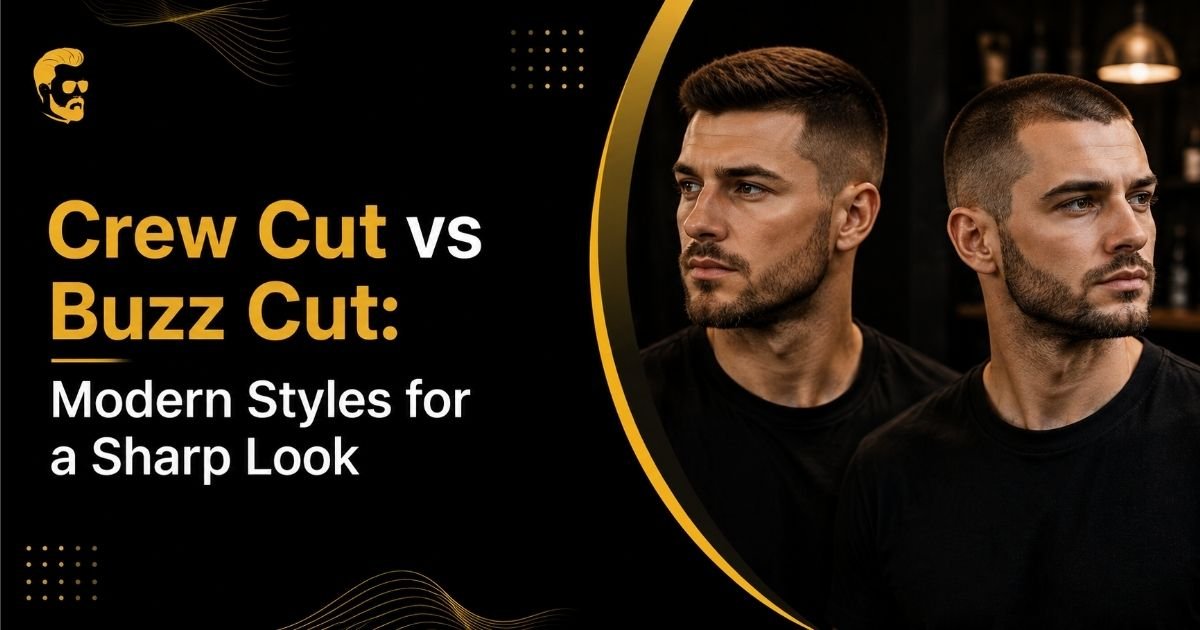
Crew Cut vs Buzz Cut: Modern Styles for a Sharp Look
Crew Cut vs Buzz Cut: Modern Styles for a Sharp Look helps you understand the key differences between these two classic short haircuts. Both styles are low-maintenance and clean-looking, but choosing the right one depends on your face shape, hair texture, and personal style.
While they may appear similar at first glance, each offers a distinct look and level of versatility. A crew cut meaning is a short, neat hairstyle with a slightly longer top and tapered sides.
This guide explains what sets them apart and helps you confidently choose the haircut that suits you best for a sharp, modern appearance.
Crew Cut vs Buzz Cut at a Glance
The Comparison Table of Hairstyle, Best Hair Type, Face Shape, Maintenance, Styling Time:
| Hairstyle | Best Hair Type | Face Shape | Maintenance | Styling Time |
| Buzz Cut | Straight, thick, thinning | Round, square, oval, diamond | Low | 0–2 minutes |
| Crew Cut | Straight, wavy, thick | Oval, square, diamond | Medium | 5–10 minutes |
What Is the Difference Between a Crew Cut and a Buzz Cut?
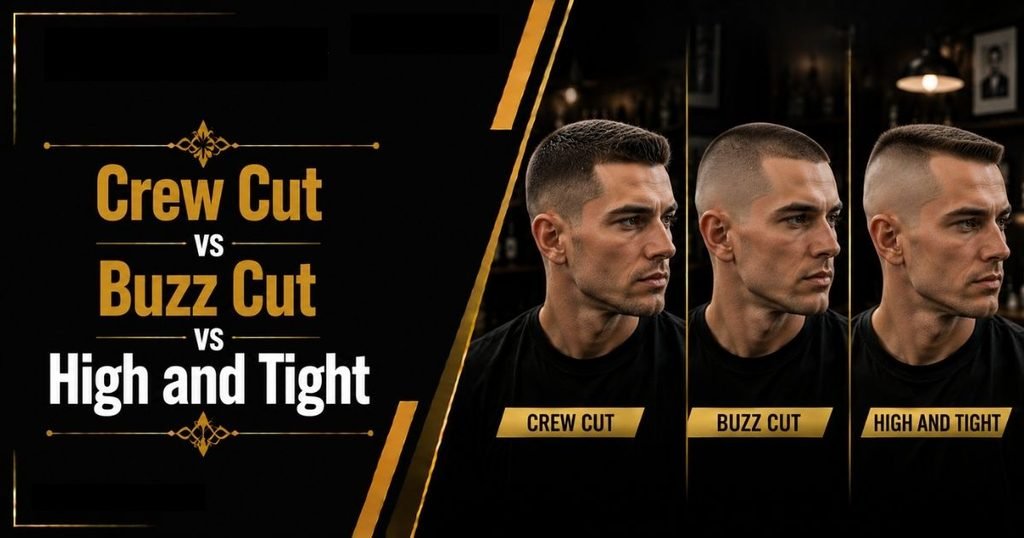
A buzz cut is cut to one uniform length all over the head using a single clipper guard, usually a grade 1 to 4. A crew cut is technically a type of buzz cut, but it’s cut in graduated lengths shortest at the back and sides, a little longer on top so there’s enough hair to comb, spike, or texture.
If you want a zero morning routine, the buzz cut wins. If you want a bit of shape without real styling effort, the crew cut sits right in between a buzz and a full pompadour.
35 Crew Cut and Buzz Cut Styles to Know
The 35 Crew Cut and Buzz Cut Styles include everything from ultra-short induction and burr cuts to classic crew cuts, Ivy League styles, textured finishes, fades, tapers, and modern fringe variations. Each haircut offers a unique balance of maintenance, styling time, and overall appearance, making it easy to find an option that matches your lifestyle.
From military-inspired buzz cuts to versatile crew cuts with fades, beards, or side parts, these styles range from clean and minimal to polished and contemporary. With the right trim schedule and simple styling tips, you can keep your haircut looking sharp, fresh, and easy to manage every day.
Induction Cut (Zero Buzz)
Overview: The induction cut is shaved to a grade 0 or 0.5, taking hair down almost to the scalp. It’s the shortest version of a buzz cut and the closest thing to a shaved head without a razor.
Why It Works: Best for thick or coarse hair types and suits oval, diamond, and square face shapes because it shows off bone structure without softening it.
Styling Tip: None needed a light scalp moisturizer after washing keeps the skin from drying out under the short hair.
Maintenance: Trim every 2 weeks to keep the length uniform, since even a few days of growth becomes noticeable at this length. Maintenance and styling times are estimates and may vary by hair type.
Regular Buzz Cut (Grade 2)
Overview: The most common buzz cut length, using a grade 2 guard for roughly a quarter-inch of hair all over short enough to be fuss-free, long enough to show a bit of hair texture.
Why It Works: Works with nearly every face shape and hair texture, including wavy and straight hair, making it the safest first buzz cut for beginners.
Styling Tip: A pea-sized amount of matte clay worked in with fingertips adds subtle texture if you want more than a bare buzz.
Maintenance: Rebuzz every 2–3 weeks at home with the same guard, or visit your barber on the same schedule. Maintenance and styling times are estimates and may vary by hair type.
Butch Cut
Overview: A grade 3 to 4 buzz cut, leaving slightly more length than a regular buzz so the hair stands up a little rather than lying completely flat.
Why It Works: Suits thin or fine hair especially well, since the extra length adds the illusion of density lacking in a shorter buzz.
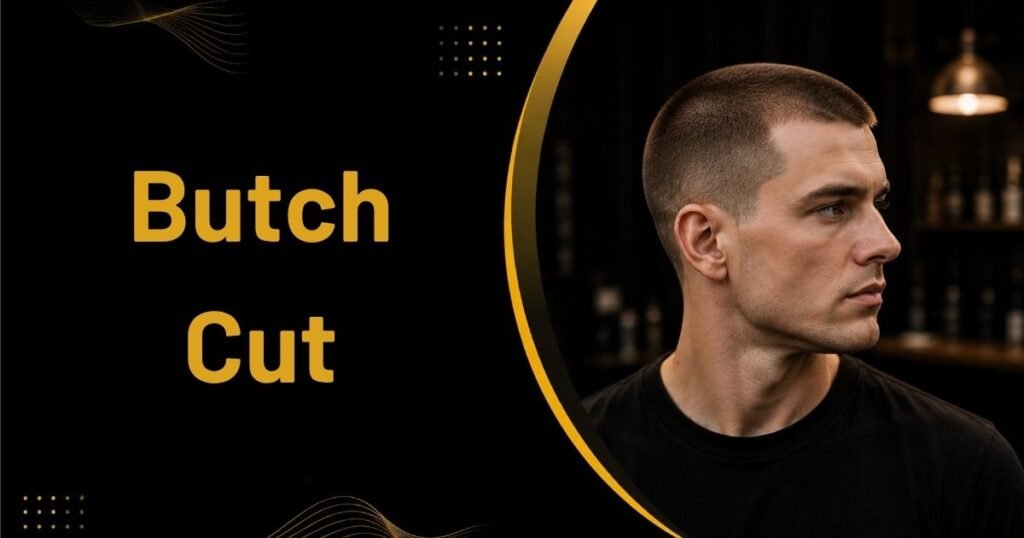
Styling Tip: A light sea salt spray before the hair dries after a shower helps it hold a slight upward texture all day.
Maintenance: Needs a trim every 3 weeks to prevent the top from getting long enough to flop over. Maintenance and styling times are estimates and may vary by hair type.
Burr Cut
Overview: Similar to an induction cut but typically done with a grade 1, the burr cut is a classic barbershop term for a tight, even, no-fuss buzz.
Why It Works: A strong option for men with thinning crowns, since uniform short length disguises the contrast between thick and thin patches better than longer styles.
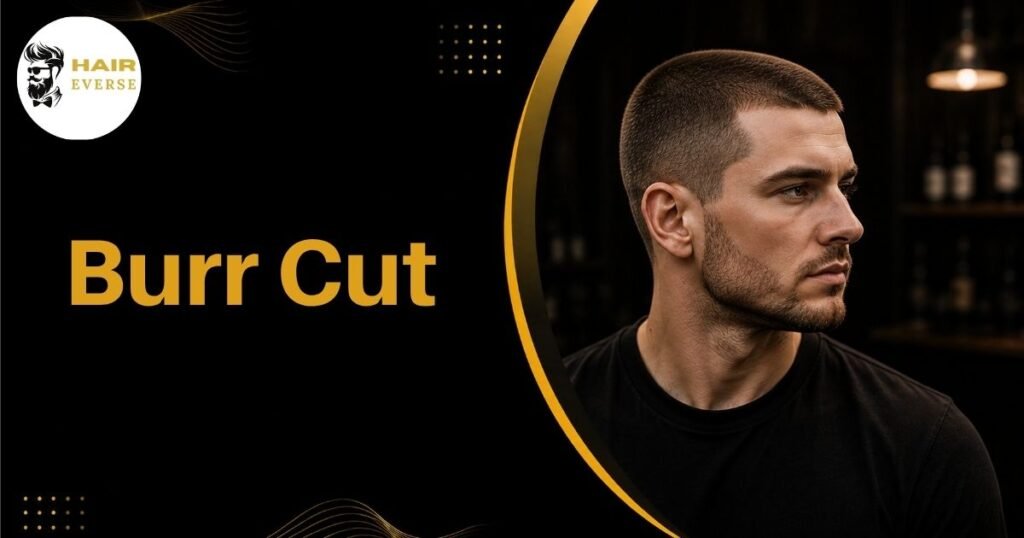
Styling Tip: None required, though a sunscreen spray for the scalp is worth using outdoors given how exposed the skin is.
Maintenance: Rebuzz every 2 weeks, since regrowth becomes visibly patchy at this length faster than at a grade 2 or higher. Maintenance and styling times are estimates and may vary by hair type.
Ivy League Buzz
Overview: A buzz cut on the sides paired with about an inch of length on top, giving enough hair to comb into a subtle side part or forward sweep.
Why It Works: Works particularly well for square and oval faces and gives straight or wavy hair types something to actually style.
Styling Tip: Use a fingertip amount of hair cream, combed through damp hair, for a natural, non-shiny finish.
Maintenance: Rebuzz the sides every 2 weeks while trimming the top every 4 weeks to keep the length ratio intact. Maintenance and styling times are estimates and may vary by hair type.
Crew Cut vs Buzz Cut vs High and Tight
Overview: A crew cut has more length on top, while a buzz cut fade is short all over. A military-inspired cut where the sides and back are buzzed down to skin, with a short buzzed patch left on top.
Why It Works: Flattering for round and square faces because the sharp contrast between skin and top hair elongates the head visually.
Styling Tip: A dab of matte pomade on top keeps the short patch looking deliberate rather than overgrown.
Maintenance: Needs a barber visit every 2 weeks to maintain the sharp contrast between the skin fade and the top. Maintenance and styling times are estimates and may vary by hair type.
Jarhead Buzz Cut
Overview: A more extreme version of the high and tight, using a triple-zero clipper all the way up to the temple before leaving a short patch on top.
Why It Works: Suits thick, coarse hair types best and pairs well with square or diamond face shapes that can handle the sharp contrast.
Styling Tip: Keep the top textured with a small amount of matte clay rather than anything glossy, which looks out of place against the shaved sides.
Maintenance: Requires a barber every 10–14 days since the triple-zero fade grows out visibly fast. Maintenance and styling times are estimates and may vary by hair type.
Fade Buzz Cut
Overview: A uniform buzz length on top that fades gradually into the sides and back rather than a flat clipper-guard line, giving a softer transition.
Why It Works: A great option for any face shape since the fade itself can be adjusted higher or lower to balance jaw width or forehead size.
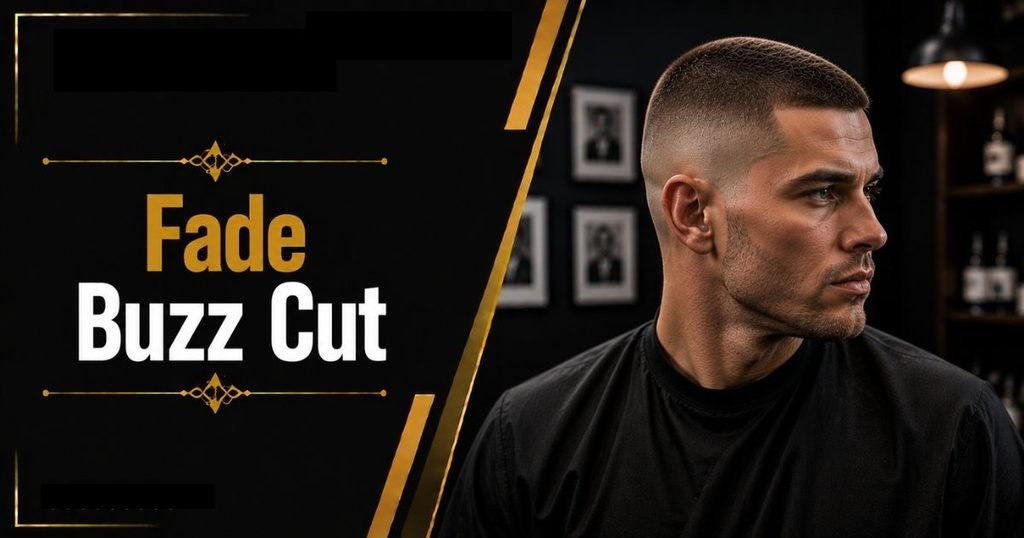
Styling Tip: No product needed on top, though keeping the fade line crisp is what makes this style read as intentional.
Maintenance: Fades grow out fastest around the hairline, so plan for a touch-up every 2 weeks. Maintenance and styling times are estimates and may vary by hair type.
Textured Buzz Cut
Overview: A grade 3–4 buzz cut left slightly uneven or point-cut on top by the barber to create texture rather than a completely flat, uniform surface.
Why It Works: Especially good for wavy or curly hair types, since the natural texture reads as intentional rather than needing to be tamed.
Styling Tip: A small amount of curl-defining gel scrunched through damp hair enhances the natural texture instead of flattening it.
Maintenance: Trim every 3 weeks to keep the textured layers from growing out into an uneven mess. Maintenance and styling times are estimates and may vary by hair type.
Buzz Cut with Design (Line Up)
Overview: A standard buzz cut finished with a razor-sharp line up along the hairline, and optionally a shaved parting line or geometric design on the side.
Why It Works: Suits any hair type since the design is added on top of the buzz, though it shows up most clearly against thick, dark hair.
Styling Tip: None on top, but keep the line up fresh it’s the single detail that makes this style look finished.
Maintenance: The line up fades within about a week, so plan a touch-up every 7–10 days if you want it crisp. Maintenance and styling times are estimates and may vary by hair type.
Bald Fade Buzz
Overview: A buzz cut on top that fades all the way down to bare skin at the bottom of the sides and back, rather than stopping at a shorter guard length.
Why It Works: Works well on square and oval faces and is a strong option for anyone with a crew cut vs buzz cut for receding hairline, since the fade draws the eye downward rather than to the crown.
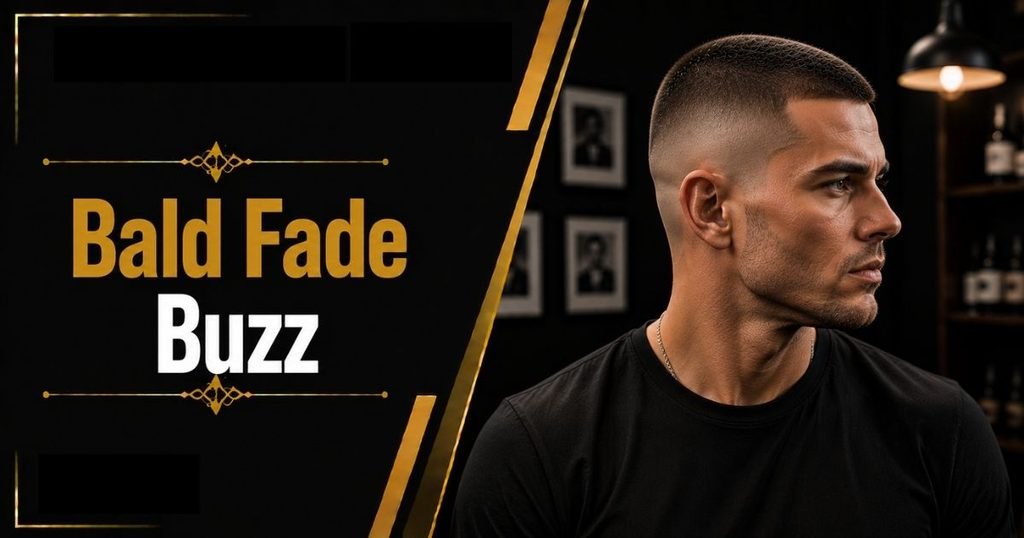
Styling Tip: A touch of matte clay on top keeps focus on the texture rather than shine, which suits the sharp contrast below.
Maintenance: Needs the most frequent upkeep on this list every 1–2 weeks since bald fades show regrowth almost immediately. Maintenance and styling times are estimates and may vary by hair type.
Taper Buzz Cut
Overview: A softer alternative to a fade, where the buzzed length gradually shortens toward the hairline and neck without dropping all the way to skin.
Why It Works: A safe, versatile choice across hair types and face shapes since the transition is subtle rather than sharp.
Styling Tip: No product needed this is one of the lowest-effort styles on the list.
Maintenance: Because there’s no hard line to maintain, you can stretch trims to every 3–4 weeks. Maintenance and styling times are estimates and may vary by hair type.
Caesar Buzz Cut
Overview: A short buzz cut on the sides with a horizontal fringe left on top, brushed forward rather than styled up or back.
Why It Works: Particularly flattering on oval and long face shapes, since the forward fringe visually shortens the forehead.
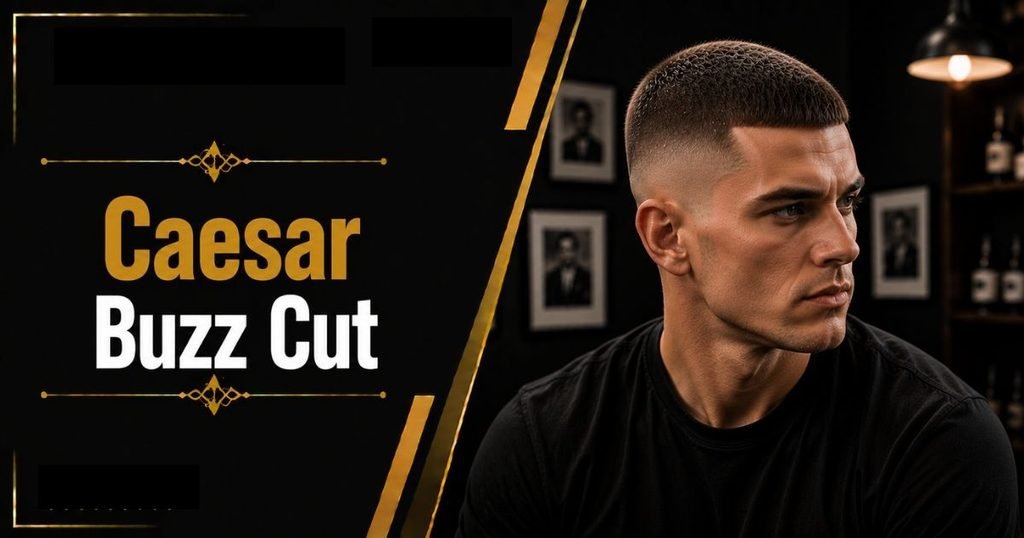
Styling Tip: Work a small amount of hair cream into the fringe and press it forward with your palm rather than a comb for a natural finish.
Maintenance: The fringe grows out fastest, so plan a trim every 3 weeks to keep the line crisp. Maintenance and styling times are estimates and may vary by hair type.
Buzz Cut with Beard
Overview: Any buzz length on top paired deliberately with beard growth, using the contrast between short hair and fuller facial hair as the main style statement.
Why It Works: Balances round or square faces particularly well, since a fuller beard adds length to the jaw that a bare buzz cut alone would not.
Styling Tip: A beard oil keeps the facial hair from looking dry next to the clean lines of the buzzed top.
Maintenance: Rebuzz the top every 2–3 weeks and trim beard edges weekly to keep both looking intentional together. Maintenance and styling times are estimates and may vary by hair type.
Flat Top Buzz
Overview: Hair on top is cut and styled to stand perfectly upright and level, creating a flat, squared-off silhouette rather than lying naturally.
Why It Works: Best suited to thick, coarse, straight hair types that can hold an upright shape, and works well on oval or long face shapes.
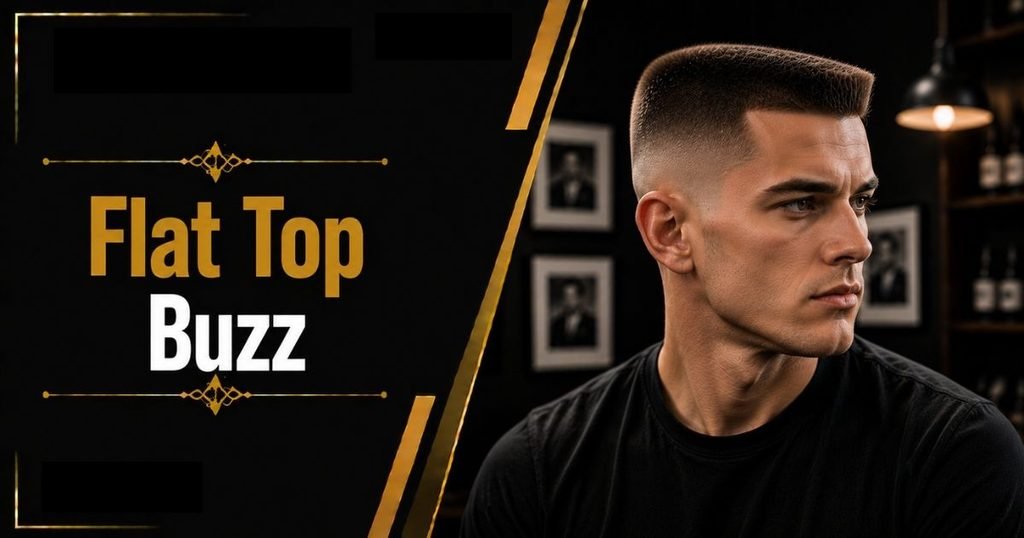
Styling Tip: A strong-hold pomade combined with a blow dryer and flat brush is what actually creates the level top this isn’t a wash-and-go style.
Maintenance: Needs trimming every 2 weeks to maintain the sharp, level edge that defines the style. Maintenance and styling times are estimates and may vary by hair type.
Curly Buzz Cut
Overview: A buzz cut done at a grade 2–3 specifically on curly or coily hair, where the curl pattern shows as texture rather than as loose curls.
Why It Works: Ideal for curly and coily hair types who want low maintenance without chemically altering their natural texture, and suits most face shapes.
Styling Tip: None needed daily, though a leave-in conditioner spray after washing keeps short curls from drying out.
Maintenance: Curly hair tends to grow out looking fuller rather than shaggy, so trims every 3–4 weeks are enough. Maintenance and styling times are estimates and may vary by hair type.
Buzz Cut with Hard Part
Overview: A standard buzz cut finished with a thin shaved line marking a side part, giving the illusion of a deliberate part without enough length to actually part the hair.
Why It Works: Works on any hair type, though it shows up most clearly on straight or wavy hair with some natural sheen.
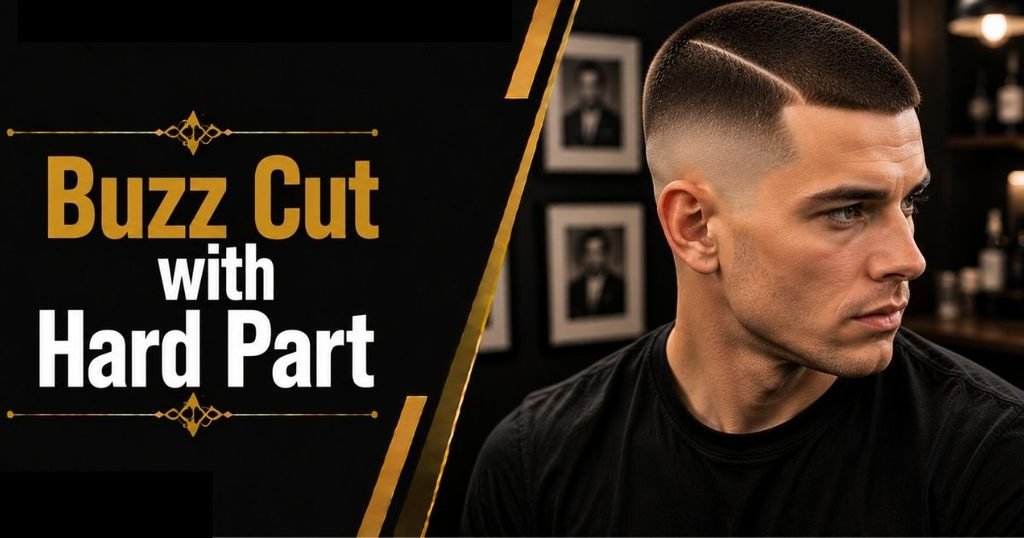
Styling Tip: None needed on top; keeping the part line clean is the entire style.
Maintenance: The part line needs refreshing every 1–2 weeks as it fades faster than the buzz itself. Maintenance and styling times are estimates and may vary by hair type.
Skin Fade Buzz
Overview: A buzzed top combined with a fade that transitions all the way to bare skin high on the sides, creating strong visual contrast.
Why It Works: Flattering on square and diamond face shapes, and a strong pick for anyone who wants their buzz cut to look more tailored than a plain grade-2 all-over.
Styling Tip: A light matte finish on top keeps the focus on the sharp fade rather than adding shine that competes with it.
Maintenance: Book a touch-up every 2 weeks, since skin fades lose their crispness faster than softer tapers. Maintenance and styling times are estimates and may vary by hair type.
Low Buzz Cut
Overview: A grade 3–4 buzz with no fade or design, kept deliberately understated for workplaces with conservative grooming expectations.
Why It Works: Works across nearly every hair type and face shape, making it the safest, most universally wearable option on this list.
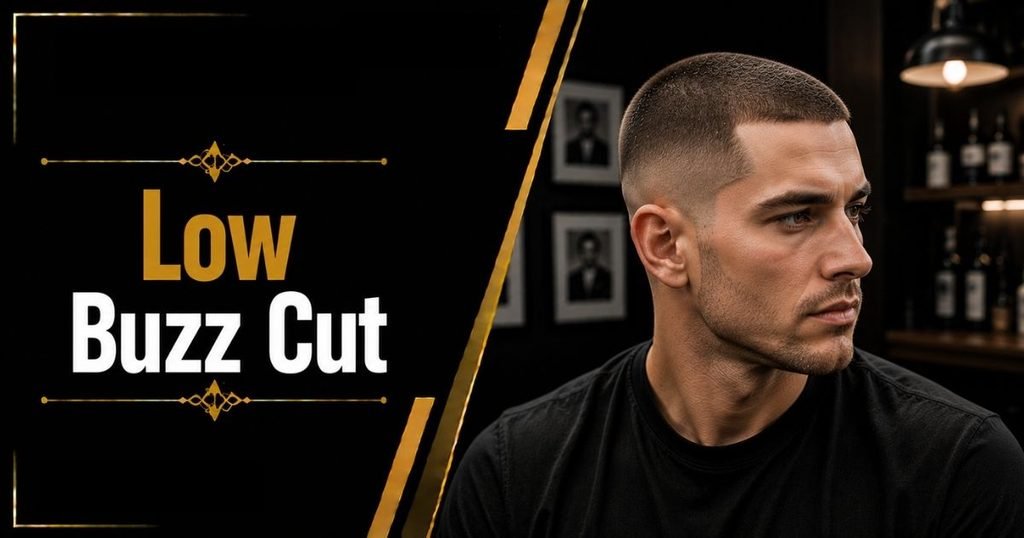
Styling Tip: None required that’s the entire appeal of this style.
Maintenance: Trim every 3–4 weeks; this cut is forgiving of a few extra days of growth. Maintenance and styling times are estimates and may vary by hair type.
Grade 4 Buzz Cut
Overview: The longest common buzz length at roughly half an inch, offering the most hair of any true buzz cut before it starts resembling a crew cut.
Why It Works: A strong bridge option for men transitioning away from longer hair, and suits thin hair types by adding visual density.
Styling Tip: A light hair cream can be worked through for a slight matte texture if desired, though it’s optional at this length.
Maintenance: Can stretch to a 4-week trim schedule since the longer length hides regrowth better than shorter buzz styles. Maintenance and styling times are estimates and may vary by hair type.
Classic Crew Cut
Overview: Short, buzzed sides paired with about an inch to an inch and a half on top, graduating in length toward the front for a slight forward lift.
Why It Works: The most universally flattering crew cut variation, suiting oval, square, and diamond face shapes and most straight or wavy hair types.
Styling Tip: Work a dime-sized amount of matte pomade through damp hair, combing forward and slightly up for texture.
Maintenance: Trim every 3–4 weeks to keep the top length in proportion with the sides. Maintenance and styling times are estimates and may vary by hair type.
Ivy League Crew Cut
Overview: A longer crew cut variation with 1.5–2 inches on top, long enough to hold a defined side part rather than just a forward brush.
Why It Works: Excellent for oval and long face shapes, and gives straight or wavy hair enough length to hold a defined part all day.
Styling Tip: Use a comb with hair cream to create a crisp part line, then press the top down lightly rather than lifting it.
Maintenance: Needs a trim every 3 weeks since the longer top grows out of its shape faster than a classic crew. Maintenance and styling times are estimates and may vary by hair type.
Long Crew Cut
Overview: Up to 2–2.5 inches on top while keeping the sides short, giving enough length for a small quiff or brushed-back look.
Why It Works: Suits thick, straight, or wavy hair best, since fine hair can struggle to hold shape at this length without heavier products.
Styling Tip: A blow dryer with a round brush, followed by a strong-hold cream, gives the top lift without flattening by midday.
Maintenance: Trim every 2–3 weeks to prevent the top from overwhelming the short sides. Maintenance and styling times are estimates and may vary by hair type.
Short Crew Cut
Overview: A crew cut kept to around half an inch on top closer to a long buzz cut than a classic crew, but still graduated rather than uniform.
Why It Works: A great middle-ground pick for anyone who wants a little more texture than a buzz cut without the full maintenance of a longer crew.
Styling Tip: A small amount of matte clay worked through with fingers is enough no comb or dryer required.
Maintenance: Trim every 3 weeks, similar to a grade 3–4 buzz cut schedule. Maintenance and styling times are estimates and may vary by hair type.
Tapered Crew Cut
Overview: A classic crew cut on top paired with a soft taper on the sides instead of a hard fade line, blending gradually into the neckline.
Why It Works: A safe, professional-friendly option across most face shapes, since the soft taper reads as neat rather than edgy.
Styling Tip: Matte pomade combed forward keeps this look understated and workplace-appropriate.
Maintenance: Trim every 3–4 weeks; the soft taper hides regrowth longer than a hard fade would. Maintenance and styling times are estimates and may vary by hair type.
Crew Cut with Fade
Overview: A classic or Ivy League crew cut length on top combined with a sharp fade down to skin on the sides for stronger contrast.
Why It Works: Well suited to square and diamond face shapes, where the sharp fade balances the added height of the crew cut on top.
Styling Tip: Comb matte pomade forward and slightly up to keep the top from overpowering the sharp fade below it.
Maintenance: Fade upkeep every 2 weeks; top trims every 3–4 weeks on a slightly different schedule. Maintenance and styling times are estimates and may vary by hair type.
French Crew Cut
Overview: A crew cut with a blunt, textured fringe left longer at the front, brushed forward rather than swept up or back.
Why It Works: Particularly flattering on long and oval faces, since the forward fringe visually shortens the forehead the same way a Caesar cut does at buzz length.
Styling Tip: Work texturizing clay through damp hair, pressing the fringe forward and down rather than lifting it.
Maintenance: Trim every 3 weeks to keep the fringe from growing past the brow line. Maintenance and styling times are estimates and may vary by hair type.
Textured Fringe Crew Cut
Overview: A classic crew cut cut with point-cutting or texturizing shears on top, breaking up the uniform edge for a more natural, tousled finish.
Why It Works: Ideal for wavy and curly hair types, since the added texture works with the natural pattern instead of fighting it.
Styling Tip: A curl-defining cream scrunched in while damp brings out the texture without adding weight.
Maintenance: Trim every 4 weeks; textured layers grow out more gracefully than a blunt crew cut edge. Maintenance and styling times are estimates and may vary by hair type.
Crew Cut with Side Part
Overview: An Ivy League-length crew cut styled with a defined, combed side part rather than brushed straight forward.
Why It Works: A polished option for oval and square faces, and a common choice for workplace settings that call for a more formal look.
Styling Tip: Apply hair cream to damp hair, comb in the part first, then smooth the rest of the top into place.
Maintenance: Trim every 3 weeks to keep the part line from growing out and losing definition. Maintenance and styling times are estimates and may vary by hair type.
Curly Crew Cut
Overview: A crew cut length on top left to curl naturally rather than combed flat, working with the curl pattern instead of against it.
Why It Works: Built specifically for curly and coily hair types, and flatters most face shapes since curl volume adds shape on top.
Styling Tip: A lightweight curl cream applied to damp hair, then air-dried, keeps curls defined without stiffness.
Maintenance: Trim every 4 weeks; curls tend to hide growth better than straight hair at the same length. Maintenance and styling times are estimates and may vary by hair type.
Crew Cut with Beard
Overview: A classic or tapered crew cut paired deliberately with beard growth, balancing structured hair on top with fuller facial hair.
Why It Works: Especially flattering for long or oval faces, since the beard adds width at the jaw that offsets the added height on top.
Styling Tip: Keep the top’s pomade matte so it doesn’t clash with a glossier beard oil finish.
Maintenance: Trim the crew cut every 3–4 weeks and the beard weekly to keep both proportions in sync. Maintenance and styling times are estimates and may vary by hair type.
Crew Cut Undercut
Overview: A crew length top paired with a disconnected undercut on the sides, creating a hard visual break rather than a gradual fade.
Why It Works: Best for square and diamond face shapes, where the sharp disconnection reads as intentional rather than harsh.
Styling Tip: Comb pomade through the top with volume, keeping the sides untouched to preserve the disconnected effect.
Maintenance: The sides need clipping every 2 weeks to keep the disconnect crisp, separate from top trims every 3–4 weeks. Maintenance and styling times are estimates and may vary by hair type.
Modern Crew Cut with Fringe
Overview: A contemporary take on the crew cut with a slightly longer, textured fringe left at the front instead of a uniform graduated top.
Why It Works: Flatters long and oval faces and works well with straight or wavy hair types that hold light texture easily.
Styling Tip: A small amount of matte clay pressed into the fringe with fingertips (not a comb) keeps the texture looking undone but intentional.
Maintenance: Trim every 3 weeks to keep the fringe from growing into the eyes. Maintenance and styling times are estimates and may vary by hair type.
High Crew Cut Fade
Overview: A crew cut top combined with a fade that starts high on the sides, close to the crew length, for maximum contrast between top and sides. A high fade has short sides and back that blend into longer hair on top.
Why It Works: A bold option for square and diamond face shapes confident enough for the sharp contrast this style creates.
Styling Tip: Style the top with a stronger-hold pomade so it holds shape against the visual weight of the high fade.
Maintenance: Book fade touch-ups every 2 weeks since high fades grow out and lose definition faster than lower ones. Maintenance and styling times are estimates and may vary by hair type.
Crew Cut for Boys and Younger Guys
Overview: A simplified classic crew cut, usually kept slightly shorter on top than the adult version, chosen for its low upkeep and easy growth-out.
Why It Works: Works across nearly all hair types and face shapes at this age, and holds up well to active lifestyles without needing daily styling.
Styling Tip: Product is optional; if used, a small amount of alcohol-free hair cream is gentler than a strong-hold pomade.
Maintenance: Trim every 4 weeks, or slightly sooner for faster-growing hair. Maintenance and styling times are estimates and may vary by hair type.
How to Choose the Right Hairstyle?
By Hair Type:
- Thick hair: Holds shape well in both crew cuts and buzz cuts the flat top and Ivy League crew are worth considering since fine hair often can’t support them.
- Thin hair: A butch cut or grade-3 buzz adds the illusion of density better than a longer crew cut, which can look sparse on top.
- Curly hair: A curly buzz cut or curly crew cut works with the natural pattern instead of requiring daily taming.
- Straight hair: The most flexible hair type for this comparison nearly every style on this list works, so the decision comes down to maintenance preference.
- Wavy hair: A textured buzz or textured crew cut lets the natural wave show as intentional texture.
By Face Shape:
- Oval: The most forgiving face shape classic crew cut, Ivy League buzz, and Caesar cut all work well.
- Round: A high and tight or bald fade buzz adds vertical contrast that visually elongates the face.
- Square: A skin fade buzz or crew cut with fade complements strong jaw structure rather than competing with it.
- Long: A Caesar buzz cut or French crew cut with a forward fringe helps balance extra face length.
How to Ask Your Barber for This Style?
Bring one or two reference photos rather than describing the cut verbally. State the exact clipper guard number if you know it (e.g., “grade 2 on the sides”). Mention how much time you realistically spend styling in the morning. Ask directly about the trim schedule needed to keep the style looking sharp. Explain any workplace grooming rules that might affect fade height or top length. Confirm the finished length on top before the barber moves to the sides, since it’s easier to take more off than to add hair back.
Product Recommendations
Hair Cream
- Best For: Crew cuts and longer buzz styles needing a natural, low-shine finish.
- How To Use: Apply a fingertip amount to damp hair and comb or finger-style into place.
Pomade
- Best For: Ivy League crew cuts, side parts, and any style needing hold with shine.
- How To Use: Warm a small amount between palms before combing through damp or dry hair.
Wax
- Best For: Short textured styles like a French crop or textured crew cut.
- How To Use: Rub between fingertips until pliable, then work through dry hair for texture.
Matte Clay
- Best For: Buzz cuts, high and tight, and any style wanting texture without shine.
- How To Use: Work a small amount through dry or towel-dried hair using fingertips only.
Shampoo
- Best For: Any short haircut, ideally a gentle formula if scalp skin is exposed at grades 0–2.
- How To Use: Massage into a wet scalp for 30 seconds, focusing on the scalp rather than hair length.
Conditioner
- Best For: Longer crew cuts and curly styles that need extra moisture.
- How To Use: Apply after shampooing, focus on the top length, and rinse fully to avoid product buildup.
Pairing Your Cut With the Right Fade or Variation
- Neither the crew cut nor the buzz cut has to stay one-dimensional small tweaks change the whole vibe. If you liked the crew cut but want a bit more length up top to play with texture, the Ivy League haircut is the natural next step.
- A low taper fade works well with either style. And if you’re still deciding between the two and want to see the full spectrum of buzz cut variations before committing.
- A buzz cut styles guide breaks down 35 options by length and face shape.
- The comb over haircut is a timeless style that blends a defined side part with a neatly styled top. Modern versions can include fades, tapers, textured finishes, or longer lengths for added personality.
- The best military haircuts for men can be selected according to hair type, face shape, and preferred maintenance level. Some styles keep the hair extremely short, while others leave extra length on top.
Final Thoughts
Whichever way you land on the crew cut vs buzz cut question, the right choice comes down to how much time you actually want to spend on your hair each morning and how your face shape responds to sharper contrast versus softer length. Both cuts are forgiving enough to experiment with; a buzz cut grows out into crew-cut territory in a matter of weeks if you change your mind, so there’s very little risk in trying either one.
If you’re still unsure, bring this guide’s comparison table to your next barber appointment and ask which of the 35 styles above best matches your hair type and lifestyle. A good barber will be able to fine-tune the exact grade and fade height on the spot.
FAQs
What is the difference Between a Crew Cut and a Buzz Cut?
A buzz cut is one uniform clipper length all over the head. A crew cut is graduated, cut shortest at the back and sides with more length left on top, giving it more styling versatility than a plain buzz.
Which is more Attractive, a Crew Cut or a Buzz Cut?
Neither is objectively more attractive; it depends on face shape and hair type. Crew cuts suit oval and square faces with style able hair, while buzz cuts flatter nearly any face shape and work well for thinning hair.
How often do you Need to Trim a Buzz Cut?
Most buzz cuts need a trim every 2–3 weeks to stay uniform. Shorter styles like an induction cut or bald fade may need touch-ups closer to every 1–2 weeks.
Can you get a Crew cut with Curly Hair?
Yes. A curly crew cut works with the natural curl pattern rather than combing it flat, and typically needs trims every 4 weeks since curls hide regrowth well.
Is a Crew cut Lower Maintenance than Regular Haircuts?
Yes, compared to longer men’s hairstyles. A crew cut needs a trim every 3–4 weeks and minimal daily styling, though it still requires more upkeep than a true buzz cut.
Crew Cut vs Buzz Cut: Which is Better?
A buzz cut is better if you want zero maintenance and an ultra-short, even length all over. A crew cut is better if you want short sides with slightly longer hair on top for styling.
Who Looks Good with a Buzz Cut?
People with strong jawlines and oval or square face shapes look best with a buzz cut. This short style also suits anyone with well-proportioned head shapes.
Is a Crew Cut a Buzz Cut?
A crew cut is a close relative, but it is not a standard buzz cut. A traditional buzz cut keeps the hair the same short length all over the head. A crew cut leaves the hair on top slightly longer than the short sides.