The Complete Hair Care Guide for Men: Every Hair Type
A hair care guide for men starts with understanding your hair type, scalp condition, and daily routine. The right combination of washing, conditioning, and styling habits helps prevent dryness, oil buildup, and breakage while keeping your hair healthy.
This guide covers practical routines tailored to different hair types, scalp needs, and lifestyles.
Hair Care Guide for Men Comparison Table
Compare the most effective hair care guide for men routines based on hair type, scalp condition, maintenance level, and time commitment. This table helps you quickly find a routine that matches your daily needs and grooming goals.
| Routine | Best Hair Type | Best For | Maintenance | Time Commitment |
| Straight Hair Routine | Straight | Managing oil at the roots | Medium | 5-10 min |
| Wavy Hair Routine | Wavy | Reducing frizz, enhancing texture | Medium | 5-10 min |
| Curly Hair Routine | Curly | Definition and moisture | High | 10-15 min |
| Coily/Kinky Hair Routine | Coily, kinky | Deep hydration | High | 10-20 min |
| Thick Hair Routine | Thick | Managing volume and weight | Medium | 5-10 min |
| Thinning Hair Routine | Thinning, fine | Scalp support and volume | Medium | 5-10 min |
| Oily Scalp Routine | All types, oily scalp | Controlling excess sebum | Medium | 5 min |
| Dry Scalp Routine | All types, dry scalp | Restoring moisture, reducing flakes | Medium | 5-10 min |
| Normal Scalp Routine | All types, balanced scalp | Maintaining balance | Low | 3-5 min |
| Short Hair Routine | Short length | Low-effort daily upkeep | Low | 3-5 min |
| Medium-Length Routine | Medium length | Styling flexibility | Medium | 5-10 min |
| Long Hair Routine | Long length | Preventing breakage and split ends | High | 10-15 min |
| Early Thinning Routine | Thinning, receding | Scalp stimulation | Medium | 5-10 min |
| Grey Hair Routine | Grey, silver | Reducing yellow tones, adding shine | Medium | 5-10 min |
| Dandruff-Prone Routine | All types, flaky scalp | Reducing flakes and itch | Medium | 5-10 min |
| Post-Workout Routine | All types, active lifestyle | Managing sweat buildup | Low | 3-5 min |
| Swimmer’s Routine | All types, chlorine exposure | Protecting hair from chlorine | Medium | 5-10 min |
| Sun/Outdoor Routine | All types, high sun exposure | Preventing UV damage | Low | 3-5 min |
| Morning Routine | All types | Quick daily refresh and style | Low | 5-10 min |
| Nightly Routine | All types | Overnight protection | Low | 2-5 min |
| Wash Day Routine | All types | Full cleansing and conditioning | Medium | 10-15 min |
| Rest-Day Routine | All types | Maintaining style without washing | Low | 2-5 min |
| Weekly Deep-Conditioning Routine | Dry, damaged | Intensive moisture repair | Low | 15-20 min |
| Weekly Scalp Exfoliation Routine | Oily, buildup-prone | Removing dead skin and residue | Low | 5-10 min |
| Heat-Styling Protection Routine | All types using heat tools | Preventing thermal damage | Low | 2-3 min |
| Shampoo Technique | All types | Effective, gentle cleansing | Daily/every other day | 2-3 min |
| Conditioner Technique | All types | Restoring moisture and softness | Same as shampoo | 2-3 min |
| Leave-In Conditioner Technique | Dry, curly, frizzy | Extended hydration | 2-4x weekly | 1-2 min |
| Styling Product Technique | All types | Even distribution, better hold | Daily | 3-5 min |
| Scalp Serum Technique | Thinning, dry scalp | Targeted scalp support | Daily | 2-3 min |
| Towel & Air-Drying Technique | All types | Reducing breakage and frizz | Daily | 2-5 min |
| Hat & Helmet Hygiene Routine | All types | Preventing buildup and breakage | Weekly | 5 min |
| Pillowcase & Bedding Hygiene | All types | Reducing bacteria and friction | Weekly | 5 min |
| Barber Visit Routine | All types | Removing split ends, maintaining shape | Every 3-6 weeks | 30-45 min |
| Diet & Hydration Habits | All types | Supporting hair health internally | Daily | N/A |
Hair Type Routines
Every hair type has different care requirements, from controlling oil in straight hair to maintaining moisture in curly and coily textures. These routines are tailored to help your natural hair look and feel its best. The best hair care tips for men help keep hair healthy, clean, strong, and well-groomed.
Straight Hair Routine
Overview: Straight hair lets sebum travel easily down each strand, which means oil reaches the ends faster than with curly or coily hair, often leaving roots greasy while ends stay comparatively dry. Straight hair care tips for men help keep hair smooth, healthy, and easy to style
Why It Works: This balance calls for a routine that cleanses the scalp without over-stripping the length, ideal for men who want low-maintenance daily upkeep.
Routine Tip: Focus shampoo lather at the scalp only, letting the rinse-down clean the strand, then apply a lightweight conditioner from mid-length to ends.
Maintenance: Wash every other day to avoid stripping natural oils that keep straight hair looking healthy. Maintenance and routine times are estimates and may vary by hair type.
Wavy Hair Routine
Overview: Wavy hair sits between straight and curly, prone to frizz but not tight enough to hold defined curl patterns without help.
Why It Works: A routine that enhances natural texture without weighing it down suits wavy hair best, since heavy products flatten waves instead of defining them.
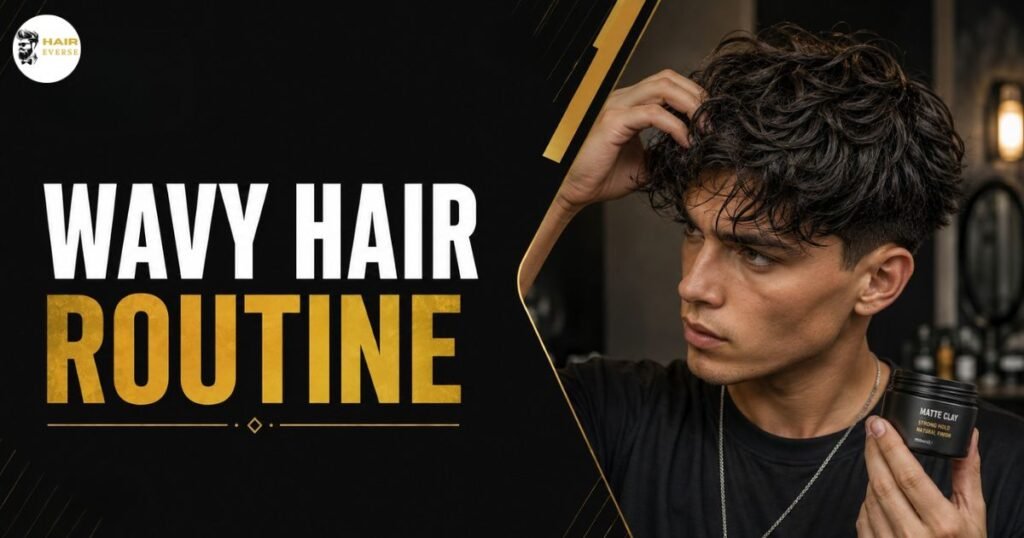
Routine Tip: Apply sea salt spray to damp hair before air-drying or diffusing to enhance natural wave pattern without added weight.
Maintenance: Detangle gently before washing to avoid disrupting the wave pattern once dry. Maintenance and routine times are estimates and may vary by hair type.
Curly Hair Routine
Overview: Curly hair’s natural bends make it harder for scalp oils to travel down the strand, which is why curly hair often runs drier than other types even without over-washing. Curly hair care tips for men help maintain healthy, defined, and frizz-free curls.
Why It Works: A moisture-focused routine with minimal manipulation preserves curl pattern and reduces frizz better than routines built for straight hair.
Routine Tip: Apply curl-defining cream to soaking-wet hair and scrunch upward from the ends before air-drying or diffusing.
Maintenance: Avoid daily washing, since curly hair typically needs less frequent cleansing and more frequent conditioning. Maintenance and routine times are estimates and may vary by hair type.
Coily/Kinky Hair Routine
Overview: Coily and kinky hair textures dry out fastest of all hair types, since the tight coil pattern makes it especially difficult for natural oils to travel the length of the strand.
Why It Works: A deep-moisture, low-manipulation routine protects against breakage, which is the primary risk for this hair type when handled roughly.
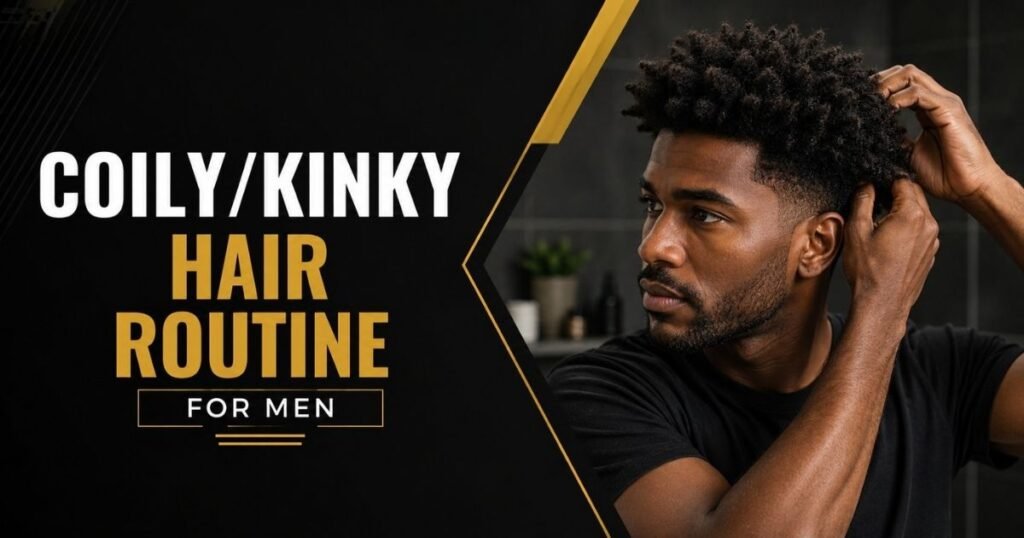
Routine Tip: Work a nourishing hair oil through damp hair before bed to lock in moisture overnight, focusing on the ends.
Maintenance: Shampoo every 7-10 days at most, using conditioner in between to keep hair hydrated without stripping natural oils. Maintenance and routine times are estimates and may vary by hair type.
Thick Hair Routine
Overview: Thick hair has more strands per square inch of scalp, giving it natural volume but also making it harder for products to distribute evenly.
Why It Works: A routine built around thorough product distribution, rather than heavier products, keeps thick hair manageable without looking weighed down.
Routine Tip: Apply conditioner section by section with fingers, working from roots to ends, to ensure even coverage across dense hair.
Maintenance: Use a wide-tooth comb while conditioner is still in to detangle without breakage. Maintenance and routine times are estimates and may vary by hair type.
Men’s Hair Care For Thinning Hair Routine
Overview: Thinning hair benefits from a gentler touch and lighter products, since heavy formulas can make already-fine strands look flatter and thinner.
Why It Works: A volumizing, scalp-focused routine supports the appearance of fullness without irritating a scalp that may already be sensitive.
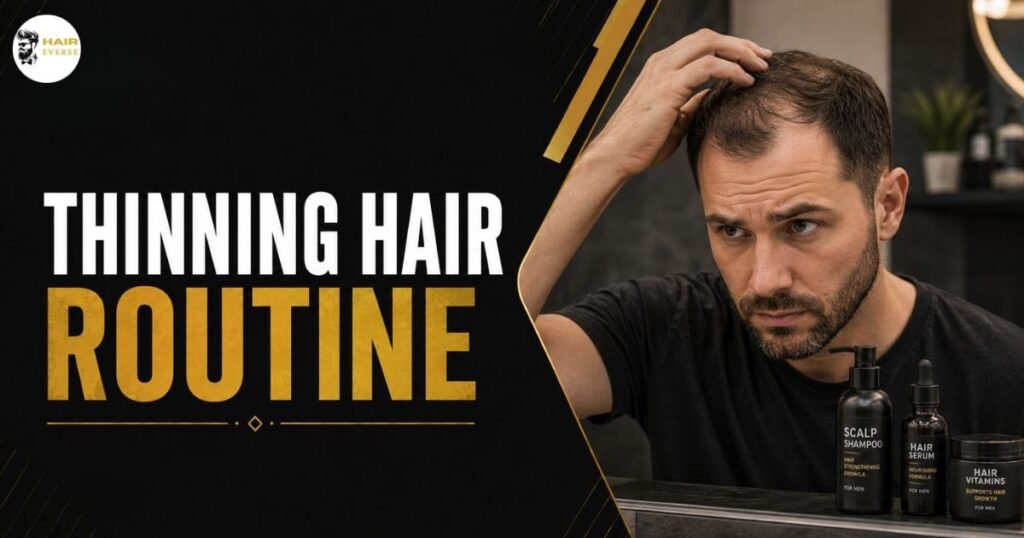
Routine Tip: Use a volumizing shampoo and massage the scalp gently with fingertips, not nails, to avoid unnecessary follicle stress.
Maintenance: Avoid tight hats and aggressive brushing, which can add stress to hair that’s already more fragile. Maintenance and routine times are estimates and may vary by hair type.
Scalp Type Routines
Healthy hair starts with a healthy scalp, whether it’s oily, dry, or balanced. These routines focus on maintaining the right scalp environment while preventing common issues like excess oil, irritation, and flakes.
Oily Scalp Routine
Overview: An oily scalp produces excess sebum, often leaving hair looking slick or greasy within a day of washing, even without added styling product.
Why It Works: Balanced, non-stripping cleansing keeps oil production in check better than harsh over-washing, which can actually trigger more oil production as the scalp overcompensates.
Routine Tip: Use a clarifying shampoo once weekly to reset buildup, paired with a gentle daily formula the rest of the week. A 7-day haircare routine helps keep your hair clean, healthy, and well-maintained.
Maintenance: Avoid washing more than once daily, since over-washing can worsen oiliness over time. Maintenance and routine times are estimates and may vary by hair type.
Dry Scalp Routine
Overview: A dry scalp often shows up as flaking, tightness, or itchiness, distinct from dandruff caused by fungal buildup rather than simple dehydration.
Why It Works: A moisture-focused routine restores comfort and reduces visible flaking better than switching shampoos alone.
Routine Tip: Massage a lightweight scalp oil into a dry scalp a few times weekly, focusing on comfort rather than heavy coverage.
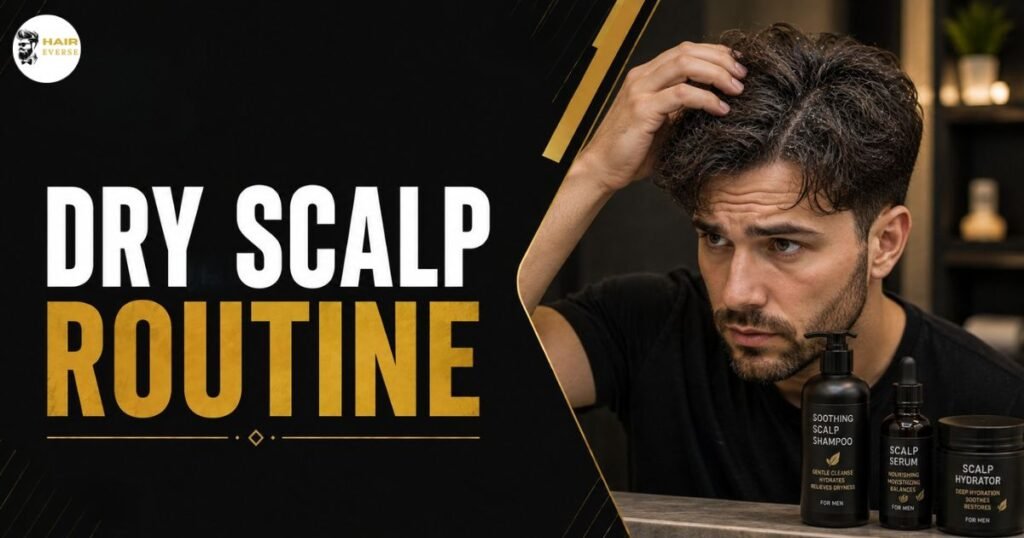
Maintenance: Lower water temperature during washing, since hot water strips moisture the scalp is already struggling to retain. Maintenance and routine times are estimates and may vary by hair type.
Normal Scalp Routine
Overview: A normal, balanced scalp shows no flaking, redness, or excess oil, making it the easiest baseline to maintain long-term.
Why It Works: A simple, consistent routine preserves this balance better than switching products frequently, which can disrupt a scalp that’s already working well.
Routine Tip: Stick with one gentle, natural-ingredient shampoo and conditioner pairing rather than rotating products often.
Maintenance: Wash every other day and avoid unnecessary product layering that could tip a balanced scalp toward oily or dry. Maintenance and routine times are estimates and may vary by hair type.
Hair Length Routines
Your hair length affects how often you should wash, condition, and trim your hair. Long hair care tips for men help keep hair healthy, smooth, and easy to manage.These routines provide practical care tips for short, medium, and long hairstyles to keep them healthy and manageable.
Short Hair Routine
Overview: Short hair is the lowest-maintenance length, but it also grows out of shape faster, meaning small styling missteps show up quickly.
Why It Works: A routine focused on scalp health and regular trims matters more than heavy styling products at this length.
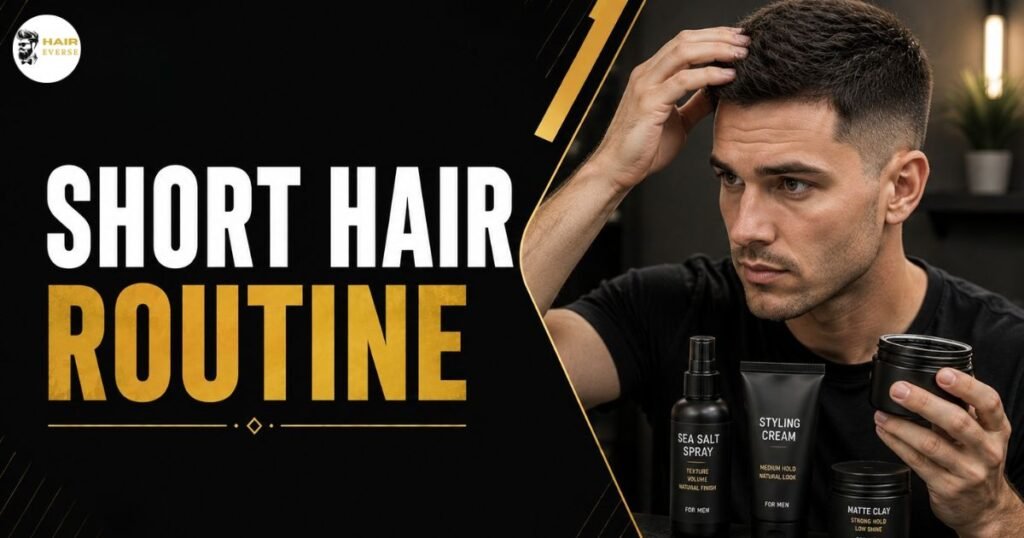
Routine Tip: Use a lightweight nourishing conditioner to protect against split ends, even though length isn’t a major factor at this size.
Maintenance: Book trims more frequently than longer hair lengths, since short styles lose their shape faster as hair grows. Maintenance and routine times are estimates and may vary by hair type.
Medium-Length Hair Routine
Overview: Medium-length hair offers styling flexibility but also starts showing dryness at the ends before length-related damage becomes obvious.
Why It Works: A routine that balances scalp cleansing with mid-length and end conditioning prevents the dry, brittle-tip look common at this length.
Routine Tip: Apply a leave-in conditioner to damp hair before styling to keep ends manageable throughout the day.
Maintenance: Trim every six to eight weeks to prevent split ends from traveling further up the strand. Maintenance and routine times are estimates and may vary by hair type.
Long Hair Routine
Overview: Long hair carries the most accumulated damage, since the ends have been through the most washing, brushing, and environmental exposure over time. Long hair care tips for men help keep hair healthy, smooth, and easy to manage.
Why It Works: A protection-focused routine that prioritizes gentle handling and regular moisture prevents the breakage that shortens perceived length over time.
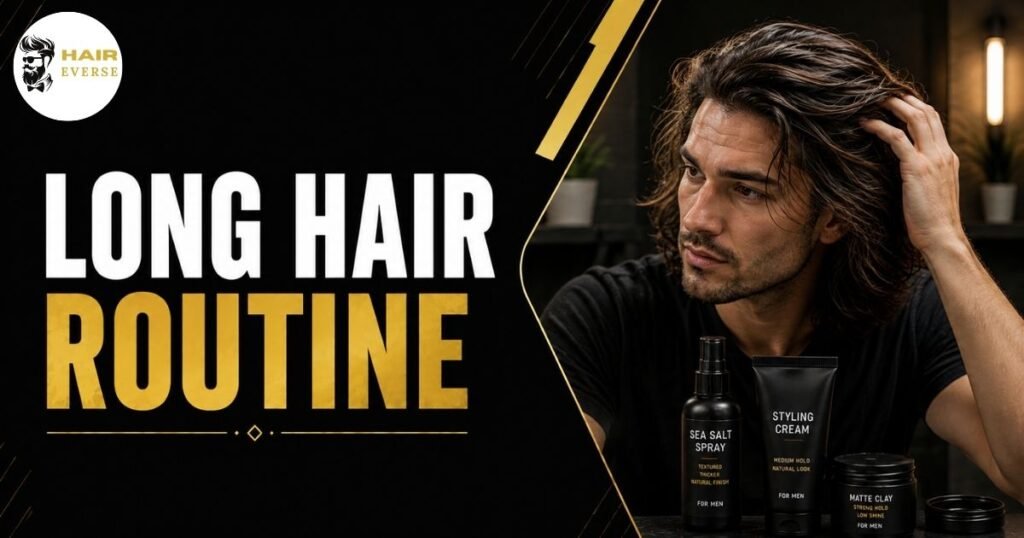
Routine Tip: Detangle with a wide-tooth comb before washing, working from the ends upward, to prevent knots from tightening under water.
Maintenance: Use a weekly deep-conditioning treatment focused on the mid-lengths and ends, where damage accumulates most. Maintenance and routine times are estimates and may vary by hair type.
Life Stage & Concern Routines
Whether you’re dealing with thinning hair, dandruff, grey hair, or an active lifestyle, these routines target common concerns with simple, effective care habits. Choose the one that best fits your current hair needs.
Early Thinning Routine
Overview: Early thinning, often noticed first at the temples or crown, benefits most from a routine that supports scalp health rather than one focused only on styling.
Why It Works: A gentle, scalp-supportive routine reduces unnecessary stress on hair that may already be more vulnerable to shedding.
Routine Tip: Apply a scalp serum directly to clean, dry scalp and massage in gently rather than working it through the hair strands.
Maintenance: Be consistent, since scalp-focused routines typically need weeks to months before any visible difference appears. Maintenance and routine times are estimates and may vary by hair type.
Grey Hair Routine
Overview: Grey hair often develops a yellow or brassy tint over time and tends to feel coarser and drier than hair with natural pigment.
Why It Works: A tone-correcting, moisture-focused routine keeps grey hair looking bright and healthy instead of dull or straw-like.
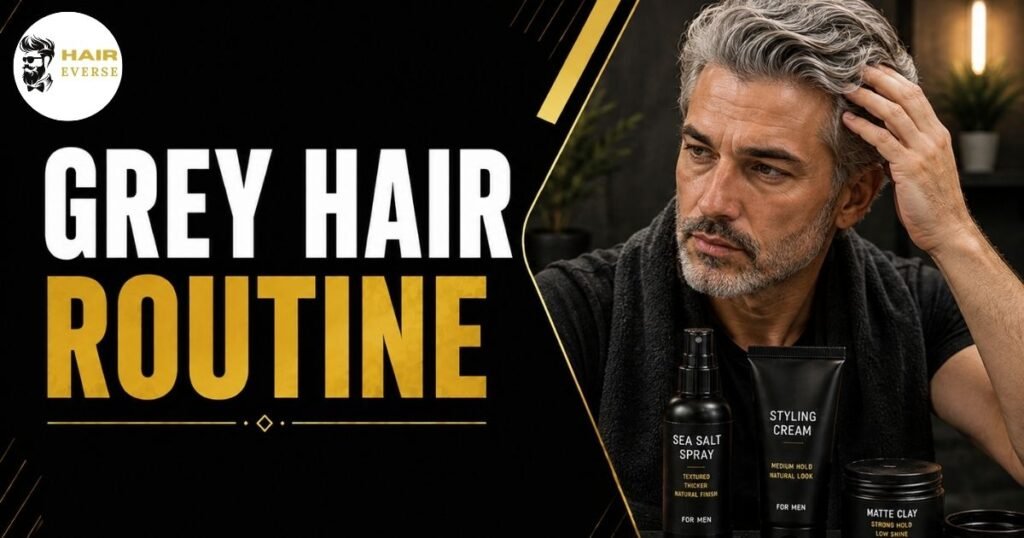
Routine Tip: Use a purple-toned shampoo once or twice weekly to neutralize yellow tones, followed by a hydrating conditioner.
Maintenance: Don’t overuse purple shampoo, since too much can leave a subtle violet cast if left on too long. Maintenance and routine times are estimates and may vary by hair type.
Dandruff-Prone Routine
Overview: Dandruff shows up as visible flaking and itching, often caused by a combination of scalp oil, dead skin buildup, and yeast that naturally lives on the scalp.
Why It Works: A routine built around an active-ingredient shampoo, used consistently, controls flaking better than switching products every time flakes appear.
Routine Tip: Let a dandruff shampoo sit on the scalp for two to three minutes before rinsing so active ingredients have time to work.
Maintenance: Alternate with a gentle daily shampoo to avoid over-drying an already-irritated scalp. Maintenance and routine times are estimates and may vary by hair type.
Post-Workout Routine
Overview: Sweat and scalp buildup after exercise can clog follicles and leave hair looking limp if left unaddressed for too long.
Why It Works: A quick rinse-and-refresh routine prevents buildup without requiring a full wash after every single workout.
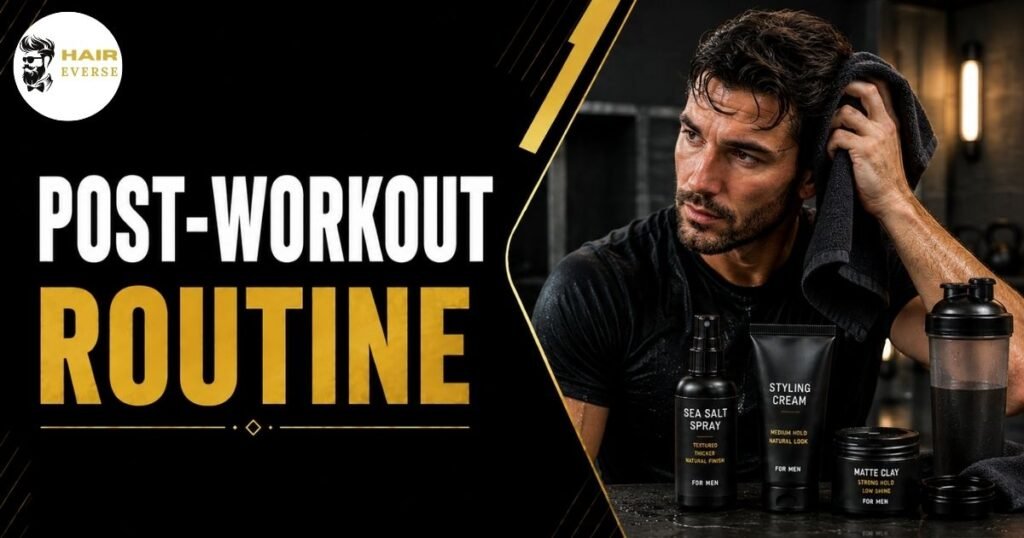
Routine Tip: Rinse hair with water immediately after intense workouts, saving a full shampoo for every other post-workout session.
Maintenance: Use dry shampoo between full washes to absorb sweat-related oil without stripping hair daily. Maintenance and routine times are estimates and may vary by hair type.
Swimmer’s Routine
Overview: Chlorine strips natural oils fast, leaving hair dry, brittle, and prone to breakage with regular pool exposure.
Why It Works: A pre- and post-swim routine minimizes chlorine absorption and replenishes lost moisture before damage accumulates.
Routine Tip: Wet hair thoroughly with clean water before swimming so hair absorbs less chlorinated pool water.
Maintenance: Follow every swim with a moisturizing conditioner to replace what chlorine strips away. Maintenance and routine times are estimates and may vary by hair type.
Sun/Outdoor Exposure Routine
Overview: UV exposure can dry out hair and cause a brittle, faded texture over time, especially for thinner hair types with less natural coverage.
Why It Works: A protective routine focused on shade and hydration prevents the kind of sun damage that shows up as breakage and dullness later.
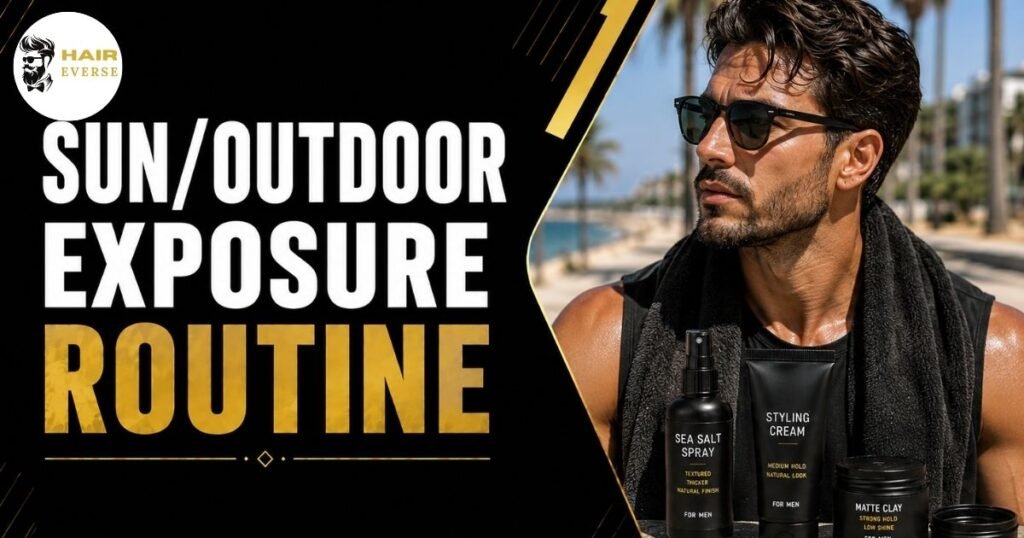
Routine Tip: Wear a breathable, loose-fitting hat during long outdoor stretches to shield both scalp and hair from direct UV exposure.
Maintenance: Follow high-sun days with a hydrating conditioner to replace moisture lost to heat and UV exposure. Maintenance and routine times are estimates and may vary by hair type.
Daily & Weekly Routine Steps
A consistent routine is the foundation of healthy hair. These daily and weekly steps cover everything from wash days and nighttime care to deep conditioning and scalp maintenance.
Morning Routine
Overview: A morning routine sets the tone for the day, whether that means a quick refresh or a full styling session before heading out.
Why It Works: Keeping the morning routine simple and consistent saves time while still delivering a polished, intentional look.
Routine Tip: Lightly dampen hair before applying styling product, since dry product application often looks patchy or uneven.
Maintenance: Keep your morning kit to two or three products maximum to avoid overcomplicating a routine that should take minutes. Maintenance and routine times are estimates and may vary by hair type.
Nightly Routine
Overview: A short nightly routine protects hair overnight, reducing friction and damage that build up while you sleep.
Why It Works: Simple overnight habits, like brushing before bed and switching to a smoother pillowcase, reduce frizz and tangling by morning.
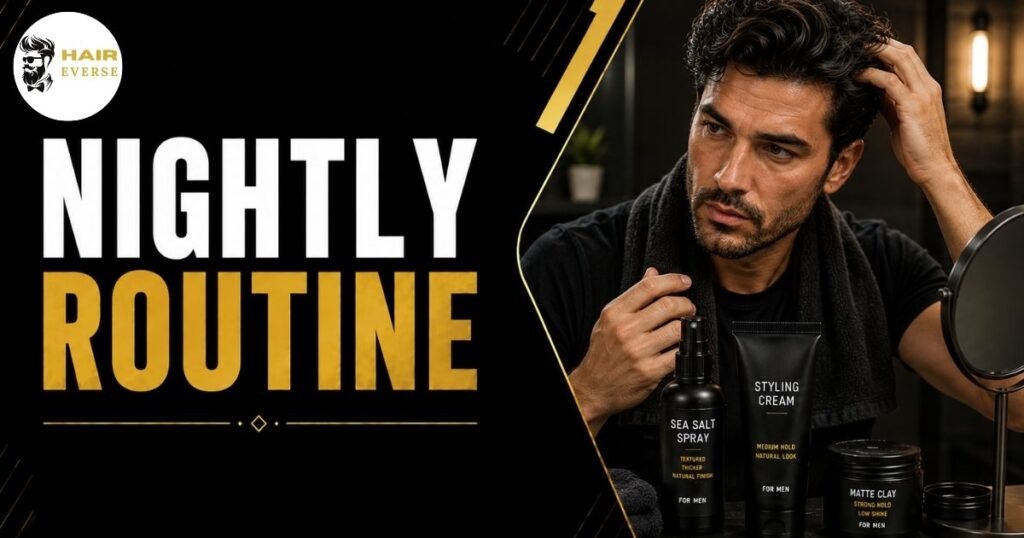
Routine Tip: Brush hair gently before bed to distribute natural oils evenly and reduce next-morning tangles.
Maintenance: Consider a satin or silk pillowcase if you deal with frizz or breakage, since cotton creates more friction overnight. Maintenance and routine times are estimates and may vary by hair type.
Wash Day Routine
Overview: A full wash day covers cleansing, conditioning, and often a treatment step, forming the foundation the rest of your routine builds on.
Why It Works: Following a consistent order cleanse, condition, treat, style ensures each product actually does its job instead of fighting the last one applied.
Routine Tip: Shampoo first to remove buildup, follow with conditioner, then apply any leave-in treatment before styling product goes on.
Maintenance: Adjust wash day frequency based on hair and scalp type rather than a fixed daily schedule. Maintenance and routine times are estimates and may vary by hair type.
Rest-Day Routine
Overview: A rest day, or non-wash day, still needs some attention to keep hair looking fresh without a full shampoo session.
Why It Works: Light refreshing techniques extend the life of your style between washes without over-stripping natural oils.
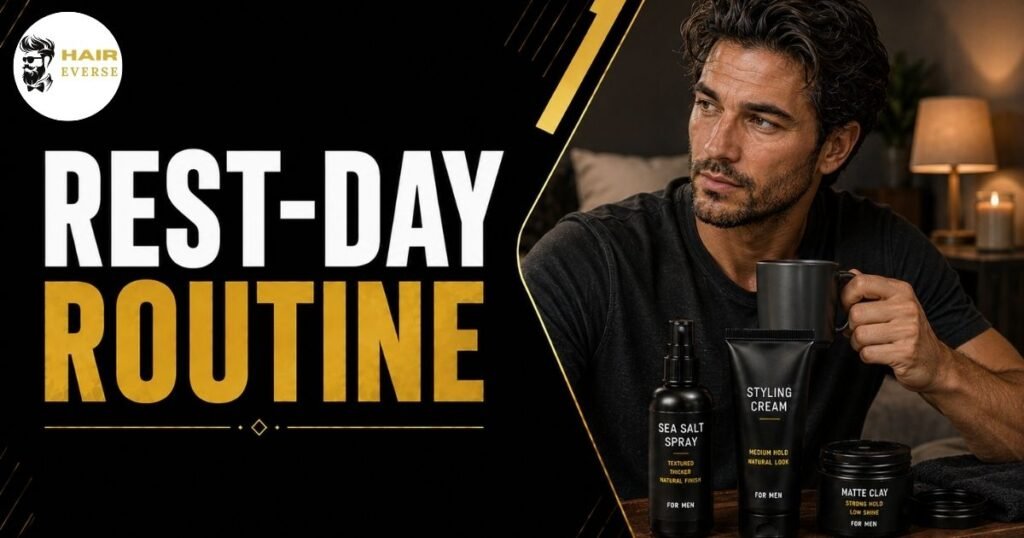
Routine Tip: Use dry shampoo at the roots and restyle with fingers rather than reapplying heavy styling product on top of yesterday’s.
Maintenance: Brush through gently to redistribute oils evenly across the scalp and hair on non-wash days. Maintenance and routine times are estimates and may vary by hair type.
Weekly Deep-Conditioning Routine
Overview: A weekly deep-conditioning treatment goes beyond a standard conditioner, penetrating deeper to repair dryness and damage.
Why It Works: Dry, damaged, or chemically treated hair benefits most from this extra step, which standard daily conditioner can’t fully address.
Routine Tip: Apply a hair mask to towel-dried hair after shampooing, leave on for the recommended time, then rinse thoroughly.
Maintenance: Once weekly is typically enough; overuse can leave hair feeling heavy rather than healthier. Maintenance and routine times are estimates and may vary by hair type.
Weekly Scalp Exfoliation Routine
Overview: Scalp exfoliation removes dead skin cells and product buildup that regular shampoo can miss, especially for men who style daily.
Why It Works: A clearer scalp supports healthier-looking hair growth and reduces the itchiness that buildup can cause over time.
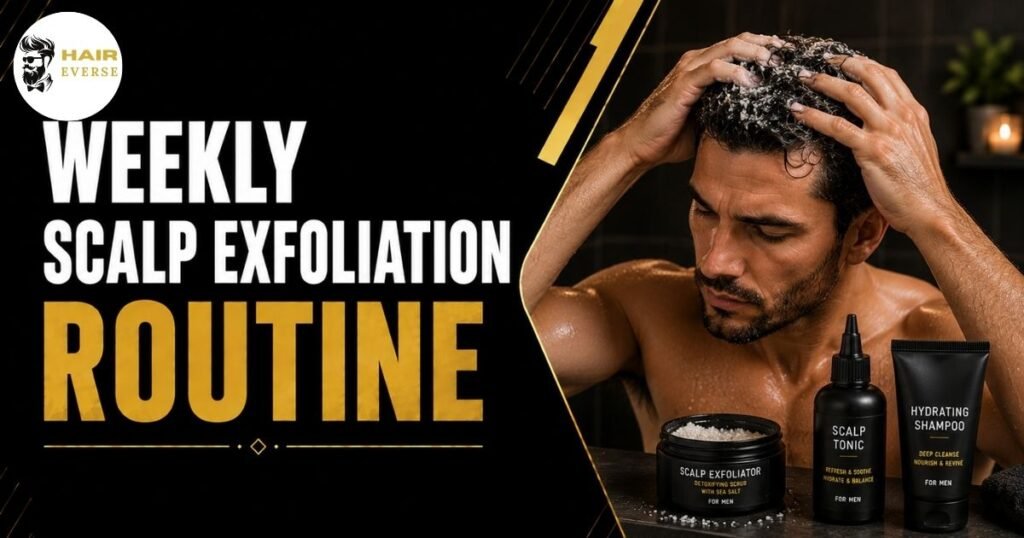
Routine Tip: Massage a gritty scalp scrub into a wet scalp before shampooing, using gentle circular motions.
Maintenance: Once weekly is sufficient for most scalp types; more frequent use can cause irritation. Maintenance and routine times are estimates and may vary by hair type.
Heat-Styling Protection Routine
Overview: Repeated heat exposure from blow dryers or straighteners can permanently alter hair structure if left unprotected.
Why It Works: A quick protective step before every heat-styling session prevents the cumulative damage that builds up over months of unprotected use.
Routine Tip: Apply heat protectant spray evenly to damp hair before blow-drying, keeping the dryer several inches from the scalp.
Maintenance: Never skip this step, even for quick touch-ups, since damage accumulates with every unprotected heat exposure. Maintenance and routine times are estimates and may vary by hair type.
Application Technique Guides
Using the right products correctly is just as important as choosing them. These technique guides show you how to shampoo, condition, style, and dry your hair for the best results with minimal damage.
Shampoo Technique
Overview: Proper shampoo technique focuses cleansing power where it’s actually needed: the scalp, not the full length of hair.
Why It Works: Concentrating lather at the roots cleans effectively while letting the rinse-down gently clean the strand without over-stripping it.
Routine Tip: Use fingertips, not nails, to massage shampoo into the scalp in small circular motions for thirty to sixty seconds.
Maintenance: Rinse thoroughly, since leftover shampoo residue can contribute to a dull, weighed-down look. Maintenance and routine times are estimates and may vary by hair type.
Conditioner Technique
Overview: Conditioner technique matters as much as the product itself, since misapplied conditioner can leave hair either greasy or under-moisturized.
Why It Works: Applying conditioner from mid-length to ends, rather than the scalp, moisturizes where hair needs it most without weighing down the roots.
Routine Tip: Let conditioner sit for one to two minutes before rinsing to give it time to actually penetrate the hair shaft.
Maintenance: Rinse with cooler water to help seal the hair cuticle and lock in added shine. Maintenance and routine times are estimates and may vary by hair type.
Leave-In Conditioner Technique
Overview: Leave-in conditioner extends hydration throughout the day, unlike a rinse-out formula that only works during the shower.
Why It Works: Applying it to damp, not dripping, hair helps the product distribute evenly instead of sliding off before it can absorb.
Routine Tip: Apply a small amount from mid-length to ends, then comb through gently with a wide-tooth comb.
Maintenance: Increase frequency during dry winter months or after heat styling, when hair needs extra support. Maintenance and routine times are estimates and may vary by hair type.
Styling Product Technique
Overview: A hair product guide for men helps you choose the right products for your hair type and style. Proper application technique prevents the clumpy, uneven look that happens when styling product goes straight from the container to the hair.
Why It Works: Warming product between your palms first allows it to spread evenly, reducing the amount needed and improving overall finish.
Routine Tip: Rub product between palms until it disappears, then apply front to back with fingers before combing through for evenness.
Maintenance: Start with less product than you think you need it’s easier to add more than to remove excess. Maintenance and routine times are estimates and may vary by hair type.
Scalp Serum Technique
Overview: Scalp serums are designed to stay in contact with the scalp rather than being rinsed out, making application technique especially important.
Why It Works: Applying serum directly to a clean, dry scalp not the hair itself ensures the product reaches where it’s actually meant to work.
Routine Tip: Use a dropper or applicator tip to part hair in sections and apply serum directly to visible scalp.
Maintenance: Apply consistently at the same time each day to build a routine you’ll actually stick with. Maintenance and routine times are estimates and may vary by hair type.
Towel & Air-Drying Technique
Overview: Aggressive towel-drying is one of the most common causes of frizz and breakage, since rubbing raises the hair cuticle and creates friction.
Why It Works: A gentler patting or squeezing motion removes excess water without the friction damage that rubbing causes.
Routine Tip: Use a soft microfiber towel or old cotton t-shirt to gently squeeze out water rather than rubbing vigorously.
Maintenance: Let hair air-dry partially before applying any heat tool to reduce total heat exposure time. Maintenance and routine times are estimates and may vary by hair type.
Lifestyle & Maintenance Habits
Healthy hair depends on more than products alone. Simple habits like keeping hats and pillowcases clean, visiting your barber regularly, and staying hydrated all contribute to stronger, healthier-looking hair.
Hat & Helmet Hygiene Routine
Overview: Hats and helmets trap sweat, oil, and grime against the scalp, creating conditions that can contribute to irritation or buildup over time.
Why It Works: Regular cleaning of anything that touches your scalp reduces bacteria buildup that a shampoo routine alone can’t fully offset.
Routine Tip: Wash fabric hats regularly following the care label, and wipe down helmet padding after heavy sweat sessions.
Maintenance: Avoid wearing hats over wet or damp hair, since trapped moisture creates ideal conditions for microbial growth. Maintenance and routine times are estimates and may vary by hair type.
Pillowcase & Bedding Hygiene Routine
Overview: Pillowcases absorb oil, sweat, and product residue every night, which can transfer back onto hair and skin if changed too infrequently.
Why It Works: A clean sleep surface reduces the bacteria and friction that contribute to breakage and scalp irritation over time.
Routine Tip: Switch to a satin or silk pillowcase if you deal with frizz, since it creates less friction than standard cotton.
Maintenance: Wash pillowcases weekly, more often if you use heavy styling products or work out before bed. Maintenance and routine times are estimates and may vary by hair type.
Barber Visit Routine
Overview: Regular barber visits do more than maintain style they remove split ends before damage travels further up the hair shaft.
Why It Works: Trims act as routine maintenance for hair health, not just appearance, especially for men who color, heat-style, or chemically treat their hair.
Routine Tip: Book trims on a set schedule rather than waiting until hair looks visibly unkempt, since damage builds up before it’s obvious.
Maintenance: Adjust frequency based on hair type and desired length shorter styles typically need more frequent visits. Maintenance and routine times are estimates and may vary by hair type.
Diet & Hydration Habits
Overview: Hair health isn’t just about what you apply externally hydration and nutrition play a supporting role in how hair grows and looks over time.
Why It Works: Adequate water intake and a balanced diet support the overall conditions your scalp and follicles need to function well.
Routine Tip: Prioritize consistent water intake throughout the day rather than relying on topical products alone to fix dryness.
Maintenance: Treat this as a background habit, not a quick fix internal factors take longer to show visible results than topical products. Maintenance and routine times are estimates and may vary by hair type.
How To Choose The Right Hair Care Routine?
A simple hair care routine keeps your hair clean, healthy, and manageable. Start by identifying two things: your hair type and your scalp type. These two factors, combined, point you toward the right routine faster than either one alone.
By Hair Type:
- Straight hair: Focus on scalp-level cleansing since oil travels the strand easily
- Wavy hair: Use lightweight, texture-enhancing products that won’t weigh down natural movement
- Curly hair: Prioritize moisture and minimal manipulation to preserve curl pattern
- Coily/kinky hair: Wash less often and moisturize more to prevent dryness and breakage
- Thick hair: Focus on thorough, even product distribution rather than heavier formulas
- Thinning hair: Choose lightweight, volumizing products and handle the scalp gently
By Scalp Type:
- Oily scalp: Balance cleansing frequency; avoid over-washing, which can worsen oil production
- Dry scalp: Add moisture through scalp oils and reduce water temperature during washing
- Normal scalp: Keep the routine simple and consistent to maintain existing balance
Hair care products for men help keep hair clean, healthy, and well-styled.
How To Ask Your Barber About Your Routine?
- Bring up your current wash frequency and product routine so recommendations fit what you already do
- Ask about your specific hair and scalp type, not just your haircut
- Mention any concerns like dandruff, thinning, or dryness directly
- Ask how your lifestyle gym schedule, swimming, sun exposure should shape your routine
- Request product recommendations by category, not just brand, so you understand the “why”
- Confirm a realistic maintenance schedule before you leave, including your next trim
Product Recommendations
Shampoo
- Best For: Removing daily dirt, oil, and product buildup from scalp and hair
- How To Use: Massage into a wet scalp for thirty to sixty seconds, focusing cleansing action at the roots
Conditioner
- Best For: Restoring moisture and softness after shampooing strips natural oils
- How To Use: Apply from mid-length to ends and let sit for one to two minutes before rinsing
Leave-In Conditioner
- Best For: Extended hydration throughout the day, especially for dry or curly hair
- How To Use: Apply to damp hair after washing, focusing on mid-lengths and ends
Scalp Serum
- Best For: Targeted support for thinning or dry scalp concerns
- How To Use: Apply directly to a clean, dry scalp and massage in gently with fingertips
Heat Protectant
- Best For: Anyone using blow dryers, straighteners, or curling tools regularly
- How To Use: Apply evenly to damp hair before any heat styling session
Hair Cream
- Best For: Light, natural-looking hold with added softness for medium to long hair
- How To Use: Work a small amount through damp or dry hair, avoiding direct scalp application
Find Your Next Cut
- Beat the heat without sacrificing style this guide to Summer Haircuts for Men rounds up 35 options built for sweat, humidity, and low upkeep, from textured crops and low taper fades to buzz cuts and surfer waves.
- Trying to figure out which shaggy layered look suits you best? This Wolf Cut vs Shag Cut guide breaks down the key differences in layering and silhouette, then walks through 40 styles across both, including hybrid “sholf” cuts.
- Want a more polished, center-parted look? This guide to Middle Part Hairstyles for Men breaks down modern variations by hair type and face shape, from classic curtains and undercuts to slicked-back and messy takes.
- A big forehead only reads as a flaw when the cut fights against it instead of working with it. Our big forehead hairstyles guide rounds up 37 styles built around forward fringe, texture, and coverage for every hair type. Barbers see the same slicked-back mistake constantly, so this guide breaks down exactly what to ask for instead.
- Growing hair out opens up options a short cut simply can’t offer. Our long hairstyles for men guide covers 35 styles once hair passes the ears, from man buns and waves to layered mullets. Every option here is matched to a specific hair type and face shape for a cleaner growing-out phase.
- Simple in theory, a crew cut still comes down to a few key decisions in the chair. Our crew cut hairstyle guide breaks down 30 variations by fade height, texture, and top length so nothing gets left to guesswork. It’s one of the most adaptable cuts on the site, working across nearly every hair type and face shape.
- Somewhere between too short to style and too long to look sharp sits the Ivy League. Our Ivy League haircut guide covers 30 versions, from the classic Princeton cut to bolder undercut and pompadour pairings. Getting the top length and taper balanced right is the real trick, and this guide walks through exactly how.
- Fade height changes the entire character of a cut, and skin fades push that contrast to its sharpest point. Our skin fade haircuts guide rounds up 35 trending variations, from subtle low fades to bold mohawks and box fades. Hair type and daily styling routine both factor into which version actually works best.
Final Thoughts
A good hair care routine for men is built on consistency, not the number of products you use. By choosing the right washing, conditioning, and drying habits for your hair and scalp type, you can keep your hair healthier and address concerns like dandruff, thinning, or dryness over time.
FAQs
What is the best hair care routine for men?
The best routine matches your specific hair type and scalp type rather than following one generic approach. Most men benefit from washing every other day, conditioning every wash, and adjusting frequency based on oiliness, hair type, and lifestyle factors like sweat or heat styling.
How can I stop my scalp from being oily?
Avoid over-washing, which can trigger more oil production as the scalp overcompensates. Use a gentle, balancing shampoo daily or every other day, and add a clarifying shampoo once weekly to reset buildup without stripping the scalp excessively.
What causes dandruff in men?
Dandruff typically comes from a combination of excess scalp oil, dead skin buildup, and a naturally occurring yeast that can overgrow on some scalps. An active-ingredient shampoo used consistently, alternated with a gentle daily formula, usually controls symptoms effectively.
Should men use heat protectant?
Yes, anyone using a blow dryer, straightener, or curling tool regularly should apply heat protectant beforehand. Repeated unprotected heat exposure can permanently alter hair structure over time, making this one of the simplest damage-prevention steps available.
What’s the difference between hair care and hair styling?
Hair care refers to washing, conditioning, and scalp maintenance that supports overall hair health, while styling refers to shaping hair into a specific look using products like pomade or gel. A complete routine includes both working together.
Can hats damage hair?
Tight hats worn for extended periods can put pressure on hair follicles and contribute to breakage over time. Hats also trap sweat and oil against the scalp, so regular hat washing and avoiding hats over wet hair both help minimize this risk.
How to take care of hair daily at home?
To care for your hair daily at home, gently detangle with a wide-tooth comb, protect strands from tight styles and harsh heat, apply a light serum or natural oil to the ends if dry, and sleep on a smooth pillowcase to prevent breakage.