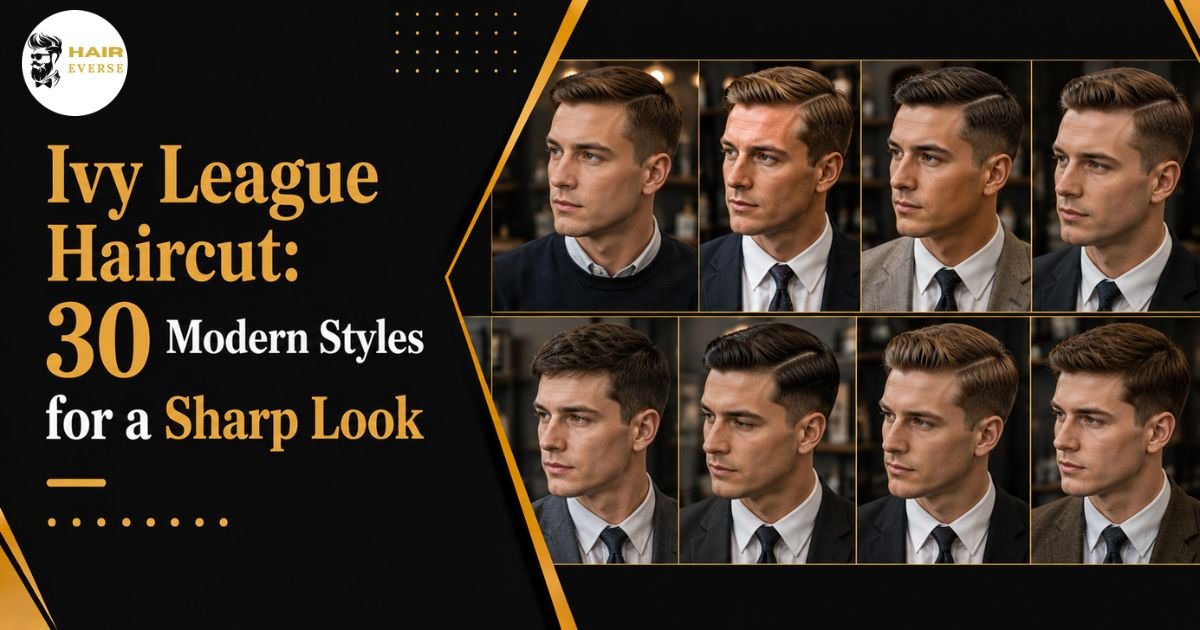
Ivy League Haircut: 30 Modern Styles for a Sharp Look
If your hair always ends up either too short to style or too long to look sharp, the Ivy League haircut solves that exact middle-ground problem. It’s short enough to read as clean and professional, but leaves just enough length on top to comb into a side part or brush up for real shape.
What makes it tricky isn’t the cutting technique itself – it’s getting the taper and top length balanced correctly for your specific hair texture, which is where a lot of guys end up disappointed with an otherwise simple cut. This guide breaks down 30 real Ivy League variations, by fade height, hair type, and top style, so you know exactly which version to ask for.
Ivy League Haircut Comparison Table
Here are style, type, face shape, mintenance and styling time comparison detailed table.
| Hairstyle | Best Hair Type | Face Shape | Maintenance | Styling Time |
| Classic Ivy League Haircut (Princeton Cut) | All types | Oval, square | Medium | 5 min |
| Modern Textured Ivy League Haircuts | Thick, wavy | Oval, round | Medium | 8 min |
| Taper low fade ivy league haircut | Straight, wavy | Oval, square | Medium | 5-8 min |
| Ivy League with Mid Fade | All types | Oval, round | Medium | 8 min |
| Ivy League with High Fade | Straight, thick | Oval, round | High | 8-10 min |
| Ivy League Crew Cut | All types | Oval, square | Low | 3-5 min |
| Ivy League korean Buzz Cut | All types | All shapes | Low | 2-3 min |
| Curly Ivy League Haircut | Curly | Round, oval | Medium | 10-12 min |
| Wavy Ivy League with Taper | Wavy | Oval, square | Low | 8 min |
| Long Ivy LeagueHaircut | Straight, wavy | Oval, long | Medium | 8-10 min |
| Short Ivy League with Hard Part | Straight, wavy | Oval, square | High | 5-8 min |
| Brushed Up Ivy League Haircut | Thick, coarse | Round, oval | Medium | 8-10 min |
| Side-Swept Ivy League Haircut | All types | Oval, square | Low | 5-8 min |
| Ivy League Undercut | Thick, medium | Oval, diamond | Medium | 8 min |
| Ivy League Pompadour | Straight, wavy | Round, square | High | 10-15 min |
| Ivy League with Fringe | Straight, wavy | Round, oval | Medium | 5-8 min |
| Messy Ivy League Haircut | Wavy, curly | Oval, round | Low | 5 min |
| Ivy League for Thinning Hair | Fine, thin | Oval, square | Low | 5 min |
| Ivy League for Round Faces | All types | Round | Medium | 8 min |
| men ivy league haircut for Straight Hair | Straight | Oval, square | Medium | 5-8 min |
| Low-Maintenance Ivy League | All types | All shapes | Low | 3-5 min |
| Ivy League with Beard | All types | Square, oval | Medium | 5-8 min |
| Military Ivy League Haircut | All types | Oval, square | Medium | 5 min |
| Ivy League Comb Over | Straight, wavy | Oval, square | Medium | 5-8 min |
| Ivy League Slick Back | Straight, wavy | Oval, square | Medium | 8 min |
| Medium Length Ivy League Asian | All types | Oval, long | Medium | 8-10 min |
| Ivy League for Coily/4C Hair | Coily | Round, oval | Medium | 10-15 min |
| Ivy League for Boys | All types | All shapes | Low | 5 min |
| Preppy Ivy League with Shine | Straight, wavy | Oval, square | Medium | 8 min |
| Ivy League with Hard Side Part and Design | All types | All shapes | High | 5-10 min |
What Is an Ivy?
An Ivy League haircut is a type of crew cut where the hair on the front and top of the head is left long enough to part or style, while the sides and back stay short and tapered.
The name traces back to mid-20th-century students at Harvard, Princeton, Yale, and other elite Northeastern universities, who wore the cut as a neat, low-maintenance signal of preppy sophistication.
It’s also called the Princeton cut or the Harvard clip, and it remains one of the most reliably professional-looking men’s haircuts available today.
Ivy League vs. Crew Cut: What’s the Difference?
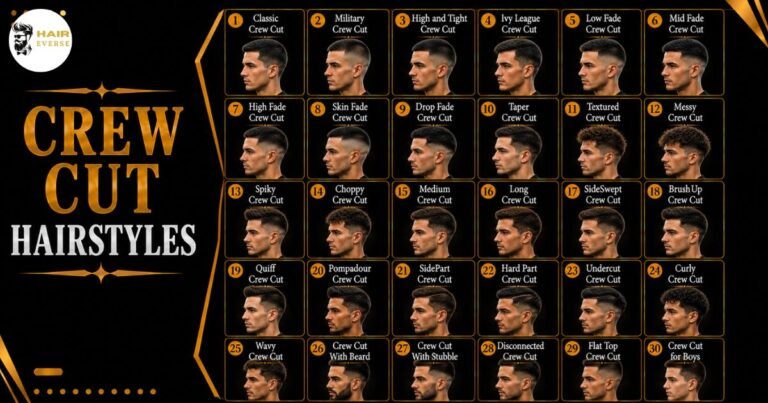
These two cuts are closely related, which is exactly why they get confused. A standard crew cut keeps the top hair uniformly short all over, usually under an inch, with minimal styling required.
An Ivy League takes that same short-sided structure but leaves noticeably more length on top, typically one to two inches at the front hairline, tapering down toward the crown. That extra length is what allows an Ivy League to be side-parted, brushed up, or swept forward, while a true crew cut mostly just lies flat.
If you want the absolute lowest-maintenance option, ask for a crew cut. If you want more styling flexibility with a similarly clean silhouette, ask for an Ivy League.
Is a Princeton Haircut the Same as an Ivy League?
Largely, yes. The Princeton haircut and the Harvard clip are historically just regional names for the same style, and most barbers today use the terms interchangeably.
Some shops draw a subtle distinction, using “Princeton” for a slightly shorter, less voluminous top and “Ivy League” as the broader umbrella term covering all the variations in between. When in doubt, describe the specific top length and taper height you want rather than relying on the name alone, since interpretation can vary by barber.
30 Best Ivy League Haircut Styles
| Classic Ivy League Haircut (Princeton Cut) |
| Modern Textured Ivy League Haircuts |
| Taper low fade ivy league haircut |
| Ivy League with Mid Fade |
| Ivy League with High Fade |
| Ivy League Crew Cut |
| Ivy League korean Buzz Cut |
| Curly Ivy League Haircut |
| Wavy Ivy League with Taper |
| Long Ivy League Haircut |
| Short Ivy League with Hard Part |
| Brushed Up Ivy League Haircut |
| Side-Swept Ivy League Haircut |
| Ivy League Undercut |
| Ivy League Pompadour |
| Ivy League with Fringe |
| Messy Ivy League Haircut |
| Ivy League for Thinning Hair |
| Ivy League for Round Faces |
| men ivy league haircut for Straight Hair |
| Low-Maintenance Ivy League Haircut |
| Ivy League with Beard |
| Military Ivy League Haircut |
| Ivy League Comb Over |
| Ivy League Slick Back |
| Medium Length Ivy League Asian |
| Ivy League for Coily/4C Hair |
| Ivy League for Boys |
| Preppy Ivy League with Shine |
| Ivy League with Hard Side Part and Design |
Classic Ivy League Haircut (Princeton Cut)
Overview: The original silhouette – short, tapered sides and back with about an inch and a half of length on top, combed into a clean side part.
Why It Works: Works with nearly every hair type and face shape, making it the safest, most universally professional entry point.
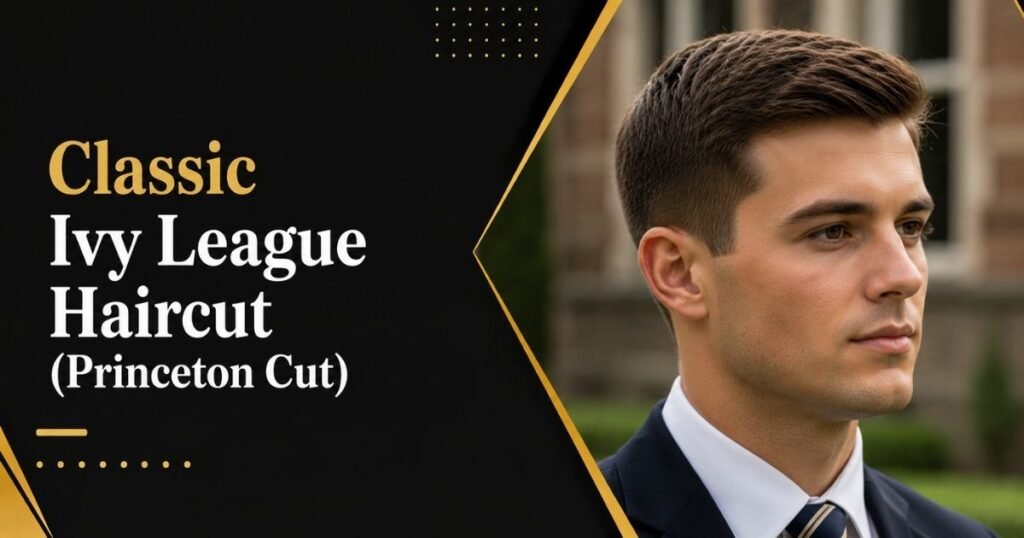
Styling Tip: Apply a light pomade to damp hair and comb the top to one side for a defined, polished part.
Maintenance: Trim every 3-4 weeks to keep the taper and top length in proportion. Maintenance and styling times are estimates and may vary by hair type.
Modern Textured Ivy League Haircuts
Overview: Adds deliberate texture to the top section instead of a smooth comb finish, brushed up and slightly forward for a livelier silhouette.
Why It Works: A good option for guys with thicker or coarser hair who want the Ivy League’s structure without a flat, overly polished look.
Styling Tip: Work matte clay through damp hair, then brush upward and slightly forward with a boar-bristle brush.
Maintenance: Trim every 3-4 weeks; the textured finish hides minor regrowth better than a sleek side part. Maintenance and styling times are estimates and may vary by hair type.
Taper Low Fade Ivy League Haircut
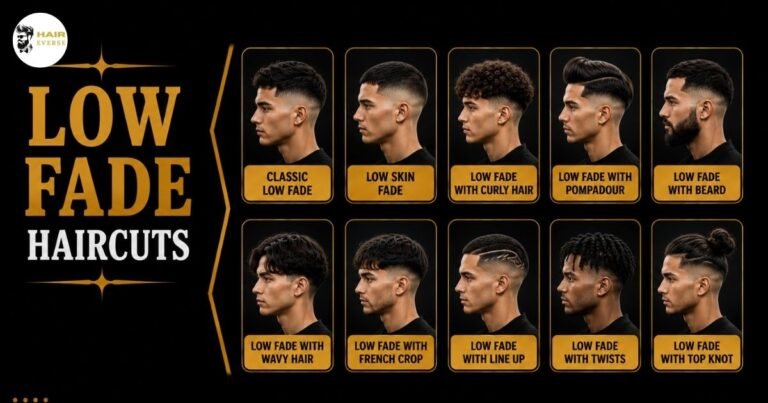
Overview: Swaps the traditional scissor taper for a fade that starts close to the ear, giving the sides a smoother, more contemporary blend. See our low fade haircut guide for more on fade height and blending.
Why It Works: The subtle fade keeps the overall look conservative enough for formal workplaces while feeling more current than a classic taper.
Styling Tip: Comb a light-hold pomade through the top for a natural, defined part without heavy shine.
Maintenance: Refresh the fade every 2-3 weeks; the top can stretch closer to 4 weeks between trims. Maintenance and styling times are estimates and may vary by hair type.
Ivy League with Mid Fade
Overview: The fade starts around the temple, adding more visible contrast than a low fade while keeping the classic Ivy League top intact.
Why It Works: A versatile middle ground – sharper than a scissor taper but still conservative enough for most offices.
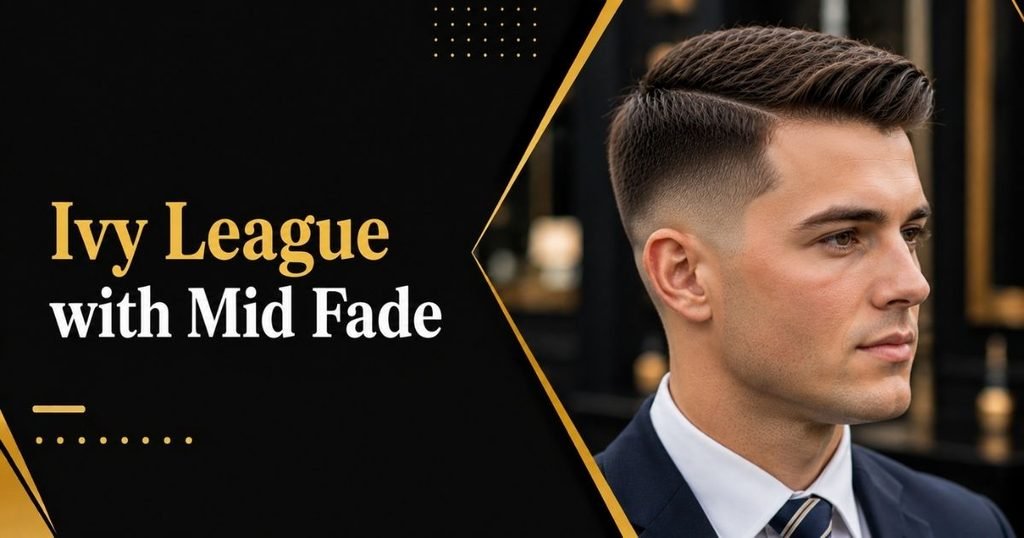
Styling Tip: Use matte clay to build a slightly textured, brushed-up finish on top.
Maintenance: Refresh the fade every 2-3 weeks to keep the mid-height blend crisp. Maintenance and styling times are estimates and may vary by hair type.
Ivy League with High Fade
Overview: The most dramatic fade height in the Ivy League family, starting high on the sides for maximum contrast against the longer top.
Why It Works: Puts full visual focus on the top style, making it a strong option for guys who want to lean into a bolder, more modern take.
Styling Tip: Comb the top back and slightly up with a strong-hold pomade for an elevated, sharp finish.
Maintenance: High fades grow out fastest, so plan on a touch-up every 1-2 weeks. Maintenance and styling times are estimates and may vary by hair type.
Ivy League Crew Cut
Overview: Trims the top length down closer to true crew cut territory while still leaving just enough length to add a hint of texture or lift.
Why It Works: One of the lowest-maintenance versions here, ideal for guys who want the Ivy League’s clean shape without daily styling effort.
Styling Tip: A small amount of matte cream is often all that’s needed to add definition without weight.
Maintenance: Trim every 3-4 weeks; the short length shows regrowth quickly but is easy to touch up. Maintenance and styling times are estimates and may vary by hair type.
Ivy League korean Buzz Cut
Overview: Takes the Ivy League concept to its shortest practical length, with just enough top length to keep the tapered sides from reading as a plain buzz cut.
Why It Works: The absolute lowest-maintenance option on this list, requiring virtually no daily styling.
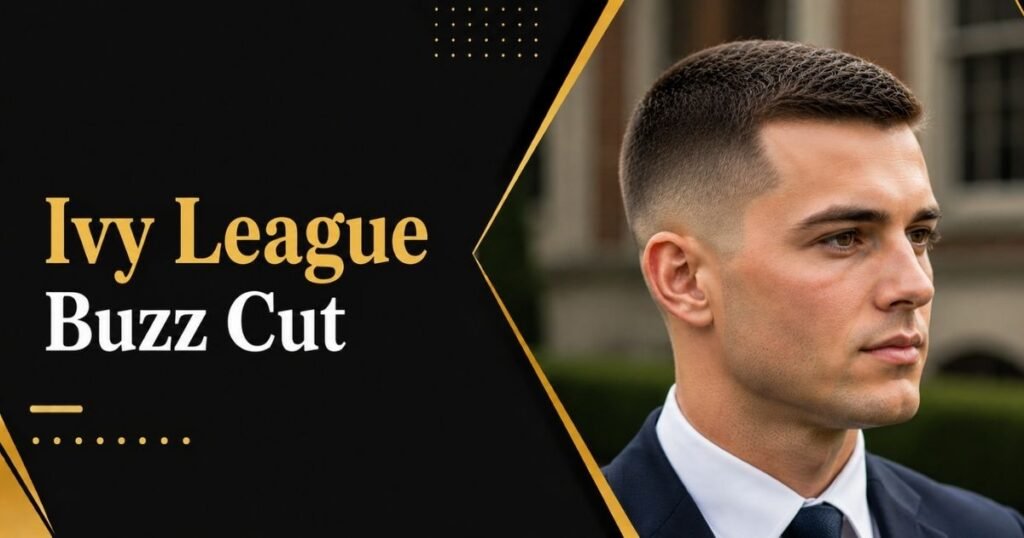
Styling Tip: If any product is used, a light texturizing powder adds subtle separation without looking greasy.
Maintenance: Trim every 2-3 weeks since the short overall length shows regrowth faster than longer versions. Maintenance and styling times are estimates and may vary by hair type.
Curly Ivy League Haircut
Overview: Keeps the sides tapered and controlled while letting natural curls stay full and defined on top rather than combing them flat.
Why It Works: Lets curly hair keep its natural pattern and bounce instead of fighting the texture with heavy product.
Styling Tip: Apply a curl-defining cream to damp curls and let them air-dry or diffuse to prevent frizz.
Maintenance: Trim every 6-8 weeks; curls hide fade and taper regrowth especially well. Maintenance and styling times are estimates and may vary by hair type.
Wavy Ivy League with Taper
Overview: A scissor taper on the sides blends smoothly into natural waves on top, letting the texture do most of the visual work.
Why It Works: One of the easiest textures to work with here, since waves add dimension a flat cut doesn’t have.
Styling Tip: Scrunch a small amount of sea salt spray into damp hair to enhance the natural wave pattern.
Maintenance: Trim every 4 weeks to keep the taper clean without disturbing the waves on top. Maintenance and styling times are estimates and may vary by hair type.
Long Ivy League Haircut
Overview: Pushes the top length beyond the traditional inch and a half, giving a more relaxed, flowing silhouette while keeping the sides tapered.
Why It Works: A good pick for guys who like the Ivy League’s structure but want more length to work with for styling variety.
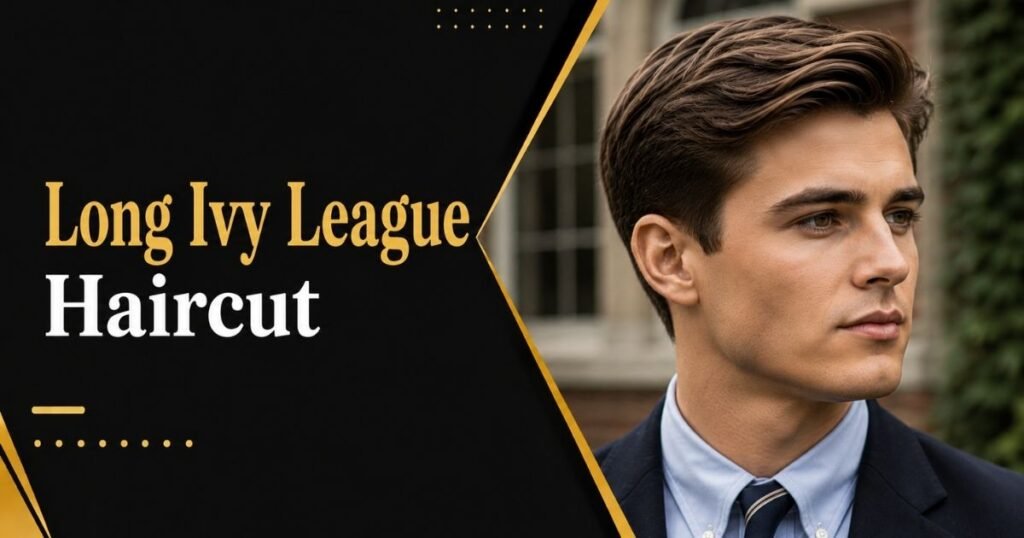
Styling Tip: Use a light-hold pomade or cream to keep the extra length controlled without stiffness.
Maintenance: Trim every 4-6 weeks; the longer top is more forgiving of regrowth than shorter versions. Maintenance and styling times are estimates and may vary by hair type.
Short Ivy League with Hard Part
Overview: A crisp, shaved line marks the part instead of a combed-in one, adding a sharp geometric detail to the classic short Ivy League shape.
Why It Works: The precise line gives an already clean cut extra polish, useful for guys who want a more deliberate, formal finish.
Styling Tip: Comb hair away from the part with a light-hold pomade to keep the shaved line visible.
Maintenance: The line needs a touch-up every 1-2 weeks to stay crisp, even if the rest of the cut can wait longer. Maintenance and styling times are estimates and may vary by hair type.
Brushed Up Ivy League Haircut
Overview: Instead of a side part, the top is brushed straight up and slightly forward for a fuller, more energetic finish.
Why It Works: Especially flattering on thick or coarse hair, which holds the brushed-up shape well without collapsing.
Styling Tip: Apply matte pomade to targeted sections and use a round brush to lift the roots while blow-drying.
Maintenance: Trim every 3-4 weeks to keep the length proportional for brushing up. Maintenance and styling times are estimates and may vary by hair type.
Side-Swept Ivy League Haircut
Overview: The top hair sweeps across the forehead in one direction rather than a hard, defined part, paired with a soft low taper on the sides.
Why It Works: An easy, effortless-looking option that still reads as neat and put-together.
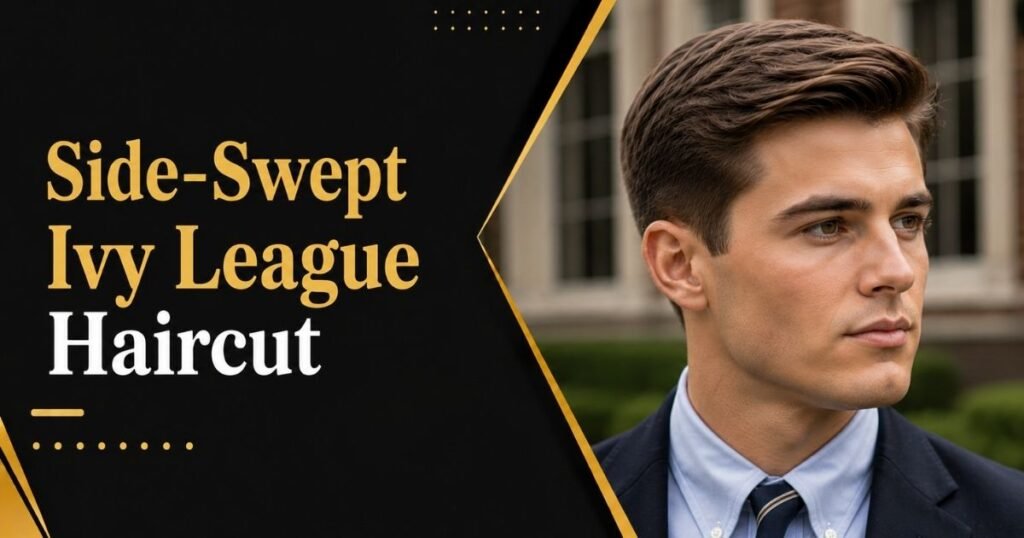
Styling Tip: Use a light cream and comb the top across while damp to set the direction before it dries.
Maintenance: Trim every 4 weeks; the soft taper is forgiving of a little extra length between visits. Maintenance and styling times are estimates and may vary by hair type.
Ivy League Undercut
Overview: Combines the Ivy League’s longer, styleable top with the sharp, disconnected contrast of an undercut instead of a gradual taper.
Why It Works: Delivers a bolder, more modern edge than the traditional taper while keeping the top’s classic proportions intact.
Styling Tip: Use a strong-hold pomade to keep the top’s shape defined against the sharp undercut sides.
Maintenance: Refresh the undercut every 2-3 weeks; the top can stretch to 4-6 weeks between trims. Maintenance and styling times are estimates and may vary by hair type.
Ivy League Pompadour
Overview: Keeps the Ivy League’s short, tapered sides but builds significant height and volume into the top, swept back and up.
Why It Works: A striking option for guys who want more drama than the classic side part while keeping the sides conservative.
Styling Tip: Blow-dry the top upward and back with a round brush, then set with a strong-hold pomade.
Maintenance: Daily restyling is needed for the height; trim the sides every 3-4 weeks. Maintenance and styling times are estimates and may vary by hair type.
Ivy League with Fringe
Overview: Instead of a firm side part, the front section is left as a soft, layered fringe that falls forward over the brow.
Why It Works: Casual and current, offering a break from the formality of a classic part while keeping the sides sharp.
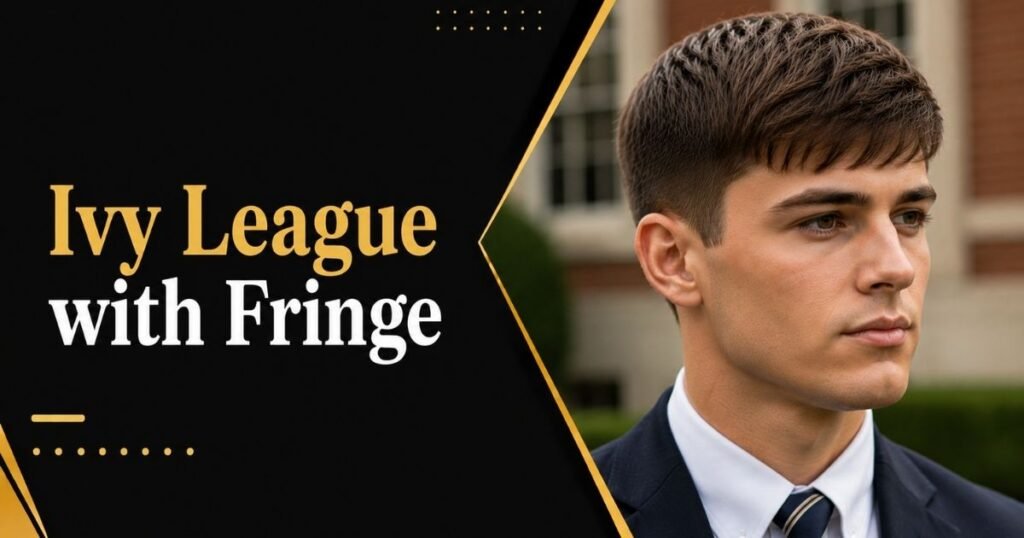
Styling Tip: Use a small amount of matte cream to define the fringe without making it look stiff.
Maintenance: Trim the fringe every 3-4 weeks to keep it from falling into the eyes. Maintenance and styling times are estimates and may vary by hair type.
Messy Ivy League Haircut
Overview: Trades the precise comb finish for a finger-styled, tousled top, while the tapered sides stay clean and structured.
Why It Works: Offers the same underlying competence as a classic Ivy League with a more relaxed, less formal edge.
Styling Tip: Scrunch a small amount of matte paste into damp hair and let it air-dry for natural texture.
Maintenance: Trim every 4 weeks; the deliberately undone top hides minor regrowth well. Maintenance and styling times are estimates and may vary by hair type.
Ivy League for Thinning Hair
Overview: Keeps the top length moderate and the sides tapered rather than faded, which reduces contrast between thinner and fuller areas.
Why It Works: The slightly longer top adds the appearance of fuller coverage without looking flat or overly structured.
Styling Tip: A texturizing powder at the crown adds the appearance of extra density without heavy buildup.
Maintenance: Trim every 3-4 weeks; keeping consistent length matters more here than with thicker hair. Maintenance and styling times are estimates and may vary by hair type.
Ivy League for Round Faces
Overview: Adds extra height and length on top compared to the classic version, visually elongating a rounder face shape.
Why It Works: The added vertical volume balances out width at the cheeks and jaw.
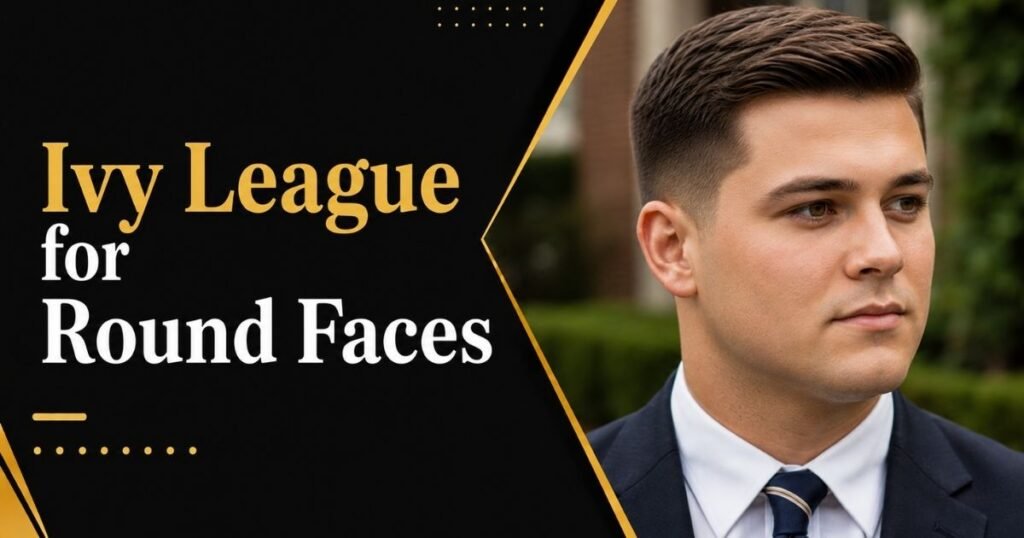
Styling Tip: Blow-dry the top upward at the roots before setting with a medium-hold pomade.
Maintenance: Trim every 3-4 weeks to keep the added height proportional. Maintenance and styling times are estimates and may vary by hair type.
Men Ivy League Haircut for Straight Hair
Overview: Straight hair shows off the Ivy League’s clean lines most clearly, making precision tapering especially important for this texture.
Why It Works: The contrast between the tapered sides and smooth, flat-lying top gives a tidy, deliberate look.
Styling Tip: A light pomade adds shine and hold without the heaviness that can make straight hair look greasy.
Maintenance: Trim every 3 weeks; lines show clearly on straight hair, so the cut needs more frequent upkeep. Maintenance and styling times are estimates and may vary by hair type.
Low-Maintenance Ivy League Haircut
Overview: Simplifies the classic shape further with a softer taper and a top length that air-dries into place without much fuss.
Why It Works: Ideal for guys who want the Ivy League’s polish without a daily styling routine.
Styling Tip: A small amount of light cream, combed through once while damp, is usually all that’s needed.
Maintenance: Trim every 4-5 weeks; the soft taper is one of the most forgiving options here. Maintenance and styling times are estimates and may vary by hair type.
Ivy League with Beard
Overview: Pairs the classic tapered sides and side-parted top with a fuller beard for a more mature, grounded overall look.
Why It Works: The beard adds visual weight at the jaw, balancing the structured neatness of the haircut above.
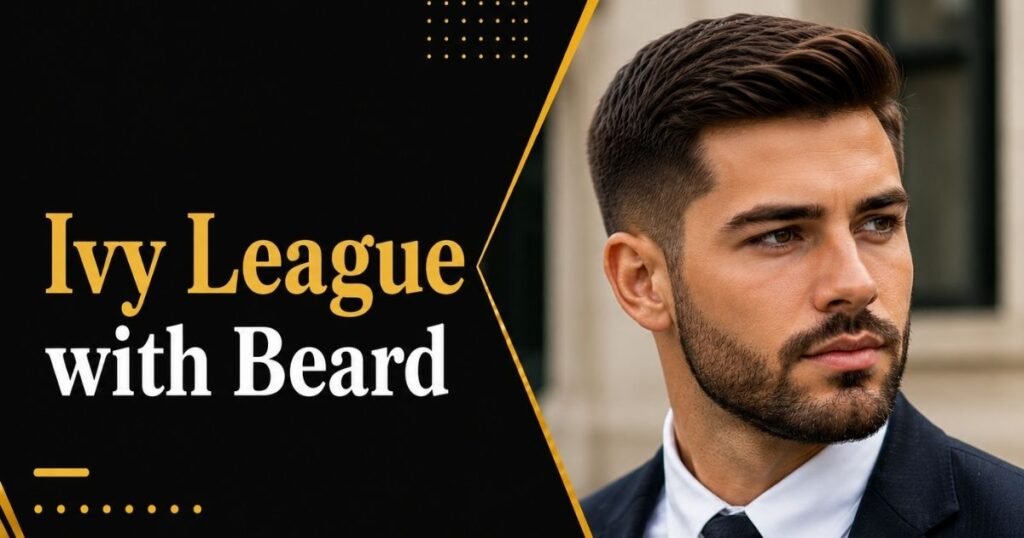
Styling Tip: Use a beard oil daily to keep facial hair soft and prevent it from looking dry against the neatly styled top.
Maintenance: Trim the haircut every 3-4 weeks and keep the beard shaped weekly so the two stay in sync. Maintenance and styling times are estimates and may vary by hair type.
Military Ivy League Haircut
Overview: Combines a very short, faded taper on the sides with a neat, longer top that stays within most standard grooming regulations.
Why It Works: Delivers the discipline and precision expected in military and similarly formal environments while still allowing a defined part.
Styling Tip: A small amount of medium-hold pomade adds a slight sheen while keeping the top controlled.
Maintenance: Trim every 2-3 weeks to keep the fade and top length within regulation. Maintenance and styling times are estimates and may vary by hair type.
Ivy League Comb Over
Overview: Combs all the top hair in one direction from a deep side part, creating a more dramatic sweep than the classic version’s shorter part.
Why It Works: A polished, business-ready look that dates back over a century and still reads as sharp today.
Styling Tip: Lightly dampen hair and apply pomade or wax before combing across for an all-day hold.
Maintenance: Trim every 3-4 weeks to keep the part and taper looking sharp and intentional. Maintenance and styling times are estimates and may vary by hair type.
Ivy League Slick Back
Overview: Instead of a side part, all the top hair is combed straight back for a sleek, uniform finish over the tapered sides.
Why It Works: A timeless, formal option that works especially well when the top is left a touch longer than the classic length.
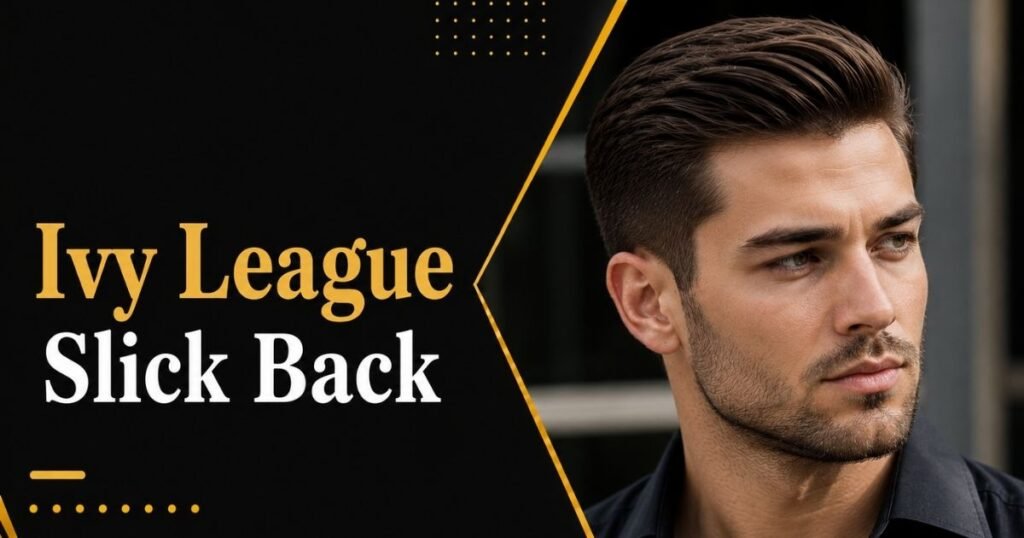
Styling Tip: Use a high-shine pomade on damp hair and comb straight back in one motion for a glass-like finish.
Maintenance: Trim every 3-4 weeks; the top can grow slightly longer between cuts since length helps the slick-back hold. Maintenance and styling times are estimates and may vary by hair type.
Medium Length Ivy League Asian
Overview: Extends the top length further than the classic version for more styling versatility, while keeping the sides at a traditional taper.
Why It Works: Gives guys who like variety more to work with – sleek one day, tousled the next – without losing the underlying structure.
Styling Tip: A medium-hold pomade supports both a sleek combed look and a more relaxed, textured finish depending on the day.
Maintenance: Trim every 5-6 weeks; the extra length is forgiving of regrowth between visits. Maintenance and styling times are estimates and may vary by hair type.
Ivy League for Coily/4C Hair
Overview: Keeps the sides tapered while letting natural coils stay full and rounded on top rather than forcing them into a flat part.
Why It Works: The coil pattern creates natural volume and texture, so the cut mainly manages density on the sides.
Styling Tip: Use a leave-in curl butter to define coils and lock in moisture without weighing the top down.
Maintenance: Trim every 6-8 weeks; regrowth blends into the coil pattern well. Maintenance and styling times are estimates and may vary by hair type.
Ivy League for Boys
Overview: A simplified version with a shorter top length and gentler taper, easy for parents to maintain and for kids to style themselves.
Why It Works: Delivers the same neat, classic silhouette in a low-effort, age-appropriate package.
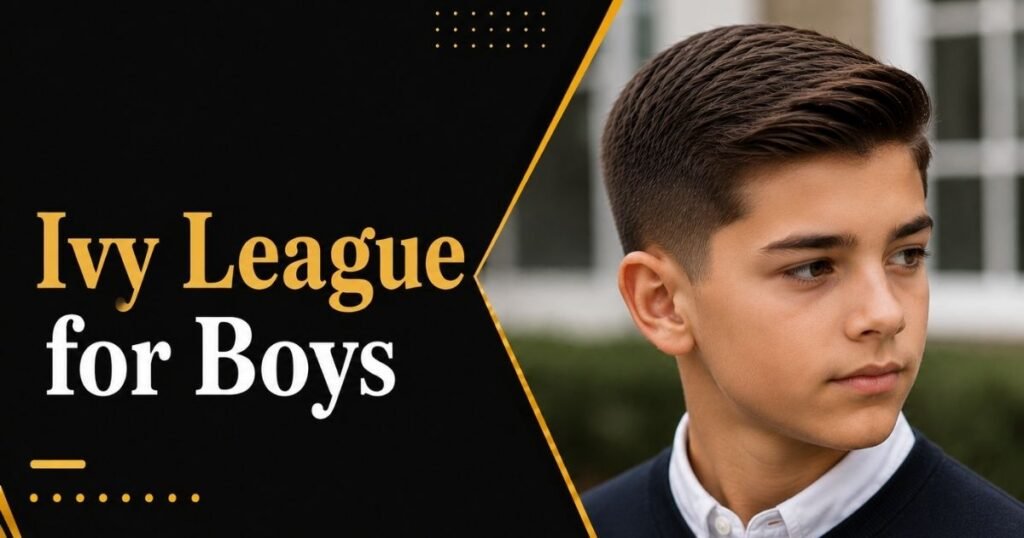
Styling Tip: A small amount of light hair cream is enough to add shape without stiffness or shine.
Maintenance: Trim every 4-5 weeks; the shorter length is more forgiving of regrowth than an adult-length version. Maintenance and styling times are estimates and may vary by hair type.
Preppy Ivy League with Shine
Overview: Leans into the style’s collegiate roots with a slightly tousled top and a glossy, dressed finish rather than a matte one.
Why It Works: Works well for dressier occasions, from weddings to formal dinners, where a bit of shine reads as polished rather than greasy.
Styling Tip: Use a high-shine pomade sparingly on damp hair to avoid an overly wet look.
Maintenance: Trim every 4 weeks; the tousled shape hides minor regrowth well. Maintenance and styling times are estimates and may vary by hair type.
Ivy League with Hard Side Part and Design
Overview: Adds a custom shaved design or pattern into the tapered sides alongside a crisp, shaved hard part, for a personalized, statement finish.
Why It Works: Turns a traditional Ivy League into a genuine style statement without changing the classic top length at all.
Styling Tip: Keep the top simple and neatly parted so the design and hard part stay the visual focus.
Maintenance: Both the design and the hard part need a touch-up every 1-2 weeks to stay sharp. Maintenance and styling times are estimates and may vary by hair type.
Ivy League Haircut vs. Pompadour
Both styles share short sides and longer top hair, but the proportions and finish differ. An Ivy League keeps a relatively modest, controlled top length, usually styled into a side part or brushed lightly upward, with a focus on neatness over volume.
A pompadour pushes for significantly more height and drama, with the top hair swept straight back and up into a bold, structured shape that requires more daily styling effort. If you want a conservative, low-effort classic, choose the Ivy League. If you want a statement style with real height, choose the pompadour, or try the Ivy League Pompadour hybrid covered above.
How to Choose the Right Ivy League for Your Hair and Face Shape
Hair Types
- Thick hair: Handles brushed-up and textured variations especially well, since there’s enough density to hold shape.
- Thin hair: A slightly shorter top with a texturizing powder creates the appearance of more density than longer styles would.
- Curly hair: Ask for the cut to be finished dry whenever possible, since curls sit differently dry than wet.
- Straight hair: Shows the taper’s lines most clearly, so precision cutting matters more here than with any other texture.
- Wavy hair: One of the easiest textures to work with – waves add movement a flat cut doesn’t have on its own.
Face Shapes
- Oval: Nearly every version on this list works – choose based on lifestyle and maintenance tolerance.
- Round: Added height and length on top, like the pompadour or brushed-up versions, visually elongates the face.
- Square: A softer, side-swept top eases strong jawlines while still highlighting them.
- Long/Oblong: Keep the top length moderate and skip added height to avoid emphasizing length further.
How to Ask Your Barber for an Ivy League Haircut
- Bring one or two clear reference photos, ideally from a similar hair type to yours
- Specify the top length you want, generally one to two inches at the front hairline
- Mention the taper or fade height you prefer on the sides – scissor taper, low fade, mid fade, or higher
- Ask specifically whether you want a soft comb-in part or a crisp, shaved hard part
- Describe your daily styling routine so the cut is built for how you’ll actually wear it
- Confirm the final top length and taper height with a mirror check before the barber puts the tools away
Product Recommendations
Hair Cream Best For: Fine to medium hair needing light, natural-looking hold on top. How To Use: Work a small amount through damp hair and style with fingers or a comb for a soft, matte finish.
Pomade Best For: Classic side parts, comb overs, and slick backs that need defined direction and shine. How To Use: Warm a dime-sized amount between palms and comb through for hold and a polished finish.
Wax Best For: Thicker hair needing stronger, longer-lasting hold, especially for brushed-up or pompadour variations. How To Use: Apply to dry hair in small sections, working from roots to ends for maximum control.
Matte Clay Best For: Adding texture and separation without shine, especially for modern textured or messy variations. How To Use: Rub between palms until slightly warm, then work through dry hair for a natural, piece-y finish.
Shampoo Best For: Keeping the scalp clean, especially important on fade variations with more exposed skin. How To Use: Use a gentle, sulfate-free formula 2-3 times a week to avoid drying out the scalp.
Conditioner Best For: Keeping curly and coily top lengths hydrated and manageable between wash days. How To Use: Apply to mid-lengths and ends, focusing away from the scalp to avoid weighing down roots.
Final Thoughts
The Ivy League haircut has stayed relevant for nearly a century because it solves a real problem: it looks deliberate and professional without demanding a complicated daily styling routine. The real skill isn’t in picking a photo you like – it’s in matching the top length, taper height, and finish to your specific hair type and face shape, then communicating that clearly to your barber.
Whether you land on a classic side-parted Princeton cut, a curly-hair version, or something bolder like the Ivy League Undercut, don’t be afraid to experiment across a couple of appointments before settling on your go-to. Bring this guide, point to what fits your hair and face shape, and let your barber take it from there.
Hairstyles for Men
- This roundup of the 35 best men hair style brings together 2026’s top trends think textured crops, disconnected fades, modern mullets, and clean side parts each suited to different face shapes, hair textures, and maintenance levels. Whether you want something sharp for the office or low-effort for everyday wear, this guide breaks down the styles worth trying this year.
- If you’re finding the right men hair style for Sharp Looks starts with understanding what actually works for your face shape, hair texture, and daily routine and this guide to the 37 best haircuts for 2026 makes that easy.
- From classic fades and crisp side parts to modern mullets and textured crops, every men hair style on this list is chosen for its sharp, put-together look with minimal upkeep. Whether you’re after a bold change or a subtle refresh, you’ll find a cut here that fits your style this year.
- A hair care guide for men starts with knowing your hair type and scalp condition to guide the right routine. Consistent washing, conditioning, and styling habits keep hair healthy and manageable over time.
- Spiky Hairstyles for Men feature short-to-medium hair styled upward with strong-hold products like clay, wax, or pomade for a bold, textured finish. From clean spiky fades to messy, tousled looks, Spiky Hairstyles for Men offer versatile options that suit nearly every hair type and face shape.
- Textured Crop Hairstyle Men covers everything from a clean low-fade crop to a messy, shaggy version, all built around choppy, layered texture on top. It’s a versatile, low-maintenance option that suits most hair types and face shapes.
- A Mohawk Fade Haircut pairs a longer center strip with sides that gradually shorten through a clipper fade, offering a modern, wearable update on the classic mohawk. It adapts easily across hair types and face shapes, from low-key corporate versions to bold, high-contrast statement looks.
FAQs
What is an Ivy League haircut?
An Ivy League haircut is a longer, more versatile version of the crew cut, with short, tapered sides and enough length on top, usually one to two inches, to comb into a side part or style upward.
Is the Ivy League haircut low maintenance?
Yes, most versions are low to medium maintenance, typically needing a trim every 3-4 weeks and only a small amount of pomade or cream to style each day.
Can you get an Ivy League haircut with curly hair?
Yes, curly hair works well with an Ivy League, especially when the top is left long enough to show the curl pattern. Ask your barber to finish the cut dry for the most accurate length.
How often should you trim an Ivy League haircut?
Most Ivy League cuts hold their shape for 3-4 weeks. Fade or hard-part variations need more frequent touch-ups, closer to every 1-2 weeks, to stay sharp.
Does the Ivy League haircut work for military regulations?
Yes, a shorter version with a tighter fade on the sides typically falls within standard grooming regulations, which is why it’s a popular choice among service members.