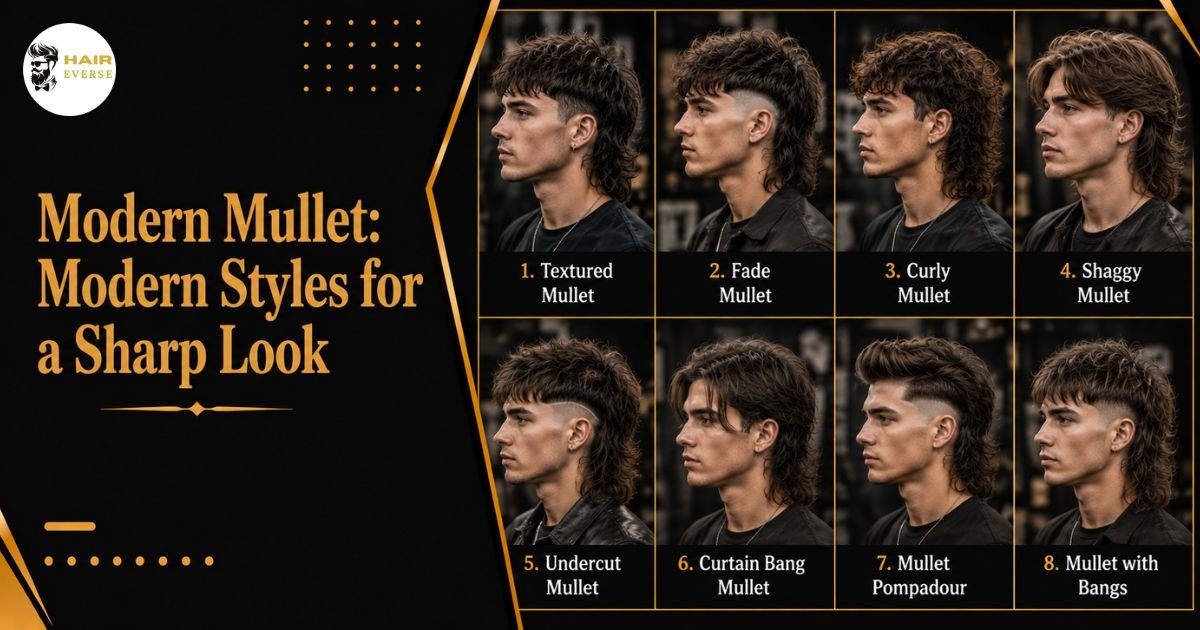
Modern Mullet Haircut: Modern Styles for a Sharp Look
Growing out the back while keeping the front sharp sounds simple, until it grows lopsided, thin at the crown, or impossible to style on a humid morning. A modern mullet haircut solves that problem, but only if you pick the version built for your hair type and face shape.
That’s break down 35 modern mullet with fade cuts, from skinfade tapers to curly wolf cuts, so you walk into the chair knowing exactly what to ask for. Barbers see the same three mistakes on repeat: growing the back too fast, skipping product, and choosing a shape that fights natural texture instead of using it. This guide fixes all three.
Comparison Table for Modern Mullet Haircut
Here are style, type, face shape, mintenance and styling time comparison detailed table.
| Hairstyle | Best Hair Type | Face Shape | Maintenance | Styling Time |
| Classic Long Mullet | Straight, Wavy | Oval, Square | Medium | 510 min |
| Modern Mullet Fade | All types | Round, Oval | Medium | 510 min |
| Curly Mullet Fade | Curly, Coily | Oval, Long | High | 1015 min |
| Modern Mullet Taper | Straight, Wavy | Any | Low | 5 min |
| Curly Modern Mullet | Curly | Round, Square | High | 1015 min |
| French Crop Mullet | All types | Oval, Round | Low | 5 min |
| Shaggy Mullet with Undercut | Wavy, Thick | Long, Oval | Medium | 10 min |
| Faux Hawk Mullet | Straight, Curly | Square, Oval | Medium | 10 min |
| Curly Edgar Mullet | Curly | Oblong, Long | Medium | 10 min |
| Wavy Pomp with Drop Fade | Wavy | Oval, Heart | Medium | 10 min |
| Mohawk Fade Mullet | Straight, Thick | Square | High | 1015 min |
| Textured Quiff Mullet | Straight, Wavy | Round, Oval | Medium | 510 min |
| SlickBack Mullet | Straight | Any | Low | 5 min |
| Burst Fade Quiff Mullet | Straight, Thin | Round | Low | 5 min |
| Permed Mullet | Straight, Wavy | Oval, Square | High | 10 min |
| Skin Temple Fade Mullet | Any | Any | Low | 5 min |
| Low Fade Mullet with Beard | Straight, Wavy | Square, Long | Medium | 510 min |
| Mod Mullet | Straight | Oval, Heart | Medium | 510 min |
| Long Curly Mullet | Curly | Oval, Long | High | 15 min |
| Short Mullet with Skin Taper | Thick, Curly | Round, Square | Low | 5 min |
| Mullet with Curtain Bangs | Wavy, Straight | Heart, Oval | Medium | 10 min |
| Straight Bang Mullet | Straight, Thick | Round, Square | Medium | 510 min |
| Caesar Cut Mullet | All types | Any | Low | 5 min |
| Blonde Mullet with Man Bun | Long, thick | Oval, Long | Medium | 10 min |
| Skin Fade Ponytail Mullet | Straight, Thick | Any | Low | 5 min |
| Spiky Mullet with Angular Fringe | Straight, Wavy | Square, Oval | Medium | 10 min |
| Wolf Cut Mullet | Wavy, Curly | Round, Oval | Medium | 1015 min |
| CombOver Mullet | Straight | Oval, Heart | Low | 510 min |
| Flat Top Mullet | Thick, Coarse | Square | Medium | 10 min |
| Horseshoe Mullet | Straight | Long, Oval | Low | 5 min |
| Layered Mullet with Dyed Tips | Straight, Wavy | Any | High | 10 min |
| Colorful Mullet with Taper | Any | Any | High | 10 min |
| Business Modern Mullet | Straight, Wavy | Any | Low | 5 min |
| Boys’ Modern Mullet | Any | Any | Low | 5 min |
| Thin Hair Mullet Fade | Thin, Fine | Round, Oval | Low | 5 min |
Classic Long Mullet
Overview: The original silhouette short, cropped sides and top with hair left long and untouched at the back. It’s the mullet in its rawest, least fussy form.
Why It Works: Best for straight or wavy hair that holds shape without much effort, and flatters oval or square faces by adding length at the back without adding width up top.
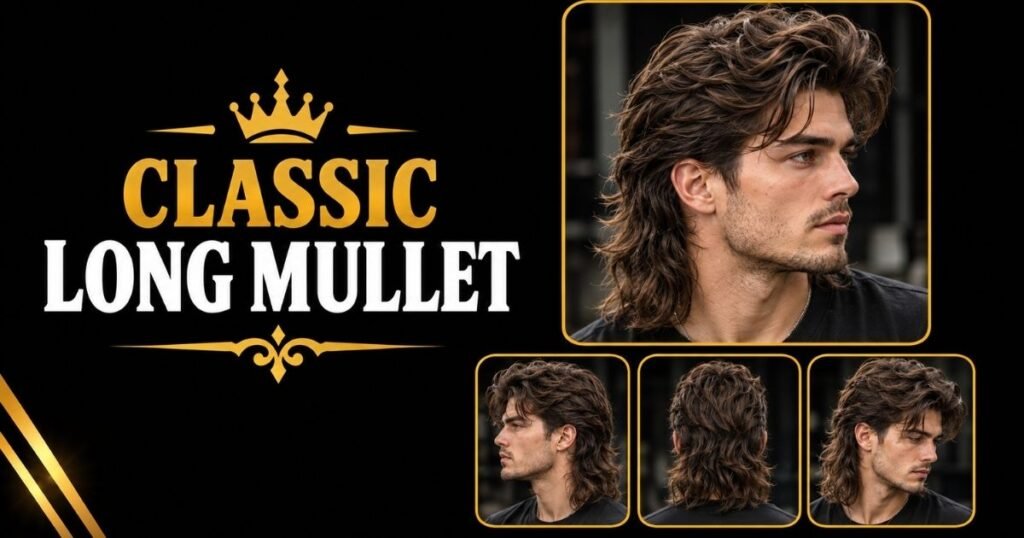
Styling Tip: Work a small amount of matte clay through damp hair to keep the top textured without shine.
Maintenance: Trim the sides every 34 weeks to keep contrast crisp while letting the back keep growing. Maintenance and styling times are estimates and may vary by hair type.
Modern Mullet Fade
Overview: This is the style most people mean when they say “modern mullet” a skin or taper fade on the sides that blends smoothly into a fuller top and longer back.
Why It Works: Works across nearly every hair type since the fade does the heavy lifting, and suits round or oval faces by adding sharp definition at the temples.
Styling Tip: Use a lightweight pomade on the top section to add movement without weighing down the fade’s clean lines.
Maintenance: Book a fade refresh every 23 weeks since fades grow out faster than the rest of the cut. Maintenance and styling times are estimates and may vary by hair type.
Modern Mullet Curly Hair
Overview: A fade on the sides paired with natural curls left long on top and at the back, letting the curl pattern do most of the visual work.
Why It Works: Built specifically for curly and coily hair types, and flatters oval or long face shapes because the curl volume adds width where a longer face needs it.
Styling Tip: Apply a curl-defining cream to soaking wet hair, then air dry or diffuse to avoid frizz breaking up the curl clumps.
Maintenance: Deep condition weekly since fades on curly hair expose more scalp and can dry out faster. Maintenance and styling times are estimates and may vary by hair type.
Modern Mullet Taper
Overview: A softer alternative to the skin fade sides gradually shorten toward the neckline instead of dropping to bare skin, giving a subtler transition.
Why It Works: Suits straight or wavy hair that doesn’t need sharp contrast to look intentional, and works on almost any face shape since the taper is forgiving.
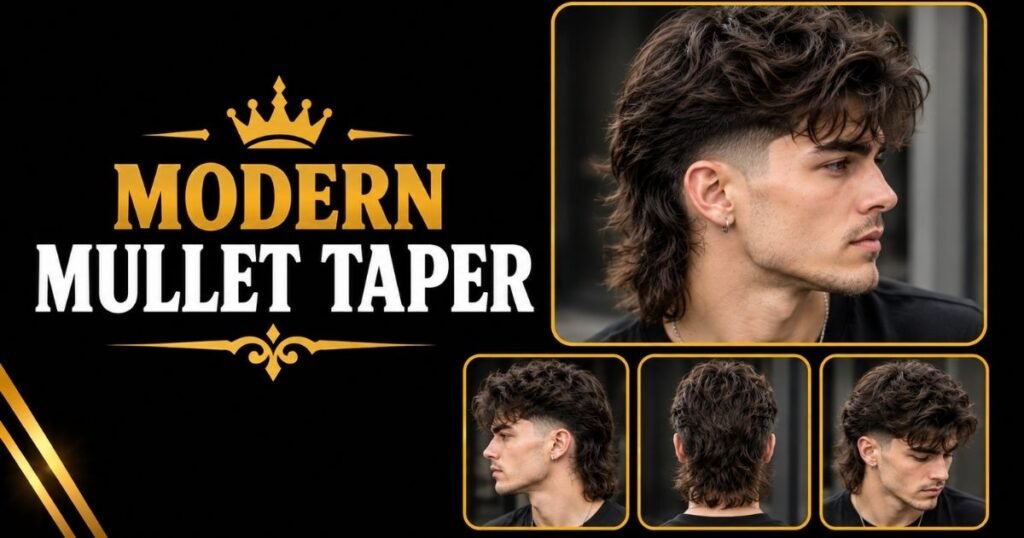
Styling Tip: A dimesize amount of hair cream tames flyaways on top without the stiffness of gel.
Maintenance: Because there’s no hard line to maintain, this style grows out gracefully and only needs a trim every 45 weeks. Maintenance and styling times are estimates and may vary by hair type.
Curly Modern Mullet Haircut
Overview: Similar to the curly mullet fade but with more length retained on the sides for a fuller, rounder silhouette instead of a hard fade line.
Why It Works: Ideal for type 3 and 4 curl patterns, and flatters round or square faces because the extra height at the crown elongates the overall shape.
Styling Tip: Scrunch a curl gel into wet hair from the ends up to encourage clumping instead of separation.
Maintenance: Trim only the dead ends every 68 weeks to preserve the curl pattern and avoid overthinning. Maintenance and styling times are estimates and may vary by hair type.
French Crop Mullet
Overview: Blends the boxy, textured fringe of a French crop with a mullet’s long back, keeping the top short and choppy while the nape stays untouched.
Why It Works: Works on nearly all hair types since the crop is naturally low maintenance, and its straight fringe line suits round or oval faces by adding horizontal balance.
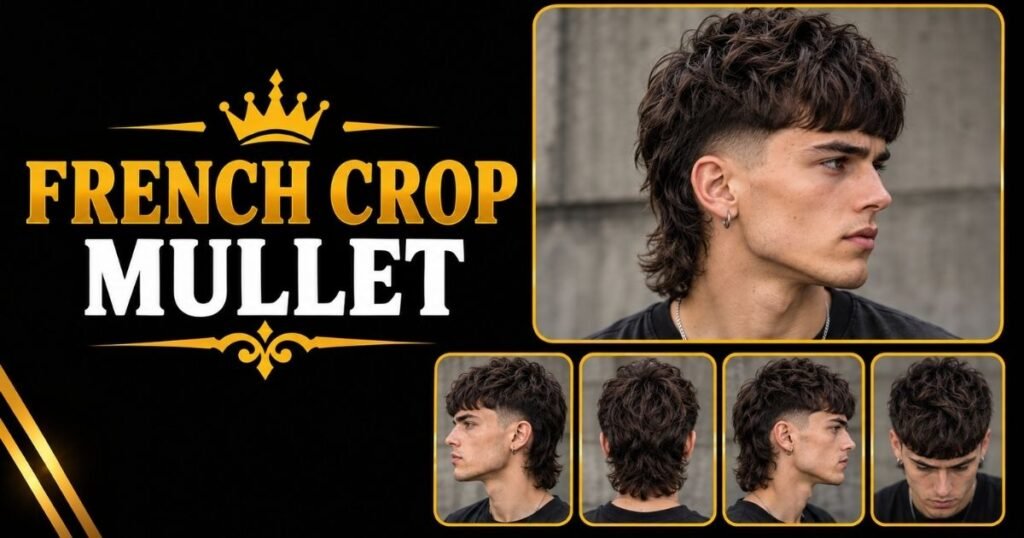
Styling Tip: Rub matte clay between your palms and press it into the fringe for texture instead of combing it flat.
Maintenance: Because the crop is short, it needs trimming every 3 weeks to stay sharp while the back keeps its length. Maintenance and styling times are estimates and may vary by hair type.
Shaggy Mullet with Undercut
Overview: Tousled, layered length on top meets a disconnected undercut on the sides for a bold, rave-adjacent look with heavy texture.
Why It Works: Best on wavy or thick hair that naturally holds shaggy layers, and flatters long or oval faces since the fringe shortens visual face length.
Styling Tip: Blowdry with a diffuser on low heat while scrunching sea salt spray through the midlengths for livedin texture.
Maintenance: Layers need reshaping every 56 weeks or the shag can start looking unintentionally messy. Maintenance and styling times are estimates and may vary by hair type.
Faux Hawk Mullet
Overview: A center strip of longer hair runs from the forehead to the crown, flanked by a skin fade, echoing the shape of a classic faux hawk but stretched into mullet length at the back.
Why It Works: Works on straight or curly hair with enough density to hold a center ridge, and suits square or oval faces by drawing the eye vertically.
Styling Tip: Apply curling cream and twist small sections upward with your fingers to define the center strip.
Maintenance: The fade needs a refresh every 23 weeks to keep the contrast against the center strip crisp. Maintenance and styling times are estimates and may vary by hair type.
Curly Edgar Mullet
Overview: Combines the Edgar cut’s blunt, straight across fringe with a mullet’s long back and a disconnected fade for high contrast.
Why It Works: Particularly flattering on oblong or long face shapes because the heavy fringe shortens the forehead, and works well with curly or coily textures.
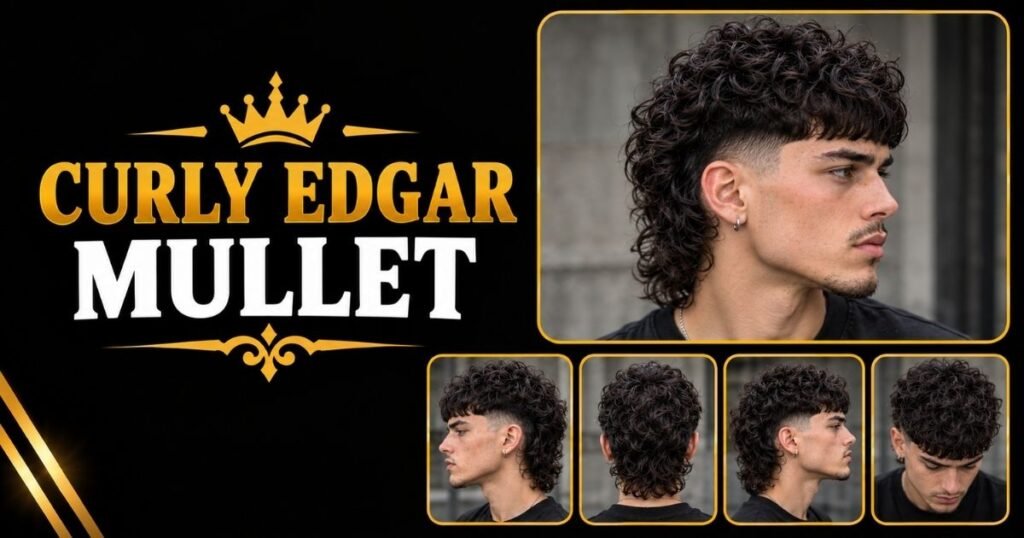
Styling Tip: Use a light gel on the fringe only to hold the blunt line in place without stiffening the curls further back.
Maintenance: The straight fringe line needs a touchup every 3 weeks to stay crisp as curls grow unevenly. Maintenance and styling times are estimates and may vary by hair type.
Wavy Pomp with Drop Fade
Overview: A voluminous pompadour on top tapers into a drop fade that curves behind the ear, with mullet length kept at the nape.
Why It Works: Suits wavy hair with natural lift, and its rounded fade line flatters oval or heartshaped faces.
Styling Tip: Blowdry the top backward and upward while it’s damp, then set with a lighthold pomade to keep waves defined.
Maintenance: The drop fade needs reshaping every 23 weeks since its curved line grows out unevenly faster than a straight fade. Maintenance and styling times are estimates and may vary by hair type.
Mohawk Fade Mullet
Overview: An elongated fringe and center strip resembling a mohawk connects into mullet length at the back, with the sides shaved close around the ears.
Why It Works: Best suited to straight or thick hair that can be styled spiky or straight, and works on square faces where the strong vertical line adds definition.
Styling Tip: Apply hair clay to towel-dried hair and pull sections straight up for a spiked finish, or comb flat for a softer look.
Maintenance: The shaved sides grow back visibly within 1014 days, so more frequent touchups keep the contrast sharp. Maintenance and styling times are estimates and may vary by hair type.
Textured Quiff Mullet
Overview: Longer top hair is tousled and pushed upward into a textured quiff, tapered at the sides and left long at the back.
Why It Works: Works well on straight or wavy hair with medium density, and flatters round or oval faces by adding height at the crown.
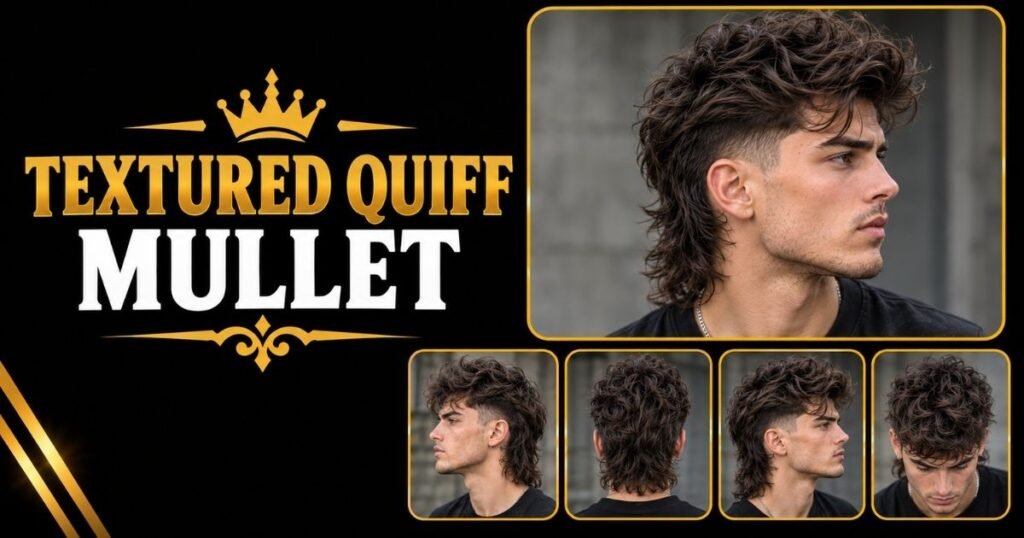
Styling Tip: Use a matte clay or gel, applying to damp hair and working from the roots up to build lift before it dries.
Maintenance: Reshape the fade every 3 weeks; the quiff itself only needs light trimming to keep its shape as it grows. Maintenance and styling times are estimates and may vary by hair type.
SlickBack Mullet
Overview: Clean and polished, with hair combed straight back off the face and subtly faded sides, keeping the mullet look understated rather than edgy.
Why It Works: Best for straight hair with enough length to comb back smoothly, and works on virtually any face shape thanks to its neutral silhouette.
Styling Tip: Apply pomade or gel to damp hair, then use a wide tooth comb to pull everything back in one direction.
Maintenance: Because the style relies on length rather than a sharp line, it only needs a trim every 45 weeks. Maintenance and styling times are estimates and may vary by hair type.
Burst Fade Quiff Mullet
Overview: A short quiff on top pairs with a burst fade that curves around the ear rather than running in a straight line down the sideburn.
Why It Works: Works well on straight or thin hair that struggles to hold long layers, and its rounded fade flatters round faces by softening angles.
Styling Tip: A pea size amount of matte paste pushed through dry hair keeps the short quiff textured without looking greasy.
Maintenance: Burst fades grow out fastest around the ear, so plan for a touchup every 2 weeks. Maintenance and styling times are estimates and may vary by hair type.
Permed Mullet
Overview: Naturally straight or wavy hair is chemically permed into loose curls on top and at the back, then paired with shorter, tapered sides.
Why It Works: Designed specifically for straight or wavy hair types wanting curl without natural texture, and suits oval or square faces since the added volume balances angular jawlines.
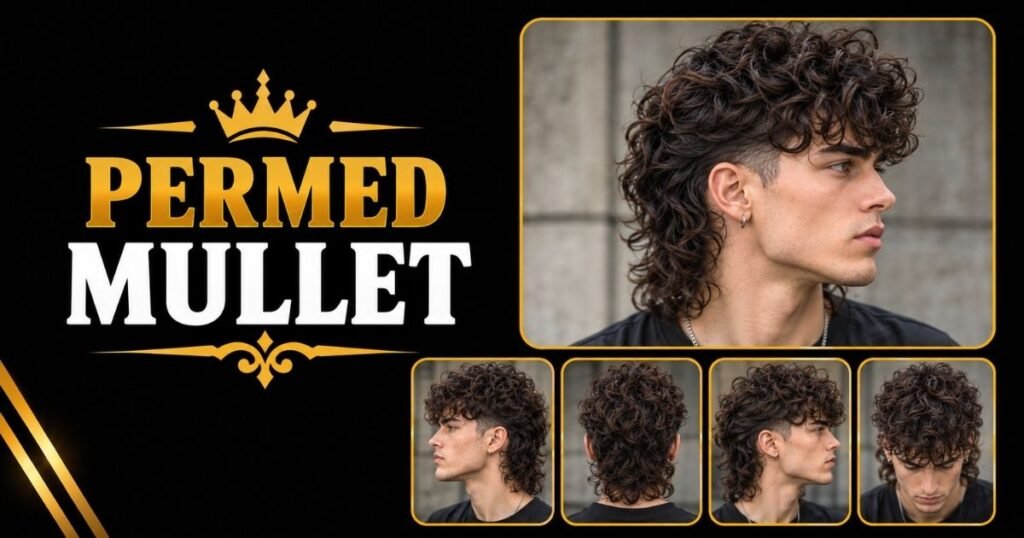
Styling Tip: Scrunch a light curl cream into damp hair and let it air dry to keep the perm pattern defined without frizz.
Maintenance: Perms need touchups every 34 months as new straight growth comes in at the roots, plus regular deep conditioning. Maintenance and styling times are estimates and may vary by hair type.
Skin Temple Fade Mullet
Overview: A shorter, more contemporary take on the mullet where a skin fade at the temples elongates the back without requiring dramatic overall length.
Why It Works: Suits any hair type since the length stays manageable, and its clean fade works for nearly every face shape.
Styling Tip: A lighthold cream keeps the top natural looking without the stiffness heavier products can cause on shorter hair.
Maintenance: The temple fade needs a refresh every 23 weeks since it’s the most visible part of the cut. Maintenance and styling times are estimates and may vary by hair type.
Low Fade Modern Mullet with Full Beard
Overview: A low fade keeps the sides subtle while a full, wellgroomed beard balances the mullet’s back length, creating a rugged, cohesive look.
Why It Works: Works on straight or wavy hair, and the beard is especially effective for square faces, softening strong jawlines with added width.
Styling Tip: Use beard oil daily and a small amount of hair cream on top to keep both textures looking intentional rather than unkempt.
Maintenance: Keep the beard neatly trimmed weekly so it doesn’t compete visually with the lowfade sides. Maintenance and styling times are estimates and may vary by hair type.
Mod Mullet
Overview: Borrows the mod haircut’s textured, forwardswept fringe at the front and blends it into classic mullet length at the back.
Why It Works: Best for straight hair with natural texture, and its forward fringe flatters oval or heartshaped faces by drawing attention downward.
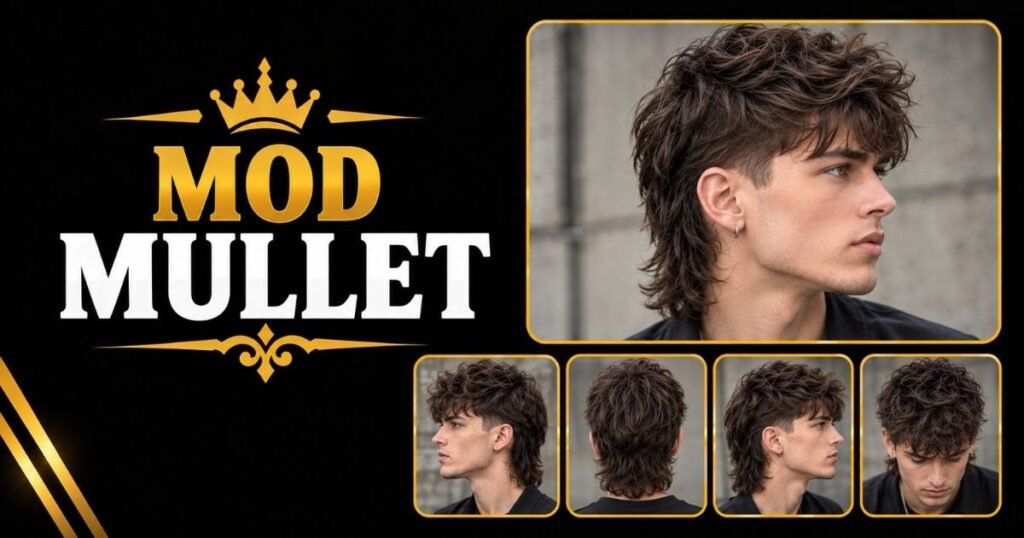
Styling Tip: Work a small amount of texturizing paste through the fringe and press it forward and down with your fingers.
Maintenance: Trim the fringe every 34 weeks to keep the mod silhouette from growing shapeless. Maintenance and styling times are estimates and may vary by hair type.
Long Curly Mullet
Overview: Maximum length and curl are kept throughout, with only minor shaping at the sides to preserve as much natural curl volume as possible.
Why It Works: Purpose built for long curly hair, and its fullness flatters oval or long face shapes by adding width around the jaw.
Styling Tip: Apply curling gel or cream to soaking wet hair and diffuse on low heat to lock in spring without frizz.
Maintenance: Deep condition at least twice a week and trim split ends every 810 weeks to keep curls springy instead of dry. Maintenance and styling times are estimates and may vary by hair type.
Modern Mullet Haircut Short with Skin Taper
Overview: Layers remove bulk from thick hair on top while a skin taper on the sides keeps the whole look neat and low profile.
Why It Works: Ideal for thick or coarse hair types that need weight removed to avoid a heavy, boxy shape, and flatters round or square faces.
Styling Tip: A light matte cream separates layers without adding shine or extra weight to already dense hair.
Maintenance: Because the cut is short overall, it needs a trim every 3 weeks to keep proportions intact. Maintenance and styling times are estimates and may vary by hair type.
Mullet with Curtain Bangs
Overview: The fringe is parted in the center and swept to both sides, framing the face while the sides taper and the back stays long.
Why It Works: Suits wavy or straight hair with enough length to part cleanly, and curtain bangs flatter heart or oval faces by framing the forehead.
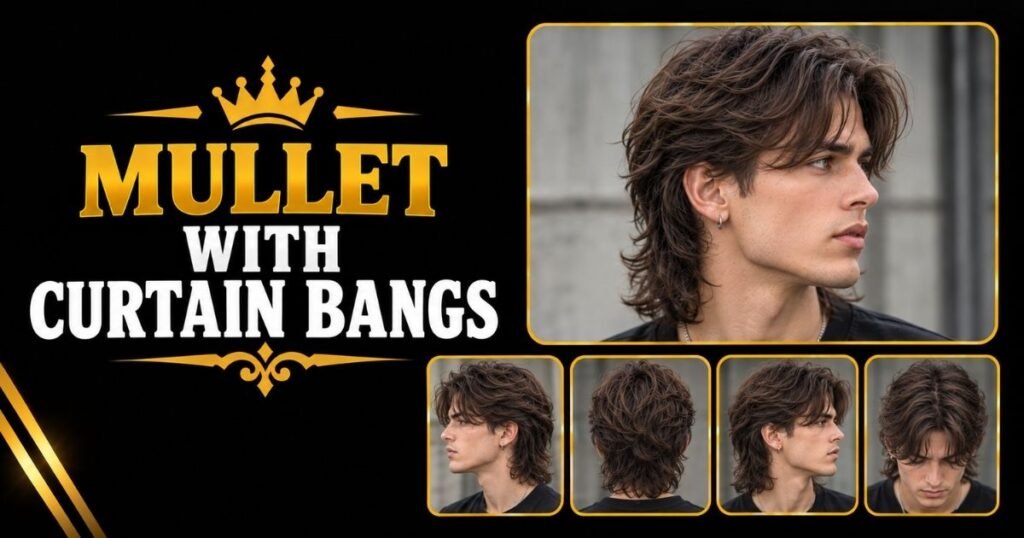
Styling Tip: Blowdry the fringe with a round brush, pulling each side outward and away from the center part.
Maintenance: Trim the bangs every 34 weeks so they don’t fall into the eyes and lose their framing effect. Maintenance and styling times are estimates and may vary by hair type.
Bang Modern Mullet Straight Hair
Overview: A blunt, straightcut fringe sits at one consistent length across the forehead, paired with shorter or shaved sides and long back hair.
Why It Works: Works best on straight hair of any thickness, and the strong horizontal fringe line flatters round or square faces by adding definition.
Styling Tip: Blowdry the fringe flat with a paddle brush, then set with a lighthold spray to prevent it from splitting.
Maintenance: The blunt line needs trimming every 23 weeks to stay crisp as hair grows unevenly along the front. Maintenance and styling times are estimates and may vary by hair type.
Caesar Cut Mullet
Overview: A short, horizontally cropped fringe defines the front, similar to a Caesar cut, while the sides are shaved or tightly faded and the back stays long.
Why It Works: Works across nearly every hair type including fine or coarse hair, and its short fringe suits most face shapes without adding bulk.
Styling Tip: A small amount of matte cream on the fringe keeps it in place without the shine a gel would add.
Maintenance: The tight sides need a refresh every 23 weeks; the short fringe holds shape well between cuts. Maintenance and styling times are estimates and may vary by hair type.
Blonde Mullet with Man Bun
Overview: Long, lightened hair on top is pulled back into a small bun, with faded or shaved sides keeping the silhouette clean underneath.
Why It Works: Best suited to long, thick, or fine hair with enough length to tie back, and works on oval or long face shapes.
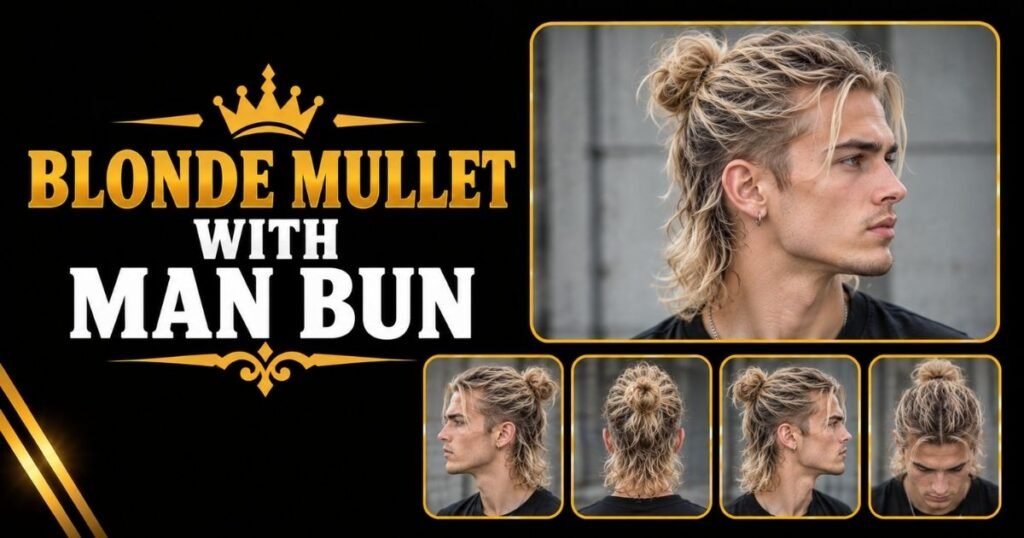
Styling Tip: Use a texturizing spray before tying the bun to add grip and prevent slipping throughout the day.
Maintenance: Touch up the blonde color every 46 weeks and use a purple shampoo weekly to keep brassiness at bay. Maintenance and styling times are estimates and may vary by hair type.
Skin Fade Ponytail Mullet
Overview: Sides and most of the back are shaved or tightly faded, while a section at the nape is left long enough to gather into a low ponytail.
Why It Works: Suits straight or thick hair with strong hold, and its clean shave works across almost any face shape.
Styling Tip: Tie the ponytail with an elastic while hair is slightly damp to reduce frizz and keep the shape smooth all day.
Maintenance: The shaved sides grow back within two weeks, so budget for frequent shapeups if you want the contrast crisp. Maintenance and styling times are estimates and may vary by hair type.
Spiky Mullet with Angular Fringe
Overview: A faux hawkstyle spiky top meets an angular, V-shaped fringe cut, giving the front a sharp, rock-inspired edge above mullet length back hair.
Why It Works: Best for straight or wavy hair with enough density to hold spikes, and the angular fringe flatters oval or square faces.
Styling Tip: Work hair gel into damp roots and pull sections upward with your fingers to create defined spikes.
Maintenance: Recut the angular fringe every 3 weeks to keep the shape sharp instead of blurring as hair grows. Maintenance and styling times are estimates and may vary by hair type.
Wolf Cut Mullet
Overview: A hybrid of shag and mullet, with heavy layering throughout the top and choppy, feathered ends that blend into mullet length hair at the back.
Why It Works: Works especially well on wavy or curly hair that shows off the layering, and flatters round or oval faces by adding texture-driven volume.
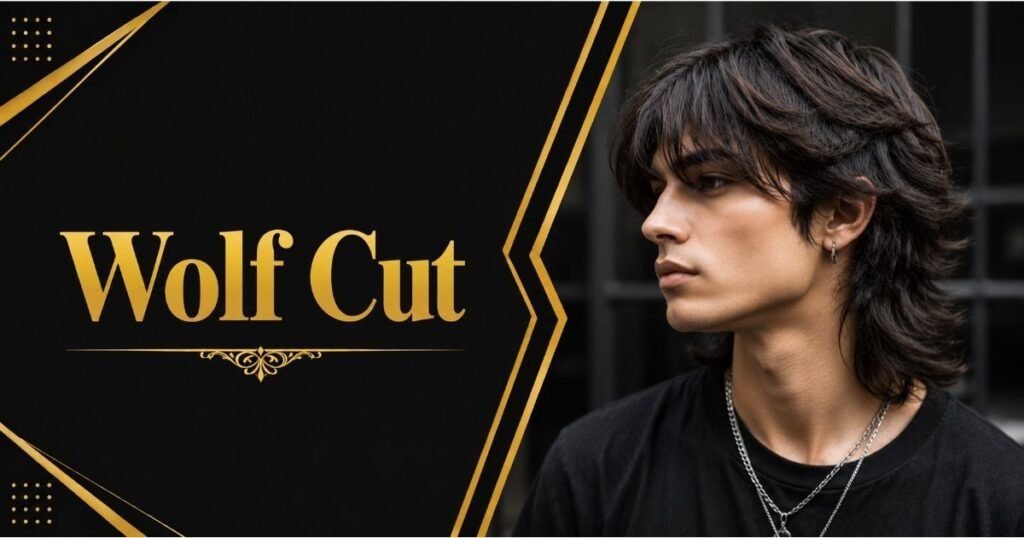
Styling Tip: Apply sea salt spray to damp hair and scrunch upward to enhance natural texture and separation between layers.
Maintenance: Layers need reshaping every 68 weeks to keep the shaggy silhouette from growing into an undefined mass. Maintenance and styling times are estimates and may vary by hair type.
CombOver Mullet
Overview: A defined side part directs the top hair across the head in a classic combover shape, with a faded side and long mullet back underneath.
Why It Works: Suits straight hair with a natural or trained part, and the sideswept top flatters oval or heartshaped faces.
Styling Tip: Apply pomade to damp hair, comb in the part with a fine tooth comb, then set with a blow dryer on a cool setting.
Maintenance: Keep the part line fresh with a trim every 34 weeks so regrowth doesn’t blur the combover shape. Maintenance and styling times are estimates and may vary by hair type.
Flat Top Mullet
Overview: A squaredoff, flat crown sits above faded sides, creating a bold retro silhouette that connects into long mullet hair at the back.
Why It Works: Best on thick or coarse hair with enough density to hold a flat shape, and suits square faces by adding structured height.
Styling Tip: Use a stronghold pomade and a flat brush to comb the top straight up before trimming the crown level.
Maintenance: The flat top needs trimming every 2 weeks to keep its squared edge, since even a little growth softens the line. Maintenance and styling times are estimates and may vary by hair type.
Horseshoe Mullet
Overview: The front hairline is cut into a curved, horseshoe-shaped section that stands slightly apart from the sides, blending into mullet length behind it.
Why It Works: Works best on straight hair with a naturally defined hairline, and suits long or oval faces by adding structure to the front.
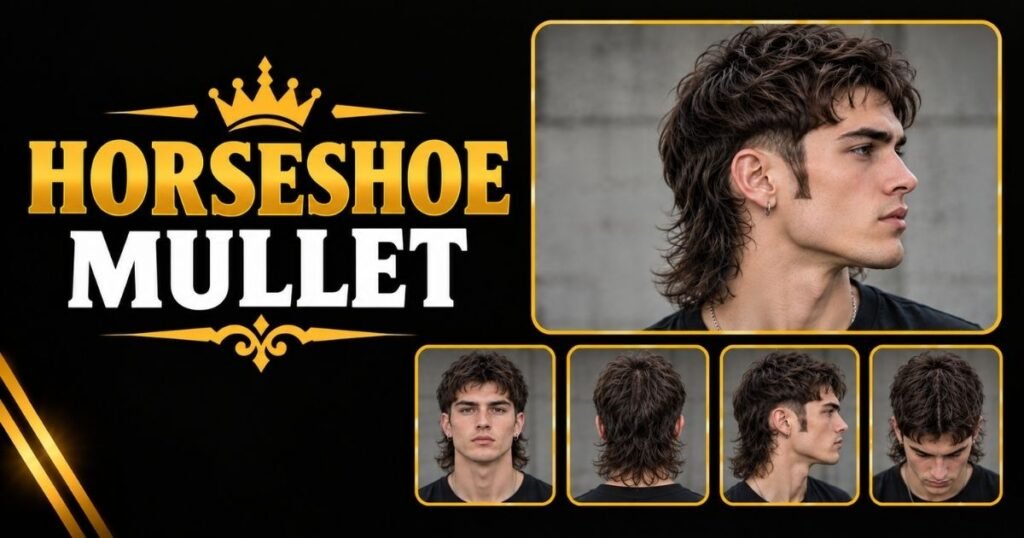
Styling Tip: A light gel along the horseshoe section keeps the curved shape crisp without stiffening the rest of the top.
Maintenance: Refresh the horseshoe outline every 3 weeks so the curve doesn’t blend into the growing sides. Maintenance and styling times are estimates and may vary by hair type.
Layered Mullet with Dyed Tips
Overview: Heavily layered hair throughout gets the ends lightened or dyed a contrasting shade, adding movement and color depth to the mullet shape.
Why It Works: Suits straight or wavy hair with visible layering, and works on any face shape since the color draws attention to texture rather than outline.
Styling Tip: Use a colorsafe styling cream to avoid stripping the dyed tips, applying from midlength to ends only.
Maintenance: Touch up the color every 46 weeks and use a sulfate-free shampoo to keep the dye from fading fast. Maintenance and styling times are estimates and may vary by hair type.
Colorful Mullet with Taper
Overview: A bold, allover or partial hair color is applied to a tapered mullet base, turning the cut into a statement piece rather than a subtle style.
Why It Works: Works on any hair type that can tolerate bleaching and dye, and suits any face shape since the impact comes from color, not silhouette.
Styling Tip: Use color depositing conditioner between salon visits to keep vibrancy from washing out too quickly.
Maintenance: Reapply color every 35 weeks depending on fade rate, and always use lukewarm water to rinse hair. Maintenance and styling times are estimates and may vary by hair type.
Business Modern Mullet Haircut
Overview: A toneddown mullet with a soft taper instead of a hard fade and back length kept just past the collar, built to pass in a corporate office.
Why It Works: Works for straight or wavy hair of any density, and its understated shape suits nearly every face shape without drawing unwanted attention.
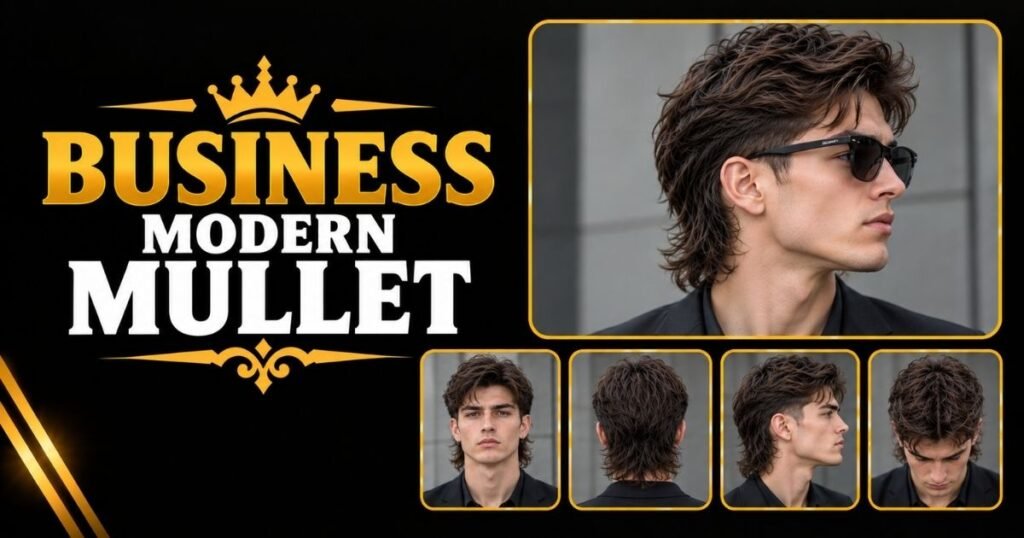
Styling Tip: A lighthold cream keeps hair neat and controlled through a full workday without looking overstyled.
Maintenance: A trim every 45 weeks keeps the length professional and prevents the back from growing past a tidy, collarlength limit. Maintenance and styling times are estimates and may vary by hair type.
Boys’ Modern Mullet Haircut
Overview: A shorter, simplified mullet with a soft taper and modest back length, designed to be easy for parents to maintain between cuts.
Why It Works: Works well for any hair type in younger boys, and its short overall length keeps it practical for school and sports.
Styling Tip: A tiny amount of kidsafe styling cream keeps hair neat without the stronger hold products used for adult styles.
Maintenance: Trim every 4 weeks to keep the shape neat as boys’ hair tends to grow quickly. Maintenance and styling times are estimates and may vary by hair type.
Thin Hair Mullet Fade
Overview: A close fade on the sides paired with modest length on top and back, chosen specifically to avoid the flat, thin look longer layers can create.
Why It Works: Built for thin or fine hair that lacks natural volume, and the tighter fade flatters round or oval faces by adding definition without needing bulk.
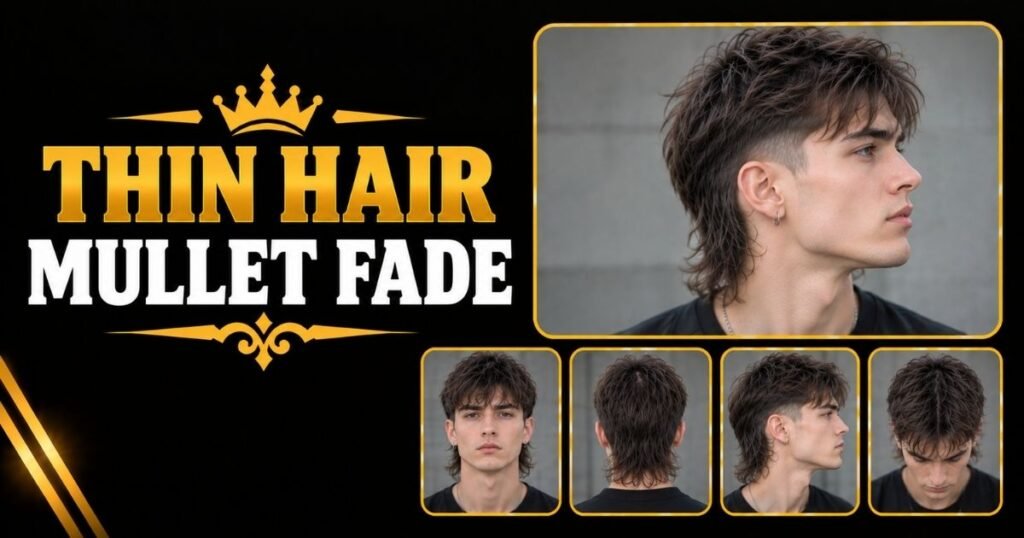
Styling Tip: Use a volumizing sea salt spray at the roots and blowdry upside down briefly to add lift before styling.
Maintenance: Keep the fade refreshed every 23 weeks since thin hair shows regrowth and unevenness faster than thicker types. Maintenance and styling times are estimates and may vary by hair type.
How to Choose the Right Modern Mullet Haircut?
By Hair Type:
- Thick hair: Look for cuts with layering built in — the Short Mullet with Skin Taper or Wolf Cut Mullet removes bulk instead of fighting it.
- Thin hair: Choose close, tight fades like the Thin Hair Mullet Fade or Burst Fade Quiff Mullet, which add definition without needing volume.
- Curly hair: The Curly Mullet Fade, Long Curly Mullet, or Curly Edgar Mullet work with your curl pattern instead of straightening it out.
- Straight hair: SlickBack Mullet and Caesar Cut Mullet hold their shape cleanly with minimal daily effort.
- Wavy hair: Wavy Pomp with Drop Fade and Mullet with Curtain Bangs make the most of natural movement.
By Face Shape:
- Oval: Almost any mullet works, but Classic Long Mullet and Modern Mullet Fade are safe, versatile starting points.
- Round: Choose styles with height, like the Textured Quiff Mullet or Flat Top Mullet, to add length visually.
- Square: Faux Hawk Mullet or Mohawk Fade Mullet add vertical lines that soften strong jaw angles.
- Long: Curly Edgar Mullet or Horseshoe Mullet add width through fringe and curl volume.
How to Ask Your Barber for Modern Mullet Haircut?
- Bring 12 reference photos of the exact style, not just the word “mullet” variations differ enormously.
- Specify the back length you want in fingerwidths or inches, since “long” means different things to different barbers.
- Mention your daily styling routine so the barber can shape the cut to match how much effort you’ll realistically put in.
- Ask directly about the maintenance schedule for your chosen fade or taper before you leave the chair.
- Explain any workplace or lifestyle restrictions upfront, especially for bolder styles like the Colorful Mullet with Taper.
- Confirm the final shape and fade height before the clippers start, not after the first pass.
Want More Hairstyles?
The undercut haircut is a versatile men’s style featuring closely shaved or clipped sides with noticeably longer hair on top, creating strong contrast and definition. It can be styled as a disconnected undercut haircut for a bold edge, or blended into a fade for a smoother, more polished finish. Suited to straight, wavy, and curly hair alike, the undercut haircut offers easy styling with high visual impact.
If you want some modern hairstyle the you need to go for Ivy League haircut is a classic men’s style featuring short, neat sides and a slightly longer top for natural texture and movement. It offers more versatility than a crew cut, letting the top be swept, styled forward, or left tousled. Pairing well with a fade or taper, the Ivy League haircut suits straight and wavy hair alike.
Alo some peoples preffer Side Part Haircut because it is a timeless men’s style known for its clean, sophisticated look, achieved by combing the hair to one side with a defined parting line. It works well with various hair lengths and textures, from short and tapered sides to a longer, more textured top. A side part haircut can be styled formally for professional settings or given a relaxed, tousled finish for everyday wear.
Choosing the right cut often comes down to understanding your options and how they suit your features. If you’re torn between two popular choppy styles, our comparison of wolf cut vs shag cut breaks down the key differences. For those dressing for the office, check out our roundup of professional hairstyles that balance polish with personality.
If your face shape is guiding your decision, our guide to square face haircuts offers tailored recommendations, while our breakdown of taper vs fade haircut clears up a common styling debate. Men looking for something bolder might enjoy our picks for spiky hairstyles for men, and if you want a retro-inspired look, our comparison of the pompadour or quiff hairstyle can help you decide which suits you best.
Fades remain one of the most versatile haircut styles, and there’s a lot of nuance in getting the right one. Our detailed breakdown of skin fade haircuts covers everything from styling to upkeep, while our comparison of low fade vs mid fade vs high fade helps you pinpoint exactly where you want the blend to start.
If you’re drawn to something edgier, check out our guide to the mohawk fade haircut, or for a cleaner, sharper look, our take on the mid fade haircut is worth a read. Not sure how to communicate what you want in the chair? Our guide on how to ask your barber for a fade walks you through the exact terminology to use. And if you’re considering something lower-maintenance, our comparison of modern mullet and buzz haircuts is a great place to start.
Modren Fade Mullet Haircut Recommended Products:
Hair Cream Best For: Straight to wavy hair needing light, natural hold. How to Use: Rub a dimesize amount between palms and work through damp hair from midlength to ends.
Pomade Best For: Slickback and combover styles needing shine and control. How to Use: Warm a small amount in your palms and comb through damp or dry hair for a polished finish.
Wax Best For: Short, textured tops like the French Crop Mullet or Caesar Cut Mullet. How to Use: Apply to dry hair and mold with fingertips for piecey, defined texture.
Clay Best For: Matte, high hold looks like the Faux Hawk Mullet or Mohawk Fade Mullet. How to Use: Work into damp or dry hair and shape immediately, since clay sets fast.
Shampoo Best For: Removing product buildup, especially on longer mullet lengths at the back. How to Use: Lather at the scalp two to three times weekly and rinse thoroughly to avoid residue.
Conditioner Best For: Longer or curly mullet styles prone to dryness and split ends. How to Use: Apply from midlength to ends after every wash and rinse with cool water to seal the cuticle.
Final Thoughts About Getting Modern Mullet Men
A mullet only looks intentional when it’s cut for your hair type, not just copied from a photo. Match the fade, length, and texture to what your hair naturally does, and the style will hold up between barber visits instead of falling apart by week two.
Whether you land on a subtle business mullet or go bold with a colorful taper, the same rule applies: know your hair type and face shape first, then pick the cut. Talk to your barber openly about maintenance before you commit, and don’t be afraid to experiment with the product until you find what actually works for your texture. Ready to book your next cut? Bring this guide with you and show your barber exactly which version you want.
FAQs
Is a Modern Mullet Haircut a good haircut for 2026?
Yes. The modern mullet remains one of the most requested men’s cuts in 2026, largely because fades and tapers have made it far more wearable than the 1980s version, fitting both casual and semiprofessional settings.
Does a Modern Mullet Haircut work for curly hair?
Absolutely. Curly hair actually adds volume and texture that flatters mullet shapes, especially styles like the Curly Mullet Fade or Long Curly Mullet, which are built around a natural curl pattern.
How long does it take to grow a Mullet?
Most men need 46 months of back growth before a mullet reads clearly, though a barber can fade the sides immediately so the cut looks intentional throughout the growingout period.
How often should you trim a Faded Mullet?
Sides and fades typically need a refresh every 23 weeks, while the longer back only needs trimming every 610 weeks to maintain length and remove split ends.
What’s the difference between a Modern Mullet Haircut and a wolf cut?
A mullet has a clear length contrast between short sides/top and a long back, while a wolf cut blends shagstyle layering throughout with less dramatic length separation.