Pompadour or Quiff: 25 Styles Compared and How to Pick Yours
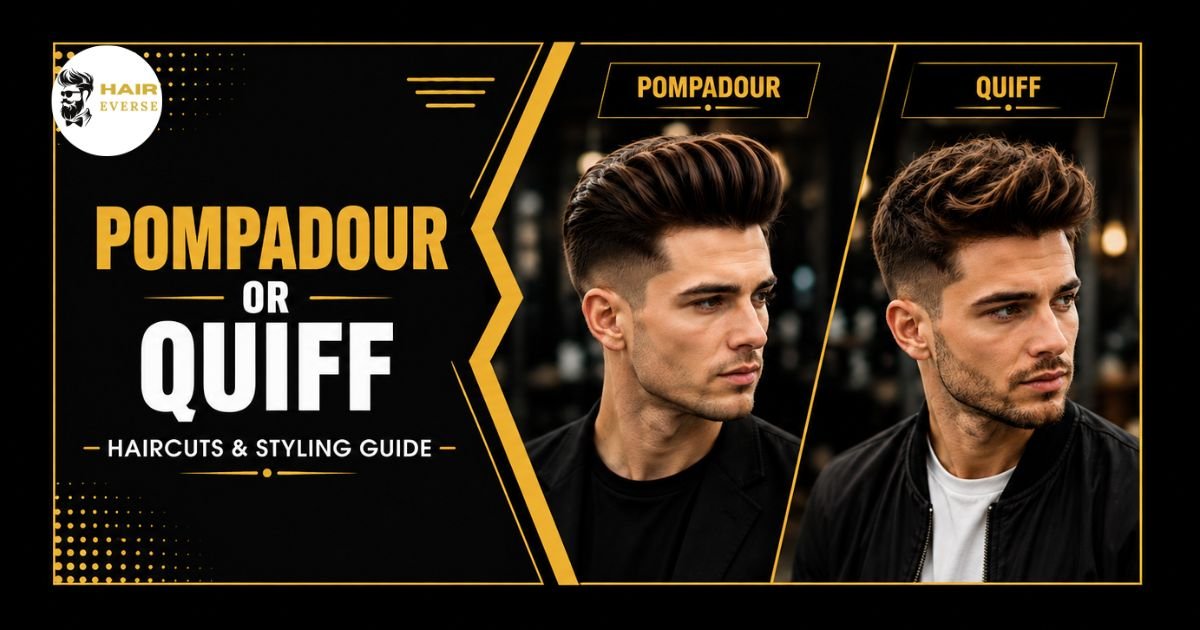
If you’ve been scrolling through barbershop inspiration and can’t tell a pompadour or quiff, you’re not alone. Pompadour or Quiff haircut push volume up top and taper the sides, so from a quick glance they look almost identical. But the direction hair moves, the amount of daily styling required, and the products each one demands are genuinely different.
Picking the wrong one for your hair type usually means fighting your hair every morning instead of working with it. This guide breaks down the real differences between a quiff haircut and a pompadour haircut, then walks through 25 variations of each so you can walk into your next barber appointment knowing exactly what to ask for.
Pompadour vs Quiff Men Comparison Table
Here is the comparison table b/w pompadour vs quiff hairstyles. We explained each style with hairtype, face shape, exact maintenance and styling time.
| Style | Best Hair Type | Face Shape | Maintenance | Styling Time |
| Classic Pompadour | Thick, straight | Round, oval | High | 1015 min |
| Modern Pompadour with Fade | Thick, wavy | Oval, oblong | High | 1012 min |
| Pompadour Undercut | Thick, straight | Square, oval | High | 10 min |
| Textured Pompadour | Wavy, thick | Oval, round | Medium | 810 min |
| SlickedBack Pompadour | Straight, thick | Oblong, oval | High | 1012 min |
| Pompadour with Beard | Thick, wavy | Round, square | High | 1015 min |
| LowMaintenance Pompadour | Thick, straight | Oval, square | Medium | 57 min |
| High Fade Pompadour | Thick, straight | Square, oval | High | 10 min |
| Curly Pompadour | Curly, coily | Oval, oblong | High | 1215 min |
| Pompadour with Side Part | Straight, fine | Oval, round | Medium | 810 min |
| Classic Quiff | Straight, wavy | Square, round | Medium | 58 min |
| Messy Quiff | Wavy, thick | Round, oval | Low | 35 min |
| Quiff with Fade | Straight, thick | Square, oblong | Medium | 57 min |
| Textured Quiff | Wavy, curly | Round, square | Medium | 58 min |
| Long Quiff | Straight, wavy | Oblong, oval | Medium | 810 min |
| Short Quiff | Fine, straight | Round, square | Low | 35 min |
| Quiff Undercut | Thick, wavy | Square, oval | Medium | 58 min |
| Disconnected Quiff | Thick, straight | Square, round | Medium | 68 min |
| SideSwept Quiff | Wavy, fine | Oval, heart | Low | 46 min |
| Quiff with Beard | Wavy, thick | Round, square | Medium | 58 min |
| Curly Quiff | Curly, coily | Oval, round | Medium | 69 min |
| Quiff Fringe (French Crop) | Straight, fine | Square, oval | Low | 35 min |
| Quiff with Skin Fade | Thick, straight | Square, oblong | Medium | 57 min |
| Wavy Quiff | Wavy, thick | Oval, heart | Low | 46 min |
| Business Quiff | Straight, fine | Oval, square | Low | 35 min |
What’s the Real Difference Between a Quiff and a Pompadour?
Before diving into individual styles, it helps to understand the core mechanic. A pompadour haircut takes the hair on top and sweeps it straight back and up, building height right above the forehead and letting it taper backward across the crown. The result is a rounded, architectural shape that usually needs a firmhold product to hold its line all day.
A quiff haircut takes a similar amount of length but directs it upward and slightly forward instead of backward. That forward lean creates a looser, more textured silhouette that catches less shine and needs less daily maintenance. Barbers often describe the quiff as “the pompadour’s more relaxed cousin” same starting point, different finish.
Hair density plays a bigger role than most guides admit. Thick, coarse hair holds a pompadour’s structure with less product. Fine or thin hair tends to fall flat under pompadour styling and does better with a quiff’s lighter lift. Curly and wavy hair generally leans toward the quiff family, since the natural texture already provides volume that would otherwise need heavy product in a pompadour.
Pompadour Hairstyles
| Classic Pompadour |
| Modern Pompadour with Fade |
| Pompadour Undercut |
| Textured Pompadour |
| SlickedBack Pompadour |
| Pompadour with Beard |
| LowMaintenance Pompadour |
| High Fade Pompadour |
| Curly Pompadour |
| Pompadour with Side Part |
Classic Pompadour Hairstyle Male
Overview: The original pompadour shape hair swept straight back and up into a tall, rounded crest, with the sides trimmed shorter for contrast. It’s the style most people picture when they hear the word “pompadour.”
Why It Works: Best suited to thick, straight hair and round or oval face shapes, where the added height balances a shorter jawline. It reads formal, which makes it a strong choice for weddings or client-facing jobs.
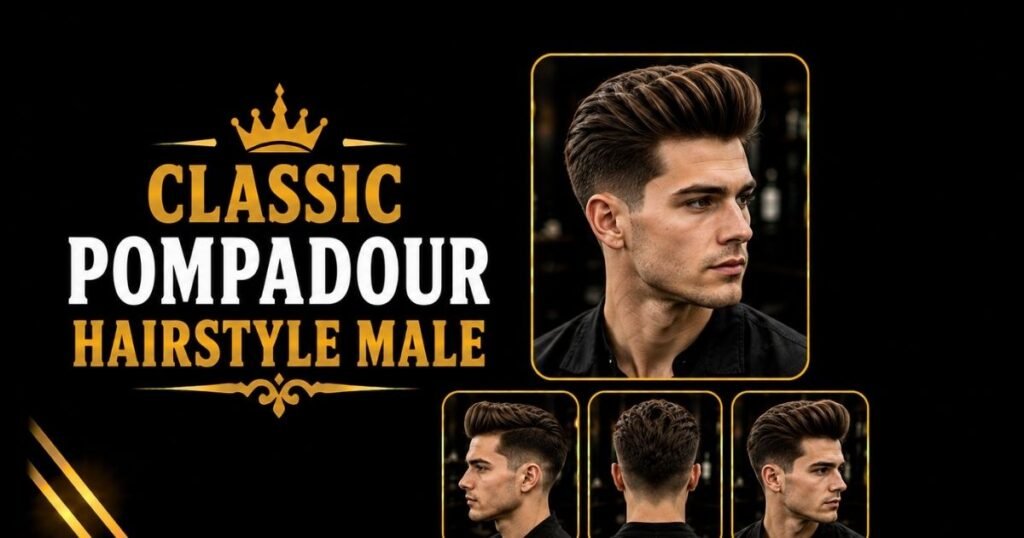
Styling Tip: Blowdry damp hair upward with a round brush before applying a firm hold pomade through the roots, then comb the top back into shape.
Maintenance: Trim every 34 weeks to keep the sides sharp against the height on top; wash with a clarifying shampoo weekly to prevent pomade buildup from weighing the crown down. Maintenance and styling times are estimates and may vary by hair type.
Modern Pompadour with Fade
Overview: Takes the classic silhouette and pairs it with a skin or high fade instead of a simple taper, sharpening the contrast between the tall top and the closely cropped sides.
Why It Works: Works well on oval and oblong faces since the fade visually narrows the sides while the height keeps proportions balanced. Thick or wavy hair holds this shape best.
Styling Tip: Use a medium hold pomade with a slight shine so the fade line stays crisp against the sculpted top.
Maintenance: Book fade touchups every 23 weeks, since fades grow out faster than the length on top. Maintenance and styling times are estimates and may vary by hair type.
Undercut Pompadour
Overview: Pairs the pompadour’s sweptback top with a disconnected undercut, where the sides are buzzed dramatically shorter with a hard line separating them from the length on top.
Why It Works: The stark contrast flatters square and oval faces by emphasizing the jawline. Best on thick, straight hair that can hold a clean shape without collapsing.
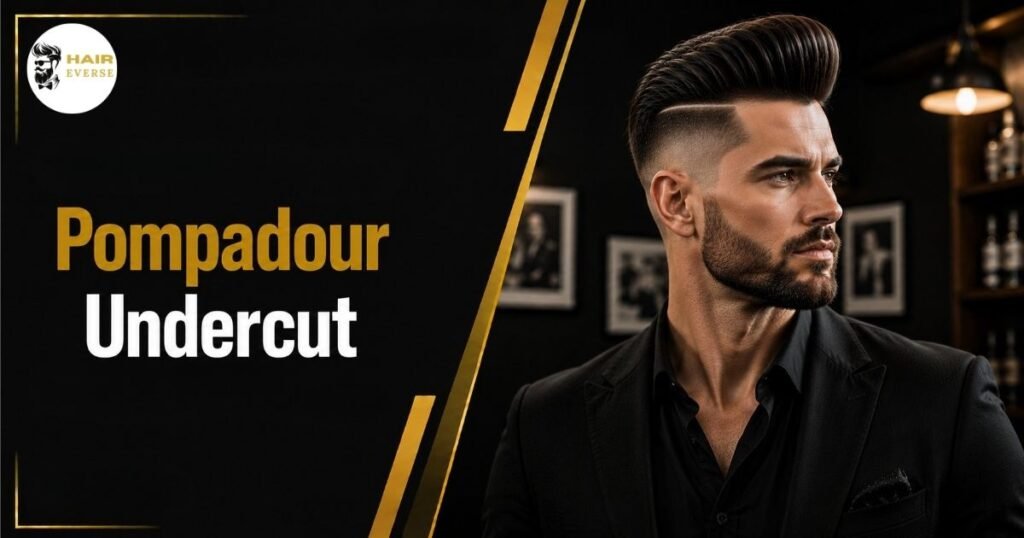
Styling Tip: Apply a stronghold pomade to damp hair first, then finish with a comb for a defined, glossy line.
Maintenance: The disconnected line needs a trim every 23 weeks or it starts to blur into a regular taper. Maintenance and styling times are estimates and may vary by hair type.
Textured Pompadour
Overview: A looser, less glossy take on the pompadour that trades the classic high shine finish for a matte, tousled texture while keeping the same backward sweep.
Why It Works: Suits wavy or thick hair and softens the formality of the classic version, making it more office-friendly for oval and round faces.
Styling Tip: Work a matte clay through damp hair with fingers rather than a comb, so the texture stays visible instead of sleek.
Maintenance: Slightly more forgiving between trims than the classic pompadour, so a 4week schedule usually works. Maintenance and styling times are estimates and may vary by hair type.
SlickedBack Pompadour
Overview: The most polished version of the pompadour, combed flat and glossy against the head with minimal texture showing, closer to a 1950s rockandroll finish.
Why It Works: Straight, thick hair holds the sleek line best. Oblong and oval faces suit the added height without it looking exaggerated.
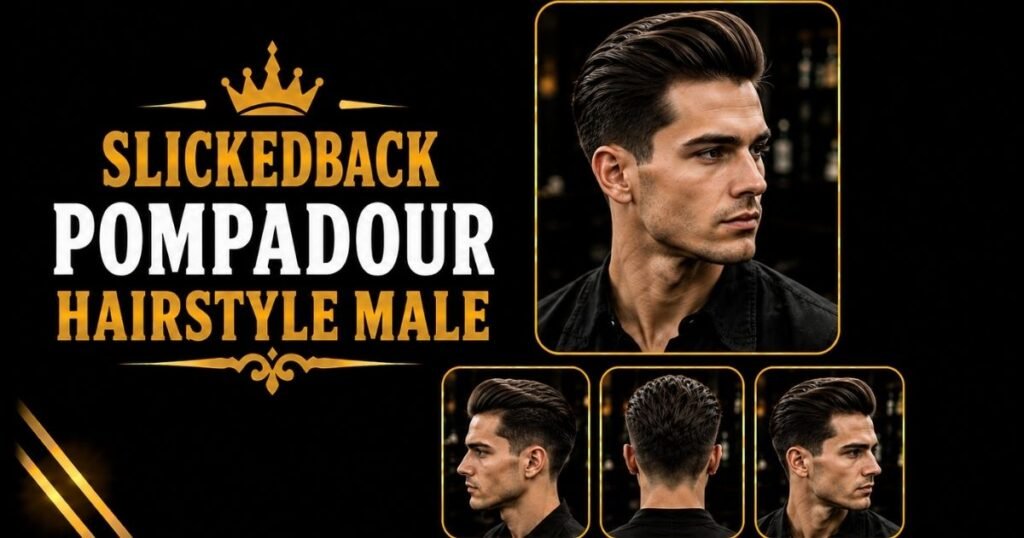
Styling Tip: A waterbased, highshine pomade combed through wet hair gives the cleanest slickback finish without flaking.
Maintenance: Wash regularly to avoid product buildup, since high shine pomades sit heavier on the scalp than matte formulas. Maintenance and styling times are estimates and may vary by hair type.
Pompadour with Beard
Overview: Combines the tall, sweptback top with a full or medium beard, balancing the height on top with density along the jaw.
Why It Works: Especially flattering on round faces, where the beard adds definition to the jawline while the pompadour adds vertical length.
Styling Tip: Keep beard oil in rotation alongside your hair pomade a wellconditioned beard reads intentional next to a sculpted top instead of messy.
Maintenance: Coordinate beard trims with hair trims every 34 weeks so both stay proportional to each other. Maintenance and styling times are estimates and may vary by hair type.
LowMaintenance Pompadour
Overview: A shorter, softer pompadour that keeps the sweptback direction but drops the extreme height, making it quicker to style and less dependent on precision.
Why It Works: A practical option for busy schedules on oval or square faces who still want the pompadour’s shape without the daily time investment.
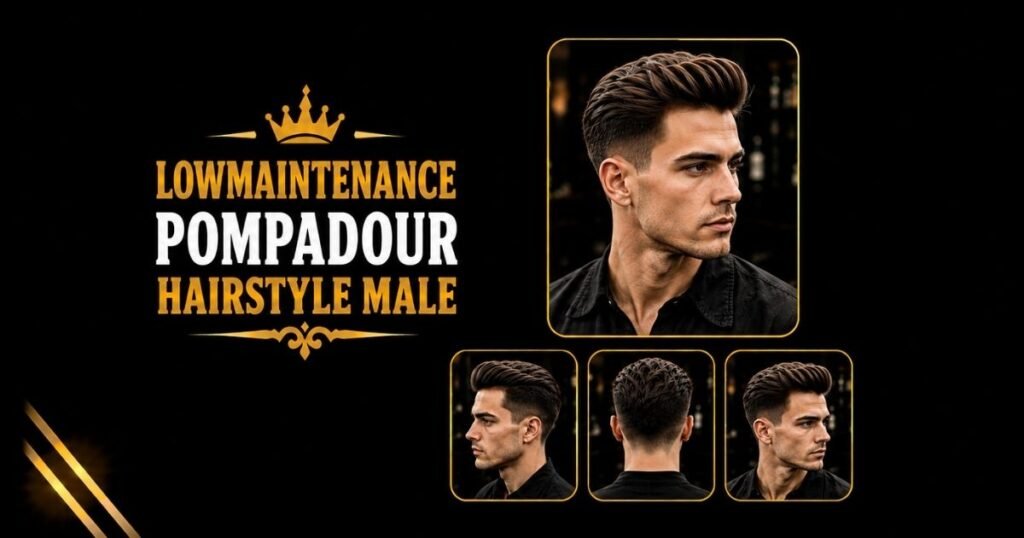
Styling Tip: A lightweight cream instead of a heavy pomade gives enough hold for the shorter shape without extra styling steps.
Maintenance: Because the length is shorter overall, this version stretches to a 5week trim schedule more comfortably than taller pompadours. Maintenance and styling times are estimates and may vary by hair type.
High Fade Pompadour
Overview: Pushes the fade higher up the head than a standard taper, leaving a smaller area of long hair on top for maximum contrast against the pompadour’s height.
Why It Works: The high contrast look suits square and oval faces and works particularly well for thick, straight hair that holds a defined top shape.
Styling Tip: Because less hair is left on top, use a stronger gold pomade in a smaller amount to avoid oversaturating the shorter length.
Maintenance: High fades grow out visibly fast plan on a trim every 2 weeks to keep the line sharp. Maintenance and styling times are estimates and may vary by hair type.
Curly Pompadour
Overview: Adapts the pompadour shape for curly or coily hair, using the natural curl pattern to build height instead of relying purely on blowdrying technique.
Why It Works: Curly hair already has volume, so this version leans into that texture rather than fighting it, flattering oval and oblong face shapes.
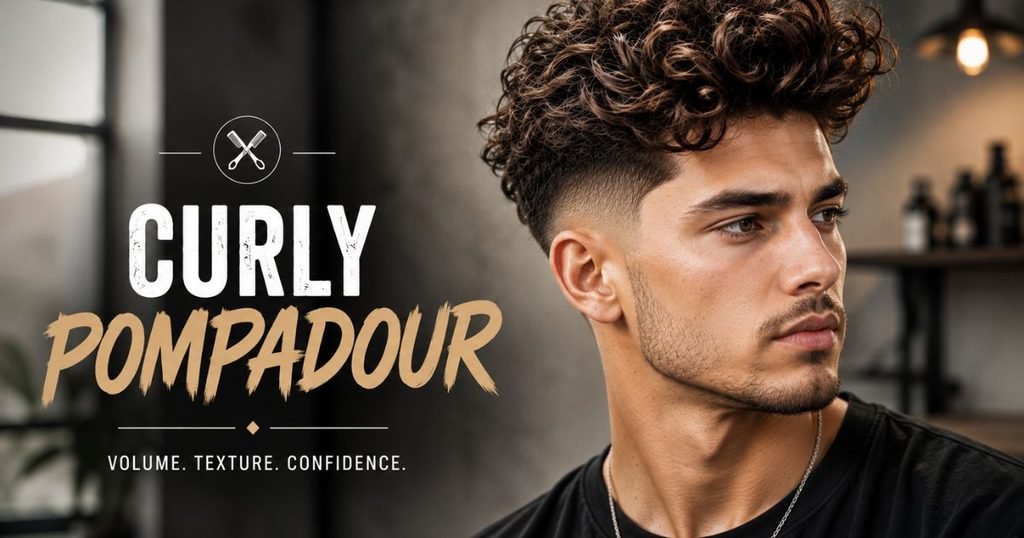
Styling Tip: Apply a curldefining cream to damp curls and diffuse upward rather than combing, which would disrupt the curl pattern.
Maintenance: Curly hair needs more product and gentle detangling to keep shape without frizz; a hydrating conditioner helps prevent the curls from drying out between washes. Maintenance and styling times are estimates and may vary by hair type.
Pompadour with Side Part
Overview: Adds a hard or soft side part to the classic pompadour shape, giving the style a more structured, business-appropriate finish.
Why It Works: Fine or straight hair holds a defined part well, and the asymmetry suits oval and round faces by breaking up the width across the forehead.
Styling Tip: Comb a lighthold cream through damp hair along your natural part line before sweeping the rest back for volume.
Maintenance: Slightly easier to maintain than a full pompadour since the parted section needs less precision each morning. Maintenance and styling times are estimates and may vary by hair type.
Quiff Haircut
| Classic Quiff |
| Messy Quiff |
| Quiff with Fade |
| Textured Quiff |
| Long Quiff |
| Short Quiff |
| Quiff Undercut |
| Disconnected Quiff |
| SideSwept Quiff |
| Quiff with Beard |
| Curly Quiff |
| Quiff Fringe (French Crop) |
| Quiff with Skin Fade |
| Wavy Quiff |
| Business Quiff |
Classic Quiff Hairstyle
Overview: The foundational quiff shape hair lifted at the front and directed slightly forward, tapering into shorter sides without the pompadour’s backward sweep.
Why It Works: Square and round faces both benefit from the upward lift, and straight or wavy hair holds the shape without much product.
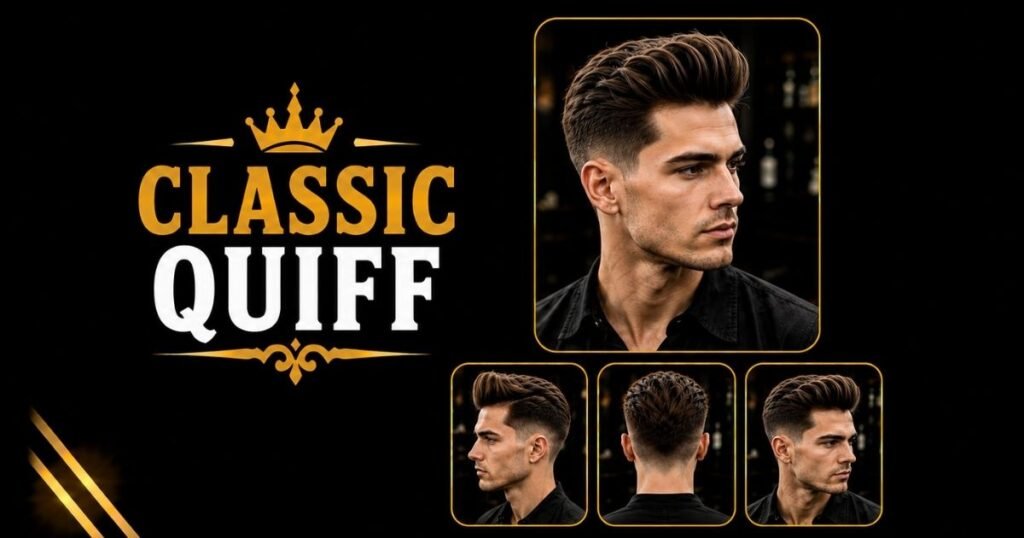
Styling Tip: Lift hair at the roots with your fingers while blowdrying, then set with a light matte paste.
Maintenance: A trim every 45 weeks keeps the front length manageable without losing the lift. Maintenance and styling times are estimates and may vary by hair type.
Messy Quiff
Overview: A deliberately undone version of the quiff, with texture left loose and uneven rather than combed into a defined shape.
Why It Works: Ideal for wavy or thick hair on round or oval faces who want the quiff’s height without a polished, formal look.
Styling Tip: Scrunch a sea salt spray or texturizing paste into damp hair with your hands, then let it air dry for natural movement.
Maintenance: One of the easiest styles on this list to maintain, since imperfection is part of the look a trim every 56 weeks is plenty. Maintenance and styling times are estimates and may vary by hair type.
Quiff with Fade
Overview: Combines the quiff’s upward lift with a tapered or midfade on the sides for a sharper, more modern silhouette.
Why It Works: Suits square and oblong faces, with thick, straight hair holding the fade line best against the textured top.
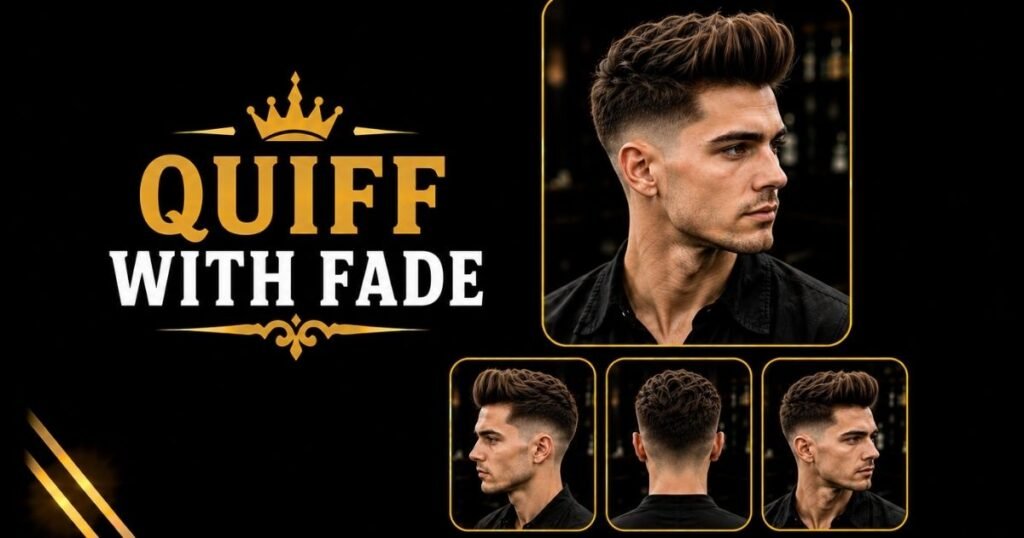
Styling Tip: A light clay adds texture without weighing the top down, keeping the contrast between the fade and the quiff crisp.
Maintenance: Fade touchups every 23 weeks keep the sides looking intentional rather than grownout. Maintenance and styling times are estimates and may vary by hair type.
Textured Quiff – Low Fade
Overview: Leans into visible texture rather than a smooth finish, using layered cutting techniques to create movement throughout the top.
Why It Works: Wavy or curly hair naturally supports this look, flattering round and square faces without extra styling effort.
Styling Tip: Work a matte texturizing cream through damp hair using a pinching motion to separate strands rather than flatten them.
Maintenance: Layers grow out gracefully, so this style can stretch to a 5week trim schedule without losing shape. Maintenance and styling times are estimates and may vary by hair type.
Long Quiff
Overview: Keeps significantly more length on top than a standard quiff, giving the front enough hair to create dramatic height and movement.
Why It Works: Best suited to oblong and oval faces with straight or wavy hair thick enough to support the extra length without collapsing.
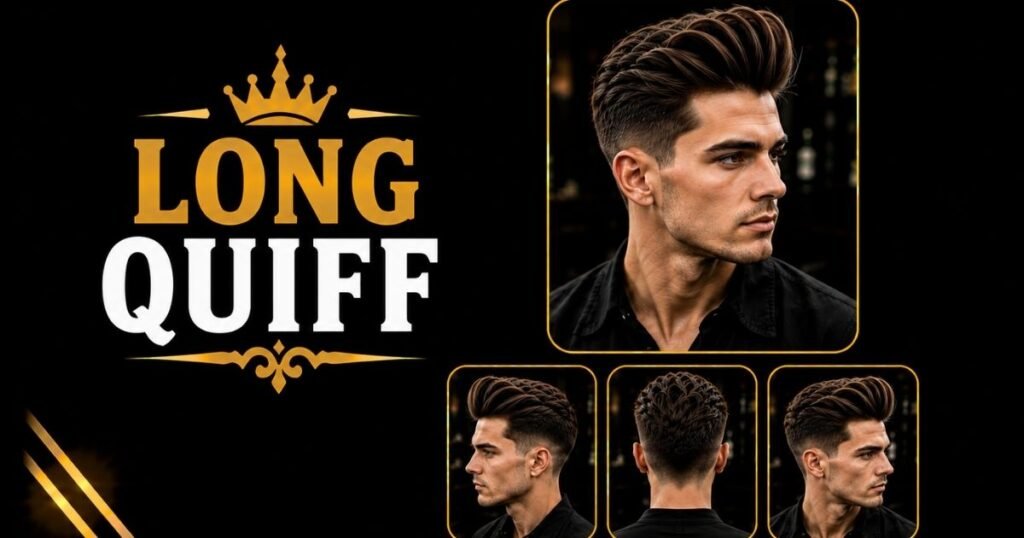
Styling Tip: Blowdry with a round brush to build a base of volume before applying a medium hold cream to control the longer strands.
Maintenance: Trims can be spaced 6 weeks apart since the goal is to maintain length, though regular dusting keeps ends healthy. Maintenance and styling times are estimates and may vary by hair type.
Short Quiff Hairstyle
Overview: A compact version of the quiff with less length on top, keeping the upward lift subtle rather than dramatic.
Why It Works: Works well for fine or thin hair and suits round or square faces looking for a low-effort daily routine.
Styling Tip: A small amount of light paste worked through with fingers is enough to hold the shorter length in place all day.
Maintenance: One of the most forgiving cuts here a 4week trim keeps it neat without needing precise upkeep in between. Maintenance and styling times are estimates and may vary by hair type.
Quiff Undercut
Overview: Pairs the quiff’s upward direction with a disconnected undercut for a sharper, more contemporary contrast between top and sides.
Why It Works: Thick or wavy hair supports the disconnection best, and the strong contrast flatters square and oval face shapes.
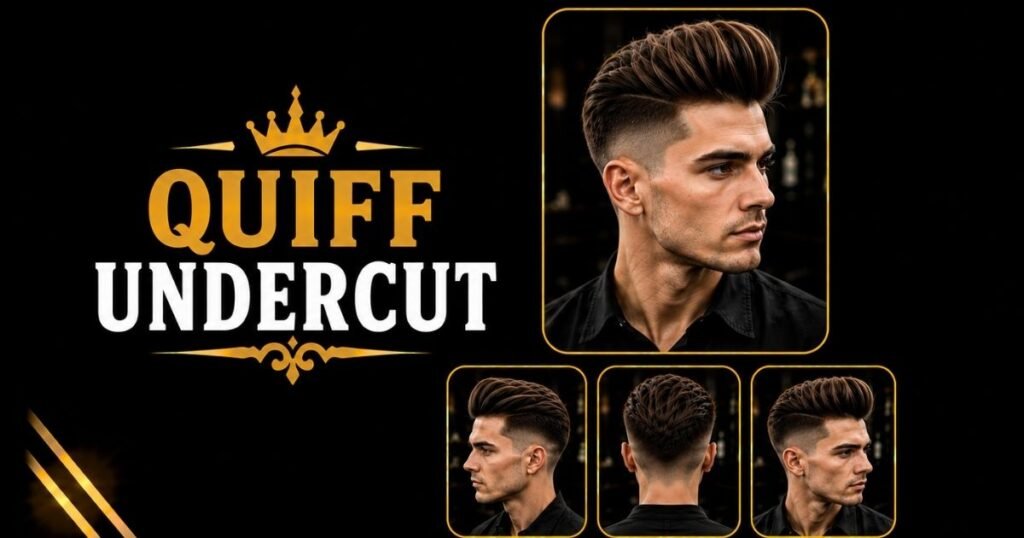
Styling Tip: Apply pomade to the roots first to create lift before styling the rest of the length forward and up.
Maintenance: The disconnected line needs a trim every 3 weeks to stay defined against the regrowth underneath. Maintenance and styling times are estimates and may vary by hair type.
Disconnected Quiff
Overview: Similar to the quiff undercut but with an even more abrupt transition point, creating a clean geometric break rather than a gradual fade.
Why It Works: Suits square and round faces with thick, straight hair that can hold a defined line without softening throughout the day.
Styling Tip: Use a stronghold clay to keep the top’s shape distinct from the buzzed sides.
Maintenance: Needs regular trims every 23 weeks since any growth blurs the sharp disconnection. Maintenance and styling times are estimates and may vary by hair type.
SideSwept Quiff
Overview: Instead of a straightup lift, this variation directs the front section gently to one side, softening the quiff’s usual peak.
Why It Works: Flatters oval and heartshaped faces, and works especially well on wavy or fine hair that naturally falls to one side.
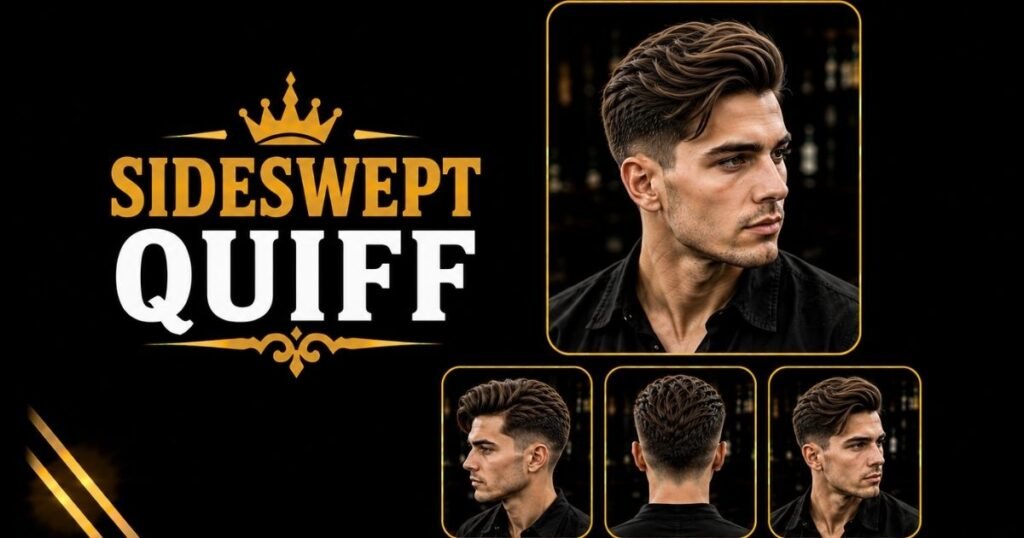
Styling Tip: Use a light cream and a comb to guide the direction while the hair is still damp, then let it set as it dries.
Maintenance: A relatively low-effort style overall, with trims every 5 weeks keeping the sideswept line intact. Maintenance and styling times are estimates and may vary by hair type.
Quiff with Beard
Overview: Combines the quiff’s textured lift with a short-to-medium beard, creating balance between the top volume and facial hair density.
Why It Works: Particularly flattering on round and square faces, where the beard adds jaw definition while the quiff keeps the top light.
Styling Tip: Comb beard oil through facial hair before styling the quiff so both areas look equally groomed rather than one overshadowing the other.
Maintenance: Coordinate beard and hair trims on the same schedule, roughly every 34 weeks, to keep proportions consistent. Maintenance and styling times are estimates and may vary by hair type.
Curly Quiff
Overview: Uses natural curl texture to create the quiff’s signature lift without heavy blowdrying, letting the curl pattern do most of the work.
Why It Works: A natural fit for curly or coily hair on oval and round faces, since the texture already provides builtin volume.
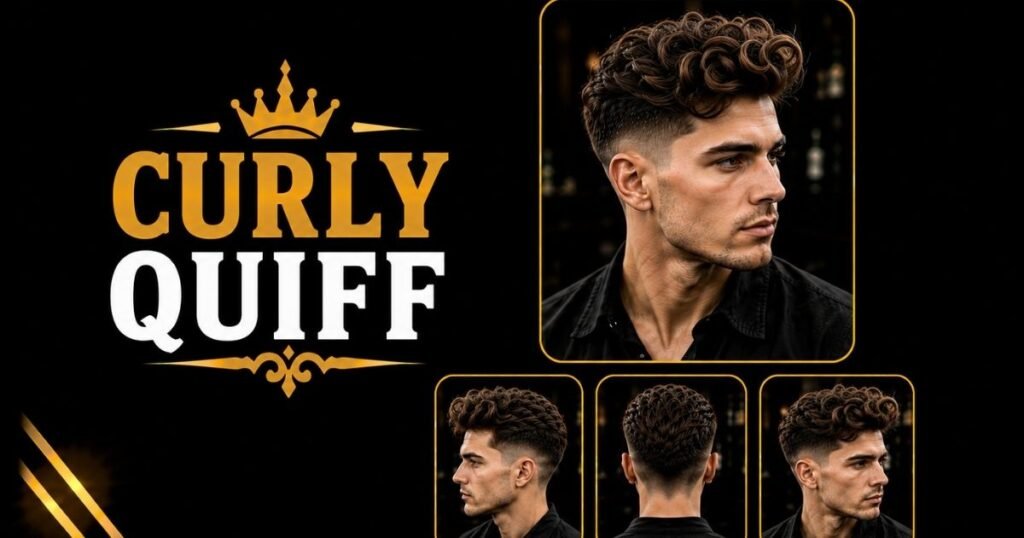
Styling Tip: Apply a curl cream to damp hair and scrunch upward, then diffuse on low heat to preserve the curl definition.
Maintenance: Curly hair benefits from a hydrating conditioner between cuts to prevent dryness, and trims every 6 weeks keep the shape balanced. Maintenance and styling times are estimates and may vary by hair type.
Quiff Fringe (French Crop Quiff)
Overview: Blends the French crop’s short, blunt fringe with the quiff’s upward texture, keeping length minimal but still lifted at the front.
Why It Works: A strong match for fine or straight hair on square and oval faces who want texture without much length to manage.
Styling Tip: A small amount of matte paste worked through the fringe with fingertips is enough heavier products will weigh the short length down.
Maintenance: Because the length stays short, plan on a trim every 34 weeks to keep the fringe from growing past the eyebrows. Maintenance and styling times are estimates and may vary by hair type.
Quiff with Skin Fade
Overview: Pairs the quiff with a fade taken all the way down to the skin, creating the highest possible contrast between the sides and the textured top.
Why It Works: Best on thick, straight hair for square and oblong faces, where the sharp sides balance the softer texture on top.
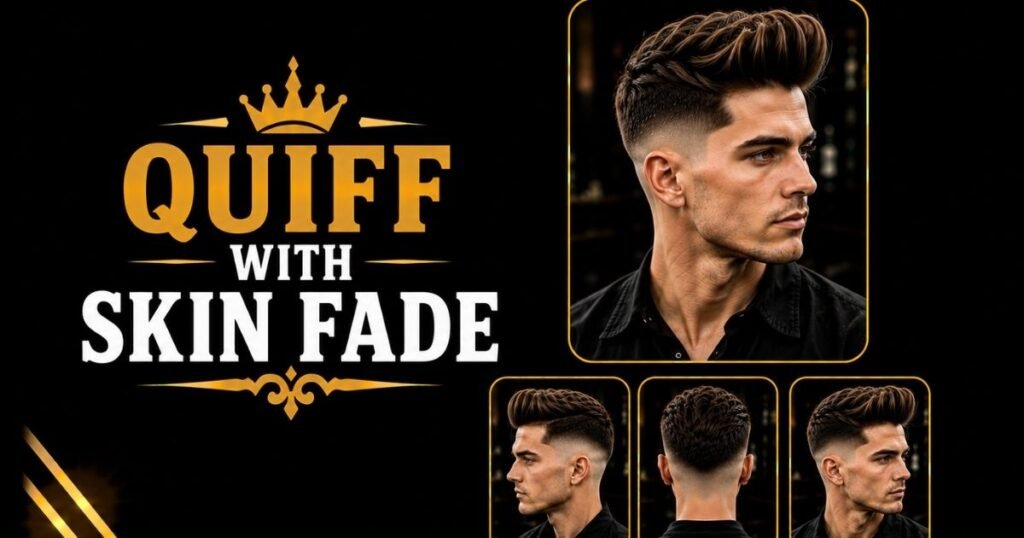
Styling Tip: Keep the top’s texture matte rather than shiny so it doesn’t compete visually with the smooth, skinclose sides.
Maintenance: Skin fades grow out the fastest of any style here expect to book a touchup every 2 weeks. Maintenance and styling times are estimates and may vary by hair type.
Wavy Quiff
Overview: Lets natural waves define the quiff’s shape instead of relying on precise blowdrying, resulting in a relaxed, livedin finish.
Why It Works: A natural pairing for wavy hair on oval or heartshaped faces who want the quiff look with minimal daily effort.
Styling Tip: A light sea salt spray enhances the natural wave pattern without adding the heaviness of a cream or pomade.
Maintenance: Low maintenance overall, with a trim every 5 weeks keeping the wave pattern looking intentional rather than overgrown. Maintenance and styling times are estimates and may vary by hair type.
Business Quiff
Overview: A conservative, tidy version of the quiff with minimal height and a clean side taper, built for office environments and client-facing roles.
Why It Works: Fine or straight hair holds this understated shape easily, and the lowkey volume suits oval and square faces without drawing too much attention.
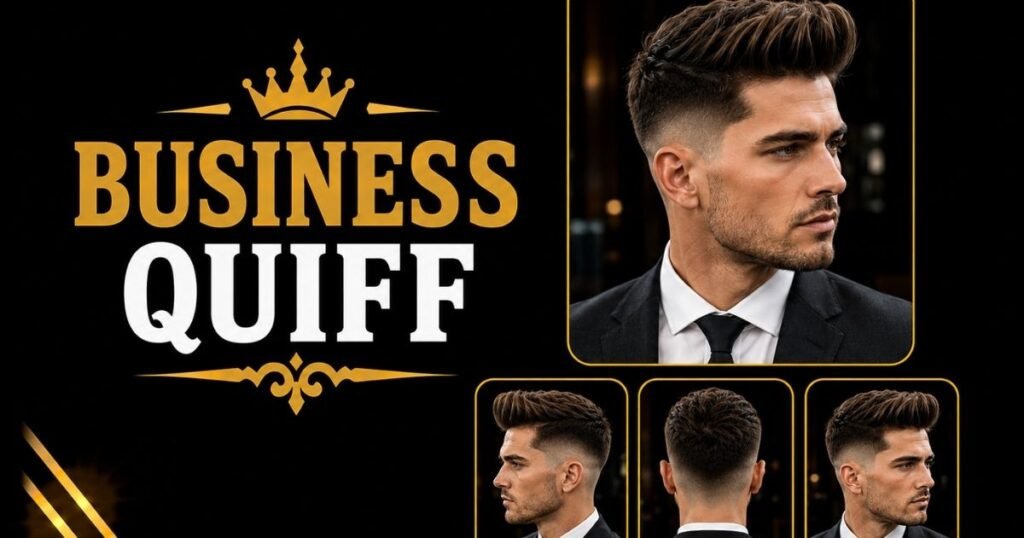
Styling Tip: A lighthold cream keeps the front controlled without the shine of a pomade, which reads more polished for a workplace setting.
Maintenance: Because the style stays close to the head, trims every 4 weeks keep it looking sharp for meetings and interviews alike. Maintenance and styling times are estimates and may vary by hair type.
How to Choose the Right Hairstyle
Picking between these 25 options gets easier once you match your hair type and face shape honestly, rather than choosing based on a photo alone.
By Hair Type:
- Thick hair: Holds both pompadours and quiffs well with less product; go with whichever silhouette you prefer
- Thin hair: Leans toward a quiff, since the lighter styling requirement won’t weigh strands down the way a full pompadour can
- Curly hair: Works better with quiff variations that use the curl pattern for volume instead of fighting it with heavy product
- Straight hair: Holds pompadour shapes cleanly and also adapts easily to any quiff style
- Wavy hair: A nearperfect match for textured or messy quiffs, where natural movement does most of the styling work
By Face Shape:
- Oval faces: Can wear almost any style on this list comfortably
- Round faces: Benefit from added height, making both pompadours and quiffs with volume good choices
- Square faces: Suit disconnected or fadepaired versions of either style, which complement a strong jawline
- Long faces: Should be cautious with extreme height; a lower volume quiff or shorter pompadour keeps proportions balanced
Confuse to Get Right Haircut
We have covered some best haircut style with detailed in Previous Articles:
- Fade haircuts for Black men remain one of the most versatile styles in 2026, valued for their clean lines and ability to work with any texture, from tight coils to loose curls. This guide rounds up 75 fade haircuts for Black men, from classic low and high fades to bold designs and taper combinations paired with waves, afros, or braids. Whatever your style or maintenance level, you’ll find a cut here worth trying.
- Buzz cut men styles remain a top choice in 2026 for their bold simplicity and virtually zero maintenance. This guide rounds up 35 fresh takes from classic uniform buzzes to skin-faded and textured variations suited to different hair types and face shapes. Whether you want something ultra-low or slightly longer on top, there’s a buzz cut men style here to fit your look.
- The Ivy League haircut pairs short, tapered sides with more length on top for a neat, versatile look that’s easy to style. Once known for its preppy campus roots, the Ivy League haircut now comes with modern fades, textured tops, and tousled finishes for a fresher take. This guide rounds up 30 modern styles to help you find the right version for a sharp, put-together look.
- The side part haircut remains a timeless favorite in 2026, known for its clean, polished look that works for both formal and everyday settings. This guide rounds up 35 trending takes on the side part haircut from sleek, classic finishes to textured and faded modern versions. Whatever your hair type or style preference, you’ll find a variation here worth trying.
- The undercut haircut pairs closely shaved sides with longer hair on top for a bold, high-contrast look. Once a retro throwback, it’s now reimagined with fades, disconnected lines, and slicked-back or textured finishes. This guide rounds up 35 fresh undercut haircut styles to help you find the right version for your look.
- Beard fade styles have become a go-to choice in 2026 for men who want a sharp, well-defined jawline without a heavy, blocky beard look. This guide rounds up modern beard fade styles from subtle, close tapers to bold skin fades that blend seamlessly into the hairline. Whatever your beard thickness or face shape, you’ll find a variation here to sharpen your overall look.
- The right beard and haircut combo can completely transform your look, balancing your face shape and complementing your age for a sharper, more put-together style.
This guide breaks down the best beard and haircut combo pairings from clean fades with tapered beards to textured tops with fuller, well-groomed facial hair. Whatever your face shape or stage of life, you’ll find a combination here that works for you.
What Is the Difference Between a Quiff and a Pompadour?
The direction of the sweep is the clearest tell. A pompadour moves hair backward into a rounded crest, while a quiff moves hair upward and slightly forward into a looser peak. Pompadours typically use more product and take longer to style, while quiffs are quicker and suit a wider range of hair textures, including curly and fine hair.
Is a Pompadour or Quiff Better for Curly Hair?
Curly hair generally does better with a quiff. The natural curl pattern already provides lift and volume, which works with the quiff’s upward direction instead of against it. A pompadour on curly hair is achievable but usually needs more product and styling time to control the curl into a smooth, backward sweep.
Can a Pompadour or Quiff Hairstyle Work for a Job Interview?
Yes, both can work in professional settings if you choose a more conservative version. A business quiff or a low-maintenance pompadour with softer volume reads polished without looking overly styled, making either a safe choice for interviews or client meetings.
How to Ask Your Barber for the Right Look
- Bring a reference photo of the specific style, not just the general term “quiff” or “pompadour” variations differ a lot
- State your hair type and length so the barber knows how much they’re working with
- Mention your daily styling time so they can recommend a shape you’ll actually maintain
- Specify the fade or taper level you want on the sides, using terms like low, mid, or high fade
- Ask about maintenance frequency upfront so you know when to book your next trim
- Confirm the final shape before they start cutting, especially for disconnected or undercut versions
Product Recommendations
Hair Cream Best For: Light hold with natural movement, ideal for quiffs and low maintenance styles How To Use: Warm a small amount between palms and work through damp hair before styling
Pomade Best For: Highshine, structured looks like the classic or slickedback pompadour How To Use: Apply to damp hair and comb through for a sleek, controlled finish
Wax Best For: Strong hold with a matte finish, good for undercut and disconnected styles How To Use: Rub between palms until pliable, then apply to dry hair for definition
Clay Best For: Textured, matte styles like the textured quiff or messy quiff How To Use: Work through damp or dry hair with fingers to build volume and separation
Shampoo Best For: Removing product buildup, especially important for pomadeheavy pompadour styles How To Use: Use a clarifying formula once or twice a week if you style daily with heavy products
Conditioner Best For: Keeping curly or wavy hair hydrated, particularly for curly pompadour and curly quiff styles How To Use: Apply after shampooing and focus on midlengths to prevent dryness that leads to frizz
Final Thoughts to Getting Pompadour or Quiff Hairstyle
Both the pompadour or quiff can look sharp on almost any face once the shape is matched to your hair type and lifestyle. If you’ve got the time and thicker hair, a pompadour delivers a bold, structured look worth the extra minutes each morning. If you’d rather spend less time in front of the mirror, one of the quiff variations above will get you height and texture without the daily commitment.
Don’t be afraid to experiment across a few of these 25 options before settling on your goto hair grows back, and most of these cuts can be adjusted at your next trim. Bring the specific style name and photo to your next barber appointment, and you’ll walk out with exactly the look you asked for.
FAQs
What is the main difference between a pompadour and a quiff?
A pompadour sweeps hair straight back into a smooth, sculpted shape, while a quiff lifts hair upward and slightly forward for a looser, textured look. Pompadours generally need more product and styling time than quiffs.
Which style is easier to maintain, pompadour or quiff?
A quiff is typically easier and faster to maintain. It needs less product, less daily styling time, and works with a wider range of hair textures than a pompadour.
How much hair length do I need for a pompadour or quiff?
Most versions of both styles need at least three inches of length on top. Longer variations, like the long quiff, may need slightly more to achieve the full effect.
What products are best for styling quiff or pompadour?
A quiff pairs well with lightweight cream or matte clay for texture. A pompadour typically needs a firmer hold pomade for structure and shine to hold its shape through the day.
Can a quiff or pompadour work for a job interview?
Yes, more conservative versions of either style, like a business quiff or a low-maintenance pompadour, look polished and professional without appearing overly styled.