Best Haircuts for Thin Hair: 35 Modern Styles for a Sharp Look
Best Haircuts for Thin Hair: 35 Modern Styles for a Sharp Look helps prove that thin hair doesn’t have to look flat, lifeless, or difficult to manage. The right haircut removes excess weight, adds natural texture, and creates the appearance of fuller, thicker hair that stays in place throughout the day.
Instead of growing thin hair longer, a well-structured shorter cut often delivers better volume and shape. With the right barbering techniques and minimal styling products, thin hair can look sharp, modern, and effortless. This guide features 35 carefully selected styles, along with practical maintenance and styling tips to help you choose the perfect cut.
Hairstyle Comparison Table
Here is the Comparison Table of Hairstyle, Best Hair Type, Face Shape, Maintenance, and Styling Time:
| Hairstyle | Best Hair Type | Face Shape | Maintenance | Styling Time |
| Buzz Cut | All types | Round, Square, Oval | Low | 2 min |
| Induction Cut | All types | Oval, Square | Low | 1 min |
| Burr Cut | Straight, Wavy | Oval, Round | Low | 2 min |
| Crew Cut | All types | Oval, Square, Round | Low | 5 min |
| Ivy League | Straight, Wavy | Oval, Long | Low-Medium | 5-8 min |
| High and Tight | All types | Square, Oval | Low | 3 min |
| Regulation Cut | Straight | Oval, Square | Low | 5 min |
| Textured Crop | Straight, Wavy, Thick | Oval, Round, Square | Medium | 5-10 min |
| French Crop | Straight, Wavy | Oval, Long | Medium | 5-10 min |
| Caesar Cut | Straight, Wavy | Oval, Round | Low | 3-5 min |
| Choppy Fringe Crop | Straight, Wavy, Curly | Oval, Long | Medium | 8-10 min |
| Spiky Crop | Straight, Wavy | Round, Square | Medium | 5-10 min |
| Messy Textured Crop | Wavy, Curly | Oval, Round | Medium | 8-10 min |
| Curly Crop | Curly | Oval, Round | Medium | 5-8 min |
| Faux Hawk | Straight, Wavy | Oval, Square | Medium | 8-10 min |
| Textured Quiff | Straight, Wavy | Oval, Round | Medium | 8-12 min |
| Short Quiff | Straight, Wavy, Thin | Oval, Long | Medium | 5-8 min |
| Undercut with Textured Top | Straight, Wavy, Thick | Square, Oval | Medium | 8-10 min |
| Skin Fade Crop | All types | Oval, Square, Round | Medium | 5-10 min |
| High Fade Buzz Cut | All types | Square, Oval | Low | 2-3 min |
| Mid Fade Taper | All types | Oval, Round, Square | Medium | 5-8 min |
| Low Fade Taper | All types | Long, Oval | Low-Medium | 5 min |
| Temple Fade Crop | Straight, Wavy | Oval, Round | Medium | 5-8 min |
| Comb Over Fade | Straight, Wavy | Oval, Long, Square | Medium | 8-10 min |
| Slicked Side Part | Straight | Oval, Long | Medium | 8-10 min |
| Forward Fringe Caesar | Straight, Wavy | Round, Oval | Low-Medium | 5 min |
| Widow’s Peak Crop | Straight, Wavy | Oval, Round | Medium | 5-8 min |
| Crown-Blending Crop | Straight, Wavy, Thick | Oval, Round | Medium | 8 min |
| Modern Short Pompadour | Straight, Wavy | Oval, Long, Square | Medium-High | 10-12 min |
| Bro Flow (Medium Length) | Wavy, Straight | Oval, Long | Medium | 10 min |
| Wavy Push Back | Wavy | Oval, Round | Medium | 8-10 min |
| Mullet Haircut | Straight, Wavy, Thick | Oval, Square | Medium | 8-10 min |
| Fringe Fade | Straight, Wavy, Curly | Oval, Round | Medium | 5-8 min |
| Shaved Head | All types | Oval, Square, Round | Low | 1 min |
| Textured Fringe Low Fade | Straight, Wavy | Oval, Long | Medium | 8 min |
Best Haircuts for Thin Hair: 35 Modern Styles for a Sharp Look
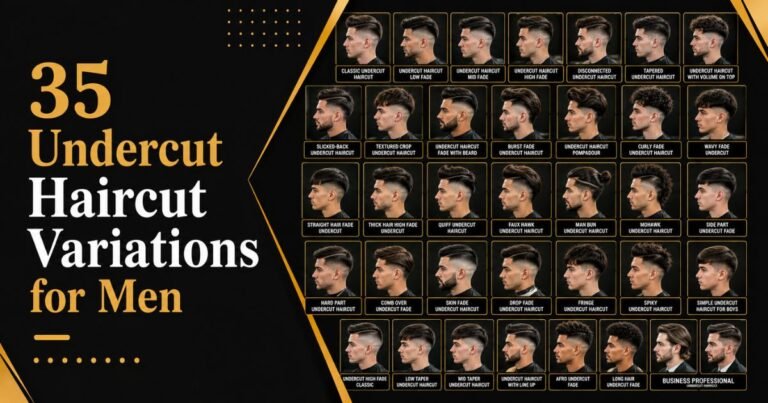
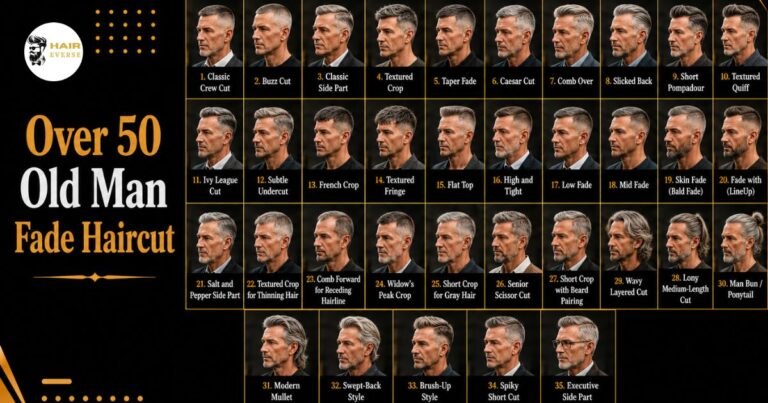
The 35 Modern Styles for a Sharp Look collection features haircuts specifically chosen to help men with thin hair achieve a fuller, more confident appearance. From timeless options like the Buzz Cut and Crew Cut to modern favorites such as the Textured Crop, French Crop, and Quiff, each style is designed to add texture, reduce the appearance of thinning, and create natural volume.
Every haircut includes practical styling tips, maintenance schedules, and recommended products to make daily grooming easier. Whether you prefer an ultra-short, low-maintenance cut or a textured style with extra movement, these haircuts offer smart, barber-approved solutions for thin hair.
Buzz Cut
Overview: The buzz cut trims hair to a uniform, close length across the whole head using clippers with a single guard size. There’s no part, no top length to manage just clean, even coverage.
Why It Works: Uniform length removes any contrast between thick and thin patches, so density differences stop standing out. It suits round, square, and oval faces equally well.
Styling Tip: No product needed day-to-day, but a light matte clay rubbed through damp hair after washing keeps strands from looking flat or shiny.
Maintenance: Get a trim every 2-3 weeks to keep the length even as it grows out. Maintenance and styling times are estimates and may vary by hair type.
Induction Cut
Overview: This is the shortest clipper cut available, taking hair down to a fine, even stubble across the entire scalp. It’s the most minimal option on this list.
Why It Works: With almost no length anywhere, there’s nothing to expose thinning or recession the whole scalp reads as one consistent texture.

Styling Tip: Skip styling products entirely; instead, use a scalp moisturizer or lightweight SPF lotion since the bare scalp is exposed to sun and friction.
Maintenance: Rebuzz every 7-10 days to maintain the close, even look as regrowth appears. Maintenance and styling times are estimates and may vary by hair type.
Burr Cut
Overview: A step longer than the induction cut, the burr cut leaves just enough length for a hint of visible texture across the scalp rather than pure stubble.
Why It Works: That small amount of texture catches light in a way that flat stubble doesn’t, giving fine straight hair a touch more visual body without demanding styling.
Styling Tip: Work a pea-sized amount of matte texture cream through damp hair to define the slight length and add subtle separation.
Maintenance: Trim every 2 weeks to keep the texture consistent instead of growing shaggy at the edges. Maintenance and styling times are estimates and may vary by hair type.
Crew Cut
Overview: The crew cut pairs of short sides with slightly longer hair on top, usually an inch or less, giving just enough length to comb or texture.
Why It Works: The extra top length lets a barber layer strategically, building the illusion of depth, while the short sides keep the overall silhouette clean and structured.
Styling Tip: Apply a dime-sized amount of matte clay and comb the top forward and slightly up for lift instead of flattening it down.
Maintenance: Book a fresh cut every 3-4 weeks since the shorter sides grow out faster than the top. Maintenance and styling times are estimates and may vary by hair type.
Ivy League
Overview: A longer relative of the crew cut, the Ivy League keeps the sides short but allows two to three inches on top for a light side sweep or soft part.
Why It Works: The added top length gives fine straight hair enough surface area to build visible movement, which flat, ultra-short styles can’t offer.
Styling Tip: Blow-dry the top with a round brush while lifting at the roots, then set with a light-hold texture powder rather than gel.
Maintenance: Trim every 4 weeks and ask your barber to keep the layering light so the top doesn’t collapse under its own weight. Maintenance and styling times are estimates and may vary by hair type.
High and Tight
Overview: Sides and back are cut nearly to the skin in a sharp, high line, while the top is left just long enough for minimal texture an inch at most.
Why It Works: The dramatic contrast between the shaved sides and short top draws the eye upward and away from any crown thinning underneath.
Styling Tip: A small amount of matte paste worked through the top with fingertips is enough to add texture without weighing it down.
Maintenance: Rebook every 2-3 weeks to keep the sharp line from growing soft. Maintenance and styling times are estimates and may vary by hair type.
Regulation Cut
Overview: This military-inspired professional cut blends short, tapered sides with a moderate, combable top length longer than a crew cut but still office-ready.
Why It Works: The taper removes bulk gradually rather than in one sharp line, which keeps thinning at the temples from looking abrupt or patchy.
Styling Tip: Comb a lightweight hair cream through damp hair for a controlled, natural finish that photographs well in office lighting.
Maintenance: A trim every 3 weeks keeps the taper blended as regrowth softens the line. Maintenance and styling times are estimates and may vary by hair type.
Textured Crop
Overview: Choppy, layered hair on top pairs with short or faded sides in this modern staple. The layers are cut to create irregular length rather than one flat plane.
Why It Works: Irregular layering breaks up light reflection across the scalp, which is one of the most effective visual tricks for making thinning hair look fuller.
Styling Tip: Scrunch a matte clay through towel-dried hair, then finish with a texture powder at the roots for extra lift and grip.
Maintenance: Rebook every 4 weeks; ask your barber to keep the layers choppy rather than smooth so the texture doesn’t grow out flat. Maintenance and styling times are estimates and may vary by hair type.
French Crop
Overview: The French crop haircut adds a short, blunt fringe across the front to the classic crop shape, with faded or tapered sides framing it.
Why It Works: The forward fringe covers the hairline directly, softening early recession without the harsh contrast a slicked-back style creates.
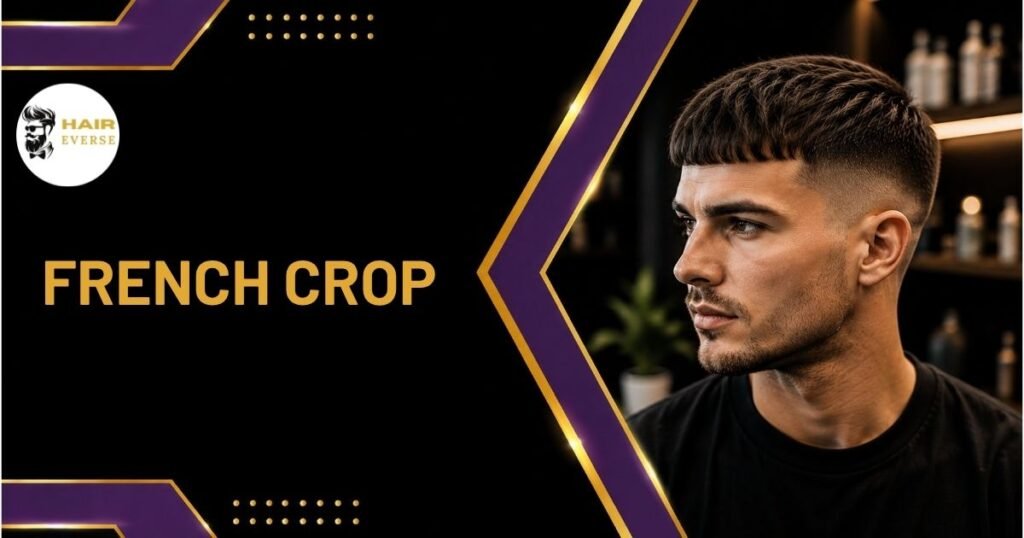
Styling Tip: Work a light matte cream through the fringe and press it forward with fingers rather than a comb, keeping the edges soft, not sharp.
Maintenance: Trim every 3-4 weeks to keep the fringe from growing past your eyebrows and losing its shape. Maintenance and styling times are estimates and may vary by hair type.
Caesar Cut
Overview: Short, even length all around is finished with a horizontal fringe cut straight across the forehead a look defined by its uniformity.
Why It Works: The consistent length minimizes contrast at the crown and temples, while the fringe distracts from a receding hairline by framing the face instead.
Styling Tip: Use a small amount of matte pomade to keep the fringe textured and separated rather than smooth and flat.
Maintenance: A trim every 3 weeks keeps the fringe crisp; let it go longer and it starts to curl or flop. Maintenance and styling times are estimates and may vary by hair type.
Choppy Fringe Crop
Overview: Similar to the French crop, but the fringe is cut unevenly rather than in a straight line, creating a rougher, more casual front section.
Why It Works: Irregular fringe edges photograph and move more naturally than a blunt line, making the density illusion hold up under everyday lighting, not just in photos.
Styling Tip: Apply texture powder at the roots first for lift, then a matte paste through the ends to define individual pieces.
Maintenance: Trim every 4 weeks and ask for point-cutting on the fringe to keep the choppy edges from growing into a solid line. Maintenance and styling times are estimates and may vary by hair type.
Spiky Crop
Overview: Short top hair is styled upward into defined spikes or peaks, usually paired with tapered or faded sides for a clean base.
Why It Works: Vertical lift is one of the most direct ways to add height and volume, both of which read as thickness even when strand count hasn’t changed.
Styling Tip: Rub a strong-hold matte wax between your palms and push hair upward from the roots rather than combing through.
Maintenance: Trim every 3-4 weeks; spikes need enough length to hold shape but not so much that they flop sideways. Maintenance and styling times are estimates and may vary by hair type.
Messy Textured Crop
Overview: A deliberately undone version of the textured crop, with layers pointed in different directions instead of one uniform sweep.
Why It Works: Random direction change disrupts the eye’s ability to focus on any single thin patch, which is especially useful for diffuse thinning across the whole crown.
Styling Tip: Blow-dry with fingers instead of a brush, lifting at the roots, then finish with a light texture powder for grip and separation.
Maintenance: Rebook every 4 weeks; this cut relies on layering, so it needs regular upkeep to stay light rather than heavy. Maintenance and styling times are estimates and may vary by hair type.
Curly Crop
Overview: Natural curls are kept short on top and tightly trimmed on the sides, letting the curl pattern itself provide texture and shape.
Why It Works: Curl pattern naturally reduces how much scalp shows through, since curls sit at angles rather than lying flat against the head.
Styling Tip: Apply a curl-defining gel to damp hair and scrunch upward, then let it air-dry or diffuse on low heat to avoid frizz.
Maintenance: Trim every 5-6 weeks since curls shrink and can hide length; ask your barber to cut it slightly longer than a straight-hair equivalent. Maintenance and styling times are estimates and may vary by hair type.
Faux Hawk
Overview: Hair is left longer down the center of the head and shorter on the sides, then styled upward into a subtle strip rather than a full mohawk.
Why It Works: The central strip of height creates a strong vertical line that pulls attention away from crown thinning on either side of it.
Styling Tip: Section the center with a comb, apply a strong-hold matte wax, and lift straight up rather than sweeping to one side.
Maintenance: Trim every 4 weeks to keep the center strip defined against the shorter sides. Maintenance and styling times are estimates and may vary by hair type.
Textured Quiff
Overview: The top is grown out several inches and swept upward and back at the front, with shorter, often faded sides for contrast.
Why It Works: Height at the front is one of the strongest density illusions available, since it adds visible volume exactly where thinning is most noticeable.
Styling Tip: Blow-dry the front section upward using a round brush and medium heat, then lock the shape in with a matte, medium-hold paste.
Maintenance: Trim every 4 weeks and keep the height controlled oversized quiffs can separate and expose the scalp underneath. Maintenance and styling times are estimates and may vary by hair type.
Short Quiff
Overview: A restrained version of the textured quiff, with just an inch or two of lift at the front instead of a dramatic sweep.
Why It Works: Modest height is easier to control on fine hair than a full quiff, which can look unbalanced once thin strands lose their lift by afternoon.
Styling Tip: Use a lightweight texture powder at the roots before adding a small amount of matte cream through the front only.
Maintenance: Trim every 3-4 weeks to keep the front section short enough to hold its lift without extra product. Maintenance and styling times are estimates and may vary by hair type.
Undercut with Textured Top
Overview: Sides and back are cut very short or shaved, creating a sharp line against a longer, textured top that’s cut with movement rather than one flat length.
Why It Works: The stark two-tone contrast draws the eye to the styled top section, which is exactly where texture and product can build the most visible density.
Styling Tip: Apply matte clay to damp hair and work it through with fingers, pushing hair in the direction you want it to fall or lift.
Maintenance: Rebook every 3-4 weeks since undercuts show regrowth quickly along the shaved line. Maintenance and styling times are estimates and may vary by hair type.
Skin Fade Crop
Overview: Sides fade all the way down to bare skin, blending gradually into a textured, cropped top instead of stopping at a hard line.
Why It Works: The gradual blend avoids the harsh line an undercut creates, which some thinning crowns need to keep the sides-to-top transition looking intentional, not abrupt.
Styling Tip: A small amount of matte paste worked through the crop’s top adds texture without competing with the fade’s clean finish.
Maintenance: Rebook every 2-3 weeks, since skin fades grow out faster than any other fade style. Maintenance and styling times are estimates and may vary by hair type.
High Fade Buzz Cut
Overview: A buzz cut on top pairs with a high fade running from the temples up to the crown, creating sharp structure with minimal length anywhere.
Why It Works: The high fade line adds visible definition around the face, which compensates for the lack of top volume and keeps the cut from reading as plain.
Styling Tip: No styling product is strictly necessary, but a light matte spray keeps the buzzed top from looking shiny under bright light.
Maintenance: Rebook every 2 weeks to keep the fade line sharp as it grows out. Maintenance and styling times are estimates and may vary by hair type.
Mid Fade Taper
Overview: The fade starts roughly at ear level, sitting between a low and high fade, and blends into a textured or slightly longer top.
Why It Works: A mid fade is the most balanced option for most face shapes and hair densities, giving structure without the extreme contrast a high fade creates.
Styling Tip: Comb a lightweight hair cream through damp hair for natural movement, or switch to matte clay if you want more visible texture.
Maintenance: Trim every 3 weeks to keep the fade blended into the top length. Maintenance and styling times are estimates and may vary by hair type.
Low Fade Taper
Overview: The fade sits low, close to the hairline, leaving more length on the sides overall compared to mid or high fades, with a longer top.
Why It Works: This is the most subtle fade option, ideal for longer or narrower face shapes that don’t need extra width added at the temples.
Styling Tip: A light-hold texture cream keeps the top soft and natural without the stiffness heavier waxes can create.
Maintenance: Trim every 4 weeks since a low fade grows out more gradually than higher fades. Maintenance and styling times are estimates and may vary by hair type.
Temple Fade Crop
Overview: The fade is concentrated specifically around the temples, blending closely into a textured crop on top rather than fading the whole side.
Why It Works: Focusing the fade at the temples reduces the sharp visual lines that recession can create there, making the hairline transition look deliberate.
Styling Tip: Apply matte clay to the crop’s top and gently work product toward the temples to keep the blend looking seamless.
Maintenance: Rebook every 3 weeks to maintain a clean blend around the temple area specifically. Maintenance and styling times are estimates and may vary by hair type.
Comb Over Fade
Overview: Not to be confused with the old-fashioned cover-up style, the modern comb over fade pairs a faded side with longer top hair combed to one direction with subtle texture.
Why It Works: Directional combing adds visible structure and a defined part line, both of which read as more hair than the same length worn without direction.
Styling Tip: Blow-dry the top in your combing direction first, then set with a light matte cream to hold the direction without stiffness.
Maintenance: Trim every 3-4 weeks to keep the fade and part line sharp. Maintenance and styling times are estimates and may vary by hair type.
Slicked Side Part
Overview: A defined part line separates hair combed to one side, with the sides kept shorter or tapered to keep the overall shape controlled.
Why It Works: A soft, textured part reads as more deliberate than a hard, wet-look line this version uses lighter product to avoid exposing scalp along the part itself.
Styling Tip: Comb through a light styling cream (not gel) while hair is damp, and keep the part slightly angled rather than razor-straight.
Maintenance: Trim every 4 weeks to maintain the part’s shape as the sides grow. Maintenance and styling times are estimates and may vary by hair type.
Forward Fringe Caesar
Overview: A variation on the classic Caesar cut where the fringe is styled slightly forward and textured rather than blunt and flat across the forehead.
Why It Works: Directing hair forward instead of back is one of the most effective tricks for temple recession, since backward styles expose the hairline directly.
Styling Tip: Press a small amount of matte cream into the fringe with fingertips, angling strands slightly downward and forward.
Maintenance: Trim every 3 weeks to keep the fringe from growing past a manageable, forward-styled length. Maintenance and styling times are estimates and may vary by hair type.
Widow’s Peak Crop
Overview: This crop is cut to work with a natural widow’s peak rather than disguise it, using textured layers that follow the peak’s natural shape.
Why It Works: Fighting a widow’s peak with a straight hairline style usually looks unnatural; textured layers that echo its shape read as intentional instead.
Styling Tip: Use a texture powder at the front hairline specifically to add grip and prevent strands from separating into a sparse-looking point.
Maintenance: Trim every 4 weeks and ask your barber to keep the front layering soft rather than blunt. Maintenance and styling times are estimates and may vary by hair type.
Crown-Blending Crop
Overview: This crop is layered specifically to soften visibility at the crown, using shorter sides and directional top texture that moves across the vertex.
Why It Works: Crown thinning is usually most visible from directly above under bright light, so texture that creates movement across that exact spot helps break up scalp exposure.
Styling Tip: Blow-dry the crown area with fingers lifting against the direction hair naturally falls, then set with a light matte paste.
Maintenance: Trim every 4 weeks and mention crown thinning specifically to your barber so they layer that area with extra care. Maintenance and styling times are estimates and may vary by hair type.
Modern Short Pompadour
Overview: A scaled-down pompadour sweeps top hair up and back off the face, using a shorter, more manageable length than the traditional voluminous version.
Why It Works: Sweeping hair up and away creates height exactly where thinning is most visible, though the shorter modern length keeps it wearable for fine hair that can’t support a taller build.
Styling Tip: Blow-dry upward and back with a round brush, then apply a strong-hold pomade at the roots to lock the lift in place all day.
Maintenance: Trim every 3-4 weeks; this style needs the most consistent upkeep on the list to keep its shape from softening. Maintenance and styling times are estimates and may vary by hair type.
Bro Flow (Medium Length)
Overview: Hair is grown to medium length and swept back naturally rather than tightly slicked, letting it fall with soft movement around the face and neck.
Why It Works: This works best for mild thinning specifically light layering keeps the length from collapsing flat, which heavier length on thin hair tends to do.
Styling Tip: Apply a lightweight sea salt spray to damp hair for texture, then air-dry or diffuse rather than flattening it with a comb.
Maintenance: Trim every 6 weeks to remove split ends and keep layering fresh; this style needs regular thinning shears to avoid excess weight. Maintenance and styling times are estimates and may vary by hair type.
Wavy Push Back
Overview: Natural waves are pushed back softly with fingers rather than a comb, letting the wave pattern itself create volume instead of a tight, slicked shape.
Why It Works: Natural wave texture adds volume without any extra styling effort, which flat straight hair of the same length can’t replicate as easily.
Styling Tip: Scrunch a lightweight mousse or sea salt spray into damp waves, then let hair air-dry to preserve the natural pattern.
Maintenance: Trim every 5-6 weeks; keep layering light so the waves aren’t weighed down by excess length. Maintenance and styling times are estimates and may vary by hair type.
Mullet Haircut
Overview: The modern mullet keeps a shorter, textured top and sides with noticeably longer length left at the back and nape.
Why It Works: The dramatic length contrast draws attention to the styled top and sides, which is where texture and product can do the most work for density illusion.
Styling Tip: Style the top with matte clay for texture and lift, while the back length benefits from a light sea salt spray for natural movement.
Maintenance: Trim the top and sides every 3-4 weeks while letting the back grow longer between visits. Maintenance and styling times are estimates and may vary by hair type.
Fringe Fade
Overview: A textured fringe sits at the front of a faded cut, combining the recession-softening benefit of a fringe with the sharp structure of a fade on the sides.
Why It Works: This pairs two density tricks at once a forward fringe to soften the hairline and a fade to add contrast and definition elsewhere.
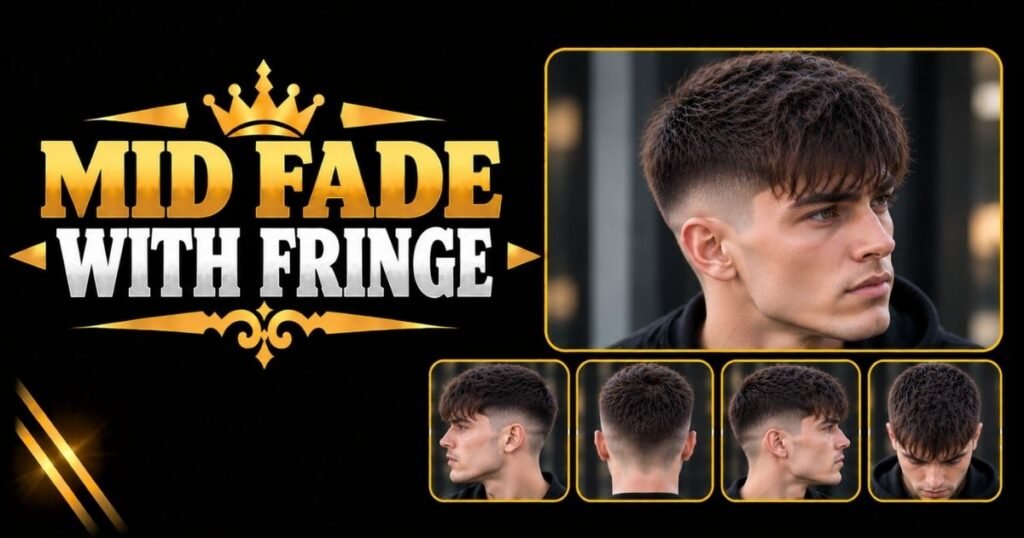
Styling Tip: Use a matte cream on the fringe to keep it soft and forward-facing, avoiding shine that draws extra attention to the front hairline.
Maintenance: Trim every 3 weeks to keep both the fringe length and the fade line sharp together. Maintenance and styling times are estimates and may vary by hair type.
Shaved Head
Overview: Hair is shaved down to skin using a razor or the shortest clipper setting, leaving no visible length anywhere on the scalp.
Why It Works: This removes the density comparison entirely there’s no thin patch to contrast against thicker hair because there’s no length at all.
Styling Tip: Use an unscented scalp moisturizer daily and apply SPF when outdoors, since a bare scalp needs the same sun protection as any exposed skin.
Maintenance: Reshave every 2-4 days with a razor, or every 5-7 days if using clippers on the shortest guard. Maintenance and styling times are estimates and may vary by hair type.
Textured Fringe with Beard Fade
Overview: A textured, slightly longer fringe sits above a subtle low fade, balancing softness at the front with clean structure at the sides.
Why It Works: The low fade keeps the cut from looking dated or too aggressive, while the fringe provides the forward coverage that helps soften early hairline recession.
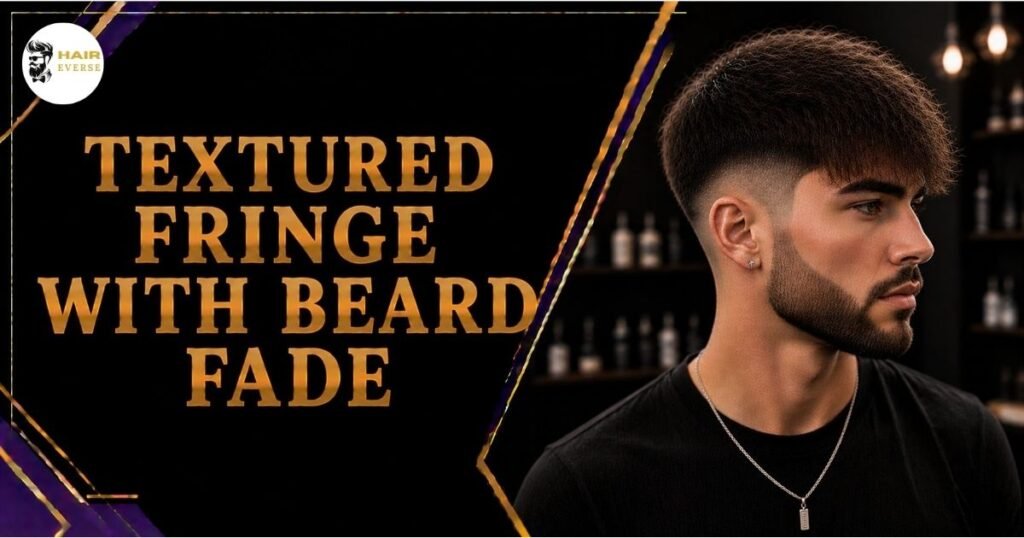
Styling Tip: Apply matte clay to the fringe only, working it forward and slightly down, and leave the faded sides product-free for contrast.
Maintenance: Trim every 4 weeks, focusing on keeping the fringe length consistent since it changes the cut’s whole look fastest. Maintenance and styling times are estimates and may vary by hair type.
How to Choose the Right Hairstyle
Matching a cut to your hair type and face shape narrows 35 options down to a handful worth actually trying.
By Hair Type:
- Thick strands, thinning density: Textured crops, undercuts, and fades handle bulk removal well while still building density illusion
- Thin, fine strands: Shorter cuts like buzz cuts, crew cuts, and Caesar cuts avoid the flatness that longer fine hair falls into
- Curly: Curly crops and fringe fades let natural curl pattern do the volume work for you
- Straight: Textured quiffs and crops benefit most from layering, since straight hair has no natural lift of its own
- Wavy: Wavy push backs and bro flows work with natural movement instead of fighting it
By Face Shape:
- Oval: Nearly every style on this list works you have the most flexibility
- Round: Height-focused cuts like faux hawks and spiky crops add length visually
- Square: Textured crops and undercuts complement strong jawlines without competing with them
- Long: Cuts with width, like Ivy Leagues or comb overs, balance out face length
How to Ask Your Barber for This Style
- Bring 1-2 reference photos, ideally from a similar hair type and density to your own
- Explain your preferred length in inches or clipper guard numbers, not vague terms
- Mention your daily styling routine and how much time you’re realistically willing to spend
- Ask directly about maintenance frequency for the specific cut you want
- Explain your workplace dress code or lifestyle needs before the first cut
- Confirm the final shape and fade height together before any clippers touch your hair
Product Recommendations
Hair Cream
- Best For: Natural, low-shine hold on straight or wavy hair
- How To Use: Rub a dime-sized amount between palms and comb through damp hair for even, lightweight distribution
Pomade
- Best For: Strong hold styles like pompadours and slicked side parts
- How To Use: Warm a small amount in your hands first, then work through dry or slightly damp hair, focusing on the roots for lift
Wax
- Best For: Defined texture in spiky crops and faux hawks
- How To Use: Rub between fingertips until pliable, then apply to sections you want to lift or separate
Clay
- Best For: Matte texture and volume in crops and textured tops
- How To Use: Apply to damp hair and scrunch or push upward from the roots rather than combing flat
Shampoo
- Best For: Removing product buildup without stripping natural oils
- How To Use: Massage into the scalp, not just the hair length, then rinse thoroughly before conditioning
Conditioner
- Best For: Preventing dryness without weighing down fine strands
- How To Use: Apply from mid-length to ends only, avoiding the roots where extra weight flattens volume fastest
Trending Grooming & Hairstyle Guides
- A well-blended beard can elevate almost any haircut, making your overall appearance cleaner and more refined. Our guide to Beard Fade Styles covers the latest fade combinations, grooming techniques, and maintenance tips to help you achieve a polished finish.
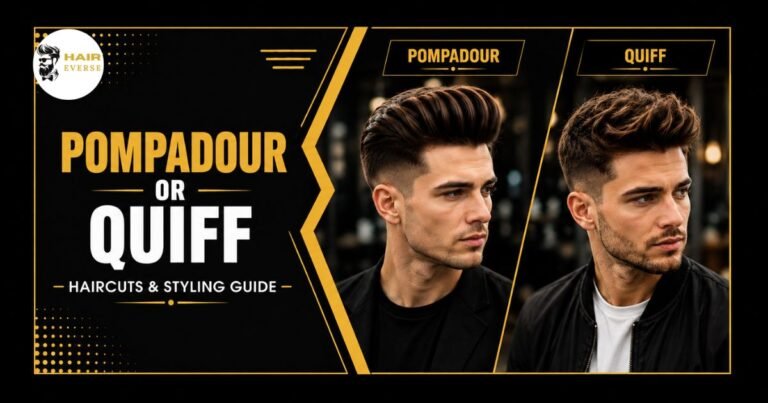
- Classic hairstyles never go out of style, and choosing between a pompadour and a quiff depends on the look you want to achieve. Explore our Pompadour or Quiff guide to compare both styles, learn styling techniques, and find the best match for your hair type.
- Finding the right haircut becomes much easier when you have plenty of inspiration to explore. Visit our Men Hair Style collection for a wide range of modern, classic, and trending hairstyles suited to every face shape, hair texture, and lifestyle.
Final Thoughts
None of these 35 cuts require you to hide your hair they work by cutting smarter, not by covering anything up. A textured crop, a clean buzz cut, or a forward fringe can all look sharp and deliberate once you match the style to your actual hair type and face shape rather than copying a photo that worked for someone else’s density.
Talk through your options with a barber you trust, bring the reference photos and details above, and don’t be afraid to experiment with a shorter length than you’re used to. The right haircut is one you can maintain confidently every morning start there, and the right look for your thin hair will follow.
FAQs
What is the Best Haircut for Thin Hair Overall?
Short, textured cuts like the textured crop, buzz cut, and French crop consistently work best. They reduce scalp contrast and use layering to build visual density that longer, flatter styles can’t match.
Should Men with Thin Hair Keep it Short or Long?
Short is almost always better. Long hair on thin strands tends to fall flat and separate, exposing the scalp underneath. Shorter cuts reduce that contrast and hold shape more reliably.
What Products Work Best for Styling Thin Hair?
Matte clays, texture powders, and lightweight creams work best. Heavy, shiny pomades and gels tend to weigh hair down and expose thinning rather than hiding it.
How Often should Men with Thin Hair Get a Trim?
Every 3-4 weeks for most short styles, though buzz cuts and fades may need trims every 2 weeks to keep sharp lines from growing out.
What Should Men with Thin Hair Avoid?
Avoid long flat styles, hard middle parts, and heavy shiny products. All three increase scalp contrast and make thinning more visible rather than less.