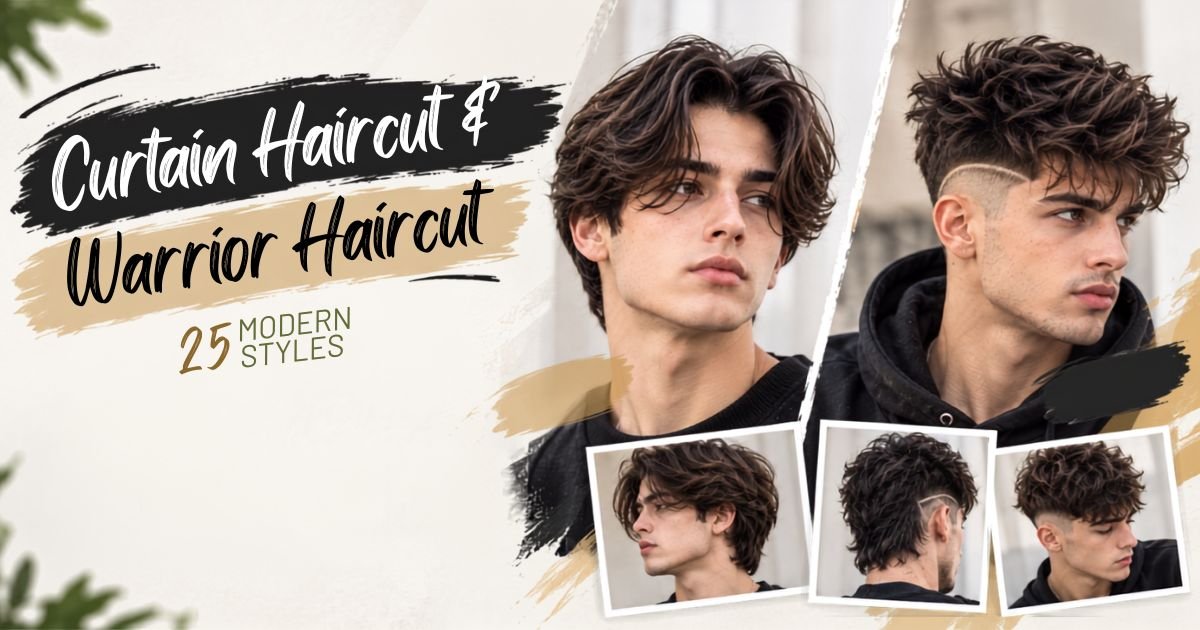
Curtain Haircut or Warrior Haircut: 25 Modern Styles for a Sharp Look
Growing out a fringe without looking messy is harder than it sounds, and that’s exactly where most guys get stuck between barber visits. Curtain Haircut or Warrior Haircut can look sharp for weeks or turn shapeless within days, and the difference usually comes down to how the top is cut and how you style it at home.
Barbers see this constantly: clients come in with a Curtain Haircut or Warrior Haircut grown out unevenly because nobody explained the maintenance routine up front.
Curtain Haircut or Warrior Haircut: Quick Comparison
The Curtain Haircut offers a soft, balanced look with a middle or off-center part, making it ideal for straight or wavy hair and a relaxed, modern style. The Warrior Cut, on the other hand, features longer, textured hair with a bold, rugged appearance that suits those who want a more confident and edgy look.
| Hairstyle | Best Hair Type | Face Shape | Maintenance | Styling Time |
| Classic 90s Curtain Fringe | Straight, wavy | Oval, heart | Medium | 5–10 min |
| Curtain Haircut with Low Taper Fade | All types | Oval, square | Medium | 5–10 min |
| Curtain Fringe with Burst Fade | Straight, wavy | Round, square | Medium | 10 min |
| Long Curtain Bangs | Straight, wavy | Oval, long | High | 10–15 min |
| Short Curtain Crop | All types | Round, square | Low | 5 min |
| Curly Curtain Haircut | Curly, coily | Oval, heart | Medium | 10 min |
| Wavy Curtain Fringe | Wavy | Oval, round | Medium | 5–10 min |
| Middle Part Curtain Cut | Straight | Oval, long | Low | 5 min |
| Curtain Mullet | Straight, wavy | Oval, square | High | 10–15 min |
| Korean-Style Curtain Haircut | Straight | Oval, heart | Medium | 10 min |
| Textured Curtain Crop | All types | Round, square | Low | 5–10 min |
| Classic Warrior Cut | Straight, wavy | Oval, square | Medium | 10 min |
| Warrior Cut with Low Taper Fade | All types | Oval, square | Medium | 10 min |
| Warrior Cut with Burst Fade | All types | Round, square | Medium | 10 min |
| Long Warrior Cut | Wavy, thick | Oval, long | High | 15 min |
| Short Warrior Crop | All types | Round, square | Low | 5 min |
| Messy Warrior Cut | All types | Oval, square | Low–Medium | 5 min |
| Disconnected Warrior Cut | Straight, thick | Oval, square | Medium | 10 min |
| Warrior Cut Mullet | Wavy, thick | Oval, square | High | 15 min |
| Curly Warrior Cut | Curly, coily | Oval, round | Medium | 10 min |
| Wavy Warrior Cut | Wavy | Oval, heart | Medium | 10 min |
| Warrior Cut with Beard | All types | Square, oval | Medium | 10 min |
| Boys’ Curtain Haircut | Straight, wavy | All shapes | Low | 5 min |
| Warrior Cut for Fine Hair | Fine, thin | Oval, round | Low–Medium | 5–10 min |
| Curtain Fringe with Undercut | All types | Oval, square | Medium | 10 min |
What Is a Curtain Haircut?
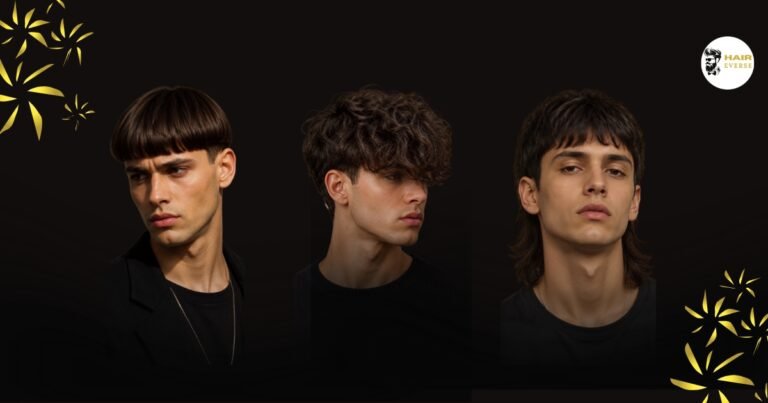
A curtain haircut is a 90s-born style with a longer top parted in the middle, so the fringe falls on either side of the forehead like a pair of curtains. The sides and back stay shorter, which keeps the shape controlled while the top does the visual work.
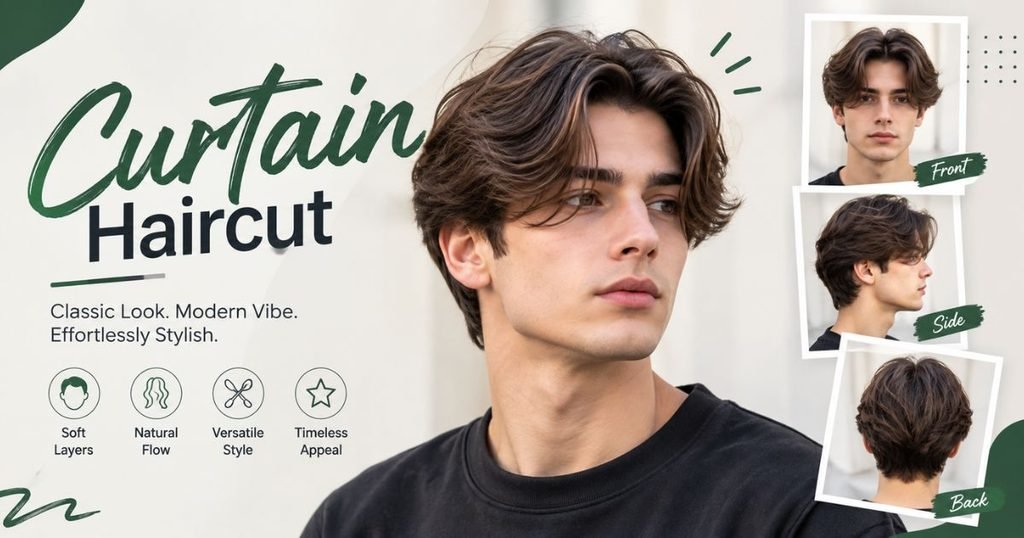
It’s one of the most requested men’s cuts of 2026 because it works on straight, wavy, and curly hair with only small tweaks to length and layering.
What Is a Warrior Cut?
A warrior cut takes a bolder route. The top is cut into choppy, disconnected layers that point in different directions instead of falling into a single part, while the sides are usually tapered or faded hard for contrast.
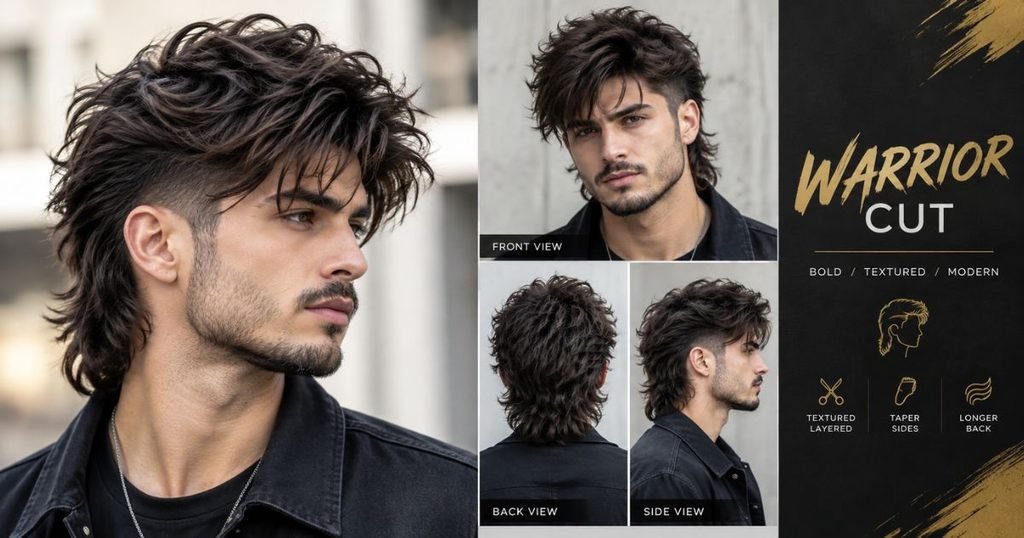
Where a curtain haircut reads as soft and face-framing, a warrior cut reads as rugged and deliberately undone. Both styles pair naturally with a low taper fade or burst fade, which is why they’re grouped together here.
Curtain Haircut or Warrior Haircut : What’s the Real Difference?
The core difference is texture and direction. A curtain haircut relies on a clean middle part and smooth, face-framing fringe. A warrior cut relies on choppy point-cutting and a hard disconnect between the top and sides, so the layers sit rougher and more scattered.
Guys with thicker or coarser hair often lean toward the warrior cut because the texture holds shape without daily blow-drying, while curtain haircuts tend to suit finer or straighter hair that falls flat and frames the face cleanly.
The 25 Best Curtain Haircut & Warrior Cut Styles
If you’re looking for a stylish haircut that blends classic charm with modern trends, curtain haircuts and warrior cuts are excellent choices.
From soft middle-part curtain styles to bold warrior-inspired looks with textured layers and fades, these hairstyles suit a variety of face shapes, hair types, and personal styles.
Classic 90s Curtain Fringe
Overview: This is the original curtain look a middle-parted fringe that falls just above the brow, with shorter, undisturbed sides. It’s the reference point every other variation on this list builds from.
Why It Works: Straight and wavy hair hold the middle part best, and the style flatters oval and heart-shaped faces by softening a wider forehead.
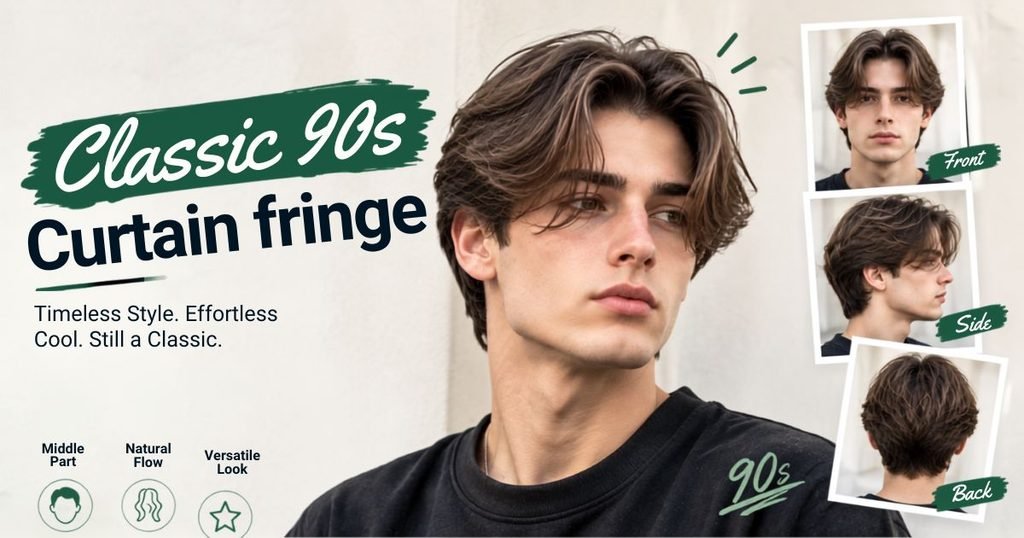
Styling Tip: Blow-dry the fringe forward first, then use a comb to split the part down the center while the hair is still slightly damp, finishing with a small amount of styling cream for hold without shine.
Maintenance: Trim every 5–6 weeks to keep the fringe from covering the eyes. Maintenance and styling times are estimates and may vary by hair type.
Curtain Haircut with Low Taper Fade
Overview: The same face-framing fringe, but the sides gradually fade down near the ears instead of staying a uniform length, adding contrast without looking severe.
Why It Works: The low taper fade suits nearly every face shape because it only tightens hair close to the skin near the hairline, keeping the transition subtle.
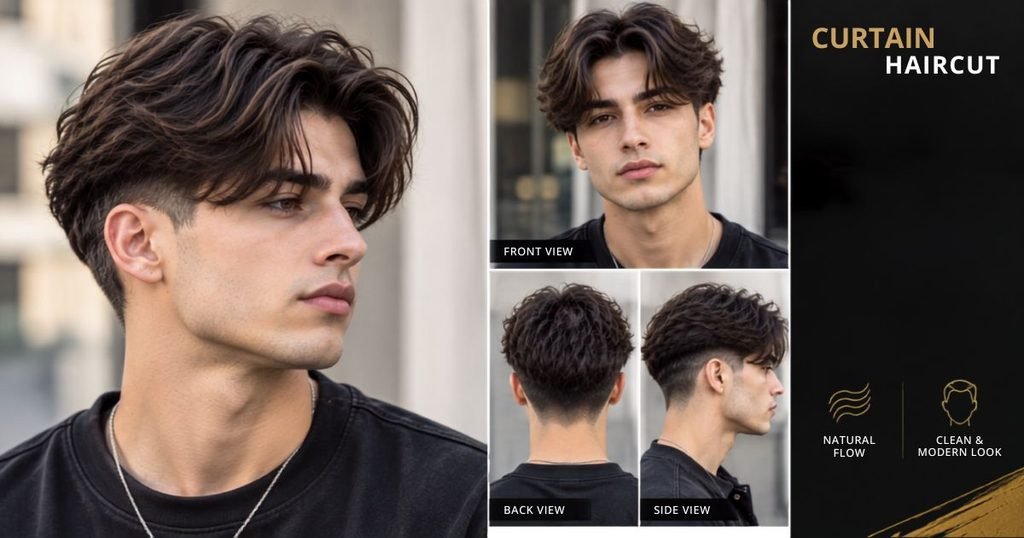
Styling Tip: Work a dime-sized amount of texture clay through damp hair before blow-drying, focusing product only on the top so the faded sides stay clean and untouched.
Maintenance: Because the fade grows out faster than the top, plan on a touch-up every 3–4 weeks even if the fringe still has length left. Maintenance and styling times are estimates and may vary by hair type.
Curtain Fringe with Burst Fade
Overview: A burst fade curves around the ear instead of running in a straight line, so this pairing gives the curtain fringe a sharper, more sculpted frame around the face.
Why It Works: The rounded fade line balances square and round face shapes by adding an angle near the temple that a straight taper doesn’t create.

Styling Tip: Use a sea salt spray on damp hair before blow-drying to add grit and hold without weighing the fringe down flat.
Maintenance: Burst fades need more frequent barber visits than tapers every 3 weeks is typical to keep the curve crisp. Maintenance and styling times are estimates and may vary by hair type.
Long Curtain Bangs
Overview: This version pushes the fringe length past eyebrow level for a bolder, more dramatic curtain effect, often worn with minimal layering underneath.
Why It Works: Longer hair on top suits oval and long face shapes especially well, since the extra length can be angled to add width visually.
Styling Tip: A round brush and blow dryer combination gives the most control here dry the roots first for lift, then smooth the length outward.
Maintenance: Expect visits every 6–8 weeks since the goal is length retention, with only the back and sides trimmed in between. Maintenance and styling times are estimates and may vary by hair type.
Short Curtain Crop
Overview: A shortened take on the curtain fringe that sits above the brow instead of at it, giving a subtler, lower-commitment version of the trend.
Why It Works: This length works on nearly any hair type and softens round or square faces without the upkeep of longer fringe.
Styling Tip: A small amount of matte clay worked through with fingers is enough no blow dryer needed most days.
Maintenance: This is the lowest-upkeep curtain option on the list, needing a trim only every 4–5 weeks. Maintenance and styling times are estimates and may vary by hair type.
Curly Curtain Haircut Men
Overview: Natural curls are left mostly untouched on top, parted down the middle, so the curl pattern itself creates the curtain shape instead of a blow-dry.
Why It Works: This variation is built specifically for curly and coily hair types and flatters oval and heart face shapes by adding volume at the crown.
Styling Tip: Apply curl cream to soaking wet hair and let it air-dry or diffuse on low heat brushing dry curls will break the curtain shape.
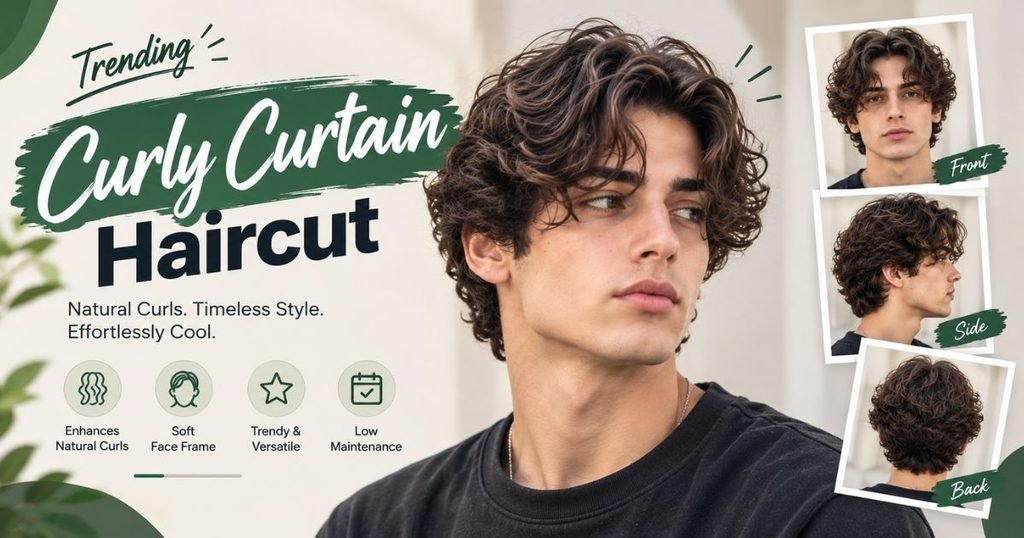
Maintenance: Curly hair grows out differently than straight hair, so trims every 6–8 weeks keep the shape without cutting away curl definition. Maintenance and styling times are estimates and may vary by hair type.
Wavy Curtain Fringe
Overview: Natural waves are left loose rather than smoothed flat, giving the curtain fringe extra texture and a more relaxed finish than the classic version.
Why It Works: Wavy hair holds a curtain shape with less product than straight hair, and this style suits oval and round faces by adding visible texture.
Styling Tip: Scrunch a light sea salt spray into damp hair, then let it air-dry to keep the wave pattern intact instead of blow-drying it out.
Maintenance: Trim every 5–6 weeks, asking your barber to keep length in the fringe while thinning bulk underneath. Maintenance and styling times are estimates and may vary by hair type.
Middle Part Curtain Cut
Overview: A cleaner, more symmetrical take on the curtain fringe with less layering, so both sides of the part mirror each other closely.
Why It Works: The symmetry suits oval and long face shapes best, since it doesn’t add extra volume to the sides of the face.
Styling Tip: Comb straight back from the crown, then use two fingers to press the part into place while it’s still damp from the shower.
Maintenance: This low-layer cut is easy to maintain with trims every 5 weeks and almost no daily product needed. Maintenance and styling times are estimates and may vary by hair type.
Curtain Mullet Haircut Men
Overview: This hybrid combines the curtain fringe up front with mullet-length hair left longer in the back, giving the cut extra edge.
Why It Works: Best suited to straight or wavy hair with some natural thickness to support both the front shape and the back length; flatters oval and square faces.
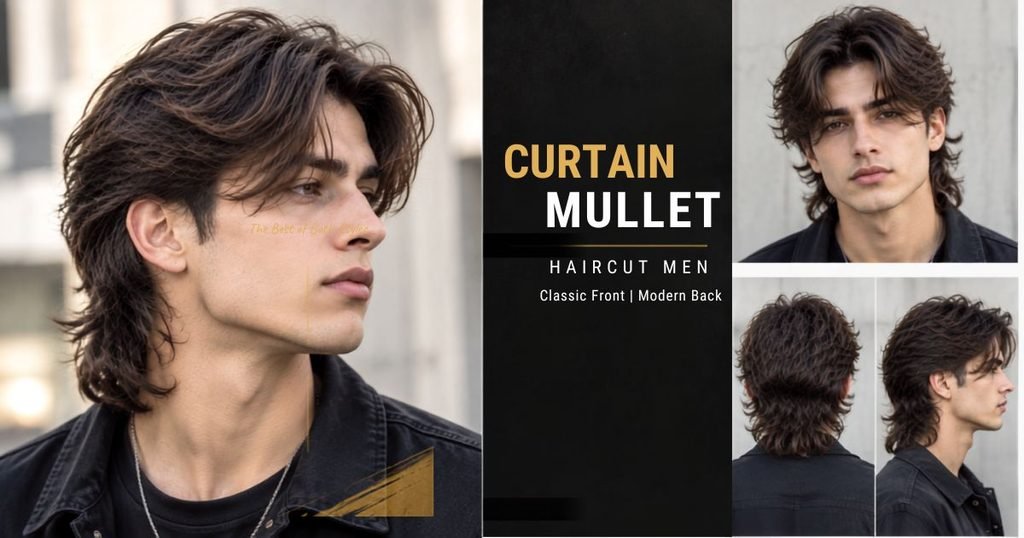
Styling Tip: Style the front the same way as a classic curtain fringe, then use a texturizing spray on the back length to keep it from looking flat.
Maintenance: Because two different lengths are growing at different rates, expect a barber visit every 4 weeks to keep both sections balanced. Maintenance and styling times are estimates and may vary by hair type.
Korean-Style Curtain Haircut
Overview: A softer, more feathered version of the curtain fringe popularized by K-pop styling, with finer layering through the top for a lighter finish.
Why It Works: The feathered layers suit straight hair types especially well and flatter oval and heart face shapes by keeping volume light rather than heavy.
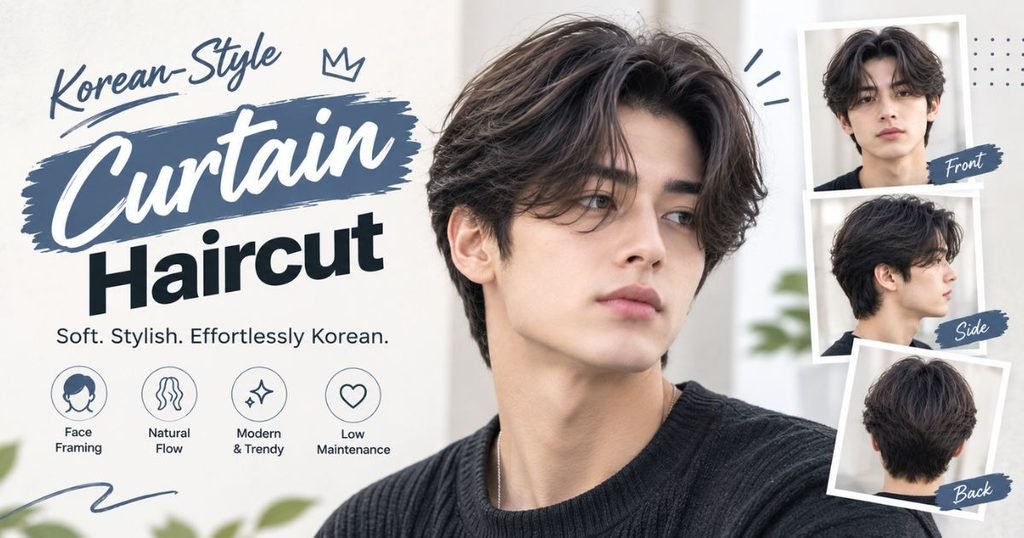
Styling Tip: Use a vent brush while blow-drying to add lift at the root, then finish with a lightweight styling cream instead of a heavy clay.
Maintenance: Trim every 5 weeks, asking your barber for point-cutting through the ends to maintain the feathered look as it grows. Maintenance and styling times are estimates and may vary by hair type.
Textured Curtain Crop
Overview: This version adds choppier texturizing to the classic curtain shape, blurring the line between a curtain haircut and a warrior cut.
Why It Works: Works well on all hair types thanks to the added texture, and flatters round and square faces by breaking up straight lines.
Styling Tip: Rough-dry with your fingers rather than a brush, then twist a small amount of matte clay between your palms before working it through for separation.
Maintenance: This crop actually looks better slightly grown out, so trims every 5–6 weeks are enough. Maintenance and styling times are estimates and may vary by hair type.
Classic Warrior Cut
Overview: The foundational warrior cut: heavily textured, disconnected top layers pointing in multiple directions, paired with tapered or faded sides for contrast.
Why It Works: Best on straight to wavy hair with some natural body, and flatters oval and square faces thanks to the added height and movement on top.
Styling Tip: Apply matte texturizing clay to towel-dried hair and scrunch upward from the roots to push the layers into their natural, disconnected shape.
Maintenance: Get the disconnect refreshed every 4 weeks, since a grown-out warrior cut starts to look shaggy rather than sharp. Maintenance and styling times are estimates and may vary by hair type.
Warrior Cut with Low Taper Fade
Overview: The choppy warrior top stays the same, but the sides fade gradually near the ears instead of a hard tapered line, making the overall look easier to wear in professional settings.
Why It Works: The subtle fade suits nearly any face shape and hair type, giving the boldness of the warrior cut without an aggressive contrast.
Styling Tip: Focus texturizing clay only on the crown and front sections; over-applying near the fade line can make the taper look muddy instead of clean.
Maintenance: Touch up the fade every 3–4 weeks even if the top still has plenty of length left to work with. Maintenance and styling times are estimates and may vary by hair type.
Warrior Cut with Burst Fade
Overview: Combining the choppiest version of the warrior top with a fade that curves around the ear creates one of the boldest looks on this list.
Why It Works: Works best with straight to thick hair and flatters square and round faces by adding an angled fade line near the temple.
Styling Tip: Point-cut layers respond well to a light dusting of texture powder at the roots before working clay through the mid-lengths for definition.
Maintenance: Burst fades need attention every 3 weeks to keep the curved line sharp against the longer top. Maintenance and styling times are estimates and may vary by hair type.
Long Warrior Cut
Overview: The top length extends to 5–6 inches, giving the choppy layers more movement and letting them be pushed back, forward, or left loose depending on the day.
Why It Works: Suits thick, wavy hair that can support the extra length without looking limp, and flatters oval and long faces.
Styling Tip: Blow-dry with a diffuser attachment on low heat to encourage natural texture, then finish with texturizing clay worked only through the ends.
Maintenance: Because the goal is length, plan on trims every 6–8 weeks with only point-cutting to maintain shape in between. Maintenance and styling times are estimates and may vary by hair type.
Short Warrior Crop
Overview: A cropped, low-maintenance take on the warrior cut with a tighter textured top and a sharper tapered fade through the sides.
Why It Works: Works on nearly all hair types and is ideal for round or square faces that want the warrior aesthetic without much daily styling.
Styling Tip: A small amount of matte pomade worked through with fingertips is usually enough to define the short texture.
Maintenance: The lowest-upkeep warrior option here, needing a trim only every 3–4 weeks to keep the fade crisp. Maintenance and styling times are estimates and may vary by hair type.
Messy Warrior Cut
Overview: This version amplifies the warrior cut’s already rough texture, pushing strands in every direction for a controlled-chaos finish.
Why It Works: Works especially well on hair with natural texture or waves, and flatters oval and square faces without requiring precision styling.
Styling Tip: Scrunch texturizing clay into damp hair and let it air-dry rather than brushing it smooth the goal is intentional disorder, not neatness.
Maintenance: Because the style hides regrowth well, trims can stretch to every 5–6 weeks. Maintenance and styling times are estimates and may vary by hair type.
Disconnected Warrior Cut
Overview: A hard disconnect separates the choppy top from the tapered or faded sides entirely, with no gradual blend between the two lengths.
Why It Works: Best suited to straight, thick hair that holds a defined shape, and flatters oval and square faces with strong bone structure.
Styling Tip: Ask your barber to point-cut through the top layers, then style upward and outward using texturizing clay to keep the disconnect visible.
Maintenance: This is one of the higher-precision cuts on the list, so visit every 3–4 weeks to keep the disconnect from blending out. Maintenance and styling times are estimates and may vary by hair type.
Warrior Cut Mullet
Overview: This variation extends the choppy warrior texture into a mullet silhouette, keeping length in the back while the top stays heavily textured.
Why It Works: Works best with thick or wavy hair that can support both sections, and suits oval and square faces looking for a bolder statement.
Styling Tip: Style the top and back separately texturizing clay on top for lift, a lightweight styling cream on the back to prevent flatness.
Maintenance: Two growth zones mean more frequent shaping, typically every 4 weeks. Maintenance and styling times are estimates and may vary by hair type.
Curly Warrior Cut
Overview: Natural curls are cut into a choppy warrior shape rather than being straightened, letting the curl pattern do most of the textural work.
Why It Works: Designed specifically for curly and coily hair types, and flatters oval and round faces by adding volume without extra length.
Styling Tip: Apply curl cream to soaking wet hair, scrunch upward, then let curls dry naturally or with a diffuser to preserve definition.
Maintenance: Curl-specific cuts benefit from trims every 6–8 weeks so the shape doesn’t lose its curl pattern too early. Maintenance and styling times are estimates and may vary by hair type.
Wavy Warrior Cut
Overview: Natural waves are left loose and choppy on top, giving the warrior cut a softer edge than the straight-hair version while still keeping the disconnected shape.
Why It Works: Wavy hair naturally supports the warrior cut’s texture with less product, and the style flatters oval and heart face shapes.
Styling Tip: A light sea salt spray on damp hair enhances the natural wave pattern before you scrunch in a small amount of clay for hold.
Maintenance: Trim every 5 weeks, keeping some length so the wave pattern has room to show through. Maintenance and styling times are estimates and may vary by hair type.
Warrior Cut with Beard
Overview: Pairing the choppy warrior top with a fuller beard balances the boldness of the haircut with added structure through the jawline.
Why It Works: This combination suits square and oval face shapes especially well, since the beard adds width at the jaw to match the volume on top.
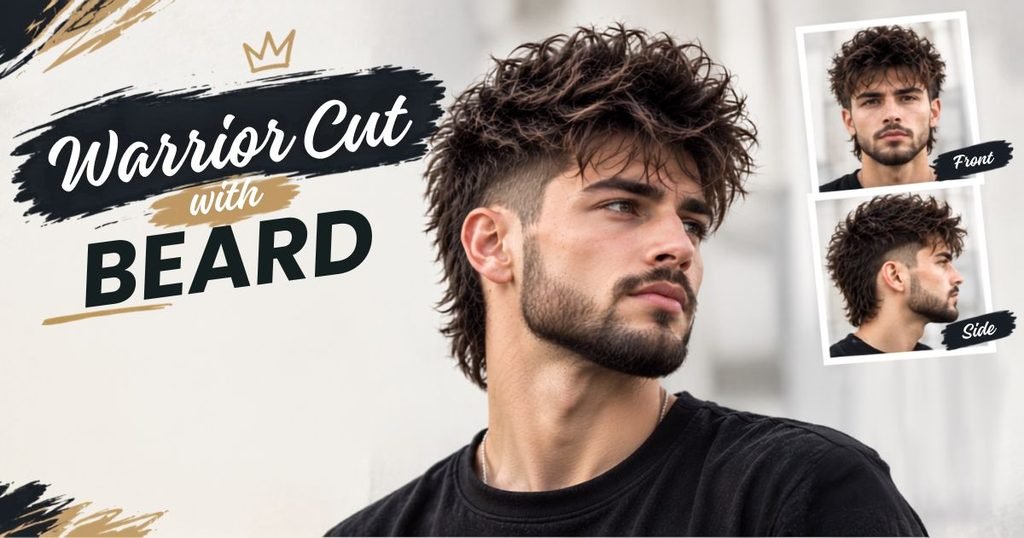
Styling Tip: Keep beard oil in your routine alongside your hair clay a dry, unkempt beard undercuts an otherwise sharp warrior cut.
Maintenance: Coordinate your haircut and beard trim on the same schedule, roughly every 3–4 weeks, so both stay proportional. Maintenance and styling times are estimates and may vary by hair type.
Boys’ Curtain Haircut
Overview: A simplified, shorter curtain fringe designed for younger boys, with less layering and an easy-to-manage length that still nods to the trend.
Why It Works: Works on nearly any hair type at this age and is easy for a parent or the boy himself to manage day-to-day without much product.
Styling Tip: A small amount of a gentle, kid-friendly styling cream combed through damp hair is enough skip heavy clays or sprays on younger hair.
Maintenance: Kids’ hair grows faster and gets messier day-to-day, so trims every 4 weeks keep the fringe out of the eyes. Maintenance and styling times are estimates and may vary by hair type.
Warrior Cut for Fine Hair
Overview: A shorter, lighter version of the warrior cut built to give fine or thinning hair the appearance of more density without extra length weighing it down.
Why It Works: Shorter choppy layers create the illusion of thickness, which flatters oval and round face shapes on fine hair types.
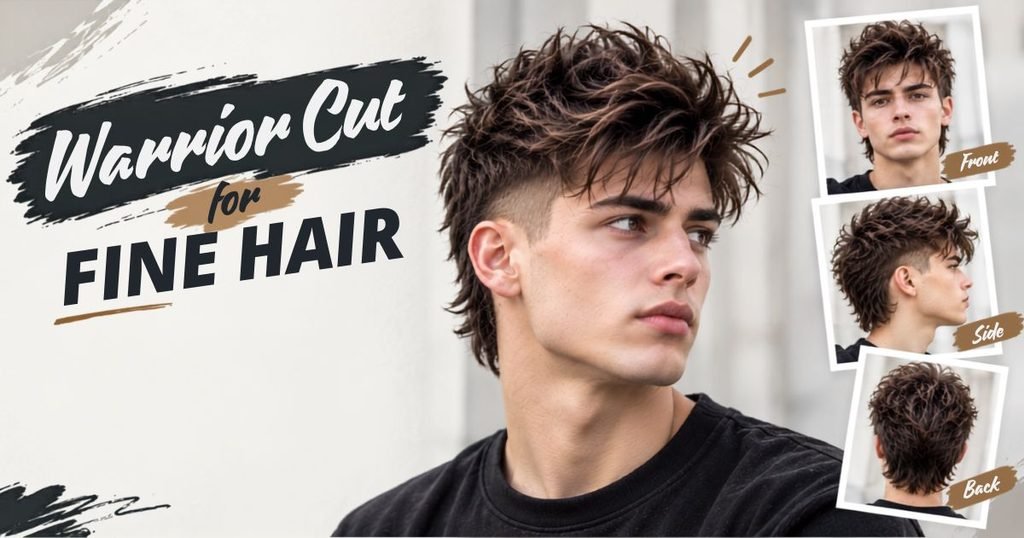
Styling Tip: Use a lightweight texture powder at the roots before styling heavier clays can weigh fine hair down and flatten the disconnect.
Maintenance: Fine hair shows regrowth less dramatically, so trims every 5–6 weeks are usually enough. Maintenance and styling times are estimates and may vary by hair type.
Curtain Fringe with Undercut
Overview: The classic curtain fringe stays on top, but the sides are shaved down to an undercut instead of a gradual fade, creating the sharpest possible contrast.
Why It Works: This high-contrast pairing suits oval and square face shapes and works best on straight to wavy hair that holds a clean part.
Styling Tip: Blow-dry the top forward and split the center part with a comb, then apply pomade for a slightly slicked, defined finish rather than a matte one.
Maintenance: The shaved sides grow out faster than the top, so plan on a touch-up every 2–3 weeks to keep the undercut clean. Maintenance and styling times are estimates and may vary by hair type.
Related Men’s Hairstyle Guides
If you want to give your curtain haircut a more modern edge, consider pairing it with a burst fade haircut. The clean fade adds contrast around the ears while keeping the longer fringe as the focal point, creating a stylish look that works for a variety of hair types and face shapes.
If you like the balanced look of a curtain haircut, be sure to explore our guide to middle part hairstyles for men. Since the curtain haircut is one of the most popular middle-part styles, you’ll find more inspiration, styling ideas, and variations to match your hair type and personal style.
If you’re considering a shorter, low-maintenance alternative to a curtain haircut, check out our guide comparing the crew cut vs buzz cut. It explains the key differences between these classic styles, helping you decide whether to keep longer textured hair or switch to a clean, easy-to-maintain cut.
You’re considering a Curtain Haircut, it’s worth exploring other layered styles before making your final choice. Check out our guide to Wolf Cut vs Shag Cut to understand the key differences in texture, layering, styling, and maintenance, helping you choose the haircut that best suits your hair type and personal style.
How to Choose the Right Hairstyle from Curtain Haircut or Warrior Haircut
Picking between these 25 styles comes down to two things: what your hair actually does on its own, and the shape of your face.
By Hair Type:
- Straight hair holds the classic curtain part cleanly and takes well to most fade pairings without much daily effort.
- Wavy hair adds natural texture to either style, making it a strong fit for the messy warrior cut or wavy curtain fringe.
- Curly hair works best with the curly-specific versions of both cuts, since straightening curls to force a flat part usually fights the hair’s natural pattern.
- Thick hair supports longer versions like the long warrior cut or curtain mullet without looking overloaded.
- Thin or fine hair does better with shorter, choppier layers, like the warrior cut for fine hair, which fake volume rather than needing it.
By Face Shape:
- Oval faces can wear nearly any style on this list, since the proportions are already balanced.
- Round faces benefit from added height and angular fade lines, like the burst fade pairings, to create the illusion of length.
- Square faces look sharp with disconnected or high-contrast styles that echo the jawline’s strong lines.
- Long faces do best with fuller, longer fringe that adds width, like the long curtain bangs.
How to Ask Your Barber for Curtain Haircut or Warrior Haircut?
- Bring 2–3 reference photos, not just one, so your barber can see the style from different angles
- Specify the fringe or top length in inches if you know it, rather than saying “not too short”
- Mention whether you want a curtain (soft, parted) or warrior (choppy, disconnected) finish, since the names get mixed up often
- Ask specifically for a low taper fade or burst fade by name if that’s the look you want
- Explain your daily styling routine so your barber can cut layers that match how much time you’ll actually spend on it
- Confirm the final shape and fringe length before the barber puts the clippers away.
Final Thoughts
Both the Curtain Haircut or Warrior Haircut reward a little patience. The first few weeks after a fresh cut are usually the trickiest, since the fringe or top layers haven’t settled into their natural fall yet stick with the styling routine that matches your hair type and it gets easier fast.
Whether you’re drawn to the soft, face framing pull of a classic curtain fringe or the rougher, disconnected energy of a warrior cut, the right pairing with a low taper or burst fade can make either style work for almost any face shape.
Both Curtain Haircut or Warrior Haircut offer unique styles that can transform your overall appearance. Choose the Curtain Haircut for a modern, versatile look or the Warrior Cut for a bold and confident statement.
FAQs
What’s the Difference between a Curtain Haircut and a Warrior Cut?
A curtain haircut features a soft, middle-parted fringe that frames the face. A warrior cut uses choppy, disconnected layers on top that point in multiple directions instead of falling into one part.
Does a Curtain Haircut Suit Round Faces?
Yes, but length and layering matter. A shorter curtain crop or one paired with a burst fade adds angles that help balance a round face shape better than a long, heavy fringe.
How do you Maintain a Warrior Cut?
Trim every 3–4 weeks to keep the disconnect sharp, use a matte texturizing clay daily, and coordinate any fade touch-ups on the same schedule so the sides don’t outgrow the top.
Can Boys get a Curtain Haircut?
Yes, a shorter, lightly layered version works well for younger boys and needs less daily styling than the adult versions, usually just a light cream combed through damp hair.
What Fade goes best with a Curtain Haircut?
A low taper fade gives a subtle, professional-friendly finish, while a burst fade adds a sharper, more sculpted line around the ear for a bolder look.
How do you ask a Barber for a Warrior Cut?
Bring reference photos, ask for a hard disconnect between the top and sides, request heavy point-cutting through the top layers, and specify your preferred fade underneath.
Curtain Haircut or Warrior Haircutcut can look sharp for weeks or turn shapeless within days, and the difference usually comes down to how the top is cut and how you style it at home.: What’s the Real Difference?
A Curtain Haircut focuses on a soft, balanced look with a middle-part style that frames the face and works well with different hair textures. In contrast, a Warrior Cut has a bolder appearance with more volume, length, and a rugged finish. While both styles create a distinctive look, the Curtain Haircut offers a more classic and versatile feel, whereas the Warrior Cut delivers a stronger, more adventurous style.