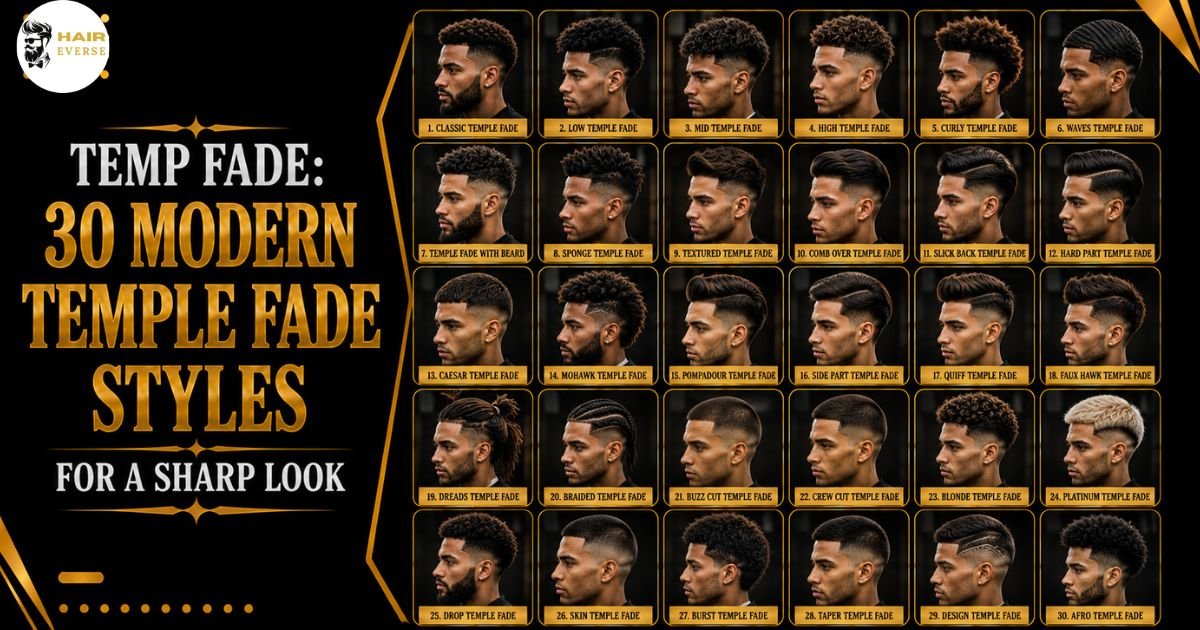
Comb-overs, Temple Fade: 30 Modern Temple Fade Styles for a Sharp Look
That gap between “too shaggy” and “fully shaved” is exactly what a temp fade solves. A Comb-overs Temple Fade tapers only the temples and sideburns instead of fading the whole side of the head, so you keep length and texture on top while still looking freshly groomed.
The tricky part is that not every version suits every hair type, and a rushed clipper pass can leave a patchy, uneven line instead of a clean one. Barbers see this daily: clients ask for “a fade” without specifying placement and end up with something too aggressive or too subtle for their face shape.
Comb-overs Temple Fade: Comparison Table
There you know about each hairstyle by hair type, face shape, maintenance, and estimated styling time.
| Hairstyle | Best Hair Type | Face Shape | Maintenance | Styling Time |
| Low Temple Fade | Straight, wavy | Any | Low | 2–5 min |
| Mid-temple fade | Wavy, curly | Oval, round | Medium | 5–10 min |
| High Temple Fade | Coarse, coily | Square, round | High | 5–10 min |
| Skin Temple Fade | Any | Square, oval | High | 5 min |
| Shadow Temple Fade | Straight, wavy | Diamond, oval | Medium | 5 min |
| Burst Temple Fade | Curly, coily | Round, oval | High | 5–10 min |
| Drop Temple Fade | Wavy, curly | Square, angular | Medium | 5 min |
| Taper Temple Fade | Any | Heart, oval | Low | 5 min |
| Temple Fade Curly Hair | Curly | Oval, round | Medium | 10–15 min |
| Temple Fade Afro | Coily | Oval, square | Medium | 10 min |
| Temple Fade Waves | Coily, straightprocessed | Round, oval | High | 5–10 min |
| Temple Fade Dreadlocks | Coily, locked | Any | Medium | 5–15 min |
| Temple Fade Cornrows | Coily | Any | Low (daily) | 5 min |
| Temple Fade Box Braids | Coily | Any | Low (daily) | 5 min |
| Temple Fade Buzz Cut | Any | Oval, square | Low | 1–2 min |
| Temple Fade Crew Cut | Straight, wavy | Oval, round | Low | 5 min |
| Temple Fade Comb-Over | Straight, wavy | Square, oval | Medium | 5–10 min |
| Temple Fade Pompadour | Straight, wavy, thick | Square, round | High | 10–15 min |
| Temple Fade Quiff | Straight, wavy | Oval, heart | Medium | 5–10 min |
| Temple Fade Slick Back | Straight, wavy | Oval, square | Medium | 5 min |
| Temple Fade Mohawk | Any | Oval, diamond | High | 10 min |
| Temple Fade Mullet | Straight, wavy, curly | Oval, square | Medium | 5–10 min |
| Temple Fade French Crop | Straight, wavy | Oval, round | Low | 5 min |
| Temple Fade Textured Crop | Wavy, curly | Any | Low | 5–10 min |
| Temple Fade Undercut | Any | Oval, square | Medium | 5–10 min |
| Temple Fade Long Top | Straight, wavy, curly | Oval, heart | Medium | 10–15 min |
| Temple Fade Straight Hair | Straight | Any | Low | 5 min |
| Temple Fade Fine Hair | Fine, thin | Round, oval | Low | 5 min |
| Temple Fade with Beard | Any | Square, oval | Medium | 5–10 min |
| Extra Short Temple Fade | Any | Oval, oblong | Low | 1 min |
Low Temple Fade
Overview: The fade starts just above the ear and stays close to the natural hairline, leaving most of the side untouched. It’s the most subtle version of the cut.
Why It Works: Suits straight or wavy hair and nearly any face shape, since the taper is small and doesn’t reshape the head. Great for offices with a conservative dress code.
Styling Tip: Work a small amount of matte clay through damp hair and comb the top into place for a neat, natural finish.
Maintenance: Book a trim every 3–4 weeks since the fade line is close to the hairline and grows out slowly. Maintenance and styling times are estimates and may vary by hair type.
Mid-temple fade
Overview: The taper begins roughly midway between the ear and the crown, giving a more noticeable contrast than a low fade without looking extreme.
Why It Works: It balances oval and round face shapes well and pairs nicely with wavy or curly hair that needs a bit more definition at the sides.
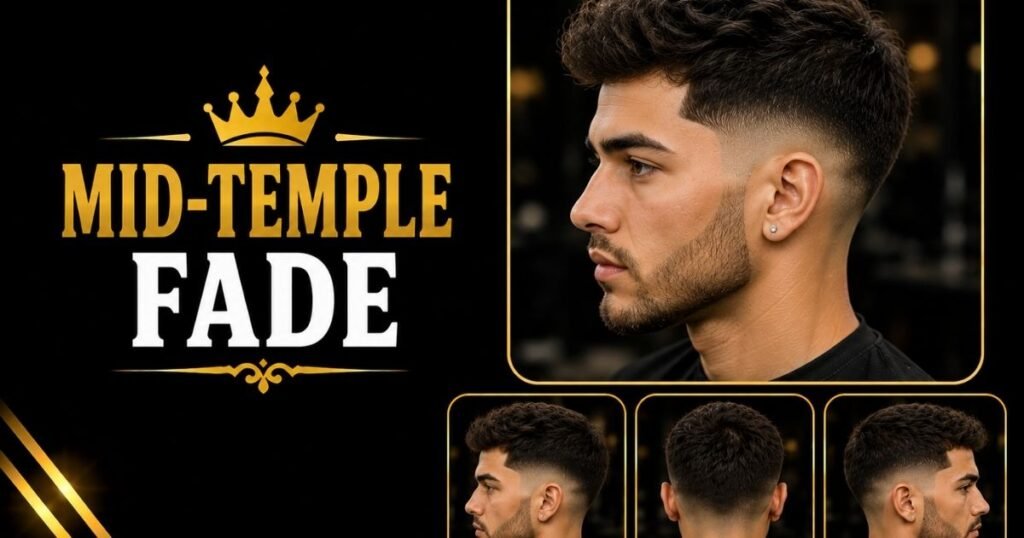
Styling Tip: Use a lightweight styling cream on top to add texture without weighing curls or waves down.
Maintenance: Get it refreshed every 2–3 weeks, as the midpoint blend shows regrowth faster than a low fade. Maintenance and styling times are estimates and may vary by hair type.
High Temple Fade
Overview: This version pushes the fade line up near the crown, creating a dramatic, high-contrast look between the short sides and longer top.
Why It Works: Works especially well with coarse or coily hair that holds shape and flatters square or round faces by adding vertical length.
Styling Tip: Apply sea salt spray to damp hair before drying for texture that holds up through the day.
Maintenance: Because the fade sits higher, regrowth is more visible. Fast plan on a touchup every 2 weeks. Maintenance and styling times are estimates and may vary by hair type.
Skin Temple Fade
Overview: The clipper work goes all the way to the skin at the temple, creating the sharpest possible contrast against the hair left on top.
Why It Works: Suits any hair type and highlights strong jaw and cheekbone structure, making it a favorite for square and oval faces.
Styling Tip: Keep the top styled with a strong-hold pomade so the contrast against the bare skin stays crisp all day.
Maintenance: Skin fades grow out visibly within a week, so plan for a touchup every 10–14 days. Maintenance and styling times are estimates and may vary by hair type.
Shadow Temple Fade
Overview: Instead of fading to skin, the barber leaves a thin layer of hair at the shortest point, creating a softer, shadowed gradient.
Why It Works: A more conservative option that suits diamond and oval faces and reads well in both formal and casual settings.
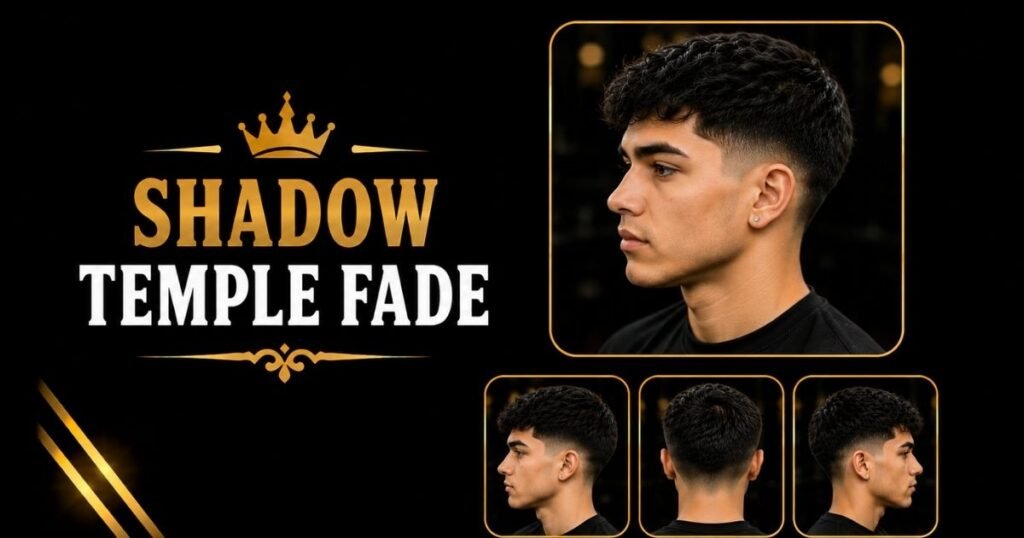
Styling Tip: A lighthold cream keeps the top looking natural without competing with the subtle fade underneath.
Maintenance: Because there’s no bare skin to maintain, this fade grows out more gracefully; a trim every 3–4 weeks is enough. Maintenance and styling times are estimates and may vary by hair type.
Burst Temple Fade
Overview: The fade curves in an arc around the ear instead of running straight down, creating a rounded “burst” shape at the temple.
Why It Works: It’s a strong match for curly or coily hair on top and flatters round or oval faces by adding a sharp, curved line for contrast.
Styling Tip: Use curl-defining cream on top to keep the curls separated and let the curved fade line stand out.
Maintenance: The curved line needs a skilled hand to maintain it. Book a touchup every 2 weeks to keep the arc crisp. Maintenance and styling times are estimates and may vary by hair type.
Drop Temple Fade
Overview: The fade line drops lower behind the ear, following the natural curve of the skull instead of running in a straight band.
Why It Works: Creates an optical illusion of a sharper jawline, which flatters square and angular faces especially well with wavy or curly hair on top.
Styling Tip: A matte clay keeps the top textured and prevents it from looking too polished against the sharp drop line.
Maintenance: Ask your barber to retrace the curve every 2–3 weeks so it doesn’t blur into a standard fade. Maintenance and styling times are estimates and may vary by hair type.
Taper Temple Fade
Overview: A gentler blend than a true fade, gradually shortening hair from the crown down without a hard contrast line at the temple.
Why It Works: The most versatile pick for classic and professional settings, and it grows out gracefully on nearly any hair type or heart-shaped face.
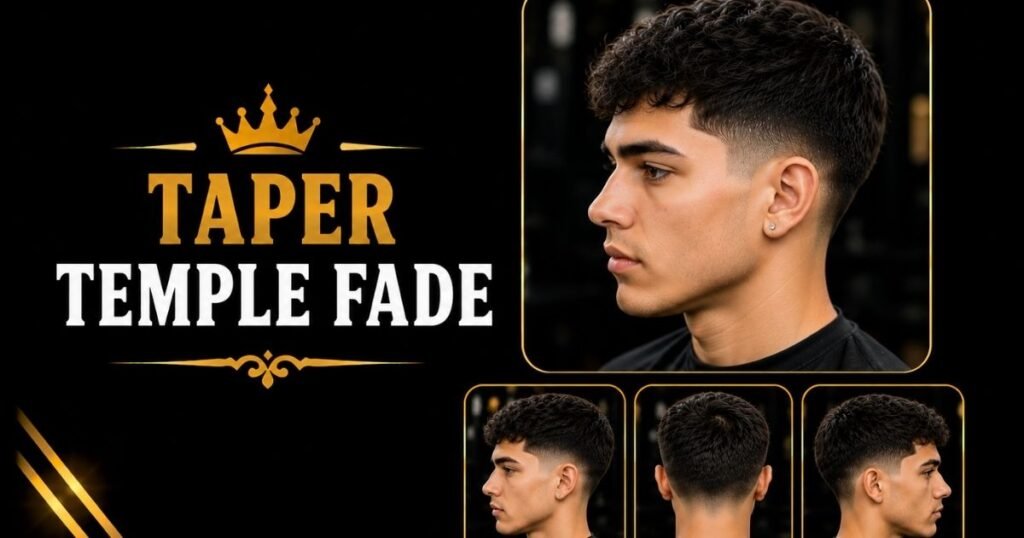
Styling Tip: A light pomade with natural shine finishes the look without pushing it into “fade” territory.
Maintenance: Because there’s no sharp line to maintain, this style can stretch to 4–5 weeks between trims. Maintenance and styling times are estimates and may vary by hair type.
Comb-overs Temple Fade Curly Hair
Overview: The sides fade cleanly while natural curls stay long and full on top, letting the curl pattern do most of the visual work.
Why It Works: Built specifically for curly and coily textures, and the clean sides balance the volume, making it flattering for oval and round faces.
Styling Tip: Apply curl-defining cream to soaking wet hair and scrunch upward to encourage clumping instead of frizz.
Maintenance: Keep the fade sharp every 2–3 weeks while letting the curls grow between visits for more volume over time. Maintenance and styling times are estimates and may vary by hair type.
Temple Fade Afro
Overview: The temples and sideburns are faded cleanly while the natural afro shape is preserved and shaped on top.
Why It Works: Celebrates natural coily texture without chemical processing, and the clean sides add structure that suits oval and square faces.
Styling Tip: A leave-in moisturizer or curl cream keeps coils hydrated and prevents shrinkage from flattening the shape.
Maintenance: A shape-up every 2 weeks keeps the fade and hairline crisp, while the afro itself needs minimal daily upkeep. Maintenance and styling times are estimates and may vary by hair type.
Temple Fade Waves
Overview: Short, brushed hair on top forms a rippling wave pattern while the sides fade tightly at the temples for contrast.
Why It Works: A go-to for coily hair being trained into waves, and the clean sides let the wave pattern stay the visual focus.

Styling Tip: Brush in one consistent direction daily with a medium-bristle wave brush to deepen the ridges over time.
Maintenance: Wear a durag or wave cap overnight to protect progress, and get the fade refreshed every two weeks. Maintenance and styling times are estimates and may vary by hair type.
Temple Fade Dreadlocks
Overview: Locs are left to grow freely on top while the sides and temples are kept tightly faded for contrast.
Why It Works: Suits any face shape since the locs can be worn loose, tied back, or in a bun to balance proportions.
Styling Tip: Use a light, residue-free oil sparingly at the roots to keep locs moisturized without buildup.
Maintenance: Retouch the fade every 2–3 weeks and repalm roll new growth to keep locs neat between retwists. Maintenance and styling times are estimates and may vary by hair type.
Temple Fade Cornrows
Overview: Cornrows are braided close to the scalp on top while the temples fade to a clean, sharp line at the sides.
Why It Works: A practical protective style for coily hair that also suits any face shape thanks to the streamlined silhouette.

Styling Tip: A light braid gel or edge control smooths flyaways along the part lines without weighing the braids down.
Maintenance: Cornrows typically last 2–3 weeks before needing a fresh braid, and the fade can be touched up alongside them. Maintenance and styling times are estimates and may vary by hair type.
Temple Fade Box Braids
Overview: Individual box braids hang freely on top while the sides fade tightly, creating contrast between structure and movement.
Why It Works: Great for coily hair that needs a break from daily styling and works with any face shape since braids can be worn loose or tied back.
Styling Tip: A lightweight braid spray keeps braids shiny and reduces frizz without leaving a greasy residue.
Maintenance: Braids generally last 4–6 weeks, but the faded sides will need a refresh every 2–3 weeks in between. Maintenance and styling times are estimates and may vary by hair type.
Temple Fade Buzz Cut
Overview: A uniform buzz length on top blends into a faded temple, giving a clean, low-effort silhouette.
Why It Works: Works on nearly all hair types and flatters oval and square faces by keeping focus on the jawline and cheekbones.

Styling Tip: No real styling needed; a small amount of light scalp moisturizer prevents dryness after washing.
Maintenance: The uniform length makes this one of the lowest maintenance options; a trim every 3 weeks keeps it sharp. Maintenance and styling times are estimates and may vary by hair type.
Temple Fade Crew Cut
Overview: Slightly longer than a buzz cut, the crew cut keeps a short, textured top while the temples fade cleanly at the sides.
Why It Works: A timeless, professional-friendly option that suits straight or wavy hair and flatters oval and round faces.
Styling Tip: A small amount of matte paste adds texture on top without looking overstyled.
Maintenance: Book a refresh every 3 weeks since the slightly longer top shows growth less obviously than a buzz cut. Maintenance and styling times are estimates and may vary by hair type.
Comb-overs Temple Fade
Overview: Hair on top is combed to one side from a defined part while the temples fade for a sharp, tailored finish.
Why It Works: Suits straight to wavy hair and elongates square or round faces thanks to the side part and added height.
Styling Tip: Comb pomade through damp hair in the direction of the part, then let it set for a lasting hold with light shine.
Maintenance: Refresh the fade every 2–3 weeks and keep the part line trimmed so it doesn’t grow shapeless. Maintenance and styling times are estimates and may vary by hair type.
Comb-overs Temple Fade Pompadour
Overview: Longer hair is swept up and back into a high-volume pompadour while the sides fade tightly at the temples.
Why It Works: It’s best suited to thick, straight, or wavy hair, and the added height balances square and round faces.

Styling Tip: Blowdry with a round brush to build lift at the root, then set with a stronghold pomade for all-day shape.
Maintenance: The height needs upkeep, so plan a trim every 3 weeks and daily restyling to hold the volume. Maintenance and styling times are estimates and may vary by hair type.
Temple Fade Quiff
Overview: A shorter, more relaxed cousin of the pompadour, with hair pushed up and slightly back while the temples stay faded.
Why It Works: Flattens oval and heart-shaped faces and works well on straight or wavy hair with a natural body.
Styling Tip: Apply a molding paste to damp hair, then push the front section up and back with your fingers for texture.
Maintenance: A trim every 3 weeks keeps the shape controlled, with quick daily restyling using the same paste. Maintenance and styling times are estimates and may vary by hair type.
Temple Fade Slick Back
Overview: All the hair on top is combed straight back for a sleek, polished finish, contrasted by clean faded temples.
Why It Works: A sharp option for oval and square faces, it works especially well on straight or slightly wavy hair with natural shine.
Styling Tip: Use a water-based pomade with high shine, combing hair straight back while still damp for the smoothest finish.
Maintenance: Touch up the fade every 2–3 weeks; the top itself requires only a comb and product each morning. Maintenance and styling times are estimates and may vary by hair type.
Temple Fade Mohawk
Overview: A center strip of longer hair runs front to back while both temples fade tightly, creating a bold, high-contrast shape.
Why It Works: Works with most textures and suits oval or diamond faces, since the vertical strip adds visual length.

Styling Tip: Apply stronghold gel to the center strip and comb it upward while blowdrying to lock the shape in place.
Maintenance: Both the fade and the strip’s edges need attention every 2 weeks to keep the contrast sharp. Maintenance and styling times are estimates and may vary by hair type.
Temple Fade Mullet
Overview: The front and sides stay short and faded at the temples while length is kept through the back and nape.
Why It Works: A flexible option for straight, wavy, or curly hair, and the short front keeps oval and square faces balanced.
Styling Tip: Use a lightweight texture spray on the back to prevent it from lying flat against the neck.
Maintenance: Ask your barber for a blended connection between the fade and the longer back every 3–4 weeks. Maintenance and styling times are estimates and may vary by hair type.
Temple Fade French Crop
Overview: A short, textured fringe sits forward on the forehead while the sides fade cleanly at the temples.
Why It Works: Suits straight or wavy hair and flatters oval and round faces by adding horizontal balance up front.
Styling Tip: Work a small amount of matte clay through the fringe with fingertips to keep the texture piecey, not stiff.
Maintenance: A trim every 3 weeks keeps the fringe length in check and the fade line crisp. Maintenance and styling times are estimates and may vary by hair type.
Temple Fade Textured Crop
Overview: A relaxed, tousled top with natural movement, kept sharp at the sides by a clean temple fade.
Why It Works: Especially flattering on wavy or curly hair, this low-effort style suits nearly any face shape.

Styling Tip: Rough dry with fingers using a sea salt spray for texture instead of brushing hair flat.
Maintenance: The forgiving top allows for a 4-week trim cycle, though the fade benefits from a touchup every 3 weeks. Maintenance and styling times are estimates and may vary by hair type.
Comb-overs Temple Fade Undercut
Overview: A sharp disconnection separates the longer top from the faded sides instead of a smooth blend, giving a bolder contrast.
Why It Works: Works on most hair types and adds structure that flatters oval and square faces.
Styling Tip: Use a stronghold cream to keep the top’s shape distinct from the shaved sides underneath.
Maintenance: The disconnection line needs recutting every 2–3 weeks to stay crisp as hair grows in. Maintenance and styling times are estimates and may vary by hair type.
Comb-overs Temple Fade Long Top
Overview: Length is preserved through the crown and can be styled in multiple ways, while the sides stay tapered at the temples.
Why It Works: A flexible pick for straight, wavy, or curly hair that suits oval and heart-shaped faces especially well.
Styling Tip: Try a topknot or a sweptback look using a medium-hold cream to control flyaways.
Maintenance: Since the top is left growing, only the fade needs regular attention every 2–3 weeks. Maintenance and styling times are estimates and may vary by hair type.
Temple Fade for Straight Hair
Overview: Straight hair shows off every line of the fade clearly, giving this version an especially crisp, tailored look.
Why It Works: The smooth canvas of straight hair works with nearly any face shape, from a slicked-back finish to a soft fringe.
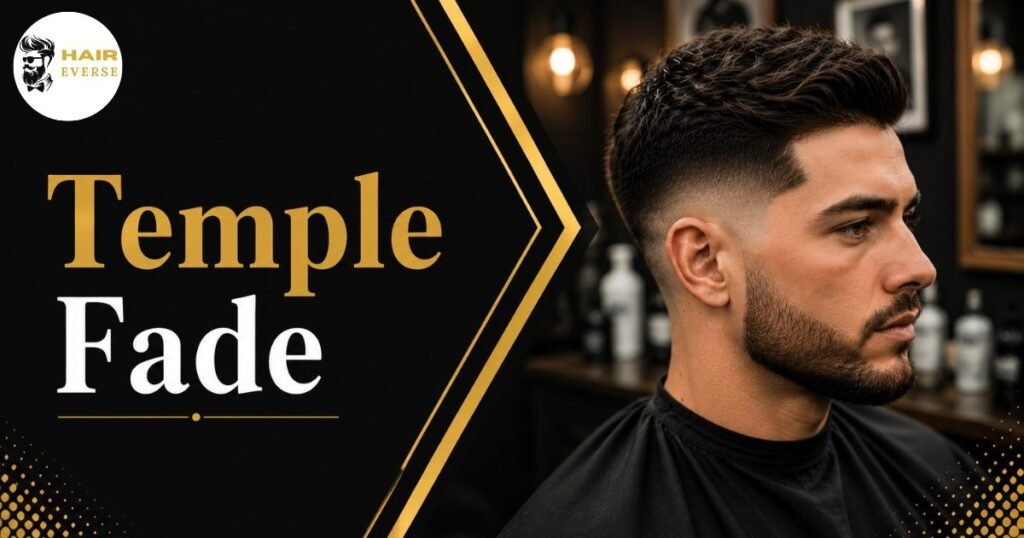
Styling Tip: A lightweight styling cream adds a touch of texture so straight hair doesn’t fall completely flat.
Maintenance: Clean lines grow out fast on straight hair, so plan a touchup every 2–3 weeks. Maintenance and styling times are estimates and may vary by hair type.
Temple Fade for Fine Hair
Overview: Keeping the top on the shorter side helps fine hair look fuller, while the faded temples add visual contrast.
Why It Works: A practical choice for round or oval faces with fine or thinning hair, since shorter lengths reduce limpness.
Styling Tip: Use a lightweight volumizing powder at the root before styling to create the illusion of density.
Maintenance: Fine hair shows regrowth quickly at the temples, so a trim every 2–3 weeks keeps things looking full. Maintenance and styling times are estimates and may vary by hair type.
Comb-overs Temple Fade with Beard
Overview: The faded temples blend directly into a full or medium beard, connecting the haircut and facial hair into one cohesive shape.
Why It Works: Adds definition to square and oval faces and works with any hair type, since the beard carries most of the visual weight.
Styling Tip: Ask your barber to fade the beard’s edges to match the temple fade for a seamless transition.
Maintenance: Both the fade and the beard line need trimming together every 2–3 weeks to stay connected and sharp. Maintenance and styling times are estimates and may vary by hair type.
Extra Short Temple Fade
Overview: A one-length buzz on top pairs with temples and nape shaved down to the skin for a bold, no-fuss finish.
Why It Works: It suits active lifestyles and nearly any hair type, and the short length draws attention to the jawline and cheekbones on oval or oblong faces.
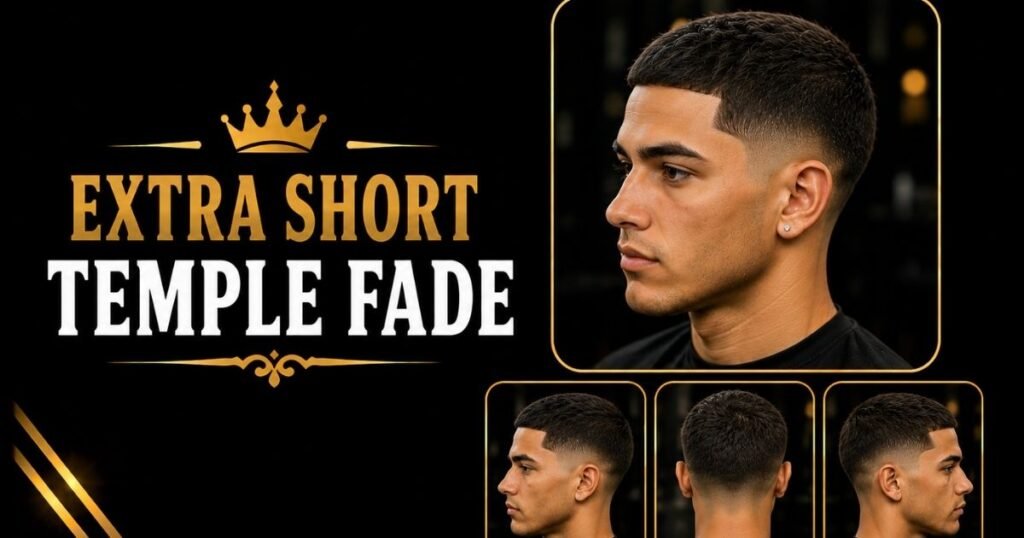
Styling Tip: No styling product is needed, just a gentle shampoo to keep the scalp clean between cuts.
Maintenance: This is the lowest upkeep style on the list, needing a refresh only every 3–4 weeks. Maintenance and styling times are estimates and may vary by hair type.
How To Choose The Right Hairstyle
Picking the right temp fade comes down to two things: your hair’s natural texture and the shape of your face.
By Hair Type:
- Thick hair: Handles higher fades and bold contrasts well; try a high temple fade or pompadour.
- Thin hair: Keep the top shorter to avoid a flat look; a crew cut or buzz cut fade works best.
- Curly hair: Let the curls stay longer for volume, paired with a mid or burst fade.
- Straight hair: Shows clean lines clearly; a low or taper fade keeps things classic.
- Wavy hair: Flexible enough for almost any placement, from a quiff to a comb-over.
By Face Shape:
- Oval: Nearly every style on this list works; this is the most forgiving shape.
- Round: Add height on top with a pompadour or high fade to elongate the face.
- Square: A skin or drop fade emphasizes a strong jawline without adding bulk.
- Long: Keep more width and avoid excessive height; a low or shadow fade balances proportions.
Temple Fade vs. Taper Fade: What’s the Difference?
A taper gradually shortens hair with no hard line, blending naturally into the neckline and sideburns. A temple fade specifically targets the small area at the temples with a sharper contrast, while the rest of the sides can stay longer. Many barbers combine both terms, so it helps to describe the contrast level you want rather than relying on the name alone.
Is a Comb-overs Temple Fade Good for a Receding Hairline?
Yes, a Comb-overs Temple Fade can actually work in your favor here. Fading the sides draws the eye away from a receding hairline and creates a cleaner transition between thinning areas and the rest of the hair. Ask your barber to keep the fade tight and avoid leaving a hard line right at the hairline itself.
How Long Does a Comb-overs Temple Fade Take to Grow Out?
Most Comb-overs Temple Fades start looking noticeably grown out within 2–3 weeks, since the tapered area is small and regrowth shows quickly. A low or shadow fade can stretch to closer to 4 weeks before it needs a refresh.
How To Ask Your Barber For This Style
- Bring 2–3 reference photos, including a front and side angle
- Explain your preferred length on top in inches or clipper guard numbers
- Mention whether you want the fade to blend into the neckline or stop at the temple
- Describe your daily styling routine so the cut works with your morning schedule
- Ask about maintenance frequency before you commit to a higher contrast fade
- Confirm the final shape and fade height before the clippers come out
Haircuts/Hairstyles: Need to Know About Other Fade
- Fade haircuts for Black men remain a top style choice in 2026, known for clean lines and versatility across every hair texture, from tight coils to looser curls. This guide features 75 standout picks, including classic low and high fades, bold designs, and twist fades paired with waves, afros, or braids.
- Beard fade styles have become a go-to choice in 2026 for men who want a sharp, well-defined jawline without a heavy, blocky beard look.
- A low taper fade keeps things sharp yet subtle, blending close to the hairline, ears, and neck for a clean, professional finish. With 38 modern styles to choose from, a low taper fade pairs well with textured crops, slick backs, or classic side parts, making it an easy, timeless choice for any look.
- Fades continue to dominate men’s grooming trends, and there’s a style for every preference. Our guide to the mid fade haircut breaks down one of the most versatile options, while our deep dive into high fade haircuts for men covers the boldest version of the blend.
- If you want to compare your options side by side, our breakdown of low fade vs mid fade vs high fade and guide to the low taper fade will help you decide.
- For something with more attitude, check out the mohawk fade haircut, our guide to skin fade haircuts, or clear up the confusion with our comparison of taper vs fade haircut.
- We’ve also got dedicated guides on fade haircuts for black men, the sharp and structured high and tight haircut, and an age-specific take with our over-50 old man fade haircut guide.
- Not sure how to explain what you want? Our tips on how to ask your barber for a fade will help you communicate it clearly.
Product Recommendations
Hair Cream Best For: Adding light hold and natural texture to straight or wavy hair on top. How To Use: Rub a dime-sized amount between palms and work through damp hair from midlength to ends.
Pomade Best For: Slicked-back comb-overs, comb-overs, pomade best for slicked-back styles, slicked-back comb-overs, comb-overs, and pompadours that need shine and hold. How To Use: Warm a small amount in your palms and comb through damp or dry hair in the direction you want it to sit.
Wax Best For: Defining shorter, textured tops like crops and buzz cuts. How To Use: Rub between fingertips until pliable, then apply piece by piece for a matte, separated finish.
Clay Best For: Thick or wavy hair that needs volume without heavy shine. How To Use: Work through dry hair with fingers, building texture from the roots outward.
Shampoo Best For: Keeping the scalp clean around a fade, where buildup shows more easily. How To Use: Massage into a wet scalp for 30–60 seconds, focusing on faded areas, then rinse thoroughly.
Conditioner Best For: Curly and coily hair on top that needs extra moisture to stay defined. How To Use: Apply from midlength to ends after shampooing, leave for 2–3 minutes, then rinse or leave in as directed.
Final Thoughts
A great Comb-overs Temple Fade is less about following a trend and more about matching the cut to your hair, your face shape, and how much time you actually want to spend in front of the mirror. With 30 versions to choose from, there’s room to start conservative with a low or tapered fade and work up to something bolder like a burst or skin fade once you know what you like.
Don’t be afraid to bring this guide to your next appointment and point directly to the style and maintenance schedule that fits your life. A confident, well-communicated request is still the single best way to walk out of the barbershop happy. Book your next cut with a clear picture in mind, and let your barber handle the precision.
FAQs
What is a Comb-overs Temple Fade?
A Comb-overs Temple Fade is a haircut where hair is tapered closely around the temples and sideburns while length is kept on top. It creates a clean, natural transition without shaving the entire side of the head.
What’s the difference between a temple fade and a taper fade?
A taper gradually shortens hair with no hard line, while a temple fade creates a sharper, more defined contrast focused specifically at the temple area. The two are often combined in the same haircut.
How much does a Comb-overs Temple Fade cost?
Pricing varies by location and barber experience, typically ranging from $25 to $60 per visit. Established barbershops in larger cities tend to charge more than local or budget shops.
How often do you need a Comb-overs Temple Fade touched up?
Most Comb-overs Temple Fades need a refresh every 2–3 weeks, since the tapered area grows out and softens the contrast. Lower or shadow fades can stretch closer to 4 weeks.
What should I tell my barber for a temple to fade?
Specify the fade height (low, mid, or high), whether you want it to reach skin or stop at a shadow, and how much length to leave on top. Bringing a reference photo makes this even clearer.