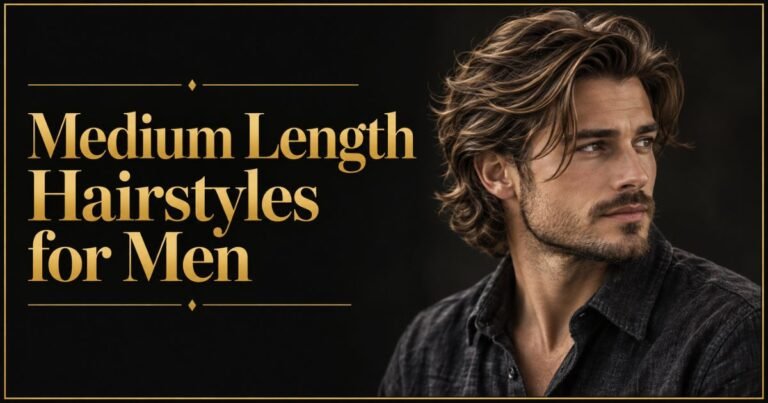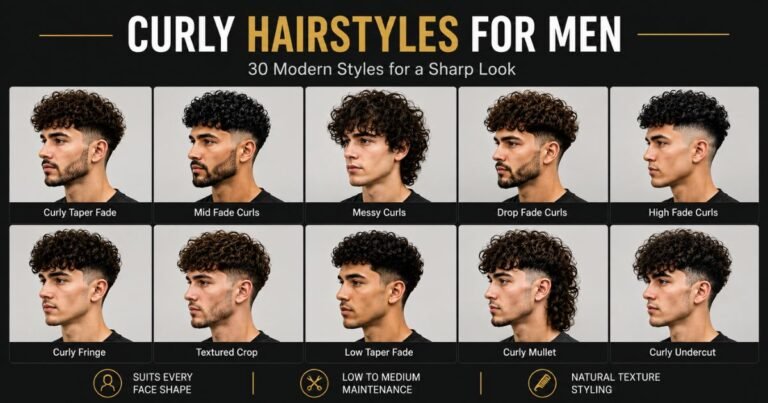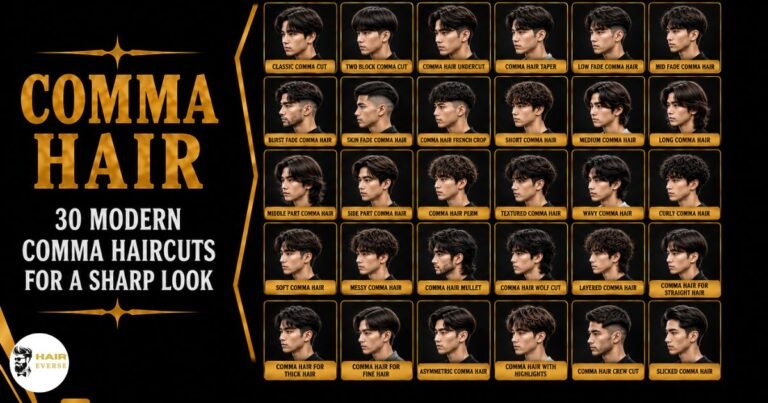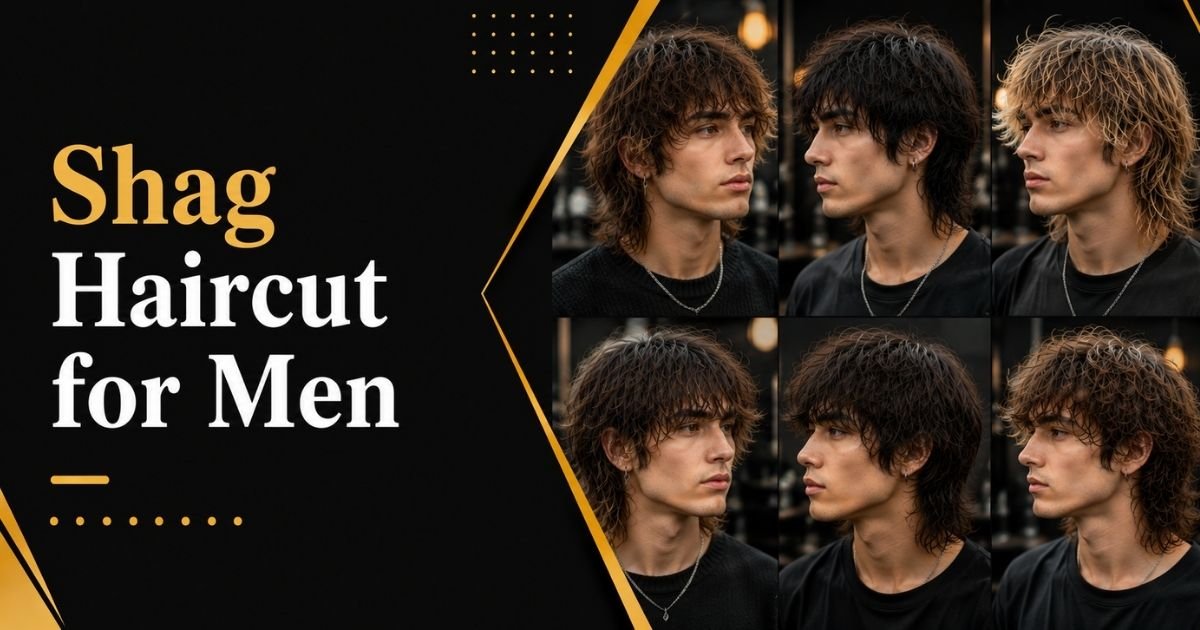
Shag Haircut for Men: 40 Modern Styles for a Sharp Look
If your hair always looks either too flat or too bulky no matter how you cut it, the fix probably isn’t more product, it’s more layering. A Shag Haircut for Men solves that exact problem by cutting choppy, uneven layers throughout the hair, adding movement and volume without adding weight.
It’s a style that looks effortless but is genuinely tricky to get right, since a bad shag reads as “grewout mistake” rather than “intentionally messy.” This guide breaks down 40 real Shag Haircut for Men variations by length, hair type, and styling twist, so you can walk into your next barber appointment already knowing which version fits your texture and face shape.
Shag Haircut for Men Comparison Table
Here are style, type, face shape, mintenance and styling time comparison detailed table.
| Hairstyle | Best Hair Type | Face Shape | Maintenance | Styling Time |
| Classic Short Shag | All types | Oval, round | Low | 5 min |
| Short Shag with Bangs | Straight, wavy | Round, square | Medium | 5–8 min |
| Textured Short Shag | All types | Oval, square | Low | 5 min |
| Short Shag with Skin Fade | Straight, wavy | Oval, square | High | 8–10 min |
| 70sInspired Short Shag | Straight, wavy | Oval, long | Medium | 8–10 min |
| Shaggy Caesar Cut | Straight, wavy | Oval, round | Low | 3–5 min |
| Short Shag with Beard | All types | Square, oval | Medium | 5–8 min |
| Short WolfInspired Shag | Straight, thick | Oval, square | Medium | 8 min |
| Medium Layered Shag | All types | Oval, round | Medium | 10 min |
| CenterParted Mid Shag | Straight, wavy | Oval, long | Low | 5–8 min |
| Tousled Medium Shag | Wavy, curly | Round, oval | Medium | 8–10 min |
| Medium Wispy Shag | Fine, thin | Oval, square | Low | 5 min |
| Modern Shag Fade | Thick, wavy | Round, oval | High | 10 min |
| Medium Shag with Curtain Bangs | Straight, wavy | Round, long | Medium | 8–10 min |
| Medium Shag with Undercut | Thick, medium | Oval, diamond | Medium | 8 min |
| Medium Choppy Shag | All types | Diamond, heart | Low | 5–8 min |
| Long Classic Shag | Wavy, straight | Oval, long | Medium | 10–12 min |
| Surfer Shag | Wavy, curly | Round, triangle | Low | 10 min |
| Long Shag Mullet | Wavy, curly | Oval, long | Low | 8–10 min |
| Long Shag with Short Sides | All types | Long, square | Medium | 10 min |
| 70s Rocker Shag | Straight, wavy | Oval, long | Medium | 10–12 min |
| Long Curly Shag | Curly | Oval, heart | Medium | 12–15 min |
| Shag for Curly Hair | Curly | Round, oval | Medium | 10–12 min |
| Shag for Wavy Hair | Wavy | Oval, square | Low | 8–10 min |
| Shag for Straight Hair | Straight | Oval, square | Medium | 5–8 min |
| Shag for Coily/4C Hair | Coily | Round, oval | Medium | 10–15 min |
| Shag for Thick Hair | Thick | Oval, diamond | Medium | 8–10 min |
| Shag for Fine/Thin Hair | Fine, thin | Oval, square | Low | 5 min |
| Classic Shaggy Mullet | Wavy, curly | Oval, long | Low | 5–10 min |
| Mullet Shag with Blunt Bangs and Fade | Straight, wavy | Round, square | High | 8–10 min |
| Wolf Cut Shag | Wavy, curly | Oval, heart | Medium | 10 min |
| Rat Tail Shag | All types | All shapes | Low | 5 min |
| Curtain Bangs Shag | Straight, wavy | Round, oval | Medium | 8 min |
| FringeHeavy Shag | Straight, wavy | Long, oblong | Medium | 8–10 min |
| SideSwept Bangs Shag | All types | Round, oval | Low | 5–8 min |
| Shag with Undercut Temples | Thick, medium | Oval, diamond | Medium | 10 min |
| Skater Shag | Straight, wavy | Oval, square | Low | 5–8 min |
| Shag with Faux Hawk | Straight, wavy | Square, oval | Medium | 10 min |
| GenderNeutral Shag | All types | All shapes | Low | 5–8 min |
| Shag with Highlights | All types | All shapes | High | 8–10 min |
What Is a Shag Haircut for Men?
A shag haircut is a layered style built on choppy, uneven ends and extra volume at the crown, giving hair natural bounce and movement instead of sitting flat. Unlike a standard layered cut, the goal isn’t precision, it’s an intentionally undone, textured finish.
The shag first became popular in the early 1970s and has cycled back into style repeatedly since, largely because it works on short, medium, and long hair alike and adapts to nearly every texture from stickstraight to tightly coiled.
Shag Haircut vs. Mullet Haircut vs. Wolf Haircut: What’s the Difference?
These three styles get confused constantly because they all rely on heavy layering, but the length distribution sets them apart. A shag keeps a relatively even length overall with choppy layers throughout, front to back.
A mullet deliberately keeps the back noticeably longer than the sides and front, creating a clear length contrast. A wolf cut is essentially a hybrid mullet length in the back with shagstyle choppy layers and volume up top, making it sharper and more dramatic than a standard shag. If you want something soft and evenly textured, ask for a shag. If you want a bold length contrast, ask for a mullet or wolf cut instead.
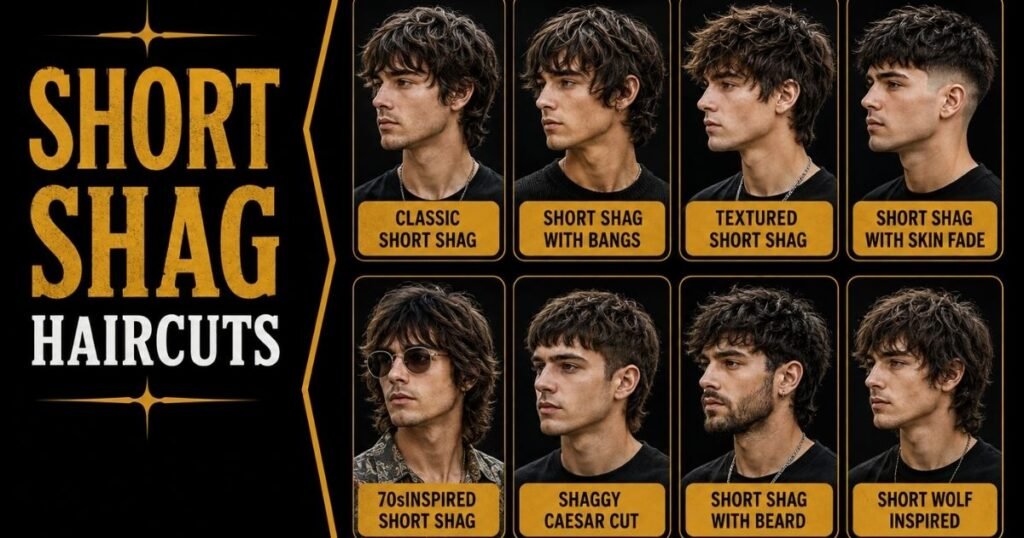
Short Shag Haircut for Men
| Classic Short Shag |
| Short Shag with Bangs |
| Textured Short Shag |
| Short Shag with Skin Fade |
| 70sInspired Short Shag |
| Shaggy Caesar Cut |
| Short Shag with Beard |
| Short WolfInspired |
Classic Shag Haircut for Men
Overview: The baseline shag short, choppy layers throughout with a little extra volume at the crown and no sharp lines anywhere.
Why It Works: Works with almost every hair type and face shape, making it the safest entry point into the shag family.
Styling Tip: Scrunch a dimesized amount of texturizing spray into damp hair, then let it airdry for natural piecey texture.
Maintenance: Trim every 6–8 weeks to keep the layers from growing into a shapeless mop. Maintenance and styling times are estimates and may vary by hair type.
Short Shag with Bangs
Overview: Adds feathered or curtainstyle bangs to the classic short shag, framing the face and softening the forehead.
Why It Works: Particularly flattering on round or square faces, where the bangs break up a wide forehead.
Styling Tip: Blowdry the bangs forward and slightly down using a small round brush for natural feathering.
Maintenance: Bangs grow into your eyes faster than the rest of the cut, so expect a bangonly trim between full haircuts. Maintenance and styling times are estimates and may vary by hair type.
Textured Short Shag
Overview: A razor or pointcutting technique adds extra texture to the ends, making the layers look thinner and more separated.
Why It Works: Great for guys with thicker hair who want the shag look without the extra bulk a bluntcut version would carry.
Styling Tip: Work a small amount of matte clay through dry hair, pinching sections apart for definition.
Maintenance: The texturizing itself grows out gracefully, so 6–8 weeks between trims is typical. Maintenance and styling times are estimates and may vary by hair type.
Short Shag with Skin Fade
Overview: Pairs a textured, layered top with a clean fade on the sides and back, giving the shag a sharper, more structured frame. If you want the fade itself explained in more depth, our low fade haircut guide breaks down height and blending options.
Why It Works: The crisp sides balance the loose texture on top, making this a good option for guys who want edge without going fully unkempt.
Styling Tip: Use a light sea salt spray on top to keep the texture loose while the fade stays sharp underneath.
Maintenance: The fade needs a refresh every 2–3 weeks, even though the shaggy top can stretch to 6–8 weeks. Maintenance and styling times are estimates and may vary by hair type.
70sInspired Short Shag
Overview: Brings back the original feathered, voluminous shag shape with a rounded silhouette and soft, flickedout ends.
Why It Works: Works especially well on straight or slightly wavy hair, which holds the feathered shape more cleanly than very curly textures.
Styling Tip: Blowdry with a round brush, flicking the ends outward at the temples and crown for that classic feathered look.
Maintenance: Trim every 5–6 weeks to keep the rounded silhouette from growing shapeless. Maintenance and styling times are estimates and may vary by hair type.
Shaggy Caesar Cut
Overview: Combines the short, forwardstyled fringe of a Caesar cut with the choppy layering of a shag for a modern, low-effort finish.
Why It Works: One of the lowest maintenance shags on this list, since the short length needs almost no daily restyling.
Styling Tip: Press a small amount of matte cream forward with fingertips to keep the fringe close to the forehead.
Maintenance: Trim every 4–6 weeks, since shorter length shows regrowth faster than longer shag styles. Maintenance and styling times are estimates and may vary by hair type.
Short Shag with Beard
Overview: Pairs the textured, tousled shag with a fuller beard for a rugged, laidback combination.
Why It Works: The beard adds visual weight at the jaw, balancing out the volume the shag creates up top.
Styling Tip: Use a beard oil daily to keep facial hair soft and prevent it from competing texturally with the shaggy top.
Maintenance: Trim the shag every 6–8 weeks and keep the beard shaped weekly so the two don’t grow unevenly out of sync. Maintenance and styling times are estimates and may vary by hair type.
Short WolfInspired Shag
Overview: Borrows the spiky, voluminous crown of a wolf cut but keeps the back at a shorter, more traditional shag length.
Why It Works: A good middle ground for guys who like the wolf cut’s edge but aren’t ready to commit to its longer back section.
Styling Tip: Apply matte clay to dry hair and push the crown section upward for added height and separation.
Maintenance: Trim every 5–6 weeks to maintain the contrast between the spiky crown and the shorter perimeter. Maintenance and styling times are estimates and may vary by hair type.
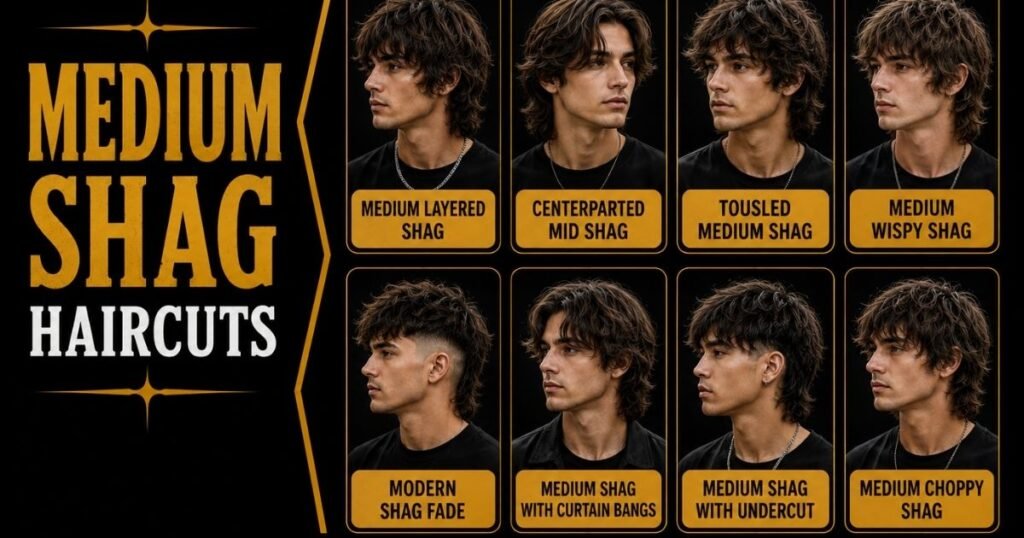
Medium Shag Haircut for Men
| Medium Layered Shag |
| CenterParted Mid Shag |
| Tousled Medium Shag |
| Medium Wispy Shag |
| Modern Shag Fade |
| Medium Shag with Curtain Bangs |
| MediumShag with Undercut |
| Medium Choppy Shag |
Medium Layered Shag
Overview: Feathered layers throughout medium length hair add flow and lift without the style feeling heavy.
Why It Works: A versatile, balanced length that suits most face shapes and works with straight or wavy hair.
Styling Tip: Apply a lightweight mousse to damp hair before airdrying to keep volume without stiffness.
Maintenance: Trim every 6–8 weeks; this length is forgiving of a little extra regrowth between visits. Maintenance and styling times are estimates and may vary by hair type.
CenterParted Mid Shag
Overview: A natural center part frames the face symmetrically while the shag’s layers keep the overall shape soft rather than severe.
Why It Works: The part gives structure to an otherwise messy cut, which is useful for guys who want the shag look but a slightly more puttogether finish.
Styling Tip: Use a light styling cream to hold the part in place without flattening the layers around it.
Maintenance: Trim every 6–8 weeks to keep the center part from disappearing under overgrown length. Maintenance and styling times are estimates and may vary by hair type.
Tousled Medium Shag
Overview: Leans further into the “just rolled out of bed” look, with looser, more randomly placed layers than a standard medium shag.
Why It Works: Works especially well on wavy or curly hair, since the natural texture does most of the styling work already.
Styling Tip: Scrunch sea salt spray into damp hair and let it airdry for an enhanced, beachy tousle.
Maintenance: Trim every 6–8 weeks; because it’s meant to look undone, minor regrowth is barely noticeable. Maintenance and styling times are estimates and may vary by hair type.
Medium Wispy Shag
Overview: Uses lighter, softer layers than a typical shag for a more delicate, airy finish rather than heavy volume.
Why It Works: A strong option for fine or thin hair, where thick, chunky layers can look sparse instead of full.
Styling Tip: A light volumizing spray at the roots adds lift without weighing down the finer strands.
Maintenance: Trim every 6–7 weeks to keep the wispy ends from splitting or looking stringy. Maintenance and styling times are estimates and may vary by hair type.
Modern Shag Fade
Overview: Combines a textured, voluminous shag on top with a tight fade on the sides for a sharper, more contemporary silhouette.
Why It Works: The clean sides add structure that keeps the loose, choppy top from reading as unkempt.
Styling Tip: Blowdry the top with a round brush for lift, then finish with matte clay for texture and hold.
Maintenance: Refresh the fade every 2–3 weeks; the shaggy top can go 6–8 weeks between trims. Maintenance and styling times are estimates and may vary by hair type.
Medium Shag with Curtain Bangs
Overview: A centerparted fringe sweeps to both sides, softening the face while blending naturally into the shag’s layers.
Why It Works: One of the most faceflattering combinations here, since the curtain shape works with nearly every face shape.
Styling Tip: Blowdry the bangs outward and down using a round brush to set the curtain shape.
Maintenance: The bangs need trimming roughly every 3–4 weeks even if the rest of the shag waits longer. Maintenance and styling times are estimates and may vary by hair type.
Medium Shag with Undercut
Overview: Pairs longer, layered top hair with a shaved or closely cropped undercut, creating a bold length contrast.
Why It Works: Suits thicker hair especially well, since the undercut removes bulk while the shag keeps the top voluminous.
Styling Tip: Use a flexible hold gel to keep the top’s shape defined throughout the day without stiffness.
Maintenance: Refresh the undercut every 3–4 weeks; the top can stretch to 6–8 weeks between full trims. Maintenance and styling times are estimates and may vary by hair type.
Medium Choppy Shag
Overview: Uses deeper, more pronounced layering than a standard medium shag for a rougher, more deliberately disheveled look.
Why It Works: Complements angular face shapes like diamond and heart, where the choppy layers soften strong features.
Styling Tip: A texturizing spray on dry hair enhances separation between the choppier sections.
Maintenance: Trim every 6–8 weeks; heavier texturizing hides minor regrowth well. Maintenance and styling times are estimates and may vary by hair type.
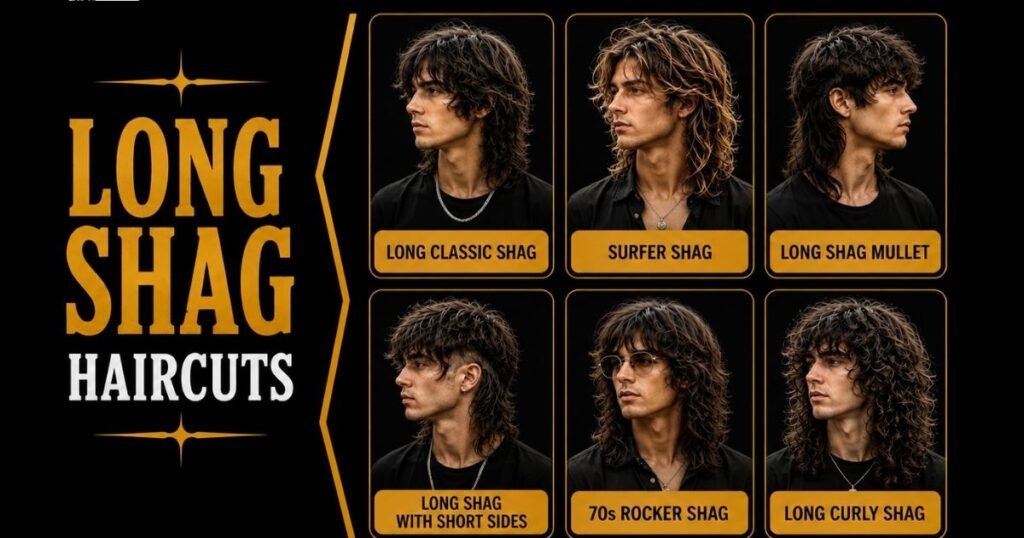
Long Shag Haircut for Men
| Long Classic Shag |
| Surfer Shag |
| Long Shag Mullet |
| Long Shag with Short Sides |
| 70s Rocker Shag |
| Long Curly Shag |
Long Classic Shag
Overview: The original shag silhouette grew out to shoulder length, with uneven feathered layers throughout and often a soft fringe.
Why It Works: The timeless, rockandrollinspired shape works particularly well on oval and long face shapes.
Styling Tip: Use a smoothing cream on midlengths and ends to control frizz while keeping the layers loose.
Maintenance: Trim every 6–8 weeks to keep the layers from losing shape as the hair grows past shoulder length. Maintenance and styling times are estimates and may vary by hair type.
Surfer Shag
Overview: A naturally windswept, sunbleached-looking shag with loose waves and minimal structure, mimicking beachdried hair.
Why It Works: Best suited to wavy or curly hair types, where the natural texture does most of the work.
Styling Tip: Scrunch sea salt spray into damp hair and let it air dry for an enhanced beachy wave pattern.
Maintenance: Trim every 6–8 weeks; the loose, natural shape hides regrowth better than more structured styles. Maintenance and styling times are estimates and may vary by hair type.
Long Shag Mullet
Overview: Combines shag layering throughout with a mullet’s signature longer back section for a retro, rebellious shape.
Why It Works: A strong pick for guys who want a bolder length contrast than a standard shag but still want soft, choppy texture.
Styling Tip: Apply light mousse to damp hair and let it airdry to preserve natural movement in the back section.
Maintenance: The back can stretch to 8–10 weeks between trims, but the top layers should be checked every 6 weeks. Maintenance and styling times are estimates and may vary by hair type.
Long Shag with Short Sides
Overview: Keeps significant length and texture on top while cropping the sides much shorter for contrast and easier upkeep.
Why It Works: A practical option for guys who want long hair texture without the sides feeling bulky or hot in warmer months.
Styling Tip: Use a matte paste on top to define individual pieces while the shorter sides stay productfree.
Maintenance: Trim the sides every 3–4 weeks; the top can go 8+ weeks if you’re growing it out. Maintenance and styling times are estimates and may vary by hair type.
70s Rocker Shag
Overview: Voluminous, feathered layers with a heavier fringe, styled for a bold, freespirited, musician-inspired look.
Why It Works: Best on straight or slightly wavy hair with enough natural body to hold the feathered volume.
Styling Tip: Blowdry with a large round brush, flicking bangs and side sections outward for maximum movement.
Maintenance: Trim every 6 weeks to keep the feathered shape from flattening out as it grows. Maintenance and styling times are estimates and may vary by hair type.
Long Curly Shag
Overview: Long layers cut specifically to work with natural curls, reducing bulk while letting the curl pattern cascade freely.
Why It Works: One of the most flattering long styles for curly hair, since the layering keeps thick curls from looking like a single heavy mass.
Styling Tip: Apply a curl-defining cream to soaking wet hair and let it air-dry or diffuse to avoid frizz.
Maintenance: Trim every 8–10 weeks; curls hide regrowth well, so this style stretches longer than straight versions. Maintenance and styling times are estimates and may vary by hair type.
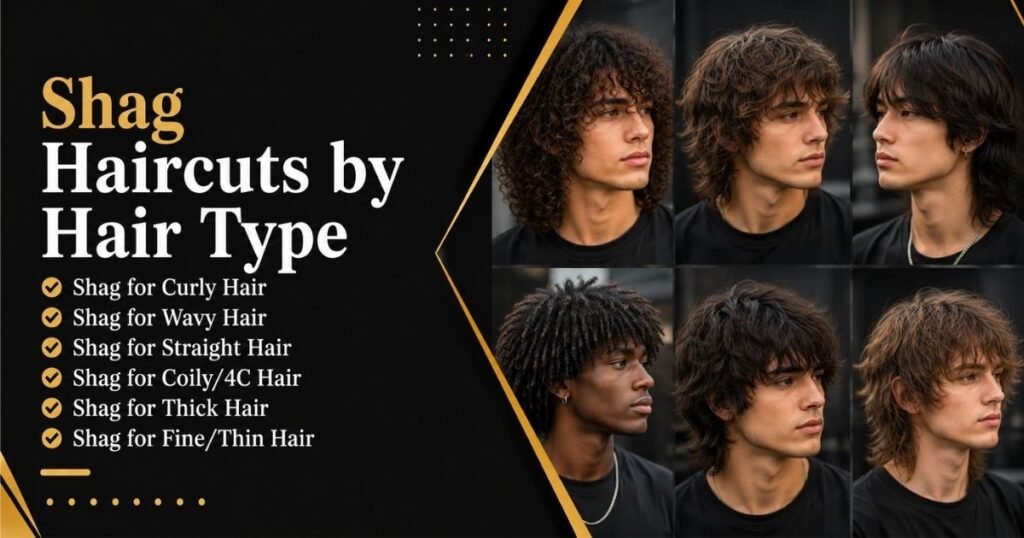
Shag Haircut for Men by Hair Type
| Shag for Curly Hair |
| Shag for Wavy Hair |
| Shag for Straight Hair |
| Shag for Coily/4C Hair |
| Shag for Thick Hair |
| Shag for Fine/Thin Hair |
Shag for Curly Hair
Overview: Layers are cut to reduce bulk from natural curls while keeping enough length for the curl pattern to remain visible. For more curl-specific cutting advice, see our curly hairstyles for men guide.
Why It Works: Removes weight that would otherwise flatten curls, letting them bounce and hold shape naturally.
Styling Tip: Use a leave-in curl cream on soaking wet hair, then scrunch upward to encourage curl clumping.
Maintenance: Trim every 8 weeks; cut curly hair dry whenever possible since curls shrink up significantly once dry. Maintenance and styling times are estimates and may vary by hair type.
Shag for Wavy Hair
Overview: Layers are cut to enhance the natural wave pattern rather than fight it, giving the hair movement without heavy styling.
Why It Works: Waves add dimension that flat, straight hair doesn’t have, making this one of the easiest textures to shag well.
Styling Tip: Scrunch a lightweight sea salt spray into damp hair to define waves without crunch.
Maintenance: Trim every 6–8 weeks; waves are forgiving of uneven regrowth compared to straight hair. Maintenance and styling times are estimates and may vary by hair type.
Shag for Straight Hair
Overview: Layers and soft edges are cut throughout to add texture and volume that straight hair doesn’t have on its own.
Why It Works: Prevents straight strands from looking flat, giving the hair a fuller, more dynamic shape.
Styling Tip: Work a light paste through damp hair with fingers to separate the layers before airdrying.
Maintenance: Trim every 5–6 weeks; straight hair shows uneven layer growth more clearly than textured hair. Maintenance and styling times are estimates and may vary by hair type.
Shag for Coily/4C Hair
Overview: Layers are cut to work with the natural shrinkage and density of coily hair, creating shape without excessive thinning.
Why It Works: The coil pattern itself creates natural volume and texture, so the shag’s layering mainly manages density and shape.
Styling Tip: Use a leave-in moisturizer and curl butter on damp hair to define coils and reduce frizz.
Maintenance: Trim every 8–10 weeks; coily hair regrowth blends into the existing pattern well. Maintenance and styling times are estimates and may vary by hair type.
Shag for Thick Hair
Overview: Heavy layering strategically removes bulk from dense hair, creating a lighter, more manageable shape without losing volume.
Why It Works: Thick hair holds a shag’s texture especially well, since there’s enough density to support choppy, separated layers.
Styling Tip: A matte clay adds texture and control without adding the shine that can make thick hair look greasy.
Maintenance: Trim every 6–7 weeks; thick hair grows into a heavier, less defined shape faster than fine hair. Maintenance and styling times are estimates and may vary by hair type.
Shag for Fine/Thin Hair
Overview: Uses lighter, less aggressive layering than a thick hair shag, since removing too much weight can make thin hair look sparse.
Why It Works: The choppy ends create the illusion of density that a single blunt length wouldn’t provide.
Styling Tip: A volumizing powder at the roots adds lift and the appearance of extra thickness.
Maintenance: Trim every 6–8 weeks; keeping consistent length matters more here than with thicker hair types. Maintenance and styling times are estimates and may vary by hair type.
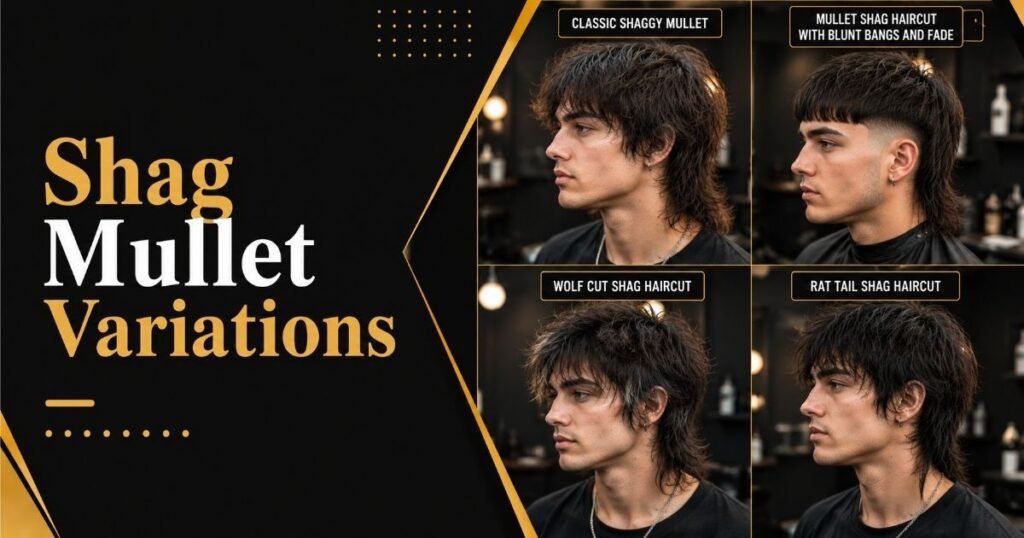
Shag Haircut for Men Mullet Variations
| Classic Shaggy Mullet |
| Mullet Shag with Blunt Bangs and Fade |
| Wolf Cut Shag |
| Rat Tail Shag |
Classic Shaggy Mullet
Overview: Shorter, choppy layers on top and sides meet a noticeably longer, shaggy back section for a 70s-inspired retro shape.
Why It Works: Delivers the rebellious mullet silhouette while the shaggy layering keeps it from looking harsh or dated.
Styling Tip: A light styling mousse adds movement to the back without stiffening it into a single heavy chunk.
Maintenance: The back can stretch to 8–10 weeks; check the top and sides every 5–6 weeks to keep proportions balanced. Maintenance and styling times are estimates and may vary by hair type.
Mullet Shag with Blunt Bangs and Fade
Overview: Combines a straightcut, blunt fringe with a fade on the sides and a longer, shaggy back for maximum contrast.
Why It Works: The sharp bangs draw attention to the eyes while the fade and shaggy back keep the rest of the look bold and current.
Styling Tip: Comb the bangs flat with a lighthold pomade so the blunt line stays crisp against the looser back section.
Maintenance: Refresh the fade every 2–3 weeks and trim the bangs every 3–4 weeks to keep the blunt line sharp. Maintenance and styling times are estimates and may vary by hair type.
Wolf Cut Shag
Why It Works: Delivers more drama and edge than a standard shag, especially on wavy or curly textures that hold the spiky crown shape.
Styling Tip: Use matte clay to push the crown section upward and outward for the signature spiky silhouette.
Maintenance: Trim every 6–8 weeks to maintain the contrast between the short, spiky crown and the longer back. Maintenance and styling times are estimates and may vary by hair type.
Rat Tail Shag
Overview: Keeps the main shape a standard shag but leaves one thin, longer strand at the nape for a bold, retropunk detail.
Why It Works: A statement option for guys who want their shag to stand out with a single unconventional detail rather than an overall dramatic change.
Styling Tip: Braid or twist the rat tail occasionally to keep it from tangling with the shorter layers above it.
Maintenance: Trim the main shag every 6–8 weeks, but leave the rat tail itself mostly untouched to let it grow. Maintenance and styling times are estimates and may vary by hair type.
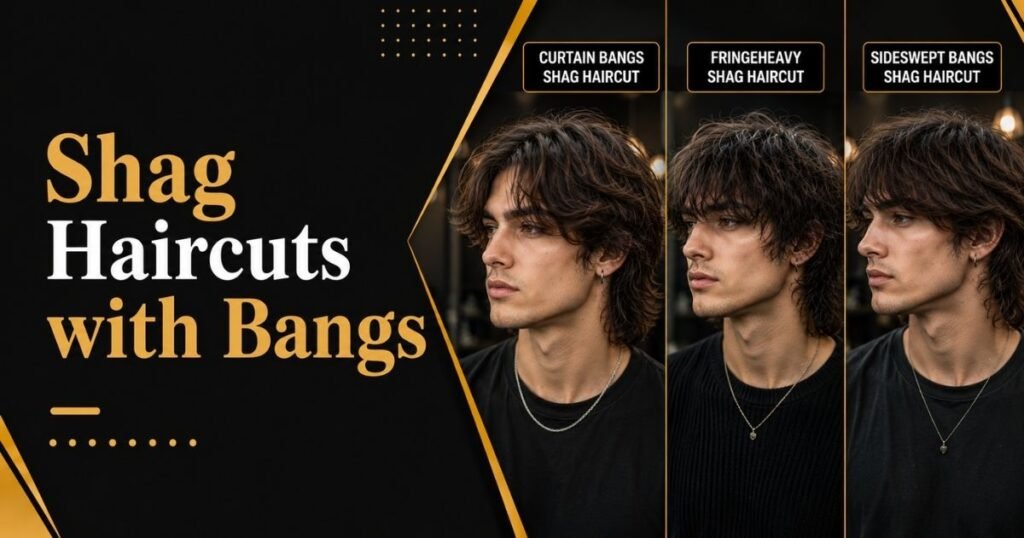
Shag Haircut for Men with Bangs
| Curtain Bangs Shag |
| FringeHeavy Shag |
| SideSwept Bangs Shag |
Curtain Bangs Shag
Overview: A centerparted fringe sweeps outward on both sides, blending directly into the shag’s overall layering for a soft, boho finish.
Why It Works: The parted shape works with nearly every face shape, gently framing the forehead without fully covering it.
Styling Tip: Blowdry the bangs down and outward using a round brush to set the curtain shape after washing.
Maintenance: Trim the bangs every 3–4 weeks even if the rest of the shag is stretched to 6–8. Maintenance and styling times are estimates and may vary by hair type.
FringeHeavy Shag
Overview: A thick, textured fringe sits just above the eyebrows, layered to match the rest of the shag’s choppy movement.
Why It Works: Especially flattering on longer face shapes, where the heavy fringe visually shortens the forehead.
Styling Tip: Use a light gel on damp bangs to keep them from separating into thin, stringy pieces.
Maintenance: Trim the fringe every 3–4 weeks to keep it from falling into the eyes. Maintenance and styling times are estimates and may vary by hair type.
SideSwept Bangs Shag
Overview: Bangs are cut longer on one side and swept diagonally across the forehead rather than falling straight down.
Why It Works: Softens angles on round or oval faces while adding a slightly asymmetrical, relaxed edge to the overall shape.
Styling Tip: Use a lighthold cream and comb the fringe to one side while damp to set the direction.
Maintenance: Trim every 6 weeks; the diagonal shape is forgiving of a little extra length between visits. Maintenance and styling times are estimates and may vary by hair type.
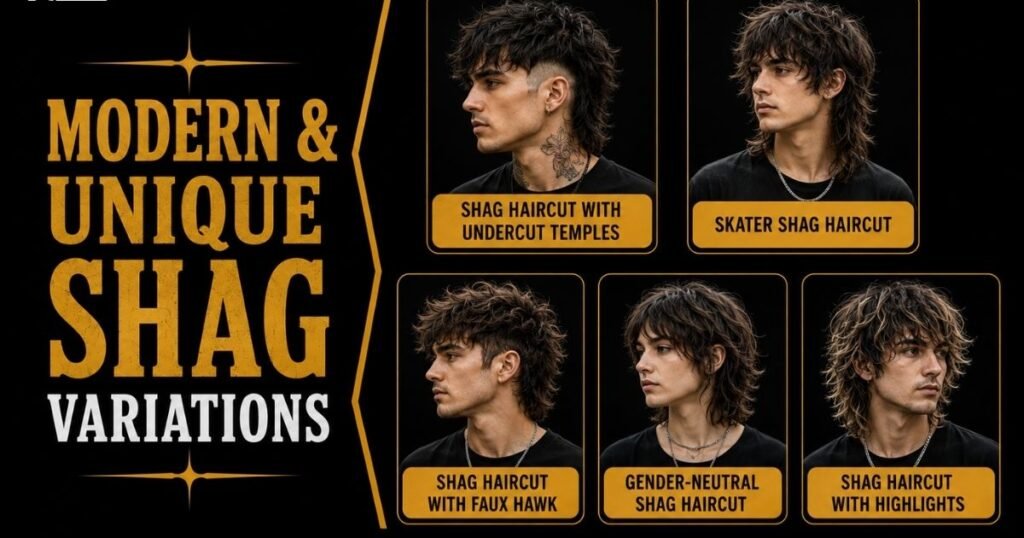
Modern & Unique Shag Variations
| Shag Haircut with Undercut Temples |
| Skater Shag Haircut |
| Shag Haircut with Faux Hawk |
| GenderNeutral Shag Haircut |
| Shag Haircut with Highlights |
Shag Haircut with Undercut Temples
Overview: Shaves or closely crops the temple area while leaving the rest of the head a full, voluminous shag, creating sharp contrast.
Why It Works: Adds a modern, edgier finish to what would otherwise be a fairly traditional shag shape.
Styling Tip: Apply flexible hold gel to the top to keep volume and texture defined against the sharp shaved temples.
Maintenance: Touch up the undercut every 3–4 weeks; the shaggy top can go 6–8 weeks between full trims. Maintenance and styling times are estimates and may vary by hair type.
Skater Shag Haircut
Overview: Longer, choppy layers on top with shorter, cleaner sides and back, echoing the casual skate and surf style scene.
Why It Works: The shorter sides make this a lower maintenance option than a full-length shag while keeping the textured top look.
Styling Tip: Towel dry and apply a light texturizing spray, then let hair fall naturally without heavy styling tools.
Maintenance: Trim the sides every 4 weeks; the longer top can stretch to 8 weeks between full trims. Maintenance and styling times are estimates and may vary by hair type.
Shag Haircut with Faux Hawk
Overview: The center section is styled upward into a soft faux hawk while the shag’s choppy texture stays intact throughout.
Why It Works: Offers a bolder, edgier statement without the commitment of a full undercut or shaved sides.
Styling Tip: Use matte clay to pinch and lift the center section upward while keeping the sides looser and textured.
Maintenance: Trim every 6–7 weeks; restyle daily since the faux hawk shape needs to be rebuilt each morning. Maintenance and styling times are estimates and may vary by hair type.
GenderNeutral Shag Haircut
Overview: A softly layered shag with volume concentrated at the crown, cut and styled to work for any gender expression or hair length.
Why It Works: One of the most versatile options here, since the layering is designed to flatter facial features rather than fit a specific gendered template.
Styling Tip: A light cream or mousse is enough to enhance natural texture without forcing the style into a rigid shape.
Maintenance: Trim every 6–8 weeks to keep the soft layering from growing shapeless. Maintenance and styling times are estimates and may vary by hair type.
Shag Haircut with Highlights
Overview: Adds subtle or bold highlights throughout the shag’s layers, using color to emphasize the natural movement and texture.
Why It Works: Highlights catch the light differently across each layer, making the choppy texture more visually dynamic than a single flat color would.
Styling Tip: Use a colorsafe styling cream to define layers without stripping tone or shine from the highlighted pieces.
Maintenance: Touch up color every 6–8 weeks alongside your regular haircut to keep both the cut and color looking fresh. Maintenance and styling times are estimates and may vary by hair type.
Is a Shag Haircut Good for Curly or Straight Hair?
Yes to both, though the approach differs. On curly hair, a shag removes bulk and lets the curl pattern show through in loose, defined layers. It works best cut dry, since curls sit differently dry than wet.
On straight hair, a shag adds texture and movement that wouldn’t exist naturally, relying more on styling products like sea salt spray or texturizing powder to hold the piecey, layered look throughout the day.
How to Choose the Right Shag Haircut for Your Face Shape
Hair Types
- Thick hair: Handles heavy, deep layering well; a shag removes bulk without losing volume.
- Thin hair: Lighter, wispier layering works better than aggressive thinning, which can look sparse.
- Curly hair: Cut dry whenever possible; look for a barber experienced with curlspecific layering.
- Straight hair: Relies more on product for texture, since straight strands won’t hold movement on their own.
- Wavy hair: One of the easiest textures to shag the natural wave does most of the styling work.
Face Shapes
- Oval: Nearly every shag variation works choose based on lifestyle and maintenance tolerance.
- Round: A shag with height at the crown and sideswept or curtain bangs adds visual length.
- Square: Softer, wispier layers around the jaw help ease strong angles.
- Long/Oblong: A heavier fringe or curtain bangs shortens the appearance of the face.
How to Ask Your Barber for a Shag Haircut
- Bring one or two clear reference photos, ideally from a similar hair type and length to yours
- Specify how much length you want to keep versus how much layering you want removed
- Mention whether you want bangs, and how you’d like them to fall
- Ask about your realistic maintenance routine so layers are cut for how you’ll actually style them day to day
- Explain your workplace or lifestyle needs if you want a more polished, less messy version
- Confirm the final shape and layer placement with a mirror check before the cut is finished.
Mess In Mind to Choose Right Hairstyle
- A great men hair style comes down to matching the cut to your hair texture, face shape, and how much daily upkeep you’re willing to put in, whether that’s a sharp fade, a textured crop, or something with more length on top.
- Side part haircuts for men offer a timeless, versatile look that works across hair types and face shapes, from classic hard parts to modern textured finishes.
- Fade haircuts for Black men blend seamlessly from skin to length, giving natural curl patterns and coily textures room to hold shape while keeping the sides sharp and clean.
- Looking for something for a specific need, age, or occasion? Try our guides to the K-pop haircut, Korean hairstyle for men, afro hairstyles for men, haircuts for teenage boys, and summer haircuts for men.
- If you’re dealing with specific concerns, see our guides to big forehead hairstyles, big forehead hairstyles for males, and worst hairstyles for oval faces (so you know what to avoid), plus our picks for hairstyles for soccer players.
- Finally, for readers on the business side, learn how to find a good barber, or if you’re running a shop, check our breakdowns of men’s haircut prices, the cost to open a barber shop, tips to start a successful barbershop, our list of barbershop marketing ideas, and our roundup of barber hashtags for Instagram.
Product Recommendations
Hair Cream Best For: Fine to medium hair needing light hold and natural texture.
How To Use: Work through damp hair and style with fingers for a soft, undone finish.
Pomade Best For: Straight hair styles like curtain bangs or sideswept fringe that need more defined direction.
How To Use: Warm a small amount between palms and comb through for shine and control.
Sea Salt Spray Best For: Wavy or curly shags aiming for a beachy, textured finish. How To Use: Scrunch into damp hair and let airdry, or diffuse for enhanced texture.
Texturizing Spray Best For: Straight hair that needs extra grip and separation to hold the shag’s layered shape. How To Use: Spray onto dry hair and work through with fingers to build texture and volume.
Matte Clay Best For: Thick or medium hair needing strong hold without shine, especially for spiky or faux hawk variations. How To Use: Rub between palms until warm, then work through dry hair to define individual layers.
Volumizing Mousse Best For: Fine or thin hair that needs lift without added weight. How To Use: Apply to roots on damp hair before blowdrying upside down for extra volume.
Final Thoughts
A shag haircut earns its staying power because it genuinely works, it adds movement to flat hair, controls bulk on thick hair, and gives nearly every face shape a flattering frame, all without demanding hours of daily styling.
The trick isn’t picking a photo you like; it’s matching the layering, length, and bangs to your specific hair type and face shape, then explaining that clearly to your barber before the clippers or scissors come out.
Whether you land on a classic short shag, a curly long shag, or a bolder wolf cut shag, don’t be afraid to experiment across a couple of appointments before settling on your version. Bring this guide, point to the category that matches your hair and face shape, and let your barber take it from there.
FAQs
What is a shag haircut?
A shag haircut is a layered men’s hairstyle with choppy, textured ends and extra volume at the crown, built for a relaxed, tousled look that works on short, medium, or long hair.
Is a shag haircut low maintenance?
Yes, most shags are low-to-medium maintenance, typically needing a trim every 4–8 weeks. Versions with bangs, fades, or color tend to need more frequent touchups than a plain layered shag.
How often should you trim a shag haircut?
Most shags hold their shape for 6–8 weeks. Shorter styles, fades, and bangheavy versions usually need attention closer to the 3–4 week mark to stay sharp.
Does a shag haircut work for straight hair?
Yes, a shag works well on straight hair, though it relies more heavily on styling products like texturizing spray or paste to hold movement, since straight strands don’t add texture on their own.
Can boys get a shag haircut?
Yes, shag haircuts work well for boys of all ages. Shorter, lower-maintenance versions like the classic short shag or shaggy Caesar cut are popular, low-effort options for younger guys.