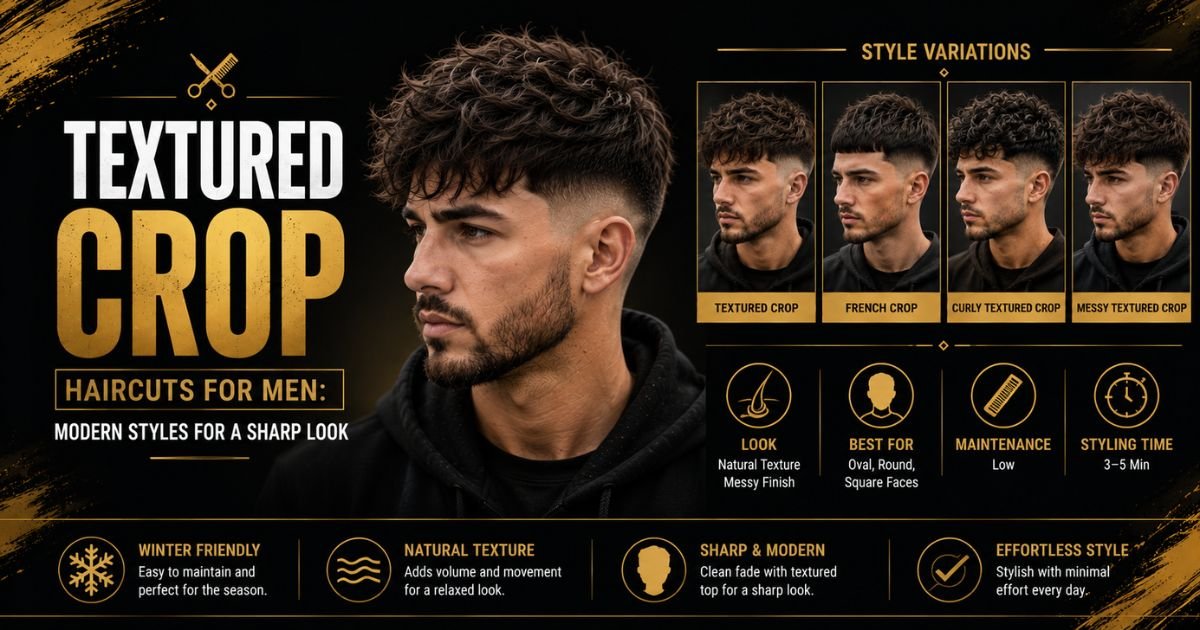
Textured Crop Haircut for Men: Modern Styles for a Sharp Look
Growing out your top while keeping the sides tight sounds simple, until the middle stage leaves you with a shapeless mess instead of the clean, lived-in look you wanted. That’s the gap a Textured Crop Haircut is built to close.
Barbers report the Textured Crop Haircut as one of the most-requested haircuts in the chair right now because it delivers an effortless, modern look while relying on precise cutting techniques to create its signature texture and shape.
Textured Crop Haircut Comparison Table
Compare different Textured Crop Haircut variations based on hair type, face shape, maintenance, and styling time to find the Textured Crop that best matches your look, lifestyle, and daily grooming routine.
| Hairstyle | Best Hair Type | Face Shape | Maintenance | Styling Time |
| Classic Textured Crop | Straight, Wavy | Oval, Square | Medium | 5–10 min |
| Textured Crop with Fringe | Straight, Wavy | Round, Oval | Medium | 5–10 min |
| French Crop | Straight, Thick | Square, Oval | Low | 5 min |
| Textured Crop Skin Fade | All types | Square, Oval | High | 5–10 min |
| Textured Crop Low Fade | All types | Round, Long | Medium | 5–10 min |
| Textured Crop Mid Fade | Straight, Wavy | Oval, Square | Medium | 5–10 min |
| Textured Crop High Fade | Thick, Curly | Square, Diamond | High | 10 min |
| Messy Textured Crop | Wavy, Curly | Oval, Round | Low | 3–5 min |
| Textured Crop with Beard | All types | Square, Long | Medium | 10–15 min |
| Textured Crop Undercut | Straight, Thick | Square, Oval | Medium | 5–10 min |
| Textured Crop Drop Fade | Wavy, Curly | Round, Oval | Medium | 5–10 min |
| Side-Swept Textured Crop | Straight, Fine | Oval, Heart | Low | 5 min |
| Textured Crop for Thick Hair | Thick | Square, Round | High | 10 min |
| Textured Crop for Curly Hair | Curly, Coily | Oval, Diamond | High | 10–15 min |
| Textured Crop for Fine Hair | Fine, Thin | Round, Oval | Low | 5 min |
| Textured Crop for a Mature Hairline | Thinning, Fine | Oval, Long | Low | 5 min |
| Disconnected Textured Crop | Straight, Wavy | Square, Oval | Medium | 5–10 min |
| Textured Crop Mohawk-Inspired | Thick, Curly | Oval, Long | High | 10–15 min |
| Professional Textured Crop | All types | Any | Low | 3–5 min |
| Textured Crop for the Holiday Party | All types | Any | Medium | 10 min |
Classic Textured Crop
Overview: The baseline version of the cut short faded sides with a choppy, medium-length top styled forward into a soft fringe. It’s the style most other textured crop variations branch off from.
Why It Works: Suits straight and wavy hair best, and flatters oval and square faces by softening strong jawlines with forward movement on top.
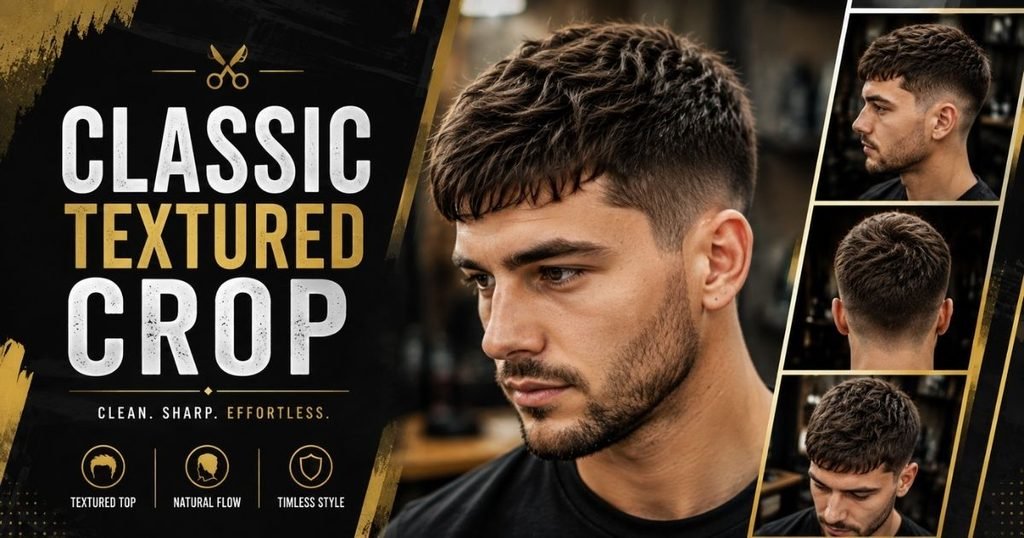
Styling Tip: Rub a dime-sized amount of matte clay between your palms, then push the top forward and slightly down with your fingers to build texture without shine.
Maintenance: Book a trim every 3–4 weeks to keep the fade sharp; the top can grow a little longer between visits without losing shape. Maintenance and styling times are estimates and may vary by hair type.
Textured Crop Haircut with Fringe
Overview: A more pronounced fringe sits at brow level, framing the forehead more deliberately than the classic version.
Why It Works: Great for a broader forehead, since the fringe balances proportions; works with round and oval face shapes.
Styling Tip: Blow-dry the fringe forward and down using a paddle brush before applying styling cream to lock the direction in place.
Maintenance: Trim the fringe line every 2–3 weeks so it doesn’t creep past the eyebrows and lose its shape. Maintenance and styling times are estimates and may vary by hair type.
French Crop Fade
Overview: A blunter, straighter fringe than the standard textured crop, paired with a clean taper fade for a more polished finish.
Why It Works: Works well across straight, wavy, and even curly hair; the neat lines flatter square and oval faces especially.
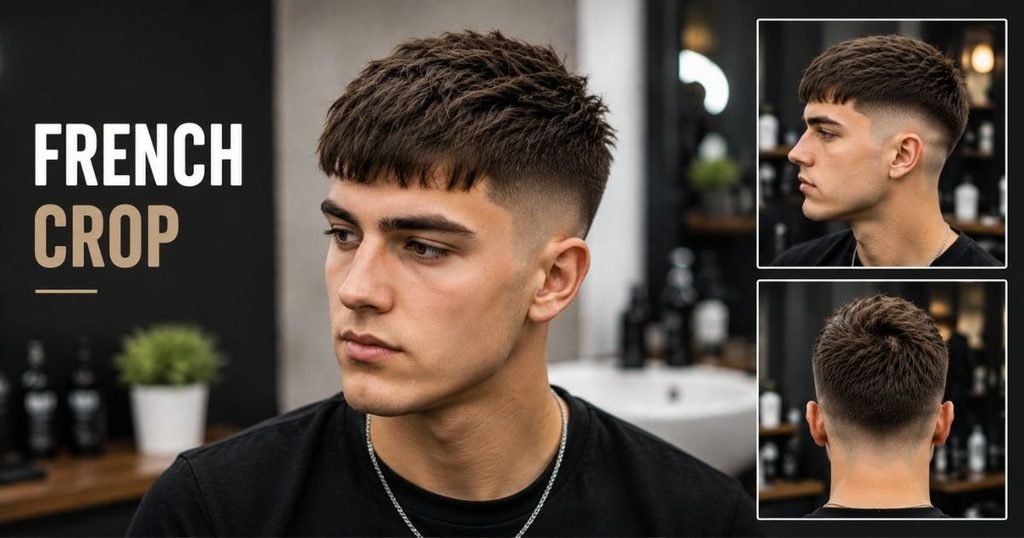
Styling Tip: Apply a small amount of molding paste and comb the fringe straight down rather than piecing it apart for that blunter edge.
Maintenance: This is one of the lowest-upkeep options on the list a monthly trim keeps the shape without daily styling effort. Maintenance and styling times are estimates and may vary by hair type.
Textured Crop Skin Fade
Overview: The sides fade all the way down to bare skin, creating the sharpest possible contrast against the textured top.
Why It Works: Flatters square and oval face shapes by drawing the eye upward and works with essentially every hair type.
Styling Tip: Use texture clay worked in with fingertips (not a comb) to keep the separation between top strands looking natural.
Maintenance: Skin fades grow out fastest of any fade style plan on a trim every 2 weeks to keep the line crisp. Maintenance and styling times are estimates and may vary by hair type.
Textured Crop Haircut Low Fade
Overview: The fade starts closer to the ears rather than higher on the head, giving a softer transition into the textured top.
Why It Works: A gentler option for round and elongated face shapes since it doesn’t add as much height contrast as a high fade.
Styling Tip: A light sea salt spray on damp hair before blow-drying gives the top natural-looking volume without stiffness.
Maintenance: Since the fade line sits lower, it grows out more subtly every 3–4 weeks is typically enough. Maintenance and styling times are estimates and may vary by hair type.
Textured Crop Mid Fade
Overview: Sitting between low and high fades, this version blends midway up the head for a balanced amount of contrast.
Why It Works: A versatile middle ground that suits oval and square faces without committing to a dramatic high-contrast look.
Styling Tip: Work matte clay through damp hair first, then finish with a blow dryer on low heat to set the forward direction.
Maintenance: Plan for a fade touch-up every 3 weeks; the top can stretch to 5–6 weeks between full cuts. Maintenance and styling times are estimates and may vary by hair type.
Textured Crop High Fade
Overview: The fade climbs high up the sides, leaving a smaller, denser section of textured hair on top for maximum contrast.
Why It Works: Best suited to thick or curly hair that can hold volume, and flatters square or diamond face shapes.
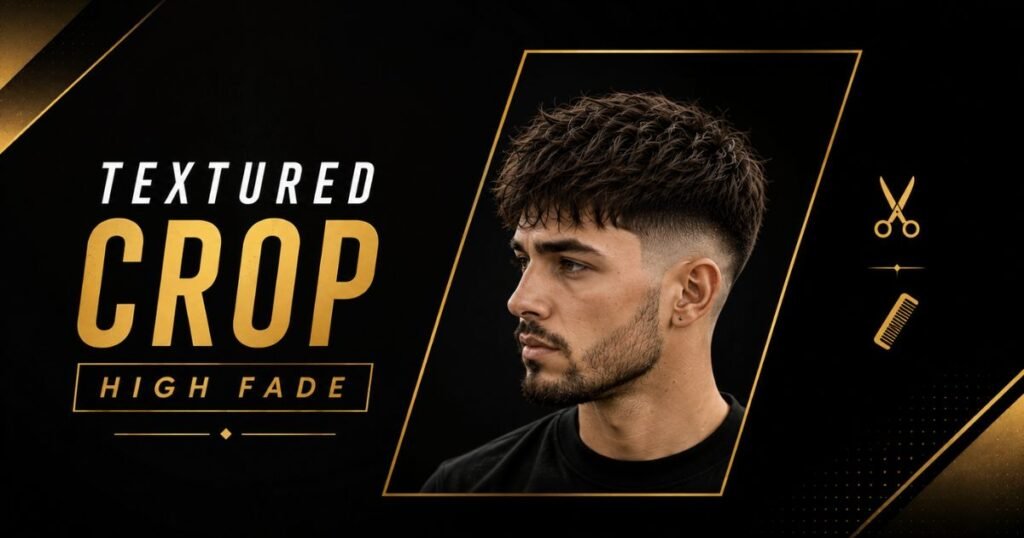
Styling Tip: Use texture powder at the roots first for lift, then layer texture clay over the top to define individual pieces.
Maintenance: High fades need the most frequent upkeep a trim every 2 weeks keeps the contrast from looking overgrown. Maintenance and styling times are estimates and may vary by hair type.
Messy Textured Crop
Overview: An intentionally undone, piecey version where the top is scrunched rather than combed into place.
Why It Works: Works especially well with wavy and curly hair that already has natural movement; suits oval and round faces.
Styling Tip: Scrunch a sea salt spray into damp hair with your hands and let it air-dry for a relaxed, textured finish.
Maintenance: Because it’s meant to look undone, minor overgrowth barely shows a trim every 5–6 weeks is fine. Maintenance and styling times are estimates and may vary by hair type.
Textured Crop with Beard
Overview: Pairs the crop with a short boxed beard or heavy stubble, giving the whole look more structure and weight at the jaw.
Why It Works: Balances square and longer face shapes by adding width at the chin to match the volume on top; works for any hair type.
Styling Tip: Style the crop first with matte clay, then brush beard oil through the beard to keep both textures looking intentional rather than competing.
Maintenance: Line up the beard every 1–2 weeks alongside your regular crop trims to keep both looking sharp together. Maintenance and styling times are estimates and may vary by hair type.
More Looks to Explore
A sharp fade on top looks even better with a beard shaped to match.
- If you’re leaning toward a bearded variation, check out our guide to beard fade styles for ways to blend your facial hair into the sides seamlessly, or browse beard and haircut combos to find a pairing suited to your face shape.
- If you’re still deciding how aggressive you want the sides, our breakdown of the low taper fade is worth a look before your next appointment.
- You like the clean, versatile look of a Textured Crop, you’ll also enjoy our guide to side part haircuts for men. A side part offers a timeless alternative with a polished finish, making it an excellent choice for men who want a hairstyle that’s stylish.
Textured Crop Haircut undercut Haircut
Overview: The sides are shaved much shorter than the top with a hard line rather than a gradual fade, creating a bold disconnect.
Why It Works: Suits thick, straight hair that can hold a longer top, and flatters square or oval faces looking for sharper contrast.
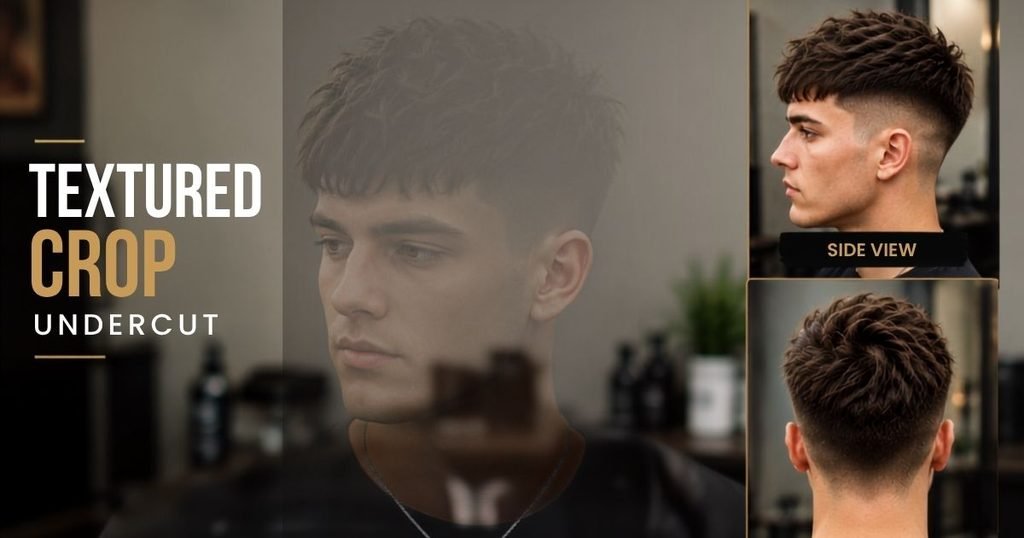
Styling Tip: Blow-dry the top upward at the root with a round brush before applying a lightweight cream for lift without heaviness.
Maintenance: The hard line grows out faster than a fade expect to touch it up every 2–3 weeks. Maintenance and styling times are estimates and may vary by hair type.
Textured Crop Drop Fade
Overview: The fade line curves downward behind the ear instead of running straight, softening the transition around the back of the head.
Why It Works: A flattering option for round or oval faces, and works especially well with wavy or curly hair textures.
Styling Tip: Lift the roots with texture powder before applying clay through the mid-lengths to keep definition without flattening the crown.
Maintenance: The curved line needs a skilled barber to maintain book a touch-up every 3 weeks to keep the drop shape clean. Maintenance and styling times are estimates and may vary by hair type.
Side Swept Textured Crop Men
Overview: Instead of a forward fringe, the top is brushed diagonally across the forehead for a softer, more classic finish.
Why It Works: A flattering pick for fine or straight hair, and suits oval or heart-shaped faces looking for a polished look.
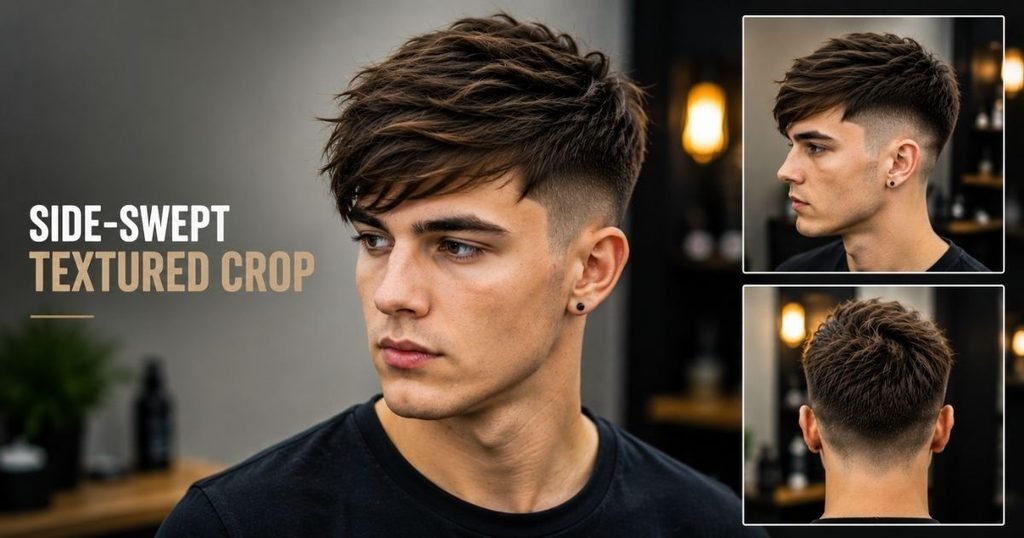
Styling Tip: Comb styling cream through damp hair in the direction you want it to sit, then let it air-dry to hold the sweep.
Maintenance: One of the easier styles to maintain day to day a trim every 4–5 weeks keeps the sweep intact. Maintenance and styling times are estimates and may vary by hair type.
Textured Crop for Thick Hair
Overview: Extra thinning and point-cutting removes bulk from thick hair so the top sits with movement instead of looking heavy.
Why It Works: Built specifically for thick or coarse hair, and suits square or round face shapes that can carry more volume on top.
Styling Tip: Ask your barber to debulk the crown, then use a light-hold cream rather than a heavy pomade so the hair doesn’t weigh down.
Maintenance: Thick hair grows out visibly fast on top plan on a trim every 3 weeks to keep the shape from getting bulky. Maintenance and styling times are estimates and may vary by hair type.
Textured Crop for Curly Hair
Overview: The curl pattern is left mostly intact on top, cut into shape rather than straightened, so the natural texture becomes the style.
Why It Works: Purpose-built for curly or coily hair, and flatters oval or diamond faces by adding volume at the crown.
Styling Tip: Apply a curl-defining gel to damp curls and let them air-dry or diffuse to avoid disrupting the curl pattern.
Maintenance: Curly hair shows growth differently than straight a trim every 5–6 weeks usually keeps the shape without cutting the curl short. Maintenance and styling times are estimates and may vary by hair type.
Textured Crop for Fine Hair
Overview: A shorter top length keeps fine hair from looking flat or thin, with the fade doing most of the visual work.
Why It Works: Designed for fine or thin hair, and suits round or oval faces well since the shorter top avoids collapsing.
Styling Tip: Use a lightweight styling cream instead of a heavy clay, which can weigh fine hair down and flatten volume.
Maintenance: Fine hair grows out fast in appearance even if length changes little a trim every 3 weeks keeps it looking full. Maintenance and styling times are estimates and may vary by hair type.
Textured Crop for a Mature Hairline
Overview: A shorter, less structured fringe is used to work with a receding or mature hairline rather than emphasize it.
Why It Works: Specifically suited to thinning or receding hair, and flatters oval or longer face shapes by keeping the top from looking sparse.
Styling Tip: A light matte clay applied sparingly at the front adds texture without drawing attention to the hairline itself.
Maintenance: Keep the top slightly shorter than other crop variations so regrowth is less noticeable between trims every 4 weeks. Maintenance and styling times are estimates and may vary by hair type.
Disconnected Textured Crop
Overview: A sharp, visible line separates a much longer top from tightly cropped sides, with no gradual blend between the two.
Why It Works: A bold look for square or oval faces, working best with straight or wavy hair that holds a defined line.
Styling Tip: Style the top with molding paste worked from mid-length to ends to keep the disconnect looking deliberate, not accidental.
Maintenance: The sharp line needs regular upkeep book a touch-up every 2–3 weeks to keep the disconnect crisp. Maintenance and styling times are estimates and may vary by hair type.
Textured Crop Mohawk-Inspired
Overview: A center strip of longer, textured hair runs from forehead to crown, with tightly faded sides for maximum contrast.
Why It Works: Best for thick or curly hair with enough density to hold the center volume, suiting oval or longer face shapes.
Styling Tip: Use a strong-hold gel applied from the roots to lift the center strip and keep it standing throughout the day.
Maintenance: This is one of the higher-upkeep styles here expect a fade touch-up every 2 weeks to keep the contrast sharp. Maintenance and styling times are estimates and may vary by hair type.
Professional Textured Crop
Overview: A tidier, more restrained version with a shorter, tighter fringe and a subtle fade built for office and client-facing settings.
Why It Works: Works across nearly every hair type and face shape since the goal is understated rather than statement-making.
Styling Tip: A small amount of matte pomade combed through keeps the top controlled without looking overly styled or shiny.
Maintenance: The cleaner shape holds longer than messier variations a trim every 4 weeks is usually enough. Maintenance and styling times are estimates and may vary by hair type.
Textured Crop for the Holiday Party
Overview: A dressed-up take on the classic crop, with extra volume and a glossier finish suited to evening events rather than daytime wear.
Why It Works: Works for any hair type and most face shapes, since the extra polish is achieved through styling rather than the cut itself.
Styling Tip: Blow-dry the top up and back with a round brush, then finish with a light-hold pomade for shine without stiffness.
Maintenance: Time this cut for a trim 3–4 days before the event so the shape is fresh but has settled enough to style easily. Maintenance and styling times are estimates and may vary by hair type.
How to Choose the Right Hairstyle?
Compare different textured crop styles based on hair type, face shape, maintenance, and styling time to find the version that best suits your look, lifestyle, and daily grooming routine.
By Hair Type
- Thick hair: Ask for extra thinning and point-cutting so the top has movement instead of bulk.
- Thin hair: Keep the top shorter and skip heavy products that flatten volume .
- Curly hair: Let the barber cut with the curl pattern rather than against it, and use curl-defining products .
- Straight hair: Nearly every variation works well; use texture clay to create separation that straight hair doesn’t have naturally .
- Wavy hair: A middle ground sea salt spray enhances natural movement without extra product weight .
By Face Shape
- Oval: The most flexible shape almost any textured crop works, including bolder options like the mohawk-inspired version.
- Round: Choose styles with height and forward volume, like a high fade or drop fade, to elongate the face.
- Square: Softer, forward-styled fringes balance strong jawlines nicely .
- Long: Lower fades and side-swept styles avoid adding extra height.
How to Ask Your Barber For This Style?
- Bring a reference photo of the exact variation you want, not just “a textured crop” .
- Explain your preferred top length in inches or finger-widths, not just “short” or “long” .
- Mention your daily styling routine so they cut for how you’ll actually wear it.
- Ask directly about maintenance frequency for that specific fade height.
- Explain your workplace or lifestyle needs if you need something more conservative.
- Confirm the fringe length and fade height before the clippers start.
Product Recommendations
Hair Cream
- Best For: Fine or straight hair needing light hold without shine
- How To Use: Warm a small amount between palms and comb through damp hair before air-drying
Pomade
- Best For: Adding shine and hold to side-swept or professional styles
- How To Use: Apply to towel-dried hair and comb into the direction you want it to sit
Wax
- Best For: Piecey, separated looks like the messy or disconnected crop
- How To Use: Rub a small amount between fingertips and apply only to the ends for texture
Clay
- Best For: Matte, natural-looking hold for most textured crop variations
- How To Use: Work through damp or dry hair with fingers, focusing on the top section for separation
Shampoo
- Best For: Removing product buildup without stripping natural oils
- How To Use: Use 2–3 times a week rather than daily to avoid drying out textured hair
Conditioner
- Best For: Keeping curly or thick hair manageable between cuts
- How To Use: Apply from mid-length to ends after shampooing, rinse thoroughly
Final Thoughts
A textured crop rewards a little patience the first few weeks after a fresh cut are when it looks its sharpest, and knowing your hair type and face shape going in makes it far easier to land on the right variation the first time.
Don’t be afraid to experiment with a fade height or fringe length you haven’t tried before a textured crop grows out gracefully, so there’s less risk than with more rigid, structured cuts. Bring a reference photo to your next appointment and talk through the details above with your barber to get a version that’s genuinely yours.
FAQS
What is a Textured Crop Haircut?
A textured crop is a men’s cut with short, faded sides and a longer, choppy top styled forward. Point-cutting or razoring removes bulk to create natural movement, making it work across most hair types and face shapes with fairly low daily effort.
How do you Style a Textured Crop?
Start with damp hair and a small amount of texture clay or matte cream. Push the top forward and slightly down with your fingers to build separation, then let it set for a few minutes before touching it up throughout the day.
What’s the Difference between a Textured Crop and a French Crop?
A textured crop has a messier, choppy top with a piece fringe, while a French crop features a neater, often blunt fringe and a smoother finish. Both use a fade on the sides, but the styling technique on top differs.
What Products do you need for a Textured Crop?
Most versions need one core product matte clay, texture clay, or a light styling cream plus an optional sea salt spray for volume. Heavier hair types may add texture powder at the roots for extra lift.
What Face Shapes Suit a Textured Crop?
Oval faces suit nearly every variation. Round faces do well with higher fades for added height, square faces benefit from softer forward fringes, and longer faces look balanced with lower fades and side-swept styles.