How Often Should Men Get a Haircut? The Complete 2026 Guide
You catch your reflection in a window and something’s off the sides feel bulky, the shape’s gone soft, and you can’t remember your last appointment. That’s the exact moment most men start asking how often should men get a haircut, and the honest answer isn’t one number for every guy.
A skin fade and a shoulder-length brush-back age completely differently, and getting the timing wrong either means constant barber visits or walking around looking overgrown for weeks. We gives you a real, style-specific schedule instead of a guess, plus a quick way to tell when you’ve actually waited too long.
How Often Should Men Get a Haircut Frequency by Style
Here are Full explained table with Hairstyle Best Type Face Shape Maintenance Recommended Frequency.
| Hairstyle | Best Hair Type | Face Shape | Maintenance | Recommended Frequency |
| Textured Crop | Straight to wavy | Oval, square, heart | Medium | 4–5 weeks |
| Low Taper Fade | All types | All shapes | Medium | 3 weeks |
| Mid Fade | Straight, wavy | Oval, square | Medium | 2–3 weeks |
| High Skin Fade | Straight, thick | Round, square | High | 2 weeks |
| Burst Fade | Curly, coily | Oval, round | Medium | 4–5 weeks |
| Drop Fade | Wavy, curly | Round, square | Medium | 3–4 weeks |
| Classic Crew Cut | All types | All shapes | Low | 4 weeks |
| Buzz Cut | All types | Oval, square | Low | 2–3 weeks |
| Ivy League Cut | Straight, wavy | Oval, long | Low | 4 weeks |
| French Crop | Straight, thick | Oval, square | Medium | 3–4 weeks |
| Caesar Cut | Straight, wavy, thinning | All shapes | Low | 3–4 weeks |
| Modern Pompadour | Straight, thick | Oval, heart | High | 3–4 weeks |
| Slick Back | Straight, wavy | Oval, square | Medium | 4–5 weeks |
| Side Part | Straight, fine | Oval, round | Medium | 4 weeks |
| Undercut | Straight, thick | Oval, square | Medium | 3–4 weeks |
| Disconnected Undercut | Thick, coarse | Square, oval | Medium | 3 weeks |
| Comb Over | Straight, thinning | Oval, round | Medium | 4 weeks |
| Quiff | Straight, wavy | Oval, heart | High | 3–4 weeks |
| Textured Fringe | Straight, wavy | Round, long | Medium | 4 weeks |
| Curly Crop | Curly, coily | Oval, round | Low | 5–6 weeks |
| Curly Afro Fade | Coily, curly | Round, square | Medium | 3–4 weeks |
| Wavy Shag | Wavy | Oval, heart | Medium | 6–8 weeks |
| Modern Mullet | Straight, wavy | Oval, square | Medium | 4–5 weeks |
| Wolf Cut | Wavy, curly | Oval, round | Medium | 6 weeks |
| Two Block Haircut | Straight, thick | Oval, round | Medium | 4 weeks |
| Man Bun / Top Knot | Straight to wavy, long | All shapes | Low | 8–10 weeks |
| Long Layered Brush Back | Wavy, thick | Oval, long | Medium | 6 weeks |
| Faux Hawk | Straight, thick | Oval, square | High | 3–4 weeks |
| Spiky Textured Top | Straight, wavy | Round, square | High | 3–4 weeks |
| Buzz Fade (Receding Hairline) | Fine, thinning | Oval, round | Low | 2–3 weeks |
| Crew Cut for Thinning Hair | Fine, thinning | All shapes | Low | 3–4 weeks |
| Bald Fade with Beard Line-Up | All types | Square, oval | Medium | 2 weeks |
| Hard Part Textured Crop | Straight, wavy | Oval, square | Medium | 3 weeks |
| Modern Caesar with Fringe | Straight, thick | Round, oval | Low | 3 weeks |
| Classic Side Swept | Straight, wavy | Oval, long | Low | 4–5 weeks |
Does Cutting Hair Make It Grow Faster?
No. Trimming hair doesn’t change how fast it grows from the scalp that’s determined by genetics, age, and overall health, not scissors. What a regular haircut does do is remove split and damaged ends, so hair looks fuller and healthier over time even though the growth rate itself stays the same.
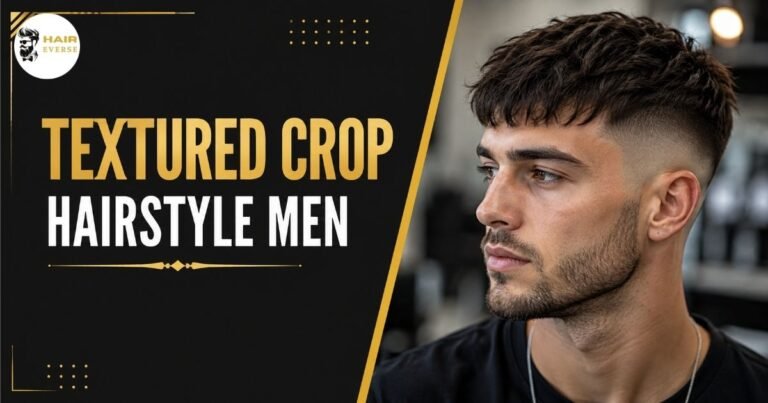
Textured Crop
Overview: Short, choppy layers on top with tapered or faded sides and a soft fringe a shape-driven cut rather than a hard line.
Why It Works: Because there’s no sharp fade line to grow out unevenly, straight to wavy hair holds this shape gracefully on oval, square, and heart faces well past the three-week mark.
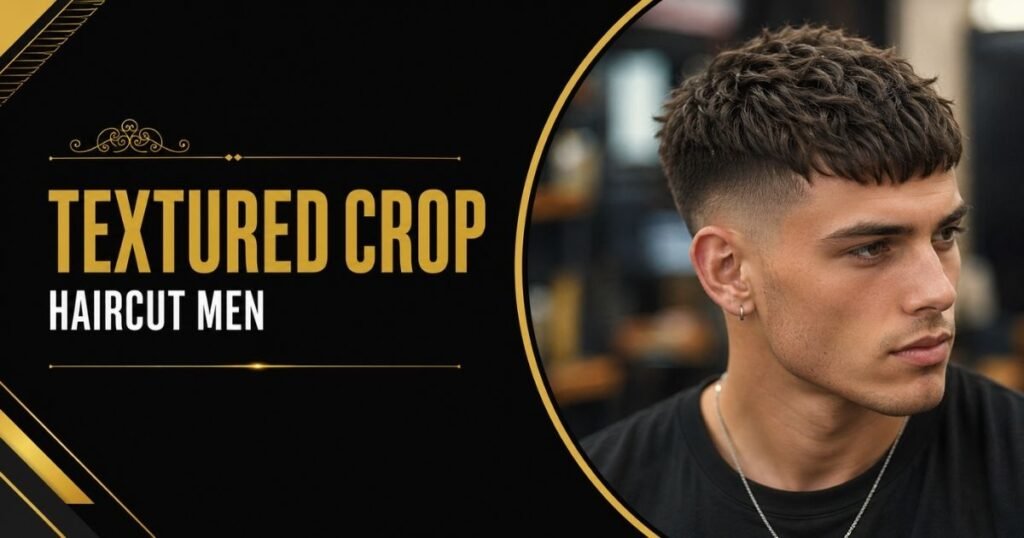
Styling Tip: As the fringe grows, switch from clay to a slightly heavier cream to keep longer pieces controlled instead of flopping forward.
Maintenance: Book your next trim around week four, before the fringe starts covering your eyebrows. Maintenance and styling times are estimates and may vary by hair type.
Low Taper Fade
Overview: A gradual fade starting just above the ears, with more length kept on top the most forgiving fade to let grow slightly.
Why It Works: The subtle blend means regrowth is less noticeable than higher fades, so most hair types can comfortably stretch to three weeks without the line looking blurred.
Styling Tip: In week three, use a touch more pomade than usual to disguise any softening at the neckline until your next visit.
Maintenance: Rebook at three weeks; waiting past four usually means starting the fade over instead of a simple refresh. Maintenance and styling times are estimates and may vary by hair type.
Mid Fade
Overview: The fade starts at temple height, giving more contrast than a low fade and more visible regrowth as a result.
Why It Works: Straight and wavy hair types show that contrast fading fastest, which is why this style needs a tighter schedule than lower fades on oval and square faces.
Styling Tip: Use a small amount of sea salt spray to add texture on top, which also visually distracts from a softening fade line late in the cycle.
Maintenance: Rebook every 2–3 weeks; this fade shows regrowth noticeably sooner than a low fade. Maintenance and styling times are estimates and may vary by hair type.
High Skin Fade
Overview: The fade runs all the way to skin, creating the starkest contrast on this list and the fastest-showing regrowth.
Why It Works: Straight, thick hair holds the sharp line longest, but even then the bare-skin sections grow in visibly within days on round and square faces.
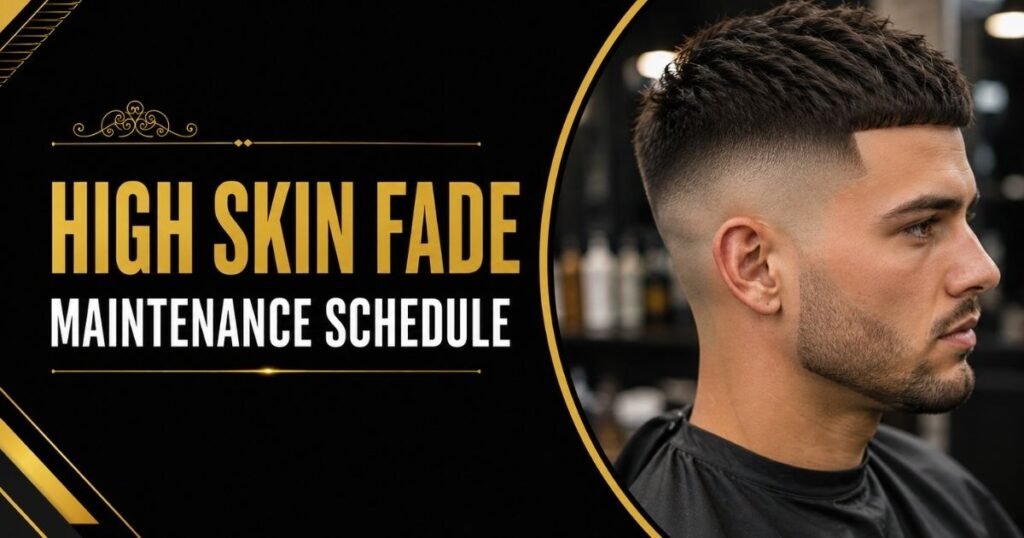
Styling Tip: Keep a light-hold cream on hand for the top so you can restyle daily without the sides distracting from a fresh look.
Maintenance: Plan on visits every two weeks this is the tightest schedule of any style here. Maintenance and styling times are estimates and may vary by hair type.
Burst Fade
Overview: A rounded fade that curves behind the ear, leaving more length at the back than a straight-line fade.
Why It Works: Curly and coily hair naturally disguises regrowth better than straight hair, letting oval and round face shapes stretch this style further than most fades.
Styling Tip: Refresh curl definition with a curl cream between visits rather than reaching for the clippers early out of habit.
Maintenance: Most curl patterns can comfortably wait 4–5 weeks before the fade needs a refresh. Maintenance and styling times are estimates and may vary by hair type.
Drop Fade
Overview: Similar to a burst fade, but the line drops lower behind the ear, often paired with mullets or longer crowns.
Why It Works: Wavy and curly hair types keep the dropped line looking intentional even as it grows out, flattering round and square faces longer than a straight fade line would.
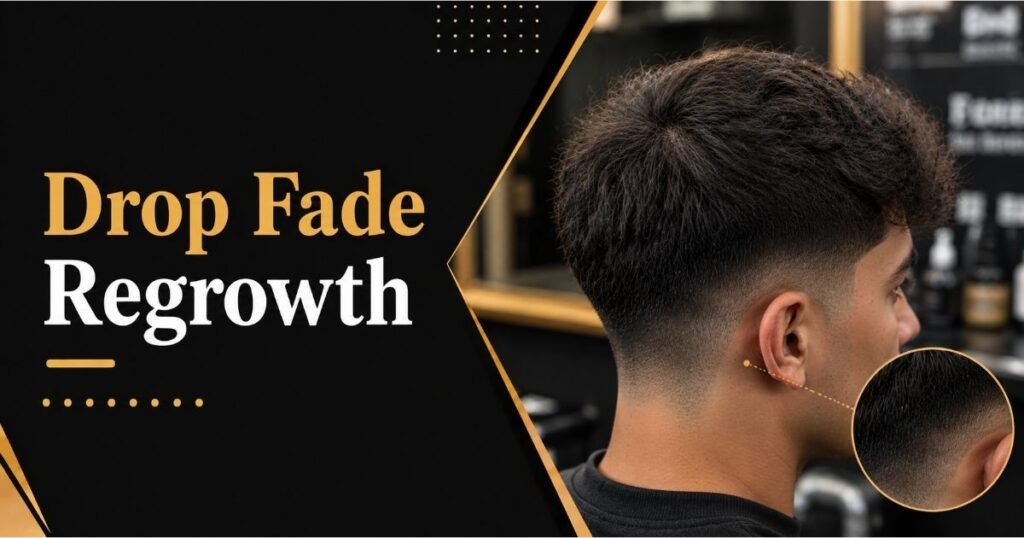
Styling Tip: Scrunch in a light sea salt spray rather than combing, which helps hide softening edges as you approach your next visit.
Maintenance: Every 3–4 weeks keeps the drop shape defined without looking blurred. Maintenance and styling times are estimates and may vary by hair type.
Classic Crew Cut
Overview: Short all over with a tapered not faded side, slightly longer on top. No hard line means no urgent regrowth issue.
Why It Works: Nearly any hair type holds this shape well past three weeks, and the simplicity flatters every face shape without a sharp edge to maintain.
Styling Tip: A small amount of matte cream keeps the top controlled even as it grows slightly shaggier toward week four.
Maintenance: Every 4 weeks is plenty since there’s no fade line demanding an earlier visit. Maintenance and styling times are estimates and may vary by hair type.
Buzz Cut
Overview: One uniform length all over, clipped with a single guard simple, but it shows regrowth fast because there’s no length to hide it.
Why It Works: Works on every hair type, including thinning hair, and suits oval and square faces, though the uniform length means even small regrowth is noticeable.
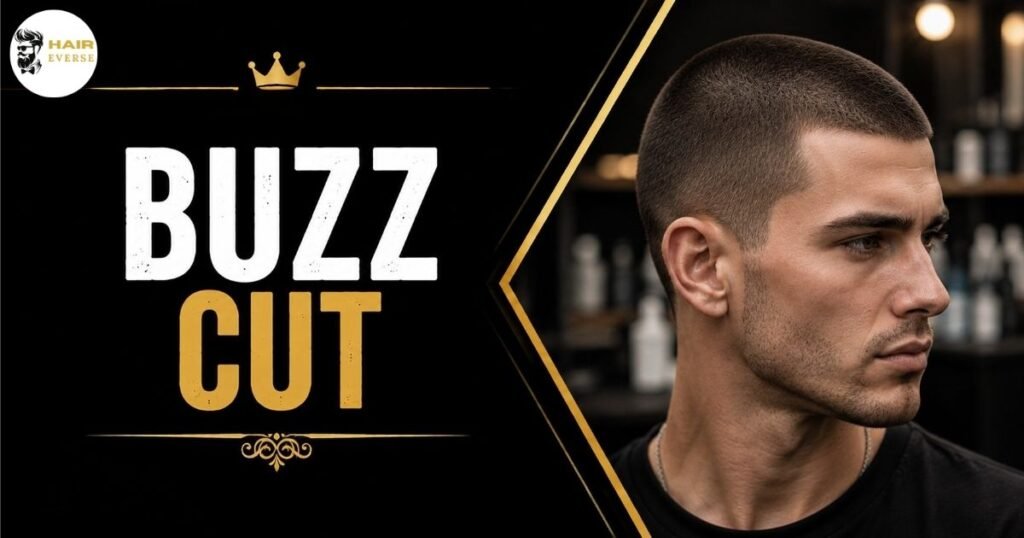
Styling Tip: No product is really needed, but a light matte spray can knock down any new growth that starts standing up.
Maintenance: Trim every 2–3 weeks for a consistently sharp look, or stretch it if you don’t mind a slightly grown-in texture. Maintenance and styling times are estimates and may vary by hair type.
Ivy League Cut
Overview: A longer, tidier crew cut with enough length on top to comb into a soft side sweep.
Why It Works: Straight and wavy hair combs cleanly even as it grows, and the elongating shape stays flattering on oval and long faces well into week four.
Styling Tip: A light pomade combed through damp hair helps mask the transition between fresh-cut and slightly grown-out length.
Maintenance: Every 4 weeks keeps the sides from creeping past tidy. Maintenance and styling times are estimates and may vary by hair type.
French Crop
Overview: Faded sides with a blunt fringe left slightly longer, often pushed forward for a defined front.
Why It Works: Thick, straight hair holds the fringe shape longest, but the faded sides need a tighter schedule than the top on oval and square faces.
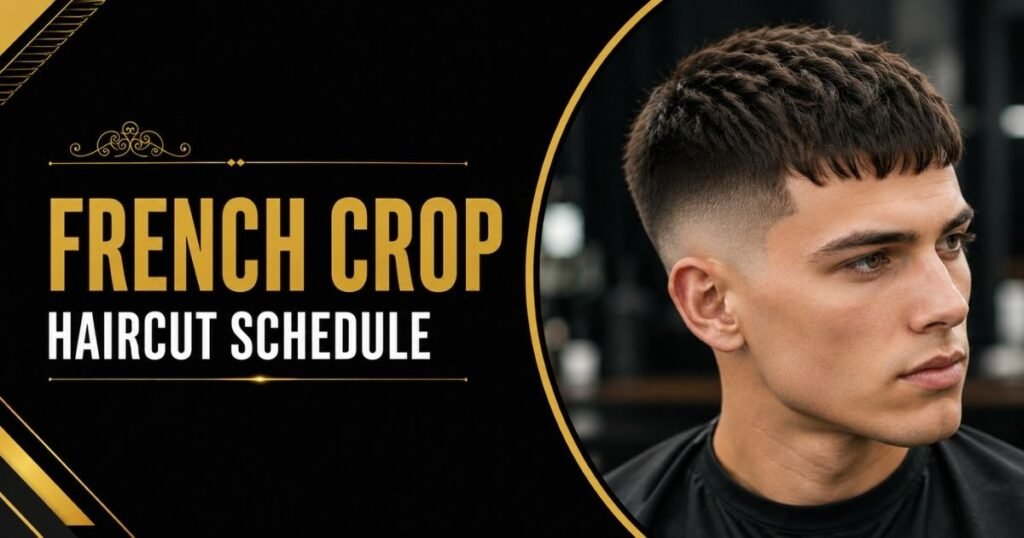
Styling Tip: As the fringe grows, press it forward with matte clay rather than letting it flop, which buys you a few extra days before a trim.
Maintenance: Every 3–4 weeks to keep the fade fresh and the fringe from growing shaggy. Maintenance and styling times are estimates and may vary by hair type.
Caesar Cut
Overview: Short, horizontal fringe with uniform length on top and short sides structured, but forgiving as it grows.
Why It Works: It’s a strong pick for thinning hairlines since a slightly longer fringe still reads as intentional, unlike other styles that get obviously scruffy.
Styling Tip: Press a small amount of matte cream into dry hair to keep the fringe controlled as it edges past the eyebrow line.
Maintenance: Trim every 3–4 weeks so the fringe doesn’t grow past your eyebrows. Maintenance and styling times are estimates and may vary by hair type.
Modern Pompadour
Overview: Long on top, swept up and back for volume, with shorter or faded sides for contrast.
Why It Works: Straight, thick hair holds height longest, but if the sides are faded, that portion regrows faster than the top on oval and heart faces.
Styling Tip: Blow-dry the top up and back with a round brush daily; a firm-hold pomade compensates as hair gets slightly longer between cuts.
Maintenance: Every 3–4 weeks for the cut, even though daily restyling is needed regardless of where you are in the cycle. Maintenance and styling times are estimates and may vary by hair type.
Slick Back
Overview: All the hair on top combed straight back with a high-hold product, often paired with tapered or faded sides.
Why It Works: Naturally straight or slightly wavy hair keeps this direction clean even as it grows, working across oval and square face shapes.
Styling Tip: A high-hold gel compensates well for slightly longer hair, so you can push this style past four weeks without losing the line.
Maintenance: Every 4–5 weeks for the cut itself. Maintenance and styling times are estimates and may vary by hair type.
Side Part
Overview: A defined part with hair swept to one side a business-standard cut that tolerates gradual growth reasonably well.
Why It Works: Fine, straight hair holds the part line clearest, and the classic shape works on oval and round faces even a week or two past its sharpest point.
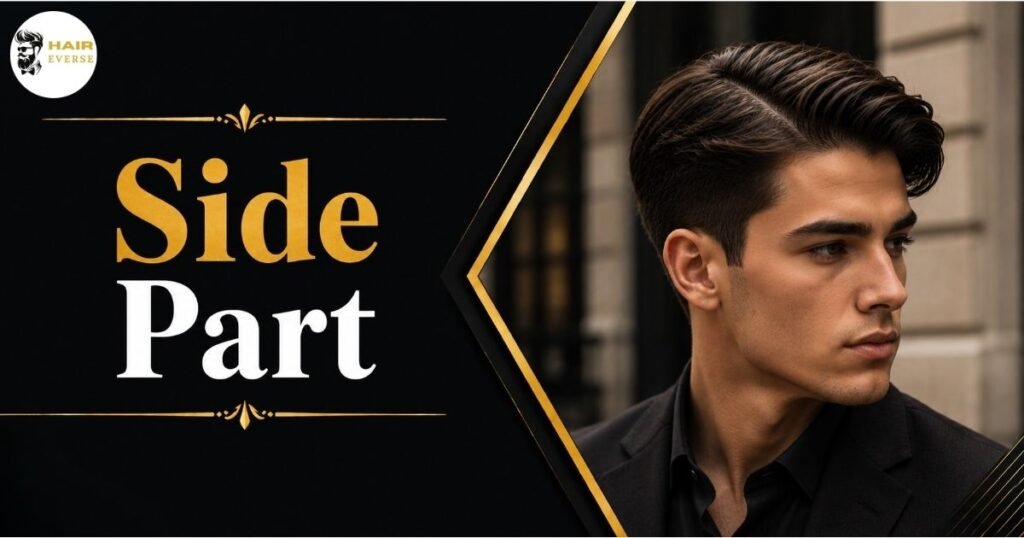
Styling Tip: A fine-tooth comb and a touch more pomade than usual can re-carve a part that’s started to soften.
Maintenance: Every 4 weeks keeps the part crisp instead of overgrown. Maintenance and styling times are estimates and may vary by hair type.
Undercut Haircut
Overview: Very short sides and back with a hard line, and a noticeably longer top for contrast.
Why It Works: Thick, straight hair holds the strong contrast longest, but the hard line itself blurs faster than the length on top, on oval and square faces.
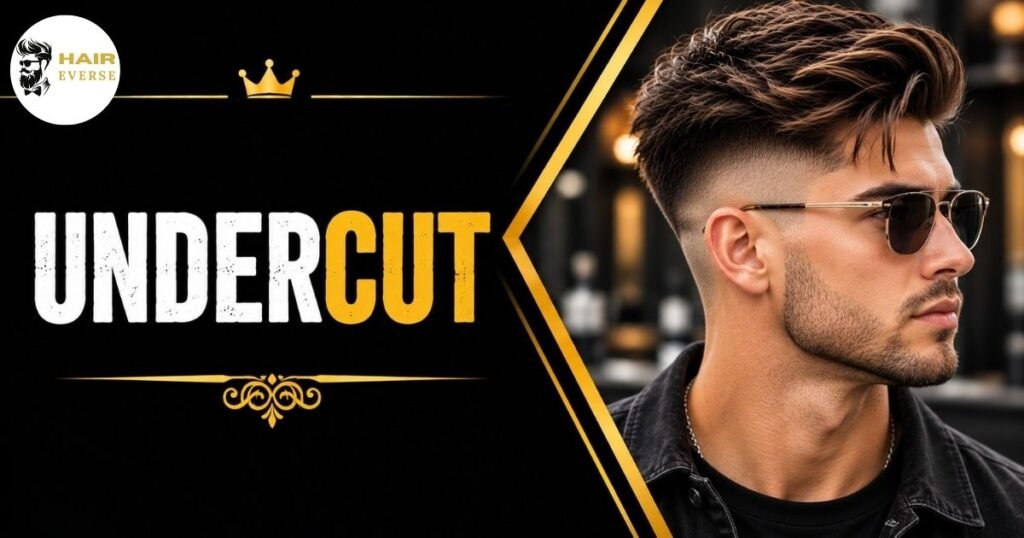
Styling Tip: Matte wax on the top disguises minor length changes better than a wet-look product would.
Maintenance: Every 3–4 weeks to keep the undercut line sharp. Maintenance and styling times are estimates and may vary by hair type.
Disconnected Undercut
Overview: Like the undercut, but the transition is cut abruptly rather than blended, which makes regrowth more obvious sooner.
Why It Works: Thick or coarse hair holds the deliberate hard line, but that same sharpness means square and oval faces show softening faster than a blended style.
Styling Tip: Style the top with a strong-hold cream and keep the disconnected line touched up between full cuts if you can trim it yourself.
Maintenance: Every 3 weeks the hard line grows out noticeably faster than a blended fade. Maintenance and styling times are estimates and may vary by hair type.
Comb Over
Overview: Hair combed from one side to the other, adding coverage and fullness, particularly on thinning crowns.
Why It Works: Works across straight, wavy, and curly hair, and stays effective for thinning hair as long as length stays consistent enough for full coverage.
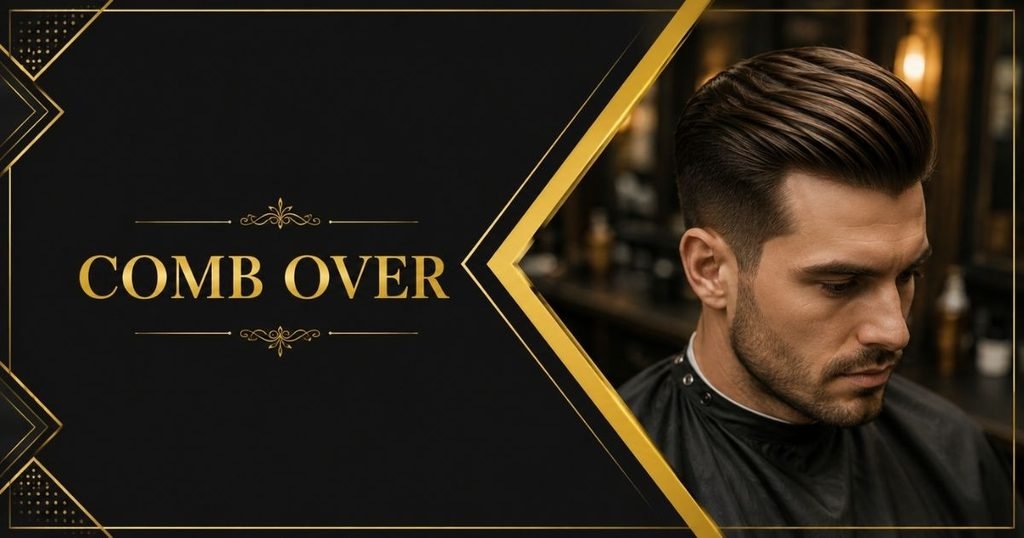
Styling Tip: Comb with a light-hold pomade in small sections to keep the coverage even as hair grows past its ideal length.
Maintenance: Every 4 weeks; keep length consistent so the coverage doesn’t get patchy. Maintenance and styling times are estimates and may vary by hair type.
Quiff
Overview: The front section is lifted and pushed back for volume, with shorter sides for contrast.
Why It Works: Straight to wavy hair lifts most reliably, though if the sides are faded, expect that part of the cut to need attention sooner on oval and heart faces.
Styling Tip: A strong-hold paste compensates for slightly longer hair by giving you more to grip and shape.
Maintenance: Every 3–4 weeks for the cut, with daily restyling regardless of where you are in the cycle. Maintenance and styling times are estimates and may vary by hair type.
Textured Fringe
Overview: A soft, choppy fringe brushed forward, usually paired with tapered or faded sides.
Why It Works: Wavy and straight hair textures best, and the forward fringe stays flattering on round and long faces even as it lengthens slightly.
Styling Tip: Light clay pressed forward and down keeps the fringe controlled as it grows closer to brow length.
Maintenance: Every 4 weeks so the fringe doesn’t grow past brow length. Maintenance and styling times are estimates and may vary by hair type.
Curly Crop
Overview: Curls kept short on top and tapered on the sides, letting the natural curl pattern do the styling work.
Why It Works: Curly and coily hair hides regrowth better than straight hair, which is why this style holds its rounded shape on oval and round faces for weeks longer than a straight cut.
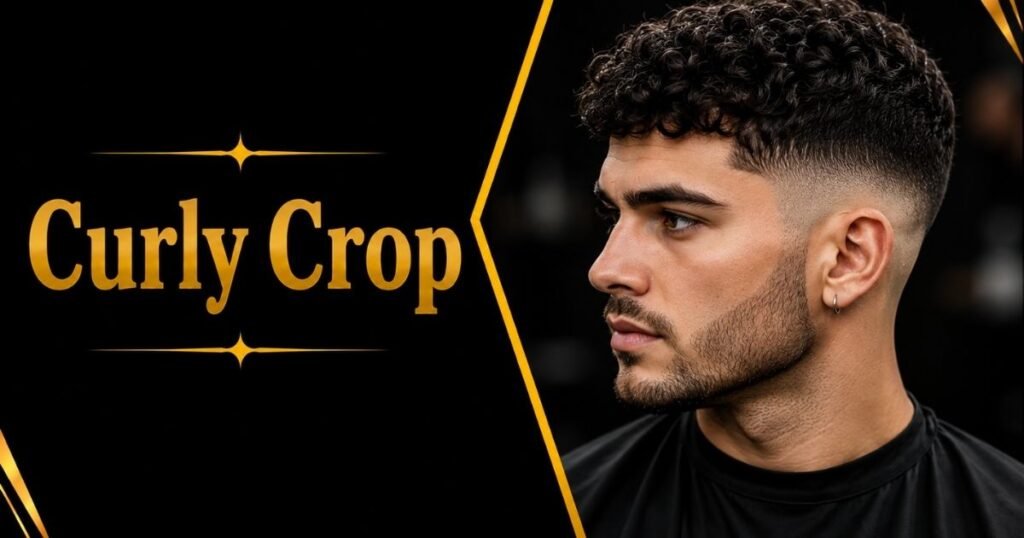
Styling Tip: A curl cream on soaking-wet hair, scrunched upward, keeps curls defined even as they lengthen slightly.
Maintenance: Every 5–6 weeks curls grow out more forgivingly than straight styles. Maintenance and styling times are estimates and may vary by hair type.
Curly Afro Fade
Overview: Faded sides with fuller, rounded volume on top, letting coily hair keep its natural shape and height.
Why It Works: Purpose-built for coily and curly hair, though the faded portion still needs a tighter schedule than the fuller top on square and round faces.
Styling Tip: Pat don’t rub a curl-defining cream into damp hair to maintain clumping as curls grow slightly looser.
Maintenance: Every 3–4 weeks to keep the fade sharp against the fuller top. Maintenance and styling times are estimates and may vary by hair type.
Wavy Shag
Overview: Heavily layered with a shaggy, undone finish and a soft fringe, deliberately built to look good while growing out.
Why It Works: Wavy hair naturally creates the tousled movement this cut relies on, so oval and heart faces stay flattered well past the six-week mark.
Styling Tip: A texturizing sea salt spray scrunched into damp hair keeps waves defined regardless of how far along the growth cycle you are.
Maintenance: Every 6–8 weeks; the shag is designed to look intentional while growing out. Maintenance and styling times are estimates and may vary by hair type.
Modern Mullet
Overview: Short, faded sides and front with noticeably longer length at the back and crown.
Why It Works: Straight to wavy hair shows the length contrast clearly, but the faded front needs more frequent attention than the longer back on oval and square faces.
Styling Tip: Texturizing spray on the back adds movement regardless of growth stage, while a small amount of clay keeps the front controlled.
Maintenance: Every 4–5 weeks to maintain the front-to-back contrast. Maintenance and styling times are estimates and may vary by hair type.
Wolf Cut
Overview: A mix between a shag and a mullet, with heavy layering for a deliberately messy, high-volume look.
Why It Works: Wavy and curly textures add the volume this cut relies on, and layers grow into each other gracefully on oval and round faces.
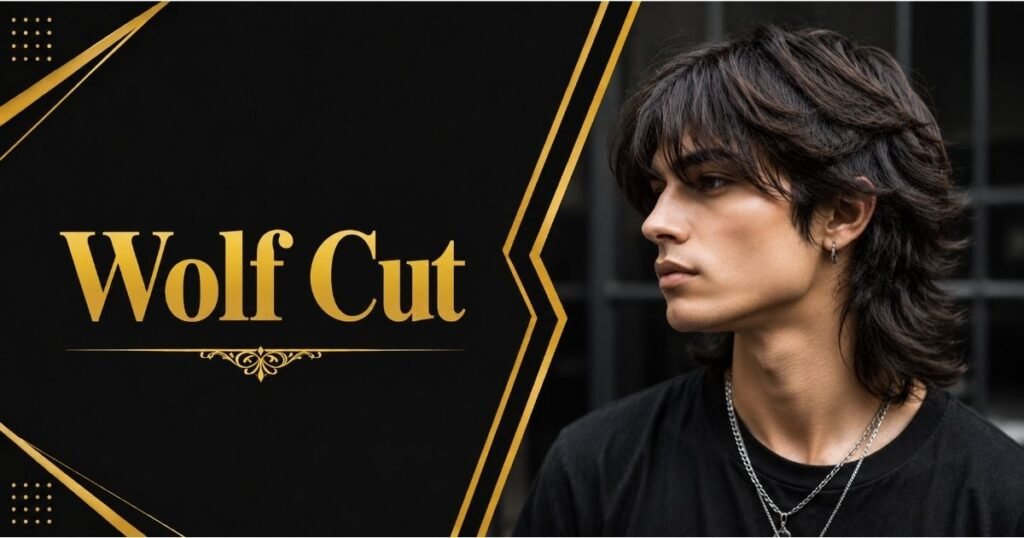
Styling Tip: Rough-dry with your hands or a diffuser to separate layers naturally, whatever stage of growth you’re at.
Maintenance: Every 6 weeks; layers are meant to grow into each other rather than need constant correction. Maintenance and styling times are estimates and may vary by hair type.
Two Block Haircut
Overview: Very short, undercut-style sides beneath a fuller, longer top left un-thinned for volume.
Why It Works: Thick, straight hair holds the fuller top well, though the undercut portion needs more frequent trims than the top on oval and round faces.
Styling Tip: A light wax keeps the top’s volume intact whether you’re one week or four weeks out from your last cut.
Maintenance: Every 4 weeks to keep the undercut portion from blending back into the top. Maintenance and styling times are estimates and may vary by hair type.
Man Bun / Top Knot
Overview: Long hair gathered and secured at the crown or back, sometimes paired with faded sides for contrast.
Why It Works: Works on nearly any hair type once it’s long enough, and it suits every face shape since the length pulls the style away from your features.

Styling Tip: A light pomade before tying back controls flyaways at any length, so styling stays consistent between trims.
Maintenance: Trims every 8–10 weeks just for end health, since length is the whole point of this style. Maintenance and styling times are estimates and may vary by hair type.
Long Layered Brush Back
Overview: Medium-length hair with soft layering, simply brushed back off the face for a relaxed, polished look.
Why It Works: Wavy, thick hair gives the brush-back its natural texture, and the layers keep an elongating shape on oval and long faces even as they lengthen.
Styling Tip: A light styling cream brushed straight back with your fingers works at any point in the growth cycle.
Maintenance: Every 6 weeks to maintain shape without cutting off the length that makes the style work. Maintenance and styling times are estimates and may vary by hair type.
Faux Hawk
Overview: Tapered sides with a raised center strip left longer, mimicking a mohawk without shaving the sides.
Why It Works: Straight, thick hair holds center height best, but the tapered sides need attention on a shorter cycle than the center on oval and square faces.
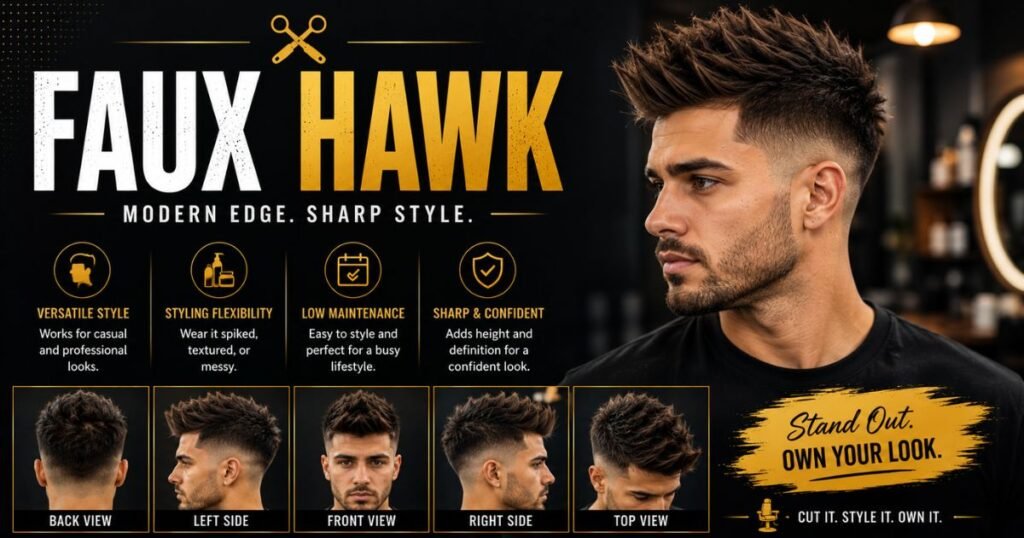
Styling Tip: A strong-hold wax pinched upward from the center out works regardless of how long the sides have grown.
Maintenance: Every 3–4 weeks to keep the tapered sides distinct from the raised center. Maintenance and styling times are estimates and may vary by hair type.
Spiky Textured Top
Overview: Short-to-medium top styled into defined, textured spikes, usually paired with a fade or taper on the sides.
Why It Works: Straight and wavy hair holds individual spikes best, and the textured top flatters round and square faces at almost any length within reason.
Styling Tip: A strong-hold wax pulled upward in small sections works whether hair is freshly cut or a few weeks grown out.
Maintenance: Every 3–4 weeks for the cut itself. Maintenance and styling times are estimates and may vary by hair type.
Buzz Fade for Receding Hairlines
Overview: A short, uniform buzz that fades into the sides, minimizing contrast between hairline and scalp rather than trying to hide it.
Why It Works: For fine or thinning hair, shorter length keeps regrowth visually consistent so it never looks obviously overgrown on oval and round faces.
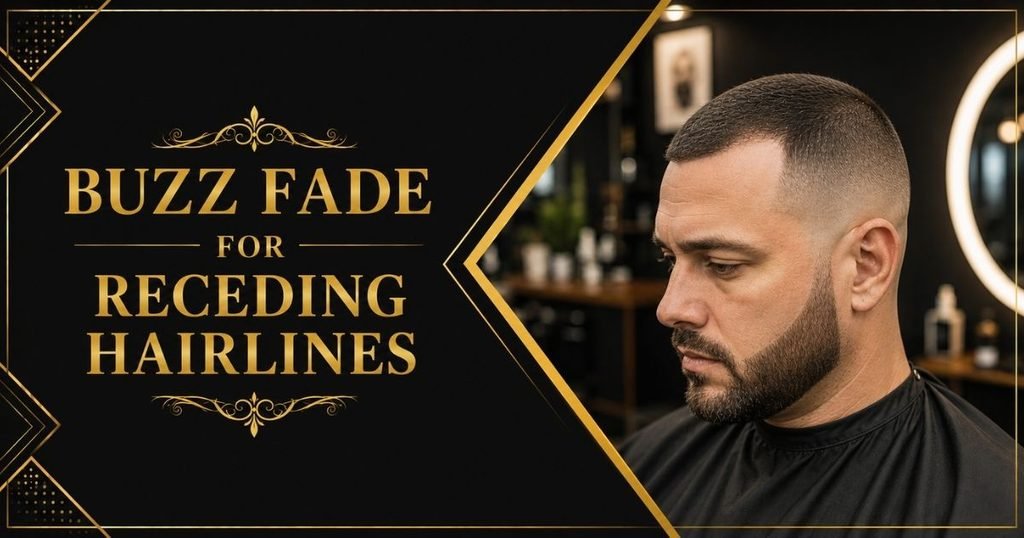
Styling Tip: Skip heavy product a light matte spray is enough, since anything heavier can highlight thin areas rather than blend them.
Maintenance: Every 2–3 weeks keeps the fade line consistent as regrowth comes in. Maintenance and styling times are estimates and may vary by hair type.
Crew Cut for Thinning Hair
Overview: A slightly longer take on the buzz cut that keeps enough length on top to add density without exposing sparse areas.
Why It Works: Fine and thinning hair benefits from the uniform length, which reads as intentional at every stage of the growth cycle rather than exposing gaps.
Styling Tip: A thickening matte paste worked through damp hair adds texture that keeps strands looking dense between trims.
Maintenance: Every 3–4 weeks to keep the length consistent all over. Maintenance and styling times are estimates and may vary by hair type.
Bald Fade with Beard Line-Up
Overview: A skin fade on the sides paired with a precisely edged beard line, creating one continuous silhouette.
Why It Works: Works with any hair type since the focus is the fade-to-beard transition, but that clean line on square and oval faces regrows visibly within about two weeks.
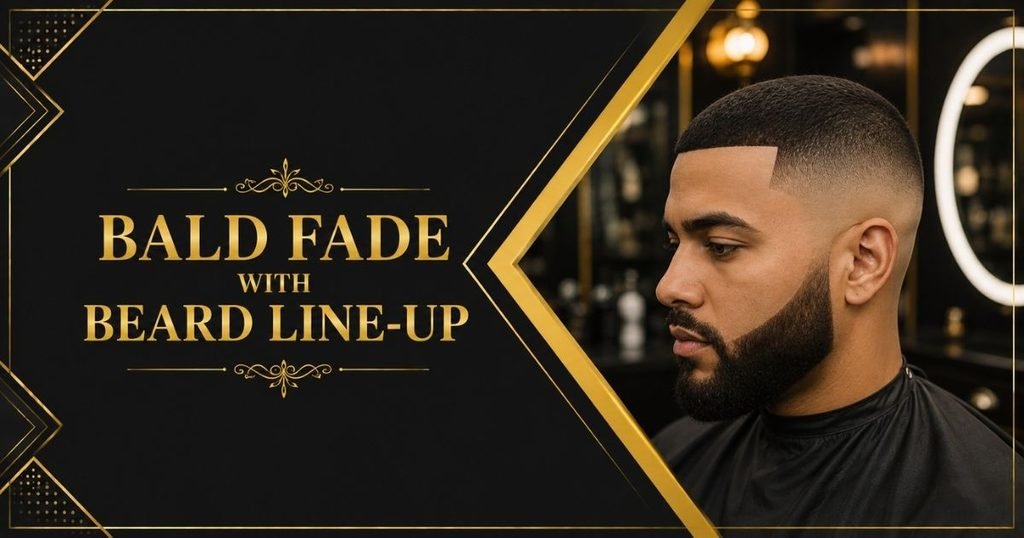
Styling Tip: Keep beard edges maintained at home with a trimmer between barber visits so the line doesn’t blur before your next appointment.
Maintenance: Every 2 weeks for the hair, with beard touch-ups at home in between. Maintenance and styling times are estimates and may vary by hair type.
Hard Part Textured Crop
Overview: A textured crop with a shaved line cut into the part, adding a sharp, deliberate detail to a casual style.
Why It Works: Straight and wavy hair shows the shaved line most clearly, but that detail grows out faster than the rest of the cut on oval and square faces.
Styling Tip: Touch up the part line at home with a trimmer between full barber visits to keep it sharp.
Maintenance: Every 3 weeks the shaved line grows in faster than the rest of the cut. Maintenance and styling times are estimates and may vary by hair type.
Modern Caesar with Fringe
Overview: A classic Caesar updated with a low fade instead of a simple taper, sharpening the overall silhouette.
Why It Works: Works well on straight to thick hair, and like the original Caesar, is a solid option for a receding hairline thanks to the short, structured fringe.
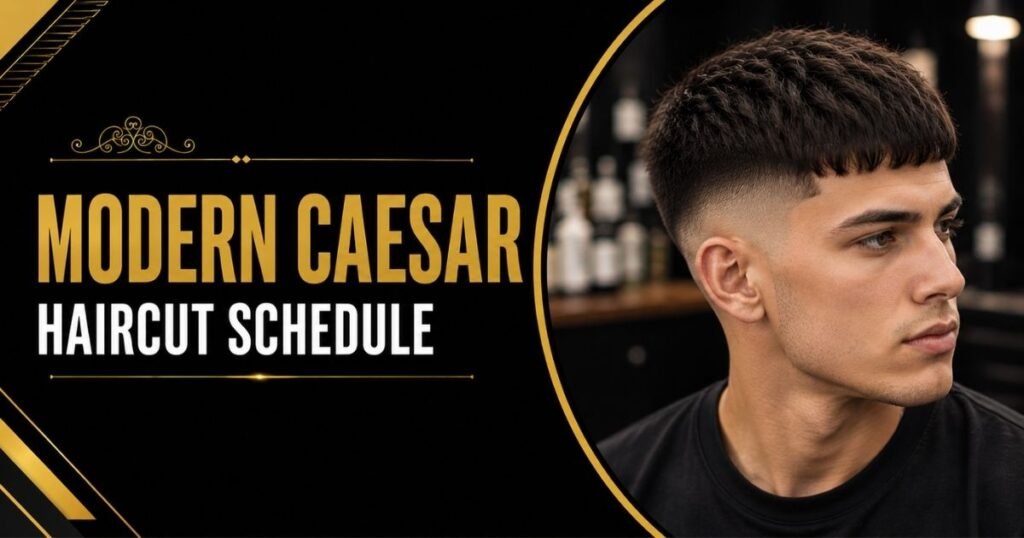
Styling Tip: Press matte cream into dry hair to keep the fringe controlled without shine as it edges toward its next trim.
Maintenance: Every 3 weeks to keep the fade fresh alongside the fringe. Maintenance and styling times are estimates and may vary by hair type.
Classic Side Swept
Overview: Medium-length hair combed to one side in a soft, natural sweep, with shorter, tapered sides for a clean finish.
Why It Works: Straight and wavy hair sweeps most naturally, and the elongating shape stays flattering on oval and long faces even as it grows past its sharpest point.
Styling Tip: A light pomade combed in your sweep direction and air-dried keeps the look soft at any stage of the cycle.
Maintenance: Every 4–5 weeks to maintain length and shape. Maintenance and styling times are estimates and may vary by hair type.
Is It Bad to Wait Too Long Between Haircuts?
Not dangerous, but it does cost you the shape you paid for. Waiting too long usually means split ends creeping further up the hair shaft, fade lines blurring into an undefined mess, and styles that relied on sharp contrast losing their whole point. For most cuts, the tipping point is somewhere between two and four weeks past your recommended frequency, depending on the style.
How Do I Know It’s Time for a Haircut?
- Your fade line has softened into a gradient with no clear starting point
- You’re reaching for product just to control shape you used to get for free
- Ends look noticeably frayed or split when you check them in good light
- Your barber’s last comment was “let’s get you in again in three weeks” and it’s been five
- Your hairline or part looks less crisp in photos than it did a month ago
Hair Types:
- Thick hair tolerates longer stretches between cuts on volume-driven styles like pompadours and two-block cuts.
- Thin hair benefits from shorter, more frequent trims that keep the style looking full rather than flat.
- Curly hair naturally hides regrowth, which is why curly crops and burst fades can stretch further than straight equivalents.
- Straight hair shows regrowth fastest, especially on fades, and usually needs the tightest schedule of any texture.
- Wavy hair sits in the middle shags and textured fringes tolerate a few extra weeks better than sharp-line cuts.
Face Shapes:
- Oval faces can handle nearly any schedule on this list; it’s the most forgiving shape as styles grow out.
- Round faces should stay closer to their recommended frequency on height-adding styles like quiffs, since lost height changes the balance fastest.
- Square faces hold sharp textured styles well even a week or two past due, since the strong jawline still reads as intentional.
- Long faces benefit from sticking closer to schedule on fringe-based styles, since added length can throw off the width the fringe was adding.
Confuse To Choose Write New Hairstyle
- Big Forehead Hairstyles help balance facial proportions by adding volume, fringe, or texture to the top of the head, drawing the eye away from a larger forehead. Whether you prefer a soft, side-swept fringe or a fuller, textured crop, these cuts work with a range of hair types to create a more harmonious face shape.
- Best Beard and Haircut pairings bring together facial hair and hairstyle choices that complement each other, enhancing your face shape and overall look. The right combination can balance strong angles, soften a round jawline, or add a more mature edge to youthful features.
- Top 50 Professional Hairstyles for Men: Modern Office Look brings together sharp, office-ready cuts from classic side parts to modern fades that keep you polished and put-together for any workplace.
- The Complete Hair Care Guide for Men: Every Hair Type covers everything from washing and conditioning to styling and maintenance, with tailored tips for straight, wavy, curly, and coily hair to help you keep it healthy and looking its best.
- Slick Back Hairstyle: Modern Styles for a Sharp Look showcases fresh takes on this timeless look, blending classic polish with modern texture for a clean, confident finish.
- Undercut Haircut versatile style that pairs closely trimmed sides with longer length on top. With 35 fresh fade variations, there’s an option to suit every face shape and style preference, from clean and classic to edgy and modern.
- Spiky Hairstyles for Men bring a bold, textured edge to classic short cuts, using product and precise styling to create defined, upward peaks. With 35 fresh takes for 2026, there’s a spiky look to match every hair type and personal style, from subtle textured crops to dramatic, high-volume spikes.
- Textured Crop Hairstyle Men combines short, choppy layers on top with tapered or faded sides for a sharp, low-maintenance look. With 36 modern variations to explore, there’s a textured crop to suit every face shape and hair texture, from clean and polished to messy and edgy.
- Pompadour or Quiff highlights the key differences between these two classic volume-driven styles, helping you decide which one suits your hair type and face shape best. This breaks down height, styling effort, and overall vibe making it easier to choose between the pompadour’s bold, structured lift and the quaffs’ more relaxed, textured sweep.
- Military Haircuts for Men bring a clean, disciplined edge to short hairstyles, favoring precision, low maintenance, and a sharp overall silhouette. There’s an option to fit every regulation length and personal preference, from classic high-and-tight cuts to more contemporary faded variations.
- Modern Bowl Cut Hairstyles for Men reimagine the classic bowl cut with sharper lines, added texture, and cleaner tapered edges for a more contemporary finish. This updated take moves away from the outdated, uniform look, offering versatile options that suit different hair types and personal styles, from sleek and minimal to textured and edgy.
How to Ask Your Barber
- Bring reference photos so your barber understands exactly how tight you want the schedule for that specific style.
- Explain your preferred length in clipper-guard numbers or inches so regrowth expectations are clear from the start.
- Mention your styling routine so your barber can flag when a style is nearing the point where product alone won’t compensate.
- Ask about maintenance frequency directly and get a specific week range, not a vague “whenever it feels long.”
- Explain your workplace or lifestyle needs a client-facing job may call for a tighter schedule than a remote one.
- Confirm a standing rebooking cadence before you leave the chair so you’re not guessing when to call next time.
Product Recommendations
- Hair Cream Best For: Keeping textured crops and Caesars looking fresh as they grow between trims. How to Use: Work a dime-sized amount through damp hair for a soft, low-shine finish.
- Pomade Best For: Slick backs and side parts that need to hold their line even a few weeks post-cut. How to Use: Warm between palms and comb through damp hair for controlled shine.
- Wax Best For: Undercuts and faux hawks that lose definition as hair lengthens. How to Use: Rub between fingertips until pliable, then style small sections for hold.
- Clay Best For: Textured crops and French crops needing matte texture between visits. How to Use: Apply to dry hair and use fingertips to separate pieces.
- Shampoo Best For: Clearing product buildup that can make regrowth look messier than it is. How to Use: Use every 2–3 days rather than daily to avoid stripping natural oils.
- Conditioner Best For: Keeping curly and wavy textures hydrated as they stretch toward a longer trim cycle. How to Use: Focus on mid-lengths and ends, rinsing with cool water to seal the cuticle.
Final Thoughts
There’s no universal answer to how often should men get a haircut the honest schedule depends on the specific style you’re maintaining, your hair type, and how sharp you want to look on any given day. A skin fade demands a tighter rhythm than a wavy shag, and neither schedule is more “correct” than the other; they’re just built for different amounts of upkeep.
If you’re not sure where you land, start with the frequency listed for your style above and adjust from there based on how your own hair grows. Talk it through with your barber at your next visit, set a standing rebooking reminder, and you’ll stop guessing every time your hair starts feeling off.
FAQS
How often should men get a haircut the complete 2026 guide?
Most men should get a haircut every 2 to 6 weeks, depending on style and hair type. Short fades and buzz cuts need trims every 2–3 weeks, while medium and long styles can typically stretch to 6–8 weeks.
How often should you get a fade trimmed?
Fades generally need a trim every 2–3 weeks. Higher, sharper fades like skin fades show regrowth fastest, while lower taper fades can sometimes stretch closer to three weeks.
How often should do men get a haircut with curly hair get a haircut?
Curly and coily hair typically hides regrowth better than straight hair, so most curly styles can go 4–6 weeks between trims without losing their shape.
How often should you get a haircut for thinning hair?
Thinning hair generally looks best with a trim every 3–4 weeks. Shorter, uniform lengths keep density looking consistent instead of exposing sparse patches as hair grows.
How often should you trim long hair?
Long styles like a man bun or brush-back typically only need a trim every 6–10 weeks, mostly to remove split ends rather than reshape the cut.
How often to get a haircut male?
Every 3–4 weeks for short/fade styles, or 6–8 weeks for longer styles.
A good rule: rebook when the current cut starts losing its shape.