35 Textured Fringe Haircuts for Men: Modern Styles for a Sharp Look
35 Textured Fringe Haircuts for Men: Modern Styles for a Sharp Look showcases versatile styles that combine modern texture with effortless appeal. A textured fringe haircut adds movement, dimension, and a natural finish, making it suitable for straight, wavy, or curly hair.
With 35 carefully selected variations, this guide helps you choose a style that complements your face shape, hair type, and daily routine. Whether you prefer a subtle, classic fringe or a bold, layered look, you’ll find practical inspiration for your next barber visit.
Hairstyle Comparison Table
Here is the Comparison Table of Hairstyle, Best Hair Type, Face Shape, Maintenance, and Styling Time:
| Hairstyle | Best Hair Type | Face Shape | Maintenance | Styling Time |
| Classic Textured Fringe | Straight, wavy | Oval, square | Medium | 5–10 min |
| Textured Fringe with Skin Fade | All types | Oval, round | High | 5–10 min |
| Textured Fringe with Taper | All types | Any | Medium | 5 min |
| Curly Textured Fringe | Curly | Oval, long | Low | 5–8 min |
| Textured French Crop | Straight, wavy | Square, oval | Medium | 3–5 min |
| Long Textured Curtain Fringe | Straight, wavy | Long, heart | Medium | 8–10 min |
| Textured Fringe Undercut | Straight, thick | Round, oval | High | 5–8 min |
| Side-Swept Textured Fringe | Straight, wavy | Round, square | Low | 5 min |
| Textured Fringe Quiff | Thick, medium | Round, oblong | High | 10–15 min |
| Choppy Textured Fringe | Straight, thick | Oval, square | Medium | 5–8 min |
| Textured Fringe with Low Fade | All types | Any | Medium | 5 min |
| Textured Fringe with High Fade | All types | Round, oval | High | 5–8 min |
| Wavy Textured Fringe | Wavy | Oval, heart | Low | 5 min |
| Textured Fringe Pompadour | Thick, medium | Long, oval | High | 10–15 min |
| Micro Fringe (Short Bangs) | Straight, thick | Oval, square | Low | 3–5 min |
| Textured Fringe with Mid Fade | All types | Any | Medium | 5–8 min |
| Disconnected Textured Crop | Thick, coarse | Square, oval | Medium | 5 min |
| Textured Fringe Mullet | Straight, wavy | Oval, long | Medium | 8–10 min |
| Two-Block Textured Fringe | Straight, thick | Round, square | Medium | 8 min |
| Hard Part Textured Fringe | Straight, wavy | Oval, square | Medium | 5–8 min |
| Layered Textured Fringe | Fine, thin | Oval, heart | Low | 5 min |
| Buzzed Sides Textured Fringe | All types | Round, oval | Low | 3–5 min |
| Blunt-Cut Textured Fringe | Straight, thick | Square, oval | Medium | 5 min |
| Textured Fringe with Beard Fade | All types | Oval, square | High | 8–10 min |
| Slicked-Back Textured Fringe | Straight, wavy | Oval, long | Medium | 8 min |
| Spiky Textured Fringe | Straight, thick | Round, square | Medium | 8–10 min |
| Long-on-Top Textured Fringe | Straight, wavy | Long, oval | Medium | 10 min |
| Fine Hair Textured Fringe | Fine, thin | Oval, heart | Low | 5 min |
| Thick Hair Textured Fringe | Thick, coarse | Square, oval | Medium | 8 min |
| Textured Fringe Undercut Sides | Straight, wavy | Round, oval | High | 5–8 min |
| Wolf Cut Textured Fringe | Wavy, curly | Oval, heart | Medium | 8 min |
| Modern Bowl-Inspired Fringe | Straight, thick | Oval, round | Low | 5 min |
| Center-Parted Textured Fringe | Straight, wavy | Oval, long | Medium | 8 min |
| Permed Textured Fringe | Straight (permed) | Oval, square | Medium | 5 min |
| Boys’ Easy Textured Fringe | All types | Any | Low | 3–5 min |
35 Textured Fringe Haircuts for Men
35 Textured Fringe Haircuts for Men highlights a wide range of modern fringe styles designed to suit different hair types, face shapes, and lifestyles. From classic textured fringes and skin fades to curly, wavy, and layered variations, each haircut includes practical styling tips and maintenance advice.
The guide explains how texture adds movement, volume, and a natural finish while helping men choose a look that matches their daily routine. Whether you want a bold, trendy cut or a simple, low-maintenance style, these 35 options provide inspiration for every preference.
Classic Textured Fringe
Overview: Medium-length hair on top, cut in broken layers through the front so the fringe falls forward without looking flat. The sides stay short and tidy, keeping the focus on the movement up top.
Why It Works: Straight to wavy hair with medium-to-thick density holds the layering best, and the shape flatters oval and square faces by softening a strong jawline.
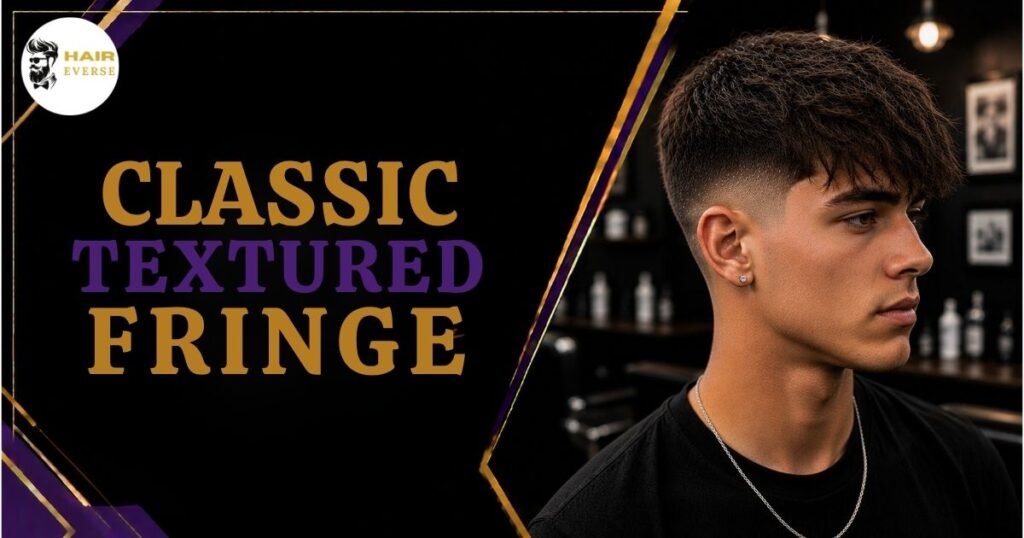
Styling Tip: Work a dime-sized amount of matte clay through damp hair, then push the fringe forward and slightly to one side with your fingers instead of a comb.
Maintenance: Trim the fringe every 3–4 weeks to keep the point-cut edges sharp; the rest of the cut can stretch to 5–6 weeks. Maintenance and styling times are estimates and may vary by hair type.
Textured Fringe with Skin Fade
Overview: The sides and back are shaved down to skin and blended upward, while the top keeps enough length for a piecey, textured fringe. The contrast between bare skin and full fringe is the whole point.
Why It Works: Works on any hair type since the drama comes from the fade line, and it flatters round or oval faces by adding sharp edges at the sides.
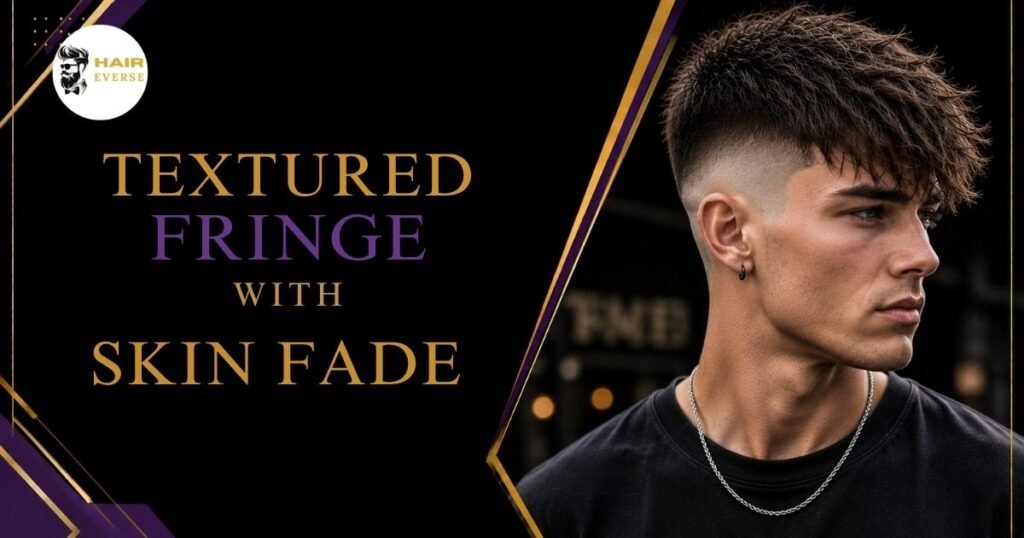
Styling Tip: Use a light sea salt spray before drying, then finish with a texture powder at the roots for lift without weighing the fringe down.
Maintenance: Skin fades grow out fast, so plan on a touch-up every 2–3 weeks to keep the line crisp. Maintenance and styling times are estimates and may vary by hair type.
Textured Fringe with Taper
Overview: A softer alternative to the skin fade, tapering gradually shortens the sides without going down to bare skin, so the fringe transitions smoothly into the sides instead of contrasting sharply.
Why It Works: Suits nearly every hair type and face shape, which is why it’s often the safest first fringe cut for someone who’s never worn one before.
Styling Tip: A small amount of hair cream tames flyaways while letting natural texture show, ideal for guys who want low-effort movement.
Maintenance: Because the taper blends rather than lines up sharply, it grows out more forgivingly and can go 5–6 weeks between full cuts. Maintenance and styling times are estimates and may vary by hair type.
Curly Textured Fringe
Overview: Natural curls are left long enough to fall over the forehead, with the sides kept close so the curl pattern up top gets all the attention.
Why It Works: Built specifically for curly and coily hair types, this version uses the curl’s natural shrinkage and bounce instead of fighting it, and it suits oval and longer face shapes especially well.
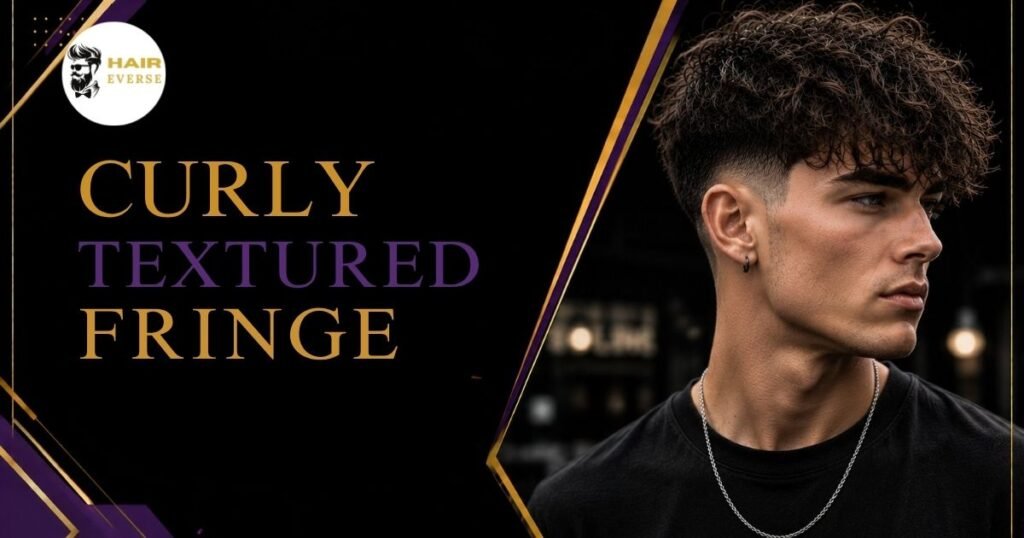
Styling Tip: Scrunch a curl-defining cream into damp hair and let it air-dry; avoid brushing once dry; it breaks up the curl pattern.
Maintenance: Ask your barber to cut curls dry, since curls fall differently wet versus dry, and trim every 5–6 weeks. Maintenance and styling times are estimates and may vary by hair type.
Textured French Crop
Overview: A short, blunt-edged fringe sits forward across the forehead rather than swept to one side, paired with a low fade or taper for a cleaner, more compact silhouette than longer fringe styles.
Why It Works: Best on straight to wavy hair with good density, and it’s especially flattering on square and oval faces because the short fringe keeps the forehead visible without overwhelming it.
Styling Tip: Rub a pea-sized amount of matte pomade between your palms and press it into the fringe rather than combing it through, to keep the choppy edges visible.
Maintenance: This one needs frequent upkeep since the short length shows growth quickly; plan on a trim every 2–3 weeks. Maintenance and styling times are estimates and may vary by hair type.
Long Textured Curtain Fringe
Overview: Hair is grown out longer and center-parted, so it falls to both sides like curtains framing the face instead of straight down over the eyes.
Why It Works: Works best on straight to wavy hair with some natural movement, and it’s one of the more flattering fringe options for long or heart-shaped faces because it adds width at the sides.
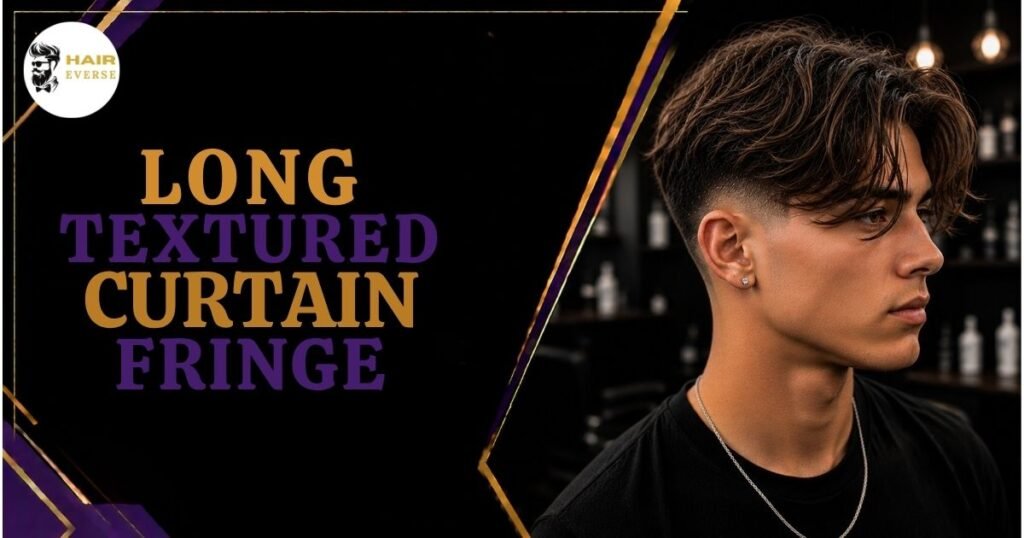
Styling Tip: Blow-dry with a round brush pulling hair outward from the center part, then set with a light-hold sea salt spray for texture.
Maintenance: The grow-out phase actually improves this style, so trims can stretch to 6–8 weeks once it’s established. Maintenance and styling times are estimates and may vary by hair type.
Textured Fringe Undercut
Overview: The sides and back are cut dramatically shorter than the top, creating a hard disconnection, while the top keeps enough length for a heavy, textured fringe to fall forward.
Why It Works: Best suited to straight or thick hair that holds shape, and the bold contrast flatters round or oval faces by adding visual height and structure.
Styling Tip: Apply a strong-hold wax to towel-dried hair and comb the fringe forward, then use your fingers to break up the line for a piecey finish.
Maintenance: The undercut portion needs a refresh every 2–3 weeks to keep the disconnection crisp, even though the top can go longer between cuts. Maintenance and styling times are estimates and may vary by hair type.
Side-Swept Textured Fringe
Overview: Instead of falling straight down, the fringe is directed to one side with a deep side part, giving a slightly more polished, put-together look than a forward fringe.
Why It Works: Suits straight and wavy hair types especially well, and the diagonal line it creates is flattering on round and square faces by adding asymmetry.
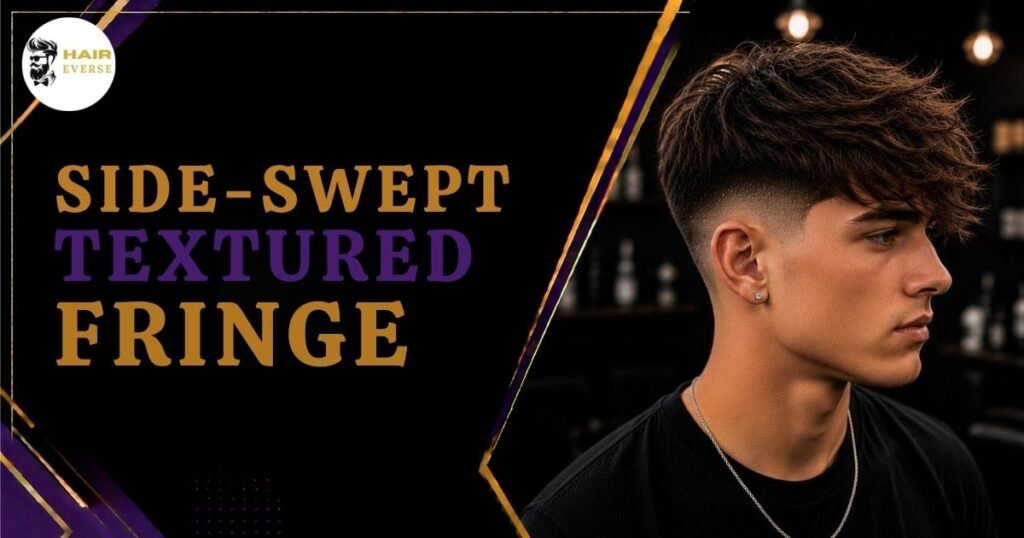
Styling Tip: Comb hair to one side while damp using a light hair cream, then blow-dry in the direction you want it to fall so it holds the shape without gel.
Maintenance: A forgiving, low-fuss style that can go 5–6 weeks between trims since the side sweep hides gradual growth well. Maintenance and styling times are estimates and may vary by hair type.
Textured Fringe Quiff
Overview: The fringe is lifted up and back at the roots instead of falling forward, creating height at the front while keeping textured, broken ends rather than a smooth, polished finish.
Why It Works: Works best with thick to medium density hair that can hold volume, and the added height flatters round or oblong faces by elongating the overall shape.
Styling Tip: Blow-dry upward and back with a round brush using a volumizing cream, then finish with a wax fiber once fully dry to lock in the lift.
Maintenance: Needs a trim every 3–4 weeks to keep the front section shaped for lifting; skipping styling days will cause it to flop forward. Maintenance and styling times are estimates and may vary by hair type.
Choppy Textured Fringe
Overview: Deep point cutting throughout the fringe creates jagged, uneven edges on purpose, giving the front a rougher, more deconstructed look than a smoothly layered fringe.
Why It Works: Best on straight or thick hair since the choppiness needs some structure to hold its shape, and it flatters oval and square faces without adding bulk.
Styling Tip: Apply matte clay to dry hair and pull small sections apart with your fingertips to exaggerate the separation between pieces.
Maintenance: Choppy edges hide growth reasonably well, so a trim every 4–5 weeks keeps the shape without needing constant upkeep. Maintenance and styling times are estimates and may vary by hair type.
Textured Fringe with Low Fade
Overview: The fade starts low, just above the ears, keeping most of the length intact on the sides while still cleaning up the perimeter, so the fringe reads as the main feature.
Why It Works: One of the most versatile pairings, it works across nearly every hair type and face shape, which makes it a reliable choice for a first-time fringe.
Styling Tip: A light hold hair cream keeps the fringe soft and touchable without the stiffness some waxes create.
Maintenance: Low fades grow out gently, so this can stretch to 5–6 weeks between visits. Maintenance and styling times are estimates and may vary by hair type.
Textured Fringe with High Fade
Overview: The fade starts much higher, near the temple, leaving less length on the sides and creating a sharper, more dramatic contrast against the longer, textured fringe on top.
Why It Works: Works on all hair types and is especially flattering on round or oval faces, since the high fade visually narrows the sides of the head.
Styling Tip: Use a matte clay worked from mid-lengths to ends, avoiding the roots so the fringe doesn’t look greasy against the short sides.
Maintenance: High fades show growth fastest of all the fade heights, so plan on a touch-up every 2 weeks for the sharpest look. Maintenance and styling times are estimates and may vary by hair type.
Wavy Textured Fringe
Overview: Built around natural waves rather than fighting them, this fringe is cut to let the wave pattern create its own texture and movement across the forehead.
Why It Works: Made specifically for wavy hair types, and it suits oval and heart-shaped faces by softening angles with natural-looking movement.
Styling Tip: Apply sea salt spray to damp hair and scrunch upward, then let it air-dry to enhance the natural wave rather than blow-drying it flat.
Maintenance: Low-effort by design; a trim every 5–6 weeks keeps the wave pattern balanced without over-thinning it. Maintenance and styling times are estimates and may vary by hair type.
Textured Fringe Pompadour
Overview: A modern take on the classic pompadour, the front section is swept up and back for height, but kept textured and matte instead of slicked and shiny.
Why It Works: Needs thick to medium density hair to hold the volume, and the height it creates flatters long or oval faces by adding structure at the crown.
Styling Tip: Blow-dry the front section up and back over a round brush with volumizing cream, then set with a strong-hold wax once completely dry.
Maintenance: The shape needs a trim every 3–4 weeks to keep the front section long enough to sweep back cleanly. Maintenance and styling times are estimates and may vary by hair type.
Micro Fringe (Short Bangs)
Overview: A very short, high fringe that sits well above the eyebrows, showing more forehead than most fringe styles while still keeping a textured, broken edge.
Why It Works: Best on straight or thick hair that holds a short shape well, and it flatters oval and square faces by drawing attention to the eyes.
Styling Tip: A small amount of matte paste worked through with fingers is enough; there’s not enough length here to need heavy product.
Maintenance: Short lengths show growth fast, so a trim every 3 weeks keeps the line from growing into your eyes. Maintenance and styling times are estimates and may vary by hair type.
Textured Fringe with Mid Fade
Overview: Sitting between the low and high fade in height, the mid fade offers a balanced amount of contrast, tidy enough for the office but with enough edge for weekends.
Why It Works: One of the most universally flattering fade heights, it works with any hair type and most face shapes without overwhelming any single feature.
Styling Tip: Use a light hold hair cream for daytime wear or switch to matte clay for more texture on nights out.
Maintenance: A dependable 3–4 week trim cycle keeps the fade line and fringe shape both looking fresh. Maintenance and styling times are estimates and may vary by hair type.
Disconnected Textured Crop
Overview: The top is cut with a hard line separating it from the sides rather than a gradual fade, creating a bold, boxy silhouette with a piece fringe sitting on top of it.
Why It Works: Works best on thick or coarse hair that holds its shape without falling flat, and it’s particularly striking on square and oval face shapes.
Styling Tip: Apply matte clay to dry hair and press the fringe forward with an open palm rather than fingers, for a slightly more uniform texture.
Maintenance: The disconnection line needs upkeep every 3 weeks, though the fringe itself can stretch a little longer. Maintenance and styling times are estimates and may vary by hair type.
Textured Fringe Mullet
Overview: Short to medium on top with a textured, forward fringe, but length is left longer at the back and nape, blending a fringe cut with mullet-style length in back.
Why It Works: Works well on straight to wavy hair with decent density, and it suits oval and long face shapes since the front stays relatively compact.
Styling Tip: Use sea salt spray at the back for texture and a lighter hair cream up front to keep the fringe from looking greasy in photos.
Maintenance: Because the back is meant to grow, only the fringe needs regular trims, roughly every 4 weeks. Maintenance and styling times are estimates and may vary by hair type.
Two-Block Textured Fringe
Overview: Popularized in Korean barbering, the sides are cut very short (block one) while the top is left long enough to fall forward heavily over the shorter sides (block two), creating a rounded, mushroom-like silhouette with texture built into the fringe.
Why It Works: Works best on straight or thick hair with good density, and it flatters round and square faces by softening the jawline with rounded volume up top.
Styling Tip: Blow-dry the top forward and down with a paddle brush, then apply a light wax to define pieces without flattening the roundness.
Maintenance: The shorter sides need a refresh every 3 weeks, while the top can go 6–8 weeks since length is the whole point. Maintenance and styling times are estimates and may vary by hair type.
Hard Part Textured Fringe
Overview: A shaved line is cut into the side part, giving the fringe a crisp, defined starting point instead of a soft, natural part line.
Why It Works: Suits straight to wavy hair types, and the graphic line adds structure that flatters oval and square faces especially well.
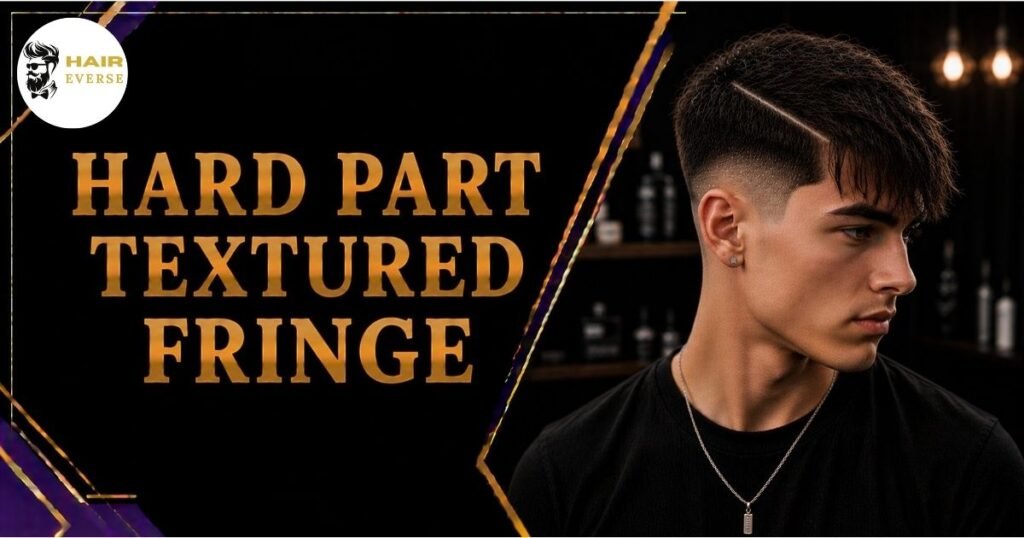
Styling Tip: Use a fine comb to set the part while damp, then apply hair cream to keep the fringe smooth around the shaved line.
Maintenance: The hard part line needs re-shaving every 1–2 weeks to stay crisp, even though the rest of the cut lasts longer. Maintenance and styling times are estimates and may vary by hair type.
Layered Textured Fringe (Fine Hair)
Overview: Light layering throughout the fringe removes just enough weight to create movement, without cutting so much that fine hair starts to look sparse or thin.
Why It Works: Specifically built for fine or thin hair types, and it works on oval and heart-shaped faces by adding the illusion of fullness at the front.
Styling Tip: A lightweight texture powder at the roots adds grip and volume without the heaviness a cream or clay would add to finer strands.
Maintenance: Fine hair shows split ends faster, so trim every 4 weeks to keep the fringe looking healthy rather than wispy. Maintenance and styling times are estimates and may vary by hair type.
Buzzed Sides Textured Fringe
Overview: The sides and back are buzzed down to a short, even length with clippers rather than faded, giving a simpler, lower-maintenance base for a textured fringe on top.
Why It Works: Works with any hair type since the sides are uniform, and the simplicity flatters round and oval faces without adding extra visual weight.
Styling Tip: A small amount of matte clay is all the top needs; the short, buzzed sides require no product at all.
Maintenance: One of the easiest styles to maintain, since buzzed sides can go 4–5 weeks and only the fringe needs occasional shaping. Maintenance and styling times are estimates and may vary by hair type.
Blunt-Cut Textured Fringe
Overview: The fringe is cut to a straighter, more even line than most textured versions, but light point cutting is still added at the very ends to avoid a completely flat, one-length look.
Why It Works: Best for straight or thick hair that holds a defined edge, and it suits square and oval faces by framing the forehead with a clean line.
Styling Tip: Blow-dry the fringe straight down with a paddle brush and finish with a light hold pomade to keep flyaways controlled.
Maintenance: Blunt lines grow out more noticeably than choppy ones, so plan on a trim every 3 weeks to keep the edge sharp. Maintenance and styling times are estimates and may vary by hair type.
Textured Fringe with Beard Fade
Overview: The haircut’s fade is extended down into the beard line for a seamless transition from hairline to jawline, while the top keeps a full, textured fringe as the focal point.
Why It Works: Works on all hair types, and pairing the fade with facial hair is especially flattering on oval and square faces by unifying the whole head shape.
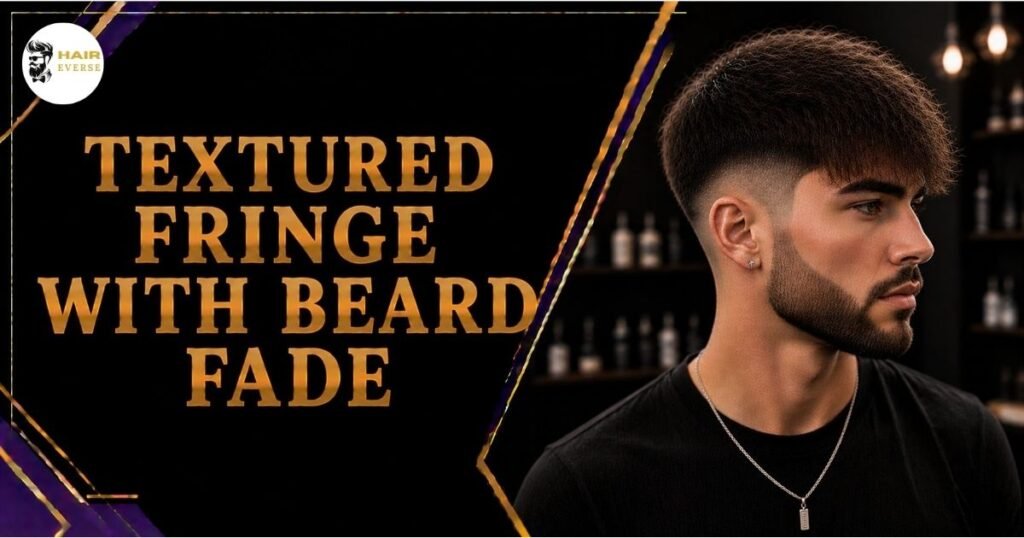
Styling Tip: Style the fringe first with matte clay, then use a small beard brush to blend the fade line into the facial hair for a seamless finish.
Maintenance: Both the beard fade and hairline need upkeep every 2 weeks to stay connected and sharp. Maintenance and styling times are estimates and may vary by hair type.
Slicked-Back Textured Fringe
Overview: Instead of falling forward, the fringe is combed straight back off the face, but kept textured at the ends rather than fully smoothed for a polished-but-not-stiff finish.
Why It Works: Works on straight to wavy hair with enough length to comb back, and the open forehead flatters oval and longer face shapes.
Styling Tip: Comb a light-hold pomade through damp hair from front to back, leaving the ends slightly separated instead of pressing them flat.
Maintenance: A flexible style that hides growth well, allowing 5–6 weeks between trims. Maintenance and styling times are estimates and may vary by hair type.
Spiky Textured Fringe
Overview: Short to medium fringe pieces are styled upward and slightly forward into defined spikes rather than a flat, forward-falling shape.
Why It Works: Needs straight or thick hair to hold the spiked shape, and the added height and angles flatter round and square faces.
Styling Tip: Apply a strong-hold wax to dry hair and pinch small sections between your fingers to build individual, textured spikes.
Maintenance: A trim every 3–4 weeks keeps enough length for spiking without the ends flopping over. Maintenance and styling times are estimates and may vary by hair type.
Long-on-Top Textured Fringe
Overview: Significant length is left on top, letting the textured fringe fall heavily over the forehead and even brush the eyebrows, paired with a taper or fade to keep the sides from competing.
Why It Works: Best on straight to wavy hair with good density to support the extra length, and it flatters long and oval face shapes by adding forward visual weight.
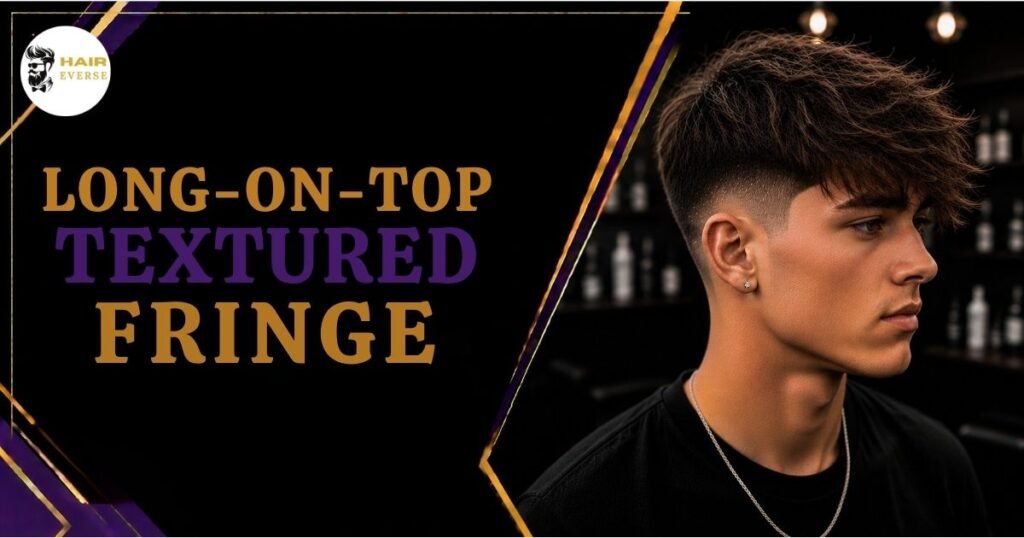
Styling Tip: Rough-dry with a diffuser attachment and a volumizing cream, then finish with a light wax to define the longer pieces.
Maintenance: Because the whole point is length, trims can stretch to 6–8 weeks, focused mainly on tidying the sides. Maintenance and styling times are estimates and may vary by hair type.
Fine Hair Textured Fringe
Overview: Kept shorter than most fringe styles with minimal layering, this version avoids over-thinning fine strands so the fringe doesn’t look see-through or sparse.
Why It Works: Purpose-built for fine hair types, and its compact shape suits oval and heart-shaped faces without adding unwanted volume elsewhere.
Styling Tip: A light texture powder at the roots adds grip; heavier products like clay or wax tend to weigh fine hair down instead of adding texture.
Maintenance: Trim every 4 weeks, since fine hair shows uneven growth and split ends more visibly than thicker types. Maintenance and styling times are estimates and may vary by hair type.
Thick Hair Textured Fringe
Overview: Heavier point cutting and thinning shears remove bulk from thick hair, so the fringe has movement instead of sitting like a dense, heavy curtain.
Why It Works: Designed specifically for thick or coarse hair, and it works on square and oval faces by softening a strong jawline with broken, layered ends.
Styling Tip: Use a lightweight hair cream rather than a heavy wax, since thick hair already has plenty of natural hold and doesn’t need extra stiffness.
Maintenance: Thick hair holds shape longer between trims, so this style can stretch to 5–6 weeks. Maintenance and styling times are estimates and may vary by hair type.
Textured Fringe Undercut Sides
Overview: Similar to the classic undercut fringe but with even shorter, more closely clipped sides for maximum contrast against a long, heavy fringe on top.
Why It Works: Works best with straight or wavy hair that has enough length up top to create real contrast, and it flatters round and oval faces by narrowing the sides visually.
Styling Tip: Comb a strong-hold pomade through the fringe while damp, directing it forward and slightly down for maximum coverage.
Maintenance: The closely clipped sides need a refresh every 2 weeks, while the fringe itself can go longer between shaping trims. Maintenance and styling times are estimates and may vary by hair type.
Wolf Cut Textured Fringe
Overview: Heavy layering throughout the crown creates volume and shag-like texture, while the front is cut into a choppy, face-framing fringe that blends into the layers rather than standing apart.
Why It Works: Works especially well on wavy or curly hair with natural texture, and the layered volume flatters oval and heart-shaped faces.
Styling Tip: Apply sea salt spray to damp hair and scrunch throughout, then use a diffuser to enhance texture without smoothing out the layers.
Maintenance: The shaggy layers are forgiving, but the fringe needs a trim every 4 weeks to stay face-framing rather than growing into the eyes. Maintenance and styling times are estimates and may vary by hair type.
Modern Bowl-Inspired Fringe
Overview: A contemporary update on the bowl cut, this version keeps the rounded silhouette but adds heavy texturizing throughout so it reads as intentional rather than retro.
Why It Works: Works best on straight or thick hair that holds a rounded shape, and the coverage flatters oval and round faces by keeping proportions balanced.
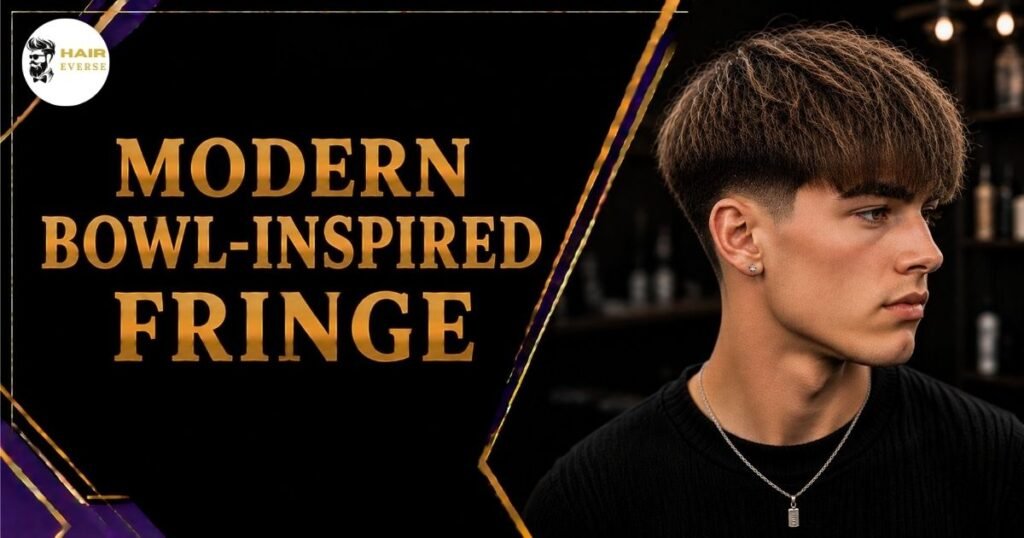
Styling Tip: Blow-dry downward and forward with a paddle brush, then use a small amount of matte clay to separate pieces at the ends only.
Maintenance: The rounded shape is easy to maintain and can go 5–6 weeks between trims without losing its form. Maintenance and styling times are estimates and may vary by hair type.
Center-Parted Textured Fringe
Overview: Hair is parted down the middle and swept to both sides in equal sections, similar to a curtain fringe but with more texture and less symmetry built in.
Why It Works: Suits straight to wavy hair with medium length, and the symmetrical framing flatters oval and long face shapes.
Styling Tip: Use a wide-tooth comb to set the center part while damp, then apply a light hair cream to each side to keep the sweep in place.
Maintenance: Grows out gracefully into a longer curtain style, so trims can stretch to 6 weeks. Maintenance and styling times are estimates and may vary by hair type.
Permed Textured Fringe
Overview: A light perm is added to naturally straight hair to create wave and volume in the fringe, giving the low-effort, textured look of naturally wavy hair without waiting for it to grow that way.
Why It Works: Designed for straight hair types who want the movement of the wavy or curly fringe styles above, and it works on oval and square faces the same way natural waves do.
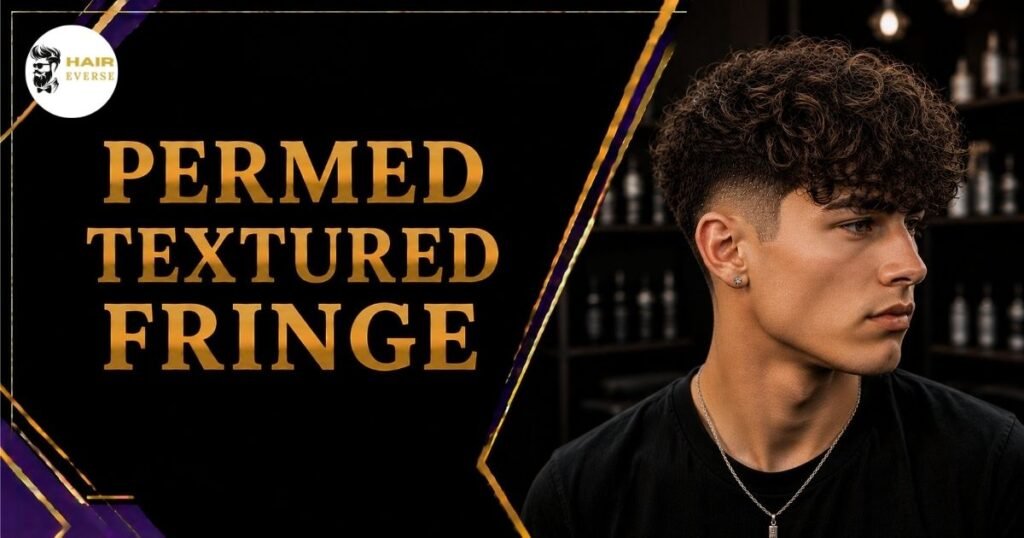
Styling Tip: Use a light curl cream on damp hair and scrunch gently; avoid brushing, which will loosen the perm pattern over time.
Maintenance: The perm itself lasts several months, but the fringe still needs trims every 4–5 weeks to keep its shape. Maintenance and styling times are estimates and may vary by hair type.
Boys’ Easy Textured Fringe
Overview: A simplified, low-maintenance version of the textured fringe built for boys, with a shorter overall length and a light taper that’s easy to keep looking neat between visits.
Why It Works: Works with any hair type since the cut stays short and simple, and it suits nearly every face shape at this age without needing precise face-shape matching.
Styling Tip: A tiny amount of kid-friendly hair cream, less than a dime-sized drop, is enough to keep the fringe tidy without looking overstyled.
Maintenance: Easy to maintain with a trim every 4 weeks; the short length means there’s little upkeep needed between cuts. Maintenance and styling times are estimates and may vary by hair type.
How To Choose The Right Hairstyle
Picking the right textured fringe comes down to matching two things: how your hair naturally behaves, and the shape of your face.
By Hair Type:
- Thick hair: Ask for heavy point cutting or thinning shears to remove bulk (Styles #10, #17, #29) without it, a thick fringe can look like a solid block instead of textured pieces.
- Thin hair: Stick to lighter layering and shorter lengths (Styles #21, #28) so the fringe doesn’t thin out to the point of looking sparse.
- Curly hair: Have it cut dry, not wet, so the barber can see exactly how each curl falls (Style #4, #31).
- Straight hair: The most flexible texture nearly every style on this list works, though a perm (#34) can add movement if you want a wavier look.
- Wavy hair: Let the natural wave do the work with minimal blow-drying (Styles #13, #33).
By Face Shape:
- Oval: The most versatile shape of almost any length or fade works, so this comes down to personal preference.
- Round: Add height and sharper lines with a high fade or quiff (Styles #9, #12) to visually lengthen the face.
- Square: Soften strong angles with longer, layered fringe pieces (Styles #1, #10) rather than blunt, straight lines.
- Long: Avoid extra height on top; curtain or center-parted styles (Styles #6, #33) add width instead.
- Heart: Medium-volume, textured styles (Styles #13, #31) balance a wider forehead with a narrower jaw.
How To Ask Your Barber For This Style?
- Bring 2–3 reference photos, ideally close-ups of the fringe itself, not just a full-face shot
- Explain your preferred fringe length in relation to your eyebrows (above, at, or below)
- Mention how much time you actually spend styling each morning
- Ask specifically whether they’ll use point cutting or a straight, blunt cut
- Explain your workplace or lifestyle needs, since a skin fade needs different upkeep than a low taper
- Confirm the final fringe shape and fade height before the clippers come out
Product Recommendations
Hair Cream
- Best For: Straight to wavy hair that needs light hold without stiffness
- How To Use: Warm a small amount between your palms and work through damp hair, focusing on the fringe
Pomade
- Best For: Slicked-back or side-swept styles that need shine and hold
- How To Use: Rub into palms until melted, then comb through from roots to ends
Wax
- Best For: Spiky or piece styles that need strong, matte hold
- How To Use: Warm between fingertips and apply to dry hair, working in small sections
Clay
- Best For: Choppy, textured fringe styles that need a matte, natural finish
- How To Use: Rub into palms and press into dry hair rather than combing through
Shampoo
- Best For: Keeping the scalp clean under fades, where buildup shows more easily
- How To Use: Focus on the scalp rather than the lengths, rinsing thoroughly to avoid residue near the hairline
Conditioner
- Best For: Curly, thick, or color-treated hair that needs extra moisture
- How To Use: Apply from mid-lengths to ends, leave for a minute, then rinse
Recommended Men’s Hairstyle Guides
- If you’re thinking about going even shorter, check out our guide to Buzz Cut Men. It covers the most popular buzz cut variations, face shape tips, and maintenance advice to help you decide if this low-maintenance style is the right choice for you.
- Want something with more texture and personality? Our Wolf Cut Hairstyles for Men guide showcases trendy layered looks that combine volume with a relaxed, modern finish. It’s a great option if you’re ready to try a bold and fashionable haircut.
- Looking for even more inspiration before your next barber visit? Browse our complete collection of Hairstyles for Men to discover classic, modern, and trending cuts for every hair type, face shape, and personal style.
Final Thoughts
A textured fringe haircut works because it’s flexible. The same basic idea can be dressed up with a skin fade for a sharp night out or kept simple with a low taper for the office. The style you land on says less about the trend and more about your hair type, your face shape, and how much time you’re actually willing to spend styling it each day.
Don’t be afraid to experiment. A fringe grows out more gracefully than most cuts, so if the first version isn’t quite right, it’s an easy adjustment at your next visit rather than a full do-over. Bring your reference photos, be specific about length and texture, and let your barber guide the details from there.
FAQs
How do you Style a Textured Fringe?
Start with damp hair, apply a lightweight product like cream or clay, then use your fingers rather than a comb to push the fringe forward and separate the pieces for texture.
What’s the Difference Between a Fringe and Curtain Bangs on Men?
A fringe typically falls forward as one section, while curtain bangs are parted in the middle and swept to both sides, framing the face rather than covering the forehead directly.
Can Curly Hair have a Textured Fringe?
Absolutely. Curly fringes actually create natural texture on their own, since curls fall unevenly by nature. Just make sure your barber cuts it dry so they can see the true curl pattern.
What Products Work Best for a Textured Fringe?
Matte clay and lightweight hair cream are the most versatile choices. Clay adds texture and separation, while cream keeps things soft for a more natural, less “styled” look.
Can you Grow out a Textured Fringe Easily?
Yes, more easily than a blunt fringe. Because the ends are already layered and broken up, the regrowth phase blends in naturally instead of creating an obvious, awkward line.