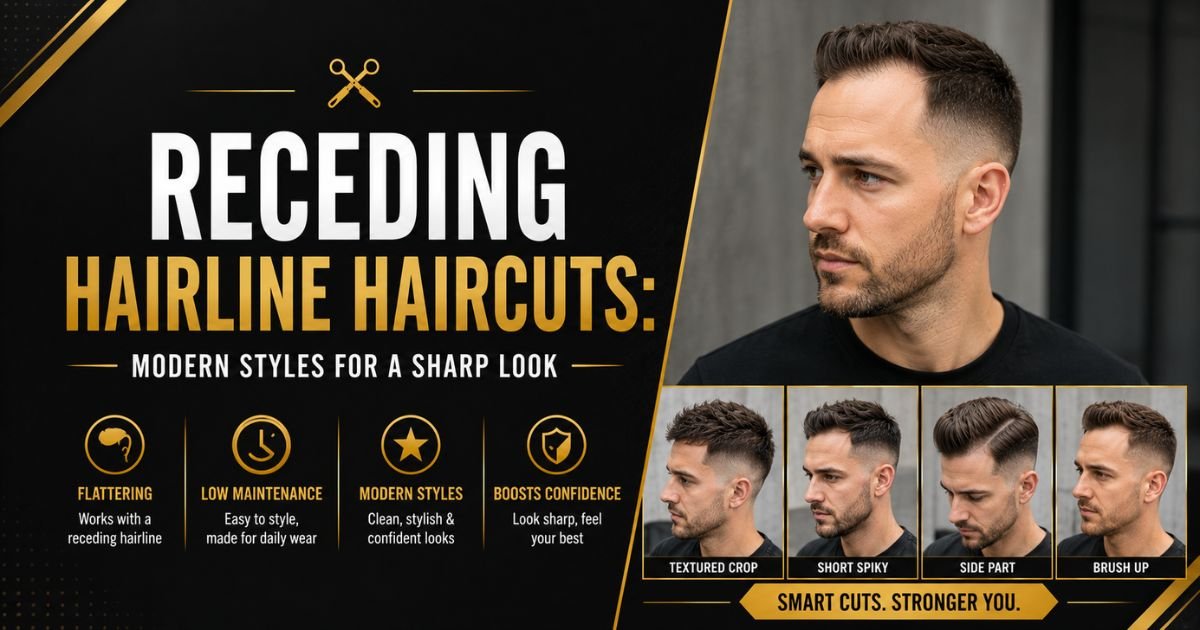
Receding Hairline Haircuts: 30 Modern Styles for a Sharp Look
Receding hairline haircuts work by keeping the sides short, adding texture or height on top, and softening the line where hair meets forehead. Fades, crew cuts, textured crops, and buzz cuts are the most reliable choices because they shift focus away from the hairline and toward the overall shape of the cut.
The challenge isn’t just finding a haircut it’s choosing the right receding hairline haircuts that match your hair type, face shape, and the amount of time you’re willing to spend styling each morning. With the right cut, you can create a balanced, confident look that works with your hairline instead of against it.
Hairstyle Comparison Table
Use this hairstyle comparison table to compare the best receding hairline haircuts based on hair type, face shape, maintenance, and styling time.
| Hairstyle | Best Hair Type | Face Shape | Maintenance | Styling Time |
| Buzz Cut | All types | Oval, Round | Low | 1–2 min |
| Crew Cut | Straight, Wavy | Square, Oval | Low | 3–5 min |
| High Fade Textured Top | Thick, Wavy | Round, Square | Medium | 5–8 min |
| Low Taper Fade | All types | Oval, Long | Low | 3–5 min |
| Mid Fade Comb Over | Straight, Fine | Oval, Heart | Medium | 5–7 min |
| Textured Crop | Thick, Wavy | Square, Round | Medium | 5–8 min |
| French Crop | Straight, Thick | Square, Oval | Medium | 5 min |
| Caesar Cut | Straight, Fine | Oval, Round | Low | 3 min |
| Ivy League | Straight, Wavy | Oval, Long | Medium | 5–8 min |
| Faux Hawk | Thick, Coarse | Round, Square | Medium | 8–10 min |
| Quiff | Straight, Wavy | Oval, Heart | Medium | 7–10 min |
| Pompadour | Thick, Straight | Oval, Square | High | 10–12 min |
| Slick Back Undercut | Straight, Fine | Oval, Long | Medium | 6–8 min |
| Side Part Fade | Straight, Wavy | Oval, Square | Medium | 5–7 min |
| Spiky Textured Top | Thick, Coarse | Round, Square | Medium | 5–8 min |
| Skin Fade Short Fringe | All types | Square, Oval | Low | 3–5 min |
| Widow’s Peak Crop | Straight, Fine | Heart, Oval | Low | 4 min |
| Brush Up | Thick, Wavy | Oval, Round | Medium | 6–8 min |
| Textured Fringe | Straight, Wavy | Oval, Heart | Medium | 5 min |
| Bald Fade Buzz | All types | Oval, Round | Low | 2 min |
| Clean Shave (Bald) | All types | Oval, Square | Low | 2–3 min (razor upkeep) |
| Faded Man Bun | Long, Thick | Oval, Long | High | 8–10 min |
| Curly Top Fade | Curly, Coily | Round, Square | Medium | 5–8 min |
| Comb Forward Caesar | Straight, Fine | Oval, Square | Low | 3–4 min |
| High and Tight | All types | Square, Round | Low | 1–2 min |
| Long Top Slick Undercut | Straight, Thick | Oval, Long | High | 8–10 min |
| Textured Quiff Fade | Wavy, Thick | Oval, Heart | Medium | 7–9 min |
| Line Up Fade | All types | Square, Oval | Low | 4–5 min |
| Afro Fade | Coily, Curly | Round, Oval | Medium | 5–7 min |
| Salt and Pepper Crop | All types | Oval, Square | Low | 4–5 min |
Buzz Cut for Receding Hairline
Overview: Hair is clipped to a uniform, ultra-short length across the whole head using one guard size. There’s no part, no comb-over, and no styling routine required.
Why It Works: Suits every hair type and works especially well on round or oval faces because the even length removes any visible contrast between the hairline and the rest of the scalp.
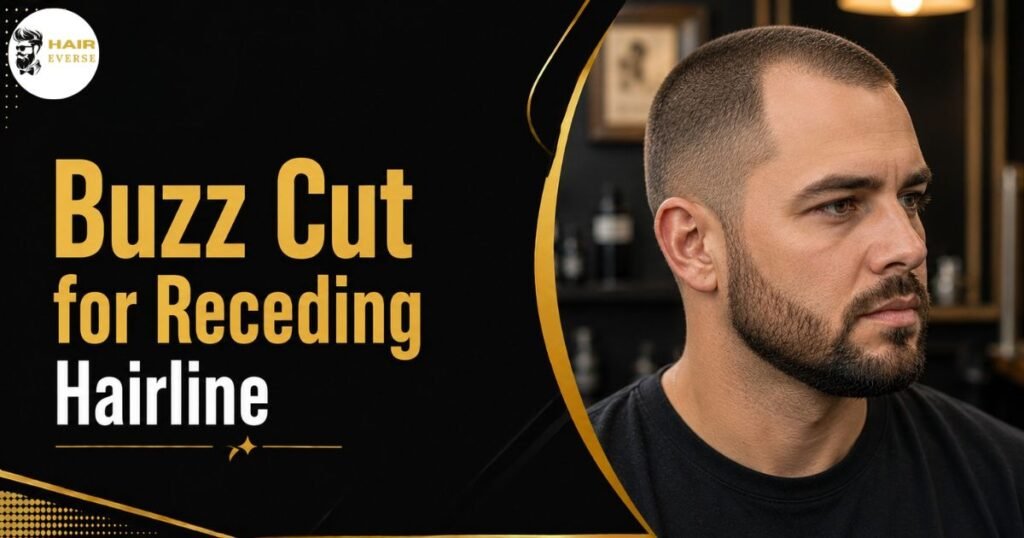
Styling Tip: No product is strictly needed, but a small amount of matte clay rubbed between palms and pressed (not combed) into damp hair adds a slightly fuller texture on top.
Maintenance: Trim every 2–3 weeks with clippers to keep the length consistent; letting it grow out unevenly is what makes a receding hairline more noticeable, not less. Maintenance and styling times are estimates and may vary by hair type.
Crew Cut High Fade
Overview: A step up from the buzz cut, the crew cut leaves slightly more length on top that gradually shortens toward the crown, with tapered sides.
Why It Works: Works best on straight or wavy hair and flatters square or oval faces by keeping the longest hair toward the front, which visually fills in the temple area.
Styling Tip: Apply a dime-sized amount of hair cream to towel-dried hair and comb it forward and slightly up for light texture without shine.
Maintenance: Book a trim every 3–4 weeks to stop the top from getting shaggy, which flattens the volume this cut relies on. Maintenance and styling times are estimates and may vary by hair type.
High Fade with Textured Top
Overview: Sides are faded aggressively from near the crown down to the skin, leaving a noticeably longer, choppy-textured section on top for contrast.
Why It Works: Best suited to thick or wavy hair; the sharp fade line pulls the eye toward the sides and crown instead of the forehead, flattering round and square faces.
Styling Tip: Work a pea-sized amount of matte clay through damp hair with fingers, then scrunch upward to keep the choppy texture from falling flat.
Maintenance: High fades grow out fast plan on a touch-up every 2 weeks to keep the fade line sharp. Maintenance and styling times are estimates and may vary by hair type.
Low Taper Fade with Side Part
Overview: The fade starts just above the ears and blends gradually into the neckline, keeping most of the length change subtle rather than dramatic.
Why It Works: A safe, versatile option for any hair type and most face shapes, especially oval and long faces, since it doesn’t add height that would exaggerate face length.
Styling Tip: Use a lightweight pomade on damp hair and comb through for a natural, low-shine finish that doesn’t scream “styled.”
Maintenance: This is one of the more forgiving fades a trim every 4 weeks keeps it looking clean without frequent barber visits. Maintenance and styling times are estimates and may vary by hair type.
Mid Fade Comb Over
Overview: Hair on top is grown out slightly longer and combed to one side over the crown, while the sides fade starting mid-way up the head.
Why It Works: Ideal for straight or fine hair on oval or heart-shaped faces; the diagonal part line draws attention away from a receding temple and receding hairline haircuts.
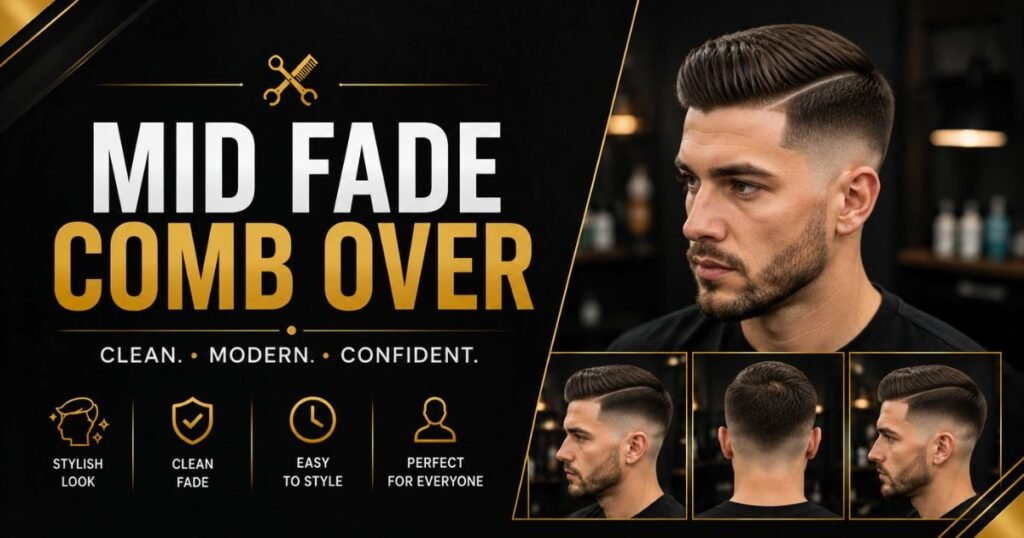
Styling Tip: Blow-dry the top section against the direction you’ll comb it for lift, then set with a light-hold gel before combing it into place.
Maintenance: Trim sides every 3 weeks; the top can go 6–8 weeks between cuts since length is part of the style. Maintenance and styling times are estimates and may vary by hair type.
Textured Crop
Overview: Short, choppy layers sit on top with a fringe that falls forward, while the sides are tapered or faded for contrast.
Why It Works: Works especially well on thick or wavy hair and square or round faces, where the broken, uneven texture makes hairline density less obvious.
Styling Tip: Apply texturizing powder or matte clay to dry hair and rough it up with your fingers rather than a comb to keep the choppy shape.
Maintenance: Get sides trimmed every 3 weeks; ask your barber to point-cut the top layers so regrowth still looks intentional. Maintenance and styling times are estimates and may vary by hair type.
French Crop
Overview: A short fringe is cut straight or slightly textured across the forehead, paired with tight sides and minimal length on top.
Why It Works: Suits straight or thick hair and square or oval faces; the horizontal fringe line visually creates a straighter hairline instead of an uneven one.
Styling Tip: Use a small amount of matte clay to define the fringe forward, keeping it flat rather than voluminous for the cleanest look.
Maintenance: Fringe needs trimming every 2–3 weeks to stay sharp; sides can stretch to 4 weeks. Maintenance and styling times are estimates and may vary by hair type.
Caesar Cut
Overview: Short, horizontally-cut bangs are brushed forward across the whole front hairline, with closely cropped sides.
Why It Works: A go-to for fine or straight hair on oval or round faces, since forward-brushed bangs physically add visual density right at the receding hairline haircuts.
Styling Tip: Apply a small amount of hair wax to dry hair and press it forward and down with your palm don’t comb it back or the effect disappears.
Maintenance: Needs a trim every 3 weeks to keep the fringe length short enough to stay forward without flopping. Maintenance and styling times are estimates and may vary by hair type.
Ivy League
Overview: A longer, styleable take on the crew cut, with enough length on top to part or brush back, and tapered sides.
Why It Works: Good for straight or wavy hair on oval or long face shapes; the added top length gives styling flexibility to redirect focus from the hairline.
Styling Tip: Blow-dry with a round brush for lift at the roots, then finish with a light pomade to hold the shape without heaviness.
Maintenance: Trim every 4 weeks; this style handles a bit of growth well, so it’s forgiving between visits. Maintenance and styling times are estimates and may vary by hair type.
Faux Hawk
Overview: Hair is styled upward into a raised strip down the center of the head, with shorter, blended sides that don’t fully shave down.
Why It Works: Best with thick or coarse hair on round or square faces; the added height shifts visual attention up and back, away from the temples.
Styling Tip: Blow-dry hair upward while it’s damp, then apply a strong-hold gel or wax along the center section to lock the raised shape in place.
Maintenance: Sides need a trim every 3 weeks to keep the contrast crisp between the raised center and the shorter edges. Maintenance and styling times are estimates and may vary by hair type.
Quiff
Overview: Hair on top is swept upward and slightly back from the forehead, creating volume and height at the front of the head.
Why It Works: Works well with straight or wavy hair on oval or heart faces, using height to balance the face and draw attention above the receding hairline haircuts.
Styling Tip: Blow-dry the front section up and back using a round brush, then set with a matte-finish gel to avoid a shiny, dated look.
Maintenance: Trim every 4 weeks; keep the front section long enough to sweep back without losing shape as it grows. Maintenance and styling times are estimates and may vary by hair type.
Pompadour
Overview: A dramatic, voluminous style where the top is swept high and back off the face, with shorter, tapered sides underneath.
Why It Works: Suits thick, straight hair on oval or square faces; the height and backward sweep is one of the most effective ways to visually add fullness above a receding hairline.
Styling Tip: Use a strong-hold pomade on damp hair, blow-dry upward with a round brush, then comb into shape once fully dry for lasting hold.
Maintenance: Requires trims every 3 weeks and daily styling effort to maintain the height and shape. Maintenance and styling times are estimates and may vary by hair type.
Slick Back Undercut
Overview: Top hair is grown longer and combed straight back off the forehead, while the sides are cut into a sharp undercut for contrast.
Why It Works: Works best with straight or fine hair on oval or long faces, using the slicked shape to make the hairline read as an intentional style choice.
Styling Tip: Apply pomade to damp hair and comb straight back with a fine-tooth comb for a controlled, polished finish.
Maintenance: Sides need trimming every 2–3 weeks to keep the undercut crisp; top can grow for months as part of the look. Maintenance and styling times are estimates and may vary by hair type.
Side Part Fade
Overview: A defined side part separates a slightly longer top section from a faded side, with the part line drawn on the fuller side of the hair.
Why It Works: Suits straight or wavy hair on oval or square faces; the asymmetry naturally distracts from a receding hairline better than a centered style.
Styling Tip: Use a fine comb to carve the part while hair is damp, then set with a light mousse so the part holds through the day.
Maintenance: Get the fade refreshed every 3 weeks; keep the part line consistent by asking your barber to mark it during each cut. Maintenance and styling times are estimates and may vary by hair type.
Spiky Textured Top
Overview: Short spikes of varying height are styled across the top of the head, usually paired with a fade or taper on the sides.
Why It Works: Best for thick or coarse hair on round or square faces; the irregular spikes break up the visual line where hair meets forehead.
Styling Tip: Apply hair wax to dry hair and pinch small sections upward between fingers to create defined, separated spikes.
Maintenance: Trim every 3 weeks; hair needs enough length to hold a spike shape, so avoid cutting it too short on top. Maintenance and styling times are estimates and may vary by hair type.
Skin Fade with Short Fringe
Overview: Sides fade all the way down to bare skin near the ears, while the top stays short with a cropped fringe brushed forward.
Why It Works: Works for any hair type and flatters square or oval faces, since the stark contrast between skin and hair pulls focus to the sides, not the temples.
Styling Tip: Work a small amount of molding paste through dry hair and press the fringe forward for texture without excess shine.
Maintenance: Skin fades grow out quickly and need a touch-up every 2 weeks to stay defined. Maintenance and styling times are estimates and may vary by hair type.
Widow’s Peak Crop
Overview: A short, cropped style that works with a widow’s peak instead of hiding it, keeping the top textured and slightly longer at the center point.
Why It Works: Suits fine or straight hair on heart or oval faces; leaning into the natural peak shape often reads as more confident than trying to disguise it.
Styling Tip: Use a lightweight cream to add texture without weighing the peak area down, working it in with fingertips rather than a comb.
Maintenance: Trim every 3–4 weeks to keep the crop length consistent around the peak. Maintenance and styling times are estimates and may vary by hair type.
Brush Up
Overview: Hair on top is brushed straight up and slightly forward from the roots, creating a soft, rounded volume across the crown.
Why It Works: Works well with thick or wavy hair on oval or round faces, since the upward direction adds height without the sharp lines of a pompadour.
Styling Tip: Blow-dry upward using a paddle brush, then use a light-hold cream to keep the brushed shape soft rather than stiff.
Maintenance: Trim every 4 weeks; keep enough length on top for the brush-up motion to hold shape. Maintenance and styling times are estimates and may vary by hair type.
Textured Fringe
Overview: A choppy, uneven fringe falls forward across the forehead, cut with texturizing shears for a soft, broken edge rather than a blunt line.
Why It Works: Flatters straight or wavy hair on oval or heart faces; the irregular fringe edge is more forgiving of an uneven hairline than a straight-cut fringe.
Styling Tip: Apply a matte paste to damp hair and scrunch the fringe forward and down with your fingers to keep the broken texture visible.
Maintenance: Trim the fringe every 3 weeks to prevent it from growing heavy and losing its shape. Maintenance and styling times are estimates and may vary by hair type.
Bald Fade Buzz
Overview: A buzzed top blends into a fade that fades completely to skin at the sides and back, combining two low-maintenance techniques in one cut.
Why It Works: Suits any hair type and flatters oval or round faces; the skin-to-buzz transition makes hair density on top look more uniform.
Styling Tip: No styling product is required day-to-day, though a matte spray can knock down shine on the buzzed section if needed.
Maintenance: Needs a refresh every 2 weeks to keep the fade line clean as both sections grow at different rates. Maintenance and styling times are estimates and may vary by hair type.
Clean Shave (Bald)
Overview: The entire head is shaved down to the skin using a razor, removing the hairline as a visual factor altogether.
Why It Works: An option for any hair type, and it tends to flatter oval or square face shapes with proportionate head shapes; many guys find it the most direct way to stop thinking about hairline placement.
Styling Tip: Use a moisturizing scalp lotion with SPF daily bare scalp skin needs the same sun protection as your face.
Maintenance: Re-shave every 2–3 days to keep stubble from becoming visibly patchy at the crown. Maintenance and styling times are estimates and may vary by hair type.
Faded Man Bun
Overview: Longer hair is gathered and tied at the back or crown, while the sides are kept short with a fade for contrast against the length.
Why It Works: Best suited to guys with more density at the crown and back even if temples are thinning; long, thick hair on oval or long faces pulls this off most naturally.
Styling Tip: Use a light styling cream on the front section to smooth flyaways before tying back, which also helps mask temple thinning.
Maintenance: Sides need trims every 3 weeks; regular deep conditioning keeps the longer length looking healthy, not stringy. Maintenance and styling times are estimates and may vary by hair type.
Curly Top Fade
Overview: Natural curls are left longer on top and shaped into a rounded silhouette, with a fade or taper cut into the sides.
Why It Works: Designed for curly or coily hair types on round or square faces; natural curl volume already adds visual density that works in your favor at the receding hairline haircuts.
Styling Tip: Apply a curl-defining cream to damp curls and let them air-dry to avoid frizz that can make the style look unstructured.
Maintenance: Trim curls every 4–6 weeks, cutting dry so your barber can see the true curl shape and pattern. Maintenance and styling times are estimates and may vary by hair type.
Comb Forward Caesar
Overview: A close relative of the Caesar cut, with slightly more length on top combed strictly forward and down toward the brow.
Why It Works: Suits fine or straight hair on oval or square faces; the forward direction is one of the most direct ways to visually rebuild a hairline.
Styling Tip: Comb a small amount of wax through damp hair and wet hair in a forward motion only brushing back at any point undoes the effect.
Maintenance: Trim every 3 weeks to keep length short enough that gravity doesn’t pull the forward style out of place. Maintenance and styling times are estimates and may vary by hair type.
High and Tight
Overview: A military-inspired cut with very short, tapered sides and a slightly longer, flat top section.
Why It Works: Works with any hair type and suits square or round faces; the sharp, structured shape reads as intentional and disciplined rather than thinning.
Styling Tip: No product needed for the classic look, though a touch of pomade can add a slight sheen if you prefer a more polished finish.
Maintenance: Needs a trim every 2–3 weeks to hold the crisp lines this style depends on. Maintenance and styling times are estimates and may vary by hair type.
Long Top Slick Undercut
Overview: Top hair is grown out to several inches and slicked either straight back or to the side, over a sharply undercut base.
Why It Works: Best for thick, straight hair on oval or long faces; the extra length gives maximum control over exactly where hair sits relative to the temples.
Styling Tip: Blow-dry with a strong-hold gel while combing hair into the desired direction; touch up with a comb throughout the day if needed.
Maintenance: Undercut needs refreshing every 2–3 weeks; top length requires regular deep conditioning to stay manageable. Maintenance and styling times are estimates and may vary by hair type.
Textured Quiff Fade
Overview: Combines the upward-swept quiff shape with a faded side, giving a modern, layered look with clear separation between top and sides.
Why It Works: Works well with wavy or thick hair on oval or heart faces, using both height and fade contrast to counter a receding line.
Styling Tip: Blow-dry the front section up and slightly back, then apply a matte clay to keep the texture defined rather than glossy.
Maintenance: Fade needs a refresh every 2–3 weeks; keep the quiff section long enough to maintain lift as it grows. Maintenance and styling times are estimates and may vary by hair type.
Line Up Fade
Overview: A crisp, straight edge is cut along the natural hairline, paired with a fade down the sides for a defined, sharp finish.
Why It Works: Suits any hair type and flatters square or oval faces by giving the hairline a clean, intentional edge rather than a soft, undefined one.
Styling Tip: Use a light pomade to keep the top controlled without disturbing the crisp line at the front.
Maintenance: Line-ups fade fast plan on a touch-up every 1–2 weeks to keep the edge sharp. Maintenance and styling times are estimates and may vary by hair type.
Afro Fade
Overview: Natural coily or curly hair is left rounded and full on top, tapered or faded at the sides for a shaped silhouette.
Why It Works: Built for coily or curly hair types on round or oval faces; the natural volume on top does most of the work in offsetting hairline thinning.
Styling Tip: Use a curl cream or leave-in conditioner to define texture and prevent dryness, which can make curls look thinner than they are.
Maintenance: Trim every 4–6 weeks to maintain shape; moisturize regularly since coily hair is more prone to dryness. Maintenance and styling times are estimates and may vary by hair type.
Salt and Pepper Crop
Overview: A short, textured crop that works naturally with graying hair, keeping the top slightly longer than the tapered sides for a clean, mature look.
Why It Works: Suits any hair type on oval or square faces; shorter length tends to make natural gray and thinning read as a deliberate, sharp style rather than an accident.
Styling Tip: A light matte cream adds texture without making gray tones look flat or shiny avoid heavy pomades, which can look greasy on lighter hair.
Maintenance: Trim every 3–4 weeks to keep the crop shape and length even across the top. Maintenance and styling times are estimates and may vary by hair type.
More Grooming Guides
- If you’re looking for a bold way to refresh your receding hairline haircut, consider an undercut haircut. Its short sides and longer top create contrast that draws attention away from the hairline, making it one of the most effective options for a modern, confident appearance.
- If you prefer clean, modern styles, explore our guide to fade haircuts for Black men. Many fade variations pair well with a receding hairline haircut, creating a sharp, balanced look that minimizes the appearance of a receding hairline while keeping the style fresh and easy to maintain.
- You’re deciding between classic short styles, our guide to the crew cut vs buzz cut is a great place to start. Both are excellent alternatives to a receding hairline haircut, offering clean, low-maintenance look.
How to Choose the Right Hairstyle?
Picking the right cut comes down to two things: your hair type and your face shape. Here’s a beginner-friendly breakdown.
By Hair Type
- Thick hair: You have the most flexibility pompadours, faux hawks, and textured crops all rely on the volume thick hair naturally provides.
- Thin hair: Stick to shorter, uniform lengths like a buzz cut, crew cut, or skin fade long, thin hair on top tends to look flat and can draw more attention to thinning areas.
- Curly hair: Let curls stay a bit longer on top and pair with a fade or taper on the sides so the natural volume isn’t fighting a straight-cut style.
- Straight hair: Straight hair holds sharp lines well, making it a good match for side parts, French crops, and slicked-back styles.
- Wavy hair: Textured crops, quiffs, and brush-ups work with wave pattern instead of against it.
By Face Shape
- Round faces: Add height on top (faux hawk, quiff, spiky texture) to elongate the face and balance width.
- Square faces: Softer, textured styles (textured crop, curly top fade) balance strong jawlines without competing with them.
- Long or oval faces: Avoid excess height; low tapers, crew cuts, and side parts keep proportions balanced.
- Heart-shaped faces: Fringe-forward styles like the Caesar or textured fringe soften a wider forehead.
How to Ask Your Barber?
Knowing what you want is only half the job describing it clearly gets you the result you’re picturing.
- Bring reference photos. A picture removes any guesswork about length, texture, or fade height.
- Explain your preferred length in inches or clipper guard numbers, not just “short” or “medium.”
- Mention your styling routine. Tell your barber if you’re not willing to style daily so they can suggest a lower-maintenance shape.
- Ask about maintenance upfront. Confirm how often you’ll need to come back before committing to a fade or line-up.
- Explain your workplace or lifestyle needs. A gym-heavy routine or a formal office both affect which style holds up best.
- Confirm the final shape before the clippers start on your hairline. A quick double-check here avoids the most common regret.
Product Recommendations
Hair Cream
- Best For: Light hold with a natural, matte finish; good for crew cuts and Ivy Leagues.
- How To Use: Warm a dime-sized amount between palms, work through damp hair, and style with fingers or a comb.
Pomade
- Best For: Slick backs, side parts, and comb-overs that need shine and hold.
- How To Use: Apply to damp hair, comb into shape, and let it dry in place for a controlled finish.
Wax
- Best For: Defined, separated pieces like spiky tops or Caesar fringes.
- How To Use: Rub a small amount between fingertips until slightly tacky, then style dry hair into individual sections.
Matte Clay
- Best For: Textured crops, faux hawks, and quiffs that need volume without shine.
- How To Use: Work into damp or dry hair with fingers, scrunching upward to build texture.
Shampoo
- Best For: Keeping the scalp clean, especially important for short and buzzed styles where scalp health is visible.
- How To Use: Use 2–3 times per week; over-washing can dry out both hair and scalp.
Conditioner
- Best For: Longer or curlier styles (man buns, curly top fades, afro fades) that need moisture to avoid frizz.
- How To Use: Apply from mid-length to ends after shampooing, focusing on drier sections.
Final Thoughts
A receding hairline doesn’t have to dictate your options it just narrows down which cuts actually work in your favor.
Whether you go for the simplicity of a buzz cut, the structure of a fade, or the confidence of a clean shave, the right haircut is the one that fits your hair type, your face shape, and how much time you actually want to spend on it each morning.
Don’t be afraid to try a few different styles over the next year as your hair and confidence both settle into what works.
FAQs
What is the best haircut for a receding hairline?
There’s no single best cut buzz cuts, crew cuts, and fades are the most reliable because short, even lengths minimize contrast at the hairline. The right pick depends on your hair type and face shape.
Should you grow your hair out or cut it short with a receding hairline?
Shorter styles generally work better because long hair on top can look flat and expose thinning more clearly. A cut with texture or height, kept moderate in length, usually looks fuller than hair grown long.
Does a buzz cut hide a receding hairline?
A buzz cut doesn’t hide a receding hairline, but it makes it far less noticeable by creating one uniform length across the head, removing the contrast between hairline and scalp.
Can a hairstyle really hide a receding hairline?
A haircut can’t reverse hair loss, but the right style shifts visual attention toward the crown, sides, or overall shape instead of the hairline, making thinning far less obvious day to day.
What products help style thinning hair on top?
Matte clay and lightweight hair cream add texture and the appearance of volume without weighing hair down. Avoid heavy, high-shine pomades on very fine or thinning hair, since they can make it look flatter.