8 Barber Terminology Guide: Hair Terms Every Man Should Know
You sit down, the barber asks what you want, and every word suddenly sounds vague “shorter on the sides” means something different to every barber in the shop.
This Barber Terminology Guide exists because most guides only define a handful of terms and skip the ones you actually need mid-conversation.
Learn the language your barber already speaks, and you’ll spend less time re-explaining yourself at every visit.
Term Quick-Reference Table
Here are Full explained table with Term Category Best For Complexity.
| Ter | Category | Best For | Complexity |
| Taper | Cut shape | Most hair types | Easy |
| Skin Fade | Cut shape | Straight to coily hair | Medium |
| Line Up | Technique | All hair types | Easy |
| Guard Number | Tool/measurement | All hair types | Easy |
| Texturizing | Technique | Thick, coarse hair | Medium |
| Point Cutting | Technique | Fine to medium hair | Medium |
| Pomade | Product | Fine to medium hair | Easy |
| Matte Clay | Product | Thick, textured hair | Easy |
Taper Barber Terminology Guide
What it means: A taper is a gradual reduction in hair length, usually along the sides and back, that blends down but never fully reaches the skin. It’s the foundation underneath most men’s haircuts, even ones that look completely different on top.
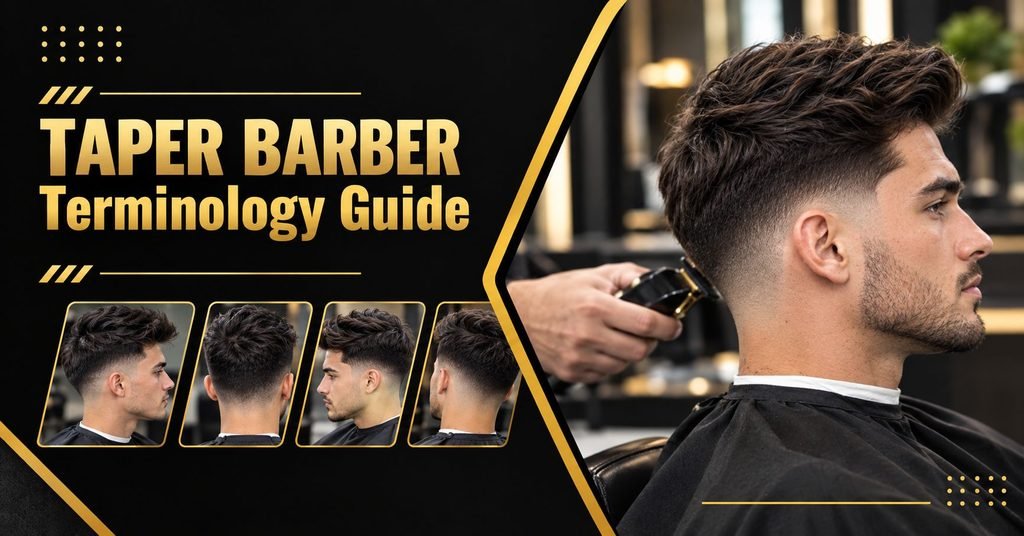
Why it matters: Because a taper never hits skin, it grows out more gracefully than a fade, which means fewer trips to the shop if your schedule is tight. It also reads as more understated, which suits offices with a conservative dress code.
How to say it: Ask for a “low taper” if you want the blend to stay close to the ears, or a “taper fade” if you want it to eventually reach skin near the bottom. Naming the starting point removes almost all guesswork. Maintenance and styling times are estimates and may vary by hair type.
Barber Terminology Guide Skin fade
What it means: A skin fade blends hair all the way down to bare skin, creating a sharp, high-contrast finish. It can start high on the head, at the mid-point, or low near the ears each version has its own name (high, mid, low fade).
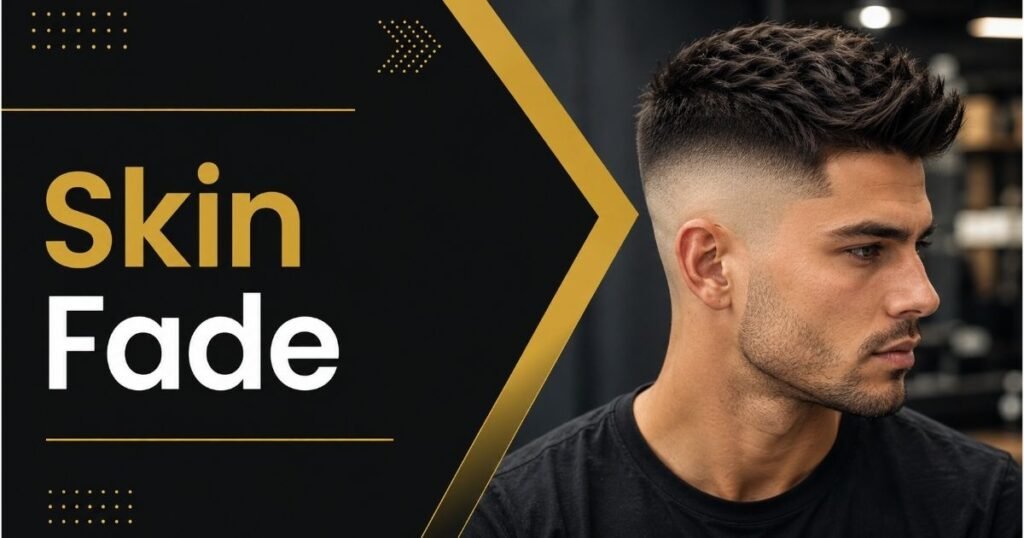
Why it matters: The higher the fade starts, the more dramatic the look, but also the faster it grows out and needs a touch-up. If you go three-plus weeks between cuts, a lower fade holds its shape longer than a high one.
How to say it: Specify both the height and the finish: “mid skin fade” tells your barber exactly where to start and how far to take it, instead of leaving the ending point open to interpretation. Maintenance and styling times are estimates and may vary by hair type.
Line Up (Shape Up / Edge Up)
What it means: A line up sharpens the edges of your hairline, temples, and sideburns into a crisp, defined shape, usually using a straight razor or trimmer. Some shops call the same service a “shape up” or “edge up” regional naming varies, but the technique is identical.
Why it matters: This is the detail that makes a cut look freshly done even a week later. It’s also one of the fastest services to add on if you’re short on time.
How to say it: If your barber uses different slang for getting a haircut than you expect, just say “can you clean up my hairline and sideburns” it works regardless of which regional term they use. Maintenance and styling times are estimates and may vary by hair type.
Barber Terminology Guide Tool and Measurement Terms
- Clipper Guard Numbers
- Guard Length Variance
Clipper Guard Numbers
What it means: Clipper guards are attachments numbered roughly 0 to 8 that control how much hair stays after a pass. Each step up adds close to a quarter-inch, so a number 1 leaves buzz-cut length while a number 4 lands closer to a short crew cut.
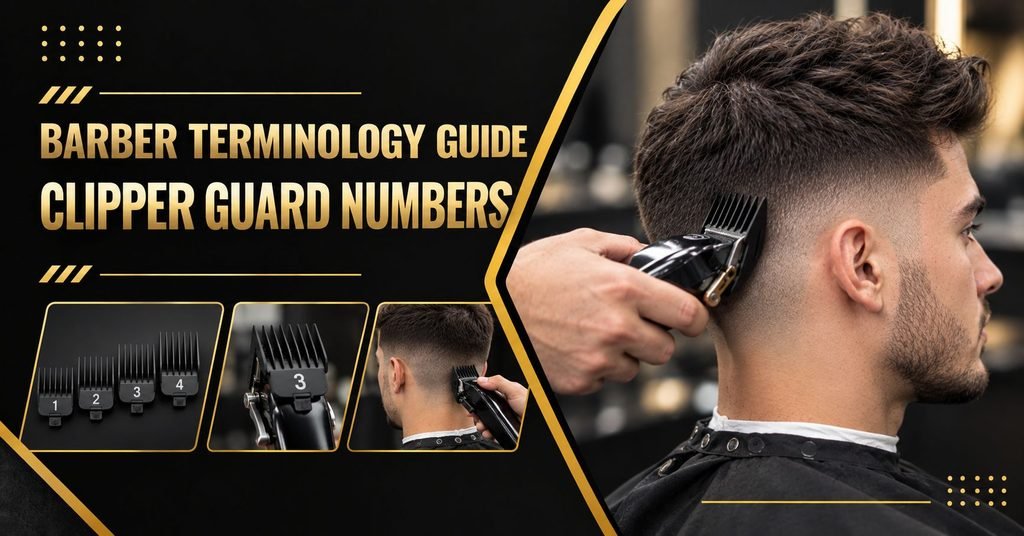
Why it matters: Guard numbers are the most precise, least confusing way to describe length, because they remove words like “short” or “medium” that mean different things to different people.
How to say it: Instead of “keep the sides short,” say “a 2 on the sides, 4 on top.” If you liked your last cut, remember the numbers and repeat them exactly next time. Maintenance and styling times are estimates and may vary by hair type.
Guard Length Variance
What it means: Guard numbers aren’t perfectly standardized across clipper brands a 3 guard on one brand might cut slightly longer or shorter than a 3 on another. Barbers account for this with experience, but it’s worth knowing if you switch shops.
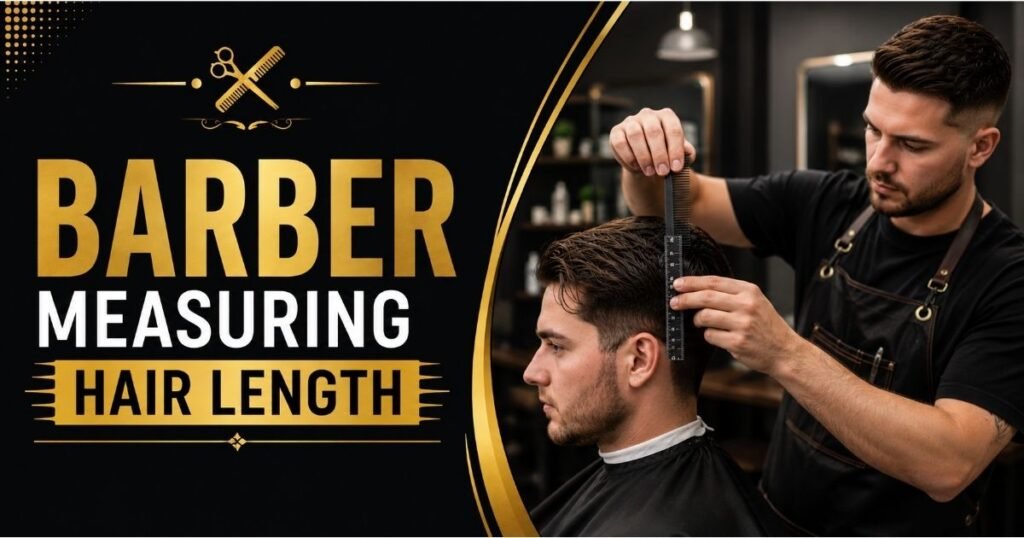
Why it matters: If a cut from a new barber comes out a little different than expected despite giving the “same” guard number, this is usually why not a communication failure.
How to say it: Add a reference point: “a 3 guard, similar to what I usually get at my last place” gives your barber a benchmark instead of just a number in isolation. Maintenance and styling times are estimates and may vary by hair type.
Barber Terminology Guide Technique Terms
- Texturizing
- Point Cutting
Texturizing
What it means: Texturizing uses shears with small teeth to remove bulk from thick or dense hair without significantly shortening it. It’s how barbers make heavy hair feel lighter and easier to style.
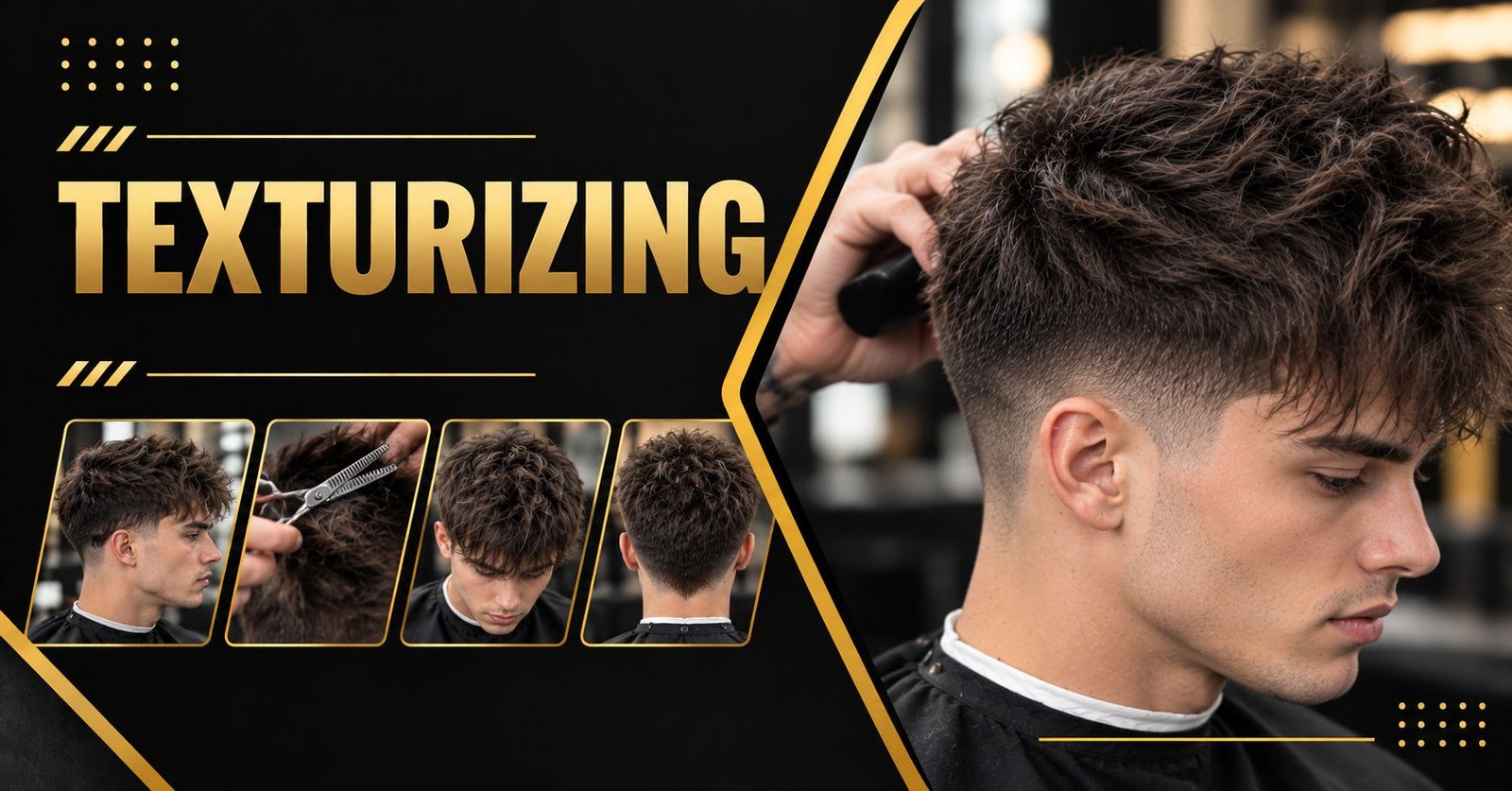
Why it matters: If your hair feels like a “helmet” no matter how you style it, texturizing is usually the fix, not a shorter overall cut.
How to say it: Say “can you texturize the top, I want the length but less bulk” this tells your barber the length is fine, the density is the issue. Maintenance and styling times are estimates and may vary by hair type.
Hair Barber salon hairstyle Point Cutting
What it means: Point cutting angles the scissor tips into the ends of the hair rather than cutting straight across, softening blunt lines and adding subtle movement.
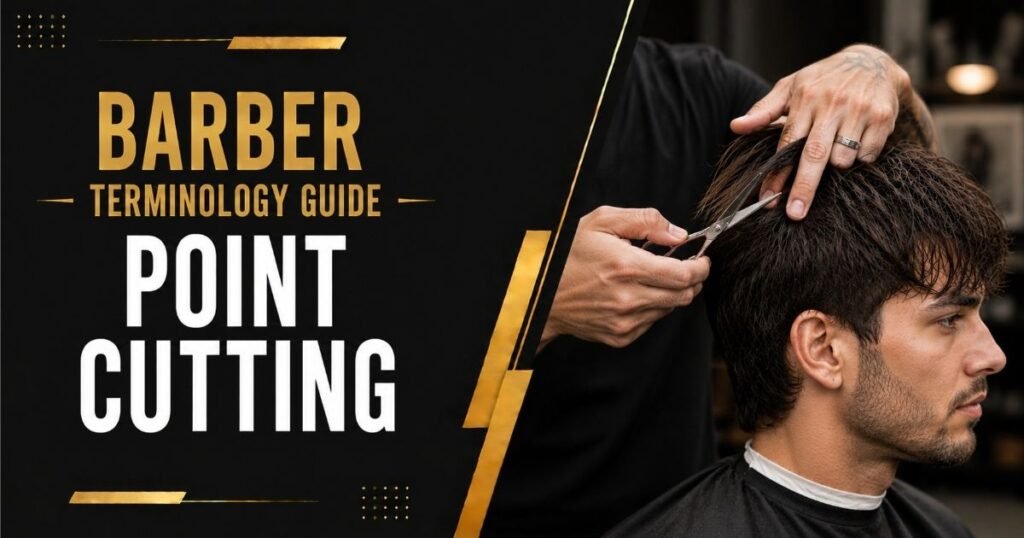
Why it matters: This is what gives a cut a “natural” finish instead of a sharp, blunt edge, particularly on top sections and fringe.
How to say it: You rarely need to request this by name instead describe the result: “I don’t want a blunt line on top, something softer.” Maintenance and styling times are estimates and may vary by hair type.
Product Terms
- Pomade
- Matte Clay
Pomade
What it means: Pomade is a waxy, often oil-based styling product that gives a slicker, shinier finish with strong hold. It works especially well on fine to medium hair for classic, combed-back looks.
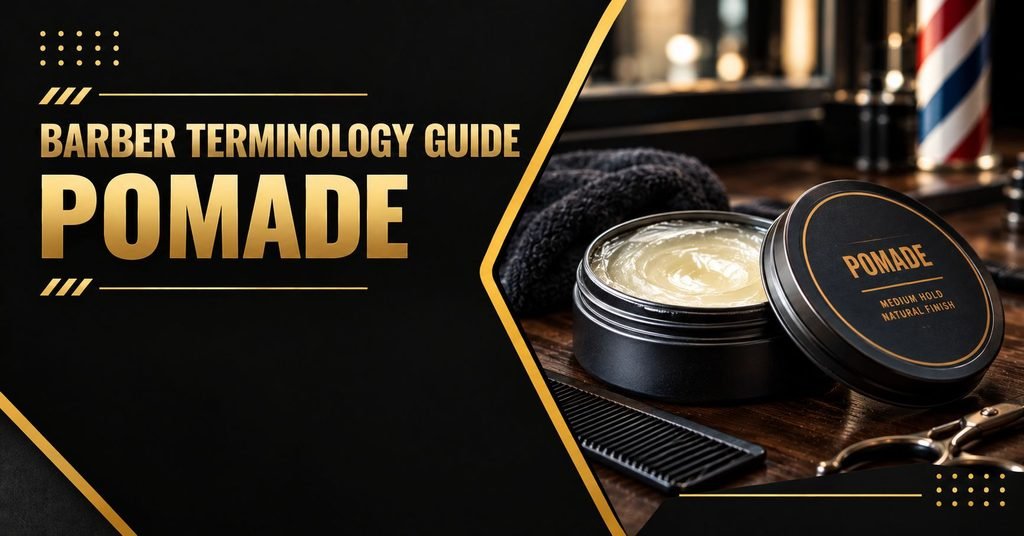
Why it matters: Choosing the wrong product for your hair type is the most common reason a style doesn’t hold the way it did in the shop.
How to say it: Ask “what pomade would you use for this on my hair type” so the recommendation is tailored, not generic. Maintenance and styling times are estimates and may vary by hair type.
Matte Clay
What it means: Matte clay is a thicker, non-shiny styling product that builds texture and separation, ideal for thicker or coarser hair that needs more grip to hold a shape.
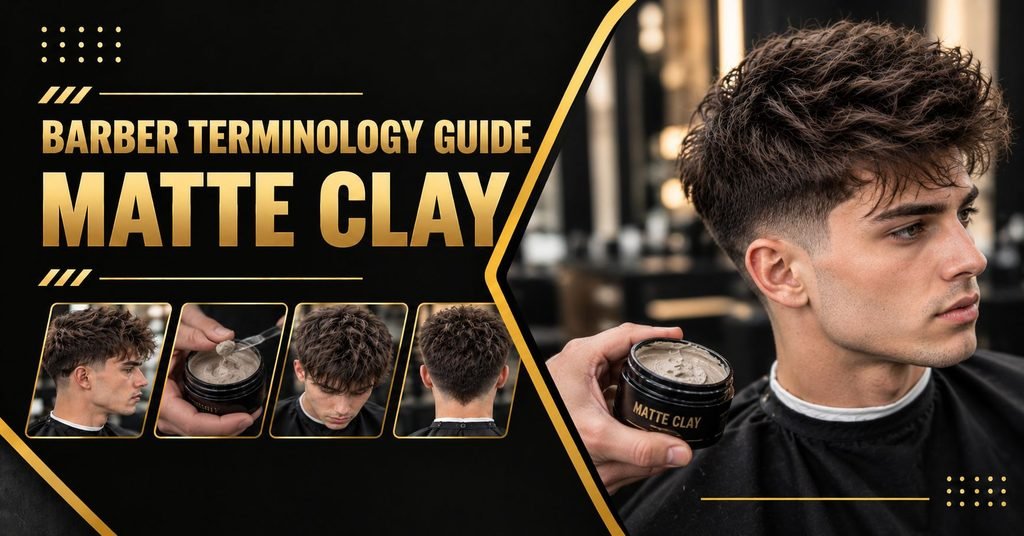
Why it matters: Unlike pomade, clay won’t add shine, which suits shorter, textured styles better than slicked-back ones.
How to say it: Ask your barber to demonstrate the amount to use a small nickel-sized amount is a common starting point, though this varies by hair length and density. Maintenance and styling times are estimates and may vary by hair type.
How to Choose the Right Words for Your Hair
Matching terminology to your actual hair type and face shape makes every conversation faster.
Hair Type Guidance:
- Thick hair: lean on texturizing and point-cutting language to reduce bulk without losing length.
- Thin hair: ask for layering or volume-focused terms rather than heavy texturizing, which can make thin hair look sparser.
- Curly hair: mention “curl pattern” explicitly, since fades and tapers behave differently on curly versus straight hair.
- Straight hair: guard numbers and taper terms translate most predictably on straight hair.
Face Shape Guidance:
- Oval: most terms and cut shapes work well; you have the most flexibility.
- Round: ask for more height on top and a tighter taper on the sides to add length visually.
- Square: textured, slightly longer top styles soften strong jawlines.
- Long: lower fades and fuller sides help balance vertical length.
How to Ask Your Barber For What You Want
- Bring a reference photo, ideally of someone with similar hair type and texture to yours
- State guard numbers for both sides and top, not just “short” or “long”
- Name the starting point of a fade or taper, not just the word “fade”
- Mention your styling routine and how much time you spend on it daily
- Ask about maintenance frequency before committing to a style
- Confirm the final shape verbally before the clippers start
Product Recommendations
Hair Cream Best For: fine to medium hair wanting light, natural hold How To Use: work a small amount through damp hair, focusing on ends
Pomade Best For: slicked-back, classic styles with shine How To Use: warm between palms, apply from mid-lengths to ends
Wax Best For: medium hold with a matte finish How To Use: rub into hands until pliable, style in small sections
Matte Clay Best For: thick or coarse hair needing texture and grip How To Use: apply to damp or dry hair, scrunch upward for lift
Shampoo Best For: removing product buildup between cuts How To Use: use two to three times a week to avoid over-drying scalp
Conditioner Best For: softening texture on coarse or curly hair How To Use: apply mid-length to ends, rinse thoroughly.
Need More Hairstyles Information
- Long hairstyles for men are back in style, offering a bold mix of masculinity and effortless charm.
- From fades with crisp lines to textured comb-overs and glossy finishes, side part haircuts for men suit any face shape or occasion.
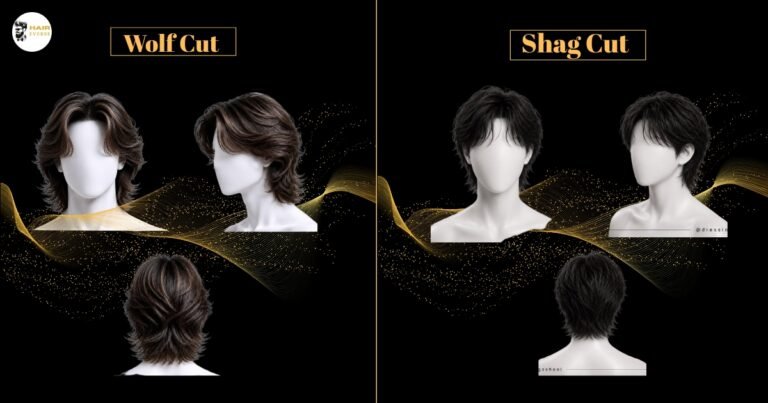
- Wolf cut vs Shag cut for Men: the wolf cut brings wild, voluminous layers with mullet-inspired edge, while the shag cut offers a softer, classic feathered look.
- Warrior Haircuts for Men: these bold, rugged styles draw inspiration from ancient fighters, blending shaved sides, textured tops, and fierce lines for a fearless look.
- Top 50 Professional Hairstyles for Men: these clean, polished cuts balance sharp lines with modern styling, giving off a confident and office-ready vibe.
- The Best Square Face Haircuts for Men: these styles soften strong jawlines while highlighting bold, angular features. Textured crops and classic fades top the list for 2026.
Final Thoughts
Knowing this vocabulary won’t make you a barber, but it will make you a better client one whose barber spends less time guessing and more time cutting exactly what you pictured. Start with the terms that match your own hair type and face shape, and build from there each visit.
Don’t be afraid to mix precise terms with plain description “a low skin fade, guard 2, but soften the top with some texturizing” is a complete sentence your barber will understand instantly. If you’re due for a cut, bring this guide along or just remember a few key phrases from it.
FAQs
What is barber terminology?
Barber haircut terminology black male is the shared vocabulary describing haircut length, shape, and technique. Terms like fade, taper, and guard number let clients and barbers communicate precisely instead of relying on vague Men’s haircut descriptions that can be interpreted differently.
What is the difference between a fade and a taper?
A taper gradually shortens hair but never reaches bare skin. A fade goes further, blending down to skin for a sharper, higher-contrast finish. Fades also typically need more frequent touch-ups than tapers.
What to say for a haircut do clipper guard numbers mean?
Clipper guards run roughly 0 to 8, with higher numbers leaving more hair. Each step adds about a quarter-inch of length. Stating a guard number removes guesswork that words like “short” or “medium” leave open.
What is a skin fade?
A skin fade blends hair down to bare skin, creating dramatic contrast. It can start high, mid, or low on the head, with higher fades generally needing more frequent maintenance to stay sharp.
What is a shape up haircut?
A shape up sharpens the hairline, temples, and sideburns into a clean, defined edge. Some barbers call it a line up or edge up the naming varies by region, but the technique is the same.